Author: Anthony Thomas

  • Lichen: Nature’s Slowest Adventurer

    Lichen: Nature’s Slowest Adventurer

    Millimeter steps,
    wanderer with no footsteps—
    lichen counts the years.

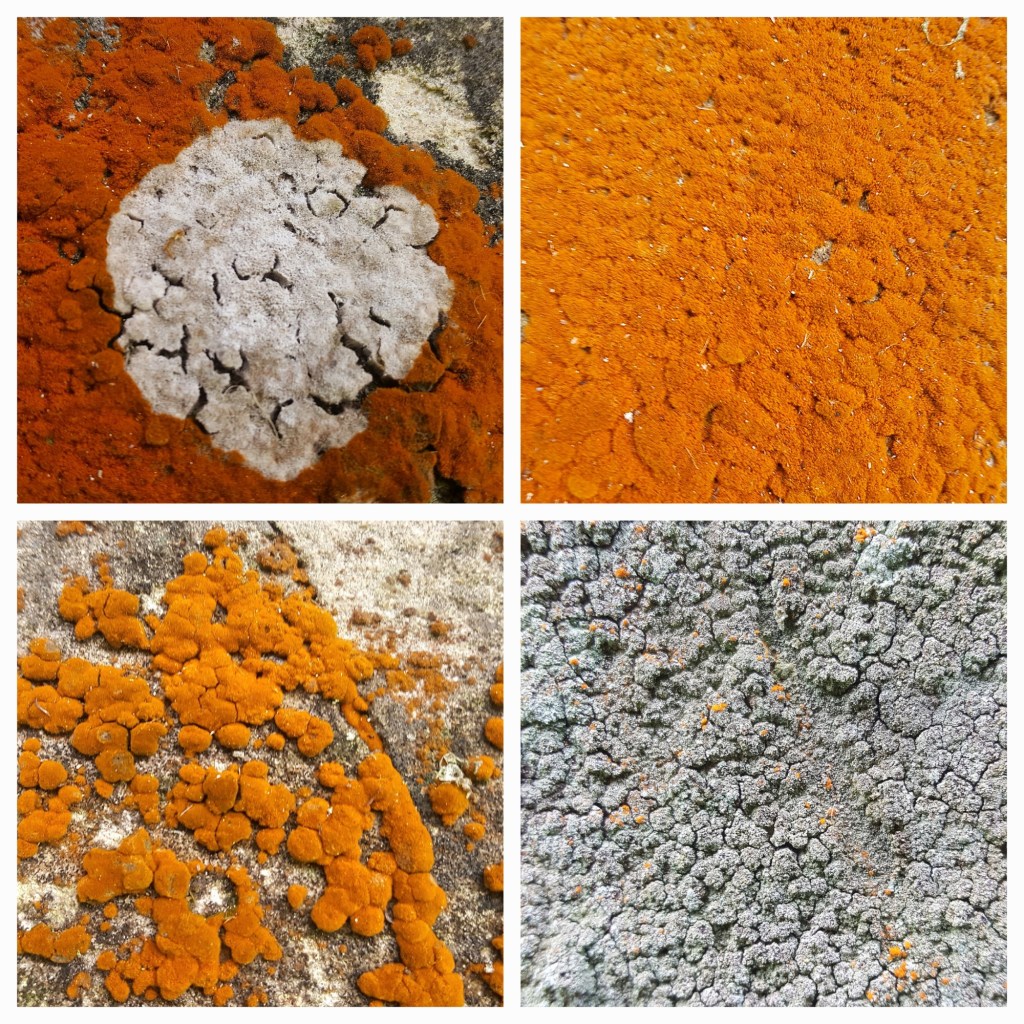
    Subtle lichen montage

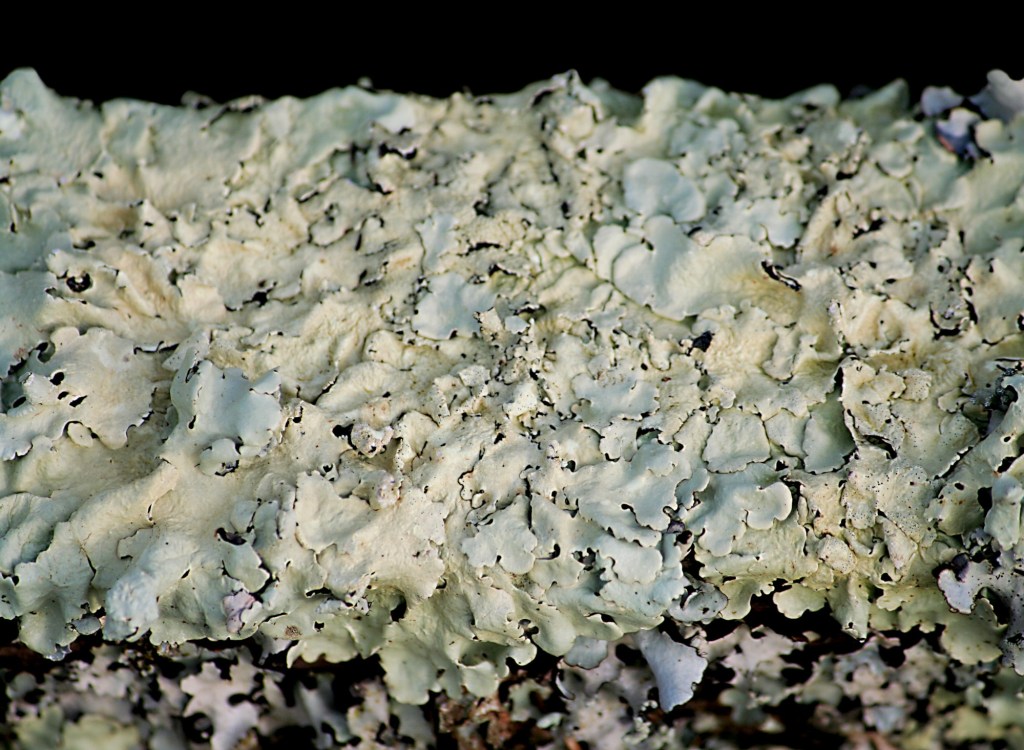
    If there were an award for “Most Patient Organism,” lichens would win without even hurrying. These humble patches of color on rocks and trees may look simple, but they’re some of nature’s most persistent explorers — quietly expanding their territory millimeter by millimeter.

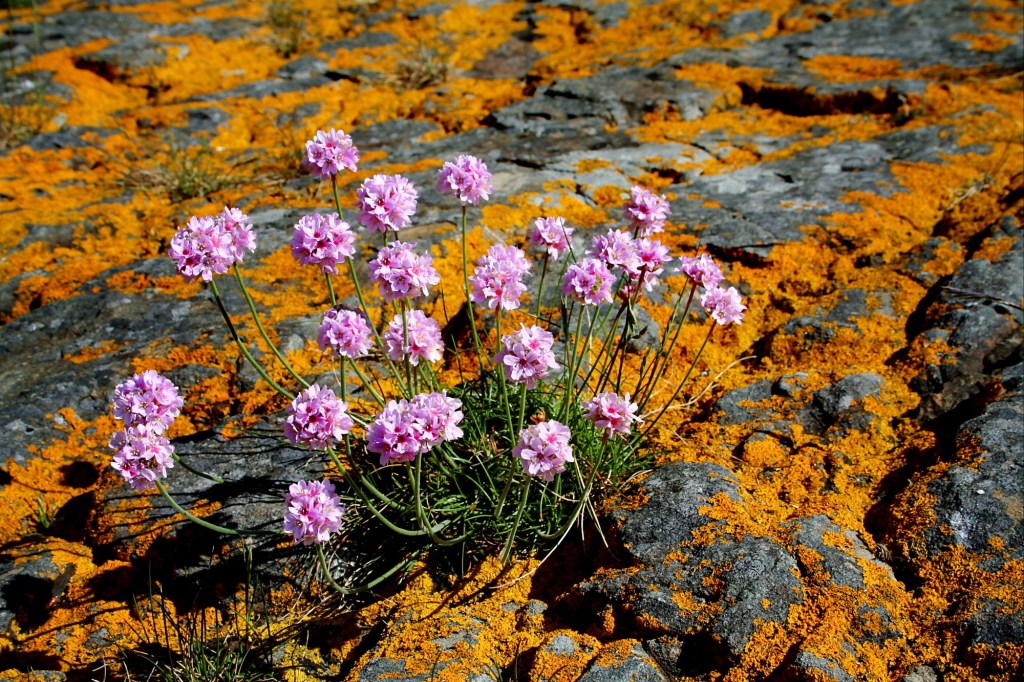
    Sea Thrift surrounded by lichen.

    Lichens are remarkable partnerships between fungi and algae (or cyanobacteria), each bringing skills to the team: the fungus provides shelter, and the algae handle food production. Together, they form a hardy organism that can survive where few others dare — from sun-baked boulders to icy mountaintops.

    Part of their charm comes from their leisurely pace. Many lichens grow only 1–2 millimeters per year, some even less. That means the broad, coin-sized lichen on a gravestone may have been growing there since long before you were born. In some cases, you can estimate a lichen’s age by its size, as certain species have surprisingly consistent slow-growth rates — a method known as lichenometry.

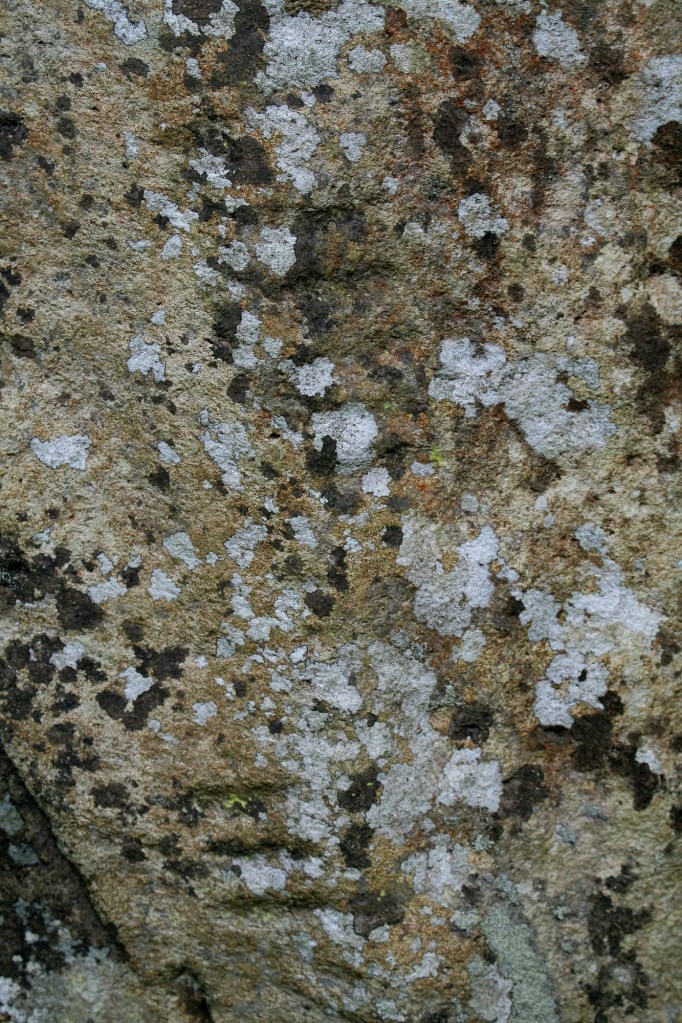
    If you look carefully you can see ancient oghan writing

    Their patience pays off. As lichens spread, they help break down rock into soil, create microhabitats for tiny creatures, and paint the landscape with splashes of green, gold, silver, and orange. They aren’t flashy, and they don’t rush. They simply endure — and in doing so, they quietly shape the world around them.

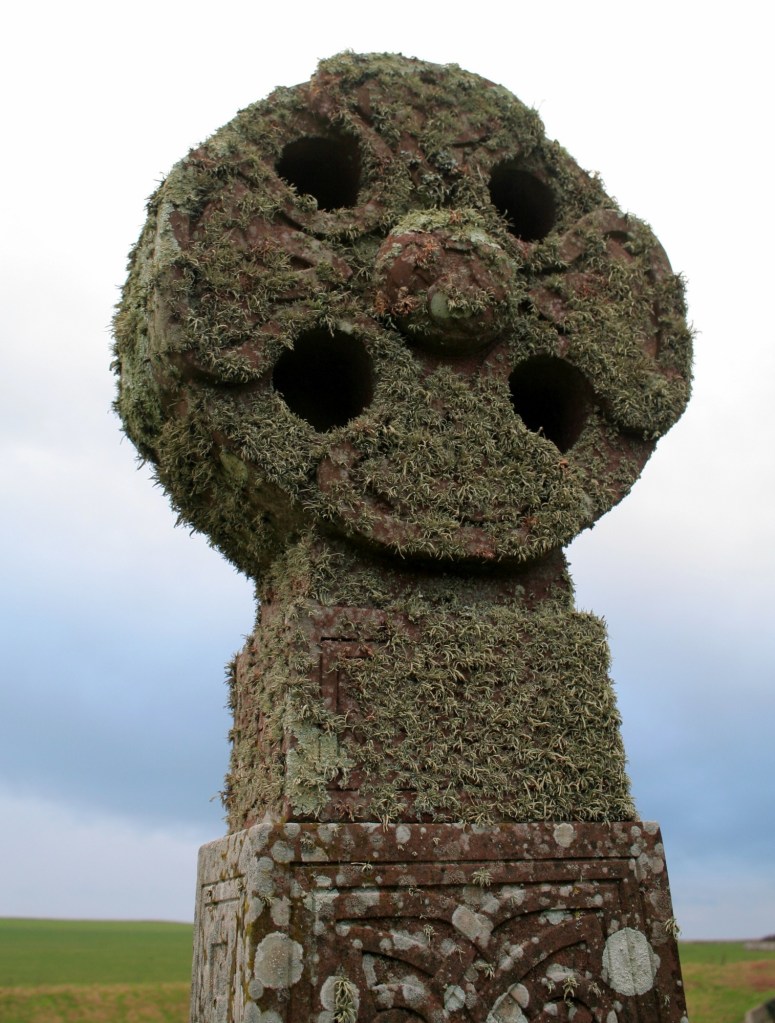
    Lichen covering an ancient Celtic cross

    So next time you spot a lichen on your walk, take a moment. You might just be looking at one of Earth’s slowest — and most resilient — adventurers.


    If you find my photography or my writing inspiring and uplifting, consider supporting what I do. Buy me a coffee on Ko-fi.
    Your support makes a difference in my life and helps me create more of what you, and I, like. Thank you!
    Tap here for a list of 100 endangered animals and plants.

    100 endangered plant and animal species

    * Abies beshanzuensis (Baishan fir) – Plant (Tree) – Baishanzu Mountain, Zhejiang, China – Three mature individuals

    * Actinote zikani – Insect (butterfly) – Near São Paulo, Atlantic forest, Brazil – Unknown numbers

    * Aipysurus foliosquama (Leaf scaled sea-snake) – Reptile – Ashmore Reef and Hibernia Reef, Timor Sea – Unknown numbers * Amanipodagrion gilliesi (Amani flatwing) – Insect (damselfly) – Amani-Sigi Forest, Usamabara Mountains, Tanzania – < 500 individuals * Antisolabis seychellensis – Insect – Morne Blanc, Mahé island, Seychelles – Unknown numbers * Antilophia bokermanni (Araripe manakin) – Bird – Chapado do Araripe, South Ceará, Brazil – 779 individuals * Aphanius transgrediens (Aci Göl toothcarp) – Fish – south-eastern shore of former Lake Aci, Turkey – Few hundred pairs * Aproteles bulmerae (Bulmer’s fruit bat) – Mammal – Luplupwintern Cave, Western Province, Papua New Guinea – 150 * Ardea insignis (White bellied heron) – Bird – Bhutan, North East India and Myanmar – 70–400 individuals * Ardeotis nigriceps (Great Indian bustard) – Bird – Rajasthan, Gujarat, Maharashtra, Andhra Pradesh, Karnataka and Madhya, India – 50–249 mature individuals * Astrochelys yniphora (Ploughshare tortoise) – Reptile – Baly Bay region, northwestern Madagascar – 440–770 * Atelopus balios (Rio Pescado stubfoot toad) – Amphibian – Azuay, Cañar and Guyas provinces, south-western Ecuador – Unknown numbers * Aythya innotata (Madagascar pochard) – Bird – volcanic lakes north of Bealanana, Madagascar – 80 mature individuals * Azurina eupalama (Galapagos damsel fish) – Fish – Unknown numbers – Unknown numbers * Bahaba taipingensis (Giant yellow croaker) – Fish – Chinese coast from Yangtze River, China to Hong Kong – Unknown numbers * Batagur baska (Common batagur) – Reptile (turtle) – Bangladesh, Cambodia, India, Indonesia and Malaysia – Unknown numbers * Bazzania bhutanica – Plant – Budini and Lafeti Khola, Bhutan – 2 sub-populations * Beatragus hunteri (Hirola) – Mammal (antelope) – South-east Kenya and possibly south-west Somalia – < 1,000 individuals * Bombus franklini (Franklin’s bumblebee) – Insect (bee) – Oregon and California – Unknown numbers * Brachyteles hypoxanthus (Northern muriqui / Woolly spider monkey) – Mammal (primate) – Atlantic forest, south-eastern Brazil – < 1,000 * Bradypus pygmaeus (Pygmy three-toed sloth) – Mammal – Isla Escudo de Veraguas, Panama – < 500 * Callitriche pulchra – Plant (freshwater) – pool on Gavdos, Greece – Unknown numbers * Calumma tarzan (Tarzan’s chameleon) – Reptile – Anosibe An’Ala region, eastern Madagascar – < 100 * Cavia intermedia (Santa Catarina’s guinea pig) – Mammal (rodent) – Moleques do Sul Island, Santa Catarina, Brazil – 40–60 * Cercopithecus roloway (Roloway guenon) – Mammal (primate) – Côte d’Ivoire – Unknown numbers * Coleura seychellensis (Seychelles sheath-tailed bat) – Mammal (bat) – Two small caves on Silhouette and Mahé, Seychelles – < 100 * Cryptomyces maximus (Willow blister) – Fungi – Pembrokeshire, United Kingdom – Unknown numbers * Cryptotis nelsoni (Nelson’s small-eared shrew) – Mammal (shrew) – Volcán San Martín Tuxtla, Veracruz, Mexico – Unknown numbers * Cyclura collei (Jamaican iguana / Jamaican rock iguana) – Reptile – Hellshire Hills, Jamaica – Unknown numbers * Daubentonia madagascariensis (Aye-aye) – Mammal (primate) – Deciduous forest, East Madagascar – Unknown numbers * Dendrophylax fawcettii (Cayman Islands ghost orchid) – Plant (orchid) – Ironwood Forest, George Town, Grand Cayman – Unknown numbers * Dicerorhinus sumatrensis (Sumatran rhino) – Mammal (rhino) – Sabah, Sarawak and Peninsular Malaysia, Kalimantan and Sumatra, Indonesia – < 100 (more recent estimates suggest 34-47) * Diomedea amsterdamensis (Amsterdam albatross) – Bird – Breeds on Plateuau des Tourbières, Amsterdam Island, Indian Ocean. – 100 mature individuals * Dioscorea strydomiana (Wild yam) – Plant – Oshoek area, Mpumalanga, South Africa – 200 * Diospyros katendei – Plant (tree) – Kasyoha-Kitomi Forest Reserve, Uganda – 20 individuals in a single population * Dipterocarpus lamellatus – Plant (tree) – Siangau Forest Reserve, Sabah, Malaysia – 12 individuals * Discoglossus nigriventer (Hula painted frog) – Amphibian – Hula Valley, Israel – Unknown numbers * Dombeya mauritiana – Plant – Mauritius – Unknown numbers * Elaeocarpus bojeri (Bois Dentelle) – Plant (tree) – Grand Bassin, Mauritius – < 10 individuals * Eleutherodactylus glandulifer (La Hotte glanded frog) – Amphibian – Massif de la Hotte, Haiti – Unknown numbers * Eleutherodactylus thorectes (Macaya breast-spot frog) – Amphibian – Formon and Macaya peaks, Masif de la Hotte, Haiti – Unknown numbers * Eriosyce chilensis (Chilenito (cactus)) – Plant – Pta Molles and Pichidungui, Chile – < 500 individuals * Erythrina schliebenii (Coral tree) – Plant – Namatimbili-Ngarama Forest, Tanzania – < 50 individuals * Euphorbia tanaensis – Plant (tree) – Witu Forest Reserve, Kenya – 4 mature individuals * Eurynorhyncus pygmeus (Spoon-billed sandpiper) – Bird – Breeds in Russia, migrates along the East Asian-Australasian Flyway to wintering grounds in India, Bangladesh and Myanmar – 100 breeding pairs * Ficus katendei – Plant – Kasyoha-Kitomi Forest Reserve, Ishasha River, Uganda – < 50 mature individuals * Geronticus eremita (Northern bald ibis) – Bird – Breeds in Morocco, Turkey and Syria. Syrian population winters in central Ethiopia. – About 3000 individuals * Gigasiphon macrosiphon – Plant (flower) – Kaya Muhaka, Gongoni and Mrima Forest Reserves, Kenya, Amani Nature Reserve, West Kilombero Scarp Forest Reserve, and Kihansi Gorge, Tanzania – 33 * Gocea ohridana – Mollusc – Lake Ohrid, Macedonia – Unknown numbers * Heleophryne rosei (Table mountain ghost frog) – Amphibian – Table Mountain, Western Cape Province, South Africa – Unknown numbers * Hemicycla paeteliana – Mollusc (land snail) – Jandia peninsula, Fuerteventura, Canary Islands – Unknown numbers * Heteromirafa sidamoensis (Liben lark) – Bird – Liben Plains, southern Ethiopia – 90–256 * Hibiscadelphus woodii – Plant (tree) – Kalalau Valley, Hawaii – Unknown numbers * Hucho perryi (Sakhalin taimen) – Fish – Russian and Japanese rivers, Pacific Ocean between Russia and Japan – Unknown numbers * Johora singaporensis (Singapore freshwater crab) – Crustacean – Bukit Timah Nature Reserve and streamlet near Bukit Batok, Singapore – Unknown numbers * Lathyrus belinensis (Belin vetchling) – Plant – Outskirts of Belin village, Antalya, Turkey – < 1,000 * Leiopelma archeyi (Archey’s frog) – Amphibian – Coromandel peninsula and Whareorino Forest, New Zealand – Unknown numbers * Lithobates sevosus (Dusky gopher frog) – Amphibian – Harrison County, Mississippi, USA – 60–100 * Lophura edwardsi (Edwards’s pheasant) – Bird – Quang Binh, Quang Tri and Thua Thien-Hue, Viet Nam – Unknown numbers * Magnolia wolfii – Plant (tree) – Risaralda, Colombia – 3 * Margaritifera marocana – Mollusc – Oued Denna, Oued Abid and Oued Beth, Morocco – < 250 * Moominia willii – Mollusc (snail) – Silhouette Island, Seychelles – < 500 * Natalus primus (Cuban greater funnel eared bat) – Mammal (bat) – Cueva La Barca, Isle of Pines, Cuba – < 100 * Nepenthes attenboroughii (Attenborough’s pitcher plant) – Plant – Mount Victoria, Palawan, Philippines – Unknown numbers * Nomascus hainanus (Hainan black crested gibbon) – Mammal (primate) – Hainan Island, China – 20 * Neurergus kaiseri (Luristan newt) – Amphibian – Zagros Mountains, Lorestan, Iran – < 1,000 * Oreocnemis phoenix (Mulanje red damsel) – Insect (damselfly) – Mulanje Plateau, Malawi – Unknown numbers * Pangasius sanitwongsei (Pangasid catfish) – Fish – Chao Phraya and Mekong basins in Cambodia, China, Lao PDR, Thailand and Viet Nam – Unknown numbers * Parides burchellanus – Insect (butterfly) – Cerrado, Brazil – < 100 * Phocoena sinus (Vaquita) – Mammal (porpoise) – Northern Gulf of California, Mexico – 12 * Picea neoveitchii (Type of spruce tree) – Plant (tree) – Qinling Range, China – Unknown numbers * Pinus squamata (Qiaojia pine) – Plant (tree) – Qiaojia, Yunnan, China – < 25 * Poecilotheria metallica (Gooty tarantula / Metallic tarantula / Peacock tarantula / Salepurgu) – Spider – Nandyal and Giddalur, Andhra Pradesh, India – Unknown numbers * Pomarea whitneyi (Fatuhiva monarch) – Bird – Fatu Hiva, Marquesas Islands, French Polynesia – 50 * Pristis pristis (Common sawfish) – Fish – Coastal tropical and subtropical waters of Indo-Pacific and Atlantic Oceans. Currently largely restricted to northern Australia – Unknown numbers * Hapalemur simus (Greater bamboo lemur) – Mammal (primate) – Southeastern and southcentral rainforests of Madagascar – 500 * Propithecus candidus (Silky sifaka) – Mammal (primate) – Maroantsetra to Andapa basin, and Marojeju Massif, Madagascar – 100–1,000 * Psammobates geometricus (Geometric tortoise) – Reptile – Western Cape Province, South Africa – Unknown numbers * Pseudoryx nghetinhensis (Saola) – Mammal – Annamite mountains, on the Viet Nam – PDR Laos border – Unknown numbers * Psiadia cataractae – Plant – Mauritius – Unknown numbers * Psorodonotus ebneri (Beydaglari bush-cricket) – Insect – Beydaglari range, Antalaya, Turkey – Unknown numbers * Rafetus swinhoei (Red River giant softshell turtle) – Reptile – Hoan Kiem Lake and Dong Mo Lake, Viet Nam, and Suzhou Zoo, China – 3 * Rhinoceros sondaicus (Javan rhino) – Mammal (rhino) – Ujung Kulon National Park, Java, Indonesia – < 100 * Rhinopithecus avunculus (Tonkin snub-nosed monkey) – Mammal (primate) – Northeastern Vietnam – < 200 * Rhizanthella gardneri (West Australian underground orchid) – Plant (orchid) – Western Australia, Australia – < 100 * Rhynchocyon spp. (Boni giant sengi) – Mammal – Boni-Dodori Forest, Lamu area, Kenya – Unknown numbers * Risiocnemis seidenschwarzi (Cebu frill-wing) – Insect (damselfly) – Rivulet beside the Kawasan River, Cebu, Philippines – Unknown numbers * Rosa arabica – Plant – St Katherine Mountains, Egypt – Unknown numbers, 10 sub-populations * Salanoia durrelli (Durrell’s vontsira) – Mammal (mongoose) – Marshes of Lake Alaotra, Madagascar – Unknown numbers * Santamartamys rufodorsalis (Red crested tree rat) – Mammal (rodent) – Sierra Nevada de Santa Marta, Colombia – Unknown numbers * Scaturiginichthys vermeilipinnis (Red-finned blue-eye) – Fish – Edgbaston Station, central western Queensland, Australia – 2,000–4,000 * Squatina squatina (Angel shark) – Fish – Canary Islands – Unknown numbers * Sterna bernsteini (Chinese crested tern) – Bird – Breeding in Zhejiang and Fujian, China. Outside breeding season in Indonesia, Malaysia, Philippines, Taiwan, Thailand. – < 50 * Syngnathus watermeyeri (Estuarine pipefish) – Fish – Kariega Estuary to East Kleinemonde Estuary, Eastern Cape Province, South Africa – Unknown numbers * Tahina spectabilis (Suicide palm / Dimaka) – Plant – Analalava district, north-western Madagascar – 90 * Telmatobufo bullocki (Bullock’s false toad) – Amphibian (frog) – Nahuelbuta, Arauco Province, Chile – Unknown numbers * Tokudaia muenninki (Okinawa spiny rat) – Mammal (rodent) – Okinawa Island, Japan – Unknown numbers * Trigonostigma somphongsi (Somphongs’s rasbora) – Fish – Mae Khlong basin, Thailand – Unknown numbers * Valencia letourneuxi – Fish – Southern Albania and Western Greece – Unknown numbers * Voanioala gerardii (Forest coconut) – Plant – Masoala peninsula, Madagascar – < 10 * Zaglossus attenboroughi (Attenborough’s echidna) – Mammal – Cyclops Mountains, Papua Province, Indonesia – Unknown numbers

    Tap to view my redbubble gallery.
  • The Eternal City in Black & White

    The Eternal City in Black & White

    Why Rome Captured My Soul.

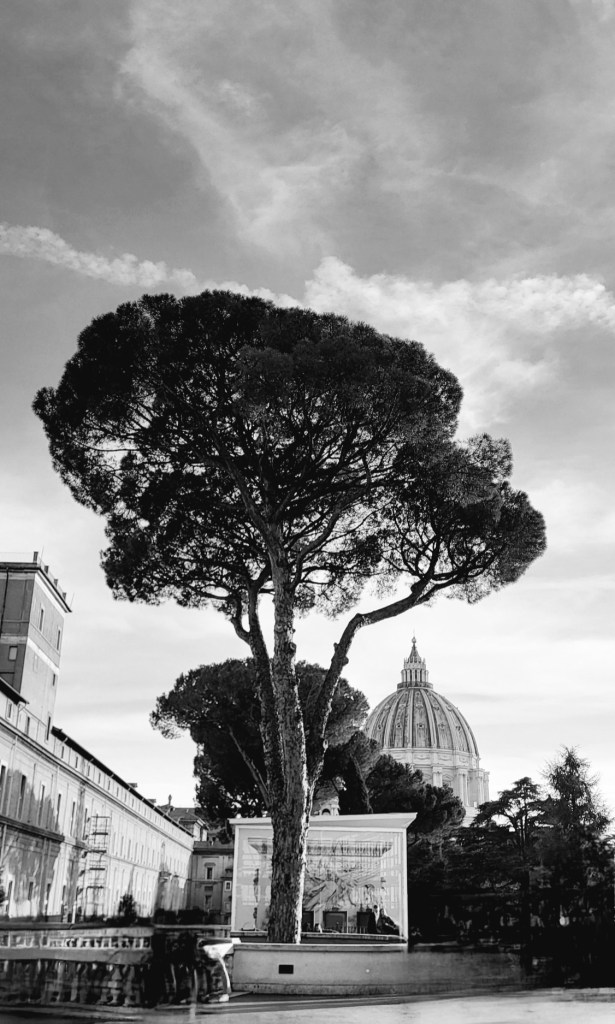
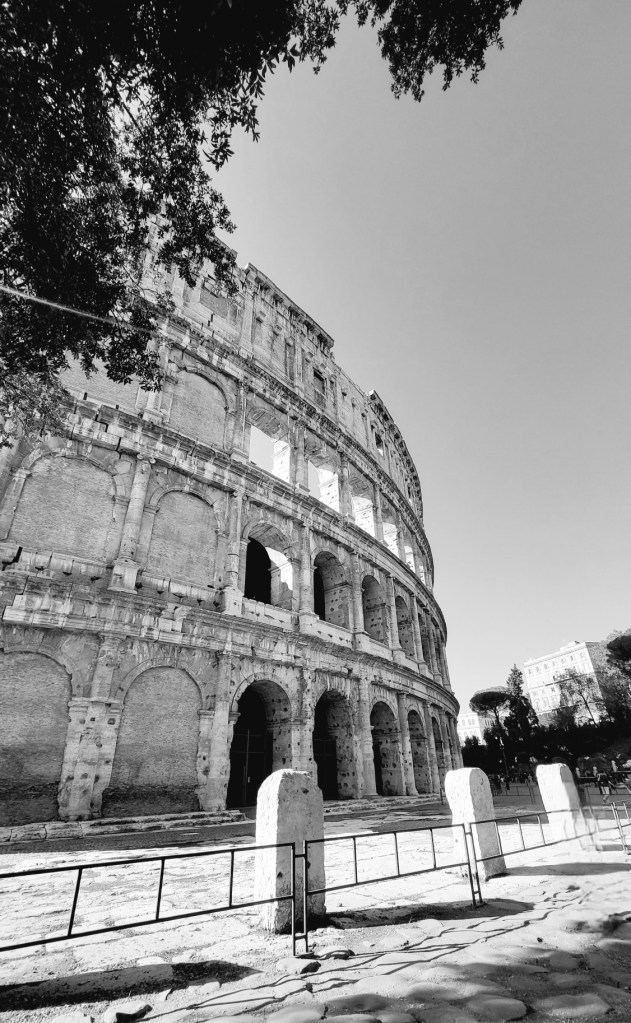
    There are cities you visit, and then there is Rome. To walk its ancient streets is to step into a time machine, where 2,000 years of history isn’t tucked away in museums—it simply is.

    And yet, it’s not the sheer age that makes Rome so wonderful; it’s the seamless blend of the monumental and the mundane.
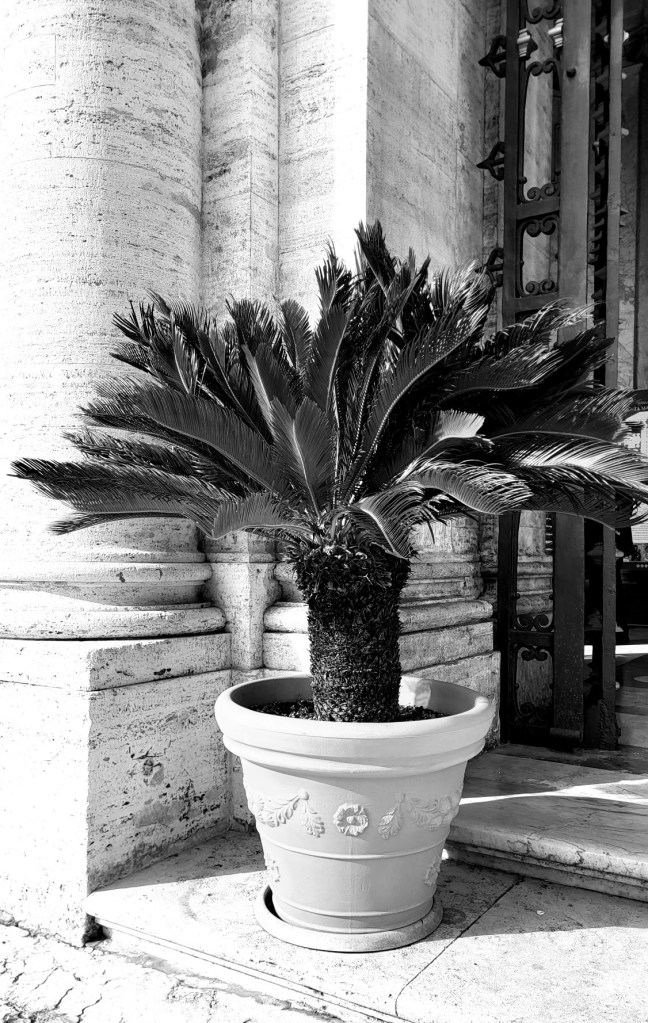
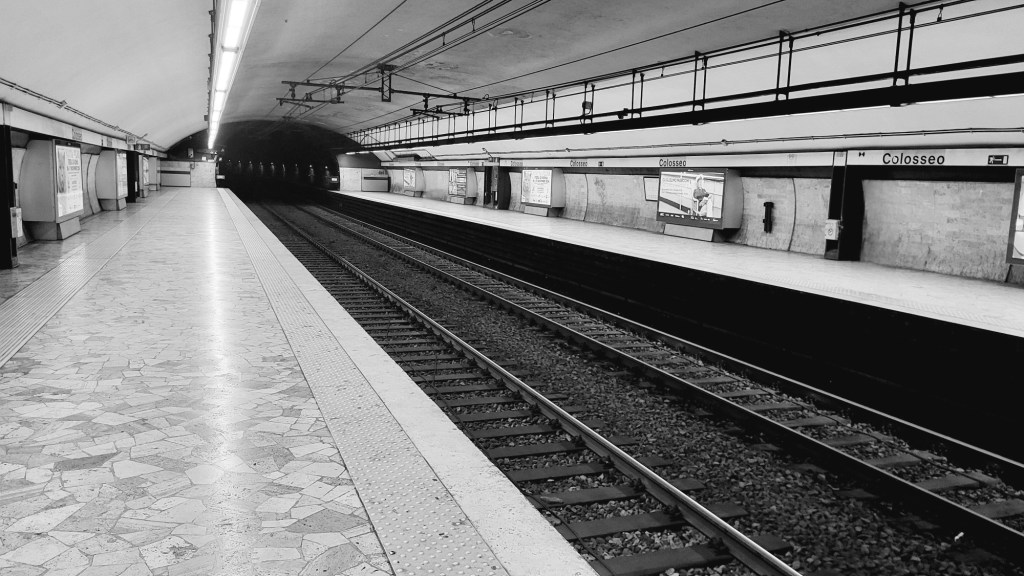
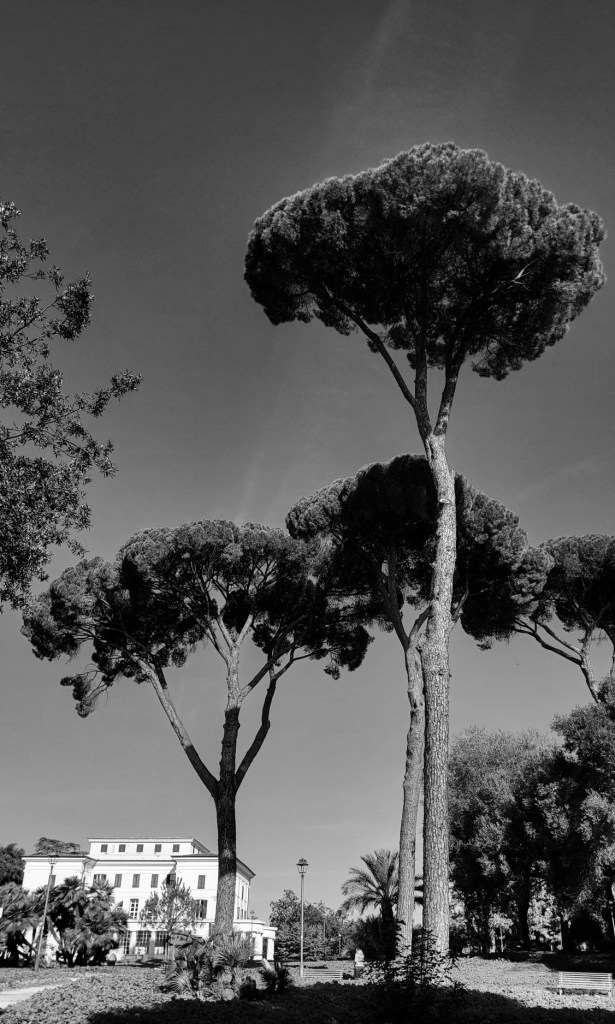
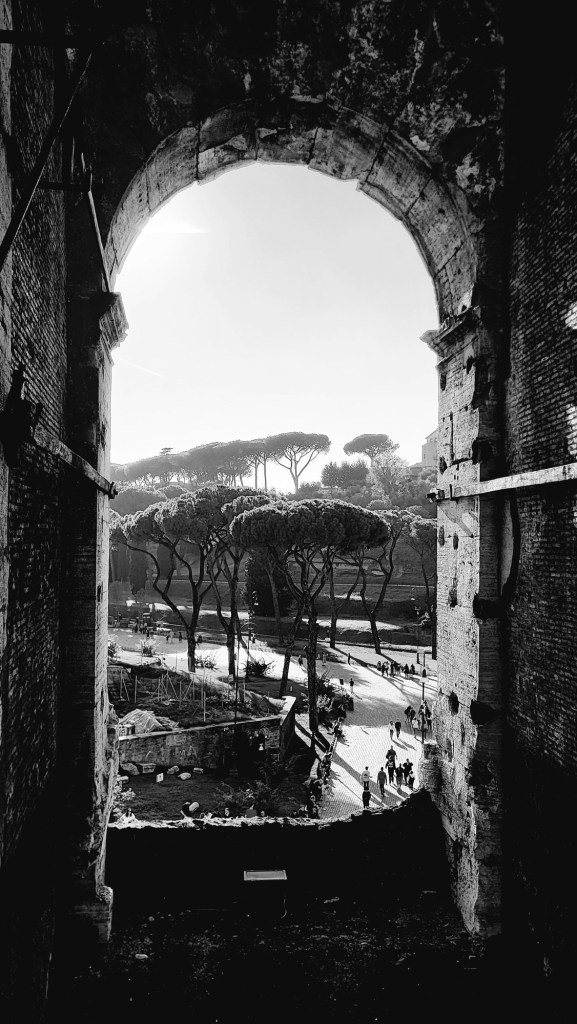
    In my recent trip, I chose to photograph the Eternal City in black and white, and the results revealed a profound truth: Rome’s beauty is inherent, stripped bare of the vibrant colours, it’s the texture, light, and form that tell the story.
    A Masterpiece in Monochome
    Imagine the scene:
    * The raw, weathered stone of the Colosseum or the Roman Forum, standing as a powerful, immutable silhouette against the sky.
    * The delicate play of light and shadow across a Baroque fountain, like the Trevi, transforming its rushing water into a shimmering, ethereal mist.
    * The contrast between a thousand-year-old pillar and the contemporary Roman sipping espresso at its base.
    Rome is an open-air museum, yes, but it’s also a living, breathing, bustling home. You can witness a laundry line strung between ancient buildings or see Vespa headlights carving streaks of light through a narrow alley in Trastevere.
    It’s in these contrasts—the immortal ruins juxtaposed with fleeting, everyday moments—that Rome truly works its magic. It is a city that reminds us that everything changes, yet the human spirit, and the beauty we create, can endure.
    Why Rome is Wonderful:
    * The Depth of Time: Every street corner holds a surprise, a piece of ancient art, or a fragment of a lost world.
    * The Food & Spirit: It is a city that insists you slow down, enjoy a simple, perfect cacio e pepe, and savour the moment.
    * The Unexpected Beauty: From grand basilicas to crumbling archways, grandeur is simply the backdrop to daily life.
    To look through my black and white photos is to see the soul of Rome—timeless, powerful, and utterly captivating. It’s a city that stays with you, long after you’ve left its cobblestones behind.

    If you find my photography or my writing inspiring and uplifting, consider supporting what I do. Buy me a coffee on Ko-fi.
    Your support makes a difference in my life and helps me create more of what you, and I, like. Thank you!
    Tap here for a list of 100 endangered animals and plants.

    100 endangered plant and animal species

    * Abies beshanzuensis (Baishan fir) – Plant (Tree) – Baishanzu Mountain, Zhejiang, China – Three mature individuals

    * Actinote zikani – Insect (butterfly) – Near São Paulo, Atlantic forest, Brazil – Unknown numbers

    * Aipysurus foliosquama (Leaf scaled sea-snake) – Reptile – Ashmore Reef and Hibernia Reef, Timor Sea – Unknown numbers * Amanipodagrion gilliesi (Amani flatwing) – Insect (damselfly) – Amani-Sigi Forest, Usamabara Mountains, Tanzania – < 500 individuals * Antisolabis seychellensis – Insect – Morne Blanc, Mahé island, Seychelles – Unknown numbers * Antilophia bokermanni (Araripe manakin) – Bird – Chapado do Araripe, South Ceará, Brazil – 779 individuals * Aphanius transgrediens (Aci Göl toothcarp) – Fish – south-eastern shore of former Lake Aci, Turkey – Few hundred pairs * Aproteles bulmerae (Bulmer’s fruit bat) – Mammal – Luplupwintern Cave, Western Province, Papua New Guinea – 150 * Ardea insignis (White bellied heron) – Bird – Bhutan, North East India and Myanmar – 70–400 individuals * Ardeotis nigriceps (Great Indian bustard) – Bird – Rajasthan, Gujarat, Maharashtra, Andhra Pradesh, Karnataka and Madhya, India – 50–249 mature individuals * Astrochelys yniphora (Ploughshare tortoise) – Reptile – Baly Bay region, northwestern Madagascar – 440–770 * Atelopus balios (Rio Pescado stubfoot toad) – Amphibian – Azuay, Cañar and Guyas provinces, south-western Ecuador – Unknown numbers * Aythya innotata (Madagascar pochard) – Bird – volcanic lakes north of Bealanana, Madagascar – 80 mature individuals * Azurina eupalama (Galapagos damsel fish) – Fish – Unknown numbers – Unknown numbers * Bahaba taipingensis (Giant yellow croaker) – Fish – Chinese coast from Yangtze River, China to Hong Kong – Unknown numbers * Batagur baska (Common batagur) – Reptile (turtle) – Bangladesh, Cambodia, India, Indonesia and Malaysia – Unknown numbers * Bazzania bhutanica – Plant – Budini and Lafeti Khola, Bhutan – 2 sub-populations * Beatragus hunteri (Hirola) – Mammal (antelope) – South-east Kenya and possibly south-west Somalia – < 1,000 individuals * Bombus franklini (Franklin’s bumblebee) – Insect (bee) – Oregon and California – Unknown numbers * Brachyteles hypoxanthus (Northern muriqui / Woolly spider monkey) – Mammal (primate) – Atlantic forest, south-eastern Brazil – < 1,000 * Bradypus pygmaeus (Pygmy three-toed sloth) – Mammal – Isla Escudo de Veraguas, Panama – < 500 * Callitriche pulchra – Plant (freshwater) – pool on Gavdos, Greece – Unknown numbers * Calumma tarzan (Tarzan’s chameleon) – Reptile – Anosibe An’Ala region, eastern Madagascar – < 100 * Cavia intermedia (Santa Catarina’s guinea pig) – Mammal (rodent) – Moleques do Sul Island, Santa Catarina, Brazil – 40–60 * Cercopithecus roloway (Roloway guenon) – Mammal (primate) – Côte d’Ivoire – Unknown numbers * Coleura seychellensis (Seychelles sheath-tailed bat) – Mammal (bat) – Two small caves on Silhouette and Mahé, Seychelles – < 100 * Cryptomyces maximus (Willow blister) – Fungi – Pembrokeshire, United Kingdom – Unknown numbers * Cryptotis nelsoni (Nelson’s small-eared shrew) – Mammal (shrew) – Volcán San Martín Tuxtla, Veracruz, Mexico – Unknown numbers * Cyclura collei (Jamaican iguana / Jamaican rock iguana) – Reptile – Hellshire Hills, Jamaica – Unknown numbers * Daubentonia madagascariensis (Aye-aye) – Mammal (primate) – Deciduous forest, East Madagascar – Unknown numbers * Dendrophylax fawcettii (Cayman Islands ghost orchid) – Plant (orchid) – Ironwood Forest, George Town, Grand Cayman – Unknown numbers * Dicerorhinus sumatrensis (Sumatran rhino) – Mammal (rhino) – Sabah, Sarawak and Peninsular Malaysia, Kalimantan and Sumatra, Indonesia – < 100 (more recent estimates suggest 34-47) * Diomedea amsterdamensis (Amsterdam albatross) – Bird – Breeds on Plateuau des Tourbières, Amsterdam Island, Indian Ocean. – 100 mature individuals * Dioscorea strydomiana (Wild yam) – Plant – Oshoek area, Mpumalanga, South Africa – 200 * Diospyros katendei – Plant (tree) – Kasyoha-Kitomi Forest Reserve, Uganda – 20 individuals in a single population * Dipterocarpus lamellatus – Plant (tree) – Siangau Forest Reserve, Sabah, Malaysia – 12 individuals * Discoglossus nigriventer (Hula painted frog) – Amphibian – Hula Valley, Israel – Unknown numbers * Dombeya mauritiana – Plant – Mauritius – Unknown numbers * Elaeocarpus bojeri (Bois Dentelle) – Plant (tree) – Grand Bassin, Mauritius – < 10 individuals * Eleutherodactylus glandulifer (La Hotte glanded frog) – Amphibian – Massif de la Hotte, Haiti – Unknown numbers * Eleutherodactylus thorectes (Macaya breast-spot frog) – Amphibian – Formon and Macaya peaks, Masif de la Hotte, Haiti – Unknown numbers * Eriosyce chilensis (Chilenito (cactus)) – Plant – Pta Molles and Pichidungui, Chile – < 500 individuals * Erythrina schliebenii (Coral tree) – Plant – Namatimbili-Ngarama Forest, Tanzania – < 50 individuals * Euphorbia tanaensis – Plant (tree) – Witu Forest Reserve, Kenya – 4 mature individuals * Eurynorhyncus pygmeus (Spoon-billed sandpiper) – Bird – Breeds in Russia, migrates along the East Asian-Australasian Flyway to wintering grounds in India, Bangladesh and Myanmar – 100 breeding pairs * Ficus katendei – Plant – Kasyoha-Kitomi Forest Reserve, Ishasha River, Uganda – < 50 mature individuals * Geronticus eremita (Northern bald ibis) – Bird – Breeds in Morocco, Turkey and Syria. Syrian population winters in central Ethiopia. – About 3000 individuals * Gigasiphon macrosiphon – Plant (flower) – Kaya Muhaka, Gongoni and Mrima Forest Reserves, Kenya, Amani Nature Reserve, West Kilombero Scarp Forest Reserve, and Kihansi Gorge, Tanzania – 33 * Gocea ohridana – Mollusc – Lake Ohrid, Macedonia – Unknown numbers * Heleophryne rosei (Table mountain ghost frog) – Amphibian – Table Mountain, Western Cape Province, South Africa – Unknown numbers * Hemicycla paeteliana – Mollusc (land snail) – Jandia peninsula, Fuerteventura, Canary Islands – Unknown numbers * Heteromirafa sidamoensis (Liben lark) – Bird – Liben Plains, southern Ethiopia – 90–256 * Hibiscadelphus woodii – Plant (tree) – Kalalau Valley, Hawaii – Unknown numbers * Hucho perryi (Sakhalin taimen) – Fish – Russian and Japanese rivers, Pacific Ocean between Russia and Japan – Unknown numbers * Johora singaporensis (Singapore freshwater crab) – Crustacean – Bukit Timah Nature Reserve and streamlet near Bukit Batok, Singapore – Unknown numbers * Lathyrus belinensis (Belin vetchling) – Plant – Outskirts of Belin village, Antalya, Turkey – < 1,000 * Leiopelma archeyi (Archey’s frog) – Amphibian – Coromandel peninsula and Whareorino Forest, New Zealand – Unknown numbers * Lithobates sevosus (Dusky gopher frog) – Amphibian – Harrison County, Mississippi, USA – 60–100 * Lophura edwardsi (Edwards’s pheasant) – Bird – Quang Binh, Quang Tri and Thua Thien-Hue, Viet Nam – Unknown numbers * Magnolia wolfii – Plant (tree) – Risaralda, Colombia – 3 * Margaritifera marocana – Mollusc – Oued Denna, Oued Abid and Oued Beth, Morocco – < 250 * Moominia willii – Mollusc (snail) – Silhouette Island, Seychelles – < 500 * Natalus primus (Cuban greater funnel eared bat) – Mammal (bat) – Cueva La Barca, Isle of Pines, Cuba – < 100 * Nepenthes attenboroughii (Attenborough’s pitcher plant) – Plant – Mount Victoria, Palawan, Philippines – Unknown numbers * Nomascus hainanus (Hainan black crested gibbon) – Mammal (primate) – Hainan Island, China – 20 * Neurergus kaiseri (Luristan newt) – Amphibian – Zagros Mountains, Lorestan, Iran – < 1,000 * Oreocnemis phoenix (Mulanje red damsel) – Insect (damselfly) – Mulanje Plateau, Malawi – Unknown numbers * Pangasius sanitwongsei (Pangasid catfish) – Fish – Chao Phraya and Mekong basins in Cambodia, China, Lao PDR, Thailand and Viet Nam – Unknown numbers * Parides burchellanus – Insect (butterfly) – Cerrado, Brazil – < 100 * Phocoena sinus (Vaquita) – Mammal (porpoise) – Northern Gulf of California, Mexico – 12 * Picea neoveitchii (Type of spruce tree) – Plant (tree) – Qinling Range, China – Unknown numbers * Pinus squamata (Qiaojia pine) – Plant (tree) – Qiaojia, Yunnan, China – < 25 * Poecilotheria metallica (Gooty tarantula / Metallic tarantula / Peacock tarantula / Salepurgu) – Spider – Nandyal and Giddalur, Andhra Pradesh, India – Unknown numbers * Pomarea whitneyi (Fatuhiva monarch) – Bird – Fatu Hiva, Marquesas Islands, French Polynesia – 50 * Pristis pristis (Common sawfish) – Fish – Coastal tropical and subtropical waters of Indo-Pacific and Atlantic Oceans. Currently largely restricted to northern Australia – Unknown numbers * Hapalemur simus (Greater bamboo lemur) – Mammal (primate) – Southeastern and southcentral rainforests of Madagascar – 500 * Propithecus candidus (Silky sifaka) – Mammal (primate) – Maroantsetra to Andapa basin, and Marojeju Massif, Madagascar – 100–1,000 * Psammobates geometricus (Geometric tortoise) – Reptile – Western Cape Province, South Africa – Unknown numbers * Pseudoryx nghetinhensis (Saola) – Mammal – Annamite mountains, on the Viet Nam – PDR Laos border – Unknown numbers * Psiadia cataractae – Plant – Mauritius – Unknown numbers * Psorodonotus ebneri (Beydaglari bush-cricket) – Insect – Beydaglari range, Antalaya, Turkey – Unknown numbers * Rafetus swinhoei (Red River giant softshell turtle) – Reptile – Hoan Kiem Lake and Dong Mo Lake, Viet Nam, and Suzhou Zoo, China – 3 * Rhinoceros sondaicus (Javan rhino) – Mammal (rhino) – Ujung Kulon National Park, Java, Indonesia – < 100 * Rhinopithecus avunculus (Tonkin snub-nosed monkey) – Mammal (primate) – Northeastern Vietnam – < 200 * Rhizanthella gardneri (West Australian underground orchid) – Plant (orchid) – Western Australia, Australia – < 100 * Rhynchocyon spp. (Boni giant sengi) – Mammal – Boni-Dodori Forest, Lamu area, Kenya – Unknown numbers * Risiocnemis seidenschwarzi (Cebu frill-wing) – Insect (damselfly) – Rivulet beside the Kawasan River, Cebu, Philippines – Unknown numbers * Rosa arabica – Plant – St Katherine Mountains, Egypt – Unknown numbers, 10 sub-populations * Salanoia durrelli (Durrell’s vontsira) – Mammal (mongoose) – Marshes of Lake Alaotra, Madagascar – Unknown numbers * Santamartamys rufodorsalis (Red crested tree rat) – Mammal (rodent) – Sierra Nevada de Santa Marta, Colombia – Unknown numbers * Scaturiginichthys vermeilipinnis (Red-finned blue-eye) – Fish – Edgbaston Station, central western Queensland, Australia – 2,000–4,000 * Squatina squatina (Angel shark) – Fish – Canary Islands – Unknown numbers * Sterna bernsteini (Chinese crested tern) – Bird – Breeding in Zhejiang and Fujian, China. Outside breeding season in Indonesia, Malaysia, Philippines, Taiwan, Thailand. – < 50 * Syngnathus watermeyeri (Estuarine pipefish) – Fish – Kariega Estuary to East Kleinemonde Estuary, Eastern Cape Province, South Africa – Unknown numbers * Tahina spectabilis (Suicide palm / Dimaka) – Plant – Analalava district, north-western Madagascar – 90 * Telmatobufo bullocki (Bullock’s false toad) – Amphibian (frog) – Nahuelbuta, Arauco Province, Chile – Unknown numbers * Tokudaia muenninki (Okinawa spiny rat) – Mammal (rodent) – Okinawa Island, Japan – Unknown numbers * Trigonostigma somphongsi (Somphongs’s rasbora) – Fish – Mae Khlong basin, Thailand – Unknown numbers * Valencia letourneuxi – Fish – Southern Albania and Western Greece – Unknown numbers * Voanioala gerardii (Forest coconut) – Plant – Masoala peninsula, Madagascar – < 10 * Zaglossus attenboroughi (Attenborough’s echidna) – Mammal – Cyclops Mountains, Papua Province, Indonesia – Unknown numbers
    Tap to view my redbubble gallery.
  • Animal collage

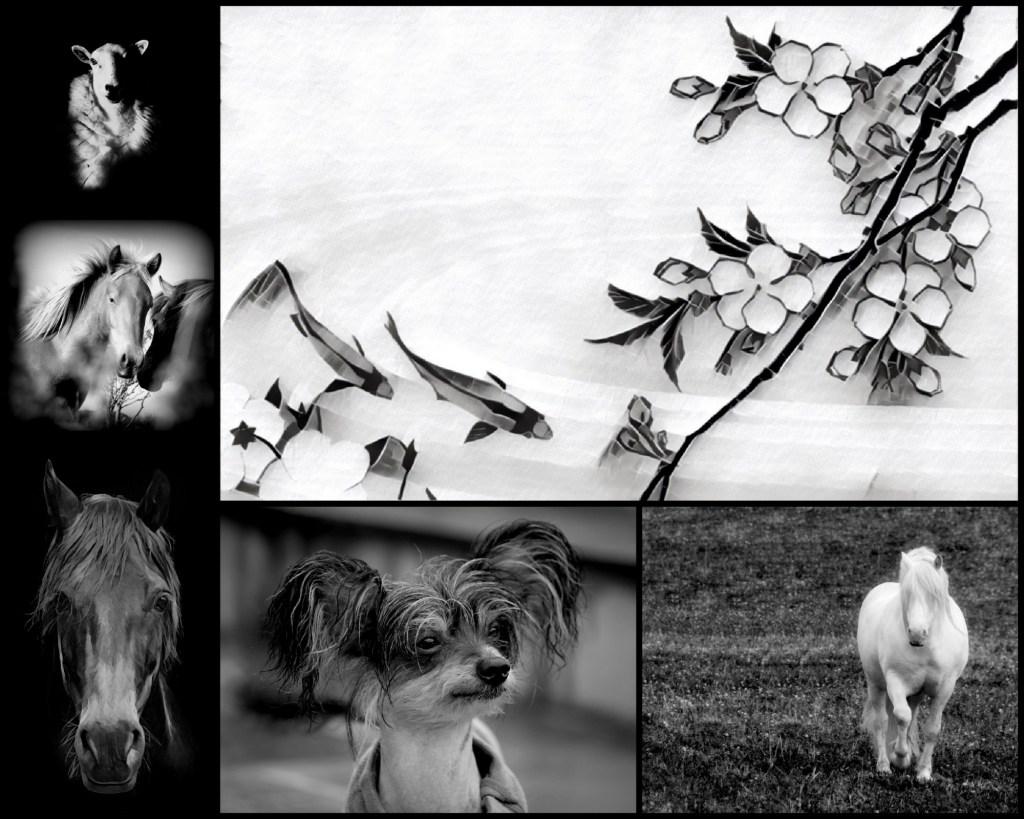
    Animal collage

    Dark frames hold the light,
    Art and nature meet the eye,
    One world in black-white.

    Animal collage


    Young Sheep’s Gaze
    Soft wool against dark,
    Eyes reflect the gentle light,
    A silent white form.

    Noble Pair
    Heads touch in the shade,
    Secret shared in flowing manes,
    Trust in the long night.

    Horse Portrait
    Mane sweeps wide and wild,
    Gazing out with steady eye,
    Power held in check.

    Crested Companion
    Ears like silky wings,
    Mouth upturned in quiet thought,
    Watchman on the ground.

    Porcelain Blossoms
    Branch curves, stark and black,
    Petals cut from purest white,
    Spring light starts to bloom.

    Twin Koi Flow
    Dark shapes slice the stream,
    Moving with a silent grace,
    Water holds their dance.

    White Field Horse
    Coat gleams, clean and bright,
    Standing still on velvet green,
    Wind blows through the field.


    If you find my photography or my writing inspiring and uplifting, consider supporting what I do. Buy me a coffee on Ko-fi.
    Your support makes a difference in my life and helps me create more of what you, and I, like. Thank you!
    Tap here for a list of 100 endangered animals and plants.

    100 endangered plant and animal species

    * Abies beshanzuensis (Baishan fir) – Plant (Tree) – Baishanzu Mountain, Zhejiang, China – Three mature individuals

    * Actinote zikani – Insect (butterfly) – Near São Paulo, Atlantic forest, Brazil – Unknown numbers

    * Aipysurus foliosquama (Leaf scaled sea-snake) – Reptile – Ashmore Reef and Hibernia Reef, Timor Sea – Unknown numbers * Amanipodagrion gilliesi (Amani flatwing) – Insect (damselfly) – Amani-Sigi Forest, Usamabara Mountains, Tanzania – < 500 individuals * Antisolabis seychellensis – Insect – Morne Blanc, Mahé island, Seychelles – Unknown numbers * Antilophia bokermanni (Araripe manakin) – Bird – Chapado do Araripe, South Ceará, Brazil – 779 individuals * Aphanius transgrediens (Aci Göl toothcarp) – Fish – south-eastern shore of former Lake Aci, Turkey – Few hundred pairs * Aproteles bulmerae (Bulmer’s fruit bat) – Mammal – Luplupwintern Cave, Western Province, Papua New Guinea – 150 * Ardea insignis (White bellied heron) – Bird – Bhutan, North East India and Myanmar – 70–400 individuals * Ardeotis nigriceps (Great Indian bustard) – Bird – Rajasthan, Gujarat, Maharashtra, Andhra Pradesh, Karnataka and Madhya, India – 50–249 mature individuals * Astrochelys yniphora (Ploughshare tortoise) – Reptile – Baly Bay region, northwestern Madagascar – 440–770 * Atelopus balios (Rio Pescado stubfoot toad) – Amphibian – Azuay, Cañar and Guyas provinces, south-western Ecuador – Unknown numbers * Aythya innotata (Madagascar pochard) – Bird – volcanic lakes north of Bealanana, Madagascar – 80 mature individuals * Azurina eupalama (Galapagos damsel fish) – Fish – Unknown numbers – Unknown numbers * Bahaba taipingensis (Giant yellow croaker) – Fish – Chinese coast from Yangtze River, China to Hong Kong – Unknown numbers * Batagur baska (Common batagur) – Reptile (turtle) – Bangladesh, Cambodia, India, Indonesia and Malaysia – Unknown numbers * Bazzania bhutanica – Plant – Budini and Lafeti Khola, Bhutan – 2 sub-populations * Beatragus hunteri (Hirola) – Mammal (antelope) – South-east Kenya and possibly south-west Somalia – < 1,000 individuals * Bombus franklini (Franklin’s bumblebee) – Insect (bee) – Oregon and California – Unknown numbers * Brachyteles hypoxanthus (Northern muriqui / Woolly spider monkey) – Mammal (primate) – Atlantic forest, south-eastern Brazil – < 1,000 * Bradypus pygmaeus (Pygmy three-toed sloth) – Mammal – Isla Escudo de Veraguas, Panama – < 500 * Callitriche pulchra – Plant (freshwater) – pool on Gavdos, Greece – Unknown numbers * Calumma tarzan (Tarzan’s chameleon) – Reptile – Anosibe An’Ala region, eastern Madagascar – < 100 * Cavia intermedia (Santa Catarina’s guinea pig) – Mammal (rodent) – Moleques do Sul Island, Santa Catarina, Brazil – 40–60 * Cercopithecus roloway (Roloway guenon) – Mammal (primate) – Côte d’Ivoire – Unknown numbers * Coleura seychellensis (Seychelles sheath-tailed bat) – Mammal (bat) – Two small caves on Silhouette and Mahé, Seychelles – < 100 * Cryptomyces maximus (Willow blister) – Fungi – Pembrokeshire, United Kingdom – Unknown numbers * Cryptotis nelsoni (Nelson’s small-eared shrew) – Mammal (shrew) – Volcán San Martín Tuxtla, Veracruz, Mexico – Unknown numbers * Cyclura collei (Jamaican iguana / Jamaican rock iguana) – Reptile – Hellshire Hills, Jamaica – Unknown numbers * Daubentonia madagascariensis (Aye-aye) – Mammal (primate) – Deciduous forest, East Madagascar – Unknown numbers * Dendrophylax fawcettii (Cayman Islands ghost orchid) – Plant (orchid) – Ironwood Forest, George Town, Grand Cayman – Unknown numbers * Dicerorhinus sumatrensis (Sumatran rhino) – Mammal (rhino) – Sabah, Sarawak and Peninsular Malaysia, Kalimantan and Sumatra, Indonesia – < 100 (more recent estimates suggest 34-47) * Diomedea amsterdamensis (Amsterdam albatross) – Bird – Breeds on Plateuau des Tourbières, Amsterdam Island, Indian Ocean. – 100 mature individuals * Dioscorea strydomiana (Wild yam) – Plant – Oshoek area, Mpumalanga, South Africa – 200 * Diospyros katendei – Plant (tree) – Kasyoha-Kitomi Forest Reserve, Uganda – 20 individuals in a single population * Dipterocarpus lamellatus – Plant (tree) – Siangau Forest Reserve, Sabah, Malaysia – 12 individuals * Discoglossus nigriventer (Hula painted frog) – Amphibian – Hula Valley, Israel – Unknown numbers * Dombeya mauritiana – Plant – Mauritius – Unknown numbers * Elaeocarpus bojeri (Bois Dentelle) – Plant (tree) – Grand Bassin, Mauritius – < 10 individuals * Eleutherodactylus glandulifer (La Hotte glanded frog) – Amphibian – Massif de la Hotte, Haiti – Unknown numbers * Eleutherodactylus thorectes (Macaya breast-spot frog) – Amphibian – Formon and Macaya peaks, Masif de la Hotte, Haiti – Unknown numbers * Eriosyce chilensis (Chilenito (cactus)) – Plant – Pta Molles and Pichidungui, Chile – < 500 individuals * Erythrina schliebenii (Coral tree) – Plant – Namatimbili-Ngarama Forest, Tanzania – < 50 individuals * Euphorbia tanaensis – Plant (tree) – Witu Forest Reserve, Kenya – 4 mature individuals * Eurynorhyncus pygmeus (Spoon-billed sandpiper) – Bird – Breeds in Russia, migrates along the East Asian-Australasian Flyway to wintering grounds in India, Bangladesh and Myanmar – 100 breeding pairs * Ficus katendei – Plant – Kasyoha-Kitomi Forest Reserve, Ishasha River, Uganda – < 50 mature individuals * Geronticus eremita (Northern bald ibis) – Bird – Breeds in Morocco, Turkey and Syria. Syrian population winters in central Ethiopia. – About 3000 individuals * Gigasiphon macrosiphon – Plant (flower) – Kaya Muhaka, Gongoni and Mrima Forest Reserves, Kenya, Amani Nature Reserve, West Kilombero Scarp Forest Reserve, and Kihansi Gorge, Tanzania – 33 * Gocea ohridana – Mollusc – Lake Ohrid, Macedonia – Unknown numbers * Heleophryne rosei (Table mountain ghost frog) – Amphibian – Table Mountain, Western Cape Province, South Africa – Unknown numbers * Hemicycla paeteliana – Mollusc (land snail) – Jandia peninsula, Fuerteventura, Canary Islands – Unknown numbers * Heteromirafa sidamoensis (Liben lark) – Bird – Liben Plains, southern Ethiopia – 90–256 * Hibiscadelphus woodii – Plant (tree) – Kalalau Valley, Hawaii – Unknown numbers * Hucho perryi (Sakhalin taimen) – Fish – Russian and Japanese rivers, Pacific Ocean between Russia and Japan – Unknown numbers * Johora singaporensis (Singapore freshwater crab) – Crustacean – Bukit Timah Nature Reserve and streamlet near Bukit Batok, Singapore – Unknown numbers * Lathyrus belinensis (Belin vetchling) – Plant – Outskirts of Belin village, Antalya, Turkey – < 1,000 * Leiopelma archeyi (Archey’s frog) – Amphibian – Coromandel peninsula and Whareorino Forest, New Zealand – Unknown numbers * Lithobates sevosus (Dusky gopher frog) – Amphibian – Harrison County, Mississippi, USA – 60–100 * Lophura edwardsi (Edwards’s pheasant) – Bird – Quang Binh, Quang Tri and Thua Thien-Hue, Viet Nam – Unknown numbers * Magnolia wolfii – Plant (tree) – Risaralda, Colombia – 3 * Margaritifera marocana – Mollusc – Oued Denna, Oued Abid and Oued Beth, Morocco – < 250 * Moominia willii – Mollusc (snail) – Silhouette Island, Seychelles – < 500 * Natalus primus (Cuban greater funnel eared bat) – Mammal (bat) – Cueva La Barca, Isle of Pines, Cuba – < 100 * Nepenthes attenboroughii (Attenborough’s pitcher plant) – Plant – Mount Victoria, Palawan, Philippines – Unknown numbers * Nomascus hainanus (Hainan black crested gibbon) – Mammal (primate) – Hainan Island, China – 20 * Neurergus kaiseri (Luristan newt) – Amphibian – Zagros Mountains, Lorestan, Iran – < 1,000 * Oreocnemis phoenix (Mulanje red damsel) – Insect (damselfly) – Mulanje Plateau, Malawi – Unknown numbers * Pangasius sanitwongsei (Pangasid catfish) – Fish – Chao Phraya and Mekong basins in Cambodia, China, Lao PDR, Thailand and Viet Nam – Unknown numbers * Parides burchellanus – Insect (butterfly) – Cerrado, Brazil – < 100 * Phocoena sinus (Vaquita) – Mammal (porpoise) – Northern Gulf of California, Mexico – 12 * Picea neoveitchii (Type of spruce tree) – Plant (tree) – Qinling Range, China – Unknown numbers * Pinus squamata (Qiaojia pine) – Plant (tree) – Qiaojia, Yunnan, China – < 25 * Poecilotheria metallica (Gooty tarantula / Metallic tarantula / Peacock tarantula / Salepurgu) – Spider – Nandyal and Giddalur, Andhra Pradesh, India – Unknown numbers * Pomarea whitneyi (Fatuhiva monarch) – Bird – Fatu Hiva, Marquesas Islands, French Polynesia – 50 * Pristis pristis (Common sawfish) – Fish – Coastal tropical and subtropical waters of Indo-Pacific and Atlantic Oceans. Currently largely restricted to northern Australia – Unknown numbers * Hapalemur simus (Greater bamboo lemur) – Mammal (primate) – Southeastern and southcentral rainforests of Madagascar – 500 * Propithecus candidus (Silky sifaka) – Mammal (primate) – Maroantsetra to Andapa basin, and Marojeju Massif, Madagascar – 100–1,000 * Psammobates geometricus (Geometric tortoise) – Reptile – Western Cape Province, South Africa – Unknown numbers * Pseudoryx nghetinhensis (Saola) – Mammal – Annamite mountains, on the Viet Nam – PDR Laos border – Unknown numbers * Psiadia cataractae – Plant – Mauritius – Unknown numbers * Psorodonotus ebneri (Beydaglari bush-cricket) – Insect – Beydaglari range, Antalaya, Turkey – Unknown numbers * Rafetus swinhoei (Red River giant softshell turtle) – Reptile – Hoan Kiem Lake and Dong Mo Lake, Viet Nam, and Suzhou Zoo, China – 3 * Rhinoceros sondaicus (Javan rhino) – Mammal (rhino) – Ujung Kulon National Park, Java, Indonesia – < 100 * Rhinopithecus avunculus (Tonkin snub-nosed monkey) – Mammal (primate) – Northeastern Vietnam – < 200 * Rhizanthella gardneri (West Australian underground orchid) – Plant (orchid) – Western Australia, Australia – < 100 * Rhynchocyon spp. (Boni giant sengi) – Mammal – Boni-Dodori Forest, Lamu area, Kenya – Unknown numbers * Risiocnemis seidenschwarzi (Cebu frill-wing) – Insect (damselfly) – Rivulet beside the Kawasan River, Cebu, Philippines – Unknown numbers * Rosa arabica – Plant – St Katherine Mountains, Egypt – Unknown numbers, 10 sub-populations * Salanoia durrelli (Durrell’s vontsira) – Mammal (mongoose) – Marshes of Lake Alaotra, Madagascar – Unknown numbers * Santamartamys rufodorsalis (Red crested tree rat) – Mammal (rodent) – Sierra Nevada de Santa Marta, Colombia – Unknown numbers * Scaturiginichthys vermeilipinnis (Red-finned blue-eye) – Fish – Edgbaston Station, central western Queensland, Australia – 2,000–4,000 * Squatina squatina (Angel shark) – Fish – Canary Islands – Unknown numbers * Sterna bernsteini (Chinese crested tern) – Bird – Breeding in Zhejiang and Fujian, China. Outside breeding season in Indonesia, Malaysia, Philippines, Taiwan, Thailand. – < 50 * Syngnathus watermeyeri (Estuarine pipefish) – Fish – Kariega Estuary to East Kleinemonde Estuary, Eastern Cape Province, South Africa – Unknown numbers * Tahina spectabilis (Suicide palm / Dimaka) – Plant – Analalava district, north-western Madagascar – 90 * Telmatobufo bullocki (Bullock’s false toad) – Amphibian (frog) – Nahuelbuta, Arauco Province, Chile – Unknown numbers * Tokudaia muenninki (Okinawa spiny rat) – Mammal (rodent) – Okinawa Island, Japan – Unknown numbers * Trigonostigma somphongsi (Somphongs’s rasbora) – Fish – Mae Khlong basin, Thailand – Unknown numbers * Valencia letourneuxi – Fish – Southern Albania and Western Greece – Unknown numbers * Voanioala gerardii (Forest coconut) – Plant – Masoala peninsula, Madagascar – < 10 * Zaglossus attenboroughi (Attenborough’s echidna) – Mammal – Cyclops Mountains, Papua Province, Indonesia – Unknown numbers

    Tap to view my redbubble gallery.
  • Into the Breathing Forest

    Into the Breathing Forest

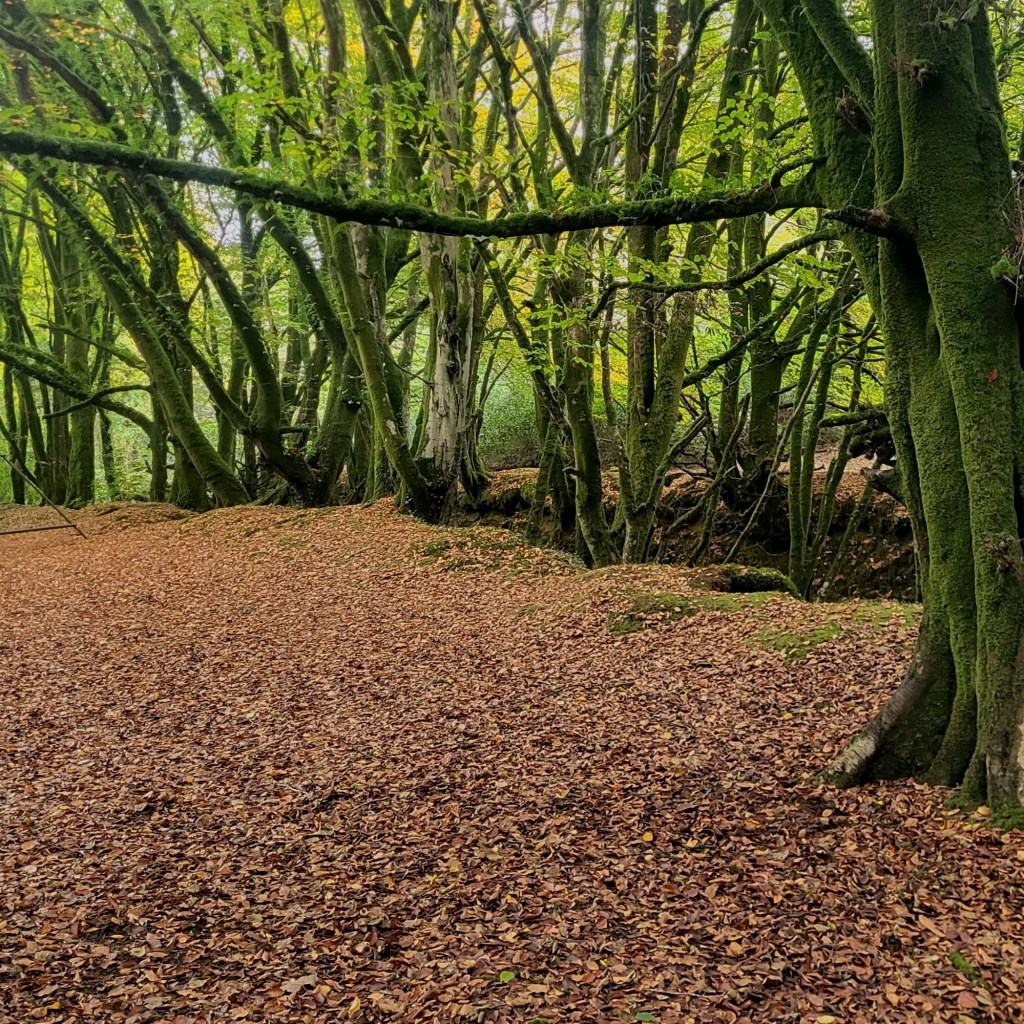
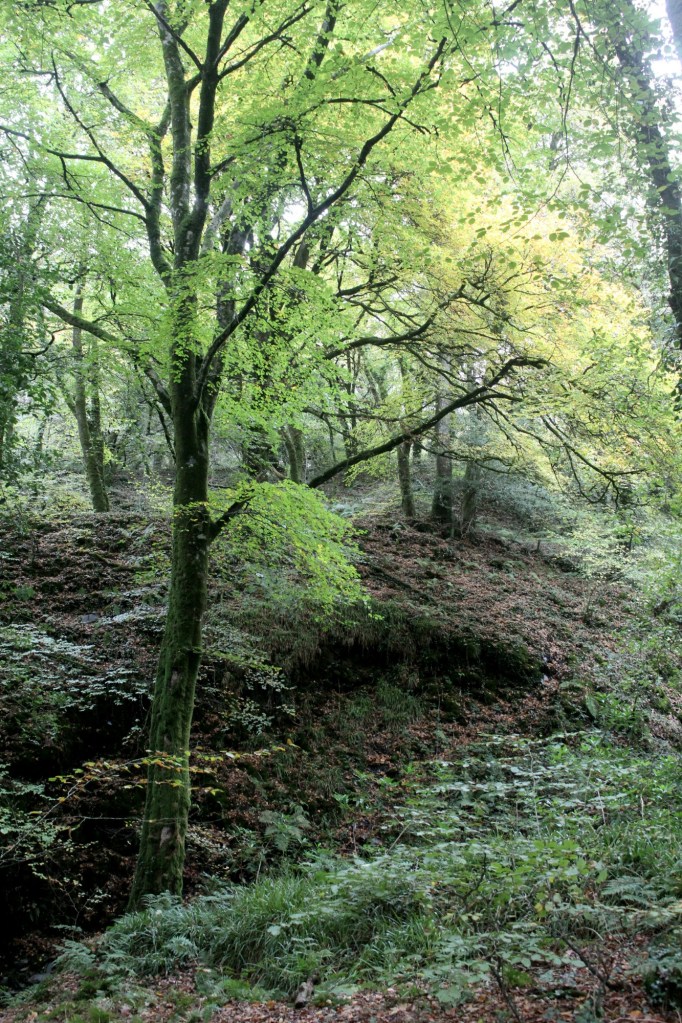
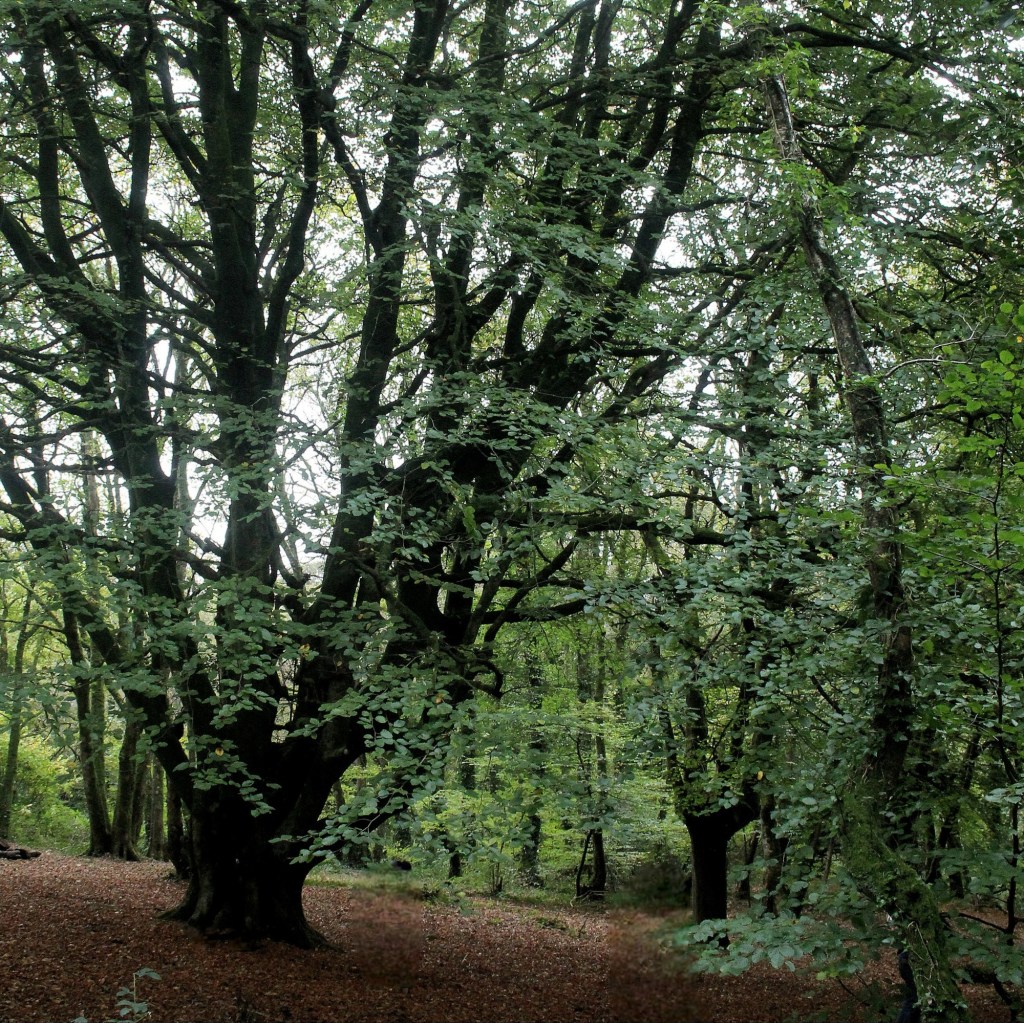
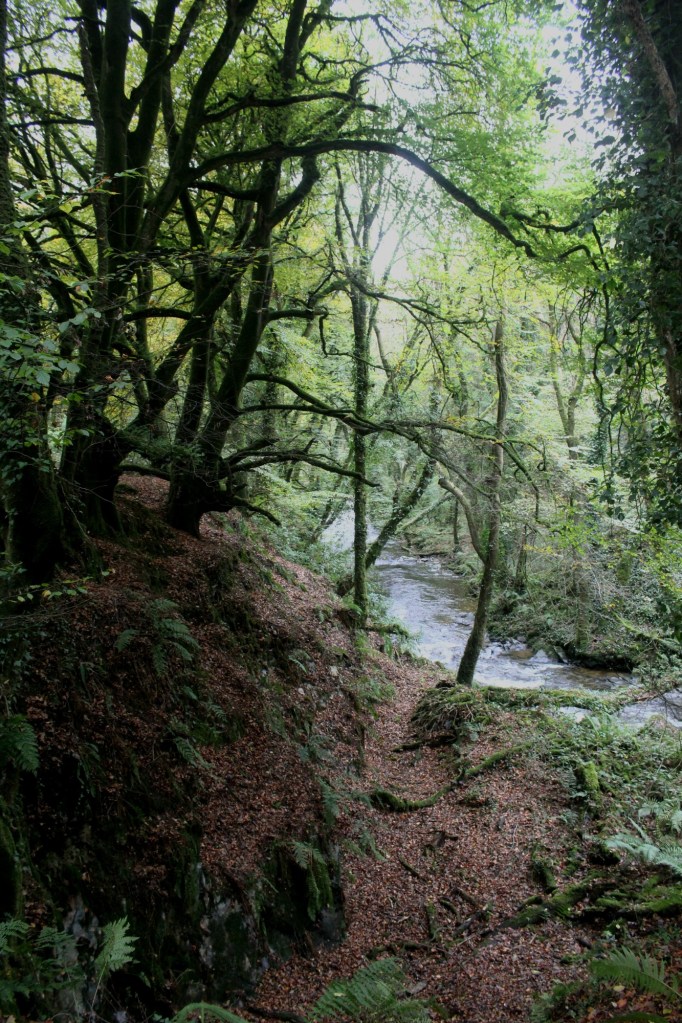
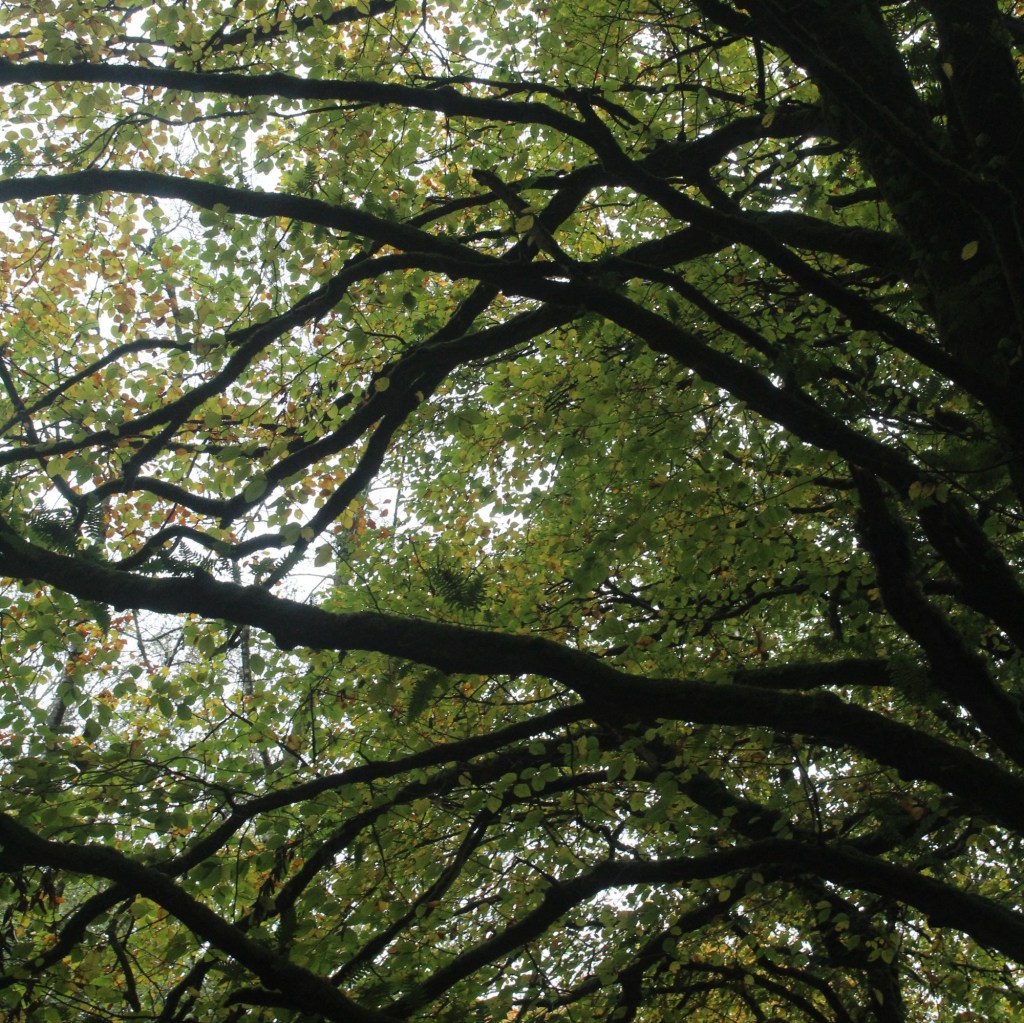
    The woods inhale. Slowly, deeply. Each leaf a lung, each branch an artery of light.

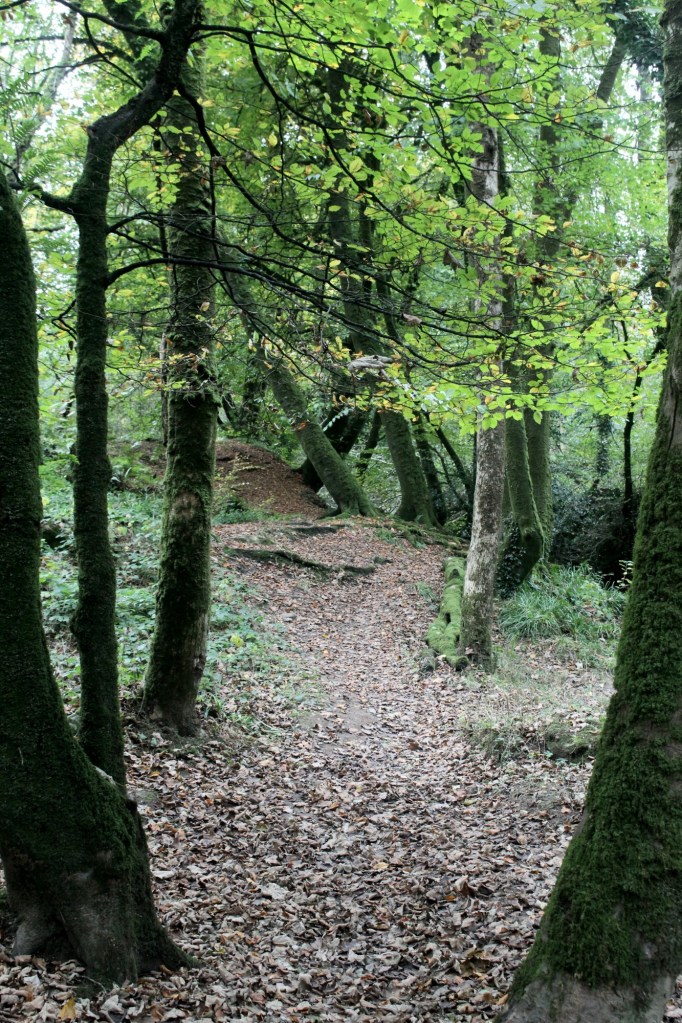
    Step by step, the path unfolds—not beneath feet, but through the mind. The crunch of amber leaves speaks in whispers: “transformation, transformation”. What was green becomes gold becomes earth. The cycle turns, horizon meeting horizon, the forest crossing itself in patterns older than names.


    Touch the bark—cool, ridged, alive. The tree holds memory in its rings, seasons stacked like heartbeats. Moss cushions the northern side, soft as thought, damp as morning. The air moves crisp against skin, carrying secrets: the musk of decay, the sharp sweetness of pine, the mineral breath of soil awakening to its work.


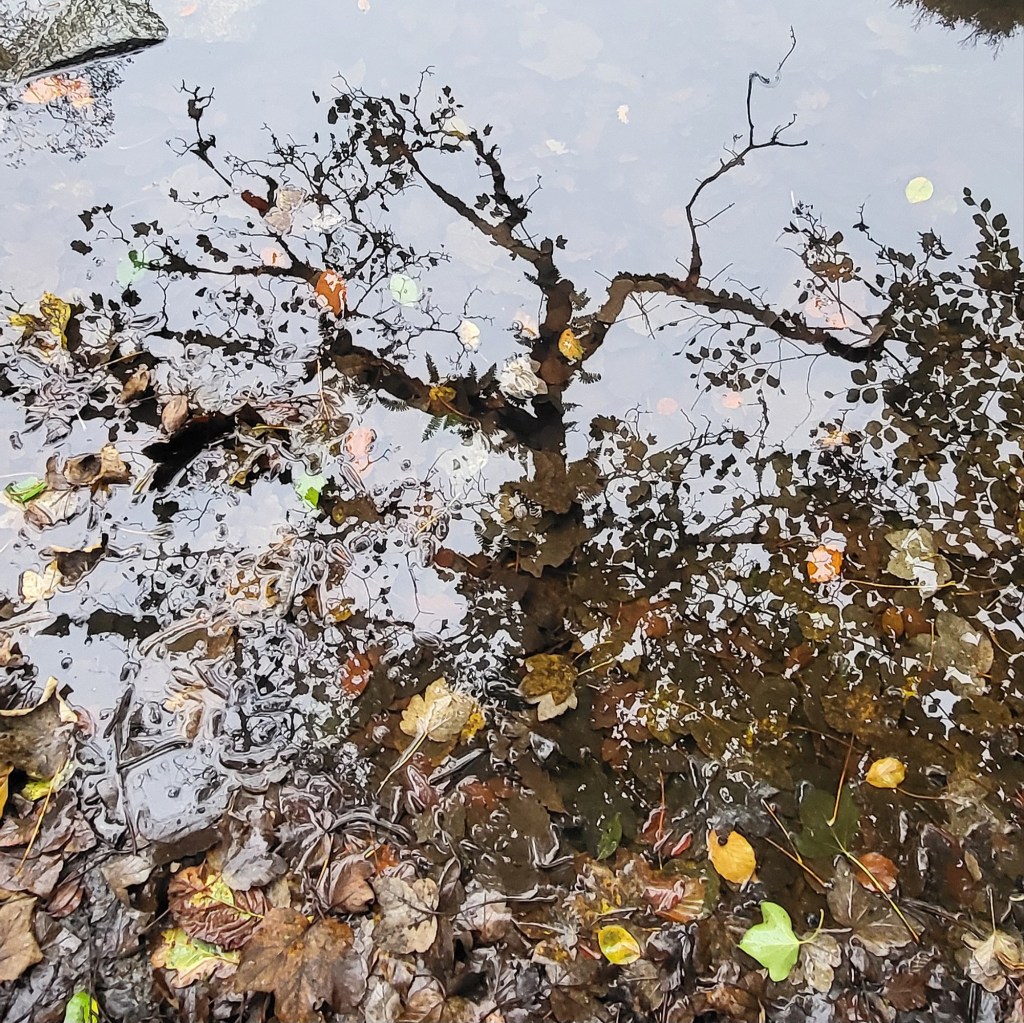
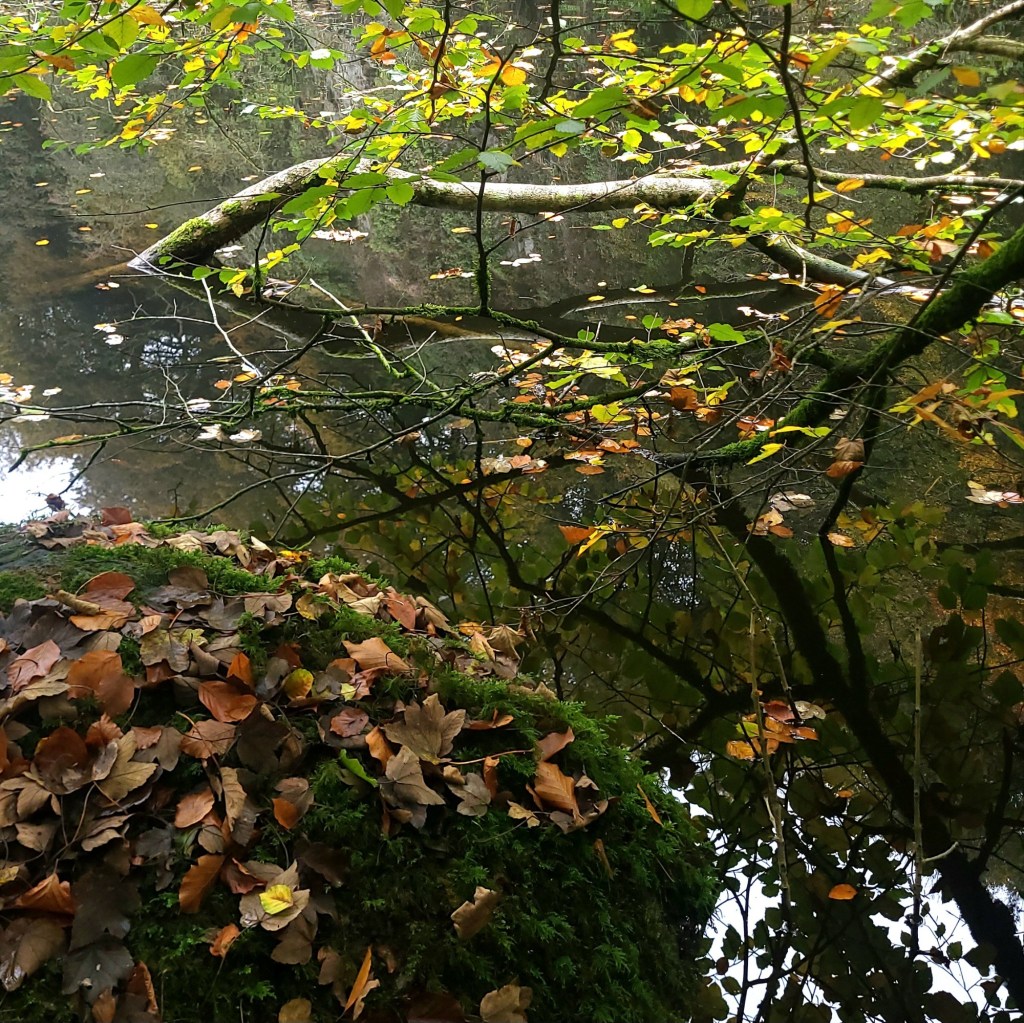
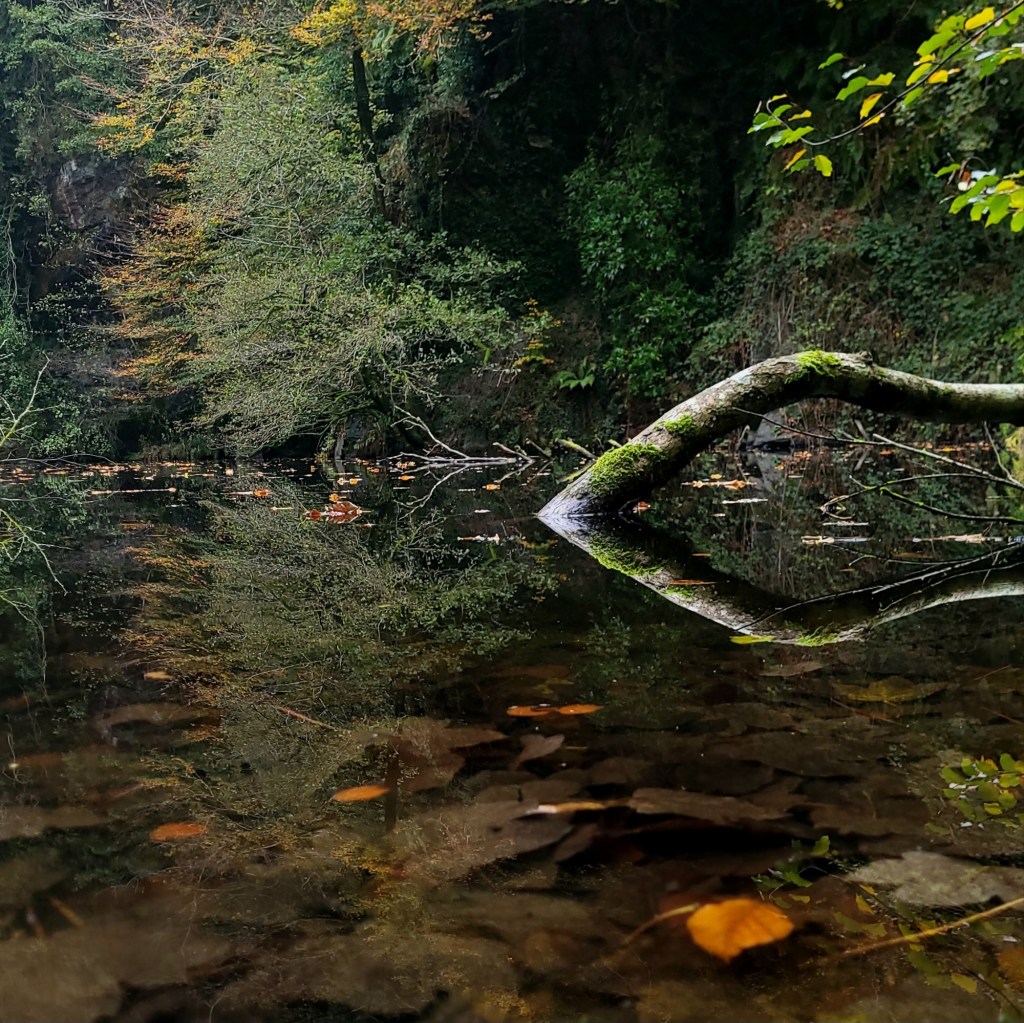
    There, in the still pool, the forest contemplates itself. Trees lean down to meet their reflections, the boundary between earth and water dissolving. Sky trapped in mud. The axis flips—which world is real? Both. Neither. The forest mind reflects the forest heart.


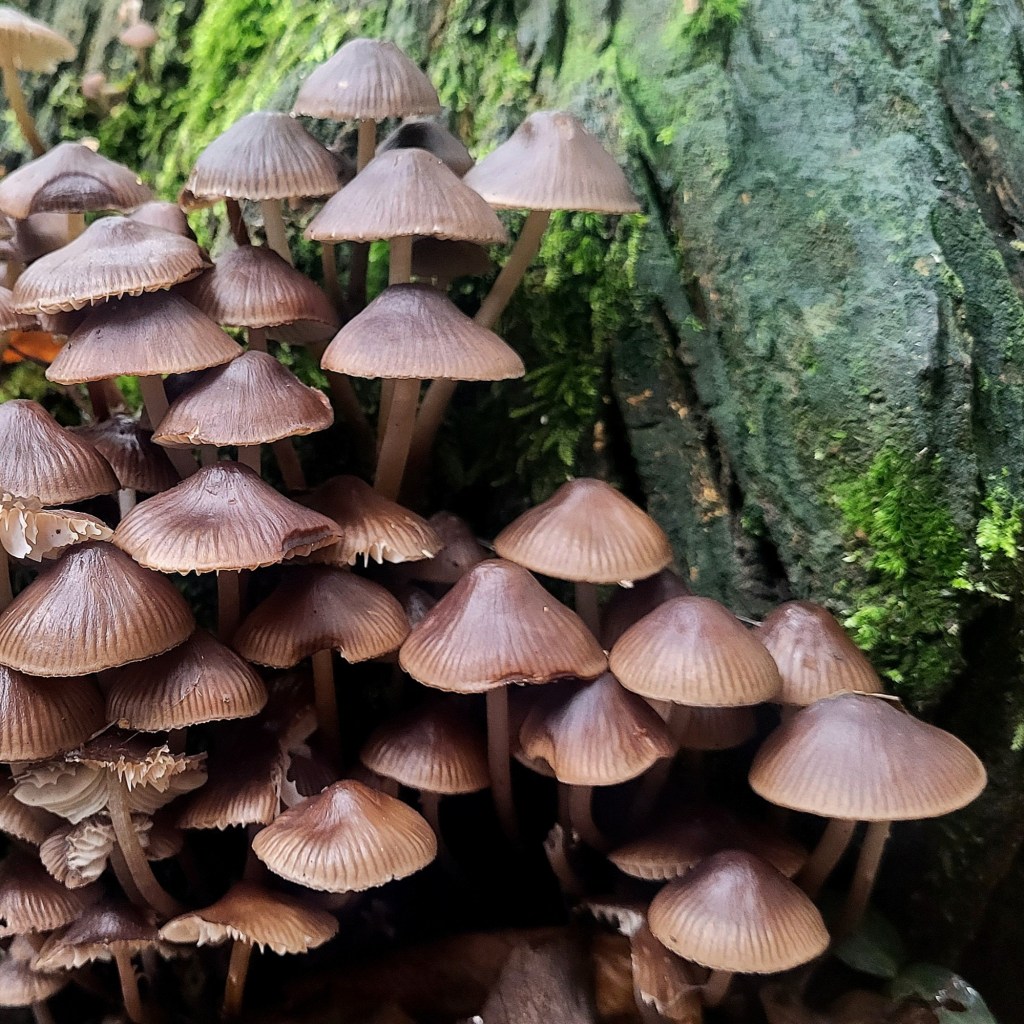
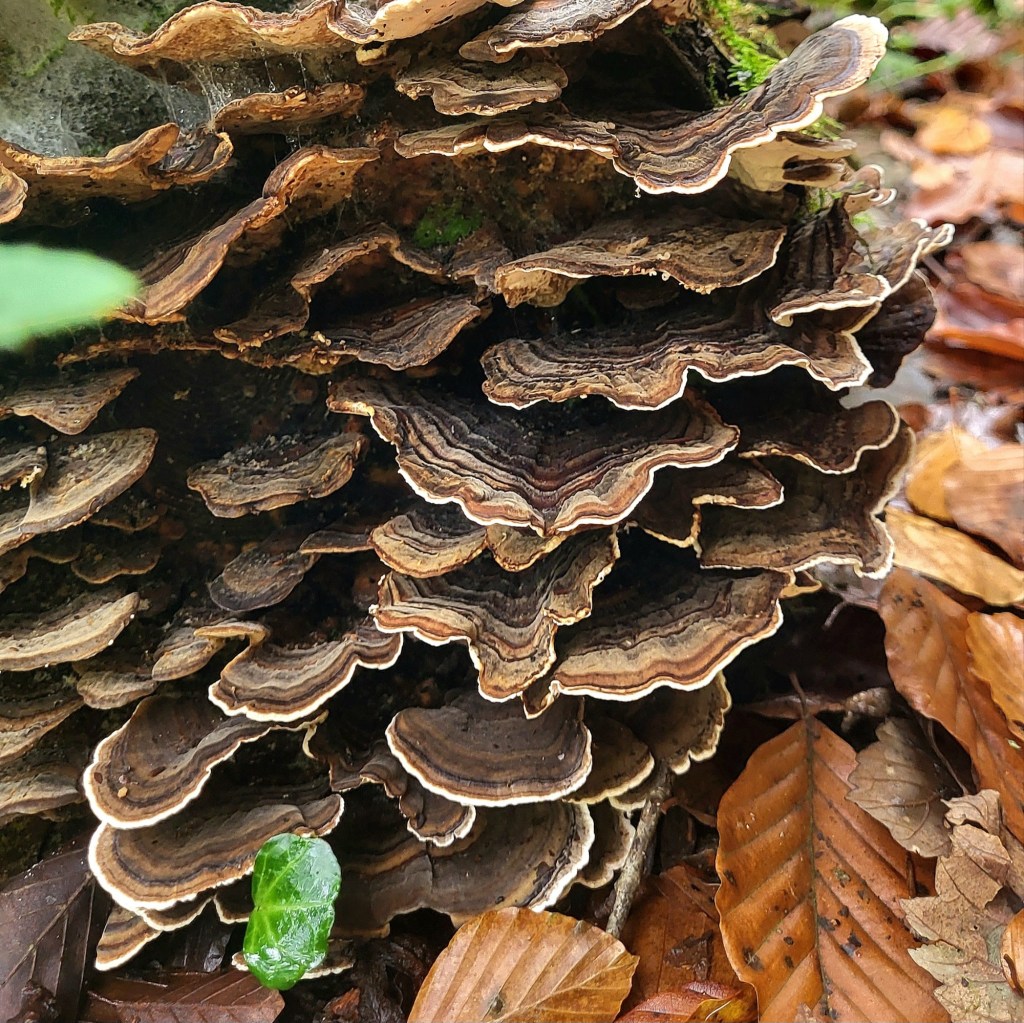
    And here: fungi bloom like thoughts made solid. They are the forest’s silent machinery, the power beneath beauty, translating death into tomorrow. Delicate as moonlight, strong as hunger, they remind us that darkness feeds the light. Every shadow contains its own illumination.


    The wind rustles—not through leaves, but through understanding. Nature’s great work continues, patient and relentless. Stand still. Listen. The woods are showing you the difference between today and tomorrow: one breath, one transformation, one step deeper into the beautiful, breathing mind of autumn.


    If you find my photography or my writing inspiring and uplifting, consider supporting what I do. Buy me a coffee on Ko-fi.
    Your support makes a difference in my life and helps me create more of what you, and I, like. Thank you!
    Tap here for a list of 100 endangered animals and plants.

    100 endangered plant and animal species

    * Abies beshanzuensis (Baishan fir) – Plant (Tree) – Baishanzu Mountain, Zhejiang, China – Three mature individuals

    * Actinote zikani – Insect (butterfly) – Near São Paulo, Atlantic forest, Brazil – Unknown numbers

    * Aipysurus foliosquama (Leaf scaled sea-snake) – Reptile – Ashmore Reef and Hibernia Reef, Timor Sea – Unknown numbers * Amanipodagrion gilliesi (Amani flatwing) – Insect (damselfly) – Amani-Sigi Forest, Usamabara Mountains, Tanzania – < 500 individuals * Antisolabis seychellensis – Insect – Morne Blanc, Mahé island, Seychelles – Unknown numbers * Antilophia bokermanni (Araripe manakin) – Bird – Chapado do Araripe, South Ceará, Brazil – 779 individuals * Aphanius transgrediens (Aci Göl toothcarp) – Fish – south-eastern shore of former Lake Aci, Turkey – Few hundred pairs * Aproteles bulmerae (Bulmer’s fruit bat) – Mammal – Luplupwintern Cave, Western Province, Papua New Guinea – 150 * Ardea insignis (White bellied heron) – Bird – Bhutan, North East India and Myanmar – 70–400 individuals * Ardeotis nigriceps (Great Indian bustard) – Bird – Rajasthan, Gujarat, Maharashtra, Andhra Pradesh, Karnataka and Madhya, India – 50–249 mature individuals * Astrochelys yniphora (Ploughshare tortoise) – Reptile – Baly Bay region, northwestern Madagascar – 440–770 * Atelopus balios (Rio Pescado stubfoot toad) – Amphibian – Azuay, Cañar and Guyas provinces, south-western Ecuador – Unknown numbers * Aythya innotata (Madagascar pochard) – Bird – volcanic lakes north of Bealanana, Madagascar – 80 mature individuals * Azurina eupalama (Galapagos damsel fish) – Fish – Unknown numbers – Unknown numbers * Bahaba taipingensis (Giant yellow croaker) – Fish – Chinese coast from Yangtze River, China to Hong Kong – Unknown numbers * Batagur baska (Common batagur) – Reptile (turtle) – Bangladesh, Cambodia, India, Indonesia and Malaysia – Unknown numbers * Bazzania bhutanica – Plant – Budini and Lafeti Khola, Bhutan – 2 sub-populations * Beatragus hunteri (Hirola) – Mammal (antelope) – South-east Kenya and possibly south-west Somalia – < 1,000 individuals * Bombus franklini (Franklin’s bumblebee) – Insect (bee) – Oregon and California – Unknown numbers * Brachyteles hypoxanthus (Northern muriqui / Woolly spider monkey) – Mammal (primate) – Atlantic forest, south-eastern Brazil – < 1,000 * Bradypus pygmaeus (Pygmy three-toed sloth) – Mammal – Isla Escudo de Veraguas, Panama – < 500 * Callitriche pulchra – Plant (freshwater) – pool on Gavdos, Greece – Unknown numbers * Calumma tarzan (Tarzan’s chameleon) – Reptile – Anosibe An’Ala region, eastern Madagascar – < 100 * Cavia intermedia (Santa Catarina’s guinea pig) – Mammal (rodent) – Moleques do Sul Island, Santa Catarina, Brazil – 40–60 * Cercopithecus roloway (Roloway guenon) – Mammal (primate) – Côte d’Ivoire – Unknown numbers * Coleura seychellensis (Seychelles sheath-tailed bat) – Mammal (bat) – Two small caves on Silhouette and Mahé, Seychelles – < 100 * Cryptomyces maximus (Willow blister) – Fungi – Pembrokeshire, United Kingdom – Unknown numbers * Cryptotis nelsoni (Nelson’s small-eared shrew) – Mammal (shrew) – Volcán San Martín Tuxtla, Veracruz, Mexico – Unknown numbers * Cyclura collei (Jamaican iguana / Jamaican rock iguana) – Reptile – Hellshire Hills, Jamaica – Unknown numbers * Daubentonia madagascariensis (Aye-aye) – Mammal (primate) – Deciduous forest, East Madagascar – Unknown numbers * Dendrophylax fawcettii (Cayman Islands ghost orchid) – Plant (orchid) – Ironwood Forest, George Town, Grand Cayman – Unknown numbers * Dicerorhinus sumatrensis (Sumatran rhino) – Mammal (rhino) – Sabah, Sarawak and Peninsular Malaysia, Kalimantan and Sumatra, Indonesia – < 100 (more recent estimates suggest 34-47) * Diomedea amsterdamensis (Amsterdam albatross) – Bird – Breeds on Plateuau des Tourbières, Amsterdam Island, Indian Ocean. – 100 mature individuals * Dioscorea strydomiana (Wild yam) – Plant – Oshoek area, Mpumalanga, South Africa – 200 * Diospyros katendei – Plant (tree) – Kasyoha-Kitomi Forest Reserve, Uganda – 20 individuals in a single population * Dipterocarpus lamellatus – Plant (tree) – Siangau Forest Reserve, Sabah, Malaysia – 12 individuals * Discoglossus nigriventer (Hula painted frog) – Amphibian – Hula Valley, Israel – Unknown numbers * Dombeya mauritiana – Plant – Mauritius – Unknown numbers * Elaeocarpus bojeri (Bois Dentelle) – Plant (tree) – Grand Bassin, Mauritius – < 10 individuals * Eleutherodactylus glandulifer (La Hotte glanded frog) – Amphibian – Massif de la Hotte, Haiti – Unknown numbers * Eleutherodactylus thorectes (Macaya breast-spot frog) – Amphibian – Formon and Macaya peaks, Masif de la Hotte, Haiti – Unknown numbers * Eriosyce chilensis (Chilenito (cactus)) – Plant – Pta Molles and Pichidungui, Chile – < 500 individuals * Erythrina schliebenii (Coral tree) – Plant – Namatimbili-Ngarama Forest, Tanzania – < 50 individuals * Euphorbia tanaensis – Plant (tree) – Witu Forest Reserve, Kenya – 4 mature individuals * Eurynorhyncus pygmeus (Spoon-billed sandpiper) – Bird – Breeds in Russia, migrates along the East Asian-Australasian Flyway to wintering grounds in India, Bangladesh and Myanmar – 100 breeding pairs * Ficus katendei – Plant – Kasyoha-Kitomi Forest Reserve, Ishasha River, Uganda – < 50 mature individuals * Geronticus eremita (Northern bald ibis) – Bird – Breeds in Morocco, Turkey and Syria. Syrian population winters in central Ethiopia. – About 3000 individuals * Gigasiphon macrosiphon – Plant (flower) – Kaya Muhaka, Gongoni and Mrima Forest Reserves, Kenya, Amani Nature Reserve, West Kilombero Scarp Forest Reserve, and Kihansi Gorge, Tanzania – 33 * Gocea ohridana – Mollusc – Lake Ohrid, Macedonia – Unknown numbers * Heleophryne rosei (Table mountain ghost frog) – Amphibian – Table Mountain, Western Cape Province, South Africa – Unknown numbers * Hemicycla paeteliana – Mollusc (land snail) – Jandia peninsula, Fuerteventura, Canary Islands – Unknown numbers * Heteromirafa sidamoensis (Liben lark) – Bird – Liben Plains, southern Ethiopia – 90–256 * Hibiscadelphus woodii – Plant (tree) – Kalalau Valley, Hawaii – Unknown numbers * Hucho perryi (Sakhalin taimen) – Fish – Russian and Japanese rivers, Pacific Ocean between Russia and Japan – Unknown numbers * Johora singaporensis (Singapore freshwater crab) – Crustacean – Bukit Timah Nature Reserve and streamlet near Bukit Batok, Singapore – Unknown numbers * Lathyrus belinensis (Belin vetchling) – Plant – Outskirts of Belin village, Antalya, Turkey – < 1,000 * Leiopelma archeyi (Archey’s frog) – Amphibian – Coromandel peninsula and Whareorino Forest, New Zealand – Unknown numbers * Lithobates sevosus (Dusky gopher frog) – Amphibian – Harrison County, Mississippi, USA – 60–100 * Lophura edwardsi (Edwards’s pheasant) – Bird – Quang Binh, Quang Tri and Thua Thien-Hue, Viet Nam – Unknown numbers * Magnolia wolfii – Plant (tree) – Risaralda, Colombia – 3 * Margaritifera marocana – Mollusc – Oued Denna, Oued Abid and Oued Beth, Morocco – < 250 * Moominia willii – Mollusc (snail) – Silhouette Island, Seychelles – < 500 * Natalus primus (Cuban greater funnel eared bat) – Mammal (bat) – Cueva La Barca, Isle of Pines, Cuba – < 100 * Nepenthes attenboroughii (Attenborough’s pitcher plant) – Plant – Mount Victoria, Palawan, Philippines – Unknown numbers * Nomascus hainanus (Hainan black crested gibbon) – Mammal (primate) – Hainan Island, China – 20 * Neurergus kaiseri (Luristan newt) – Amphibian – Zagros Mountains, Lorestan, Iran – < 1,000 * Oreocnemis phoenix (Mulanje red damsel) – Insect (damselfly) – Mulanje Plateau, Malawi – Unknown numbers * Pangasius sanitwongsei (Pangasid catfish) – Fish – Chao Phraya and Mekong basins in Cambodia, China, Lao PDR, Thailand and Viet Nam – Unknown numbers * Parides burchellanus – Insect (butterfly) – Cerrado, Brazil – < 100 * Phocoena sinus (Vaquita) – Mammal (porpoise) – Northern Gulf of California, Mexico – 12 * Picea neoveitchii (Type of spruce tree) – Plant (tree) – Qinling Range, China – Unknown numbers * Pinus squamata (Qiaojia pine) – Plant (tree) – Qiaojia, Yunnan, China – < 25 * Poecilotheria metallica (Gooty tarantula / Metallic tarantula / Peacock tarantula / Salepurgu) – Spider – Nandyal and Giddalur, Andhra Pradesh, India – Unknown numbers * Pomarea whitneyi (Fatuhiva monarch) – Bird – Fatu Hiva, Marquesas Islands, French Polynesia – 50 * Pristis pristis (Common sawfish) – Fish – Coastal tropical and subtropical waters of Indo-Pacific and Atlantic Oceans. Currently largely restricted to northern Australia – Unknown numbers * Hapalemur simus (Greater bamboo lemur) – Mammal (primate) – Southeastern and southcentral rainforests of Madagascar – 500 * Propithecus candidus (Silky sifaka) – Mammal (primate) – Maroantsetra to Andapa basin, and Marojeju Massif, Madagascar – 100–1,000 * Psammobates geometricus (Geometric tortoise) – Reptile – Western Cape Province, South Africa – Unknown numbers * Pseudoryx nghetinhensis (Saola) – Mammal – Annamite mountains, on the Viet Nam – PDR Laos border – Unknown numbers * Psiadia cataractae – Plant – Mauritius – Unknown numbers * Psorodonotus ebneri (Beydaglari bush-cricket) – Insect – Beydaglari range, Antalaya, Turkey – Unknown numbers * Rafetus swinhoei (Red River giant softshell turtle) – Reptile – Hoan Kiem Lake and Dong Mo Lake, Viet Nam, and Suzhou Zoo, China – 3 * Rhinoceros sondaicus (Javan rhino) – Mammal (rhino) – Ujung Kulon National Park, Java, Indonesia – < 100 * Rhinopithecus avunculus (Tonkin snub-nosed monkey) – Mammal (primate) – Northeastern Vietnam – < 200 * Rhizanthella gardneri (West Australian underground orchid) – Plant (orchid) – Western Australia, Australia – < 100 * Rhynchocyon spp. (Boni giant sengi) – Mammal – Boni-Dodori Forest, Lamu area, Kenya – Unknown numbers * Risiocnemis seidenschwarzi (Cebu frill-wing) – Insect (damselfly) – Rivulet beside the Kawasan River, Cebu, Philippines – Unknown numbers * Rosa arabica – Plant – St Katherine Mountains, Egypt – Unknown numbers, 10 sub-populations * Salanoia durrelli (Durrell’s vontsira) – Mammal (mongoose) – Marshes of Lake Alaotra, Madagascar – Unknown numbers * Santamartamys rufodorsalis (Red crested tree rat) – Mammal (rodent) – Sierra Nevada de Santa Marta, Colombia – Unknown numbers * Scaturiginichthys vermeilipinnis (Red-finned blue-eye) – Fish – Edgbaston Station, central western Queensland, Australia – 2,000–4,000 * Squatina squatina (Angel shark) – Fish – Canary Islands – Unknown numbers * Sterna bernsteini (Chinese crested tern) – Bird – Breeding in Zhejiang and Fujian, China. Outside breeding season in Indonesia, Malaysia, Philippines, Taiwan, Thailand. – < 50 * Syngnathus watermeyeri (Estuarine pipefish) – Fish – Kariega Estuary to East Kleinemonde Estuary, Eastern Cape Province, South Africa – Unknown numbers * Tahina spectabilis (Suicide palm / Dimaka) – Plant – Analalava district, north-western Madagascar – 90 * Telmatobufo bullocki (Bullock’s false toad) – Amphibian (frog) – Nahuelbuta, Arauco Province, Chile – Unknown numbers * Tokudaia muenninki (Okinawa spiny rat) – Mammal (rodent) – Okinawa Island, Japan – Unknown numbers * Trigonostigma somphongsi (Somphongs’s rasbora) – Fish – Mae Khlong basin, Thailand – Unknown numbers * Valencia letourneuxi – Fish – Southern Albania and Western Greece – Unknown numbers * Voanioala gerardii (Forest coconut) – Plant – Masoala peninsula, Madagascar – < 10 * Zaglossus attenboroughi (Attenborough’s echidna) – Mammal – Cyclops Mountains, Papua Province, Indonesia – Unknown numbers

    Tap to view my redbubble gallery.
  • 🌿The Hart’s Tongue Fern: A Garden Gem with a Secret History

    🌿The Hart’s Tongue Fern: A Garden Gem with a Secret History

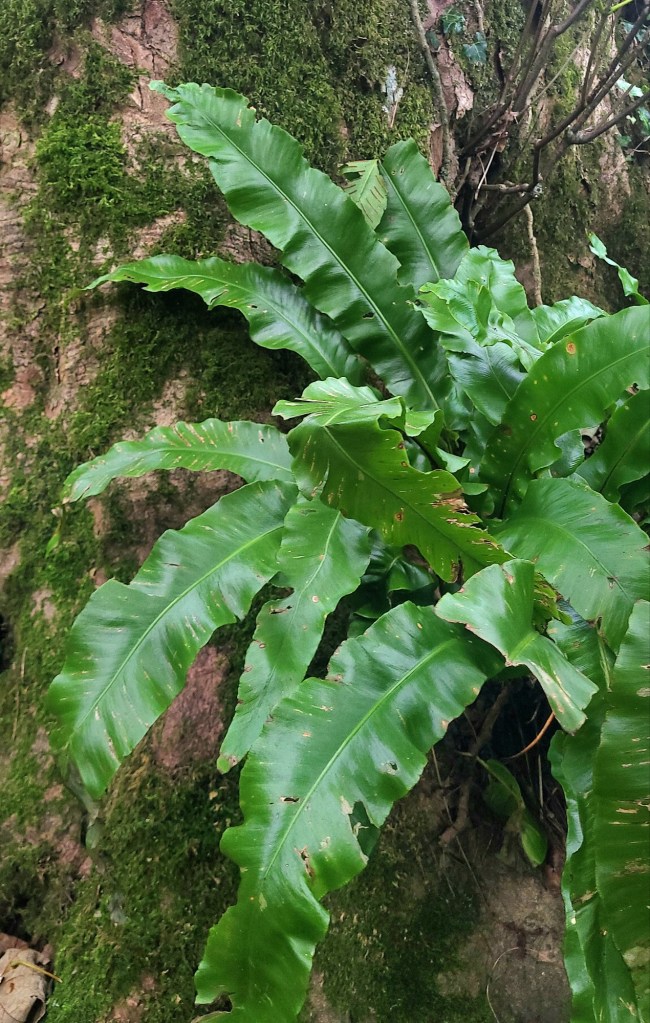
    Step into the world of ferns, and you’ll quickly discover a family of plants renowned for their delicate, often feathery fronds. But then, you’ll meet the Hart’s Tongue Fern (Asplenium scolopendrium), and all your preconceived notions might just get delightfully upended! This isn’t your average fern, and its story is as compelling as its unique appearance.

    Hart's Tongue Fern (Asplenium scolopendrium)
    Nature’s beauty

    A Frond Like No Other
    Imagine a fern without the typical lacy leaves. Instead, the Hart’s Tongue Fern boasts long, strap-shaped, glossy, and undivided fronds that unfurl from a central crown. This bold, architectural form instantly sets it apart. It’s believed that these distinctive fronds resemble the tongue of a ‘hart’ – an old term for a male red deer – hence its charming common name.


    And for those who love a peek behind the botanical curtain, its scientific name, scolopendrium, hints at another intriguing detail: the neat, parallel lines of its spore cases on the underside of the fronds are said to resemble the legs of a centipede!


    A Dash of Ancient Wisdom: The Doctrine of Signatures
    Beyond its captivating looks, the Hart’s Tongue Fern carries traces of ancient beliefs. In medieval times, a fascinating concept known as the Doctrine of Signatures guided herbalists. This idea proposed that a plant’s appearance offered clues to its healing properties. Given its distinctive tongue-shaped fronds, it’s not hard to imagine how this fern would have caught the eye of early herbalists seeking natural remedies. It speaks to a time when humans deeply observed and interpreted the natural world around them.

    Hart's Tongue Fern (Asplenium scolopendrium),

    From Wild Woodland to Elegant Garden
    While you might spot the European variety thriving in damp, shady woodlands or tucked into the mossy crevices of old stone walls, the Hart’s Tongue Fern is an absolute star in the garden.


    Why gardeners adore it:
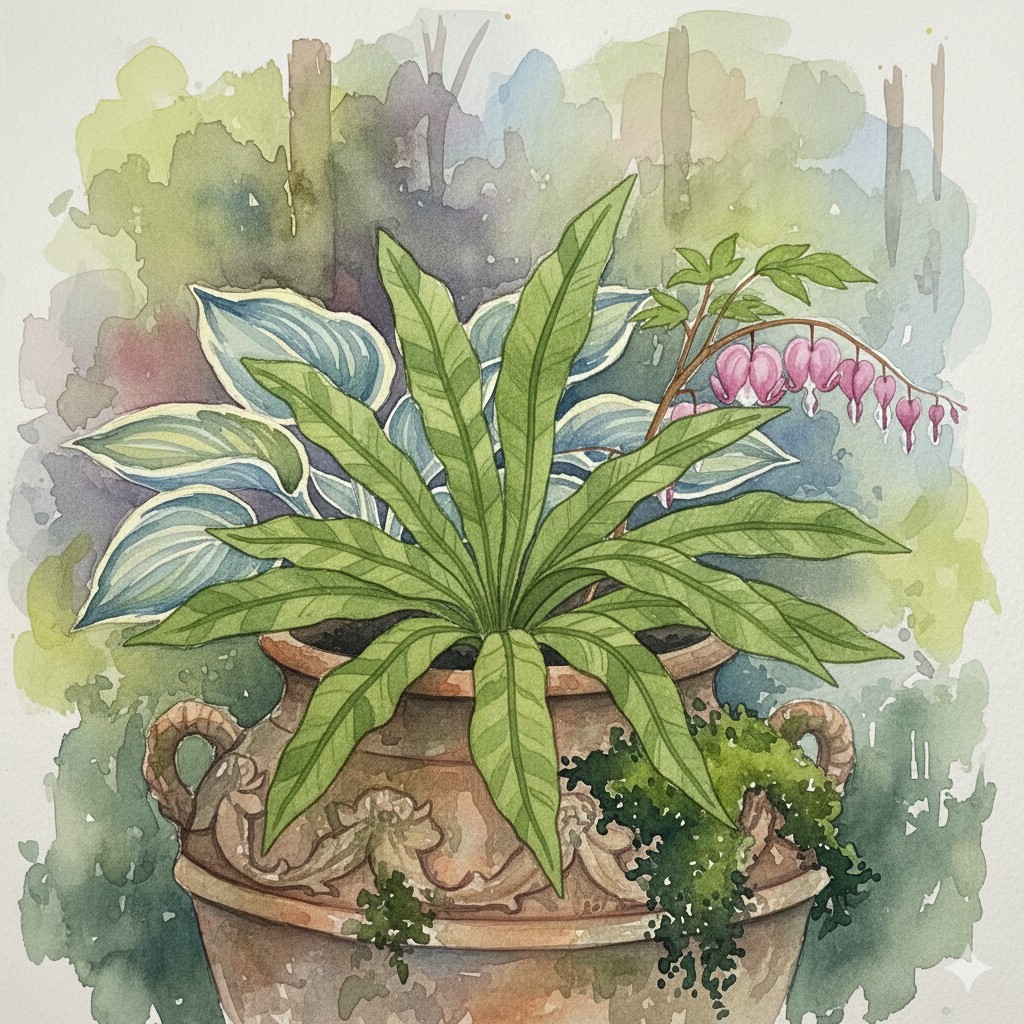
    Unrivalled Texture: Its broad, smooth fronds create a stunning contrast against the more delicate foliage of other shade-loving plants like hostas or other ferns. It adds an almost tropical, sculptural element to any planting scheme.


    Evergreen Charm: Unlike many deciduous ferns, the Hart’s Tongue Fern keeps its lush green fronds throughout the winter. This provides invaluable year-round interest, brightening up dreary winter gardens and adding a consistent layer of green structure.


    Perfect for Tricky Spots:
    Shady Borders: It’s a natural fit for woodland gardens or the darker corners of borders where other plants might struggle.
    Walls and Rockeries: Mimicking its wild habitat, it looks spectacular nestled into rock crevices, dry-stone walls, or between paving stones, where its compact root system can find purchase.


     Container Power: Its upright, clumping habit makes it an excellent choice for pots and containers, bringing an instant touch of sophistication to shaded patios or balconies.


    A Rare North American Cousin
    It’s worth noting that while the European Hart’s Tongue Fern is relatively common, its North American counterpart (Asplenium scolopendrium var. americanum) is a much rarer gem, often found in specific magnesium-rich limestone environments and federally protected. A beautiful reminder of nature’s delicate balance!


    A piece of ancient history in your garden
    Whether you’re looking for a unique textural accent, a dependable evergreen for shade, or simply a plant with a rich backstory, the Hart’s Tongue Fern is a truly rewarding choice. It’s a living piece of history, effortlessly bridging ancient lore with modern garden aesthetics.


    Have you ever encountered this remarkable fern? Share your thoughts in the comments below!


    If you find my photography or my writing inspiring and uplifting, consider supporting what I do. Buy me a coffee on Ko-fi.
    Your support makes a difference in my life and helps me create more of what you, and I, like. Thank you!
    Tap here for a list of 100 endangered animals and plants.

    100 endangered plant and animal species

    * Abies beshanzuensis (Baishan fir) – Plant (Tree) – Baishanzu Mountain, Zhejiang, China – Three mature individuals

    * Actinote zikani – Insect (butterfly) – Near São Paulo, Atlantic forest, Brazil – Unknown numbers

    * Aipysurus foliosquama (Leaf scaled sea-snake) – Reptile – Ashmore Reef and Hibernia Reef, Timor Sea – Unknown numbers * Amanipodagrion gilliesi (Amani flatwing) – Insect (damselfly) – Amani-Sigi Forest, Usamabara Mountains, Tanzania – < 500 individuals * Antisolabis seychellensis – Insect – Morne Blanc, Mahé island, Seychelles – Unknown numbers * Antilophia bokermanni (Araripe manakin) – Bird – Chapado do Araripe, South Ceará, Brazil – 779 individuals * Aphanius transgrediens (Aci Göl toothcarp) – Fish – south-eastern shore of former Lake Aci, Turkey – Few hundred pairs * Aproteles bulmerae (Bulmer’s fruit bat) – Mammal – Luplupwintern Cave, Western Province, Papua New Guinea – 150 * Ardea insignis (White bellied heron) – Bird – Bhutan, North East India and Myanmar – 70–400 individuals * Ardeotis nigriceps (Great Indian bustard) – Bird – Rajasthan, Gujarat, Maharashtra, Andhra Pradesh, Karnataka and Madhya, India – 50–249 mature individuals * Astrochelys yniphora (Ploughshare tortoise) – Reptile – Baly Bay region, northwestern Madagascar – 440–770 * Atelopus balios (Rio Pescado stubfoot toad) – Amphibian – Azuay, Cañar and Guyas provinces, south-western Ecuador – Unknown numbers * Aythya innotata (Madagascar pochard) – Bird – volcanic lakes north of Bealanana, Madagascar – 80 mature individuals * Azurina eupalama (Galapagos damsel fish) – Fish – Unknown numbers – Unknown numbers * Bahaba taipingensis (Giant yellow croaker) – Fish – Chinese coast from Yangtze River, China to Hong Kong – Unknown numbers * Batagur baska (Common batagur) – Reptile (turtle) – Bangladesh, Cambodia, India, Indonesia and Malaysia – Unknown numbers * Bazzania bhutanica – Plant – Budini and Lafeti Khola, Bhutan – 2 sub-populations * Beatragus hunteri (Hirola) – Mammal (antelope) – South-east Kenya and possibly south-west Somalia – < 1,000 individuals * Bombus franklini (Franklin’s bumblebee) – Insect (bee) – Oregon and California – Unknown numbers * Brachyteles hypoxanthus (Northern muriqui / Woolly spider monkey) – Mammal (primate) – Atlantic forest, south-eastern Brazil – < 1,000 * Bradypus pygmaeus (Pygmy three-toed sloth) – Mammal – Isla Escudo de Veraguas, Panama – < 500 * Callitriche pulchra – Plant (freshwater) – pool on Gavdos, Greece – Unknown numbers * Calumma tarzan (Tarzan’s chameleon) – Reptile – Anosibe An’Ala region, eastern Madagascar – < 100 * Cavia intermedia (Santa Catarina’s guinea pig) – Mammal (rodent) – Moleques do Sul Island, Santa Catarina, Brazil – 40–60 * Cercopithecus roloway (Roloway guenon) – Mammal (primate) – Côte d’Ivoire – Unknown numbers * Coleura seychellensis (Seychelles sheath-tailed bat) – Mammal (bat) – Two small caves on Silhouette and Mahé, Seychelles – < 100 * Cryptomyces maximus (Willow blister) – Fungi – Pembrokeshire, United Kingdom – Unknown numbers * Cryptotis nelsoni (Nelson’s small-eared shrew) – Mammal (shrew) – Volcán San Martín Tuxtla, Veracruz, Mexico – Unknown numbers * Cyclura collei (Jamaican iguana / Jamaican rock iguana) – Reptile – Hellshire Hills, Jamaica – Unknown numbers * Daubentonia madagascariensis (Aye-aye) – Mammal (primate) – Deciduous forest, East Madagascar – Unknown numbers * Dendrophylax fawcettii (Cayman Islands ghost orchid) – Plant (orchid) – Ironwood Forest, George Town, Grand Cayman – Unknown numbers * Dicerorhinus sumatrensis (Sumatran rhino) – Mammal (rhino) – Sabah, Sarawak and Peninsular Malaysia, Kalimantan and Sumatra, Indonesia – < 100 (more recent estimates suggest 34-47) * Diomedea amsterdamensis (Amsterdam albatross) – Bird – Breeds on Plateuau des Tourbières, Amsterdam Island, Indian Ocean. – 100 mature individuals * Dioscorea strydomiana (Wild yam) – Plant – Oshoek area, Mpumalanga, South Africa – 200 * Diospyros katendei – Plant (tree) – Kasyoha-Kitomi Forest Reserve, Uganda – 20 individuals in a single population * Dipterocarpus lamellatus – Plant (tree) – Siangau Forest Reserve, Sabah, Malaysia – 12 individuals * Discoglossus nigriventer (Hula painted frog) – Amphibian – Hula Valley, Israel – Unknown numbers * Dombeya mauritiana – Plant – Mauritius – Unknown numbers * Elaeocarpus bojeri (Bois Dentelle) – Plant (tree) – Grand Bassin, Mauritius – < 10 individuals * Eleutherodactylus glandulifer (La Hotte glanded frog) – Amphibian – Massif de la Hotte, Haiti – Unknown numbers * Eleutherodactylus thorectes (Macaya breast-spot frog) – Amphibian – Formon and Macaya peaks, Masif de la Hotte, Haiti – Unknown numbers * Eriosyce chilensis (Chilenito (cactus)) – Plant – Pta Molles and Pichidungui, Chile – < 500 individuals * Erythrina schliebenii (Coral tree) – Plant – Namatimbili-Ngarama Forest, Tanzania – < 50 individuals * Euphorbia tanaensis – Plant (tree) – Witu Forest Reserve, Kenya – 4 mature individuals * Eurynorhyncus pygmeus (Spoon-billed sandpiper) – Bird – Breeds in Russia, migrates along the East Asian-Australasian Flyway to wintering grounds in India, Bangladesh and Myanmar – 100 breeding pairs * Ficus katendei – Plant – Kasyoha-Kitomi Forest Reserve, Ishasha River, Uganda – < 50 mature individuals * Geronticus eremita (Northern bald ibis) – Bird – Breeds in Morocco, Turkey and Syria. Syrian population winters in central Ethiopia. – About 3000 individuals * Gigasiphon macrosiphon – Plant (flower) – Kaya Muhaka, Gongoni and Mrima Forest Reserves, Kenya, Amani Nature Reserve, West Kilombero Scarp Forest Reserve, and Kihansi Gorge, Tanzania – 33 * Gocea ohridana – Mollusc – Lake Ohrid, Macedonia – Unknown numbers * Heleophryne rosei (Table mountain ghost frog) – Amphibian – Table Mountain, Western Cape Province, South Africa – Unknown numbers * Hemicycla paeteliana – Mollusc (land snail) – Jandia peninsula, Fuerteventura, Canary Islands – Unknown numbers * Heteromirafa sidamoensis (Liben lark) – Bird – Liben Plains, southern Ethiopia – 90–256 * Hibiscadelphus woodii – Plant (tree) – Kalalau Valley, Hawaii – Unknown numbers * Hucho perryi (Sakhalin taimen) – Fish – Russian and Japanese rivers, Pacific Ocean between Russia and Japan – Unknown numbers * Johora singaporensis (Singapore freshwater crab) – Crustacean – Bukit Timah Nature Reserve and streamlet near Bukit Batok, Singapore – Unknown numbers * Lathyrus belinensis (Belin vetchling) – Plant – Outskirts of Belin village, Antalya, Turkey – < 1,000 * Leiopelma archeyi (Archey’s frog) – Amphibian – Coromandel peninsula and Whareorino Forest, New Zealand – Unknown numbers * Lithobates sevosus (Dusky gopher frog) – Amphibian – Harrison County, Mississippi, USA – 60–100 * Lophura edwardsi (Edwards’s pheasant) – Bird – Quang Binh, Quang Tri and Thua Thien-Hue, Viet Nam – Unknown numbers * Magnolia wolfii – Plant (tree) – Risaralda, Colombia – 3 * Margaritifera marocana – Mollusc – Oued Denna, Oued Abid and Oued Beth, Morocco – < 250 * Moominia willii – Mollusc (snail) – Silhouette Island, Seychelles – < 500 * Natalus primus (Cuban greater funnel eared bat) – Mammal (bat) – Cueva La Barca, Isle of Pines, Cuba – < 100 * Nepenthes attenboroughii (Attenborough’s pitcher plant) – Plant – Mount Victoria, Palawan, Philippines – Unknown numbers * Nomascus hainanus (Hainan black crested gibbon) – Mammal (primate) – Hainan Island, China – 20 * Neurergus kaiseri (Luristan newt) – Amphibian – Zagros Mountains, Lorestan, Iran – < 1,000 * Oreocnemis phoenix (Mulanje red damsel) – Insect (damselfly) – Mulanje Plateau, Malawi – Unknown numbers * Pangasius sanitwongsei (Pangasid catfish) – Fish – Chao Phraya and Mekong basins in Cambodia, China, Lao PDR, Thailand and Viet Nam – Unknown numbers * Parides burchellanus – Insect (butterfly) – Cerrado, Brazil – < 100 * Phocoena sinus (Vaquita) – Mammal (porpoise) – Northern Gulf of California, Mexico – 12 * Picea neoveitchii (Type of spruce tree) – Plant (tree) – Qinling Range, China – Unknown numbers * Pinus squamata (Qiaojia pine) – Plant (tree) – Qiaojia, Yunnan, China – < 25 * Poecilotheria metallica (Gooty tarantula / Metallic tarantula / Peacock tarantula / Salepurgu) – Spider – Nandyal and Giddalur, Andhra Pradesh, India – Unknown numbers * Pomarea whitneyi (Fatuhiva monarch) – Bird – Fatu Hiva, Marquesas Islands, French Polynesia – 50 * Pristis pristis (Common sawfish) – Fish – Coastal tropical and subtropical waters of Indo-Pacific and Atlantic Oceans. Currently largely restricted to northern Australia – Unknown numbers * Hapalemur simus (Greater bamboo lemur) – Mammal (primate) – Southeastern and southcentral rainforests of Madagascar – 500 * Propithecus candidus (Silky sifaka) – Mammal (primate) – Maroantsetra to Andapa basin, and Marojeju Massif, Madagascar – 100–1,000 * Psammobates geometricus (Geometric tortoise) – Reptile – Western Cape Province, South Africa – Unknown numbers * Pseudoryx nghetinhensis (Saola) – Mammal – Annamite mountains, on the Viet Nam – PDR Laos border – Unknown numbers * Psiadia cataractae – Plant – Mauritius – Unknown numbers * Psorodonotus ebneri (Beydaglari bush-cricket) – Insect – Beydaglari range, Antalaya, Turkey – Unknown numbers * Rafetus swinhoei (Red River giant softshell turtle) – Reptile – Hoan Kiem Lake and Dong Mo Lake, Viet Nam, and Suzhou Zoo, China – 3 * Rhinoceros sondaicus (Javan rhino) – Mammal (rhino) – Ujung Kulon National Park, Java, Indonesia – < 100 * Rhinopithecus avunculus (Tonkin snub-nosed monkey) – Mammal (primate) – Northeastern Vietnam – < 200 * Rhizanthella gardneri (West Australian underground orchid) – Plant (orchid) – Western Australia, Australia – < 100 * Rhynchocyon spp. (Boni giant sengi) – Mammal – Boni-Dodori Forest, Lamu area, Kenya – Unknown numbers * Risiocnemis seidenschwarzi (Cebu frill-wing) – Insect (damselfly) – Rivulet beside the Kawasan River, Cebu, Philippines – Unknown numbers * Rosa arabica – Plant – St Katherine Mountains, Egypt – Unknown numbers, 10 sub-populations * Salanoia durrelli (Durrell’s vontsira) – Mammal (mongoose) – Marshes of Lake Alaotra, Madagascar – Unknown numbers * Santamartamys rufodorsalis (Red crested tree rat) – Mammal (rodent) – Sierra Nevada de Santa Marta, Colombia – Unknown numbers * Scaturiginichthys vermeilipinnis (Red-finned blue-eye) – Fish – Edgbaston Station, central western Queensland, Australia – 2,000–4,000 * Squatina squatina (Angel shark) – Fish – Canary Islands – Unknown numbers * Sterna bernsteini (Chinese crested tern) – Bird – Breeding in Zhejiang and Fujian, China. Outside breeding season in Indonesia, Malaysia, Philippines, Taiwan, Thailand. – < 50 * Syngnathus watermeyeri (Estuarine pipefish) – Fish – Kariega Estuary to East Kleinemonde Estuary, Eastern Cape Province, South Africa – Unknown numbers * Tahina spectabilis (Suicide palm / Dimaka) – Plant – Analalava district, north-western Madagascar – 90 * Telmatobufo bullocki (Bullock’s false toad) – Amphibian (frog) – Nahuelbuta, Arauco Province, Chile – Unknown numbers * Tokudaia muenninki (Okinawa spiny rat) – Mammal (rodent) – Okinawa Island, Japan – Unknown numbers * Trigonostigma somphongsi (Somphongs’s rasbora) – Fish – Mae Khlong basin, Thailand – Unknown numbers * Valencia letourneuxi – Fish – Southern Albania and Western Greece – Unknown numbers * Voanioala gerardii (Forest coconut) – Plant – Masoala peninsula, Madagascar – < 10 * Zaglossus attenboroughi (Attenborough’s echidna) – Mammal – Cyclops Mountains, Papua Province, Indonesia – Unknown numbers

    Tap to view my redbubble gallery.
  • Diving Into Wonder

    Diving Into Wonder

    The World’s Best Kelp Forests and the Secret Lives Within

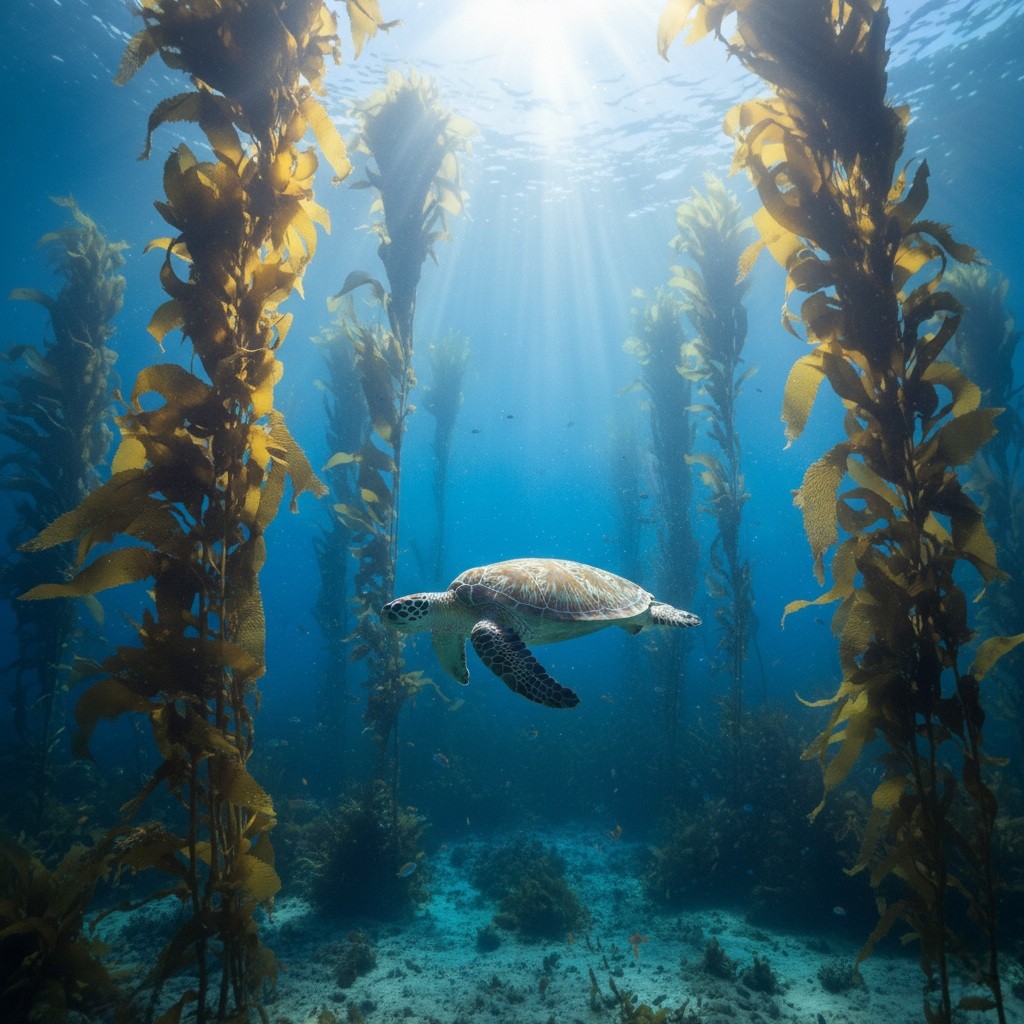
    There’s something otherworldly about descending into a kelp forest. Shafts of sunlight pierce the blue depths, illuminating golden-brown fronds that sway in the current like cathedral columns. A sea turtle glides past, seemingly suspended in time. You’ve entered one of the ocean’s most productive and mysterious ecosystems – a place where life thrives in stunning abundance.

    Turtle swimming through kelp
    Tap to go to RedBubble

    Kelp forests are among the most dynamic habitats on Earth, yet they remain relatively unknown compared to coral reefs. These underwater jungles grow at astonishing rates, shelter countless marine species, and play a crucial role in ocean health. Whether you’re a seasoned diver or dreaming of your first underwater adventure, exploring the world’s premier kelp forests offers an unforgettable journey into the heart of marine biodiversity.

    What Makes Kelp Forests So Special?

    Before we dive into the world’s best locations, it’s worth understanding what makes these ecosystems so remarkable.

    Nature’s Speed Champion

    Kelp isn’t just any seaweed – it’s one of the fastest-growing organisms on the planet. Giant kelp (Macrocystis pyrifera) can grow up to two feet per day in ideal conditions, reaching lengths of over 150 feet from seafloor to surface. This explosive growth creates a three-dimensional habitat that transforms barren rocky reefs into thriving underwater forests in a matter of months.

    The Ocean’s Apartment Complex

    Like rainforests on land, kelp forests provide structure and shelter for an incredible diversity of life. The canopy filters sunlight and dampens wave action, creating calm conditions below. The holdfasts – root-like structures that anchor kelp to rocks – create hiding spots for crabs, snails, and juvenile fish. The stipes (stems) and fronds offer surfaces for algae and invertebrates to attach, while the mid-water column becomes highways for fish, seals, and sea turtles.

    A single kelp forest can support over 1,000 species, from microscopic plankton to apex predators like sharks and orcas.


    Now that you understand why these ecosystems matter, let’s explore where you can experience them firsthand.

    The World’s Best Kelp Forest Dive Sites

    Channel Islands, California, USA

    Why Visit: The Channel Islands off the coast of Southern California host some of the most pristine kelp forests in North America. Crystal-clear waters, abundant marine life, and relatively easy access make this a bucket-list destination.

    What You’ll See: California sea lions dart playfully through the kelp fronds, while harbor seals peek curiously at divers. Garibaldi fish—California’s vibrant state marine fish—patrol their territories among the kelp. You might encounter bat rays gliding along the bottom, giant black sea bass, and the occasional pod of dolphins.

    Best Time to Visit: Summer through early fall (July–October) offers the best visibility and warmest water temperatures.

    Diving Conditions: Suitable for intermediate to advanced divers. Water temperatures range from 55-70°F (13-21°C), and visibility can exceed 60 feet on good days.

    Local Knowledge: The kelp here is predominantly giant kelp, which creates towering underwater forests. Anacapa Island and Santa Cruz Island are particularly spectacular sites.

    Monterey Bay, California, USA

    Why Visit: Monterey Bay is a world-renowned marine sanctuary where cold, nutrient-rich waters create some of the most productive kelp forests on Earth.

    What You’ll See: This is a biodiversity hotspot. Expect to encounter sea otters wrapped in kelp fronds at the surface, leopard sharks resting on the sandy bottom, massive schools of rockfish, and – if you’re lucky – the occasional great white shark passing through. The kelp forest transitions into deep submarine canyons, creating dramatic underwater topography.

    Best Time to Visit: Year-round diving is possible, but summer and fall offer the best conditions.

    Diving Conditions: Appropriate for all levels, with sites ranging from protected coves to challenging open-water dives. Water temperatures are cool (50–60°F/10–15°C), so a thick wetsuit or drysuit is essential.

    Local Knowledge: Don’t miss Monastery Beach or Point Lobos State Natural Reserve, both offering world-class kelp diving.

    Tasmania, Australia

    Why Visit: Tasmania’s kelp forests are among the most unique in the world, featuring giant kelp alongside a distinct mix of temperate and subtropical species found nowhere else.

    What You’ll See: Weedy seadragons – one of the ocean’s most bizarre and beautiful creatures – drift through the kelp like aquatic seahorses adorned with elaborate leafy appendages. You’ll also encounter Australian fur seals, cuttlefish, abalone, and colorful reef fish. The diversity here is astounding.

    Best Time to Visit: December through April (Tasmanian summer) provides the warmest water and best visibility.

    Diving Conditions: Suitable for intermediate divers. Water temperatures range from 54–64°F (12–18°C).

    Local Knowledge: The east coast, particularly around Fortescue Bay and Eaglehawk Neck, offers exceptional kelp forest diving. Tasmania’s kelp forests face threats from warming waters and overgrazing by sea urchins, making responsible ecotourism here particularly important.

    False Bay, South Africa

    Why Visit: Dive with sevengill cow sharks, seals, and even great whites in one of the most dramatic kelp forest settings on Earth.

    What You’ll See: False Bay’s kelp forests are patrolled by massive sevengill cow sharks – prehistoric-looking predators that can grow over 9 feet long. Cape fur seals zip through the kelp with astonishing agility, while cuttlefish, octopuses, and endemic species like the puffadder shyshark hide among the holdfasts.

    Best Time to Visit: Year-round, but summer (November–March) offers warmer water.

    Diving Conditions: Suitable for advanced divers due to cold water, surge, and the presence of large predators. Water temperatures range from 52–64°F (11–18°C).

    Local Knowledge: Simon’s Town and Miller’s Point are popular entry points. The kelp here is predominantly *Ecklonia maxima*, a type of kelp with single large blades rather than the branching structure of giant kelp.

    Hokkaido, Japan

    Why Visit: Experience kelp forests in the North Pacific, where Japanese culture and marine conservation intersect beautifully.

    What You’ll See: Hokkaido’s cold waters support lush kelp forests inhabited by sea urchins (harvested for high-quality uni), octopuses, starfish, and various species of rockfish. The kelp here includes species like *Saccharina japonica*, which is also cultivated for food.

    Best Time to Visit: Summer (June–September) for the warmest conditions, though kelp is present year-round.

    Diving Conditions: Suitable for intermediate divers. Water can be quite cold (45–65°F/7–18°C).

    Local Knowledge: The Shakotan Peninsula offers some of the best kelp diving in Japan, with dramatic underwater cliffs draped in kelp.

    Patagonia, Argentina & Chile

    Why Visit: Remote, wild, and largely unexplored, Patagonian kelp forests offer adventurous divers a frontier experience.

    What You’ll See: South American sea lions, elephant seals, various penguin species, and endemic fish populate these southern kelp forests. The marine life here has a distinctly subantarctic character.

    Best Time to Visit: November through March (Southern Hemisphere summer).

    Diving Conditions: For experienced divers only. Cold water (45–55°F/7–13°C), limited infrastructure, and remote locations make this a true expedition dive.

    Local Knowledge: The Beagle Channel near Ushuaia and the fjords around Puerto Madryn offer kelp forest diving with a sense of true wilderness.

    Understanding Kelp Forest Ecology: What Divers Should Know

    The Kelp Life Cycle

    Kelp reproduces through spores rather than seeds. Mature kelp releases millions of microscopic spores that settle on rocks and grow into tiny plants. Under the right conditions – cold, nutrient-rich water with plenty of sunlight – these develop into the towering forests we see today. However, kelp forests are dynamic; they can disappear and regrow with seasonal changes, storms, and environmental conditions.

    The Delicate Balance

    Kelp forests exist in a delicate balance maintained by complex food webs. Sea urchins are one of kelp’s greatest threats – they graze on kelp holdfasts and can completely denude a reef, creating “urchin barrens.” In healthy ecosystems, predators like sea otters, lobsters, and certain fish species keep urchin populations in check. When these predators disappear due to overfishing or habitat loss, urchins can explode in number and devastate kelp forests.

    This phenomenon highlights why marine protected areas and responsible fishing practices are crucial for kelp forest health.

    Kelp’s Many Neighbors

    When you dive in a kelp forest, you’re witnessing countless relationships:

    – Herbivores like sea urchins, snails, and some fish graze directly on kelp or the algae growing on it
    – Filter feeders such as mussels, barnacles, and tunicates attach to kelp stipes and rocks, feeding on plankton in the water column
    – Predators including rockfish, lingcod, and seals hunt smaller fish that shelter in the kelp
    – Cleaners like señoritas (small wrasse) set up cleaning stations where larger fish come to have parasites removed
    – Nurseries for juvenile fish, which use the kelp’s complex structure to hide from predators until they mature


    The Magic of Kelp

    Standing on a boat, looking down at the golden kelp swaying beneath the surface, you might not realize you’re about to enter one of the planet’s most productive ecosystems. But once you descend through the canopy and feel the cool water, see the filtered sunlight, and watch a sea turtle glide past with ancient grace, you understand.

    Kelp forests are cathedrals of the sea – places of beauty, abundance, and wonder. They remind us that the ocean isn’t a vast empty space but a complex mix of life, where every organism plays a role in maintaining the whole.

    Whether you choose the seal-filled waters of California, the weedy seadragon habitats of Tasmania, or the wild frontiers of Patagonia, diving in kelp forests offers more than just an adventure. It offers perspective, connection, and a glimpse into an ecosystem that sustains far more life than we often realize.

    The next time you see that image of sunlight streaming through kelp while a turtle swims past, remember: this isn’t just a beautiful image. It’s an invitation to explore, understand, and protect one of the ocean’s greatest treasures.

    Ready to take the plunge? Start planning your kelp forest adventure today—and remember to dive responsibly, so future generations can experience the same wonder you’re about to discover.

    If you find my photography or my writing inspiring and uplifting, consider supporting what I do. Buy me a coffee on Ko-fi.
    Your support makes a difference in my life and helps me create more of what you, and I, like. Thank you!
    Tap here for a list of 100 endangered animals and plants.

    100 endangered plant and animal species

    * Abies beshanzuensis (Baishan fir) – Plant (Tree) – Baishanzu Mountain, Zhejiang, China – Three mature individuals

    * Actinote zikani – Insect (butterfly) – Near São Paulo, Atlantic forest, Brazil – Unknown numbers

    * Aipysurus foliosquama (Leaf scaled sea-snake) – Reptile – Ashmore Reef and Hibernia Reef, Timor Sea – Unknown numbers * Amanipodagrion gilliesi (Amani flatwing) – Insect (damselfly) – Amani-Sigi Forest, Usamabara Mountains, Tanzania – < 500 individuals * Antisolabis seychellensis – Insect – Morne Blanc, Mahé island, Seychelles – Unknown numbers * Antilophia bokermanni (Araripe manakin) – Bird – Chapado do Araripe, South Ceará, Brazil – 779 individuals * Aphanius transgrediens (Aci Göl toothcarp) – Fish – south-eastern shore of former Lake Aci, Turkey – Few hundred pairs * Aproteles bulmerae (Bulmer’s fruit bat) – Mammal – Luplupwintern Cave, Western Province, Papua New Guinea – 150 * Ardea insignis (White bellied heron) – Bird – Bhutan, North East India and Myanmar – 70–400 individuals * Ardeotis nigriceps (Great Indian bustard) – Bird – Rajasthan, Gujarat, Maharashtra, Andhra Pradesh, Karnataka and Madhya, India – 50–249 mature individuals * Astrochelys yniphora (Ploughshare tortoise) – Reptile – Baly Bay region, northwestern Madagascar – 440–770 * Atelopus balios (Rio Pescado stubfoot toad) – Amphibian – Azuay, Cañar and Guyas provinces, south-western Ecuador – Unknown numbers * Aythya innotata (Madagascar pochard) – Bird – volcanic lakes north of Bealanana, Madagascar – 80 mature individuals * Azurina eupalama (Galapagos damsel fish) – Fish – Unknown numbers – Unknown numbers * Bahaba taipingensis (Giant yellow croaker) – Fish – Chinese coast from Yangtze River, China to Hong Kong – Unknown numbers * Batagur baska (Common batagur) – Reptile (turtle) – Bangladesh, Cambodia, India, Indonesia and Malaysia – Unknown numbers * Bazzania bhutanica – Plant – Budini and Lafeti Khola, Bhutan – 2 sub-populations * Beatragus hunteri (Hirola) – Mammal (antelope) – South-east Kenya and possibly south-west Somalia – < 1,000 individuals * Bombus franklini (Franklin’s bumblebee) – Insect (bee) – Oregon and California – Unknown numbers * Brachyteles hypoxanthus (Northern muriqui / Woolly spider monkey) – Mammal (primate) – Atlantic forest, south-eastern Brazil – < 1,000 * Bradypus pygmaeus (Pygmy three-toed sloth) – Mammal – Isla Escudo de Veraguas, Panama – < 500 * Callitriche pulchra – Plant (freshwater) – pool on Gavdos, Greece – Unknown numbers * Calumma tarzan (Tarzan’s chameleon) – Reptile – Anosibe An’Ala region, eastern Madagascar – < 100 * Cavia intermedia (Santa Catarina’s guinea pig) – Mammal (rodent) – Moleques do Sul Island, Santa Catarina, Brazil – 40–60 * Cercopithecus roloway (Roloway guenon) – Mammal (primate) – Côte d’Ivoire – Unknown numbers * Coleura seychellensis (Seychelles sheath-tailed bat) – Mammal (bat) – Two small caves on Silhouette and Mahé, Seychelles – < 100 * Cryptomyces maximus (Willow blister) – Fungi – Pembrokeshire, United Kingdom – Unknown numbers * Cryptotis nelsoni (Nelson’s small-eared shrew) – Mammal (shrew) – Volcán San Martín Tuxtla, Veracruz, Mexico – Unknown numbers * Cyclura collei (Jamaican iguana / Jamaican rock iguana) – Reptile – Hellshire Hills, Jamaica – Unknown numbers * Daubentonia madagascariensis (Aye-aye) – Mammal (primate) – Deciduous forest, East Madagascar – Unknown numbers * Dendrophylax fawcettii (Cayman Islands ghost orchid) – Plant (orchid) – Ironwood Forest, George Town, Grand Cayman – Unknown numbers * Dicerorhinus sumatrensis (Sumatran rhino) – Mammal (rhino) – Sabah, Sarawak and Peninsular Malaysia, Kalimantan and Sumatra, Indonesia – < 100 (more recent estimates suggest 34-47) * Diomedea amsterdamensis (Amsterdam albatross) – Bird – Breeds on Plateuau des Tourbières, Amsterdam Island, Indian Ocean. – 100 mature individuals * Dioscorea strydomiana (Wild yam) – Plant – Oshoek area, Mpumalanga, South Africa – 200 * Diospyros katendei – Plant (tree) – Kasyoha-Kitomi Forest Reserve, Uganda – 20 individuals in a single population * Dipterocarpus lamellatus – Plant (tree) – Siangau Forest Reserve, Sabah, Malaysia – 12 individuals * Discoglossus nigriventer (Hula painted frog) – Amphibian – Hula Valley, Israel – Unknown numbers * Dombeya mauritiana – Plant – Mauritius – Unknown numbers * Elaeocarpus bojeri (Bois Dentelle) – Plant (tree) – Grand Bassin, Mauritius – < 10 individuals * Eleutherodactylus glandulifer (La Hotte glanded frog) – Amphibian – Massif de la Hotte, Haiti – Unknown numbers * Eleutherodactylus thorectes (Macaya breast-spot frog) – Amphibian – Formon and Macaya peaks, Masif de la Hotte, Haiti – Unknown numbers * Eriosyce chilensis (Chilenito (cactus)) – Plant – Pta Molles and Pichidungui, Chile – < 500 individuals * Erythrina schliebenii (Coral tree) – Plant – Namatimbili-Ngarama Forest, Tanzania – < 50 individuals * Euphorbia tanaensis – Plant (tree) – Witu Forest Reserve, Kenya – 4 mature individuals * Eurynorhyncus pygmeus (Spoon-billed sandpiper) – Bird – Breeds in Russia, migrates along the East Asian-Australasian Flyway to wintering grounds in India, Bangladesh and Myanmar – 100 breeding pairs * Ficus katendei – Plant – Kasyoha-Kitomi Forest Reserve, Ishasha River, Uganda – < 50 mature individuals * Geronticus eremita (Northern bald ibis) – Bird – Breeds in Morocco, Turkey and Syria. Syrian population winters in central Ethiopia. – About 3000 individuals * Gigasiphon macrosiphon – Plant (flower) – Kaya Muhaka, Gongoni and Mrima Forest Reserves, Kenya, Amani Nature Reserve, West Kilombero Scarp Forest Reserve, and Kihansi Gorge, Tanzania – 33 * Gocea ohridana – Mollusc – Lake Ohrid, Macedonia – Unknown numbers * Heleophryne rosei (Table mountain ghost frog) – Amphibian – Table Mountain, Western Cape Province, South Africa – Unknown numbers * Hemicycla paeteliana – Mollusc (land snail) – Jandia peninsula, Fuerteventura, Canary Islands – Unknown numbers * Heteromirafa sidamoensis (Liben lark) – Bird – Liben Plains, southern Ethiopia – 90–256 * Hibiscadelphus woodii – Plant (tree) – Kalalau Valley, Hawaii – Unknown numbers * Hucho perryi (Sakhalin taimen) – Fish – Russian and Japanese rivers, Pacific Ocean between Russia and Japan – Unknown numbers * Johora singaporensis (Singapore freshwater crab) – Crustacean – Bukit Timah Nature Reserve and streamlet near Bukit Batok, Singapore – Unknown numbers * Lathyrus belinensis (Belin vetchling) – Plant – Outskirts of Belin village, Antalya, Turkey – < 1,000 * Leiopelma archeyi (Archey’s frog) – Amphibian – Coromandel peninsula and Whareorino Forest, New Zealand – Unknown numbers * Lithobates sevosus (Dusky gopher frog) – Amphibian – Harrison County, Mississippi, USA – 60–100 * Lophura edwardsi (Edwards’s pheasant) – Bird – Quang Binh, Quang Tri and Thua Thien-Hue, Viet Nam – Unknown numbers * Magnolia wolfii – Plant (tree) – Risaralda, Colombia – 3 * Margaritifera marocana – Mollusc – Oued Denna, Oued Abid and Oued Beth, Morocco – < 250 * Moominia willii – Mollusc (snail) – Silhouette Island, Seychelles – < 500 * Natalus primus (Cuban greater funnel eared bat) – Mammal (bat) – Cueva La Barca, Isle of Pines, Cuba – < 100 * Nepenthes attenboroughii (Attenborough’s pitcher plant) – Plant – Mount Victoria, Palawan, Philippines – Unknown numbers * Nomascus hainanus (Hainan black crested gibbon) – Mammal (primate) – Hainan Island, China – 20 * Neurergus kaiseri (Luristan newt) – Amphibian – Zagros Mountains, Lorestan, Iran – < 1,000 * Oreocnemis phoenix (Mulanje red damsel) – Insect (damselfly) – Mulanje Plateau, Malawi – Unknown numbers * Pangasius sanitwongsei (Pangasid catfish) – Fish – Chao Phraya and Mekong basins in Cambodia, China, Lao PDR, Thailand and Viet Nam – Unknown numbers * Parides burchellanus – Insect (butterfly) – Cerrado, Brazil – < 100 * Phocoena sinus (Vaquita) – Mammal (porpoise) – Northern Gulf of California, Mexico – 12 * Picea neoveitchii (Type of spruce tree) – Plant (tree) – Qinling Range, China – Unknown numbers * Pinus squamata (Qiaojia pine) – Plant (tree) – Qiaojia, Yunnan, China – < 25 * Poecilotheria metallica (Gooty tarantula / Metallic tarantula / Peacock tarantula / Salepurgu) – Spider – Nandyal and Giddalur, Andhra Pradesh, India – Unknown numbers * Pomarea whitneyi (Fatuhiva monarch) – Bird – Fatu Hiva, Marquesas Islands, French Polynesia – 50 * Pristis pristis (Common sawfish) – Fish – Coastal tropical and subtropical waters of Indo-Pacific and Atlantic Oceans. Currently largely restricted to northern Australia – Unknown numbers * Hapalemur simus (Greater bamboo lemur) – Mammal (primate) – Southeastern and southcentral rainforests of Madagascar – 500 * Propithecus candidus (Silky sifaka) – Mammal (primate) – Maroantsetra to Andapa basin, and Marojeju Massif, Madagascar – 100–1,000 * Psammobates geometricus (Geometric tortoise) – Reptile – Western Cape Province, South Africa – Unknown numbers * Pseudoryx nghetinhensis (Saola) – Mammal – Annamite mountains, on the Viet Nam – PDR Laos border – Unknown numbers * Psiadia cataractae – Plant – Mauritius – Unknown numbers * Psorodonotus ebneri (Beydaglari bush-cricket) – Insect – Beydaglari range, Antalaya, Turkey – Unknown numbers * Rafetus swinhoei (Red River giant softshell turtle) – Reptile – Hoan Kiem Lake and Dong Mo Lake, Viet Nam, and Suzhou Zoo, China – 3 * Rhinoceros sondaicus (Javan rhino) – Mammal (rhino) – Ujung Kulon National Park, Java, Indonesia – < 100 * Rhinopithecus avunculus (Tonkin snub-nosed monkey) – Mammal (primate) – Northeastern Vietnam – < 200 * Rhizanthella gardneri (West Australian underground orchid) – Plant (orchid) – Western Australia, Australia – < 100 * Rhynchocyon spp. (Boni giant sengi) – Mammal – Boni-Dodori Forest, Lamu area, Kenya – Unknown numbers * Risiocnemis seidenschwarzi (Cebu frill-wing) – Insect (damselfly) – Rivulet beside the Kawasan River, Cebu, Philippines – Unknown numbers * Rosa arabica – Plant – St Katherine Mountains, Egypt – Unknown numbers, 10 sub-populations * Salanoia durrelli (Durrell’s vontsira) – Mammal (mongoose) – Marshes of Lake Alaotra, Madagascar – Unknown numbers * Santamartamys rufodorsalis (Red crested tree rat) – Mammal (rodent) – Sierra Nevada de Santa Marta, Colombia – Unknown numbers * Scaturiginichthys vermeilipinnis (Red-finned blue-eye) – Fish – Edgbaston Station, central western Queensland, Australia – 2,000–4,000 * Squatina squatina (Angel shark) – Fish – Canary Islands – Unknown numbers * Sterna bernsteini (Chinese crested tern) – Bird – Breeding in Zhejiang and Fujian, China. Outside breeding season in Indonesia, Malaysia, Philippines, Taiwan, Thailand. – < 50 * Syngnathus watermeyeri (Estuarine pipefish) – Fish – Kariega Estuary to East Kleinemonde Estuary, Eastern Cape Province, South Africa – Unknown numbers * Tahina spectabilis (Suicide palm / Dimaka) – Plant – Analalava district, north-western Madagascar – 90 * Telmatobufo bullocki (Bullock’s false toad) – Amphibian (frog) – Nahuelbuta, Arauco Province, Chile – Unknown numbers * Tokudaia muenninki (Okinawa spiny rat) – Mammal (rodent) – Okinawa Island, Japan – Unknown numbers * Trigonostigma somphongsi (Somphongs’s rasbora) – Fish – Mae Khlong basin, Thailand – Unknown numbers * Valencia letourneuxi – Fish – Southern Albania and Western Greece – Unknown numbers * Voanioala gerardii (Forest coconut) – Plant – Masoala peninsula, Madagascar – < 10 * Zaglossus attenboroughi (Attenborough’s echidna) – Mammal – Cyclops Mountains, Papua Province, Indonesia – Unknown numbers

    Tap to view my redbubble gallery.
  • Inventory of the Tide Line

    Inventory of the Tide Line

    The beach reveals its secrets in a narrow strip, a ribbon of refusal where the ocean has spat back what it cannot digest. I walk this margin between two kingdoms, neither fully of the water nor the land, and I am hunting—though for what, I cannot say.

    Shell on beach

    A shell first. Bivalve, broken, the color of a bruise healing. Its inner surface catches the light like mother-of-pearl, though it is only calcium carbonate arranged with accidental artistry. The creature who built this fortress is long gone, consumed or dissolved, and what remains is architecture without an architect. I turn it in my palm. The hinge still works, opening and closing on a history I cannot read. How many tides did this shell survive intact before arriving here, halved, at my feet? The ocean is a kind of time machine, delivering ancient news without commentary.

    Shells and driftwood

    Driftwood next, the size of my forearm, bleached bone-white by salt and sun. It is smooth as something loved, handled, though no human hand shaped this particular curve. The wood grain shows in silver-gray whorls—Douglas fir, perhaps, or cedar—impossible to know now that the tree is this far from its first life. There are bore holes, tiny as pin pricks, where marine worms feasted in the years this timber floated. Shipwreck? Windfall? The beach does not distinguish between disaster and the ordinary catastrophes of falling. Everything here has drowned its way to a second chance.

    Pinecone on the beach

    I nearly miss the pine cone wedged between two stones. How improbable, this meeting of forest and sea. The cone is closed tight as a fist, its scales sealed against the salt air, still holding whatever promise of propagation brought it into being. It must have tumbled from a coastal pine, rolled down a creek swollen with winter rain, been carried by the current to this unlikely grave. Or shrine. The beach makes no distinction. I wonder if the seeds inside are still viable, if given soil and time they might yet become trees. But the cone will not open here. The fire it was engineered to survive has been replaced by water, which is the wrong catalyst entirely.

    Seaweed

    Seaweed sprawls in a tangle, kelp torn from its holdfast in some recent storm. The bulbs at the ends of the blades are punctured and deflated now, those gas-filled balloons that kept the fronds upright in the underwater forest, reaching for the sun. Now they lie collapsed, drying from deep olive-brown to something almost black. Already the flies have found it. The smell is salt and rot and iodine, the smell of life rearranging itself into new forms. I pick up a blade and feel the slippery weight of it, still supple, not quite ready to surrender into sand. This kelp may have been alive yesterday. The ocean is both urgent and patient, taking what it pleases, when it pleases.

    Stones on the beach

    And stones, always stones. I choose one from the thousands, drawn by nothing I can name. It is the size of a plum, granite, speckled white and black and rose. Rounded by centuries of tumbling, it sits in my hand with the weight of deep time. Every stone is a clock running backward, each wave reducing it incrementally, returning it molecule by molecule to sand. This one is already smooth, patient, nearly featureless. In another thousand years it will be smaller. In ten thousand, perhaps gone. I am a flicker in the stone’s existence, a momentary warmth.


    The philosopher Heraclitus said we cannot step in the same river twice. But he said nothing about the beach, which is both more and less constant than a river. The water changes, yes, but so does the land. Every tide rearranges the inventory. Tomorrow these objects will be gone, buried or claimed by the next high water. New ones will arrive: a jellyfish like collapsed silk, a fishing float from Japan, a gull’s feather. The beach is a museum with a rotating collection, curated by chaos, open to anyone willing to walk the margins and look down.

    I pocket the stone. The rest I leave where I found them, or near enough. The beach does not require my curation. It has been assembling and disassembling these collections since before there were eyes to see them, and it will continue long after. I am only a visitor here, a temporary witness to this particular arrangement of beautiful wreckage, walking the thin line where the world’s two great bodies meet and neither can claim final victory.

    The sun is lower now. The shadows of the stones grow long. I turn back the way I came, following my own footprints filling slowly with seawater, already disappearing.


    If you find my photography or my writing inspiring and uplifting, consider supporting what I do. Buy me a coffee on Ko-fi.
    Your support makes a difference in my life and helps me create more of what you, and I, like. Thank you!
    Tap here for a list of 100 endangered animals and plants.

    100 endangered plant and animal species

    * Abies beshanzuensis (Baishan fir) – Plant (Tree) – Baishanzu Mountain, Zhejiang, China – Three mature individuals

    * Actinote zikani – Insect (butterfly) – Near São Paulo, Atlantic forest, Brazil – Unknown numbers

    * Aipysurus foliosquama (Leaf scaled sea-snake) – Reptile – Ashmore Reef and Hibernia Reef, Timor Sea – Unknown numbers * Amanipodagrion gilliesi (Amani flatwing) – Insect (damselfly) – Amani-Sigi Forest, Usamabara Mountains, Tanzania – < 500 individuals * Antisolabis seychellensis – Insect – Morne Blanc, Mahé island, Seychelles – Unknown numbers * Antilophia bokermanni (Araripe manakin) – Bird – Chapado do Araripe, South Ceará, Brazil – 779 individuals * Aphanius transgrediens (Aci Göl toothcarp) – Fish – south-eastern shore of former Lake Aci, Turkey – Few hundred pairs * Aproteles bulmerae (Bulmer’s fruit bat) – Mammal – Luplupwintern Cave, Western Province, Papua New Guinea – 150 * Ardea insignis (White bellied heron) – Bird – Bhutan, North East India and Myanmar – 70–400 individuals * Ardeotis nigriceps (Great Indian bustard) – Bird – Rajasthan, Gujarat, Maharashtra, Andhra Pradesh, Karnataka and Madhya, India – 50–249 mature individuals * Astrochelys yniphora (Ploughshare tortoise) – Reptile – Baly Bay region, northwestern Madagascar – 440–770 * Atelopus balios (Rio Pescado stubfoot toad) – Amphibian – Azuay, Cañar and Guyas provinces, south-western Ecuador – Unknown numbers * Aythya innotata (Madagascar pochard) – Bird – volcanic lakes north of Bealanana, Madagascar – 80 mature individuals * Azurina eupalama (Galapagos damsel fish) – Fish – Unknown numbers – Unknown numbers * Bahaba taipingensis (Giant yellow croaker) – Fish – Chinese coast from Yangtze River, China to Hong Kong – Unknown numbers * Batagur baska (Common batagur) – Reptile (turtle) – Bangladesh, Cambodia, India, Indonesia and Malaysia – Unknown numbers * Bazzania bhutanica – Plant – Budini and Lafeti Khola, Bhutan – 2 sub-populations * Beatragus hunteri (Hirola) – Mammal (antelope) – South-east Kenya and possibly south-west Somalia – < 1,000 individuals * Bombus franklini (Franklin’s bumblebee) – Insect (bee) – Oregon and California – Unknown numbers * Brachyteles hypoxanthus (Northern muriqui / Woolly spider monkey) – Mammal (primate) – Atlantic forest, south-eastern Brazil – < 1,000 * Bradypus pygmaeus (Pygmy three-toed sloth) – Mammal – Isla Escudo de Veraguas, Panama – < 500 * Callitriche pulchra – Plant (freshwater) – pool on Gavdos, Greece – Unknown numbers * Calumma tarzan (Tarzan’s chameleon) – Reptile – Anosibe An’Ala region, eastern Madagascar – < 100 * Cavia intermedia (Santa Catarina’s guinea pig) – Mammal (rodent) – Moleques do Sul Island, Santa Catarina, Brazil – 40–60 * Cercopithecus roloway (Roloway guenon) – Mammal (primate) – Côte d’Ivoire – Unknown numbers * Coleura seychellensis (Seychelles sheath-tailed bat) – Mammal (bat) – Two small caves on Silhouette and Mahé, Seychelles – < 100 * Cryptomyces maximus (Willow blister) – Fungi – Pembrokeshire, United Kingdom – Unknown numbers * Cryptotis nelsoni (Nelson’s small-eared shrew) – Mammal (shrew) – Volcán San Martín Tuxtla, Veracruz, Mexico – Unknown numbers * Cyclura collei (Jamaican iguana / Jamaican rock iguana) – Reptile – Hellshire Hills, Jamaica – Unknown numbers * Daubentonia madagascariensis (Aye-aye) – Mammal (primate) – Deciduous forest, East Madagascar – Unknown numbers * Dendrophylax fawcettii (Cayman Islands ghost orchid) – Plant (orchid) – Ironwood Forest, George Town, Grand Cayman – Unknown numbers * Dicerorhinus sumatrensis (Sumatran rhino) – Mammal (rhino) – Sabah, Sarawak and Peninsular Malaysia, Kalimantan and Sumatra, Indonesia – < 100 (more recent estimates suggest 34-47) * Diomedea amsterdamensis (Amsterdam albatross) – Bird – Breeds on Plateuau des Tourbières, Amsterdam Island, Indian Ocean. – 100 mature individuals * Dioscorea strydomiana (Wild yam) – Plant – Oshoek area, Mpumalanga, South Africa – 200 * Diospyros katendei – Plant (tree) – Kasyoha-Kitomi Forest Reserve, Uganda – 20 individuals in a single population * Dipterocarpus lamellatus – Plant (tree) – Siangau Forest Reserve, Sabah, Malaysia – 12 individuals * Discoglossus nigriventer (Hula painted frog) – Amphibian – Hula Valley, Israel – Unknown numbers * Dombeya mauritiana – Plant – Mauritius – Unknown numbers * Elaeocarpus bojeri (Bois Dentelle) – Plant (tree) – Grand Bassin, Mauritius – < 10 individuals * Eleutherodactylus glandulifer (La Hotte glanded frog) – Amphibian – Massif de la Hotte, Haiti – Unknown numbers * Eleutherodactylus thorectes (Macaya breast-spot frog) – Amphibian – Formon and Macaya peaks, Masif de la Hotte, Haiti – Unknown numbers * Eriosyce chilensis (Chilenito (cactus)) – Plant – Pta Molles and Pichidungui, Chile – < 500 individuals * Erythrina schliebenii (Coral tree) – Plant – Namatimbili-Ngarama Forest, Tanzania – < 50 individuals * Euphorbia tanaensis – Plant (tree) – Witu Forest Reserve, Kenya – 4 mature individuals * Eurynorhyncus pygmeus (Spoon-billed sandpiper) – Bird – Breeds in Russia, migrates along the East Asian-Australasian Flyway to wintering grounds in India, Bangladesh and Myanmar – 100 breeding pairs * Ficus katendei – Plant – Kasyoha-Kitomi Forest Reserve, Ishasha River, Uganda – < 50 mature individuals * Geronticus eremita (Northern bald ibis) – Bird – Breeds in Morocco, Turkey and Syria. Syrian population winters in central Ethiopia. – About 3000 individuals * Gigasiphon macrosiphon – Plant (flower) – Kaya Muhaka, Gongoni and Mrima Forest Reserves, Kenya, Amani Nature Reserve, West Kilombero Scarp Forest Reserve, and Kihansi Gorge, Tanzania – 33 * Gocea ohridana – Mollusc – Lake Ohrid, Macedonia – Unknown numbers * Heleophryne rosei (Table mountain ghost frog) – Amphibian – Table Mountain, Western Cape Province, South Africa – Unknown numbers * Hemicycla paeteliana – Mollusc (land snail) – Jandia peninsula, Fuerteventura, Canary Islands – Unknown numbers * Heteromirafa sidamoensis (Liben lark) – Bird – Liben Plains, southern Ethiopia – 90–256 * Hibiscadelphus woodii – Plant (tree) – Kalalau Valley, Hawaii – Unknown numbers * Hucho perryi (Sakhalin taimen) – Fish – Russian and Japanese rivers, Pacific Ocean between Russia and Japan – Unknown numbers * Johora singaporensis (Singapore freshwater crab) – Crustacean – Bukit Timah Nature Reserve and streamlet near Bukit Batok, Singapore – Unknown numbers * Lathyrus belinensis (Belin vetchling) – Plant – Outskirts of Belin village, Antalya, Turkey – < 1,000 * Leiopelma archeyi (Archey’s frog) – Amphibian – Coromandel peninsula and Whareorino Forest, New Zealand – Unknown numbers * Lithobates sevosus (Dusky gopher frog) – Amphibian – Harrison County, Mississippi, USA – 60–100 * Lophura edwardsi (Edwards’s pheasant) – Bird – Quang Binh, Quang Tri and Thua Thien-Hue, Viet Nam – Unknown numbers * Magnolia wolfii – Plant (tree) – Risaralda, Colombia – 3 * Margaritifera marocana – Mollusc – Oued Denna, Oued Abid and Oued Beth, Morocco – < 250 * Moominia willii – Mollusc (snail) – Silhouette Island, Seychelles – < 500 * Natalus primus (Cuban greater funnel eared bat) – Mammal (bat) – Cueva La Barca, Isle of Pines, Cuba – < 100 * Nepenthes attenboroughii (Attenborough’s pitcher plant) – Plant – Mount Victoria, Palawan, Philippines – Unknown numbers * Nomascus hainanus (Hainan black crested gibbon) – Mammal (primate) – Hainan Island, China – 20 * Neurergus kaiseri (Luristan newt) – Amphibian – Zagros Mountains, Lorestan, Iran – < 1,000 * Oreocnemis phoenix (Mulanje red damsel) – Insect (damselfly) – Mulanje Plateau, Malawi – Unknown numbers * Pangasius sanitwongsei (Pangasid catfish) – Fish – Chao Phraya and Mekong basins in Cambodia, China, Lao PDR, Thailand and Viet Nam – Unknown numbers * Parides burchellanus – Insect (butterfly) – Cerrado, Brazil – < 100 * Phocoena sinus (Vaquita) – Mammal (porpoise) – Northern Gulf of California, Mexico – 12 * Picea neoveitchii (Type of spruce tree) – Plant (tree) – Qinling Range, China – Unknown numbers * Pinus squamata (Qiaojia pine) – Plant (tree) – Qiaojia, Yunnan, China – < 25 * Poecilotheria metallica (Gooty tarantula / Metallic tarantula / Peacock tarantula / Salepurgu) – Spider – Nandyal and Giddalur, Andhra Pradesh, India – Unknown numbers * Pomarea whitneyi (Fatuhiva monarch) – Bird – Fatu Hiva, Marquesas Islands, French Polynesia – 50 * Pristis pristis (Common sawfish) – Fish – Coastal tropical and subtropical waters of Indo-Pacific and Atlantic Oceans. Currently largely restricted to northern Australia – Unknown numbers * Hapalemur simus (Greater bamboo lemur) – Mammal (primate) – Southeastern and southcentral rainforests of Madagascar – 500 * Propithecus candidus (Silky sifaka) – Mammal (primate) – Maroantsetra to Andapa basin, and Marojeju Massif, Madagascar – 100–1,000 * Psammobates geometricus (Geometric tortoise) – Reptile – Western Cape Province, South Africa – Unknown numbers * Pseudoryx nghetinhensis (Saola) – Mammal – Annamite mountains, on the Viet Nam – PDR Laos border – Unknown numbers * Psiadia cataractae – Plant – Mauritius – Unknown numbers * Psorodonotus ebneri (Beydaglari bush-cricket) – Insect – Beydaglari range, Antalaya, Turkey – Unknown numbers * Rafetus swinhoei (Red River giant softshell turtle) – Reptile – Hoan Kiem Lake and Dong Mo Lake, Viet Nam, and Suzhou Zoo, China – 3 * Rhinoceros sondaicus (Javan rhino) – Mammal (rhino) – Ujung Kulon National Park, Java, Indonesia – < 100 * Rhinopithecus avunculus (Tonkin snub-nosed monkey) – Mammal (primate) – Northeastern Vietnam – < 200 * Rhizanthella gardneri (West Australian underground orchid) – Plant (orchid) – Western Australia, Australia – < 100 * Rhynchocyon spp. (Boni giant sengi) – Mammal – Boni-Dodori Forest, Lamu area, Kenya – Unknown numbers * Risiocnemis seidenschwarzi (Cebu frill-wing) – Insect (damselfly) – Rivulet beside the Kawasan River, Cebu, Philippines – Unknown numbers * Rosa arabica – Plant – St Katherine Mountains, Egypt – Unknown numbers, 10 sub-populations * Salanoia durrelli (Durrell’s vontsira) – Mammal (mongoose) – Marshes of Lake Alaotra, Madagascar – Unknown numbers * Santamartamys rufodorsalis (Red crested tree rat) – Mammal (rodent) – Sierra Nevada de Santa Marta, Colombia – Unknown numbers * Scaturiginichthys vermeilipinnis (Red-finned blue-eye) – Fish – Edgbaston Station, central western Queensland, Australia – 2,000–4,000 * Squatina squatina (Angel shark) – Fish – Canary Islands – Unknown numbers * Sterna bernsteini (Chinese crested tern) – Bird – Breeding in Zhejiang and Fujian, China. Outside breeding season in Indonesia, Malaysia, Philippines, Taiwan, Thailand. – < 50 * Syngnathus watermeyeri (Estuarine pipefish) – Fish – Kariega Estuary to East Kleinemonde Estuary, Eastern Cape Province, South Africa – Unknown numbers * Tahina spectabilis (Suicide palm / Dimaka) – Plant – Analalava district, north-western Madagascar – 90 * Telmatobufo bullocki (Bullock’s false toad) – Amphibian (frog) – Nahuelbuta, Arauco Province, Chile – Unknown numbers * Tokudaia muenninki (Okinawa spiny rat) – Mammal (rodent) – Okinawa Island, Japan – Unknown numbers * Trigonostigma somphongsi (Somphongs’s rasbora) – Fish – Mae Khlong basin, Thailand – Unknown numbers * Valencia letourneuxi – Fish – Southern Albania and Western Greece – Unknown numbers * Voanioala gerardii (Forest coconut) – Plant – Masoala peninsula, Madagascar – < 10 * Zaglossus attenboroughi (Attenborough’s echidna) – Mammal – Cyclops Mountains, Papua Province, Indonesia – Unknown numbers

    Tap to view my redbubble gallery.
  • Of Mushrooms and Maples

    Of Mushrooms and Maples

    Wet leaves underfoot,
    that earthy perfume of rot,
    red and gold decay

    Autumn leaves maple

    The Japanese maple (*Acer palmatum*) achieves its crimson through a process that is, essentially, an act of calculated abandonment. As daylight shortens and temperatures drop, the tree stops producing chlorophyll—that green workhorse molecule—and begins withdrawing nutrients from its leaves back into the branches and trunk, a kind of metabolic retreat before winter. What remains visible are the anthocyanins, pigments that were there all along but masked by the chlorophyll’s dominance. Dr. Sarah Berkowitz, a plant physiologist I spoke with at the Arnold Arboretum, told me that the intensity of red depends on several factors: cold nights, sunny days, and the tree’s own genetics. “You can have two maples side by side,” she said, “same species, same conditions, and one will go scarlet while the other barely manages orange.” The blurred background in photographs of autumn leaves—that bokeh effect photographers prize—mimics what the tree itself is doing: bringing certain things into sharp focus while letting everything else fall away into soft irrelevance. By November, these leaves will be on the ground, brown and brittle, their sugars fully reabsorbed, their work done.


    Mushroom

    I found it growing in the scraggly bit behind the garden shed—not even a proper woods, really, just where we’ve let things go to seed and tangle. A single mushroom, pale as butter left too long on the counter, with that fuzzy yellow cap like something wearing its best coat against the cold. I should have photographed it more carefully, or looked it up in one of those field guides I’m always meaning to buy, but instead I just crouched there getting mud on my knees, thinking about how it had pushed up through all those wet leaves without anyone noticing. My grandmother would have known its name immediately, and whether it was good for eating, and probably would have had some story about finding ones like it during the war when there wasn’t much else. I have none of her knowledge, only this habit of stopping to look at things, which is its own small inheritance, I suppose. The dog was waiting for me, patient in that impatient way dogs have, and the light was going, but I stayed another moment. Sometimes that’s all you can do—stay another moment with something beautiful and probably useless, growing in the abandoned corner of things.


    If you find my photography or my writing inspiring and uplifting, consider supporting what I do. Buy me a coffee on Ko-fi.
    Your support makes a difference in my life and helps me create more of what you, and I, like. Thank you!
    Tap here for a list of 100 endangered animals and plants.

    100 endangered plant and animal species

    * Abies beshanzuensis (Baishan fir) – Plant (Tree) – Baishanzu Mountain, Zhejiang, China – Three mature individuals

    * Actinote zikani – Insect (butterfly) – Near São Paulo, Atlantic forest, Brazil – Unknown numbers

    * Aipysurus foliosquama (Leaf scaled sea-snake) – Reptile – Ashmore Reef and Hibernia Reef, Timor Sea – Unknown numbers * Amanipodagrion gilliesi (Amani flatwing) – Insect (damselfly) – Amani-Sigi Forest, Usamabara Mountains, Tanzania – < 500 individuals * Antisolabis seychellensis – Insect – Morne Blanc, Mahé island, Seychelles – Unknown numbers * Antilophia bokermanni (Araripe manakin) – Bird – Chapado do Araripe, South Ceará, Brazil – 779 individuals * Aphanius transgrediens (Aci Göl toothcarp) – Fish – south-eastern shore of former Lake Aci, Turkey – Few hundred pairs * Aproteles bulmerae (Bulmer’s fruit bat) – Mammal – Luplupwintern Cave, Western Province, Papua New Guinea – 150 * Ardea insignis (White bellied heron) – Bird – Bhutan, North East India and Myanmar – 70–400 individuals * Ardeotis nigriceps (Great Indian bustard) – Bird – Rajasthan, Gujarat, Maharashtra, Andhra Pradesh, Karnataka and Madhya, India – 50–249 mature individuals * Astrochelys yniphora (Ploughshare tortoise) – Reptile – Baly Bay region, northwestern Madagascar – 440–770 * Atelopus balios (Rio Pescado stubfoot toad) – Amphibian – Azuay, Cañar and Guyas provinces, south-western Ecuador – Unknown numbers * Aythya innotata (Madagascar pochard) – Bird – volcanic lakes north of Bealanana, Madagascar – 80 mature individuals * Azurina eupalama (Galapagos damsel fish) – Fish – Unknown numbers – Unknown numbers * Bahaba taipingensis (Giant yellow croaker) – Fish – Chinese coast from Yangtze River, China to Hong Kong – Unknown numbers * Batagur baska (Common batagur) – Reptile (turtle) – Bangladesh, Cambodia, India, Indonesia and Malaysia – Unknown numbers * Bazzania bhutanica – Plant – Budini and Lafeti Khola, Bhutan – 2 sub-populations * Beatragus hunteri (Hirola) – Mammal (antelope) – South-east Kenya and possibly south-west Somalia – < 1,000 individuals * Bombus franklini (Franklin’s bumblebee) – Insect (bee) – Oregon and California – Unknown numbers * Brachyteles hypoxanthus (Northern muriqui / Woolly spider monkey) – Mammal (primate) – Atlantic forest, south-eastern Brazil – < 1,000 * Bradypus pygmaeus (Pygmy three-toed sloth) – Mammal – Isla Escudo de Veraguas, Panama – < 500 * Callitriche pulchra – Plant (freshwater) – pool on Gavdos, Greece – Unknown numbers * Calumma tarzan (Tarzan’s chameleon) – Reptile – Anosibe An’Ala region, eastern Madagascar – < 100 * Cavia intermedia (Santa Catarina’s guinea pig) – Mammal (rodent) – Moleques do Sul Island, Santa Catarina, Brazil – 40–60 * Cercopithecus roloway (Roloway guenon) – Mammal (primate) – Côte d’Ivoire – Unknown numbers * Coleura seychellensis (Seychelles sheath-tailed bat) – Mammal (bat) – Two small caves on Silhouette and Mahé, Seychelles – < 100 * Cryptomyces maximus (Willow blister) – Fungi – Pembrokeshire, United Kingdom – Unknown numbers * Cryptotis nelsoni (Nelson’s small-eared shrew) – Mammal (shrew) – Volcán San Martín Tuxtla, Veracruz, Mexico – Unknown numbers * Cyclura collei (Jamaican iguana / Jamaican rock iguana) – Reptile – Hellshire Hills, Jamaica – Unknown numbers * Daubentonia madagascariensis (Aye-aye) – Mammal (primate) – Deciduous forest, East Madagascar – Unknown numbers * Dendrophylax fawcettii (Cayman Islands ghost orchid) – Plant (orchid) – Ironwood Forest, George Town, Grand Cayman – Unknown numbers * Dicerorhinus sumatrensis (Sumatran rhino) – Mammal (rhino) – Sabah, Sarawak and Peninsular Malaysia, Kalimantan and Sumatra, Indonesia – < 100 (more recent estimates suggest 34-47) * Diomedea amsterdamensis (Amsterdam albatross) – Bird – Breeds on Plateuau des Tourbières, Amsterdam Island, Indian Ocean. – 100 mature individuals * Dioscorea strydomiana (Wild yam) – Plant – Oshoek area, Mpumalanga, South Africa – 200 * Diospyros katendei – Plant (tree) – Kasyoha-Kitomi Forest Reserve, Uganda – 20 individuals in a single population * Dipterocarpus lamellatus – Plant (tree) – Siangau Forest Reserve, Sabah, Malaysia – 12 individuals * Discoglossus nigriventer (Hula painted frog) – Amphibian – Hula Valley, Israel – Unknown numbers * Dombeya mauritiana – Plant – Mauritius – Unknown numbers * Elaeocarpus bojeri (Bois Dentelle) – Plant (tree) – Grand Bassin, Mauritius – < 10 individuals * Eleutherodactylus glandulifer (La Hotte glanded frog) – Amphibian – Massif de la Hotte, Haiti – Unknown numbers * Eleutherodactylus thorectes (Macaya breast-spot frog) – Amphibian – Formon and Macaya peaks, Masif de la Hotte, Haiti – Unknown numbers * Eriosyce chilensis (Chilenito (cactus)) – Plant – Pta Molles and Pichidungui, Chile – < 500 individuals * Erythrina schliebenii (Coral tree) – Plant – Namatimbili-Ngarama Forest, Tanzania – < 50 individuals * Euphorbia tanaensis – Plant (tree) – Witu Forest Reserve, Kenya – 4 mature individuals * Eurynorhyncus pygmeus (Spoon-billed sandpiper) – Bird – Breeds in Russia, migrates along the East Asian-Australasian Flyway to wintering grounds in India, Bangladesh and Myanmar – 100 breeding pairs * Ficus katendei – Plant – Kasyoha-Kitomi Forest Reserve, Ishasha River, Uganda – < 50 mature individuals * Geronticus eremita (Northern bald ibis) – Bird – Breeds in Morocco, Turkey and Syria. Syrian population winters in central Ethiopia. – About 3000 individuals * Gigasiphon macrosiphon – Plant (flower) – Kaya Muhaka, Gongoni and Mrima Forest Reserves, Kenya, Amani Nature Reserve, West Kilombero Scarp Forest Reserve, and Kihansi Gorge, Tanzania – 33 * Gocea ohridana – Mollusc – Lake Ohrid, Macedonia – Unknown numbers * Heleophryne rosei (Table mountain ghost frog) – Amphibian – Table Mountain, Western Cape Province, South Africa – Unknown numbers * Hemicycla paeteliana – Mollusc (land snail) – Jandia peninsula, Fuerteventura, Canary Islands – Unknown numbers * Heteromirafa sidamoensis (Liben lark) – Bird – Liben Plains, southern Ethiopia – 90–256 * Hibiscadelphus woodii – Plant (tree) – Kalalau Valley, Hawaii – Unknown numbers * Hucho perryi (Sakhalin taimen) – Fish – Russian and Japanese rivers, Pacific Ocean between Russia and Japan – Unknown numbers * Johora singaporensis (Singapore freshwater crab) – Crustacean – Bukit Timah Nature Reserve and streamlet near Bukit Batok, Singapore – Unknown numbers * Lathyrus belinensis (Belin vetchling) – Plant – Outskirts of Belin village, Antalya, Turkey – < 1,000 * Leiopelma archeyi (Archey’s frog) – Amphibian – Coromandel peninsula and Whareorino Forest, New Zealand – Unknown numbers * Lithobates sevosus (Dusky gopher frog) – Amphibian – Harrison County, Mississippi, USA – 60–100 * Lophura edwardsi (Edwards’s pheasant) – Bird – Quang Binh, Quang Tri and Thua Thien-Hue, Viet Nam – Unknown numbers * Magnolia wolfii – Plant (tree) – Risaralda, Colombia – 3 * Margaritifera marocana – Mollusc – Oued Denna, Oued Abid and Oued Beth, Morocco – < 250 * Moominia willii – Mollusc (snail) – Silhouette Island, Seychelles – < 500 * Natalus primus (Cuban greater funnel eared bat) – Mammal (bat) – Cueva La Barca, Isle of Pines, Cuba – < 100 * Nepenthes attenboroughii (Attenborough’s pitcher plant) – Plant – Mount Victoria, Palawan, Philippines – Unknown numbers * Nomascus hainanus (Hainan black crested gibbon) – Mammal (primate) – Hainan Island, China – 20 * Neurergus kaiseri (Luristan newt) – Amphibian – Zagros Mountains, Lorestan, Iran – < 1,000 * Oreocnemis phoenix (Mulanje red damsel) – Insect (damselfly) – Mulanje Plateau, Malawi – Unknown numbers * Pangasius sanitwongsei (Pangasid catfish) – Fish – Chao Phraya and Mekong basins in Cambodia, China, Lao PDR, Thailand and Viet Nam – Unknown numbers * Parides burchellanus – Insect (butterfly) – Cerrado, Brazil – < 100 * Phocoena sinus (Vaquita) – Mammal (porpoise) – Northern Gulf of California, Mexico – 12 * Picea neoveitchii (Type of spruce tree) – Plant (tree) – Qinling Range, China – Unknown numbers * Pinus squamata (Qiaojia pine) – Plant (tree) – Qiaojia, Yunnan, China – < 25 * Poecilotheria metallica (Gooty tarantula / Metallic tarantula / Peacock tarantula / Salepurgu) – Spider – Nandyal and Giddalur, Andhra Pradesh, India – Unknown numbers * Pomarea whitneyi (Fatuhiva monarch) – Bird – Fatu Hiva, Marquesas Islands, French Polynesia – 50 * Pristis pristis (Common sawfish) – Fish – Coastal tropical and subtropical waters of Indo-Pacific and Atlantic Oceans. Currently largely restricted to northern Australia – Unknown numbers * Hapalemur simus (Greater bamboo lemur) – Mammal (primate) – Southeastern and southcentral rainforests of Madagascar – 500 * Propithecus candidus (Silky sifaka) – Mammal (primate) – Maroantsetra to Andapa basin, and Marojeju Massif, Madagascar – 100–1,000 * Psammobates geometricus (Geometric tortoise) – Reptile – Western Cape Province, South Africa – Unknown numbers * Pseudoryx nghetinhensis (Saola) – Mammal – Annamite mountains, on the Viet Nam – PDR Laos border – Unknown numbers * Psiadia cataractae – Plant – Mauritius – Unknown numbers * Psorodonotus ebneri (Beydaglari bush-cricket) – Insect – Beydaglari range, Antalaya, Turkey – Unknown numbers * Rafetus swinhoei (Red River giant softshell turtle) – Reptile – Hoan Kiem Lake and Dong Mo Lake, Viet Nam, and Suzhou Zoo, China – 3 * Rhinoceros sondaicus (Javan rhino) – Mammal (rhino) – Ujung Kulon National Park, Java, Indonesia – < 100 * Rhinopithecus avunculus (Tonkin snub-nosed monkey) – Mammal (primate) – Northeastern Vietnam – < 200 * Rhizanthella gardneri (West Australian underground orchid) – Plant (orchid) – Western Australia, Australia – < 100 * Rhynchocyon spp. (Boni giant sengi) – Mammal – Boni-Dodori Forest, Lamu area, Kenya – Unknown numbers * Risiocnemis seidenschwarzi (Cebu frill-wing) – Insect (damselfly) – Rivulet beside the Kawasan River, Cebu, Philippines – Unknown numbers * Rosa arabica – Plant – St Katherine Mountains, Egypt – Unknown numbers, 10 sub-populations * Salanoia durrelli (Durrell’s vontsira) – Mammal (mongoose) – Marshes of Lake Alaotra, Madagascar – Unknown numbers * Santamartamys rufodorsalis (Red crested tree rat) – Mammal (rodent) – Sierra Nevada de Santa Marta, Colombia – Unknown numbers * Scaturiginichthys vermeilipinnis (Red-finned blue-eye) – Fish – Edgbaston Station, central western Queensland, Australia – 2,000–4,000 * Squatina squatina (Angel shark) – Fish – Canary Islands – Unknown numbers * Sterna bernsteini (Chinese crested tern) – Bird – Breeding in Zhejiang and Fujian, China. Outside breeding season in Indonesia, Malaysia, Philippines, Taiwan, Thailand. – < 50 * Syngnathus watermeyeri (Estuarine pipefish) – Fish – Kariega Estuary to East Kleinemonde Estuary, Eastern Cape Province, South Africa – Unknown numbers * Tahina spectabilis (Suicide palm / Dimaka) – Plant – Analalava district, north-western Madagascar – 90 * Telmatobufo bullocki (Bullock’s false toad) – Amphibian (frog) – Nahuelbuta, Arauco Province, Chile – Unknown numbers * Tokudaia muenninki (Okinawa spiny rat) – Mammal (rodent) – Okinawa Island, Japan – Unknown numbers * Trigonostigma somphongsi (Somphongs’s rasbora) – Fish – Mae Khlong basin, Thailand – Unknown numbers * Valencia letourneuxi – Fish – Southern Albania and Western Greece – Unknown numbers * Voanioala gerardii (Forest coconut) – Plant – Masoala peninsula, Madagascar – < 10 * Zaglossus attenboroughi (Attenborough’s echidna) – Mammal – Cyclops Mountains, Papua Province, Indonesia – Unknown numbers

    Tap to view my redbubble gallery.
  • Beyond the Surface: How Artistic Vision Transforms the Ordinary

    Beyond the Surface: How Artistic Vision Transforms the Ordinary

    At first glance, you might describe this painting simply: a woman in white stands in a doorway, feeding doves. The facts are unremarkable. People feed birds every day. Doorways are architectural necessities. White dresses hang in countless closets.

    Impressionist, painting, lady with doves
    Tap to buy a print or a card

    Yet something else entirely emerges from this canvas – something that catches in your throat, that makes you pause mid-scroll, that lingers in your mind long after you’ve looked away.

    This is the alchemy of artistic vision.

    The Deliberate Blur

    The artist has made a radical choice: to surrender sharpness. In an age where we increasingly worship clarity, precision, and high-definition everything, this painting embraces the haze. The woman’s features dissolve into shadow and suggestion. The doves become spectral flutters of white against ochre and gold. Even the doorway – that symbol of transition and threshold – seems to waver between solid and ephemeral.

    This isn’t a failure of technique. It’s a triumph of understanding.

    By blurring the literal details, the artist has brought the emotional truth into sharp focus. We don’t need to see the woman’s face to feel her quietness, her contemplative solitude. We don’t need precise feathers to sense the flutter and scatter of wings, the whisper of movement in a still moment.

    The Palette of Memory

    Those golden-brown tones that saturate the entire composition – they’re not realistic, not documentary. No doorway and no dress truly exist in this amber wash of color. Instead, the artist has painted this scene through the filter of memory.

    This is how we actually remember moments that matter: not in crisp detail but in mood, in feeling, in a particular quality of light that we can never quite articulate but instantly recognize. The monochromatic warmth creates a sense of distance – not just in space but in time. This could be yesterday or a century ago. It could be a memory or a dream or that hazy space between the two.

    The color scheme unifies everything – figure, architecture, birds, atmosphere – into a single, cohesive emotional experience. This isn’t fragmentation. This is wholeness.

    Presence Through Absence

    Perhaps the most remarkable transformation occurs in what the painting withholds. By refusing to give us everything, it gives us something far more valuable: space for ourselves.

    We cannot quite see the woman’s expression, so we fill it with our own. Is she peaceful? Melancholic? Lost in reverie? The answer depends on what we bring to the viewing. The painting becomes a mirror as much as a window.

    The doves, those symbols of peace, hope, and the soul itself, are rendered as soft brushstrokes – more essence than form. They could be taking flight or arriving. They could be many or few. In their incompleteness, they become archetypal, universal.

    Perhaps those doves are more than birds. Perhaps they’re the visible form of something interior – memories taking flight, wishes released into the world, thoughts given wings. The woman stands at her threshold not just feeding creatures but communing with her own inner life made manifest. Each flutter of white could be a hope sent skyward, a regret released, a dream she’s choosing to set free rather than clutch. In this reading, the soft, almost ghostly rendering of the birds makes perfect sense – they exist in that same hazy realm as memory and longing, never quite solid, always in motion, impossible to hold but beautiful to witness.

    The Threshold Moment

    That doorway places the woman – and by extension, us – in a liminal space. She’s neither fully inside nor out, caught in the act of connection between domestic interior and the wider world. The threshold is one of humanity’s oldest metaphors: for birth and death, for change and transformation, for the moment before a decision is made.

    But it’s the artistic treatment that elevates this architectural detail into genuine poetry. The way the darkness inside contrasts with the muted light beyond. The way the structure seems to frame not just a person but a mood, a moment, an entire way of being.

    What Could Have Been Lost

    Imagine this same scene rendered with photographic precision. A clear-faced woman in a crisp white dress, each dove individually detailed, every brick defined. It would tell us exactly what happened one morning when someone fed birds.

    Instead, through the artist’s choices – the softened edges, the golden haze, the dissolution of detail into atmosphere – we receive something far more profound. We get the feeling of all such mornings. The universal experience of quiet solitude. The gentle ritual of caring for small, wild things. The brief suspension of time when we stand between one space and another, one moment and the next.

    The Lesson for All Creators

    This painting offers a vital lesson that extends far beyond visual art. Whether we write, photograph, compose music, or simply try to communicate our experiences to others: sometimes less clarity creates more truth.

    The obsession with making everything explicit, with explaining every detail, with leaving nothing to interpretation – this can actually drain meaning from our work. It can reduce the profound to the merely descriptive.

    What this artist understood is that transformation requires trust. Trust that the viewer will meet the work halfway. Trust that suggestion can be more powerful than declaration. Trust that what we feel is sometimes more real than what we see.

    Standing in the Golden Light

    So yes, this is technically a painting of a woman feeding doves in a doorway. But it’s also a meditation on solitude and connection. It’s an exploration of memory and presence. It’s a study in how the specific can become universal, how the simple can become sacred.

    The skilled artistry doesn’t just depict a moment – it transfigures it. It takes the ordinary raw material of daily life and reveals the poetry that was always there, waiting for someone to see it truly.

    This is what art does at its finest. It doesn’t just show us what things look like. It shows us what they mean, what they feel like, what they are in their deepest essence.

    And that transformation – from fact to feeling, from description to truth – that’s the real magic hiding in plain sight within these golden-brown depths.


    If you find my photography or my writing inspiring and uplifting, consider supporting what I do. Buy me a coffee on Ko-fi.
    Your support makes a difference in my life and helps me create more of what you, and I, like. Thank you!
    Tap here for a list of 100 endangered animals and plants.

    100 endangered plant and animal species

    * Abies beshanzuensis (Baishan fir) – Plant (Tree) – Baishanzu Mountain, Zhejiang, China – Three mature individuals

    * Actinote zikani – Insect (butterfly) – Near São Paulo, Atlantic forest, Brazil – Unknown numbers

    * Aipysurus foliosquama (Leaf scaled sea-snake) – Reptile – Ashmore Reef and Hibernia Reef, Timor Sea – Unknown numbers * Amanipodagrion gilliesi (Amani flatwing) – Insect (damselfly) – Amani-Sigi Forest, Usamabara Mountains, Tanzania – < 500 individuals * Antisolabis seychellensis – Insect – Morne Blanc, Mahé island, Seychelles – Unknown numbers * Antilophia bokermanni (Araripe manakin) – Bird – Chapado do Araripe, South Ceará, Brazil – 779 individuals * Aphanius transgrediens (Aci Göl toothcarp) – Fish – south-eastern shore of former Lake Aci, Turkey – Few hundred pairs * Aproteles bulmerae (Bulmer’s fruit bat) – Mammal – Luplupwintern Cave, Western Province, Papua New Guinea – 150 * Ardea insignis (White bellied heron) – Bird – Bhutan, North East India and Myanmar – 70–400 individuals * Ardeotis nigriceps (Great Indian bustard) – Bird – Rajasthan, Gujarat, Maharashtra, Andhra Pradesh, Karnataka and Madhya, India – 50–249 mature individuals * Astrochelys yniphora (Ploughshare tortoise) – Reptile – Baly Bay region, northwestern Madagascar – 440–770 * Atelopus balios (Rio Pescado stubfoot toad) – Amphibian – Azuay, Cañar and Guyas provinces, south-western Ecuador – Unknown numbers * Aythya innotata (Madagascar pochard) – Bird – volcanic lakes north of Bealanana, Madagascar – 80 mature individuals * Azurina eupalama (Galapagos damsel fish) – Fish – Unknown numbers – Unknown numbers * Bahaba taipingensis (Giant yellow croaker) – Fish – Chinese coast from Yangtze River, China to Hong Kong – Unknown numbers * Batagur baska (Common batagur) – Reptile (turtle) – Bangladesh, Cambodia, India, Indonesia and Malaysia – Unknown numbers * Bazzania bhutanica – Plant – Budini and Lafeti Khola, Bhutan – 2 sub-populations * Beatragus hunteri (Hirola) – Mammal (antelope) – South-east Kenya and possibly south-west Somalia – < 1,000 individuals * Bombus franklini (Franklin’s bumblebee) – Insect (bee) – Oregon and California – Unknown numbers * Brachyteles hypoxanthus (Northern muriqui / Woolly spider monkey) – Mammal (primate) – Atlantic forest, south-eastern Brazil – < 1,000 * Bradypus pygmaeus (Pygmy three-toed sloth) – Mammal – Isla Escudo de Veraguas, Panama – < 500 * Callitriche pulchra – Plant (freshwater) – pool on Gavdos, Greece – Unknown numbers * Calumma tarzan (Tarzan’s chameleon) – Reptile – Anosibe An’Ala region, eastern Madagascar – < 100 * Cavia intermedia (Santa Catarina’s guinea pig) – Mammal (rodent) – Moleques do Sul Island, Santa Catarina, Brazil – 40–60 * Cercopithecus roloway (Roloway guenon) – Mammal (primate) – Côte d’Ivoire – Unknown numbers * Coleura seychellensis (Seychelles sheath-tailed bat) – Mammal (bat) – Two small caves on Silhouette and Mahé, Seychelles – < 100 * Cryptomyces maximus (Willow blister) – Fungi – Pembrokeshire, United Kingdom – Unknown numbers * Cryptotis nelsoni (Nelson’s small-eared shrew) – Mammal (shrew) – Volcán San Martín Tuxtla, Veracruz, Mexico – Unknown numbers * Cyclura collei (Jamaican iguana / Jamaican rock iguana) – Reptile – Hellshire Hills, Jamaica – Unknown numbers * Daubentonia madagascariensis (Aye-aye) – Mammal (primate) – Deciduous forest, East Madagascar – Unknown numbers * Dendrophylax fawcettii (Cayman Islands ghost orchid) – Plant (orchid) – Ironwood Forest, George Town, Grand Cayman – Unknown numbers * Dicerorhinus sumatrensis (Sumatran rhino) – Mammal (rhino) – Sabah, Sarawak and Peninsular Malaysia, Kalimantan and Sumatra, Indonesia – < 100 (more recent estimates suggest 34-47) * Diomedea amsterdamensis (Amsterdam albatross) – Bird – Breeds on Plateuau des Tourbières, Amsterdam Island, Indian Ocean. – 100 mature individuals * Dioscorea strydomiana (Wild yam) – Plant – Oshoek area, Mpumalanga, South Africa – 200 * Diospyros katendei – Plant (tree) – Kasyoha-Kitomi Forest Reserve, Uganda – 20 individuals in a single population * Dipterocarpus lamellatus – Plant (tree) – Siangau Forest Reserve, Sabah, Malaysia – 12 individuals * Discoglossus nigriventer (Hula painted frog) – Amphibian – Hula Valley, Israel – Unknown numbers * Dombeya mauritiana – Plant – Mauritius – Unknown numbers * Elaeocarpus bojeri (Bois Dentelle) – Plant (tree) – Grand Bassin, Mauritius – < 10 individuals * Eleutherodactylus glandulifer (La Hotte glanded frog) – Amphibian – Massif de la Hotte, Haiti – Unknown numbers * Eleutherodactylus thorectes (Macaya breast-spot frog) – Amphibian – Formon and Macaya peaks, Masif de la Hotte, Haiti – Unknown numbers * Eriosyce chilensis (Chilenito (cactus)) – Plant – Pta Molles and Pichidungui, Chile – < 500 individuals * Erythrina schliebenii (Coral tree) – Plant – Namatimbili-Ngarama Forest, Tanzania – < 50 individuals * Euphorbia tanaensis – Plant (tree) – Witu Forest Reserve, Kenya – 4 mature individuals * Eurynorhyncus pygmeus (Spoon-billed sandpiper) – Bird – Breeds in Russia, migrates along the East Asian-Australasian Flyway to wintering grounds in India, Bangladesh and Myanmar – 100 breeding pairs * Ficus katendei – Plant – Kasyoha-Kitomi Forest Reserve, Ishasha River, Uganda – < 50 mature individuals * Geronticus eremita (Northern bald ibis) – Bird – Breeds in Morocco, Turkey and Syria. Syrian population winters in central Ethiopia. – About 3000 individuals * Gigasiphon macrosiphon – Plant (flower) – Kaya Muhaka, Gongoni and Mrima Forest Reserves, Kenya, Amani Nature Reserve, West Kilombero Scarp Forest Reserve, and Kihansi Gorge, Tanzania – 33 * Gocea ohridana – Mollusc – Lake Ohrid, Macedonia – Unknown numbers * Heleophryne rosei (Table mountain ghost frog) – Amphibian – Table Mountain, Western Cape Province, South Africa – Unknown numbers * Hemicycla paeteliana – Mollusc (land snail) – Jandia peninsula, Fuerteventura, Canary Islands – Unknown numbers * Heteromirafa sidamoensis (Liben lark) – Bird – Liben Plains, southern Ethiopia – 90–256 * Hibiscadelphus woodii – Plant (tree) – Kalalau Valley, Hawaii – Unknown numbers * Hucho perryi (Sakhalin taimen) – Fish – Russian and Japanese rivers, Pacific Ocean between Russia and Japan – Unknown numbers * Johora singaporensis (Singapore freshwater crab) – Crustacean – Bukit Timah Nature Reserve and streamlet near Bukit Batok, Singapore – Unknown numbers * Lathyrus belinensis (Belin vetchling) – Plant – Outskirts of Belin village, Antalya, Turkey – < 1,000 * Leiopelma archeyi (Archey’s frog) – Amphibian – Coromandel peninsula and Whareorino Forest, New Zealand – Unknown numbers * Lithobates sevosus (Dusky gopher frog) – Amphibian – Harrison County, Mississippi, USA – 60–100 * Lophura edwardsi (Edwards’s pheasant) – Bird – Quang Binh, Quang Tri and Thua Thien-Hue, Viet Nam – Unknown numbers * Magnolia wolfii – Plant (tree) – Risaralda, Colombia – 3 * Margaritifera marocana – Mollusc – Oued Denna, Oued Abid and Oued Beth, Morocco – < 250 * Moominia willii – Mollusc (snail) – Silhouette Island, Seychelles – < 500 * Natalus primus (Cuban greater funnel eared bat) – Mammal (bat) – Cueva La Barca, Isle of Pines, Cuba – < 100 * Nepenthes attenboroughii (Attenborough’s pitcher plant) – Plant – Mount Victoria, Palawan, Philippines – Unknown numbers * Nomascus hainanus (Hainan black crested gibbon) – Mammal (primate) – Hainan Island, China – 20 * Neurergus kaiseri (Luristan newt) – Amphibian – Zagros Mountains, Lorestan, Iran – < 1,000 * Oreocnemis phoenix (Mulanje red damsel) – Insect (damselfly) – Mulanje Plateau, Malawi – Unknown numbers * Pangasius sanitwongsei (Pangasid catfish) – Fish – Chao Phraya and Mekong basins in Cambodia, China, Lao PDR, Thailand and Viet Nam – Unknown numbers * Parides burchellanus – Insect (butterfly) – Cerrado, Brazil – < 100 * Phocoena sinus (Vaquita) – Mammal (porpoise) – Northern Gulf of California, Mexico – 12 * Picea neoveitchii (Type of spruce tree) – Plant (tree) – Qinling Range, China – Unknown numbers * Pinus squamata (Qiaojia pine) – Plant (tree) – Qiaojia, Yunnan, China – < 25 * Poecilotheria metallica (Gooty tarantula / Metallic tarantula / Peacock tarantula / Salepurgu) – Spider – Nandyal and Giddalur, Andhra Pradesh, India – Unknown numbers * Pomarea whitneyi (Fatuhiva monarch) – Bird – Fatu Hiva, Marquesas Islands, French Polynesia – 50 * Pristis pristis (Common sawfish) – Fish – Coastal tropical and subtropical waters of Indo-Pacific and Atlantic Oceans. Currently largely restricted to northern Australia – Unknown numbers * Hapalemur simus (Greater bamboo lemur) – Mammal (primate) – Southeastern and southcentral rainforests of Madagascar – 500 * Propithecus candidus (Silky sifaka) – Mammal (primate) – Maroantsetra to Andapa basin, and Marojeju Massif, Madagascar – 100–1,000 * Psammobates geometricus (Geometric tortoise) – Reptile – Western Cape Province, South Africa – Unknown numbers * Pseudoryx nghetinhensis (Saola) – Mammal – Annamite mountains, on the Viet Nam – PDR Laos border – Unknown numbers * Psiadia cataractae – Plant – Mauritius – Unknown numbers * Psorodonotus ebneri (Beydaglari bush-cricket) – Insect – Beydaglari range, Antalaya, Turkey – Unknown numbers * Rafetus swinhoei (Red River giant softshell turtle) – Reptile – Hoan Kiem Lake and Dong Mo Lake, Viet Nam, and Suzhou Zoo, China – 3 * Rhinoceros sondaicus (Javan rhino) – Mammal (rhino) – Ujung Kulon National Park, Java, Indonesia – < 100 * Rhinopithecus avunculus (Tonkin snub-nosed monkey) – Mammal (primate) – Northeastern Vietnam – < 200 * Rhizanthella gardneri (West Australian underground orchid) – Plant (orchid) – Western Australia, Australia – < 100 * Rhynchocyon spp. (Boni giant sengi) – Mammal – Boni-Dodori Forest, Lamu area, Kenya – Unknown numbers * Risiocnemis seidenschwarzi (Cebu frill-wing) – Insect (damselfly) – Rivulet beside the Kawasan River, Cebu, Philippines – Unknown numbers * Rosa arabica – Plant – St Katherine Mountains, Egypt – Unknown numbers, 10 sub-populations * Salanoia durrelli (Durrell’s vontsira) – Mammal (mongoose) – Marshes of Lake Alaotra, Madagascar – Unknown numbers * Santamartamys rufodorsalis (Red crested tree rat) – Mammal (rodent) – Sierra Nevada de Santa Marta, Colombia – Unknown numbers * Scaturiginichthys vermeilipinnis (Red-finned blue-eye) – Fish – Edgbaston Station, central western Queensland, Australia – 2,000–4,000 * Squatina squatina (Angel shark) – Fish – Canary Islands – Unknown numbers * Sterna bernsteini (Chinese crested tern) – Bird – Breeding in Zhejiang and Fujian, China. Outside breeding season in Indonesia, Malaysia, Philippines, Taiwan, Thailand. – < 50 * Syngnathus watermeyeri (Estuarine pipefish) – Fish – Kariega Estuary to East Kleinemonde Estuary, Eastern Cape Province, South Africa – Unknown numbers * Tahina spectabilis (Suicide palm / Dimaka) – Plant – Analalava district, north-western Madagascar – 90 * Telmatobufo bullocki (Bullock’s false toad) – Amphibian (frog) – Nahuelbuta, Arauco Province, Chile – Unknown numbers * Tokudaia muenninki (Okinawa spiny rat) – Mammal (rodent) – Okinawa Island, Japan – Unknown numbers * Trigonostigma somphongsi (Somphongs’s rasbora) – Fish – Mae Khlong basin, Thailand – Unknown numbers * Valencia letourneuxi – Fish – Southern Albania and Western Greece – Unknown numbers * Voanioala gerardii (Forest coconut) – Plant – Masoala peninsula, Madagascar – < 10 * Zaglossus attenboroughi (Attenborough’s echidna) – Mammal – Cyclops Mountains, Papua Province, Indonesia – Unknown numbers

    Tap to view my redbubble gallery.
  • Feathered magazine

    Feathered magazine

    Blue and Gold Peacock

    A Crown of Sapphires

    The peacock’s magnificent display of natural artistry

    Few creatures embody natural splendor quite like the peacock. With their iridescent blue necks and spectacular tail feathers—or “train”—adorned with hundreds of eye-spots, male peafowl have captivated human imagination for millennia. These stunning feathers aren’t just for show; they’re part of an elaborate courtship ritual where males fan out their trains in a shimmering display, creating a rustling sound that mesmerizes potential mates. What appears as vibrant blue and gold is actually a masterpiece of structural coloration—microscopic crystal-like structures that scatter light to create these jewel-like hues. Native to South Asia, peacocks have been symbols of royalty, beauty, and immortality across cultures, from ancient Persia to modern India, where they’re celebrated as the national bird.

    Peacock Facts: Train can contain over 200 feathers • Males shed and regrow their trains annually • Can live 20+ years • Their calls can be heard up to a mile away
    Magpie

    The Feathered Genius

    Why magpies are among the world’s smartest birds

    Dressed in striking black and white plumage with an iridescent blue-green sheen on their wings, magpies are far more than pretty faces. These members of the corvid family are among the most intelligent creatures on Earth, displaying problem-solving abilities that rival great apes. They’re one of the few non-mammal species to pass the mirror test—recognizing their own reflection—demonstrating a level of self-awareness rare in the animal kingdom. Magpies are also notorious collectors, attracted to shiny objects and known for their complex social behaviors. They mate for life, hold “funerals” for deceased flock members, and can even learn to mimic human speech. Despite their reputation as thieves in folklore, these birds are actually sophisticated communicators with their own dialects varying by region.

    Intelligence Alert: Can use tools • Recognize individual human faces • Have up to 40 different vocalizations • Build elaborate dome-shaped nests with multiple chambers
    Bullfinch with Flowers

    Nature’s Rosy Ambassador

    The bullfinch brings color to winter gardens

    With their powder-puff appearance and brilliant rose-red breast, male bullfinches are living valentines that brighten the dreariest winter day. These plump, round little birds are masters of subtlety—despite their vivid coloring, they’re surprisingly quiet and unobtrusive, preferring to forage in pairs or small family groups high in tree canopies. Bullfinches have a particular fondness for tree buds and seeds, though they’re also drawn to blossoms in spring, making them frequent visitors to flowering fruit trees. Their soft, piping calls are barely audible, matching their gentle demeanor. In Japanese culture, bullfinches hold special significance and are featured in traditional art alongside plum blossoms, symbolizing the arrival of spring. These charming birds remind us that sometimes the greatest beauty comes in the smallest, most unassuming packages.

    Did You Know: Females have softer grey-pink breasts • Parents feed chicks by regurgitating seeds • Can strip an entire fruit tree of buds in hours • Form strong pair bonds that last multiple seasons
    Nightingale with Apricot Blossom

    The Poet’s Muse

    Nightingales have inspired artists for thousands of years

    Small, unassuming, and brown in color, the nightingale might easily go unnoticed—until it opens its beak. For centuries, this bird has been celebrated as possessing the most beautiful song in the natural world, a complex melody that can contain over 200 different phrases. Unlike most birds, nightingales sing throughout the night, especially during breeding season, their haunting serenades carrying through moonlit gardens and woodlands. From ancient Greek mythology to Keats’ immortal ode, from Persian poetry to modern recordings, the nightingale’s voice has inspired more art, literature, and music than perhaps any other creature. These remarkable singers can learn and incorporate new sounds throughout their lives, each male developing his own unique repertoire. When perched among spring blossoms, as the world awakens from winter, the nightingale’s song becomes a living embodiment of renewal and hope.

    Musical Mastery: Can sing for 20+ hours during mating season • Males with larger song repertoires attract more mates • Migrate from Africa to Europe each spring • Inspired works by Keats, Shakespeare, Hans Christian Andersen, and countless composers
    If you find my photography or my writing inspiring and uplifting, consider supporting what I do. Buy me a coffee on Ko-fi.
    Your support makes a difference in my life and helps me create more of what you, and I, like. Thank you!
    Tap here for a list of 100 endangered animals and plants.

    100 endangered plant and animal species

    * Abies beshanzuensis (Baishan fir) – Plant (Tree) – Baishanzu Mountain, Zhejiang, China – Three mature individuals

    * Actinote zikani – Insect (butterfly) – Near São Paulo, Atlantic forest, Brazil – Unknown numbers

    * Aipysurus foliosquama (Leaf scaled sea-snake) – Reptile – Ashmore Reef and Hibernia Reef, Timor Sea – Unknown numbers * Amanipodagrion gilliesi (Amani flatwing) – Insect (damselfly) – Amani-Sigi Forest, Usamabara Mountains, Tanzania – < 500 individuals * Antisolabis seychellensis – Insect – Morne Blanc, Mahé island, Seychelles – Unknown numbers * Antilophia bokermanni (Araripe manakin) – Bird – Chapado do Araripe, South Ceará, Brazil – 779 individuals * Aphanius transgrediens (Aci Göl toothcarp) – Fish – south-eastern shore of former Lake Aci, Turkey – Few hundred pairs * Aproteles bulmerae (Bulmer’s fruit bat) – Mammal – Luplupwintern Cave, Western Province, Papua New Guinea – 150 * Ardea insignis (White bellied heron) – Bird – Bhutan, North East India and Myanmar – 70–400 individuals * Ardeotis nigriceps (Great Indian bustard) – Bird – Rajasthan, Gujarat, Maharashtra, Andhra Pradesh, Karnataka and Madhya, India – 50–249 mature individuals * Astrochelys yniphora (Ploughshare tortoise) – Reptile – Baly Bay region, northwestern Madagascar – 440–770 * Atelopus balios (Rio Pescado stubfoot toad) – Amphibian – Azuay, Cañar and Guyas provinces, south-western Ecuador – Unknown numbers * Aythya innotata (Madagascar pochard) – Bird – volcanic lakes north of Bealanana, Madagascar – 80 mature individuals * Azurina eupalama (Galapagos damsel fish) – Fish – Unknown numbers – Unknown numbers * Bahaba taipingensis (Giant yellow croaker) – Fish – Chinese coast from Yangtze River, China to Hong Kong – Unknown numbers * Batagur baska (Common batagur) – Reptile (turtle) – Bangladesh, Cambodia, India, Indonesia and Malaysia – Unknown numbers * Bazzania bhutanica – Plant – Budini and Lafeti Khola, Bhutan – 2 sub-populations * Beatragus hunteri (Hirola) – Mammal (antelope) – South-east Kenya and possibly south-west Somalia – < 1,000 individuals * Bombus franklini (Franklin’s bumblebee) – Insect (bee) – Oregon and California – Unknown numbers * Brachyteles hypoxanthus (Northern muriqui / Woolly spider monkey) – Mammal (primate) – Atlantic forest, south-eastern Brazil – < 1,000 * Bradypus pygmaeus (Pygmy three-toed sloth) – Mammal – Isla Escudo de Veraguas, Panama – < 500 * Callitriche pulchra – Plant (freshwater) – pool on Gavdos, Greece – Unknown numbers * Calumma tarzan (Tarzan’s chameleon) – Reptile – Anosibe An’Ala region, eastern Madagascar – < 100 * Cavia intermedia (Santa Catarina’s guinea pig) – Mammal (rodent) – Moleques do Sul Island, Santa Catarina, Brazil – 40–60 * Cercopithecus roloway (Roloway guenon) – Mammal (primate) – Côte d’Ivoire – Unknown numbers * Coleura seychellensis (Seychelles sheath-tailed bat) – Mammal (bat) – Two small caves on Silhouette and Mahé, Seychelles – < 100 * Cryptomyces maximus (Willow blister) – Fungi – Pembrokeshire, United Kingdom – Unknown numbers * Cryptotis nelsoni (Nelson’s small-eared shrew) – Mammal (shrew) – Volcán San Martín Tuxtla, Veracruz, Mexico – Unknown numbers * Cyclura collei (Jamaican iguana / Jamaican rock iguana) – Reptile – Hellshire Hills, Jamaica – Unknown numbers * Daubentonia madagascariensis (Aye-aye) – Mammal (primate) – Deciduous forest, East Madagascar – Unknown numbers * Dendrophylax fawcettii (Cayman Islands ghost orchid) – Plant (orchid) – Ironwood Forest, George Town, Grand Cayman – Unknown numbers * Dicerorhinus sumatrensis (Sumatran rhino) – Mammal (rhino) – Sabah, Sarawak and Peninsular Malaysia, Kalimantan and Sumatra, Indonesia – < 100 (more recent estimates suggest 34-47) * Diomedea amsterdamensis (Amsterdam albatross) – Bird – Breeds on Plateuau des Tourbières, Amsterdam Island, Indian Ocean. – 100 mature individuals * Dioscorea strydomiana (Wild yam) – Plant – Oshoek area, Mpumalanga, South Africa – 200 * Diospyros katendei – Plant (tree) – Kasyoha-Kitomi Forest Reserve, Uganda – 20 individuals in a single population * Dipterocarpus lamellatus – Plant (tree) – Siangau Forest Reserve, Sabah, Malaysia – 12 individuals * Discoglossus nigriventer (Hula painted frog) – Amphibian – Hula Valley, Israel – Unknown numbers * Dombeya mauritiana – Plant – Mauritius – Unknown numbers * Elaeocarpus bojeri (Bois Dentelle) – Plant (tree) – Grand Bassin, Mauritius – < 10 individuals * Eleutherodactylus glandulifer (La Hotte glanded frog) – Amphibian – Massif de la Hotte, Haiti – Unknown numbers * Eleutherodactylus thorectes (Macaya breast-spot frog) – Amphibian – Formon and Macaya peaks, Masif de la Hotte, Haiti – Unknown numbers * Eriosyce chilensis (Chilenito (cactus)) – Plant – Pta Molles and Pichidungui, Chile – < 500 individuals * Erythrina schliebenii (Coral tree) – Plant – Namatimbili-Ngarama Forest, Tanzania – < 50 individuals * Euphorbia tanaensis – Plant (tree) – Witu Forest Reserve, Kenya – 4 mature individuals * Eurynorhyncus pygmeus (Spoon-billed sandpiper) – Bird – Breeds in Russia, migrates along the East Asian-Australasian Flyway to wintering grounds in India, Bangladesh and Myanmar – 100 breeding pairs * Ficus katendei – Plant – Kasyoha-Kitomi Forest Reserve, Ishasha River, Uganda – < 50 mature individuals * Geronticus eremita (Northern bald ibis) – Bird – Breeds in Morocco, Turkey and Syria. Syrian population winters in central Ethiopia. – About 3000 individuals * Gigasiphon macrosiphon – Plant (flower) – Kaya Muhaka, Gongoni and Mrima Forest Reserves, Kenya, Amani Nature Reserve, West Kilombero Scarp Forest Reserve, and Kihansi Gorge, Tanzania – 33 * Gocea ohridana – Mollusc – Lake Ohrid, Macedonia – Unknown numbers * Heleophryne rosei (Table mountain ghost frog) – Amphibian – Table Mountain, Western Cape Province, South Africa – Unknown numbers * Hemicycla paeteliana – Mollusc (land snail) – Jandia peninsula, Fuerteventura, Canary Islands – Unknown numbers * Heteromirafa sidamoensis (Liben lark) – Bird – Liben Plains, southern Ethiopia – 90–256 * Hibiscadelphus woodii – Plant (tree) – Kalalau Valley, Hawaii – Unknown numbers * Hucho perryi (Sakhalin taimen) – Fish – Russian and Japanese rivers, Pacific Ocean between Russia and Japan – Unknown numbers * Johora singaporensis (Singapore freshwater crab) – Crustacean – Bukit Timah Nature Reserve and streamlet near Bukit Batok, Singapore – Unknown numbers * Lathyrus belinensis (Belin vetchling) – Plant – Outskirts of Belin village, Antalya, Turkey – < 1,000 * Leiopelma archeyi (Archey’s frog) – Amphibian – Coromandel peninsula and Whareorino Forest, New Zealand – Unknown numbers * Lithobates sevosus (Dusky gopher frog) – Amphibian – Harrison County, Mississippi, USA – 60–100 * Lophura edwardsi (Edwards’s pheasant) – Bird – Quang Binh, Quang Tri and Thua Thien-Hue, Viet Nam – Unknown numbers * Magnolia wolfii – Plant (tree) – Risaralda, Colombia – 3 * Margaritifera marocana – Mollusc – Oued Denna, Oued Abid and Oued Beth, Morocco – < 250 * Moominia willii – Mollusc (snail) – Silhouette Island, Seychelles – < 500 * Natalus primus (Cuban greater funnel eared bat) – Mammal (bat) – Cueva La Barca, Isle of Pines, Cuba – < 100 * Nepenthes attenboroughii (Attenborough’s pitcher plant) – Plant – Mount Victoria, Palawan, Philippines – Unknown numbers * Nomascus hainanus (Hainan black crested gibbon) – Mammal (primate) – Hainan Island, China – 20 * Neurergus kaiseri (Luristan newt) – Amphibian – Zagros Mountains, Lorestan, Iran – < 1,000 * Oreocnemis phoenix (Mulanje red damsel) – Insect (damselfly) – Mulanje Plateau, Malawi – Unknown numbers * Pangasius sanitwongsei (Pangasid catfish) – Fish – Chao Phraya and Mekong basins in Cambodia, China, Lao PDR, Thailand and Viet Nam – Unknown numbers * Parides burchellanus – Insect (butterfly) – Cerrado, Brazil – < 100 * Phocoena sinus (Vaquita) – Mammal (porpoise) – Northern Gulf of California, Mexico – 12 * Picea neoveitchii (Type of spruce tree) – Plant (tree) – Qinling Range, China – Unknown numbers * Pinus squamata (Qiaojia pine) – Plant (tree) – Qiaojia, Yunnan, China – < 25 * Poecilotheria metallica (Gooty tarantula / Metallic tarantula / Peacock tarantula / Salepurgu) – Spider – Nandyal and Giddalur, Andhra Pradesh, India – Unknown numbers * Pomarea whitneyi (Fatuhiva monarch) – Bird – Fatu Hiva, Marquesas Islands, French Polynesia – 50 * Pristis pristis (Common sawfish) – Fish – Coastal tropical and subtropical waters of Indo-Pacific and Atlantic Oceans. Currently largely restricted to northern Australia – Unknown numbers * Hapalemur simus (Greater bamboo lemur) – Mammal (primate) – Southeastern and southcentral rainforests of Madagascar – 500 * Propithecus candidus (Silky sifaka) – Mammal (primate) – Maroantsetra to Andapa basin, and Marojeju Massif, Madagascar – 100–1,000 * Psammobates geometricus (Geometric tortoise) – Reptile – Western Cape Province, South Africa – Unknown numbers * Pseudoryx nghetinhensis (Saola) – Mammal – Annamite mountains, on the Viet Nam – PDR Laos border – Unknown numbers * Psiadia cataractae – Plant – Mauritius – Unknown numbers * Psorodonotus ebneri (Beydaglari bush-cricket) – Insect – Beydaglari range, Antalaya, Turkey – Unknown numbers * Rafetus swinhoei (Red River giant softshell turtle) – Reptile – Hoan Kiem Lake and Dong Mo Lake, Viet Nam, and Suzhou Zoo, China – 3 * Rhinoceros sondaicus (Javan rhino) – Mammal (rhino) – Ujung Kulon National Park, Java, Indonesia – < 100 * Rhinopithecus avunculus (Tonkin snub-nosed monkey) – Mammal (primate) – Northeastern Vietnam – < 200 * Rhizanthella gardneri (West Australian underground orchid) – Plant (orchid) – Western Australia, Australia – < 100 * Rhynchocyon spp. (Boni giant sengi) – Mammal – Boni-Dodori Forest, Lamu area, Kenya – Unknown numbers * Risiocnemis seidenschwarzi (Cebu frill-wing) – Insect (damselfly) – Rivulet beside the Kawasan River, Cebu, Philippines – Unknown numbers * Rosa arabica – Plant – St Katherine Mountains, Egypt – Unknown numbers, 10 sub-populations * Salanoia durrelli (Durrell’s vontsira) – Mammal (mongoose) – Marshes of Lake Alaotra, Madagascar – Unknown numbers * Santamartamys rufodorsalis (Red crested tree rat) – Mammal (rodent) – Sierra Nevada de Santa Marta, Colombia – Unknown numbers * Scaturiginichthys vermeilipinnis (Red-finned blue-eye) – Fish – Edgbaston Station, central western Queensland, Australia – 2,000–4,000 * Squatina squatina (Angel shark) – Fish – Canary Islands – Unknown numbers * Sterna bernsteini (Chinese crested tern) – Bird – Breeding in Zhejiang and Fujian, China. Outside breeding season in Indonesia, Malaysia, Philippines, Taiwan, Thailand. – < 50 * Syngnathus watermeyeri (Estuarine pipefish) – Fish – Kariega Estuary to East Kleinemonde Estuary, Eastern Cape Province, South Africa – Unknown numbers * Tahina spectabilis (Suicide palm / Dimaka) – Plant – Analalava district, north-western Madagascar – 90 * Telmatobufo bullocki (Bullock’s false toad) – Amphibian (frog) – Nahuelbuta, Arauco Province, Chile – Unknown numbers * Tokudaia muenninki (Okinawa spiny rat) – Mammal (rodent) – Okinawa Island, Japan – Unknown numbers * Trigonostigma somphongsi (Somphongs’s rasbora) – Fish – Mae Khlong basin, Thailand – Unknown numbers * Valencia letourneuxi – Fish – Southern Albania and Western Greece – Unknown numbers * Voanioala gerardii (Forest coconut) – Plant – Masoala peninsula, Madagascar – < 10 * Zaglossus attenboroughi (Attenborough’s echidna) – Mammal – Cyclops Mountains, Papua Province, Indonesia – Unknown numbers

    Tap to view my redbubble gallery.
Design a site like this with WordPress.com
Get started