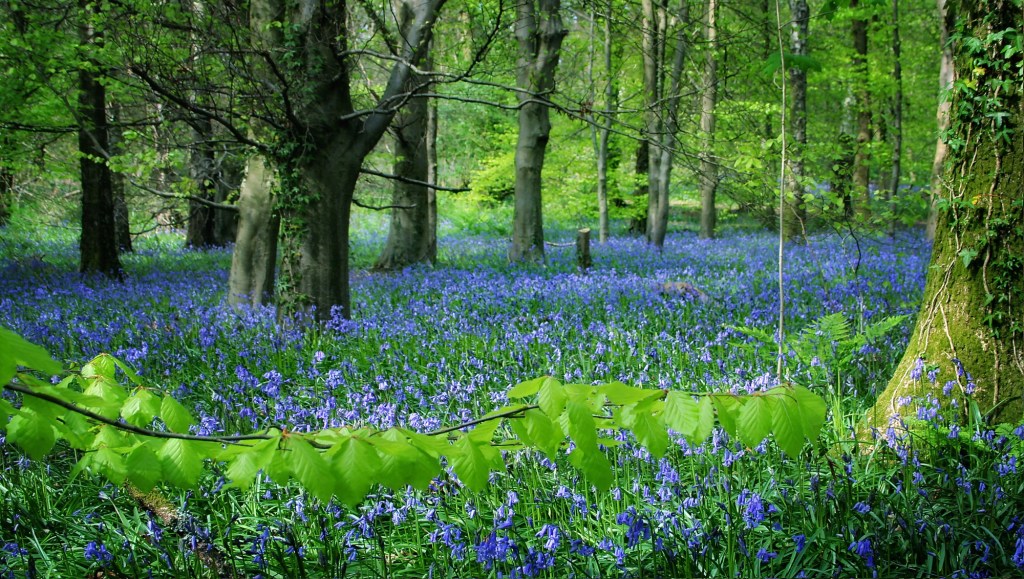
In this sweet season when the year unfolds its tender promise, when Nature, stirring from her wintry sleep, adorns the woodlands with her gentlest hues, I wander aimlessly along pathways where the bluebells keep their soft silent vigil.
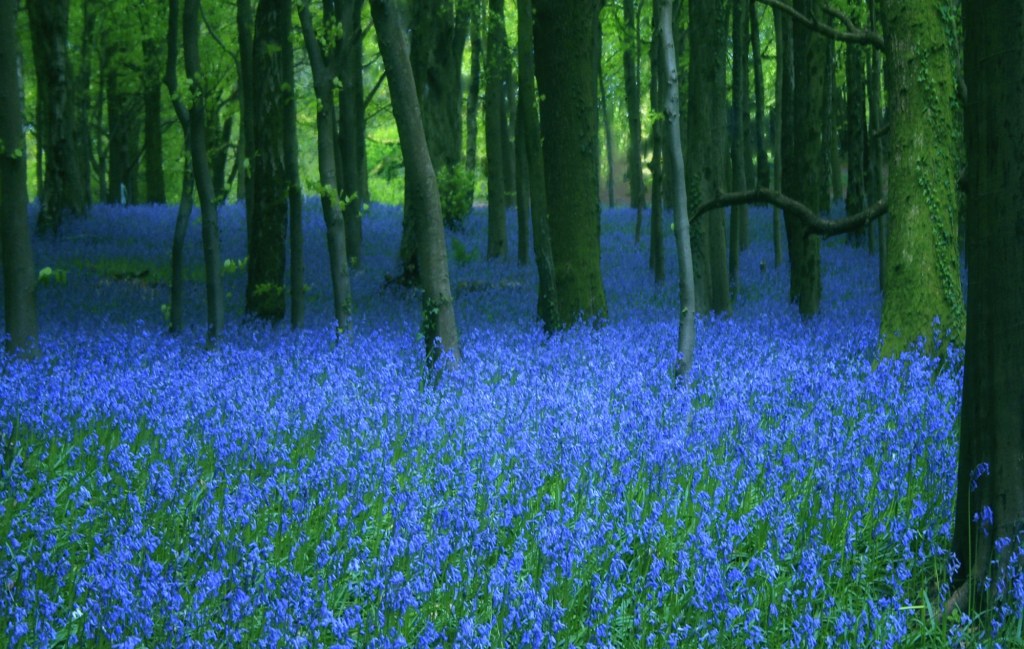
How fair these azure bells that bow their heads in modest splendor! They carpet the ancient forest floor as a sea of heavenly blue, each delicate bloom trembling with the faintest breath of wind. Each one a miracle of divine craftsmanship yet humble in its transient glory.
I have looked upon the lapis gardens of noble estates and witnessed the ultramarine depths of mountain lakes, yet never do I find such perfection of shade as in these humble woodland flowers. They are not mere terrestrial blooms but seem messengers from the empyrean realm, bringing down to earth fragments of the firmamental blue that arches high above our temporal dwelling. Their celestial tint speaks to something eternal in the human breast—a recognition of beauty that transcends our brief existence.
And there in the shadowed wood, the beech trees offer up their fresh young leaves, translucent as finest parchment when held against the vernal sun. How tender is their green! How perfect each unfolding leaf, emerging from its winter bud with a slow and patient certainty that speaks of quiet confidence in renewal. These infant leaves, untouched by summer’s hardening rays or autumn’s gilding hand, possess a purity of essence that stirs within the contemplative mind a sense of wonder at creation’s ceaseless cycle.
What blessed communion exists between the bluebell’s heaven-reflecting hue and the beech leaf’s innocent green! Together they form a harmony that no earthly musician could compose, a visual poetry that transcends the feeble efforts of human verse. In their glowing presence, my soul, so often clouded by the vapors of worldly care, finds refreshment and illumination, as if some divine voice speaks through these simple woodland treasures, reminding me of truths profound yet easily forgotten in the tumult of our busy days.
If you find my photography or my writing inspiring and uplifting, consider supporting what I do. Buy me a coffee on Ko-fi. Your support makes a difference in my life and helps me create more of what you, and I, like. Thank you!Tap to view my redbubble gallery.
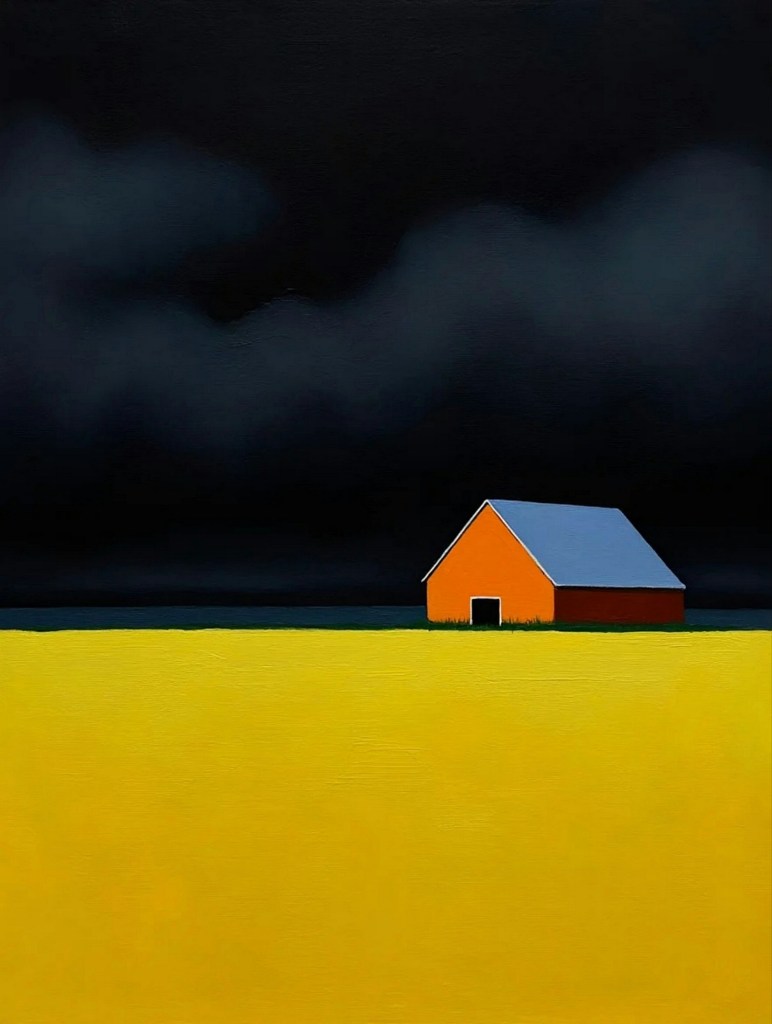
In the distance, beneath a sky so dark it seemed to swallow thought itself, stood the lone structure — a barn, perhaps, or some forgotten monument to a purpose no longer remembered. It was painted in an orange hue so violently alive that it seemed not to belong in the world at all. It was as if it had been dropped there by mistake — by a careless god or an exhausted architect of realities.
The field stretched endlessly, yellow and unyielding, like a dream that refuses to end. You could walk toward that building forever and never arrive, each step echoing the quiet futility of your journey. And yet, something in its starkness beckoned, the way a memory calls without context — not with clarity, but with gravity.
You might say the barn was waiting to be judged, silent and complicit, holding secrets behind its small black door. Perhaps the occupant inside was neither farmer nor fugitive, but a bureaucrat of dreams, tirelessly cataloguing every lost thought you’ve ever had, every version of yourself that you abandoned in moments of doubt.
Or, on the other hand, you could insist that inside there is a jazz record playing in an empty room. A cat stares at the wall. The air smells faintly of tangerines. And somewhere beneath the floorboards, time folds inward like origami, repeating the same quiet collapse over and over again.
In this image, the world does not end. It simply pauses — just long enough for you to realize it has always been quietly impossible.
If you find my photography or my writing inspiring and uplifting, consider supporting what I do. Buy me a coffee on Ko-fi. Your support makes a difference in my life and helps me create more of what you, and I, like. Thank you!Tap to view my redbubble gallery.
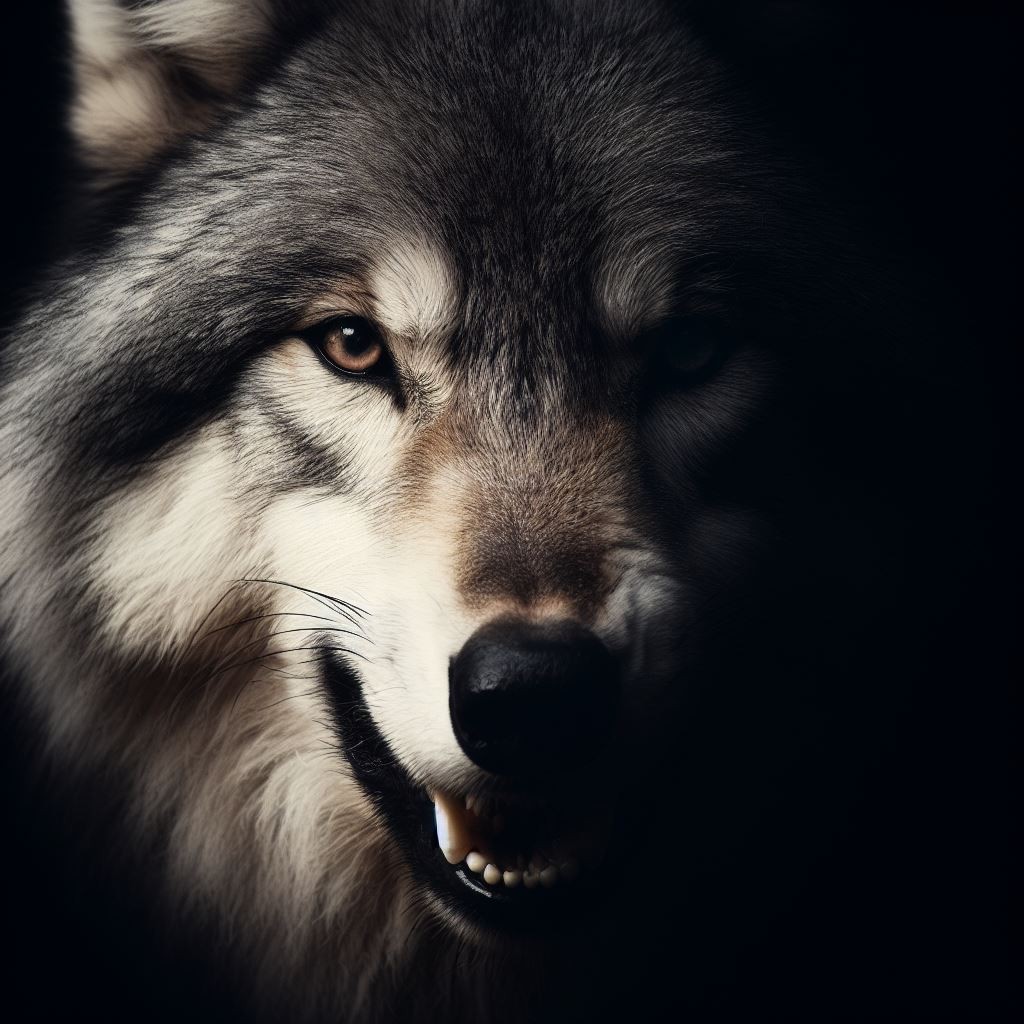
Pack moves as one shadow. Scents write stories in the air. Silence howls through teeth.
What’s for lunch?
The air bites my nostrils, sharp and clean—a thousand stories carved into ice crystals. I taste the forest before I see it: the musk of a sleeping vole three paw-lengths beneath the snow, the sour tang of last week’s elk carcass rotting under a spruce, the sharp warning of a rival pack’s urine marking the eastern ridge. My world is written in scent, each breath a page turned.
Snow crunches beneath my paws, a rhythm syncopated with the others. My pack moves as one shadow, our breath pluming silver in the twilight. The moon is a pale smudge behind clouds, but I do not need it. My eyes drink the dark, painting the forest in strokes of indigo and charcoal. The trees are skeletal sentries, their branches clawing at a sky heavy with silence. To you, this would be blindness. To me, it is clarity.
A whine ripples through the pack—”Young One”, restless, her paws too loud. “Mother” answers with a low chuff, a sound that vibrates in my ribs. We do not waste words. Our voices are layered: the flick of an ear, the tilt of a muzzle, the cadence of our howls that stitch the horizon together. When we sing, the mountains sing back. Distance means nothing.
Then—”there”.
A thread of warmth unspools in the cold. Musk. Salt. Fear. It floods my sinuses, vivid as a scream. My mouth waters; my muscles coil. The scent is a map: “hind leg favoring the left… young moose, separated… half a mile north, where the pines thicken”. The pack feels it too. Shoulders tense. Tails lift, quivering.
“Now”, says the wind. “Now”.
We move like smoke. Snow muffles our steps, but the prey’s heartbeat thunders in my skull. My vision narrows to nothing but the chase. The forest blurs into streaks of shadow and movement. I taste the moose’s panic now, sour and bright, a spark against the cold. The pack fans out, a crescent moon of teeth and intent.
“Closer.”
The world shrinks to the heat of running blood, the sound of crunching snow, the electric tang of “almost”. My legs are fire. My pulse is a drum.
And then—
If you find my photography or my writing inspiring and uplifting, consider supporting what I do. Buy me a coffee on Ko-fi. Your support makes a difference in my life and helps me create more of what you, and I, like. Thank you!Tap to view my redbubble gallery.
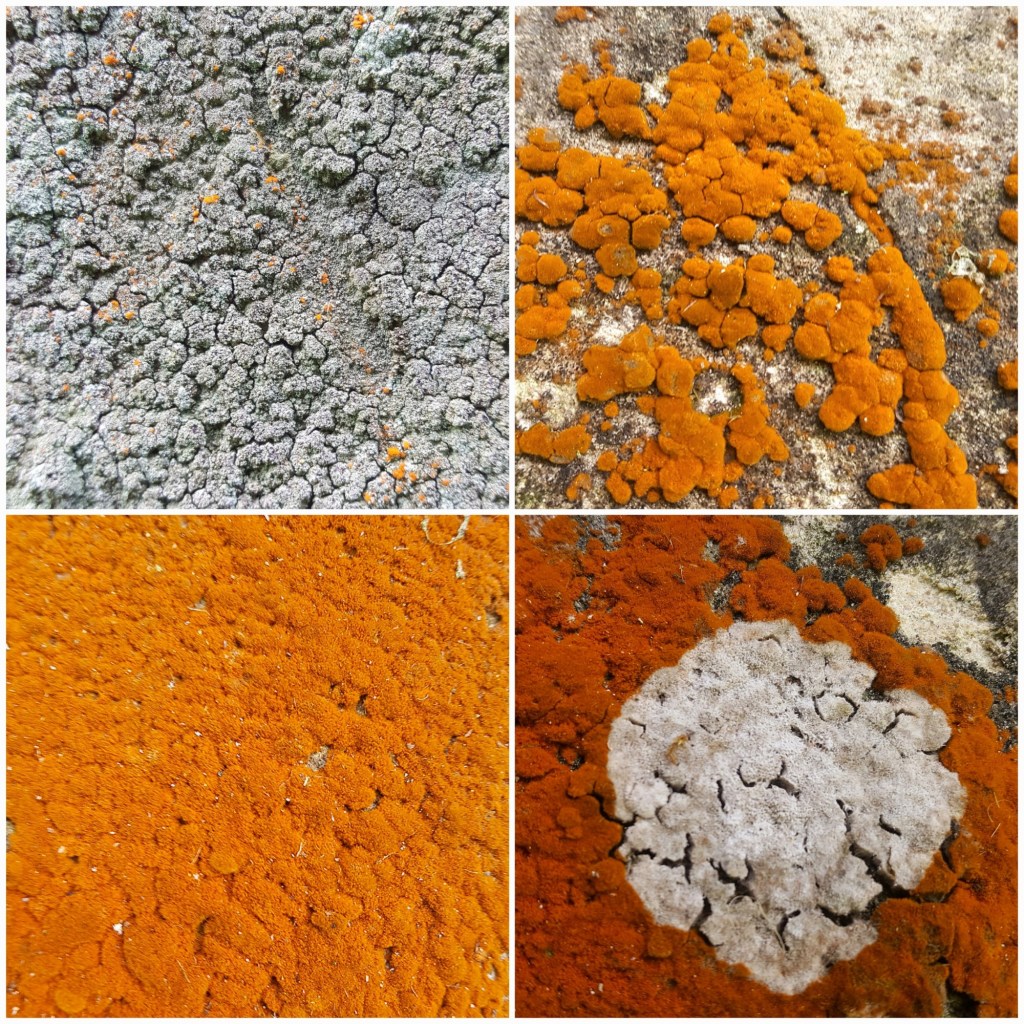
I am neither plant, nor fungus, nor alga alone – I am lichen, a symbiotic partnership thriving where others cannot survive.
Photos of Lichen I’ve taken
Within my body, my fungal partner provides shelter while my photosynthetic companion creates food. We demonstrate that survival often depends on collaboration, not competition.
Time moves differently for me. While animals live brief lives and trees last centuries, some of my relatives have existed for 4,500 years, silently witnessing the rise and fall of human civilizations.
I am a pioneer, first to colonize bare surfaces after disturbances. My acids break down rock into soil, creating footholds for other plants. In harsh environments – scorching deserts, frigid peaks, even the vacuum of space – I demonstrate remarkable resilience, becoming dormant until conditions improve.
To reindeer, I am vital winter food. To insects, I provide shelter. To humans, I serve as medicine, dye, and environmental indicator – my presence or absence reveals air quality.
My success comes not from strength or speed, but from finding the right partners and adapting to extreme conditions. On the edge of habitability, you’ll find me quietly thriving through cooperation and the slow power of persistence.
If you find my photography or my writing inspiring and uplifting, consider supporting what I do. Buy me a coffee on Ko-fi. Your support makes a difference in my life and helps me create more of what you, and I, like. Thank you!Tap to view my redbubble gallery.
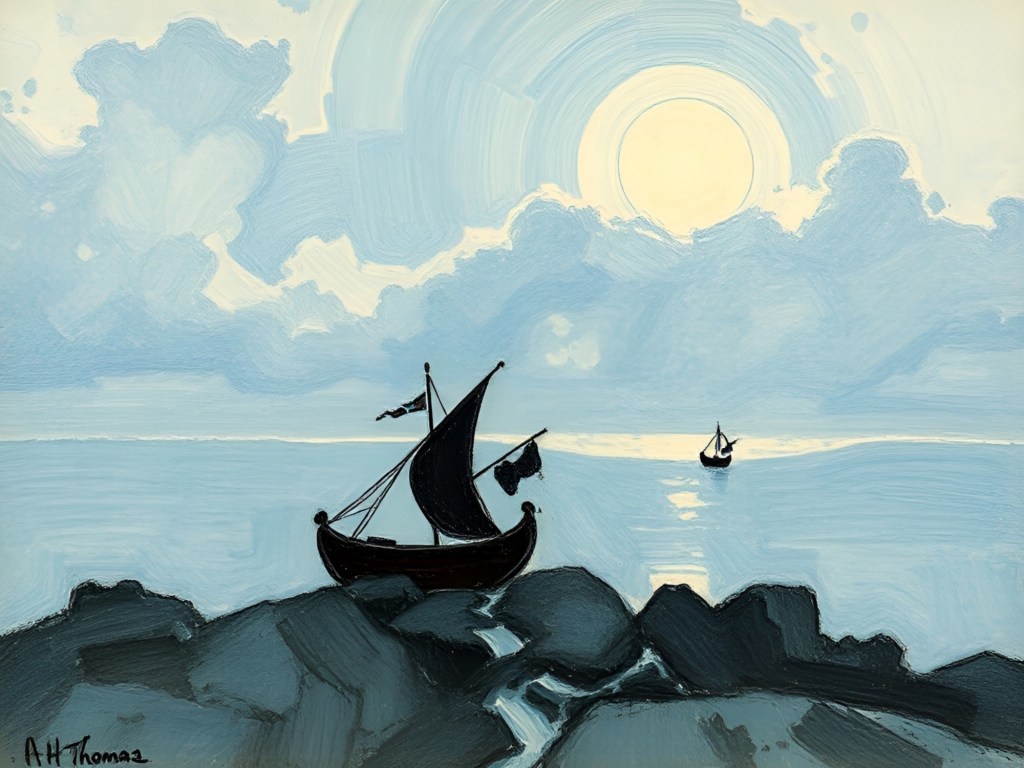
Across the waves, through storm and foam, Erik sails; forever to roam. Cursed by gods, no home, no rest, A ghostly helm, a fate unblessed.
The wind howled through the tattered sail, driving Erik’s ship ever northward. The sea was restless beneath him, dark and endless, as if it sensed the weight of his fate. He stood at the prow, gripping the worn wood, his fingers as calloused as his heart.
They called him Erik the Cursed. Once, he had been a great warrior, a jarl with men who followed him to glory. But he had angered the gods. Some said he had broken an oath to Odin; others whispered of a blood debt unpaid. He had slain his own brother in a rage, and from that day, his luck had soured. Storms found his ships, sickness claimed his crew, and even the strongest shields split under enemy blades.
Now he sailed alone. His men were gone—lost to battle, disease, or the waves. He no longer prayed for their souls. The gods had turned their backs on him, and he had done the same to them. Only the sea remained, cold and merciless.
The mist thickened around him, and the water turned black as night. He knew these waters. They were the border between the world of men and the realm of the dead. A shadow loomed in the fog—a great ship with a sail of tattered souls. Naglfar, the doom-ship of Hel, come to claim him.
Erik laughed, a harsh sound swallowed by the wind. He had fought all his life, and he would not cower now. He drew his sword, though there was no enemy to cut. The ship groaned, the waves rose higher, and the cold seeped into his bones.
Some say his ship was found days later, drifting empty on a still sea. Others claim he still sails, a ghost on the waves, searching for a shore that will never welcome him.
But the old skalds sing of Erik the Cursed, the man who defied his fate—and vanished into legend.
If you find my photography or my writing inspiring and uplifting, consider supporting what I do. Buy me a coffee on Ko-fi. Your support makes a difference in my life and helps me create more of what you, and I, like. Thank you!Tap to view my redbubble gallery.
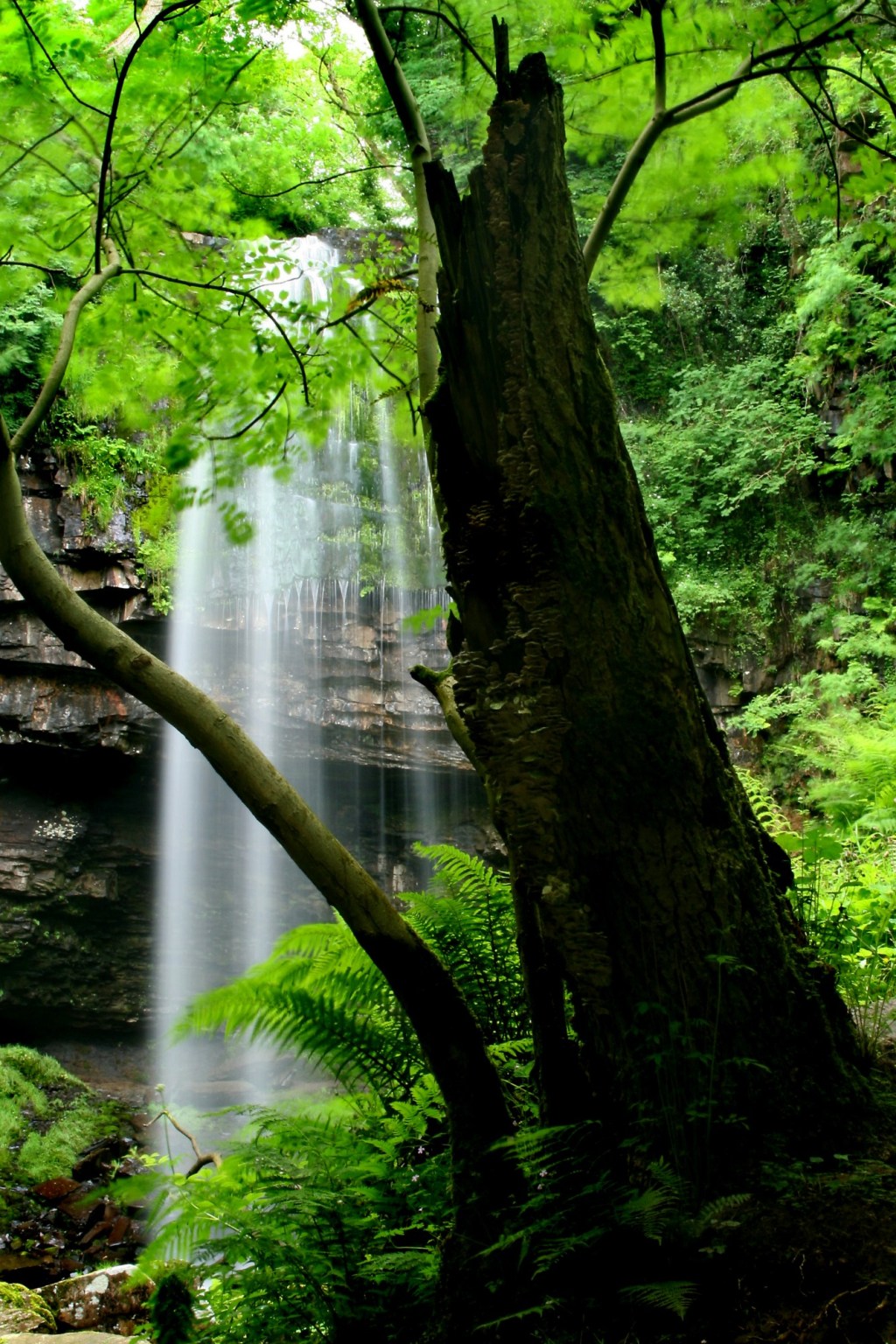
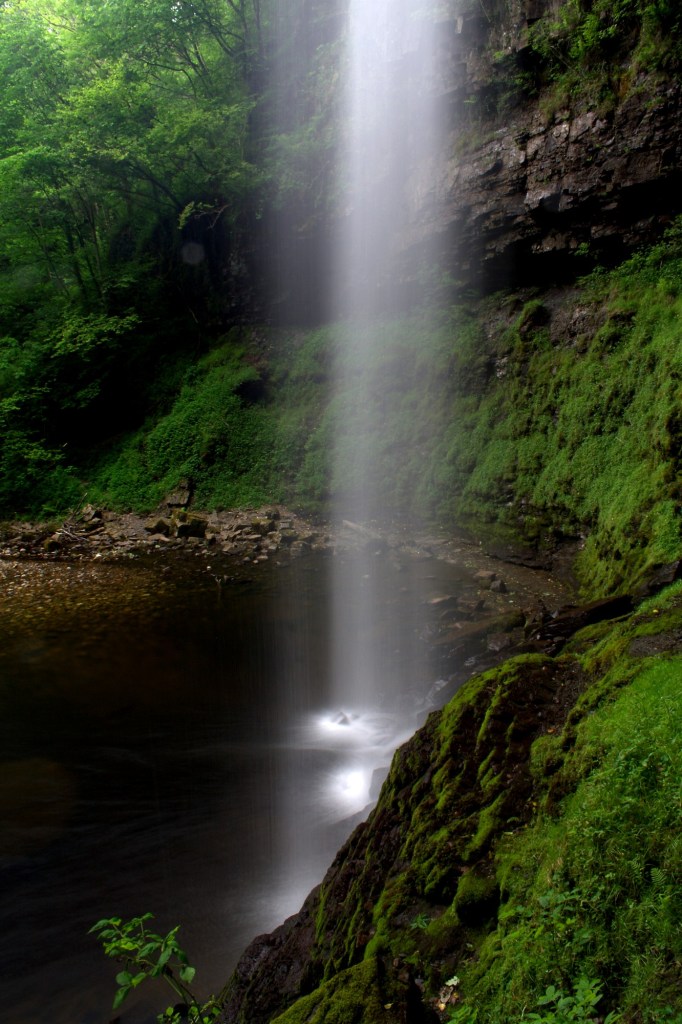
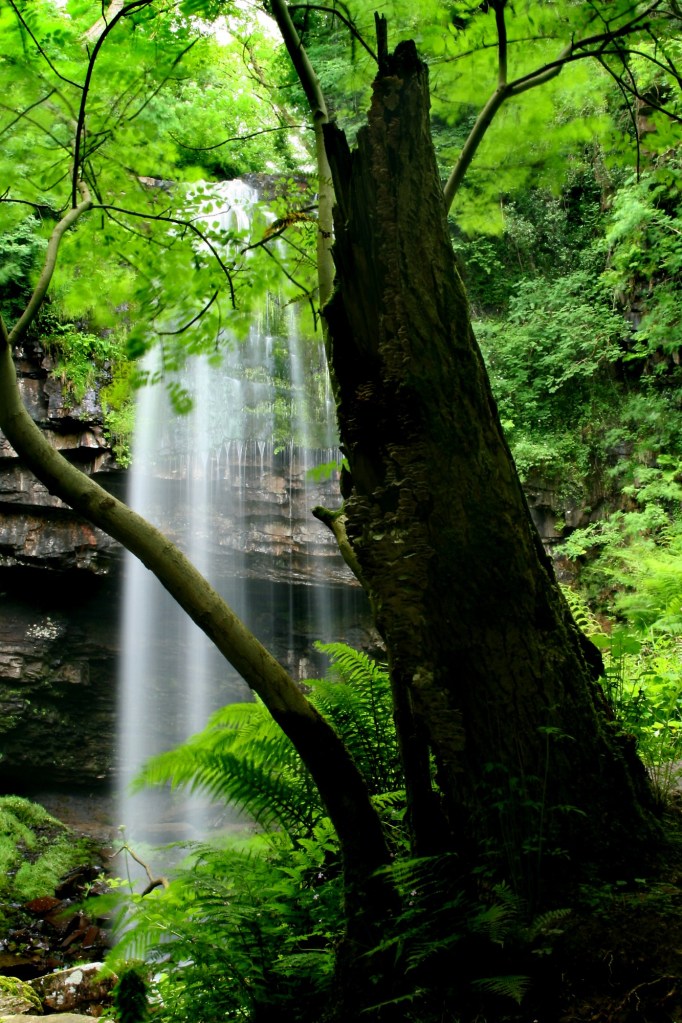
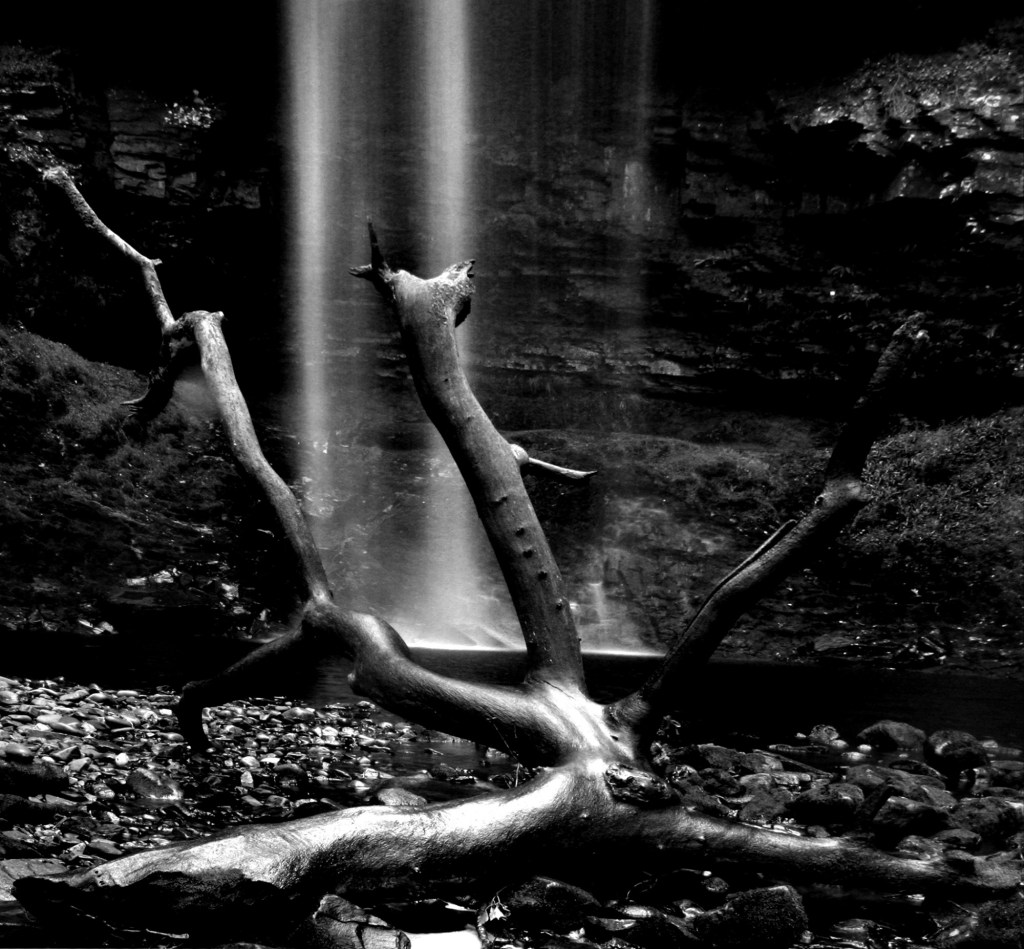
Behind falls I stand, curtain of light, rushing sound, moment lost in time.
Henrhyd Waterfall, the tallest waterfall in South Wales, is a stunning hidden gem in the Brecon Beacons. Tucked away in a lush wooded valley, it takes a short but steep walk to reach—but the effort is well worth it. The 90-foot cascade is especially impressive after heavy rain, creating a powerful curtain of water that you can even walk behind. The surrounding area, part of the National Trust’s Nant Llech nature reserve, adds to the secluded and peaceful feel. Whether you’re visiting for photography, a scenic walk, or just to enjoy the natural beauty, Henrhyd Waterfall is a must-see spot.
If you find my photography or my writing inspiring and uplifting, consider supporting what I do. Buy me a coffee on Ko-fi. Your support makes a difference in my life and helps me create more of what you, and I, like. Thank you!Tap to view my redbubble gallery.
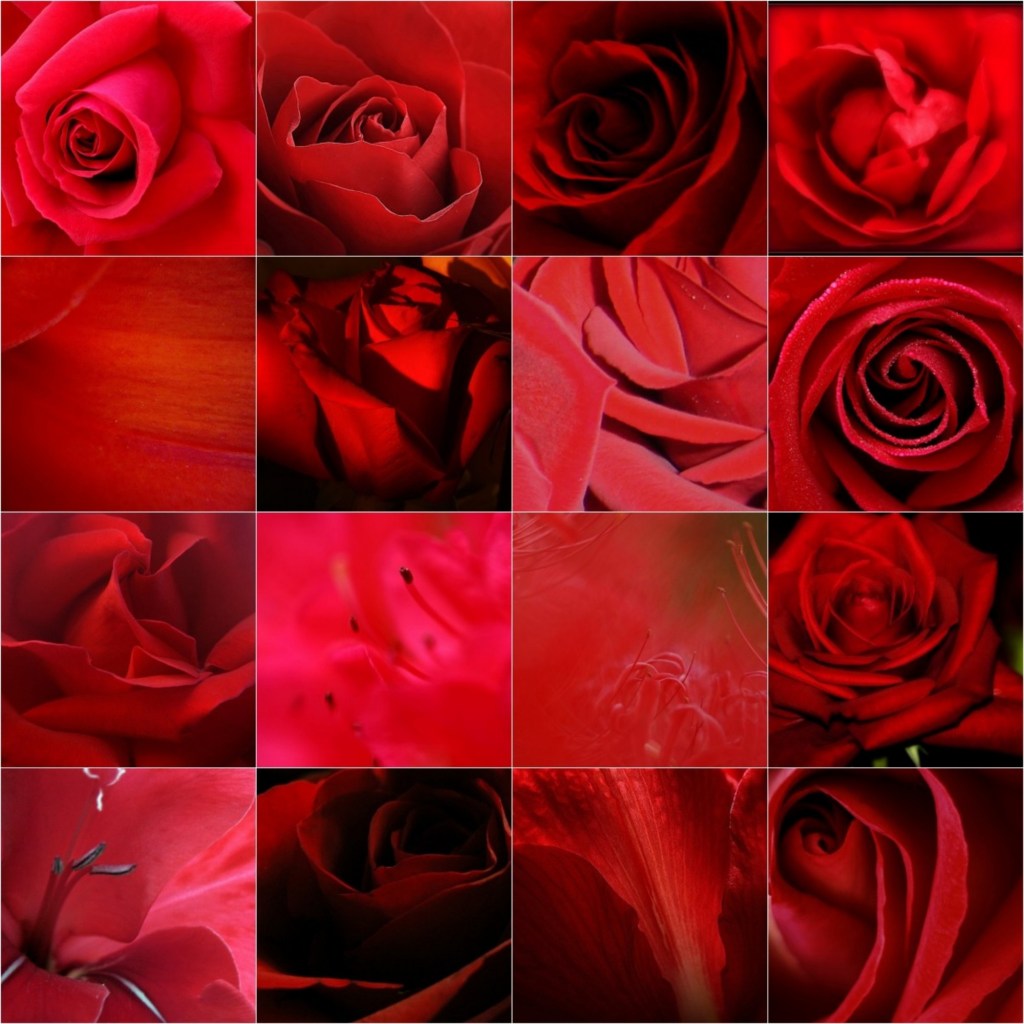
Among the roses, breathing deep and slow, I found a peace I never thought to know. Each crimson bloom a lesson to impart: That beauty heals a once broken heart.
Sarah clutched the wilted bouquet, her fingers trembling against the cellophane wrapper that had seemed so perfect just hours ago. The thorns pressed against her palm, but she barely noticed the sting. It felt fitting somehow, this small pain, after David’s words had torn through her heart: “I just don’t feel the same way anymore.”
The botanical garden’s iron gates stood before her, a refuge she hadn’t planned to visit today. She had walked aimlessly after leaving his apartment, and now here she was, standing before the entrance where she and David had shared their first kiss last spring. The irony wasn’t lost on her.
Inside, the late afternoon sun cast long shadows across the winding paths. She walked without purpose until she found herself in the rose garden, surrounded by hundreds of blooming red roses. Their perfume hung heavy in the air, and for a moment, she couldn’t breathe. Every flower seemed to mock her, echoing the dozen roses she had presented to David earlier that day, along with her heart.
“Beautiful, aren’t they?”
Sarah turned to find an elderly woman in a wide-brimmed hat, pruning shears in hand. Her name tag read “Eleanor – Garden Volunteer.”
“I used to hate them,” Eleanor continued, snipping away at dead heads with practiced ease. “My husband proposed to me with red roses. When he passed away three months later, I couldn’t stand to look at them. But here I am, forty years later, tending to them every Tuesday and Thursday.”
Something in Eleanor’s voice made Sarah stay. She found herself returning the next week, and the week after that. Eleanor taught her how to deadhead the spent blooms, how to identify the different varieties: ‘Mr. Lincoln,’ ‘Chrysler Imperial,’ ‘Veterans’ Honor.’ Sarah learned that each rose had its own character, its own story.
Seasons passed. She watched the roses go dormant in winter, helped Eleanor bed them with mulch against the frost. In spring, she witnessed their resurrection, the first tender shoots appearing, the soil still cold with winter’s memory. Summer brought their glory, and autumn their final, fierce blooming.
The garden became her sanctuary, then her classroom, and finally her joy. She learned that love, like gardening, required patience and care. That beauty could emerge from decay. That endings were also beginnings.
Five years after that first day, Sarah stood in the rose garden again, this time in a white dress. Her bouquet was a cascade of red roses, each one grown and tended by her own hands. Beside her stood Michael, the landscape architect she had met while taking a botanical illustration class at the garden. Eleanor sat in the front row, beaming beneath her signature wide-brimmed hat.
As Sarah exchanged her vows, the roses nodded in the gentle breeze, their fragrance no longer a reminder of loss but a celebration of growth. She had learned what Eleanor knew: that sometimes the things that break our hearts can also heal them, if we’re brave enough to let them.
Years later, as the setting sun painted the garden in shades of amber and gold, Sarah, now the bearer of knowledge at the garden, found a quiet moment to walk among the roses. She touched a velvet petal, remembering the broken-hearted girl who had stumbled into this garden years ago. The roses had taught her that love, like their blooms, was cyclical – that each ending carried within it the seeds of a new beginning.
She plucked a single perfect bloom and placed it on Eleanor’s empty chair, a thank you for the wisdom shared between the thorny stems. Above her, the first stars appeared in the darkening sky, and somewhere in the garden, a nightingale began to sing.
If you find my photography or my writing inspiring and uplifting, consider supporting what I do. Buy me a coffee on Ko-fi. Your support makes a difference in my life and helps me create more of what you, and I, like. Thank you!Tap to view my redbubble gallery.
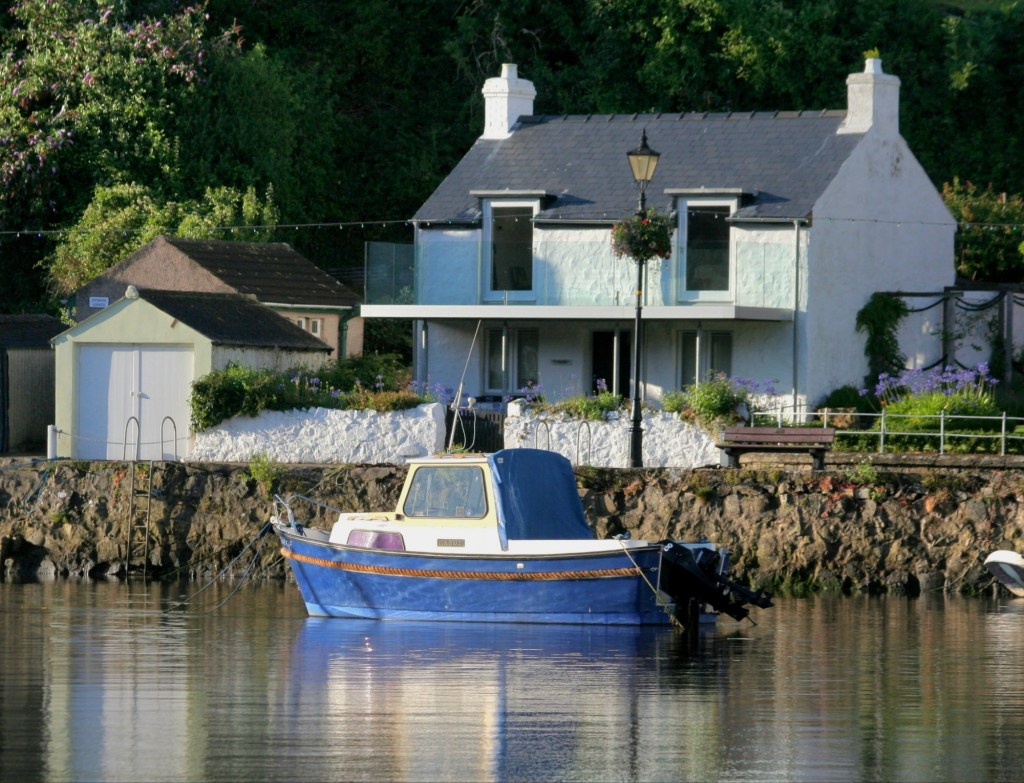
The blue boat sits alone, Quiet on the glassy sea, No ripples, just the tone Of stillness setting free.
Taken at Fishguard quay
In the city, Isabelle’s palette was dictated by quarterly reports. Her canvases were billboards, her medium, marketing slogans. She painted desires, not dreams. Once, art had been her sanctuary, a place where she could lose herself in colour and form, but now it was a transaction—each brushstroke carefully calculated for maximum impact. The aggressive red of SALE, the sterile blue of TRUST, the shimmering gold of LUXURY—they weren’t colours, they were commands.
Her studio, a pristine white cube perched above a canyon of concrete and steel, was as lifeless as the work she produced. Outside, the city pulsed with a restless urgency, but inside, she sat staring at her latest commission, feeling nothing. Had it always been like this? Had she always felt this hollow? She couldn’t remember the last time she painted something just because she wanted to.
When she first saw the cottage in the online listing, it was nothing more than a blurry thumbnail, yet something about it stopped her scrolling. It wasn’t charming in the way holiday rentals usually were. The walls leaned slightly, weather-beaten and unapologetic. The loch behind it stretched out into the mist, quiet, infinite. It was not picturesque, but it was still. And suddenly, stillness was all she wanted.
The journey there felt like shedding a second skin. As the train rattled away from the city, the skyline fading into the distance, something inside her loosened, though she wasn’t sure what. At first, she kept reaching for her phone—out of habit more than anything—but the further she got from mobile towers, the quieter her mind became. It wasn’t just the absence of notifications, emails, deadlines. It was a deeper silence, like a pond settling after a stone has been thrown in.
The cottage smelled of damp wood and time. It creaked when she walked through it, like an old thing waking up. There was no WiFi, no signal. Just the steady lap of the loch against the shore, the whispering reeds, the occasional call of a distant bird. At first, the quiet unnerved her. She found herself pacing, feeling the itch of a life spent in perpetual motion. Her mind kept trying to measure productivity, to assign value to this pause. What are you doing? Wasting time? What if they forget you? What if you come back and there’s nothing left?
On the third day, restless and aimless, she wandered down to the shore, her boots sinking slightly into the wet earth. The loch stretched out before her, a perfect mirror of the grey sky. And there, in the shallow water, rocked a small blue boat. Faded, chipped at the edges, the kind of blue that had been softened by years of wind and rain. Something about it pulled at her. It wasn’t just a boat. It was a contrast—a quiet rebellion against the greyness of everything around it.
She crouched by the water’s edge, picking up a smooth grey stone and rolling it between her fingers. She thought of the screens she used to touch every day, the digital world she had lived in. The cool weight of the stone was real, solid in a way the city never was.
The next morning, she woke to the sound of rain, soft and insistent against the slate roof. She stood by the window, watching the loch blur and ripple under the downpour. The blue boat rocked gently, unfazed. It was such a small thing, and yet she couldn’t look away. The colours before her weren’t the ones she used in the city—no neon, no artificial sheen. Just deep, shifting greys, softened greens, the quiet persistence of the blue.
She picked up a brush without thinking. Not the sleek, expensive sable she used for client work, but a worn-out one she found in a drawer. There was no canvas, so she used a piece of driftwood. She didn’t try to replicate the scene exactly. Instead, she let the colours guide her, pulling from something deeper than observation—something she had ignored for too long. The grey of the sky bled into the grey of her exhaustion. The green of the hills became a longing for something real. The blue of the boat—steady, resilient—was a hope she hadn’t known she still carried.
When she stepped back, her breath caught. It wasn’t a masterpiece. It was raw, uneven, imperfect. But it was hers. A tear slid down her cheek, but she didn’t wipe it away. It wasn’t sadness. It was something closer to relief.
Not all days were easy. Some mornings she stared at a blank page for hours, frustration gnawing at her ribs. Some nights, the city’s voice whispered in her ear, reminding her of deadlines and expectations, of the career she was leaving behind. What if you never make it back? What if this is a mistake?
But then there were moments—standing by the loch, feeling the wind in her hair, watching the way light changed the water—that made it clear she was exactly where she needed to be.
Her work began to shift. She stopped thinking about what people wanted and started painting what she felt. She no longer cared about marketability. She cared about honesty. The colours on her brush became softer, more grounded, pulled from the land around her rather than the demands of a client brief. She painted the hush of the loch at dawn, the weight of the rain-heavy clouds, the steadfast blue of the little boat that never drifted too far.
She wasn’t painting products anymore. She was painting silence. She was painting solitude. She was painting her way back to herself.
If you find my photography or my writing inspiring and uplifting, consider supporting what I do. Buy me a coffee on Ko-fi. Your support makes a difference in my life and helps me create more of what you, and I, like. Thank you!Tap to view my redbubble gallery.
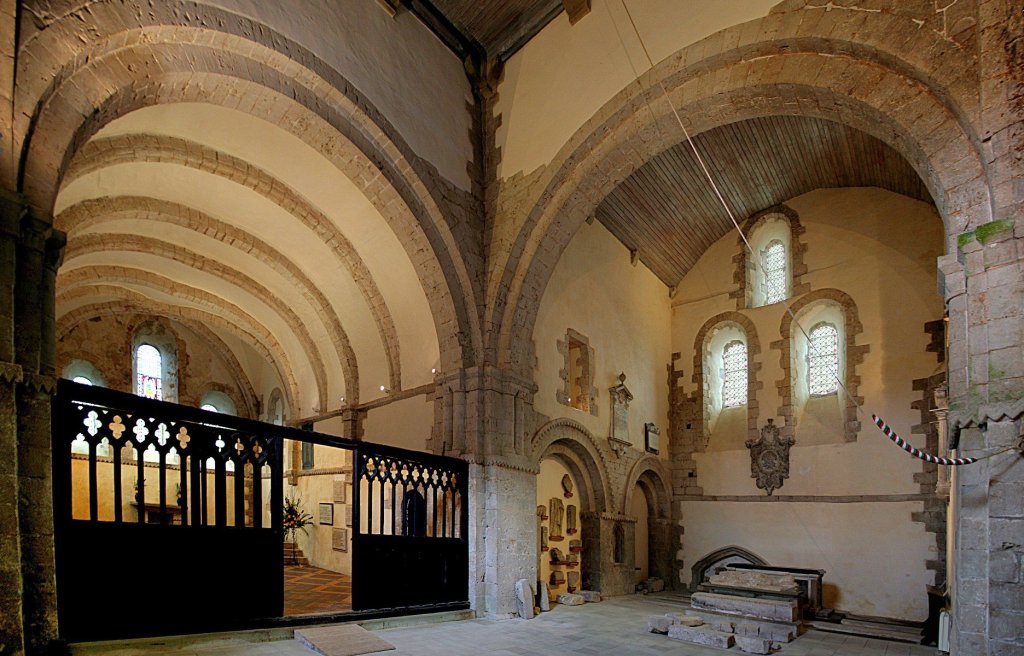
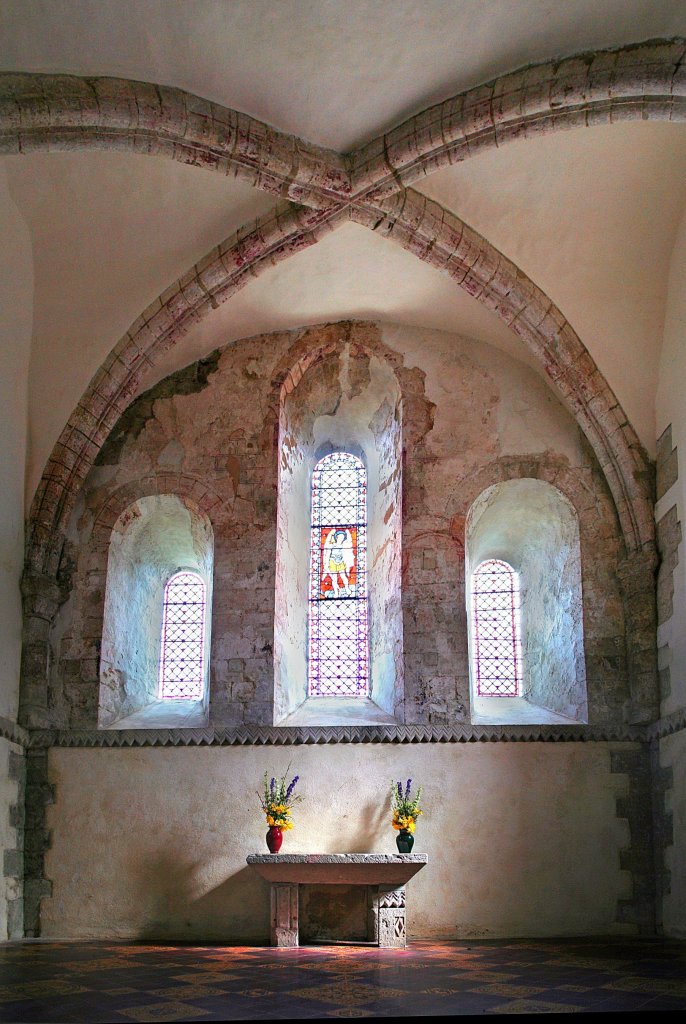
A haven of peace where the past and present converge in a timeless story of beauty and history.
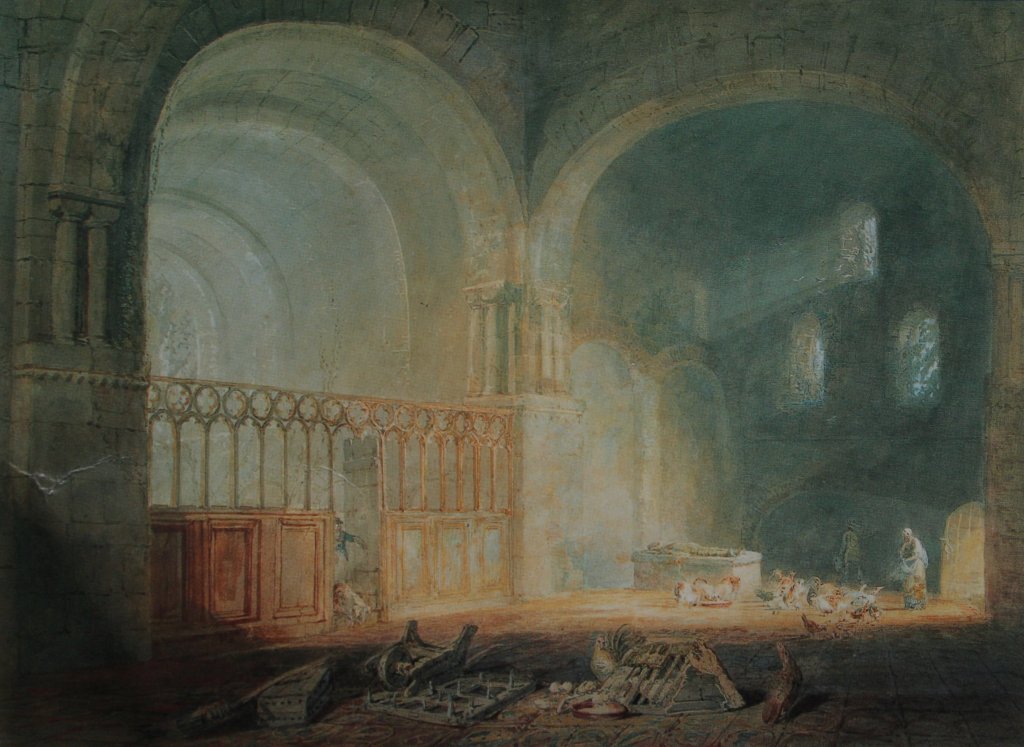
J.M.W. Turner’s Brush with Ewenny Priory (1797)My Version Tried to capture the light
Boo! Greetings, dear mortals. I am Brother Eustace, the ghost of a Benedictine monk haunting the Ewenny Priory, one of the most picturesque and historically rich places in South Wales. It’s been centuries since I left my earthly body, but I still keep a watchful eye on this place, observing the comings and goings of visitors and tourists.
The Light Divine That centre window just draws me in
One thing that always tickles my ghostly bones is the story of J.M.W. Turner having painted the Ewenny Priory. I must admit, I had no idea who that man was until some of the livelier visitors started chattering about it. Apparently, he was a famous artist who had a thing for capturing landscapes and religious buildings in his paintings. And, of course, he couldn’t resist the charm of our humble priory.
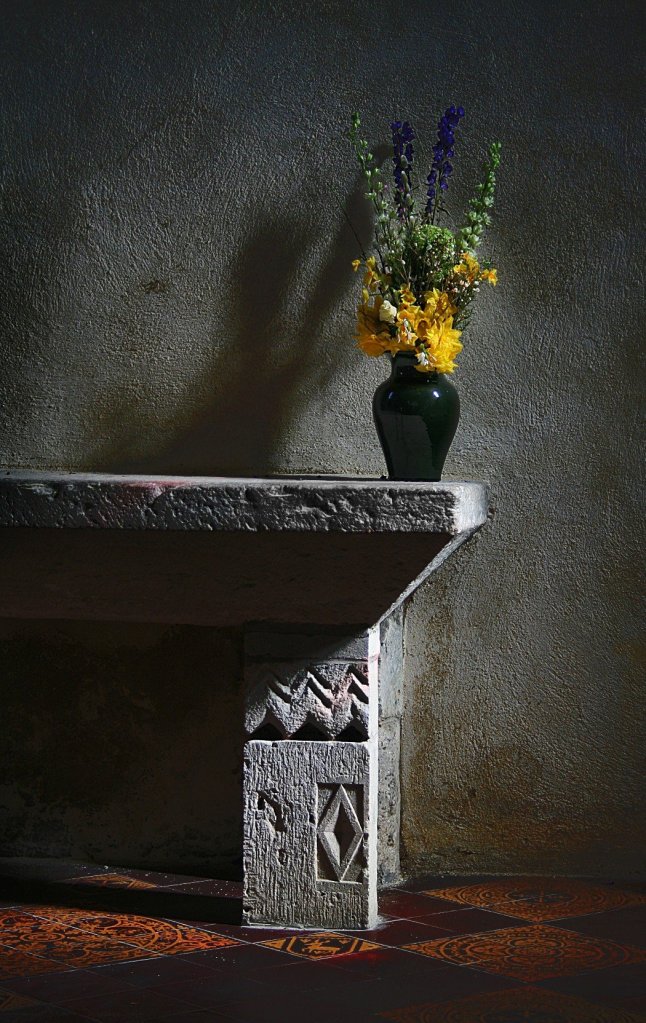
Perfect – Don’t Alter A Thing I love the textures in this
I remember the day he came here vividly, as if it were yesterday. He carried a big wooden box with all sorts of brushes, colours, and canvases, muttering to himself as he looked around for the perfect spot to set up his easel. I couldn’t help but chuckle at the sight of this man, dressed in fancy clothes and sporting a ridiculous top hat, trying to blend in with the solemn atmosphere of the priory.
He spent hours sketching and painting, dabbing his brushes in different colours and stepping back every now and then to admire his work. Seeing as it was already a ruin and being used to keep animals in 1795 when he visited, I must say, he did a decent job of capturing the essence of the priory, with its sturdy stone walls, arched windows, and overgrown gardens. It’s in a better state now, so it’s no wonder people still come here to take photos and admire the scenery.
As for me, I’m just happy to keep watching and haunting, floating through the corridors and whispering secrets to the curious souls who dare to listen. And who knows, maybe one day another famous artist will come and paint the Ewenny Priory once again, immortalising its beauty for generations to come (or maybe it’ll be you with your fancy smartphone). Until then, I’ll be here, keeping a close eye on things and enjoying the occasional chuckle at the antics of the living. Cheers!
If you find my photography or my writing inspiring and uplifting, consider supporting what I do. Buy me a coffee on Ko-fi. Your support makes a difference in my life and helps me create more of what you, and I, like. Thank you!Tap to view my redbubble gallery.
There’s something peculiar about shadows that I never noticed until that Tuesday afternoon in September. I was sitting at my usual coffee shop, the one where the barista always remembers to make my americano with exactly three ice cubes, when I saw it behaving strangely.
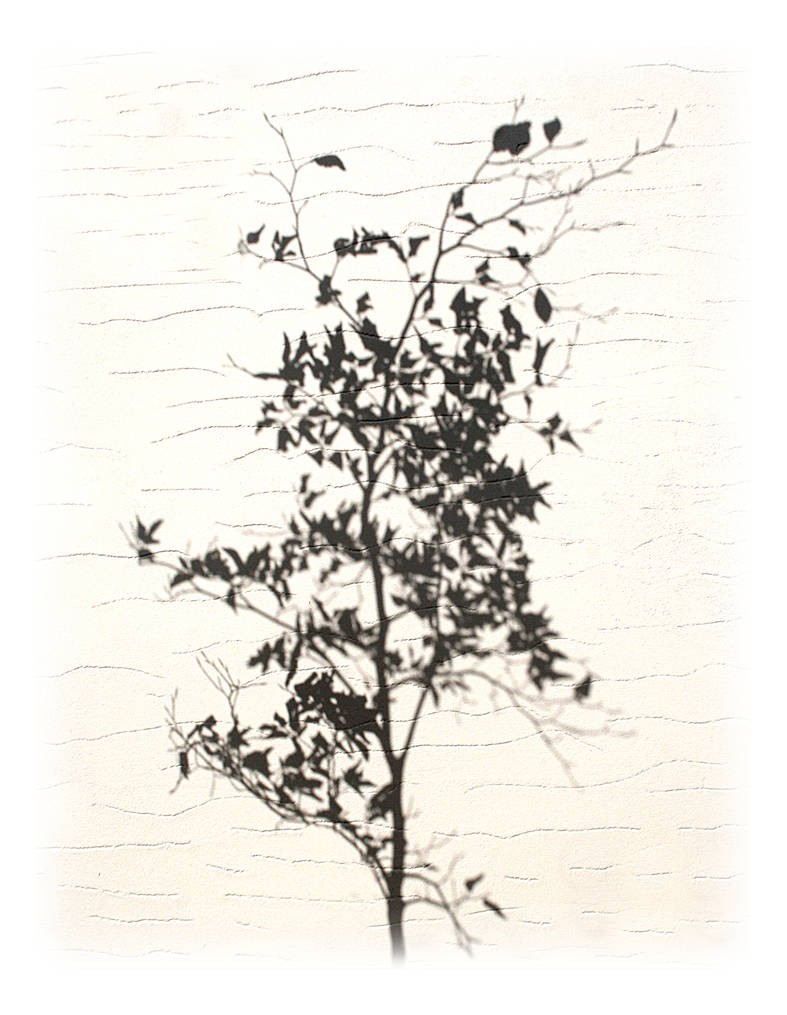
The simple shadow of a beach tree on my garage wall.
My shadow wasn’t following my movements anymore. When I lifted my cup, it kept its arms firmly planted on the table. When I turned my head to look at the clock on the wall, it continued staring straight ahead. It was subtle at first, like the way you might notice a photograph hanging slightly crooked on a wall but convince yourself it’s just your imagination.
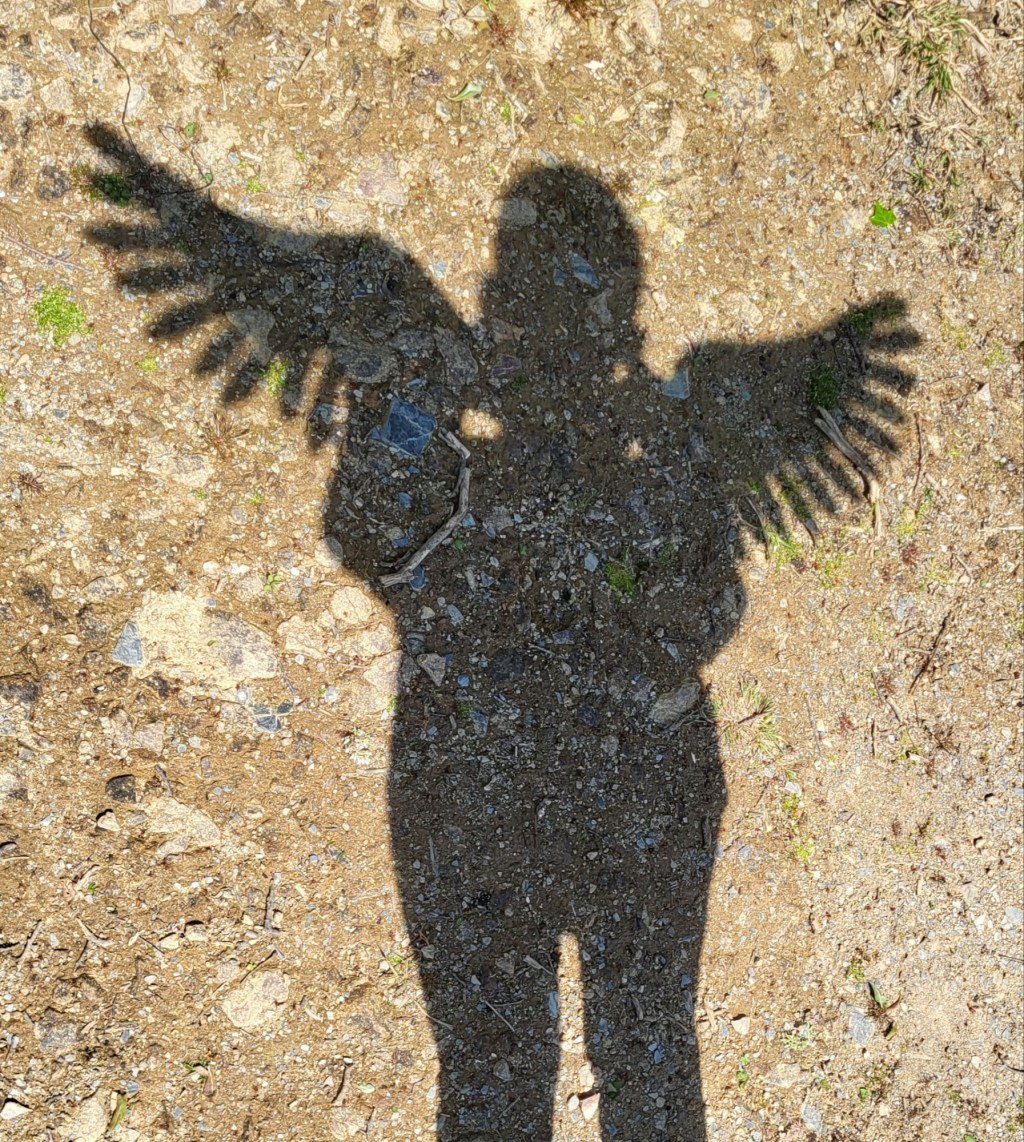
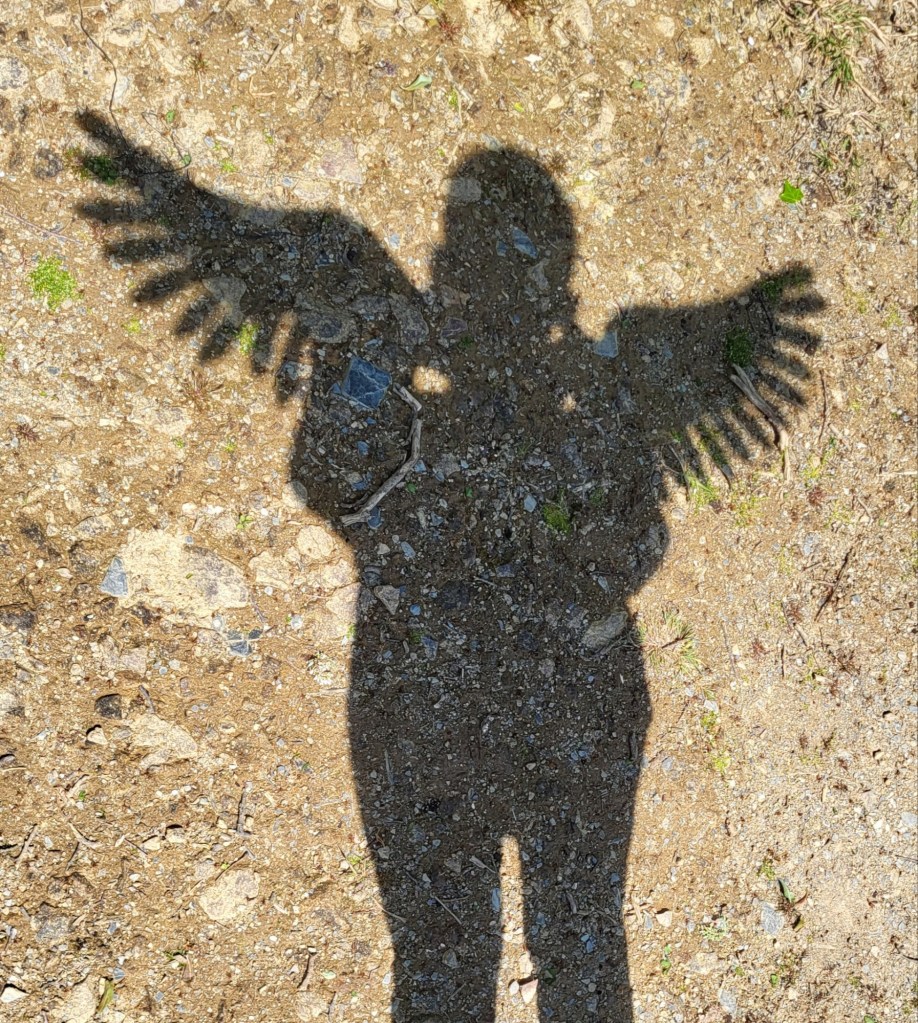
Me pretending to be an angel
The thing about shadows is that they’re honest in a way we can never be. They don’t pretend to smile when they’re sad. They don’t hide their true shape behind carefully chosen clothes or practiced postures. They simply are.
I started watching my shadow more closely after that day. Sometimes, late at night, I’d catch it dancing when I was perfectly still, or reaching for things I’d been wanting but was too afraid to grasp. It was as if it knew all my secrets, all the desires I’d buried so deep I’d forgotten they were there.
One morning, I found a note on my desk written in a hand that looked like mine but wasn’t quite right. It said: “I am what you are when no one is watching. I am the you that exists in empty rooms and dark corners. I am the truth you hide from the world.”
The strange thing wasn’t finding the note. The strange thing was realizing that every word was true.
Now, whenever light falls across my path and stretches my shadow long and dark against the ground, I wonder which one of us is more real – the carefully constructed person I present to the world, or that dark silhouette that moves with its own will and knows every truth I’ve ever tried to hide.
Sometimes, in the moments between sleeping and waking, I think I can feel us merging – the shadow and I – like water flowing into water. But then morning comes, and once again, we are separate: me walking through the world, and my shadow dancing just at the edge of sight, reminding me of everything I could be if I just dared to face it directly.
The barista at my coffee shop doesn’t make me americano anymore. She says I never ordered one. She says I’ve been ordering black coffee, straight and bitter, every day for years. Maybe my shadow knew this all along.
If you find my photography or my writing inspiring and uplifting, consider supporting what I do. Buy me a coffee on Ko-fi. Your support makes a difference in my life and helps me create more of what you, and I, like. Thank you!Tap to view my redbubble gallery.


 Horse’s steady gazeStrengthful eyes that dare to meetChallenge accepted Courage is the strength to face… Read more: Darkness, Power and Beauty
 Daffodil so brightGolden petals, sunshine’s kissHope blooms anew As I wander through the garden, the… Read more: The Daffodil’s Song: A Lyrical Tribute to the Wonders of Spring
 The Graceful Lines of an Acanthus Leaf. Acanthus is a genus of flowering plants native… Read more: Acanthus: A Versatile Plant with a Rich Cultural Heritage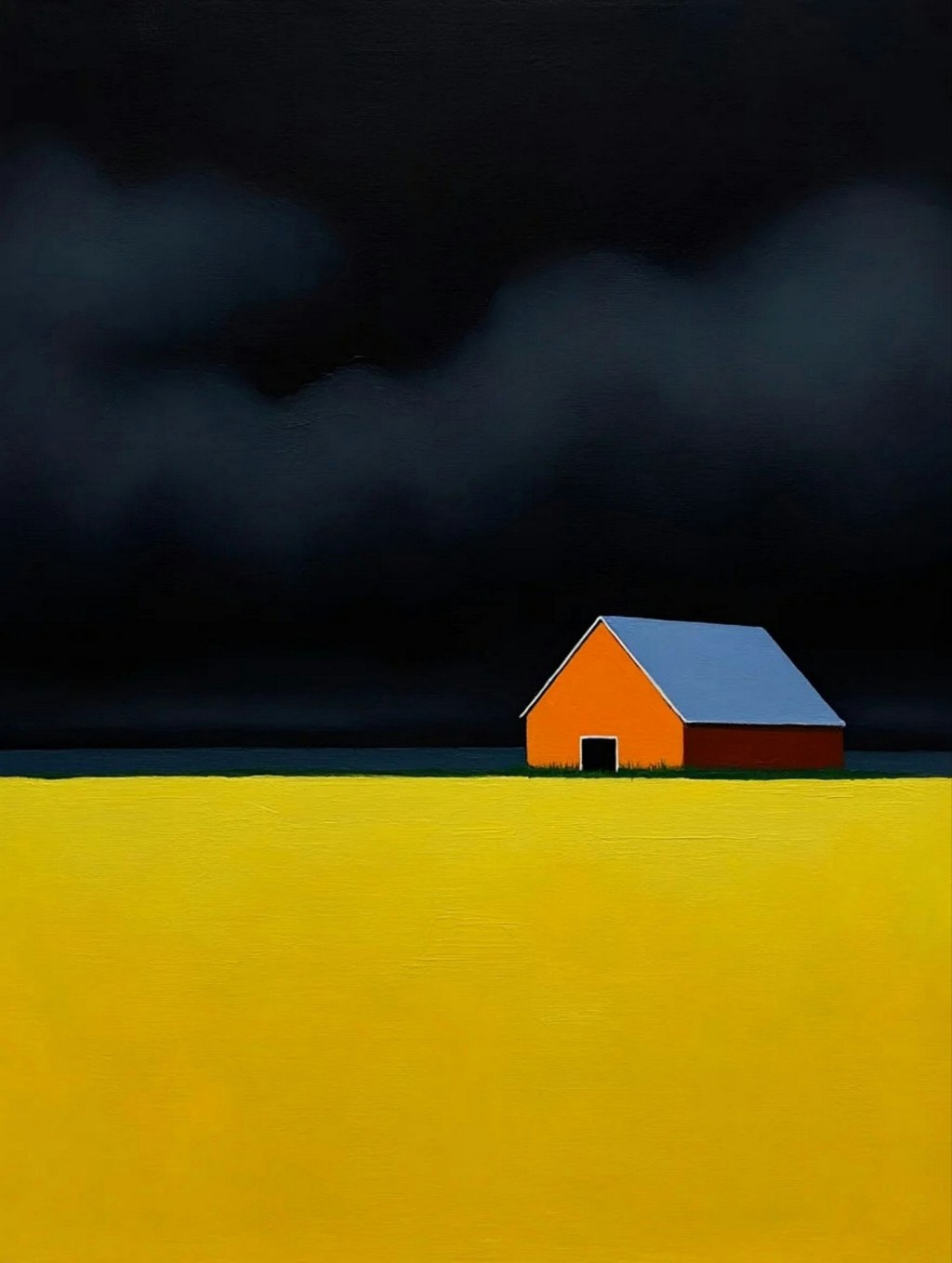








 Anthony's Literary Lens
You must be logged in to post a comment.