Wales is often called the “land of castles” – and for a good reason. There are over 400 castles in this small country, ranging from ancient earthworks and stone ruins to magnificent fortresses and stately homes. In this blog post, I will explore some of the history and features of these castles, and why they are such an important part of Welsh culture and heritage.
Tap to see my red bubble gallery
“Within the weathered stones of Welsh castles, whispers of ancient magic linger, transporting the imagination to realms of enchantment and wonder.”
Anthony
The earliest castles in Wales date back to the Iron Age, when the Celtic tribes built hillforts and defended settlements across the land. Some of these sites, such as Dinas Emrys and Tre’r Ceiri, are still visible today. The Romans also built forts and walls in Wales, such as Segontium and Caerleon, to protect their province of Britannia from the native Britons and the invading Saxons.
The Norman conquest of England in 1066 brought a new wave of castle building in Wales, as the Normans and their allies sought to extend their control and influence over the Welsh kingdoms. They built motte-and-bailey castles, which consisted of a wooden tower on a raised mound (motte) and a walled courtyard (bailey), often surrounded by a ditch. Some of the most famous examples of these castles are Chepstow, Cardiff, and Pembroke. The Normans also rebuilt and enlarged some of the existing Roman and Welsh fortifications, such as Caerphilly and Caernarfon.
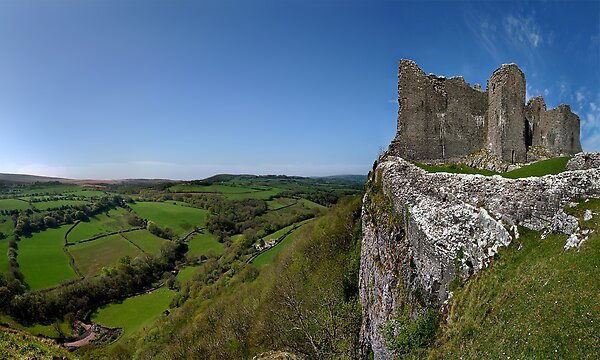
The Welsh princes and lords resisted the Norman invasion and expansion, and built their own castles to defend their territories and assert their authority. These castles were often made of stone, and had distinctive features such as round towers, gatehouses, and curtain walls. Some of the most impressive Welsh castles are Dolwyddelan, Castell y Bere, and Carreg Cennen (photoed). The Welsh castles also reflected the culture and identity of their builders, and often incorporated elements of Welsh art and architecture, such as carvings, sculptures, and inscriptions.
The 13th century saw the rise of King Edward I of England, who launched a series of campaigns to conquer Wales and end the Welsh resistance. He built a ring of massive and sophisticated castles along the north and west coast of Wales, such as Conwy, Beaumaris, Harlech, and Criccieth. These castles were designed to dominate the landscape and intimidate the Welsh population, and were also symbols of royal power and prestige. They were built by master masons and engineers, and had advanced features such as concentric walls, moats, drawbridges, portcullises, and arrow slits. These castles are considered to be some of the finest examples of medieval military architecture in Europe, and are part of the UNESCO World Heritage Site of the Castles and Town Walls of King Edward in Gwynedd.
The 15th century saw the emergence of a Welsh hero, Owain Glyndŵr, who led a rebellion against English rule and proclaimed himself Prince of Wales. He captured and destroyed many of the English and Norman castles, and built his own castles, such as Sycharth and Dolbadarn, to rally his supporters and allies. His rebellion was ultimately unsuccessful, but he inspired generations of Welsh patriots and nationalists.
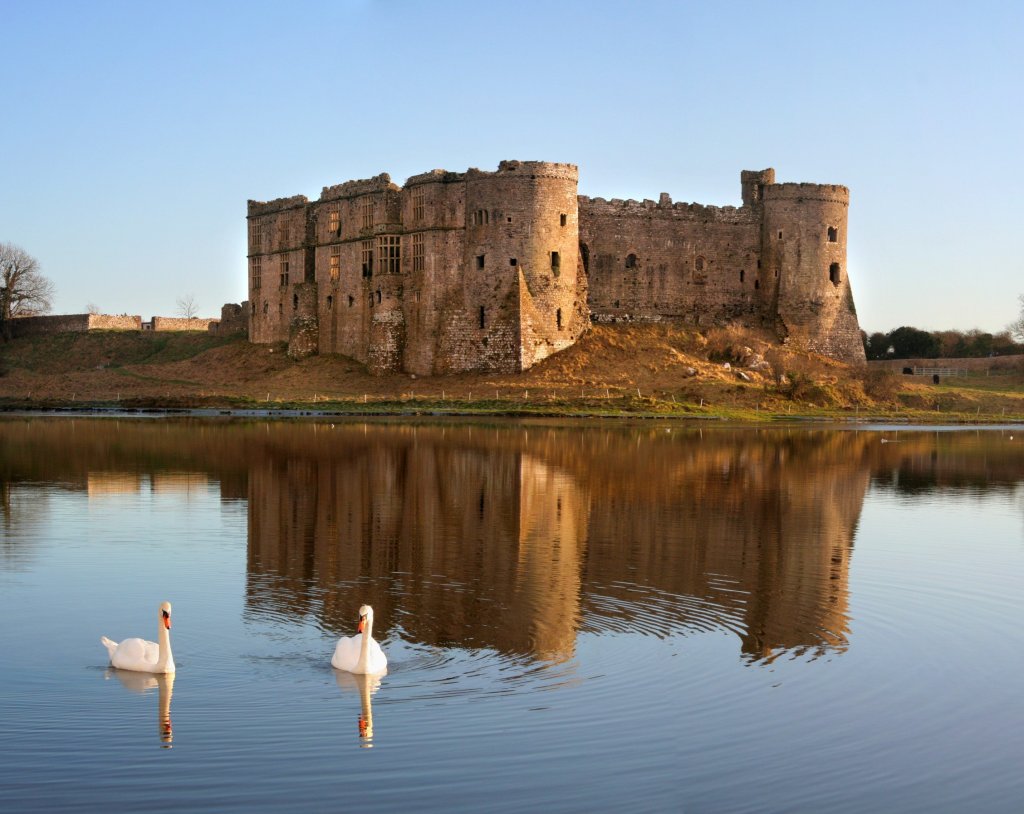
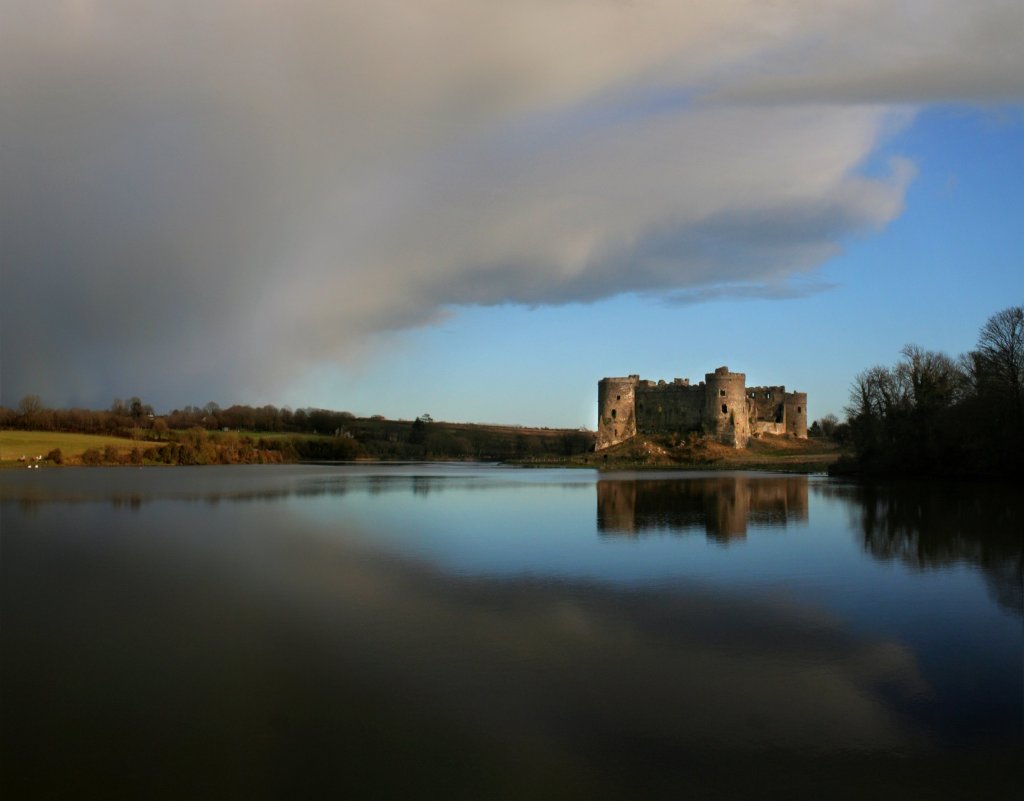
The 16th century saw the Tudor dynasty come to power in England, which had Welsh origins. The Tudors brought a period of relative peace and stability to Wales, and also enacted the Laws in Wales Acts, which integrated Wales into the English legal and administrative system. The Tudors also patronized and renovated some of the Welsh castles, such as Raglan and Carew, and transformed them into comfortable and elegant residences. The Tudors also adopted the Welsh dragon as part of their heraldry and flag, which is still used today as the national emblem of Wales.
The 17th century saw the outbreak of the English Civil War, which divided the country between the Royalists and the Parliamentarians. Many of the Welsh castles were involved in the conflict, and changed hands several times. Some of the castles were besieged, damaged, or demolished, such as Denbigh, Holt, and Chirk. Some of the castles were also used as prisons, garrisons, or headquarters, such as Caerphilly, Powis, and Ludlow.
The 18th and 19th centuries saw the rise of the Industrial Revolution, which transformed the economy and society of Wales. Many of the Welsh castles were neglected, abandoned, or sold, and some of them were used as quarries, factories, or mines, such as Flint, Kidwelly, and Caldicot. Some of the castles were also restored, preserved, or rebuilt, by wealthy landowners, antiquarians, or architects, such as Penrhyn, Castell Coch, and Penhow. Some of the castles were also donated, leased, or sold to the public, the state, or charitable organizations, such as Tretower, Dinefwr, and Plas Mawr.
The 20th and 21st centuries saw the growth of tourism, education, and conservation in Wales. Many of the Welsh castles are now open to visitors, and are managed by various bodies, such as Cadw, the National Trust, and local authorities. The castles are also used for various events, activities, and exhibitions, such as festivals, concerts, weddings, and re-enactments. The castles are also sources of research, learning, and inspiration, for historians, archaeologists, students, and artists. The castles are also part of the national identity and pride of Wales, and are celebrated in literature, music, and art.
The castles of Wales are a rich and diverse legacy of the past, and a living and vibrant part of the present. They tell the stories of the people, events, and ideas that shaped the history and culture of Wales, and also reflect the changes and challenges that faced the country over the centuries. They are also monuments of beauty, skill, and creativity, and showcase the architectural and engineering achievements of their builders and designers. They are also places of wonder, mystery, and romance, and invite us to explore, discover, and enjoy them. They are, in short, the treasures of Wales.

- Darkness, Power and Beauty
 Horse’s steady gazeStrengthful eyes that dare to meetChallenge accepted Courage is the strength to face… Read more: Darkness, Power and Beauty
 - The Daffodil’s Song: A Lyrical Tribute to the Wonders of Spring
 Daffodil so brightGolden petals, sunshine’s kissHope blooms anew As I wander through the garden, the… Read more: The Daffodil’s Song: A Lyrical Tribute to the Wonders of Spring
 - Acanthus: A Versatile Plant with a Rich Cultural Heritage
 The Graceful Lines of an Acanthus Leaf. Acanthus is a genus of flowering plants native… Read more: Acanthus: A Versatile Plant with a Rich Cultural Heritage




 Anthony's Literary Lens
You must be logged in to post a comment.