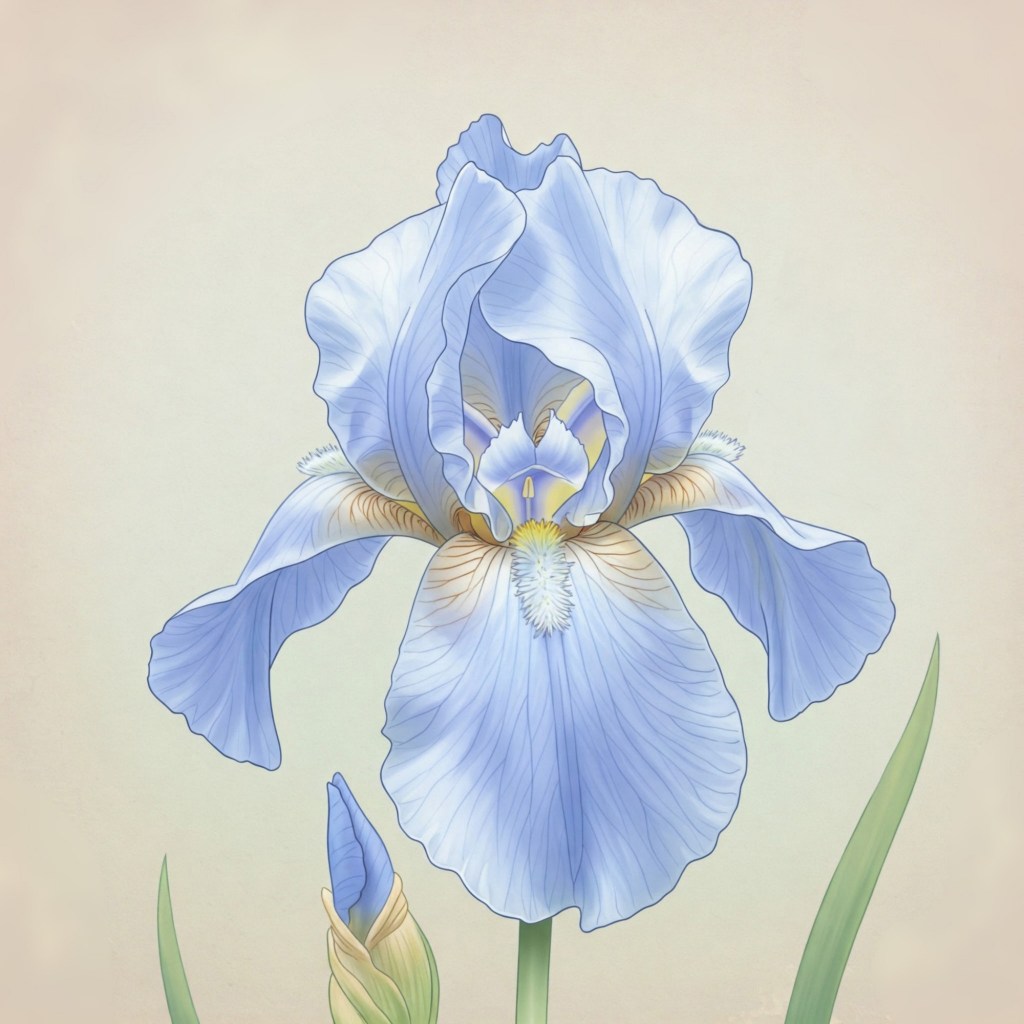
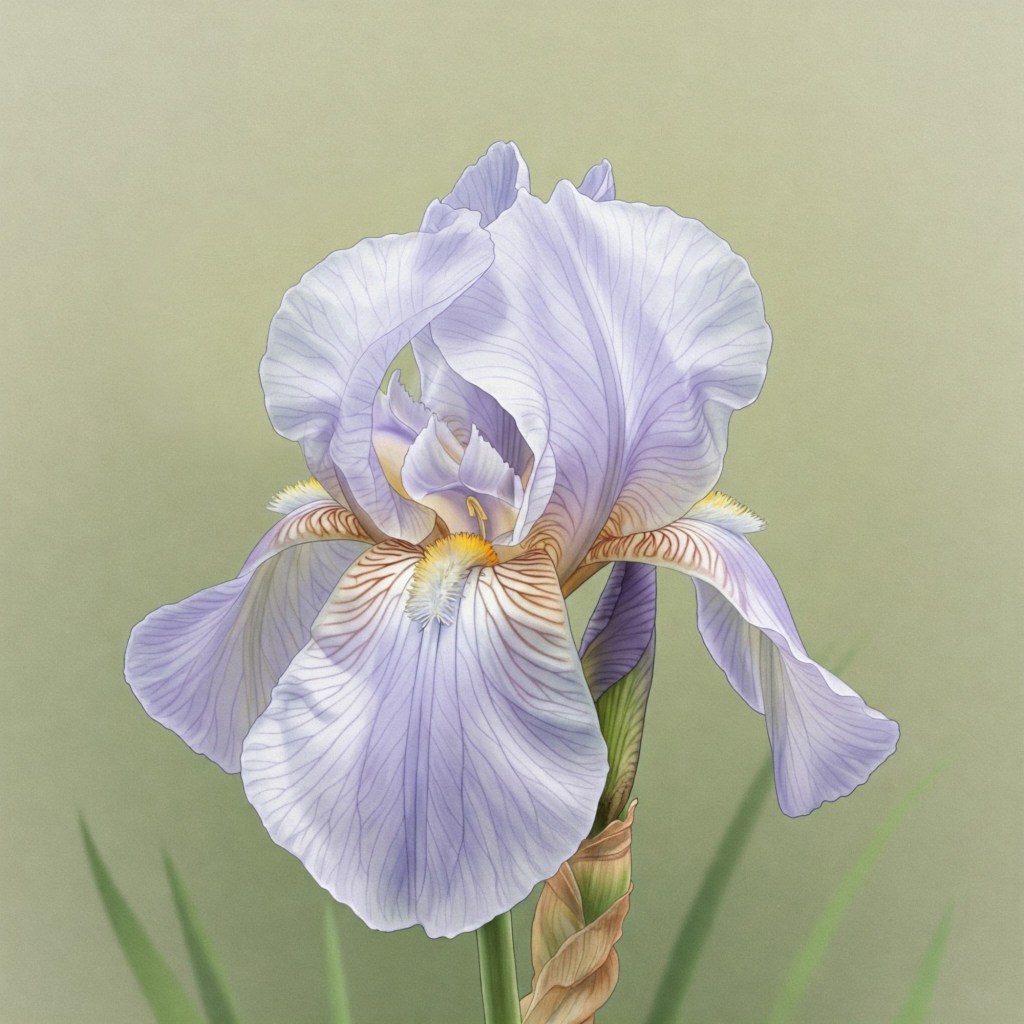
There’s something about this image that quiets the noise in my head. It’s not just a flower—it’s the iris, regal in its posture, soft yet striking in its hue. That shade of blue, almost whispering lilac, feels like a memory I never lived but somehow still know. The petals fold like silk caught in a breeze, elegant and deliberate, each line a testament to nature’s precision and grace.
I think I love this image because it captures fragility without weakness. The iris doesn’t scream for attention—it simply exists, calm and sure of its beauty. The contrast between the softness of the petals and the structure of the stem reminds me that strength can look gentle, too.
And maybe it’s the way the bud sits below the bloom, full of promise, not yet opened but already perfect. It feels like a moment paused, a breath held between what was and what will be. This flower doesn’t just represent beauty—it feels like hope. Silent. Still. But alive.
If you find my photography or my writing inspiring and uplifting, consider supporting what I do. Buy me a coffee on Ko-fi. Your support makes a difference in my life and helps me create more of what you, and I, like. Thank you!Tap to view my redbubble gallery.
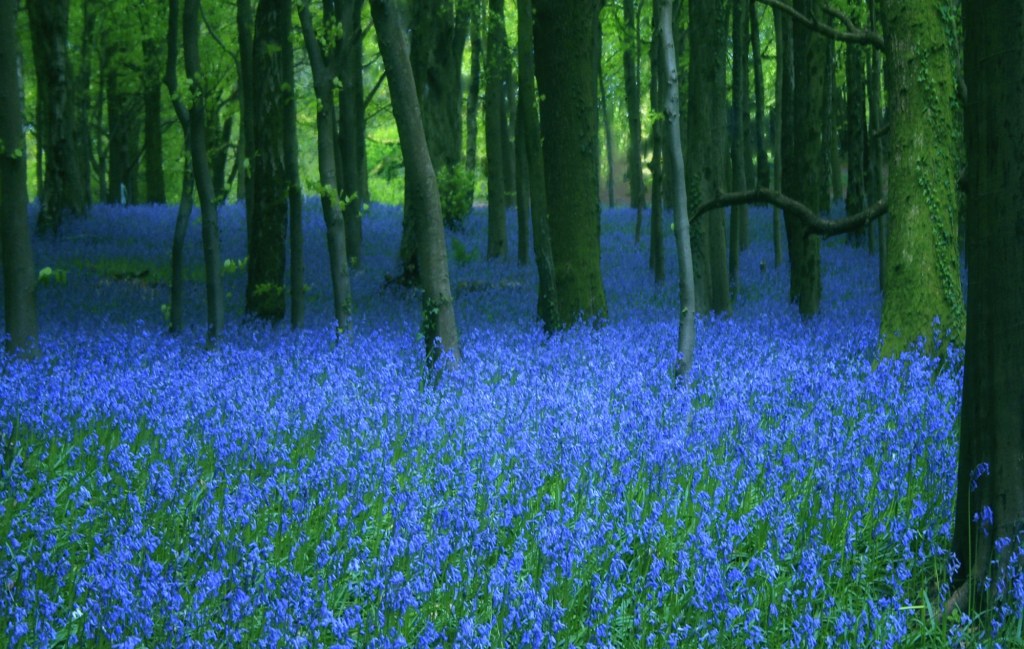
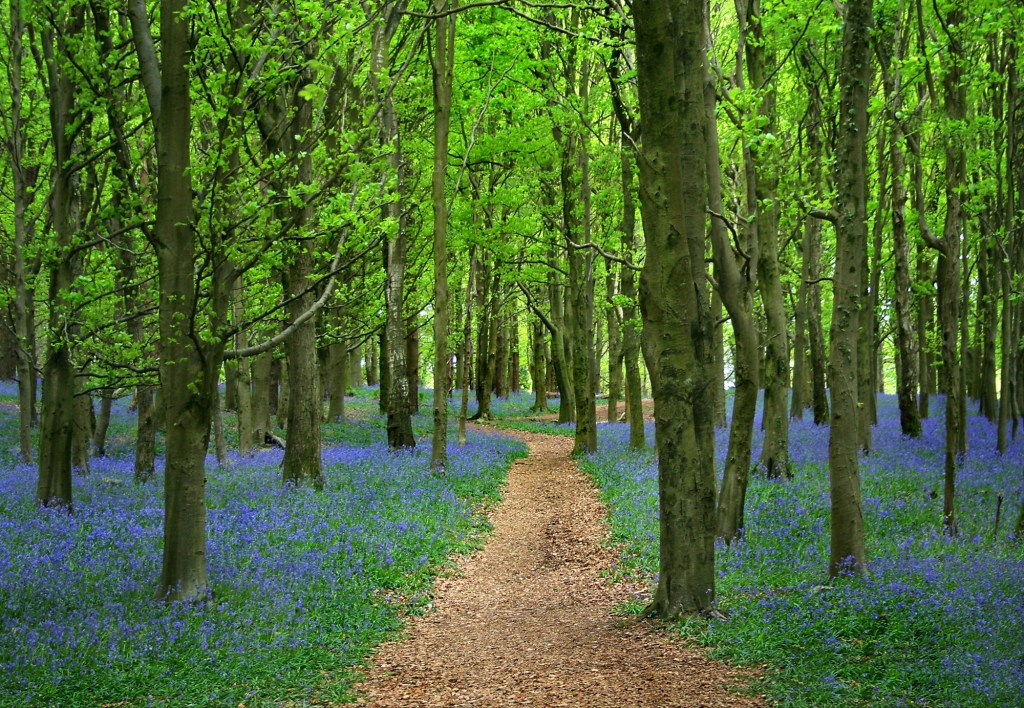
In this sweet season when the year unfolds its tender promise, when Nature, stirring from her wintry sleep, adorns the woodlands with her gentlest hues, I wander aimlessly along pathways where the bluebells keep their soft silent vigil.
How fair these azure bells that bow their heads in modest splendor! They carpet the ancient forest floor as a sea of heavenly blue, each delicate bloom trembling with the faintest breath of wind. Each one a miracle of divine craftsmanship yet humble in its transient glory.
I have looked upon the lapis gardens of noble estates and witnessed the ultramarine depths of mountain lakes, yet never do I find such perfection of shade as in these humble woodland flowers. They are not mere terrestrial blooms but seem messengers from the empyrean realm, bringing down to earth fragments of the firmamental blue that arches high above our temporal dwelling. Their celestial tint speaks to something eternal in the human breast—a recognition of beauty that transcends our brief existence.
And there in the shadowed wood, the beech trees offer up their fresh young leaves, translucent as finest parchment when held against the vernal sun. How tender is their green! How perfect each unfolding leaf, emerging from its winter bud with a slow and patient certainty that speaks of quiet confidence in renewal. These infant leaves, untouched by summer’s hardening rays or autumn’s gilding hand, possess a purity of essence that stirs within the contemplative mind a sense of wonder at creation’s ceaseless cycle.
What blessed communion exists between the bluebell’s heaven-reflecting hue and the beech leaf’s innocent green! Together they form a harmony that no earthly musician could compose, a visual poetry that transcends the feeble efforts of human verse. In their glowing presence, my soul, so often clouded by the vapors of worldly care, finds refreshment and illumination, as if some divine voice speaks through these simple woodland treasures, reminding me of truths profound yet easily forgotten in the tumult of our busy days.
If you find my photography or my writing inspiring and uplifting, consider supporting what I do. Buy me a coffee on Ko-fi. Your support makes a difference in my life and helps me create more of what you, and I, like. Thank you!Tap to view my redbubble gallery.
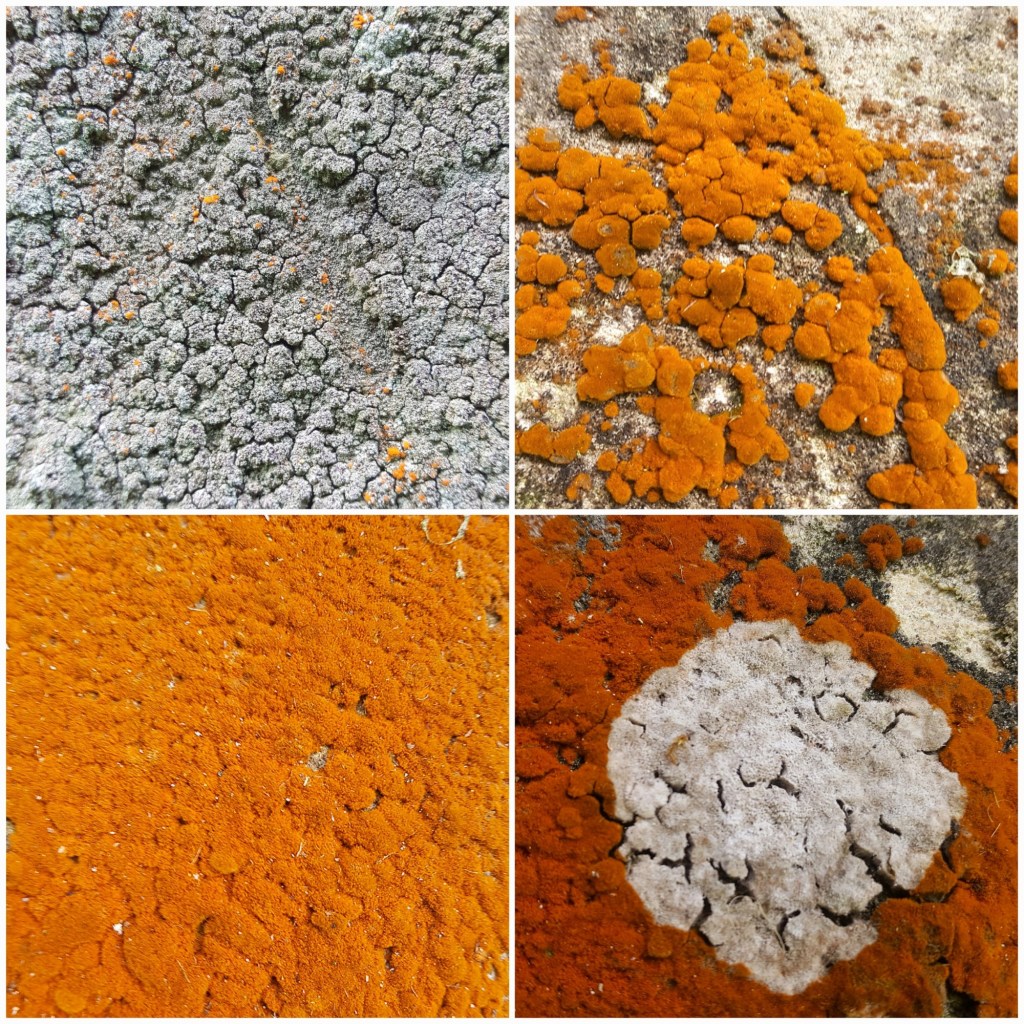
I am neither plant, nor fungus, nor alga alone – I am lichen, a symbiotic partnership thriving where others cannot survive.
Photos of Lichen I’ve taken
Within my body, my fungal partner provides shelter while my photosynthetic companion creates food. We demonstrate that survival often depends on collaboration, not competition.
Time moves differently for me. While animals live brief lives and trees last centuries, some of my relatives have existed for 4,500 years, silently witnessing the rise and fall of human civilizations.
I am a pioneer, first to colonize bare surfaces after disturbances. My acids break down rock into soil, creating footholds for other plants. In harsh environments – scorching deserts, frigid peaks, even the vacuum of space – I demonstrate remarkable resilience, becoming dormant until conditions improve.
To reindeer, I am vital winter food. To insects, I provide shelter. To humans, I serve as medicine, dye, and environmental indicator – my presence or absence reveals air quality.
My success comes not from strength or speed, but from finding the right partners and adapting to extreme conditions. On the edge of habitability, you’ll find me quietly thriving through cooperation and the slow power of persistence.
If you find my photography or my writing inspiring and uplifting, consider supporting what I do. Buy me a coffee on Ko-fi. Your support makes a difference in my life and helps me create more of what you, and I, like. Thank you!Tap to view my redbubble gallery.
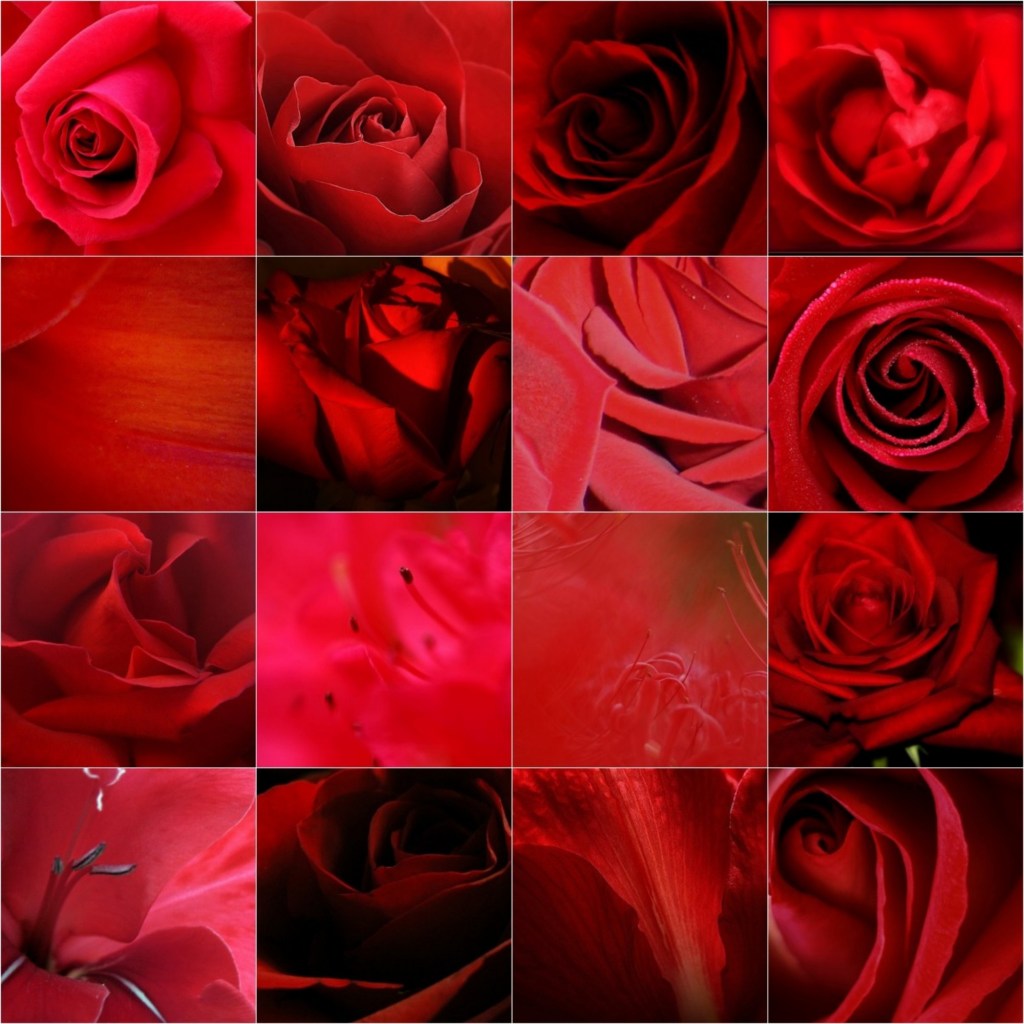
Among the roses, breathing deep and slow, I found a peace I never thought to know. Each crimson bloom a lesson to impart: That beauty heals a once broken heart.
Sarah clutched the wilted bouquet, her fingers trembling against the cellophane wrapper that had seemed so perfect just hours ago. The thorns pressed against her palm, but she barely noticed the sting. It felt fitting somehow, this small pain, after David’s words had torn through her heart: “I just don’t feel the same way anymore.”
The botanical garden’s iron gates stood before her, a refuge she hadn’t planned to visit today. She had walked aimlessly after leaving his apartment, and now here she was, standing before the entrance where she and David had shared their first kiss last spring. The irony wasn’t lost on her.
Inside, the late afternoon sun cast long shadows across the winding paths. She walked without purpose until she found herself in the rose garden, surrounded by hundreds of blooming red roses. Their perfume hung heavy in the air, and for a moment, she couldn’t breathe. Every flower seemed to mock her, echoing the dozen roses she had presented to David earlier that day, along with her heart.
“Beautiful, aren’t they?”
Sarah turned to find an elderly woman in a wide-brimmed hat, pruning shears in hand. Her name tag read “Eleanor – Garden Volunteer.”
“I used to hate them,” Eleanor continued, snipping away at dead heads with practiced ease. “My husband proposed to me with red roses. When he passed away three months later, I couldn’t stand to look at them. But here I am, forty years later, tending to them every Tuesday and Thursday.”
Something in Eleanor’s voice made Sarah stay. She found herself returning the next week, and the week after that. Eleanor taught her how to deadhead the spent blooms, how to identify the different varieties: ‘Mr. Lincoln,’ ‘Chrysler Imperial,’ ‘Veterans’ Honor.’ Sarah learned that each rose had its own character, its own story.
Seasons passed. She watched the roses go dormant in winter, helped Eleanor bed them with mulch against the frost. In spring, she witnessed their resurrection, the first tender shoots appearing, the soil still cold with winter’s memory. Summer brought their glory, and autumn their final, fierce blooming.
The garden became her sanctuary, then her classroom, and finally her joy. She learned that love, like gardening, required patience and care. That beauty could emerge from decay. That endings were also beginnings.
Five years after that first day, Sarah stood in the rose garden again, this time in a white dress. Her bouquet was a cascade of red roses, each one grown and tended by her own hands. Beside her stood Michael, the landscape architect she had met while taking a botanical illustration class at the garden. Eleanor sat in the front row, beaming beneath her signature wide-brimmed hat.
As Sarah exchanged her vows, the roses nodded in the gentle breeze, their fragrance no longer a reminder of loss but a celebration of growth. She had learned what Eleanor knew: that sometimes the things that break our hearts can also heal them, if we’re brave enough to let them.
Years later, as the setting sun painted the garden in shades of amber and gold, Sarah, now the bearer of knowledge at the garden, found a quiet moment to walk among the roses. She touched a velvet petal, remembering the broken-hearted girl who had stumbled into this garden years ago. The roses had taught her that love, like their blooms, was cyclical – that each ending carried within it the seeds of a new beginning.
She plucked a single perfect bloom and placed it on Eleanor’s empty chair, a thank you for the wisdom shared between the thorny stems. Above her, the first stars appeared in the darkening sky, and somewhere in the garden, a nightingale began to sing.
If you find my photography or my writing inspiring and uplifting, consider supporting what I do. Buy me a coffee on Ko-fi. Your support makes a difference in my life and helps me create more of what you, and I, like. Thank you!Tap to view my redbubble gallery.
There’s something peculiar about shadows that I never noticed until that Tuesday afternoon in September. I was sitting at my usual coffee shop, the one where the barista always remembers to make my americano with exactly three ice cubes, when I saw it behaving strangely.
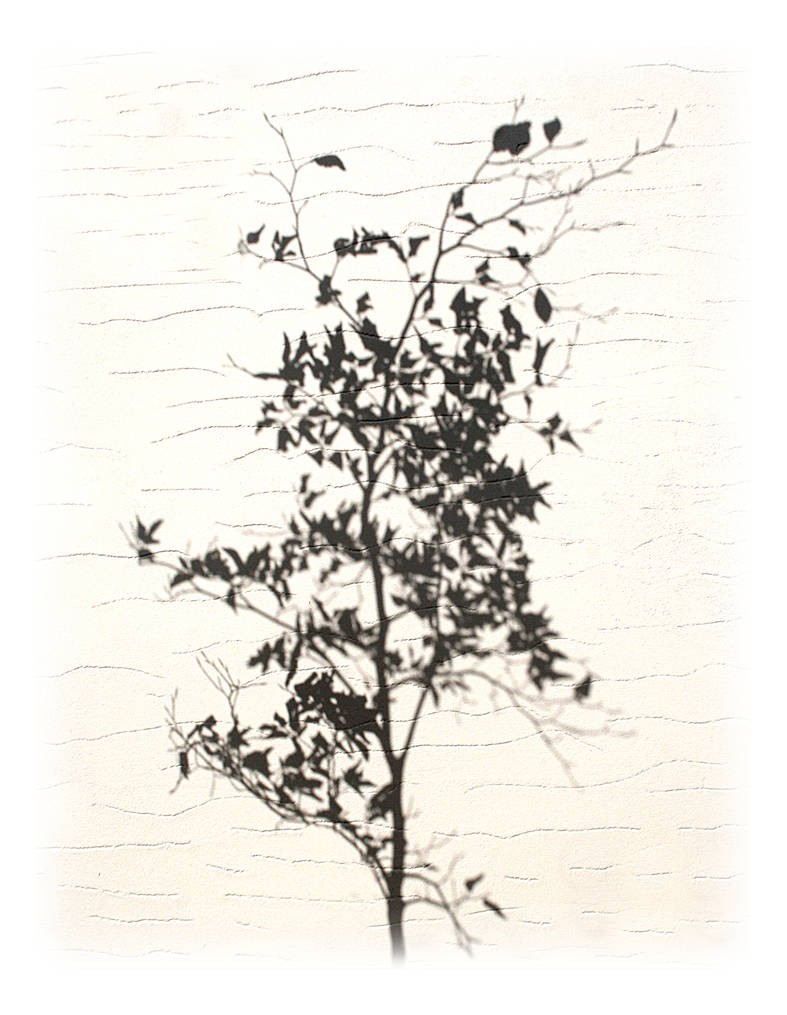
The simple shadow of a beach tree on my garage wall.
My shadow wasn’t following my movements anymore. When I lifted my cup, it kept its arms firmly planted on the table. When I turned my head to look at the clock on the wall, it continued staring straight ahead. It was subtle at first, like the way you might notice a photograph hanging slightly crooked on a wall but convince yourself it’s just your imagination.
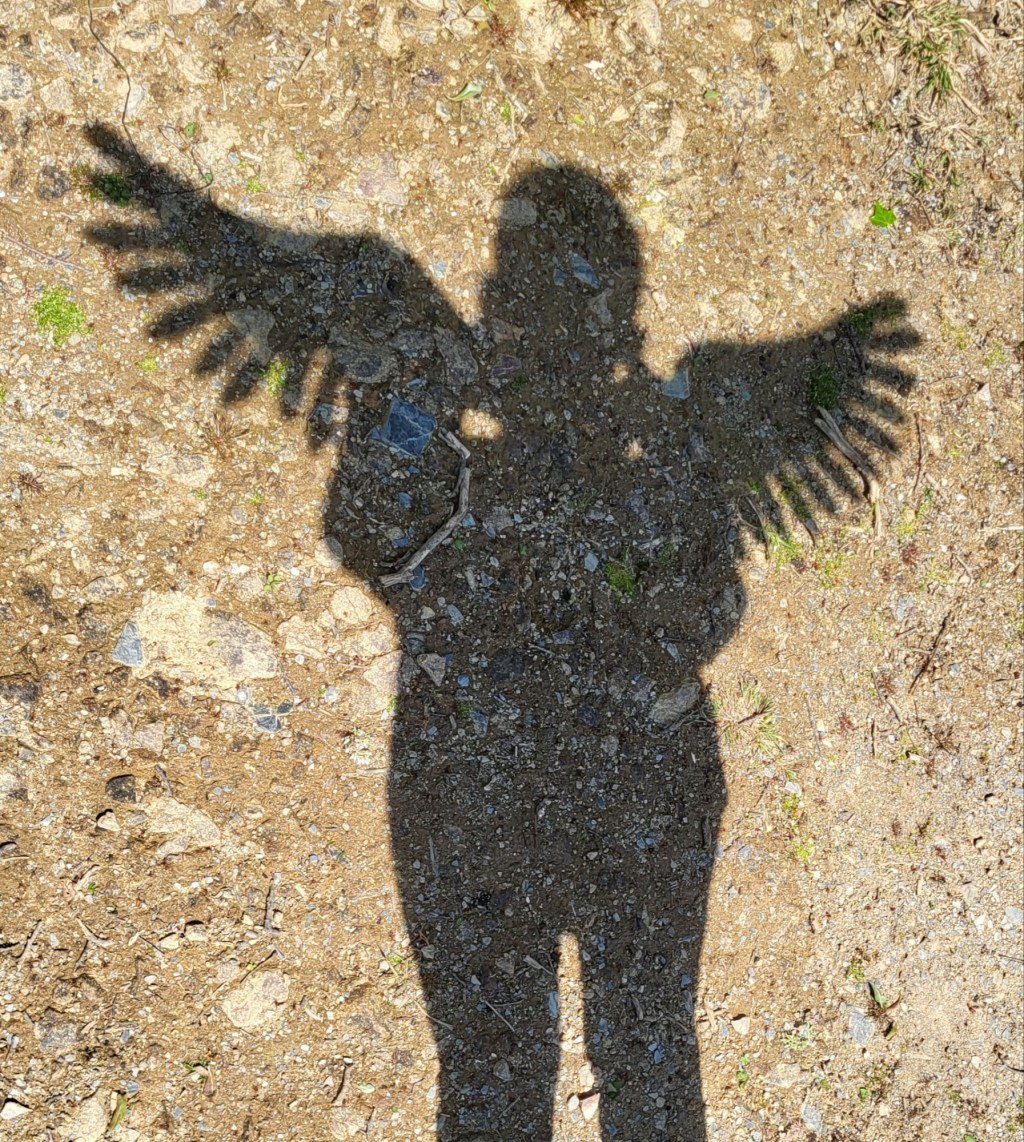
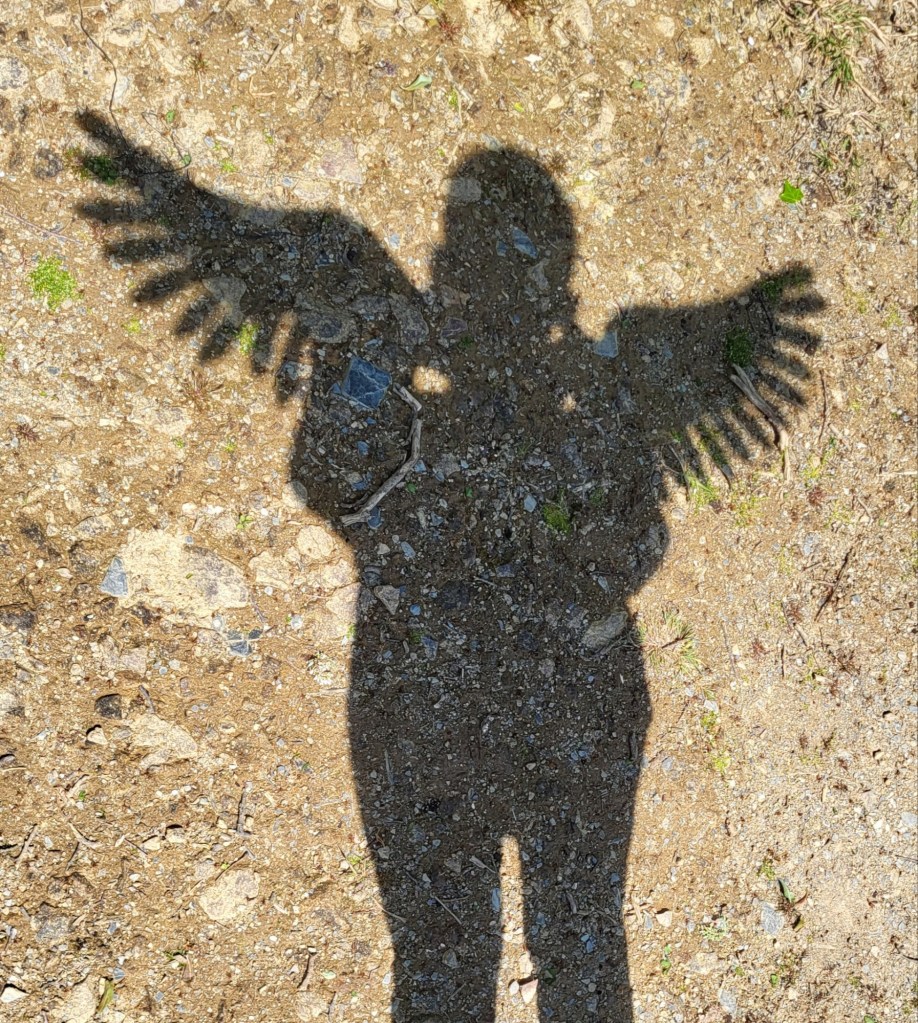
Me pretending to be an angel
The thing about shadows is that they’re honest in a way we can never be. They don’t pretend to smile when they’re sad. They don’t hide their true shape behind carefully chosen clothes or practiced postures. They simply are.
I started watching my shadow more closely after that day. Sometimes, late at night, I’d catch it dancing when I was perfectly still, or reaching for things I’d been wanting but was too afraid to grasp. It was as if it knew all my secrets, all the desires I’d buried so deep I’d forgotten they were there.
One morning, I found a note on my desk written in a hand that looked like mine but wasn’t quite right. It said: “I am what you are when no one is watching. I am the you that exists in empty rooms and dark corners. I am the truth you hide from the world.”
The strange thing wasn’t finding the note. The strange thing was realizing that every word was true.
Now, whenever light falls across my path and stretches my shadow long and dark against the ground, I wonder which one of us is more real – the carefully constructed person I present to the world, or that dark silhouette that moves with its own will and knows every truth I’ve ever tried to hide.
Sometimes, in the moments between sleeping and waking, I think I can feel us merging – the shadow and I – like water flowing into water. But then morning comes, and once again, we are separate: me walking through the world, and my shadow dancing just at the edge of sight, reminding me of everything I could be if I just dared to face it directly.
The barista at my coffee shop doesn’t make me americano anymore. She says I never ordered one. She says I’ve been ordering black coffee, straight and bitter, every day for years. Maybe my shadow knew this all along.
If you find my photography or my writing inspiring and uplifting, consider supporting what I do. Buy me a coffee on Ko-fi. Your support makes a difference in my life and helps me create more of what you, and I, like. Thank you!Tap to view my redbubble gallery.
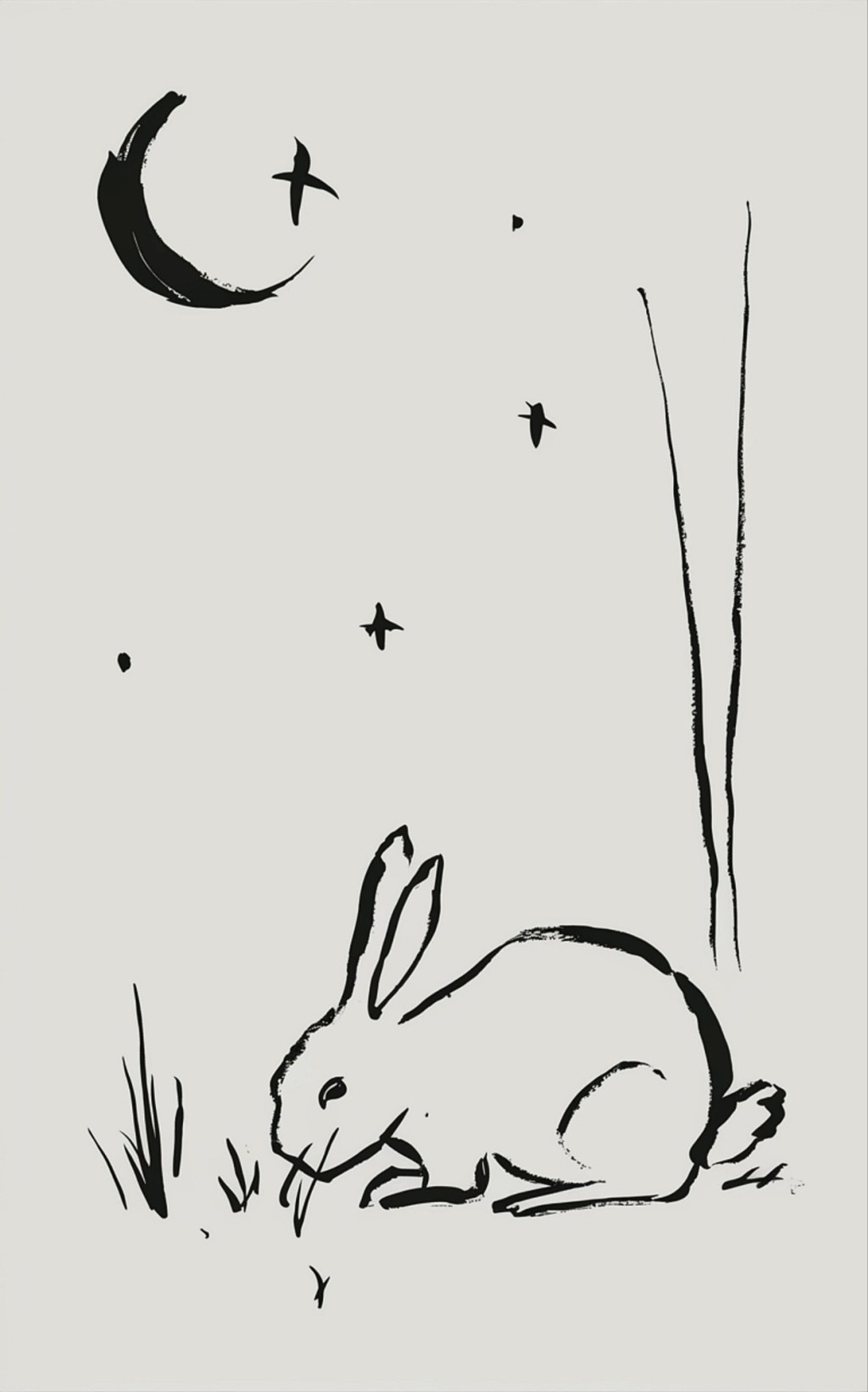
In the simplicity of a few black lines capturing a rabbit’s form, we find the simple truth that nature speaks through balance. Every curve and angle in the natural world seems to fall precisely where it should, as if guided by an invisible hand that knows exactly when to bend and when to stretch, when to soar and when to rest.
Tap the image and you can buy cards or prints in redbubble
Consider how a rabbit’s form combines gentle curves with decisive lines – the soft arch of its back flowing into the alert angle of its ears, the delicate tuck of its feet beneath the rounded mass of its body. These elements don’t just coexist; they converse with each other in a visual harmony that feels inevitably right.
The ancient Chinese principle of feng shui recognized this natural balance centuries ago. It speaks of qi – the vital force that flows through all things – and how it moves in curves, like water finding its path downhill or wind shaping stones over millennia. Sharp angles and straight lines exist in nature too, but they’re almost always softened by organic curves, like the straight trunk of a tree dissolving into the graceful arc of its branches.
This balance appears everywhere we look: in the spiral of a nautilus shell that follows the golden ratio, in the branching patterns of lightning that mirror the veins of a leaf, in the way a falcon’s wing curves exactly as needed to catch the wind. Nature doesn’t calculate these designs; they emerge from the fundamental forces that shape our world, each finding its perfect expression through countless iterations over time.
Even in chaos, nature finds balance. A hurricane’s spiral, violent as it may be, follows the same mathematical principles as the gentle unfurling of a fern frond. The jagged line of a mountain range creates its own kind of harmony with the sky, each peak and valley notes on a stave creating a balanced tune that feels complete and right.
Perhaps this is why minimalist art, like my rabbit drawing, can capture something so profound. By reducing form to its essential elements, it reveals the underlying balance that makes natural design so compelling. In those few decisive lines, we see not just a rabbit, but a piece of fundamental harmony that runs through all things – the perfect tension between straight and curved, between movement and stillness, between complexity and simplicity.
It reminds us that true balance isn’t static – it’s a dynamic dance of opposing forces finding their perfect equilibrium, like the eternal cycle of yin and yang. In this way, every natural form becomes a lesson in harmony, teaching us that beauty often lies not in elaboration, but in finding that exquisite point where nothing needs to be added and nothing needs to be taken away.
If you find my photography or my writing inspiring and uplifting, consider supporting what I do. Buy me a coffee on Ko-fi. Your support makes a difference in my life and helps me create more of what you, and I, like. Thank you!Tap to view my redbubble gallery.
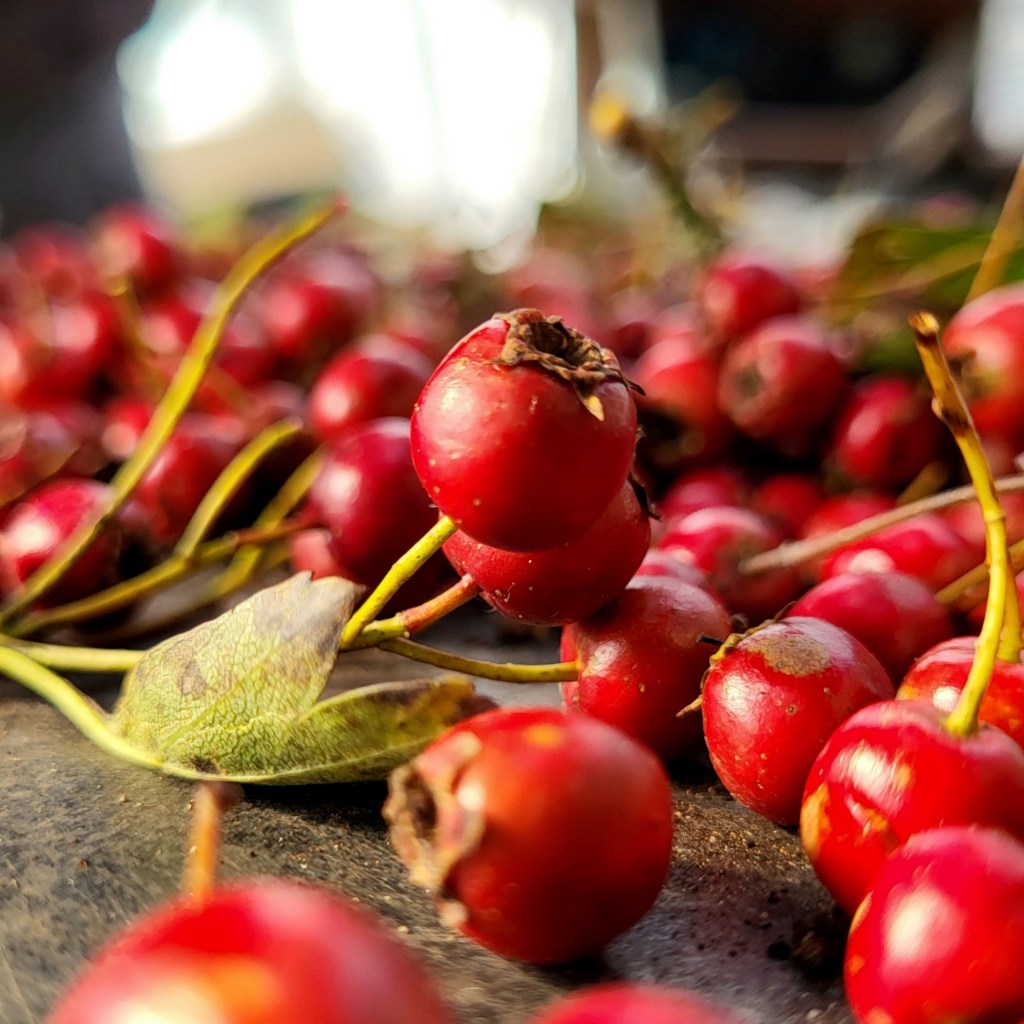
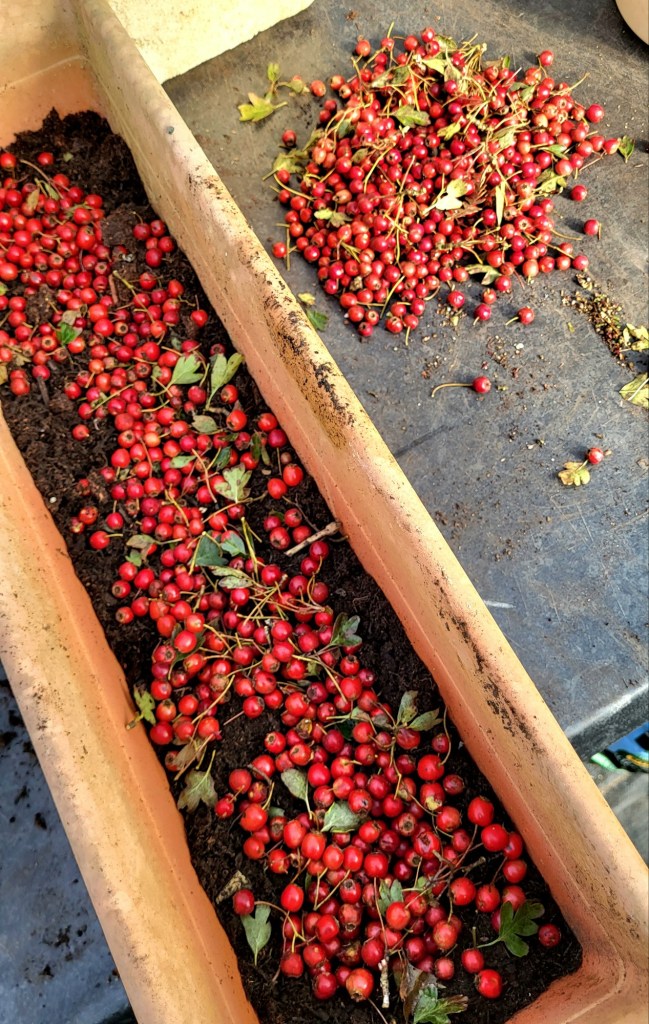
In the quietude of an autumn afternoon, as the sun cast a gentle, melancholic glow over the garden, I found myself standing before a humble tub, a handful of hawthorn berries cradled in my palm. The berries, vibrant and red, seemed to pulsate with a life of their own, whispering secrets of the seasons and the cycles of time.
A tub of hope
The decision to plant these berries had come to me in a dream, or perhaps it was a memory, blurred at the edges like an old photograph. I had been walking through a forest, the air crisp and cool, when I stumbled upon a hawthorn tree, its branches laden with crimson fruit. The tree seemed to beckon me, its thorns glinting in the dappled sunlight, and I knew then that I must bring a piece of this wild, untamed beauty into my own small world.
I had always been drawn to hawthorns, with their delicate white flowers in spring and their fiery berries in autumn. They seemed to embody the duality of life—beauty and pain, growth and decay, all intertwined in a dance as old as time itself. And so, with a sense of reverence, I began to plant the berries, each one a tiny promise of life to come.
The tub, a simple vessel of earth and possibility, sat before me like an altar. I knelt down, feeling the cool soil between my fingers, and began to press the berries gently into the ground. Each one seemed to sigh softly as it settled into its new home, a quiet acceptance of the journey ahead. I wondered what dreams they might hold, what stories they might tell as they grew and changed with the passing of the seasons.
As I worked, my mind wandered, as it often does, to the strange and wondrous paths that life can take. I thought of the hawthorn trees that had stood for centuries, silently watching the ebb and flow of human existence. I thought of the birds that would one day feast on the berries, their songs echoing through the garden like ancient melodies. And I thought of the quiet, unassuming beauty of growth—the slow, steady unfurling of life from the smallest of seeds.
The hawthorn, I knew, was a symbol of hope and protection in many cultures. It was said to guard against evil spirits, to bring good fortune, and to heal the heart. As I planted the berries, I found myself hoping for all these things and more. I hoped for the courage to face the unknown, for the strength to endure the storms of life, and for the wisdom to appreciate the beauty in the everyday.
And so, with the berries planted and the tub nestled in a sunny corner of the garden, I stepped back and took a deep breath. The air was filled with the scent of earth and the faintest hint of something more—a promise, perhaps, or a whisper of things to come. I knew that the journey of these hawthorn berries was only just beginning, and I looked forward to the days and seasons ahead with a sense of anticipation and wonder.
In the quiet moments that followed, as the sun dipped lower in the sky and the shadows lengthened, I felt a profound sense of connection—to the earth, to the cycles of life, and to the mysterious, unknowable forces that guide us all. And as I turned to walk back into the house, leaving the berries to their dreams and their destiny, I knew that I, too, was a part of this vast and wondrous tapestry, forever intertwined with the whispering hawthorns and the dance of time.
If you find my photography or my writing inspiring and uplifting, consider supporting what I do. Buy me a coffee on Ko-fi. Your support makes a difference in my life and helps me create more of what you, and I, like. Thank you!Tap to view my redbubble gallery.
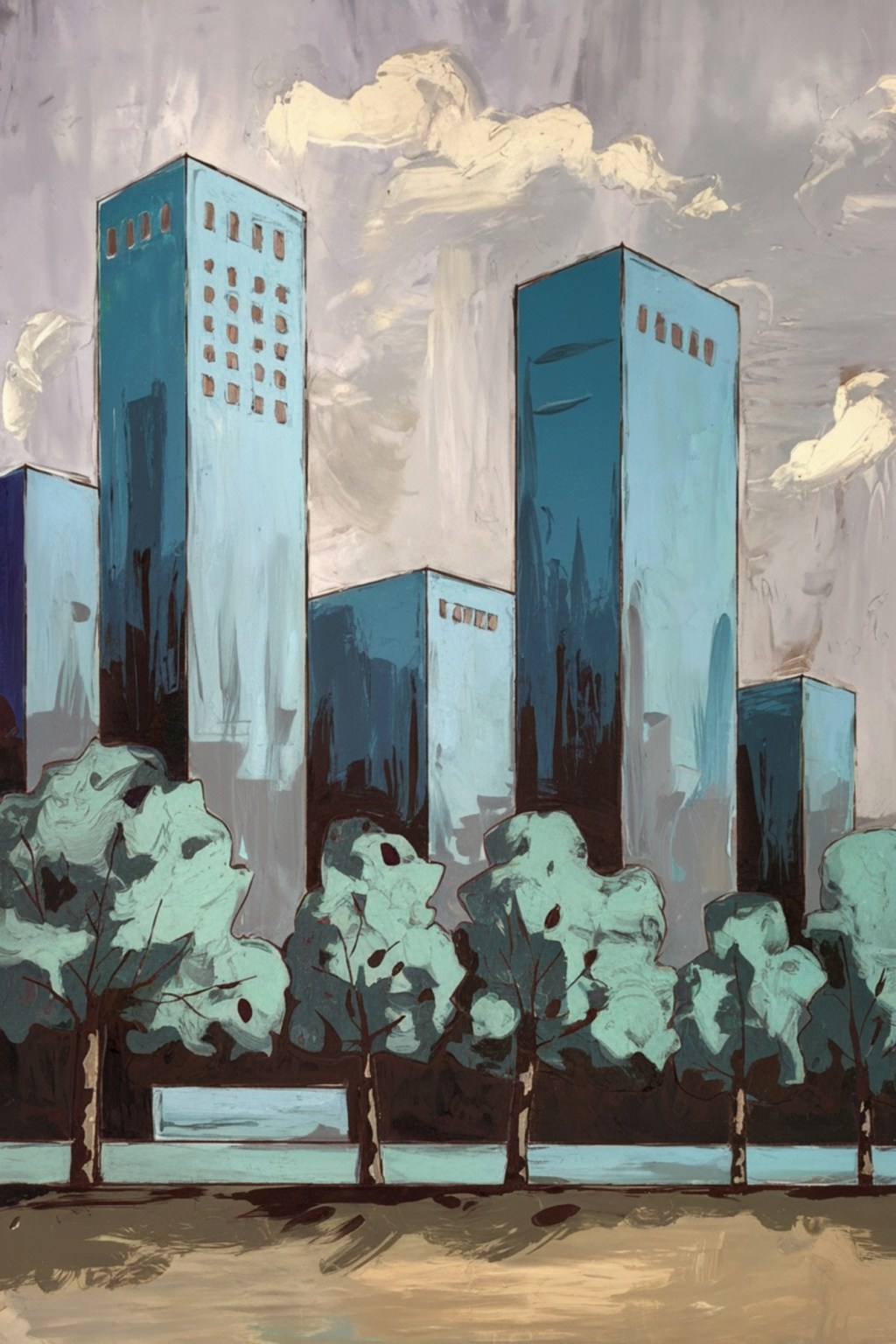
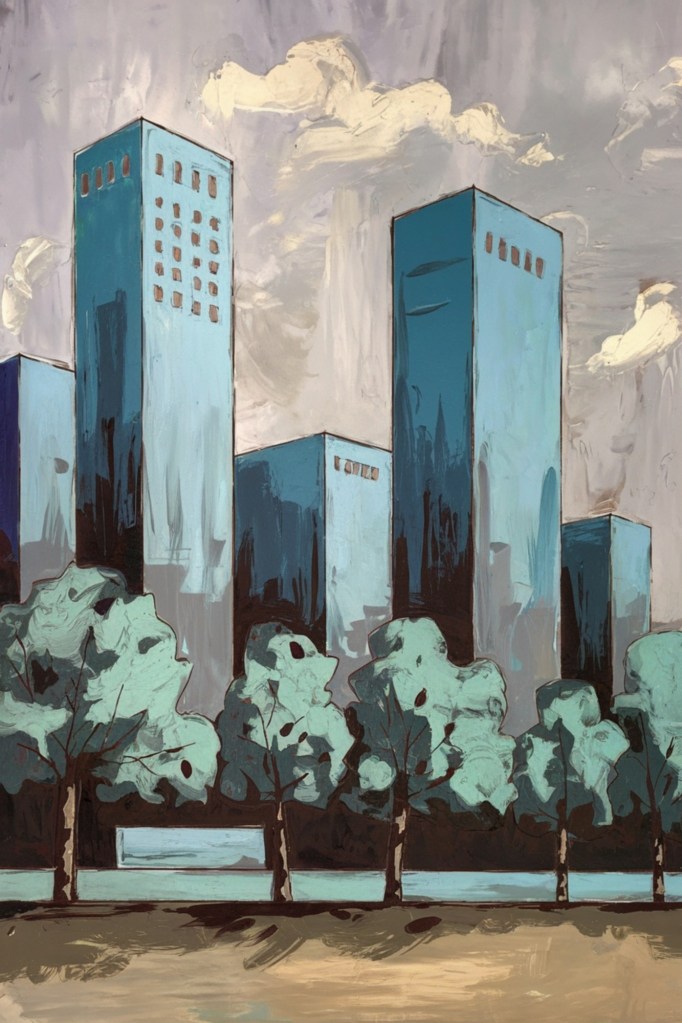
So it goes: I’ve got this picture in my head, or maybe on my phone, or perhaps etched into the back of my eyelids by some cosmic etcher with a dark sense of humor.
The trees are just… there, like they’ve always been, like they’re waiting for someone to apologize. The skyscrapers, though—oh, those glorious, preposterous middle fingers to gravity. Let’s talk about those first, because humanity loves a crescendo, even if the finale is a dirge.
The skyscrapers. Let’s call them what they are: tombstones for the ego of the species. Each one a Babel reboot, a steel-and-glass hymn to the gods of More. You can almost hear them creak under the weight of their own symbolism. “Look upon my works, ye mighty, and despair”, they whisper, though their HVAC systems hums tunes of existential dread. They are triumphs, sure—miracles of engineering, collaboration, and the kind of optimism that requires ignoring leaky seams or rust’s patience. Their house stock trades, divorces, and 3 PM Zoom meetings where someone inevitably says, “Let’s circle back.” Progress! Marvelous, merciless progress.
But what price progress? The trees, for instance. My eyes keep sliding off those vainglorious towers and snagging on the trees. *Why?* They’re not even special trees. No sequoias, no oaks with love’s naive initials carved by heartbroken teens. Just… trees. Green things that photosynthesize like CO2’s going out to fashion. Yet there they are, roots knuckling into the dirt, leaves doing that little shudder-dance in the wind, as if to say, “You built all that? Cute.”
So here I am: a mammal with a primate brain, inexplicably soothed by chlorophyll and bark. The skyscrapers? They’re impressive, sure. But they’re also lonely. You ever notice that? All those windows, and not one of them opens wide enough to yell, “What are we doing here?” The trees, though—they’ve got a different loneliness. The kind that doesn’t need answering. The kind that just *is*, like tax returns or the sound of your own heartbeat at 3 AM.
Maybe it’s the scale. The skyscrapers shrink me; the trees do too, but politely. One says, “You are a speck.” The other says, “So am I. Let’s have a beer.” There’s a humility in their persistence, these green martyrs. They don’t care if you admire them. They’re not checking LinkedIn. They’re just… enduring, the way mold endures in a bachelor’s fridge—quietly. Without fanfare. Without elevators.
So here I am, a hairless ape with a pension plan, caught between cathedrals of ambition and these shaggy, unkempt priests of green. The skyscrapers win, of course. They always win. But the trees—oh, the trees—they *wait*. And in their waiting, there’s a kind of rebellion. A reminder that progress is a firework, but life is a tide that flows unending.
And so it goes.
A thousand windows reflect nothing. The trees breathe— “Are we alive yet?”
If you find this content inspiring and uplifting, consider supporting what I do. Buy me a coffee on Ko-fi. Your support makes a difference in my life and helps me create more of what you, and I, like. Thank you!Tap to view my redbubble gallery.
The air—it’s alive. It hums, doesn’t it? Or maybe it’s in my head. No, no, it’s real, vibrating in my chest, crawling through my skin like tiny electric sparks. Is this how air used to feel? Clean, wet, soft like velvet. Not the choking, recycled stuff, scraped thin by machines. My chest feels raw, unprepared for it, like I’ve swallowed something too pure for my body.
Pure Bliss
And the trees—heavens, the trees. They stretch forever, all the way up, vanishing into green shadows and sunlight, folding together like lace. Too tall. Too wide. Too much. My eyes can’t hold them all at once. I try. I can’t. I blink, and they shift, ripple, like they’re breathing. The bark, cracked and grooved like skin—no, like stone—but warmer, alive, alive, alive. My fingers press against it. It presses back. Does it know I’m here? Does it care?
I don’t trust this. It’s too perfect. Too much light, too much green, too much life. It’s like a story I heard when I was a kid. Forests with wolves and deer and wind that whispers. People who walked barefoot on the dirt, dirt that smelled like rain. It was a bedtime lie, wasn’t it? They said we killed it. Burned it. Paved it over and left it for dead. And yet here it is, here I am, knees sinking into the moss. Moss—soft like the fabric of dreams, cool under my palms.
Dream. Yes, that’s it. This is a dream. It has to be. A glitch. My mind spinning out, a defense mechanism. The tether’s broken, I see the matrix. I’ll wake up. I’ll wake up back in the gray, the hum of machines in my ears. No birds. No birds there. But I hear them here—high, sharp, calling out into the endless green. Birds. I almost laugh. They’re real. Or I’ve invented them. Can I invent sound this beautiful?
The smell—merciful earth, what is that smell? It’s dirt, yes, but sweeter, richer, like something blooming. Flowers? Do flowers have a smell? Not the ones we grew in the domes, sterile and waxy, pretty but hollow. These are alive, pulsing like veins in the air, like a thousand tiny hearts opening up at once. Too much. It’s too much. I close my eyes, but the forest doesn’t leave. It presses into me, through me, like it wants to crawl inside my lungs, nestle into my ribs
Woods Imagined
I can’t go back. How can I go back? They’ll laugh. They won’t understand. They’ll say, Oh, Aaron, the tether scrambled your mind. Forests? Sure. We had those. Once. And what did they do for us? They won’t smell this, feel this. They’ll never know how it moves, how it whispers. I could try to tell them, but the words wouldn’t come. They’re caught in my throat, tangled like the vines wrapping around the trees, twisting upward, desperate for the light.
The wind. It moves like a sigh, brushing my skin. It knows me. Does it know what I’ve come from? What I’ve left behind? I taste salt, but I’m not crying. Am I? Maybe the forest is crying. Maybe it remembers what’s coming. What’s already happened. Or maybe it’s laughing, laughing at me, a man from the hollow future, standing here like a ghost in a world too alive to make sense.
I sit. No, I collapse. My legs are shaking, useless. The moss takes me, cradles me like it’s been waiting. The air is thicker now, heavier, like it’s wrapping around me. A cocoon. I want to stay here. Let it swallow me whole. Let it keep me. The tether can break, and I’ll drift here forever, lost in this green dream.
A sound—a bird, maybe? Or a branch snapping. Too sharp to be the wind. I twist, searching, but there’s nothing, only more trees. Endless trees. Watching me. Whispering to me. I think I hear words. No, not words. Something older, deeper. The pulse of roots in the soil. The creak of branches holding the sky. They know. They know what we’ve done.
“I’m sorry,” I say aloud, my voice thin, swallowed by the forest. It feels like a lie. The words aren’t enough. Nothing is enough. My hand touches the ground—soft, cool, alive—and I want to sink into it, vanish into the earth like water. Let me stay. Let me forget what we became.
The wind rises again, stronger this time, carrying the scent of leaves and damp earth. It washes over me, through me. My head is heavy. My eyes close. I’m floating. No—sinking. Sinking into the moss, the soil, the hum of the trees. The air thickens around me, soft as a blanket.
“Let me stay,” I whisper, though I don’t know who I’m asking. The forest answers with silence, the kind that hums, vibrates, breathes. My chest aches with it. My heart beats too fast. Or maybe it’s slowing. Or maybe it’s the forest’s heart now, and mine is gone.
I’ll wake up soon, back in the gray. Won’t I? But the wind doesn’t let go. The moss holds tight. The light filters through my eyelids, green and gold, and I think—maybe I won’t wake up. Maybe I was never awake at all.
If you find this content inspiring and uplifting, consider supporting what I do. Buy me a coffee on Ko-fi. Your support makes a difference in my life and helps me create more of what you, and I, like. Thank you!Tap to view my redbubble gallery.
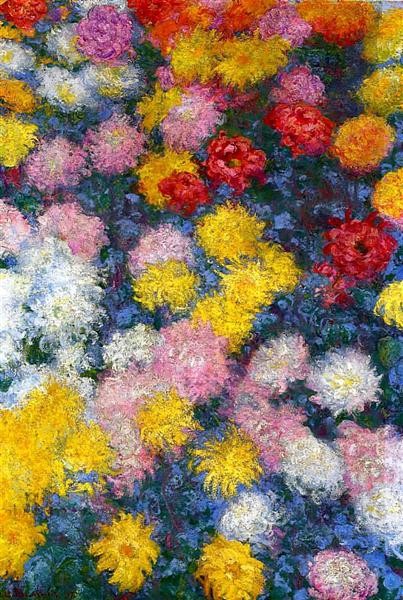
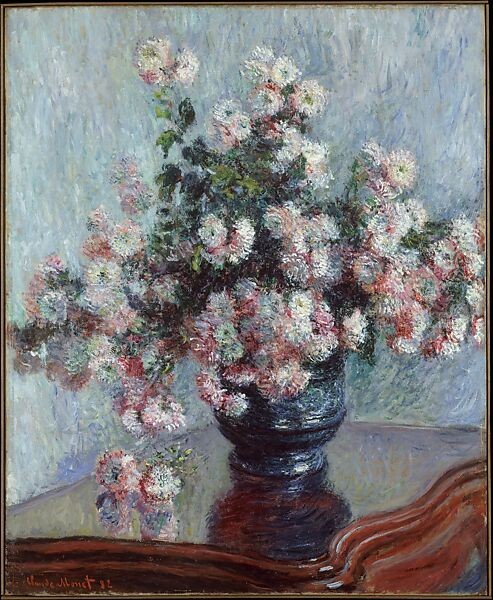
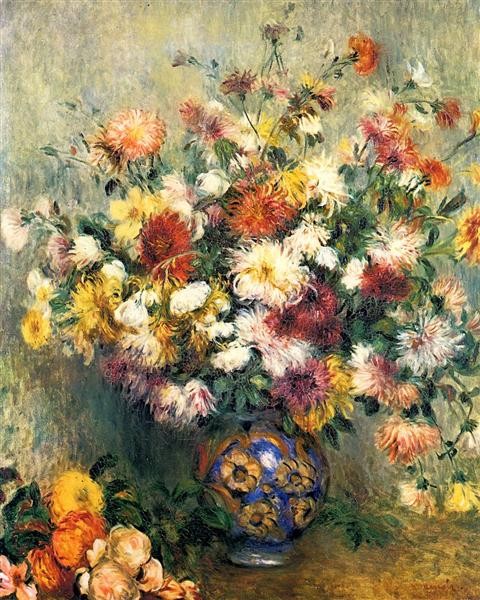
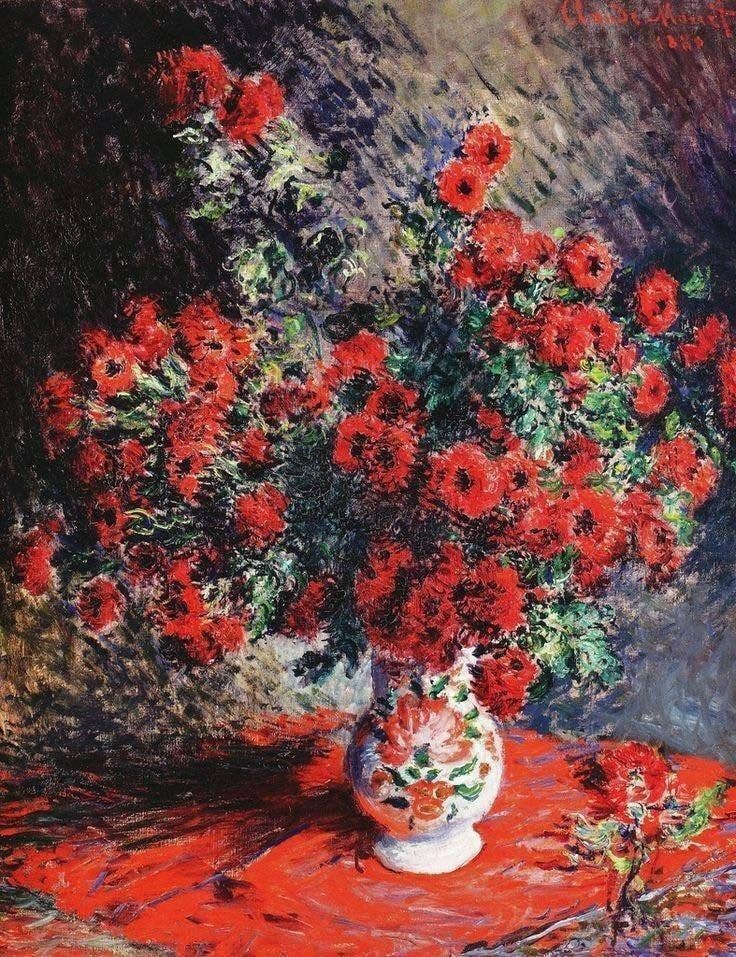
Chrysanthemums have been a popular subject in art for centuries, celebrated for their beauty and symbolism. Here are some famous paintings and artistic works featuring chrysanthemums:
Chrysanthemum
Claude Monet
Monet, the French Impressionist master, painted several works featuring chrysanthemums. In his characteristic style, he captures their vibrant colors and delicate textures, showcasing their charm. His painting “Chrysanthemums” is a striking example of how Impressionists used light and color to bring flowers to life.
Pierre-Auguste Renoir
Renoir, another Impressionist, was also captivated by chrysanthemums. His painting “Chrysanthemums” features a vase overflowing with the blooms, emphasizing their lushness and intricate forms. Renoir’s brushwork highlights the flowers’ natural beauty.
Van Gogh
While Van Gogh is most famous for his sunflowers, he also painted chrysanthemums. His still-life works featuring these flowers reflect his love of vibrant colors and his ability to imbue still objects with emotional depth.
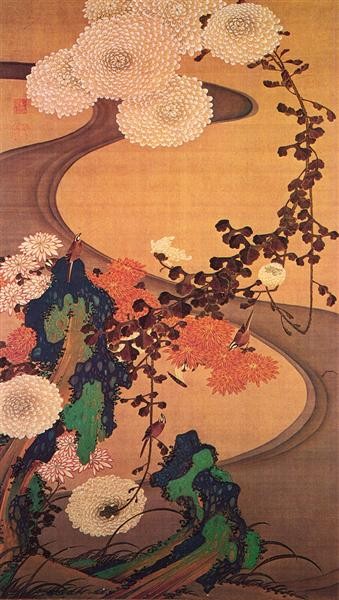
Ito Jakuchu
Ito Jakuchu, a Japanese Edo-period artist, created intricate and vibrant scrolls of chrysanthemums. His work reflects the flower’s importance in Japanese culture and combines realism with a sense of spiritual elegance.
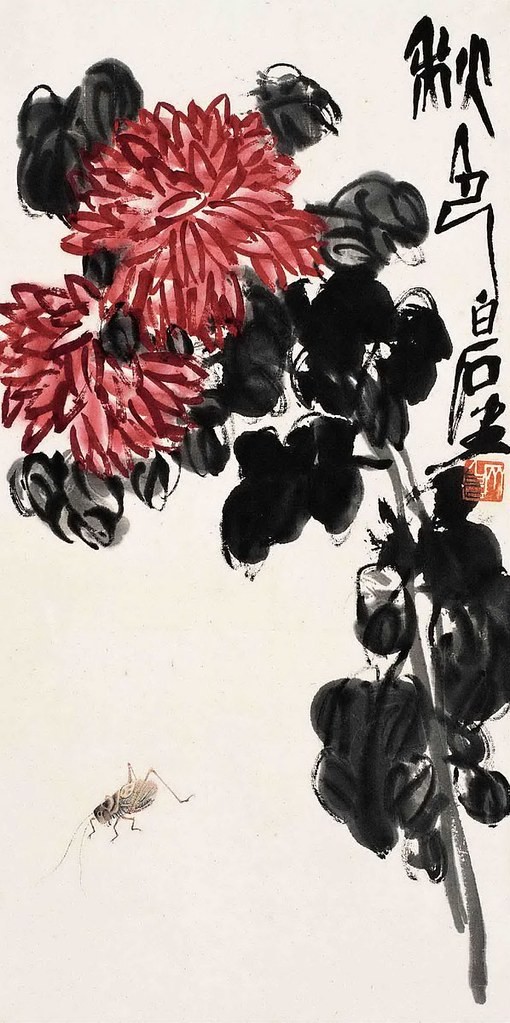
Qi Baishi
Qi Baishi, a master of traditional Chinese painting, often depicted chrysanthemums in his works. Using expressive brushstrokes and ink washes, he captured their essence with simplicity and depth.
If you find this content inspiring and uplifting, consider supporting what I do. Buy me a coffee on Ko-fi. Your support makes a difference in my life and helps me create more of what you, and I, like. Thank you!Tap to view my redbubble gallery.


 Horse’s steady gazeStrengthful eyes that dare to meetChallenge accepted Courage is the strength to face… Read more: Darkness, Power and Beauty
 Daffodil so brightGolden petals, sunshine’s kissHope blooms anew As I wander through the garden, the… Read more: The Daffodil’s Song: A Lyrical Tribute to the Wonders of Spring
 The Graceful Lines of an Acanthus Leaf. Acanthus is a genus of flowering plants native… Read more: Acanthus: A Versatile Plant with a Rich Cultural Heritage
 Anthony's Literary Lens
You must be logged in to post a comment.