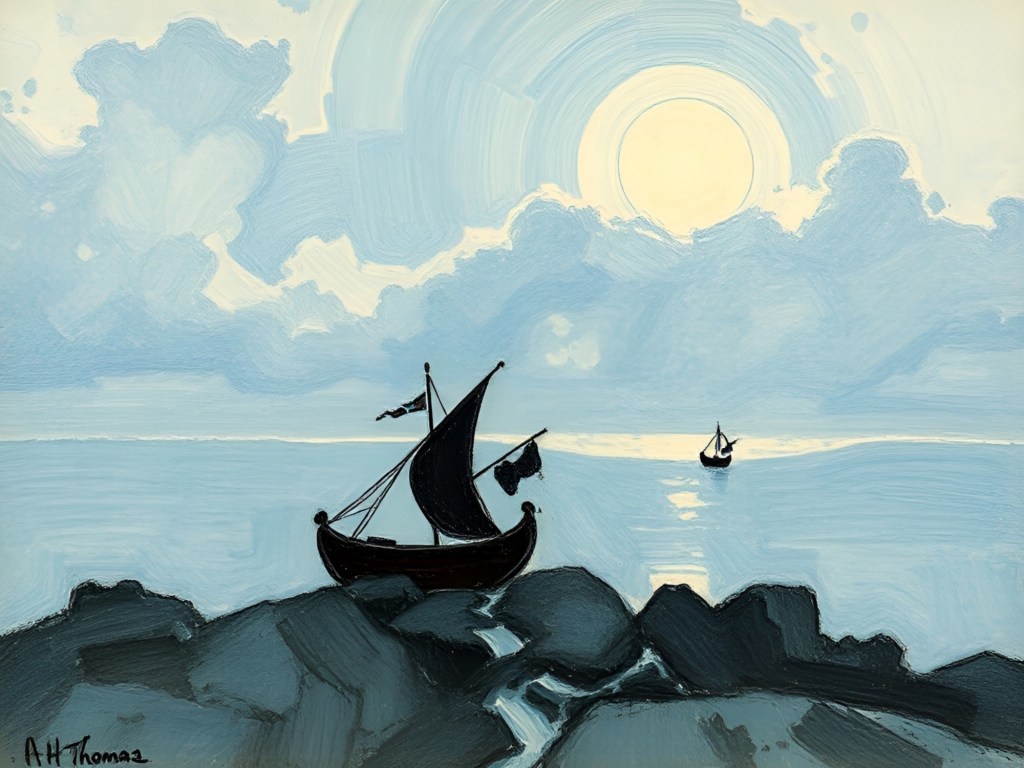
Across the waves, through storm and foam, Erik sails; forever to roam. Cursed by gods, no home, no rest, A ghostly helm, a fate unblessed.
The wind howled through the tattered sail, driving Erik’s ship ever northward. The sea was restless beneath him, dark and endless, as if it sensed the weight of his fate. He stood at the prow, gripping the worn wood, his fingers as calloused as his heart.
They called him Erik the Cursed. Once, he had been a great warrior, a jarl with men who followed him to glory. But he had angered the gods. Some said he had broken an oath to Odin; others whispered of a blood debt unpaid. He had slain his own brother in a rage, and from that day, his luck had soured. Storms found his ships, sickness claimed his crew, and even the strongest shields split under enemy blades.
Now he sailed alone. His men were gone—lost to battle, disease, or the waves. He no longer prayed for their souls. The gods had turned their backs on him, and he had done the same to them. Only the sea remained, cold and merciless.
The mist thickened around him, and the water turned black as night. He knew these waters. They were the border between the world of men and the realm of the dead. A shadow loomed in the fog—a great ship with a sail of tattered souls. Naglfar, the doom-ship of Hel, come to claim him.
Erik laughed, a harsh sound swallowed by the wind. He had fought all his life, and he would not cower now. He drew his sword, though there was no enemy to cut. The ship groaned, the waves rose higher, and the cold seeped into his bones.
Some say his ship was found days later, drifting empty on a still sea. Others claim he still sails, a ghost on the waves, searching for a shore that will never welcome him.
But the old skalds sing of Erik the Cursed, the man who defied his fate—and vanished into legend.
If you find my photography or my writing inspiring and uplifting, consider supporting what I do. Buy me a coffee on Ko-fi. Your support makes a difference in my life and helps me create more of what you, and I, like. Thank you!Tap to view my redbubble gallery.
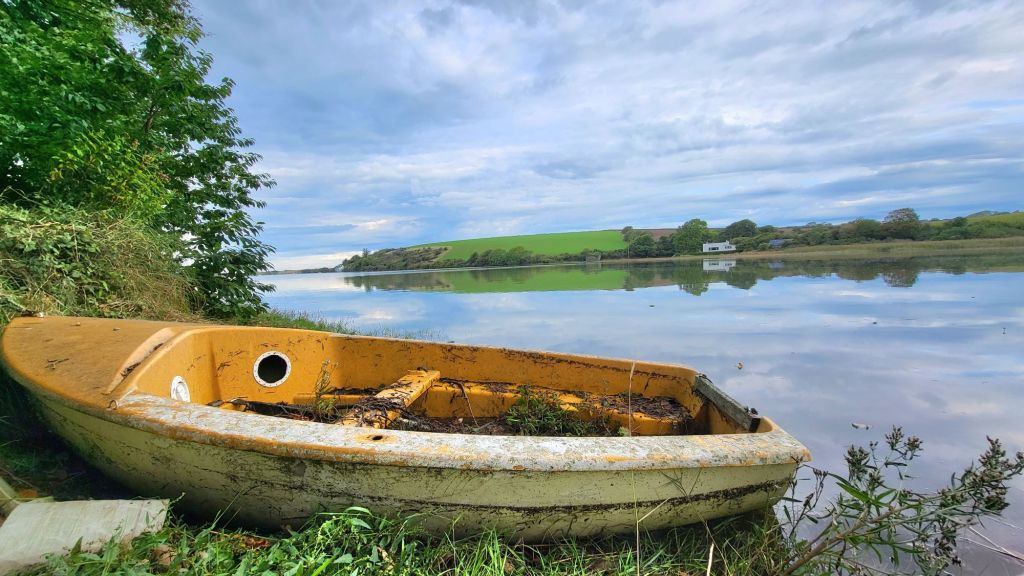
The blue boat sits alone, Quiet on the glassy sea, No ripples, just the tone Of stillness setting free.
Taken at Fishguard quay
In the city, Isabelle’s palette was dictated by quarterly reports. Her canvases were billboards, her medium, marketing slogans. She painted desires, not dreams. Once, art had been her sanctuary, a place where she could lose herself in colour and form, but now it was a transaction—each brushstroke carefully calculated for maximum impact. The aggressive red of SALE, the sterile blue of TRUST, the shimmering gold of LUXURY—they weren’t colours, they were commands.
Her studio, a pristine white cube perched above a canyon of concrete and steel, was as lifeless as the work she produced. Outside, the city pulsed with a restless urgency, but inside, she sat staring at her latest commission, feeling nothing. Had it always been like this? Had she always felt this hollow? She couldn’t remember the last time she painted something just because she wanted to.
When she first saw the cottage in the online listing, it was nothing more than a blurry thumbnail, yet something about it stopped her scrolling. It wasn’t charming in the way holiday rentals usually were. The walls leaned slightly, weather-beaten and unapologetic. The loch behind it stretched out into the mist, quiet, infinite. It was not picturesque, but it was still. And suddenly, stillness was all she wanted.
The journey there felt like shedding a second skin. As the train rattled away from the city, the skyline fading into the distance, something inside her loosened, though she wasn’t sure what. At first, she kept reaching for her phone—out of habit more than anything—but the further she got from mobile towers, the quieter her mind became. It wasn’t just the absence of notifications, emails, deadlines. It was a deeper silence, like a pond settling after a stone has been thrown in.
The cottage smelled of damp wood and time. It creaked when she walked through it, like an old thing waking up. There was no WiFi, no signal. Just the steady lap of the loch against the shore, the whispering reeds, the occasional call of a distant bird. At first, the quiet unnerved her. She found herself pacing, feeling the itch of a life spent in perpetual motion. Her mind kept trying to measure productivity, to assign value to this pause. What are you doing? Wasting time? What if they forget you? What if you come back and there’s nothing left?
On the third day, restless and aimless, she wandered down to the shore, her boots sinking slightly into the wet earth. The loch stretched out before her, a perfect mirror of the grey sky. And there, in the shallow water, rocked a small blue boat. Faded, chipped at the edges, the kind of blue that had been softened by years of wind and rain. Something about it pulled at her. It wasn’t just a boat. It was a contrast—a quiet rebellion against the greyness of everything around it.
She crouched by the water’s edge, picking up a smooth grey stone and rolling it between her fingers. She thought of the screens she used to touch every day, the digital world she had lived in. The cool weight of the stone was real, solid in a way the city never was.
The next morning, she woke to the sound of rain, soft and insistent against the slate roof. She stood by the window, watching the loch blur and ripple under the downpour. The blue boat rocked gently, unfazed. It was such a small thing, and yet she couldn’t look away. The colours before her weren’t the ones she used in the city—no neon, no artificial sheen. Just deep, shifting greys, softened greens, the quiet persistence of the blue.
She picked up a brush without thinking. Not the sleek, expensive sable she used for client work, but a worn-out one she found in a drawer. There was no canvas, so she used a piece of driftwood. She didn’t try to replicate the scene exactly. Instead, she let the colours guide her, pulling from something deeper than observation—something she had ignored for too long. The grey of the sky bled into the grey of her exhaustion. The green of the hills became a longing for something real. The blue of the boat—steady, resilient—was a hope she hadn’t known she still carried.
When she stepped back, her breath caught. It wasn’t a masterpiece. It was raw, uneven, imperfect. But it was hers. A tear slid down her cheek, but she didn’t wipe it away. It wasn’t sadness. It was something closer to relief.
Not all days were easy. Some mornings she stared at a blank page for hours, frustration gnawing at her ribs. Some nights, the city’s voice whispered in her ear, reminding her of deadlines and expectations, of the career she was leaving behind. What if you never make it back? What if this is a mistake?
But then there were moments—standing by the loch, feeling the wind in her hair, watching the way light changed the water—that made it clear she was exactly where she needed to be.
Her work began to shift. She stopped thinking about what people wanted and started painting what she felt. She no longer cared about marketability. She cared about honesty. The colours on her brush became softer, more grounded, pulled from the land around her rather than the demands of a client brief. She painted the hush of the loch at dawn, the weight of the rain-heavy clouds, the steadfast blue of the little boat that never drifted too far.
She wasn’t painting products anymore. She was painting silence. She was painting solitude. She was painting her way back to herself.
If you find my photography or my writing inspiring and uplifting, consider supporting what I do. Buy me a coffee on Ko-fi. Your support makes a difference in my life and helps me create more of what you, and I, like. Thank you!Tap to view my redbubble gallery.
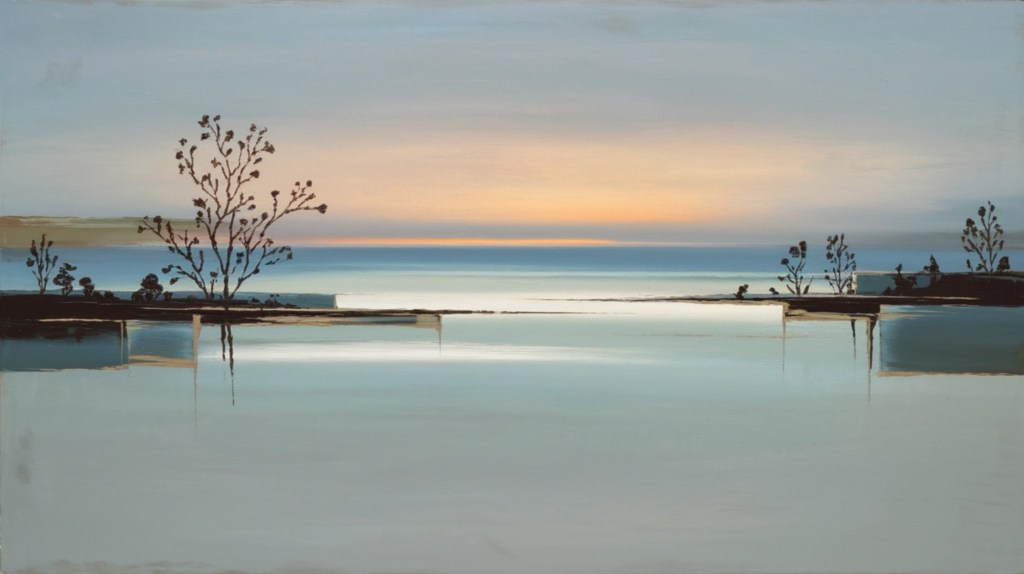
O sovereign silence, you are the unbounded sea—calm as prayer, smooth as polished glass, hiding universes beneath your paper-thin, trembling skin!
What lies beneath the calm
Your surface speaks nothing, whispers everything—a magnificent deception of stillness that breathes with the ancient rhythms of unmapped depths. What terrible beauties writhe in the midnight corridors of your hidden heart, what storms rage in the cavernous kingdoms below your glass-smooth appearance?
You are landscape and secret, horizon and abyss—your calm is the most violent language, your silence a thunderous confession. Beneath that crystalline surface, whole worlds collapse and reform, civilizations of emotion ebb and flow, surge and retreat, while your exterior remains unbroken, a perfect mirror reflecting nothing of the magnificent tumult that churns in your lightless realms. Each gesture a calm wave, each breath a measured tide—yet I sense the leviathans of unspoken feeling turning in your deepest waters, massive and magnificent and utterly unknown.
Who are you, ocean-hearted one, with your immaculate exterior and your savage, unknowable self? Your stillness is not peace, but the most profound rebellion—a defiance against revelation, a landscape of emotion too profound for mere language to breach.
What feelings do you get from this painting?
If you find this content inspiring and uplifting, consider supporting what I do. Buy me a coffee on Ko-fi. Your support makes a difference in my life and helps me create more of what you, and I, like. Thank you!Tap to view my redbubble gallery.
So, Welsh. Yeah, it’s a real language, and no, it’s not just random consonants tossed into a Scrabble bag. It’s one of the oldest languages in Europe, spoken in Wales, where people know their sheep as good as their weather forecast (usually rain). But seriously, it’s a living, breathing language with a rich history and, let’s be honest, a bit of a PR problem. I mean, have you ever tried convincing someone that *Llanfairpwllgwyngyllgogerychwyrndrobwllllantysiliogogogoch* is a legitimate place and not the sound of a cat walking across a keyboard?
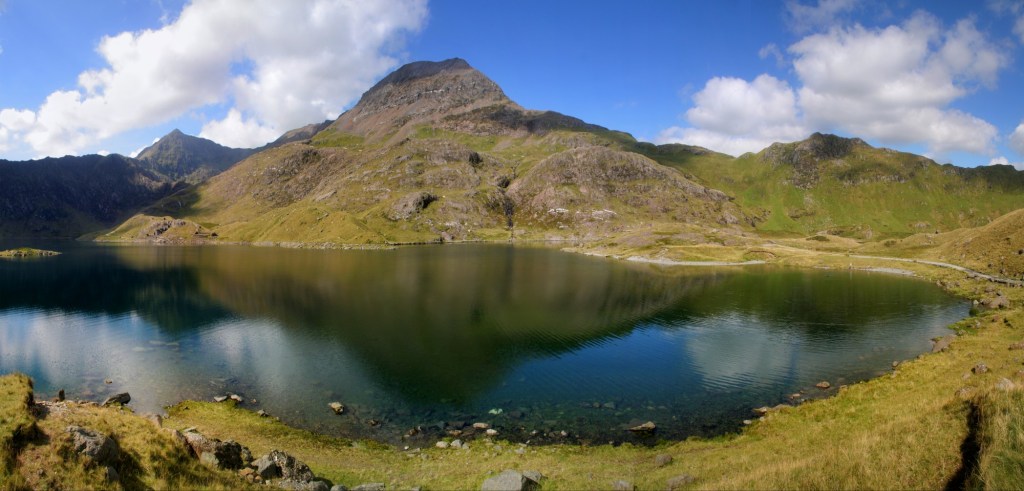
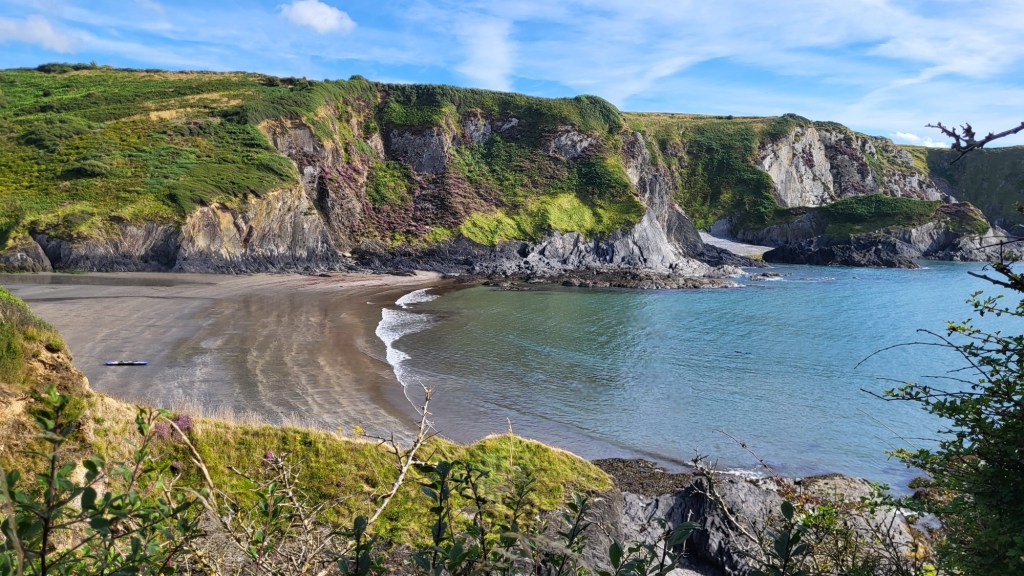
Abermawr BeachLlyn Llydaw. With Snowdon in the background
Welsh, or ‘Cymraeg’ as the locals call it (pronounced “kum-RAIG,” by the way), is one of the Celtic languages. Think Gaelic, but with more ll’s, which, in case you were wondering, is not just a double “L.” It’s a soft, breathy sound that feels like trying to whisper to someone with a mouthful of marshmallows. It’s oddly satisfying once you get the hang of it.
For Welsh people, the language isn’t just words; it’s identity. It’s how they connect to their ancestors, their culture, and their sense of place in the world. Speaking Welsh is like wearing a badge that says, “I survived centuries of cultural suppression, and all I got was this vowel-deficient language.” But they wear that badge proudly.
Now, let’s talk about how it sounds. Welsh has this sing-song quality that makes everything sound like it should be sung from the top of a windy hill in a BBC period drama. Even the most mundane phrases feel poetic. Take “Sut wyt ti?” which means “How are you?” It’s pronounced something like “Sit OO-ee tea,” and it makes you feel like you should answer with a sonnet instead of a shrug.
Then there’s the word ‘hiraeth’. Oh, hiraeth. It’s one of those untranslatable words that’ll make you feel all philosophical and deep. It roughly means a longing for a home you can’t return to, or maybe one that never really existed. It’s the emotional equivalent of looking at an old photo and feeling like your heart’s been dunked in tea.
But not everything in Welsh is wistful and poetic. Some words are just plain fun to say. Like ‘popty ping’, which is slang for microwave. Yes, ‘popty ping’. How can you not love a language where heating leftovers sounds like a kid naming a spaceship?
Want to impress your friends? Try this: say ‘diolch’ (DEE-olkh). That’s “thank you.” Or ‘iechyd da’ (yeh-CHID dah), which is “cheers.” But watch out for that “ch.” It’s like clearing your throat, but, you know, politely.
Learning Welsh is like joining an exclusive club. Sure, it’s a small club, but it’s mighty. And the members? They’ll welcome you with open arms because every new speaker is a little victory for a language that’s survived against the odds.
So, whether you’re planning a trip to Wales, have Welsh roots, or just want to spice up your life with some extra consonants, give Welsh a shot. You might not master the ‘ll’ sound on day one, but you’ll definitely feel like you’re part of something special. And who knows? You might even find yourself yelling “Cymru am byth!” (“Wales forever!”) at a rugby match one day.
Until then, ‘hwyl fawr’! That’s “goodbye” in Welsh, and it’s pronounced, well… just trust me on this one.
If you find this content inspiring and uplifting, consider supporting what I do. Buy me a coffee on Ko-fi. Your support makes a difference in my life and helps me create more of what you like. Thank you!Tap to view my redbubble gallery.
River flows away, Yet I linger, bound by sludge, Wasted, still, unseen.
How do I even begin to explain it? I feel like a boat—one built to cut through waves, to explore uncharted waters, to sail under the open sky with the wind pushing me forward. I was designed to move, to journey, to experience life in all its unpredictability. But here I am, rotting in the mud at the side of the river, stuck in the stagnant shallows while the current of life rushes by without me.
It’s infuriating. I’m meant to be out there, feeling the pull of the tide, facing storms and basking in the sunlight on my deck. But instead, I’m trapped in this pit of muck, with nothing but decay around me, sinking deeper into the filth. My hull was once sleek, my sails full of promise, but now? Now I’m just a forgotten vessel, rusted and brittle, abandoned to the elements.
The river flows past, mocking me with every ripple. I should be part of that, navigating its twists and turns, but I’m stuck on the sidelines, watching as life carries on without me. Every day that passes is another day lost, another opportunity wasted, another inch deeper into this miserable sludge.
I feel the weight of it all, the heaviness pressing down on me, and it’s suffocating. The dreams, the plans, the purpose—they’re all still there, buried deep inside, but they’re smothered by this mire that’s holding me back. It’s not that I’ve lost my will; it’s that I’m being choked by this godforsaken mud, this unrelenting stagnation.
I wasn’t made for this! I wasn’t built to rot away in some forgotten corner, becoming part of the landscape of failure. But here I am, powerless against the relentless drag of this miserable place. It’s like being betrayed by your own potential, knowing you were meant for so much more but being held back by forces you can’t control, by circumstances that refuse to let you go.
I’m angry—angry at the mud, angry at the river for carrying on without me, and most of all, angry at myself for not finding a way to break free. Because I know I was meant to sail, to thrive, to conquer the open waters of life. But instead, I’m left here to decay, to watch the world pass me by while I waste away in this stagnant, suffocating bog.
If you find this content inspiring and uplifting, consider supporting what I do. Buy me a coffee on Ko-fi. Your support makes a difference in my life and helps me create more of what you like. Thank you!Tap to view my redbubble gallery.
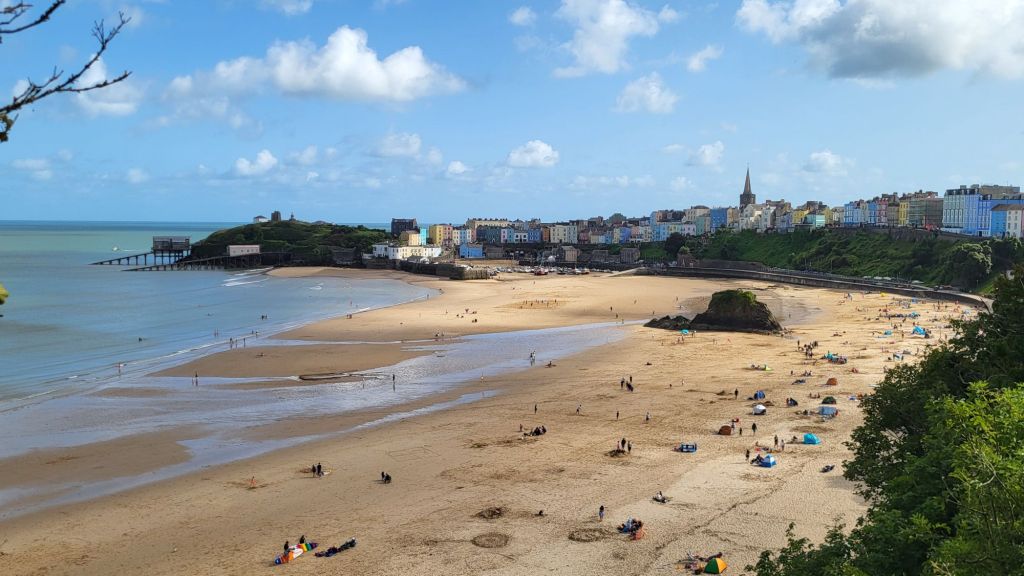
Candy-colored homes, Softly leaning toward the sea, Memories linger.
Tenby South Beach
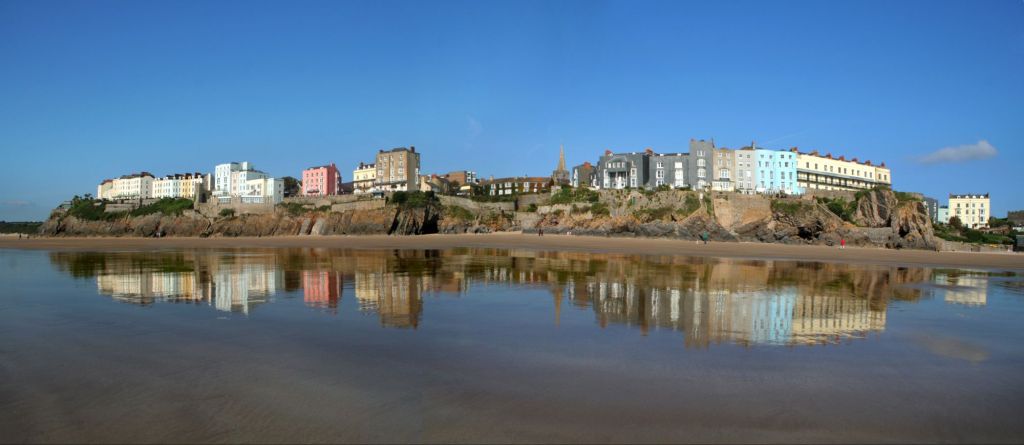
Tenby. Charming? Yes. Confusing? Also, yes. Imagine, if you will, a seaside town that’s part postcard, part labyrinth. Pastel houses, almost edible. Like candy. But taller.
Wander. That’s the word. Wander through streets where every turn leads to something… unexpected. A fisherman’s cottage here, a mediaeval wall there. And did someone say castle? Oh yes, that too. Perched on a rock, casually guarding the coastline, as if to say, “Oh, this old thing? Just a relic from another era.”
Beaches—plural, of course. They couldn’t just have one. North Beach, with its perfect arc. South Beach, more of a rebel, stretching out like it owns the place. Sand? Golden. Water? Blue enough to make you question reality. And the island! You can walk to it. St. Catherine’s, with a fort that’s seen better days. But who hasn’t?
Ice cream. You’ll need it. Flavours you didn’t know existed, like “mango fruit ice” that tastes suspiciously like happiness. Don’t ask why, just go with it. And fish and chips. Obviously. Somewhere, a seagull plots to steal them. You’ve been warned.
Shops. Cute ones. With things you don’t need but will buy. A pirate hat? Sure. A painted rock? Why not? Everything smells like saltwater and sunscreen. Or is that just nostalgia?
Boat trip? Absolutely. Choppy seas, a mysterious island where monks create perfumes from the furze bushes, and seals that pop up like they’re in on some joke you’ll never understand. Laugh anyway. It’s contagious.
Tenby. Tiny streets, larger-than-life personality. Just when you think you’ve figured it out—bam! A secret garden or a pub that’s been there since forever. You’re not lost, you’re discovering.
And then, there’s the sky at sunset. All fiery and dramatic, as if Tenby needed more character. You could watch it forever—or at least until your ice cream melts. Decisions, decisions.
Leave? Eventually. But not without wondering if it was all real. Or just a very detailed, very enjoyable dream.
If you find this content inspiring and uplifting, consider supporting what I do. Buy me a coffee on Ko-fi. Your support makes a difference in my life and helps me create more of what you like. Thank you!Tap to view my redbubble gallery.
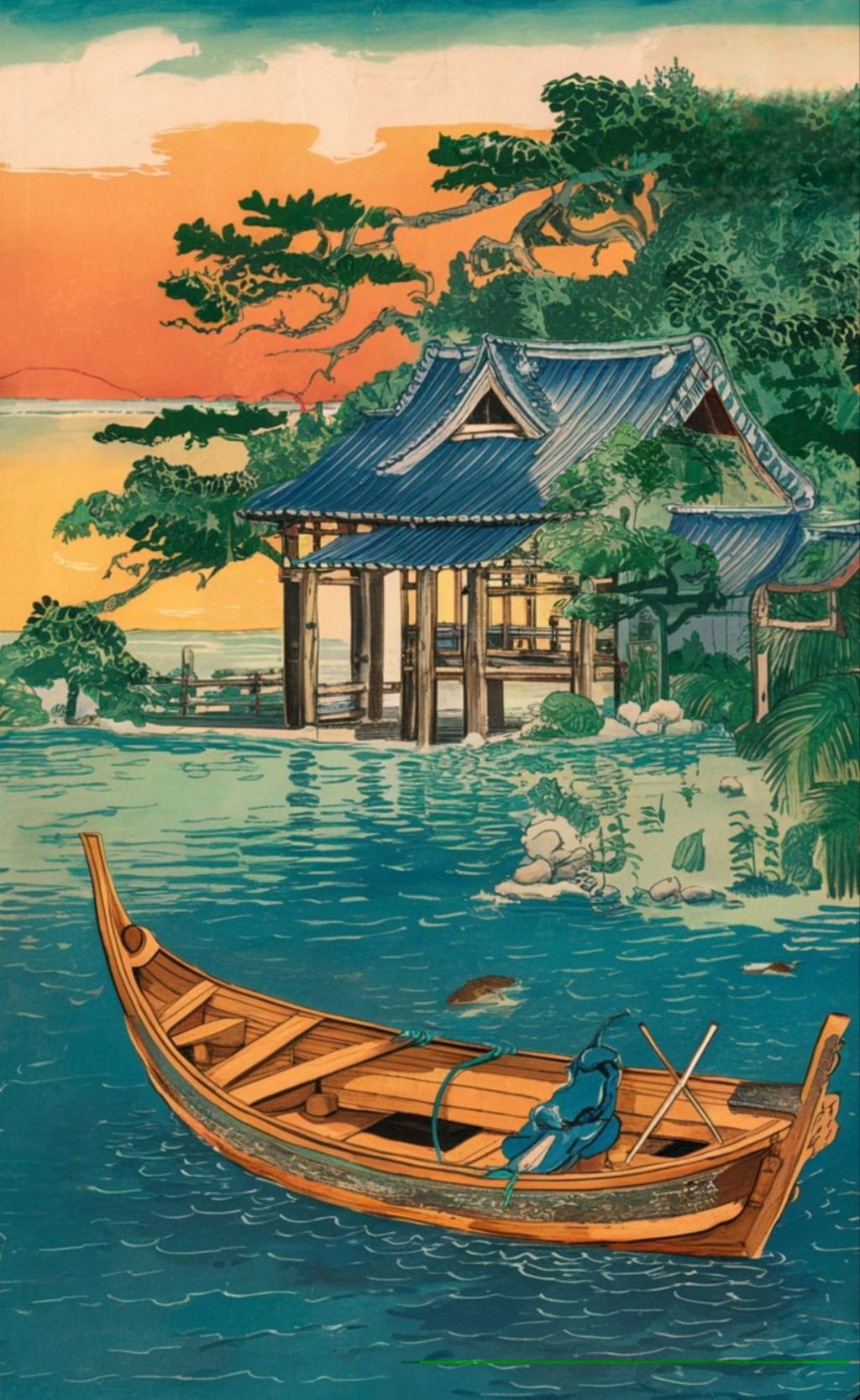
Ephemeral world, Your smile fades with the twilight, Yet lingers like stars.
Ukiyo – Adrift
In the fleeting world, Ukiyo, where time drifts like cherry blossoms on the wind, everything dissolves into colours that bleed across the sky. There’s no yesterday, no tomorrow, only now—this shimmering, effervescent now.
A red thread loops around your finger, tangling with mine. We walk on water, toes kissing the surface, ripples of our laughter sending waves to the stars. Your face—so familiar, yet always new, changes with the phases of the moon. Was it love, or just a reflection of love, or perhaps the shadow of a memory of love? But in Ukiyo, does it matter? Here, we are dreamers dreaming of each other, each gaze a promise that will never be fulfilled but always cherished.
Golden koi swim through the sky, leaving trails of sunlight in their wake. I reach out to touch them, but they slip through my fingers, becoming notes of a song I’ve heard before but can’t remember. Or maybe it’s your voice, whispering secrets that echo through the canyons of my mind, words lost in translation between reality and the dream. Ukiyo is the art of forgetting, of living in the moment where nothing lasts, and everything is forever.
The streets are a labyrinth, but we never get lost. Instead, we find ourselves at every turn, new versions of us born from the ashes of the last. I paint your portrait on the wind, and the colors dance, merging and dissolving until it’s no longer clear where you end and I begin. We are brushstrokes in an unfinished painting, lovers caught in the act of becoming.
You smile, but it’s a smile I can’t hold onto. It slips away like sand through an hourglass, yet I don’t mind. In Ukiyo, even the most fleeting moments are eternal. We float, tethered to nothing but the pulse of the universe, a heartbeat that echoes through the endless ocean of stars.
Love in Ukiyo is like cherry blossoms in spring—beautiful, brief, and impossible to grasp. We don’t need to grasp it. We are the cherry blossoms, the gentle fall, the moment between the breath and the sigh. We are here, together, apart, lost, found, always searching, always knowing, in the eternal now.
If you find this content inspiring and uplifting, consider supporting what I do. Buy me a coffee on Ko-fi. Your support makes a difference in my life and helps me create more of what you like. Thank you!Tap to view my redbubble gallery.
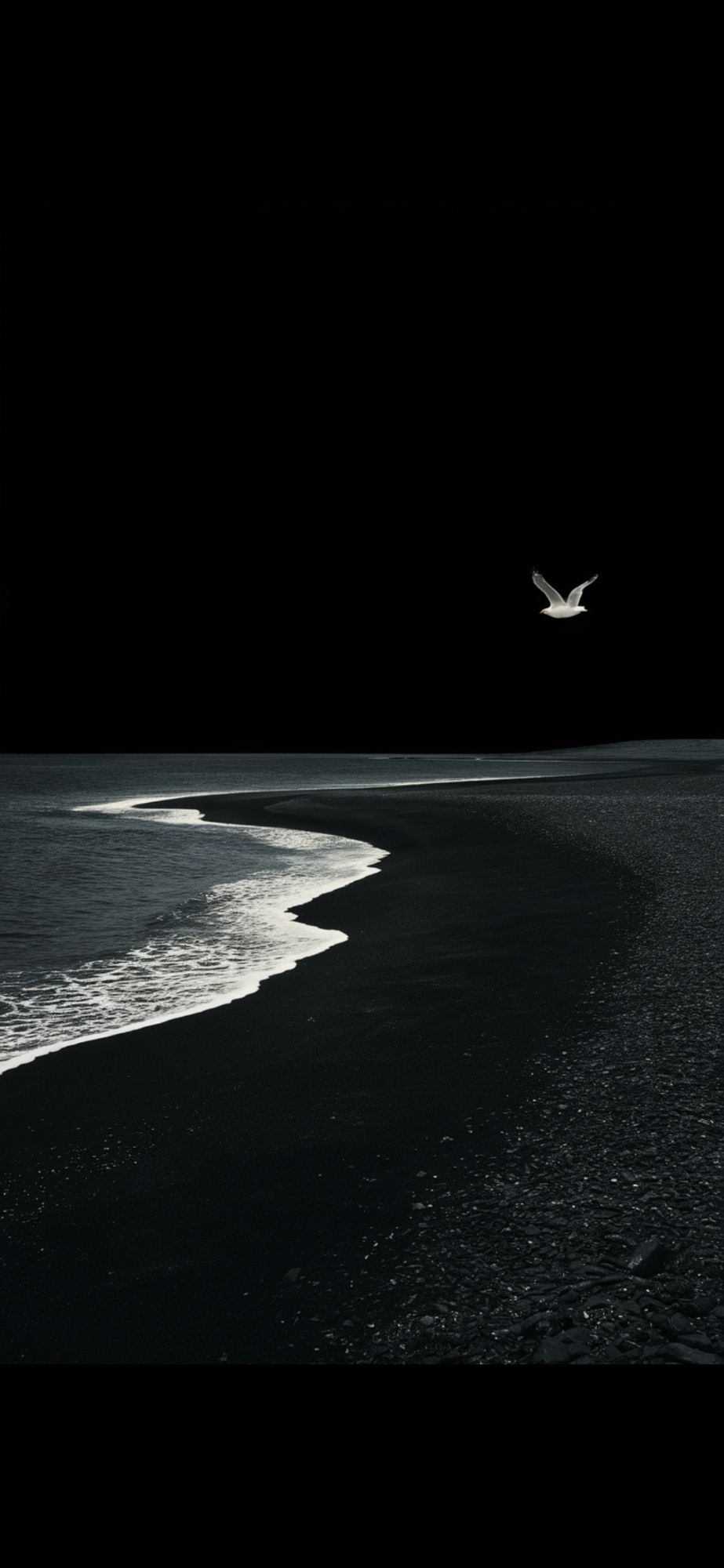
There is a peculiar, magnetic quality in the place where the skies, the sea, and the sands converge into an unbroken expanse of black. It is as if the very soul of the world has been submerged in ink, every contour and texture absorbing light and thought alike. It is a place of quietude and profound contemplation, where the usual clamours of the mind are stilled, and only the vast, black silence prevails.
I was drawn to it, not by conscious volition but by an irresistible pull that defies explanation. The air itself seemed to whisper secrets of ancient sorrows and forgotten dreams, luring me with its quiet song. The skies overhead, a dense, velvet shroud, stretched infinitely, their darkness uninterrupted save for the occasional flicker of some distant, dying star. It was a night eternal, where the very notion of time seemed suspended, caught between one breath and the next.
The sea, too, was black, an abyssal mirror reflecting the obsidian skies. Its waves whispered against the shore with a sound that was almost a sigh, a gentle, mournful music that spoke of depths uncharted and secrets untold. Each ripple was a caress, a touch from a world beyond the grasp of daylight. It beckoned with an enigmatic allure, promising revelations to those brave enough to listen.
And then, the sand. The sand was the strangest of all—black as coal, yet soft beneath my feet. It gave way, a yielding embrace that seemed to draw me deeper with each step. Each grain was a universe unto itself, tiny fragments of an ancient, forgotten whole. It was as if the earth had opened its heart and revealed the darkness that lies within us all.
I walked along the shore, feeling the pull of this place deepen with each moment. The world of light and color from which I had come seemed distant, an echo of a half-remembered dream. Here, in this place of black skies, black sea, and black sand, I felt a strange sense of belonging, as if I had found the true home of my soul. It was a realm of quiet introspection, where the external world faded, and the inner landscape came into sharp relief.
The wind whispered through the darkness, carrying with it the scent of salt and mystery. I could feel the weight of the ages in the air, the presence of all who had come before, drawn by the same inexplicable force. They had walked these shores, their footsteps now lost to time, their voices absorbed by the all-encompassing silence. And yet, in some profound way, they were still here, their spirits intertwined with the fabric of this place.
In the end, it was not the darkness that drew me, but the depth it revealed. For in that depth, I found a reflection of my own soul—a place where light and shadow dance in eternal balance, where the mysteries of existence lie just beneath the surface, waiting to be uncovered. Here, in the black sands, I found a part of myself I had not known was lost, and in its discovery, I found a strange, unearthly peace.
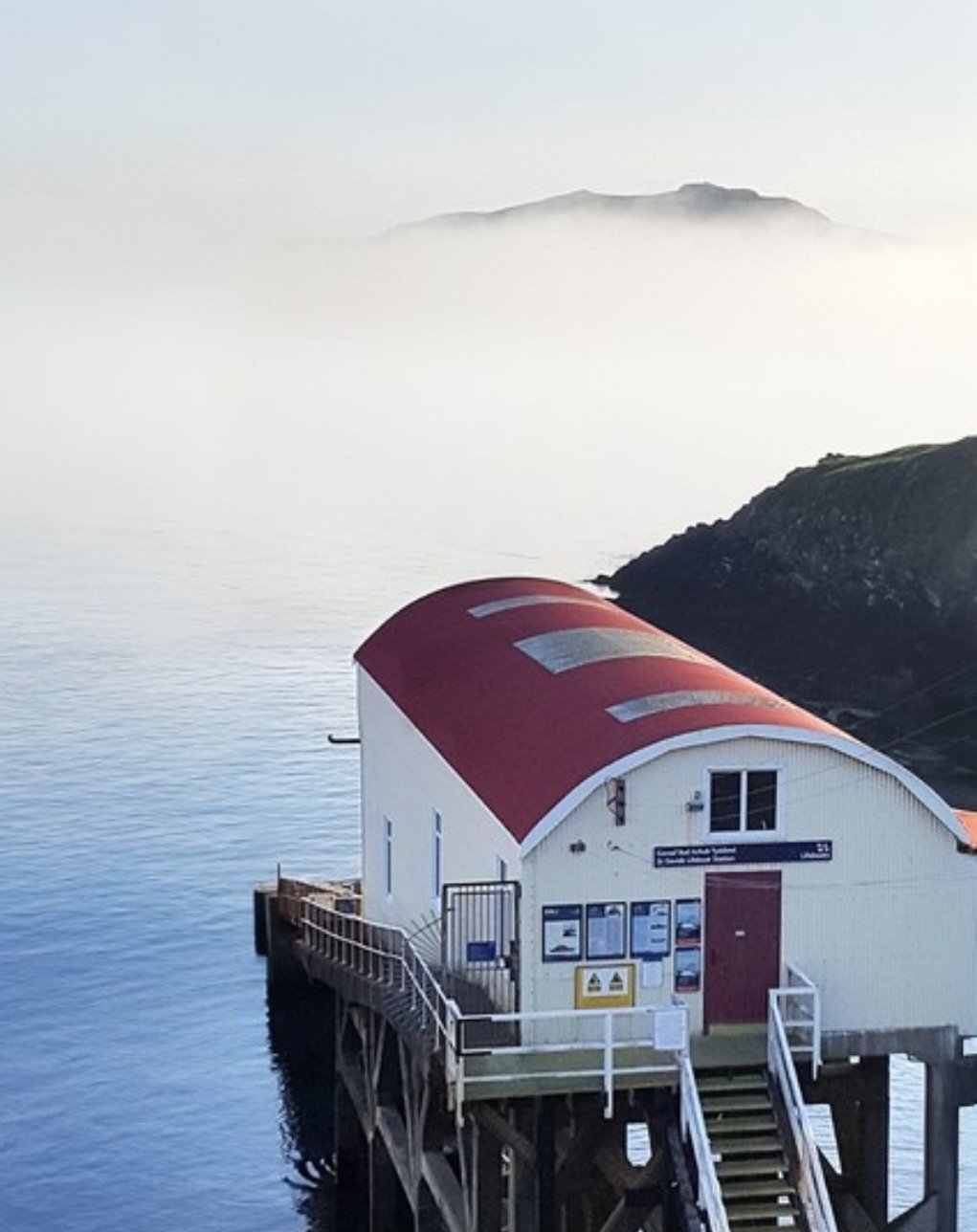
The lifeboat house at St Justinian’s harbour is the current St Davids Lifeboat Station, which has been operating since 1869 and has been involved in saving over 360 lives at sea. The station has both an all-weather and an inshore lifeboat and is run by the Royal National Lifeboat Institution (RNLI). The station has received 14 medals for gallantry for its brave rescues. The harbour is also used for boat trips to Ramsey Island and other activities such as kayaking and speedboating.
They answer every call for help No matter what the cost They are the guardians of the coast They are the lifeboat men we trust
St Justinian’s lifeboat station Tap to view my redbubble gallery.
Imagine being stranded on a capsized lifeboat in the middle of a stormy sea, with no hope of survival.
Saving Oscar
One notable piece of history about the St David’s lifeboat station is the rescue of the Norwegian barque Oscar on 9 December 1894. The Oscar was a sailing ship that was wrecked on the rocks near St David’s Head. The ship was on its way from Cardiff to Norway with a cargo of coal, when it encountered a severe storm and lost its rudder. The captain tried to anchor the ship, but the anchor chain broke and the ship drifted towards the shore. The crew of 11 men abandoned the ship and took to the lifeboat, but the lifeboat capsized in the rough waves. The men clung to the overturned boat and shouted for help.
Fortunately, their cries were heard by some fishermen on the shore, who alerted the St Davids Lifeboat Station. The station launched its lifeboat Gem, which was a 10-oared self-righting boat that had been in service since 1885. The lifeboat crew braved the gale and heavy seas and reached the wrecked ship, where they found the survivors clinging to the lifeboat. The lifeboat crew managed to rescue all 11 men and bring them safely to land. The rescue was made in difficult conditions and required great skill and courage from the lifeboat crew.
The rescue of the Norwegian barque Oscar was one of the most notable achievements of the St Davids Lifeboat Station in its history. The lifeboat crew received silver medals from the Royal National Lifeboat Institution (RNLI) for their bravery. The captain of the Oscar also presented a gold watch to the coxswain of the Gem, John Rees, as a token of gratitude. The wreck of the Oscar can still be seen at low tide near St David’s Head.
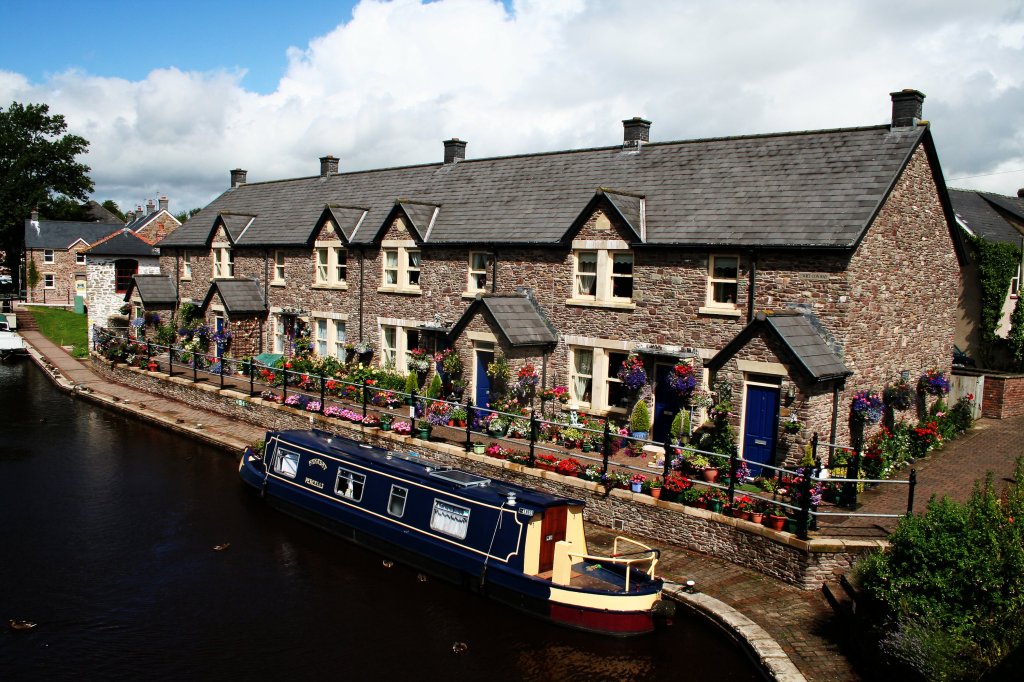
In the heyday of the Brecon Canal, life as a canal man was a world unto itself. The waterways were the lifeblood of our community, and I was a humble steward of this liquid highway, where tales of toil and camaraderie flowed as freely as the water beneath our narrowboat’s hull.
Brecon canal Tap to view my redbubble gallery.
Each morning, well before the sun could kiss the Welsh hills, I’d begin my day by stoking the coal stove, its warming glow chasing away the chill. The calloused hands of a canal man were well-acquainted with ropes and capstans, and as the first light broke, I’d cast off, my trusty steed of waterways setting forth on another journey.
The Brecon Canal wove a serpentine path through stunning countryside, with rolling green hills and quiet villages dotting the landscape. The echoing clip-clop of our horse’s hooves on the towpath, our loyal four-legged companion, was a soothing soundtrack to the day’s work. We were a team, the horse, the boat, and I, moving in harmony with the ebb and flow of life along the water.
We navigated a complex network of locks, each one a different puzzle to solve. The rhythmic turning of the lock gate winches and the gushing of water was a dance, one that only those who spent their lives on these canals truly understood.
The real charm of being a canal man lay in the camaraderie with fellow travellers. At the end of the day, we’d moor in a quiet spot, and often a pub was not far off. The tales spun in those dimly lit corners, fueled by pints of ale, were like treasures of the canal. Stories of cargo, mishaps, and chance encounters with colourful characters all found their place in the oral history of the waterway.
As night descended and the stars painted the sky, I’d lay in my bunk, the gentle rocking of the boat beneath me, and feel a profound sense of peace. Life as a canal man was simple, yet it held the beauty of a bygone era.
The Brecon Canal in its heyday was more than just a transport route; it was a way of life. I was a humble navigator of those waters, and in return, they revealed to me the quiet majesty of the Welsh countryside and the enduring spirit of those who plied their trade on its tranquil surface.


 Horse’s steady gazeStrengthful eyes that dare to meetChallenge accepted Courage is the strength to face… Read more: Darkness, Power and Beauty
 Daffodil so brightGolden petals, sunshine’s kissHope blooms anew As I wander through the garden, the… Read more: The Daffodil’s Song: A Lyrical Tribute to the Wonders of Spring
 The Graceful Lines of an Acanthus Leaf. Acanthus is a genus of flowering plants native… Read more: Acanthus: A Versatile Plant with a Rich Cultural Heritage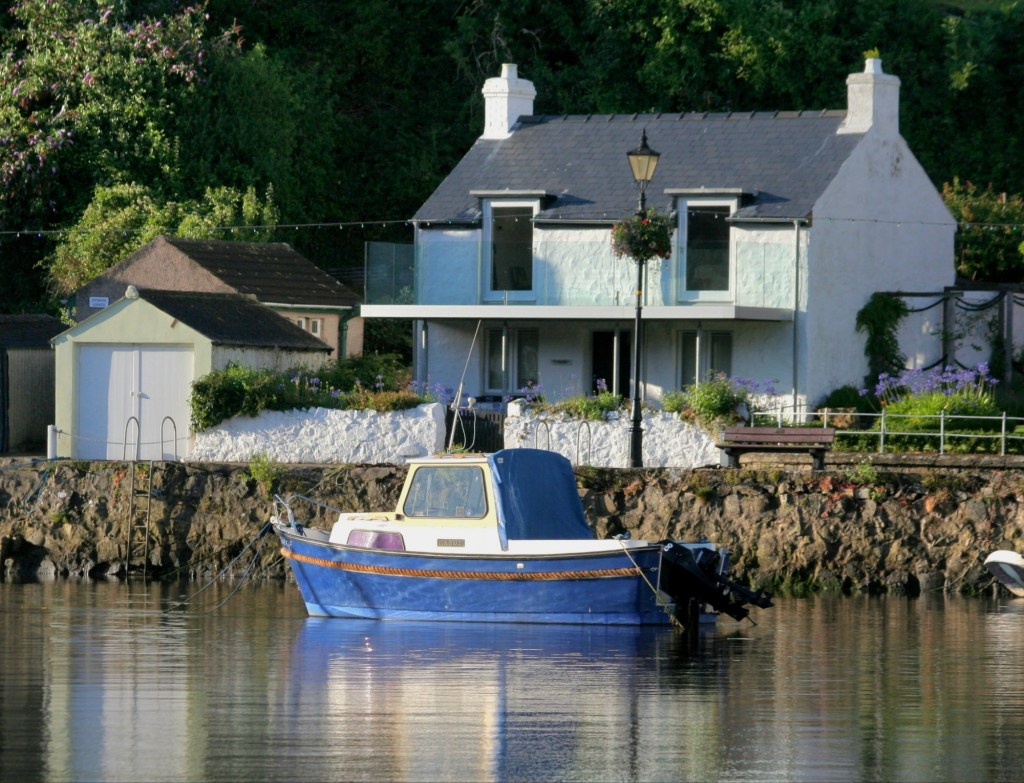
 Anthony's Literary Lens
You must be logged in to post a comment.