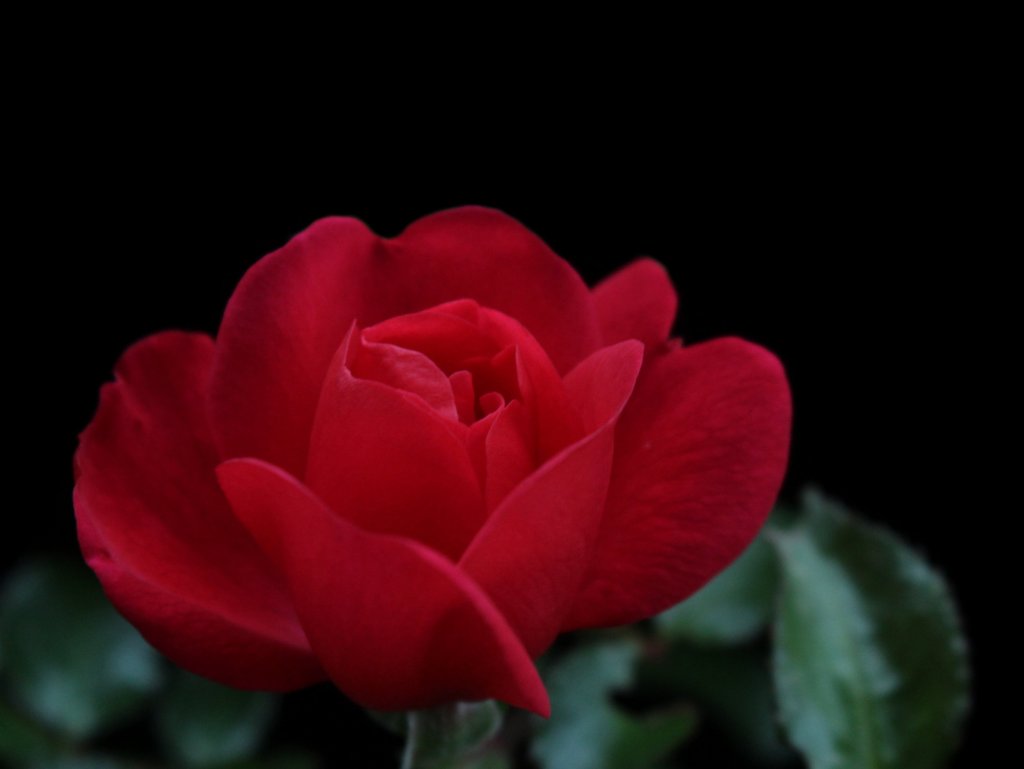
-
The Homing Light

Captain’s slow despair,
Starshine tear on a rough palm,
Purpose is reborn.

Tap to see in RedBubble It is in the night-green, whale-deep hollow of the world, when the sun’s great flame has been drowned like a drunkard’s candle and the stars are but dew on the sleeves of Gods, that The Soul-Sail takes to the water – soft, black velvet. Not a ship of timbers cleaved by man’s saw, mind you, a vessel born of a single, slow sigh from the shore, its hull the pale, polished bone of unbreakable longing.
And the sailor of this bright, lonely craft is the ageless, whispering sprite called Lyra. Born of the dreams and longings of past sailors hoping to cross an eternal horizon, her eyes are pools where extinguished constellations come to rest. Her true cargo never was silk nor spice, but the delicate, thistledown glow of every single, flickering window-flame lit by voyager’s wives and mothers – the crescendo of love’s pure, obstinate promise. These prayers, these hearth-lights, are drawn like silver dust across the sleeping waves, gathering and humming in the canvas of The Soul-Sail, making it blaze with a heat that is less of fire and more of memory’s warm, comforting joys.
For Lyra knows, in the marrow of her mythical bones, that the sea’s deepest wreck is not the snapping of a mast, but the sudden, terrible hush within a man’s own breast when his purpose is mislaid. When the bold, singing core of his dream – the little, shining reason he first slipped his ropes and faced the vast, swallowing dark – is forgotten, traded for the thin, rattling coin of worry and endless, profitless journey.
And so it is that the good ship Hope, which once cut the foam like a proud, golden rumour, now hangs limp and lost, strangled by a fog as thick as cold porridge and Captain Finnigan sits dumb on his deck, his soul’s wick dark, hearing only the hollow clap of the waves against a heart that has become nothing but a dry, rattling gourd.
Then, through the blind-man’s murk, there swims The Soul-Sail, gliding not upon the water but with it, a bright, honeyed halo against the crushing black. Lyra stands serene, a quiet queen of the deep-tide hour, and from the radiant, burning cloth of her sail – that collective, coastal calling – she plucks a single, singing pinch of starshine.
This tear of celestial light floats slow and low to the palm of the broken captain, and at its touch, Finnigan does not see a lighthouse on a distant crag; no, he sees the small, quick flicker of his daughter Lily’s smile, the exact, bright way her eyes squint when she laughs, and he feels the fierce, simple thunder of belonging that is waiting for him beyond the horizon of his sorrow. He sees the path not with his sailor’s eyes, but with the restored, hopeful eye of his own, true heart.
And when the memory is whole, when the purpose is found, and the joy is a strong, steady anchor once more, Lyra simply steers The Soul-Sail into a slow, sweeping turn. The light doesn’t point; it flows, carving an invisible, irresistible tunnel of brilliance through the damp air, showing the captain not the quickest way home, but the only way home – the one aligned with the newly sung, newly remembered music of his soul.
Then, Lyra and her luminous craft dissolve again into the myth-muttering dark, leaving behind only the blessed silence and a sailor whose course is suddenly, magically, and perfectly true.

If you find my photography or my writing inspiring and uplifting, consider supporting what I do. Buy me a coffee on Ko-fi.
Your support makes a difference in my life and helps me create more of what you, and I, like. Thank you!Tap here for a list of 100 endangered animals and plants.
100 endangered plant and animal species
* Abies beshanzuensis (Baishan fir) – Plant (Tree) – Baishanzu Mountain, Zhejiang, China – Three mature individuals
* Actinote zikani – Insect (butterfly) – Near São Paulo, Atlantic forest, Brazil – Unknown numbers
* Aipysurus foliosquama (Leaf scaled sea-snake) – Reptile – Ashmore Reef and Hibernia Reef, Timor Sea – Unknown numbers * Amanipodagrion gilliesi (Amani flatwing) – Insect (damselfly) – Amani-Sigi Forest, Usamabara Mountains, Tanzania – < 500 individuals * Antisolabis seychellensis – Insect – Morne Blanc, Mahé island, Seychelles – Unknown numbers * Antilophia bokermanni (Araripe manakin) – Bird – Chapado do Araripe, South Ceará, Brazil – 779 individuals * Aphanius transgrediens (Aci Göl toothcarp) – Fish – south-eastern shore of former Lake Aci, Turkey – Few hundred pairs * Aproteles bulmerae (Bulmer’s fruit bat) – Mammal – Luplupwintern Cave, Western Province, Papua New Guinea – 150 * Ardea insignis (White bellied heron) – Bird – Bhutan, North East India and Myanmar – 70–400 individuals * Ardeotis nigriceps (Great Indian bustard) – Bird – Rajasthan, Gujarat, Maharashtra, Andhra Pradesh, Karnataka and Madhya, India – 50–249 mature individuals * Astrochelys yniphora (Ploughshare tortoise) – Reptile – Baly Bay region, northwestern Madagascar – 440–770 * Atelopus balios (Rio Pescado stubfoot toad) – Amphibian – Azuay, Cañar and Guyas provinces, south-western Ecuador – Unknown numbers * Aythya innotata (Madagascar pochard) – Bird – volcanic lakes north of Bealanana, Madagascar – 80 mature individuals * Azurina eupalama (Galapagos damsel fish) – Fish – Unknown numbers – Unknown numbers * Bahaba taipingensis (Giant yellow croaker) – Fish – Chinese coast from Yangtze River, China to Hong Kong – Unknown numbers * Batagur baska (Common batagur) – Reptile (turtle) – Bangladesh, Cambodia, India, Indonesia and Malaysia – Unknown numbers * Bazzania bhutanica – Plant – Budini and Lafeti Khola, Bhutan – 2 sub-populations * Beatragus hunteri (Hirola) – Mammal (antelope) – South-east Kenya and possibly south-west Somalia – < 1,000 individuals * Bombus franklini (Franklin’s bumblebee) – Insect (bee) – Oregon and California – Unknown numbers * Brachyteles hypoxanthus (Northern muriqui / Woolly spider monkey) – Mammal (primate) – Atlantic forest, south-eastern Brazil – < 1,000 * Bradypus pygmaeus (Pygmy three-toed sloth) – Mammal – Isla Escudo de Veraguas, Panama – < 500 * Callitriche pulchra – Plant (freshwater) – pool on Gavdos, Greece – Unknown numbers * Calumma tarzan (Tarzan’s chameleon) – Reptile – Anosibe An’Ala region, eastern Madagascar – < 100 * Cavia intermedia (Santa Catarina’s guinea pig) – Mammal (rodent) – Moleques do Sul Island, Santa Catarina, Brazil – 40–60 * Cercopithecus roloway (Roloway guenon) – Mammal (primate) – Côte d’Ivoire – Unknown numbers * Coleura seychellensis (Seychelles sheath-tailed bat) – Mammal (bat) – Two small caves on Silhouette and Mahé, Seychelles – < 100 * Cryptomyces maximus (Willow blister) – Fungi – Pembrokeshire, United Kingdom – Unknown numbers * Cryptotis nelsoni (Nelson’s small-eared shrew) – Mammal (shrew) – Volcán San Martín Tuxtla, Veracruz, Mexico – Unknown numbers * Cyclura collei (Jamaican iguana / Jamaican rock iguana) – Reptile – Hellshire Hills, Jamaica – Unknown numbers * Daubentonia madagascariensis (Aye-aye) – Mammal (primate) – Deciduous forest, East Madagascar – Unknown numbers * Dendrophylax fawcettii (Cayman Islands ghost orchid) – Plant (orchid) – Ironwood Forest, George Town, Grand Cayman – Unknown numbers * Dicerorhinus sumatrensis (Sumatran rhino) – Mammal (rhino) – Sabah, Sarawak and Peninsular Malaysia, Kalimantan and Sumatra, Indonesia – < 100 (more recent estimates suggest 34-47) * Diomedea amsterdamensis (Amsterdam albatross) – Bird – Breeds on Plateuau des Tourbières, Amsterdam Island, Indian Ocean. – 100 mature individuals * Dioscorea strydomiana (Wild yam) – Plant – Oshoek area, Mpumalanga, South Africa – 200 * Diospyros katendei – Plant (tree) – Kasyoha-Kitomi Forest Reserve, Uganda – 20 individuals in a single population * Dipterocarpus lamellatus – Plant (tree) – Siangau Forest Reserve, Sabah, Malaysia – 12 individuals * Discoglossus nigriventer (Hula painted frog) – Amphibian – Hula Valley, Israel – Unknown numbers * Dombeya mauritiana – Plant – Mauritius – Unknown numbers * Elaeocarpus bojeri (Bois Dentelle) – Plant (tree) – Grand Bassin, Mauritius – < 10 individuals * Eleutherodactylus glandulifer (La Hotte glanded frog) – Amphibian – Massif de la Hotte, Haiti – Unknown numbers * Eleutherodactylus thorectes (Macaya breast-spot frog) – Amphibian – Formon and Macaya peaks, Masif de la Hotte, Haiti – Unknown numbers * Eriosyce chilensis (Chilenito (cactus)) – Plant – Pta Molles and Pichidungui, Chile – < 500 individuals * Erythrina schliebenii (Coral tree) – Plant – Namatimbili-Ngarama Forest, Tanzania – < 50 individuals * Euphorbia tanaensis – Plant (tree) – Witu Forest Reserve, Kenya – 4 mature individuals * Eurynorhyncus pygmeus (Spoon-billed sandpiper) – Bird – Breeds in Russia, migrates along the East Asian-Australasian Flyway to wintering grounds in India, Bangladesh and Myanmar – 100 breeding pairs * Ficus katendei – Plant – Kasyoha-Kitomi Forest Reserve, Ishasha River, Uganda – < 50 mature individuals * Geronticus eremita (Northern bald ibis) – Bird – Breeds in Morocco, Turkey and Syria. Syrian population winters in central Ethiopia. – About 3000 individuals * Gigasiphon macrosiphon – Plant (flower) – Kaya Muhaka, Gongoni and Mrima Forest Reserves, Kenya, Amani Nature Reserve, West Kilombero Scarp Forest Reserve, and Kihansi Gorge, Tanzania – 33 * Gocea ohridana – Mollusc – Lake Ohrid, Macedonia – Unknown numbers * Heleophryne rosei (Table mountain ghost frog) – Amphibian – Table Mountain, Western Cape Province, South Africa – Unknown numbers * Hemicycla paeteliana – Mollusc (land snail) – Jandia peninsula, Fuerteventura, Canary Islands – Unknown numbers * Heteromirafa sidamoensis (Liben lark) – Bird – Liben Plains, southern Ethiopia – 90–256 * Hibiscadelphus woodii – Plant (tree) – Kalalau Valley, Hawaii – Unknown numbers * Hucho perryi (Sakhalin taimen) – Fish – Russian and Japanese rivers, Pacific Ocean between Russia and Japan – Unknown numbers * Johora singaporensis (Singapore freshwater crab) – Crustacean – Bukit Timah Nature Reserve and streamlet near Bukit Batok, Singapore – Unknown numbers * Lathyrus belinensis (Belin vetchling) – Plant – Outskirts of Belin village, Antalya, Turkey – < 1,000 * Leiopelma archeyi (Archey’s frog) – Amphibian – Coromandel peninsula and Whareorino Forest, New Zealand – Unknown numbers * Lithobates sevosus (Dusky gopher frog) – Amphibian – Harrison County, Mississippi, USA – 60–100 * Lophura edwardsi (Edwards’s pheasant) – Bird – Quang Binh, Quang Tri and Thua Thien-Hue, Viet Nam – Unknown numbers * Magnolia wolfii – Plant (tree) – Risaralda, Colombia – 3 * Margaritifera marocana – Mollusc – Oued Denna, Oued Abid and Oued Beth, Morocco – < 250 * Moominia willii – Mollusc (snail) – Silhouette Island, Seychelles – < 500 * Natalus primus (Cuban greater funnel eared bat) – Mammal (bat) – Cueva La Barca, Isle of Pines, Cuba – < 100 * Nepenthes attenboroughii (Attenborough’s pitcher plant) – Plant – Mount Victoria, Palawan, Philippines – Unknown numbers * Nomascus hainanus (Hainan black crested gibbon) – Mammal (primate) – Hainan Island, China – 20 * Neurergus kaiseri (Luristan newt) – Amphibian – Zagros Mountains, Lorestan, Iran – < 1,000 * Oreocnemis phoenix (Mulanje red damsel) – Insect (damselfly) – Mulanje Plateau, Malawi – Unknown numbers * Pangasius sanitwongsei (Pangasid catfish) – Fish – Chao Phraya and Mekong basins in Cambodia, China, Lao PDR, Thailand and Viet Nam – Unknown numbers * Parides burchellanus – Insect (butterfly) – Cerrado, Brazil – < 100 * Phocoena sinus (Vaquita) – Mammal (porpoise) – Northern Gulf of California, Mexico – 12 * Picea neoveitchii (Type of spruce tree) – Plant (tree) – Qinling Range, China – Unknown numbers * Pinus squamata (Qiaojia pine) – Plant (tree) – Qiaojia, Yunnan, China – < 25 * Poecilotheria metallica (Gooty tarantula / Metallic tarantula / Peacock tarantula / Salepurgu) – Spider – Nandyal and Giddalur, Andhra Pradesh, India – Unknown numbers * Pomarea whitneyi (Fatuhiva monarch) – Bird – Fatu Hiva, Marquesas Islands, French Polynesia – 50 * Pristis pristis (Common sawfish) – Fish – Coastal tropical and subtropical waters of Indo-Pacific and Atlantic Oceans. Currently largely restricted to northern Australia – Unknown numbers * Hapalemur simus (Greater bamboo lemur) – Mammal (primate) – Southeastern and southcentral rainforests of Madagascar – 500 * Propithecus candidus (Silky sifaka) – Mammal (primate) – Maroantsetra to Andapa basin, and Marojeju Massif, Madagascar – 100–1,000 * Psammobates geometricus (Geometric tortoise) – Reptile – Western Cape Province, South Africa – Unknown numbers * Pseudoryx nghetinhensis (Saola) – Mammal – Annamite mountains, on the Viet Nam – PDR Laos border – Unknown numbers * Psiadia cataractae – Plant – Mauritius – Unknown numbers * Psorodonotus ebneri (Beydaglari bush-cricket) – Insect – Beydaglari range, Antalaya, Turkey – Unknown numbers * Rafetus swinhoei (Red River giant softshell turtle) – Reptile – Hoan Kiem Lake and Dong Mo Lake, Viet Nam, and Suzhou Zoo, China – 3 * Rhinoceros sondaicus (Javan rhino) – Mammal (rhino) – Ujung Kulon National Park, Java, Indonesia – < 100 * Rhinopithecus avunculus (Tonkin snub-nosed monkey) – Mammal (primate) – Northeastern Vietnam – < 200 * Rhizanthella gardneri (West Australian underground orchid) – Plant (orchid) – Western Australia, Australia – < 100 * Rhynchocyon spp. (Boni giant sengi) – Mammal – Boni-Dodori Forest, Lamu area, Kenya – Unknown numbers * Risiocnemis seidenschwarzi (Cebu frill-wing) – Insect (damselfly) – Rivulet beside the Kawasan River, Cebu, Philippines – Unknown numbers * Rosa arabica – Plant – St Katherine Mountains, Egypt – Unknown numbers, 10 sub-populations * Salanoia durrelli (Durrell’s vontsira) – Mammal (mongoose) – Marshes of Lake Alaotra, Madagascar – Unknown numbers * Santamartamys rufodorsalis (Red crested tree rat) – Mammal (rodent) – Sierra Nevada de Santa Marta, Colombia – Unknown numbers * Scaturiginichthys vermeilipinnis (Red-finned blue-eye) – Fish – Edgbaston Station, central western Queensland, Australia – 2,000–4,000 * Squatina squatina (Angel shark) – Fish – Canary Islands – Unknown numbers * Sterna bernsteini (Chinese crested tern) – Bird – Breeding in Zhejiang and Fujian, China. Outside breeding season in Indonesia, Malaysia, Philippines, Taiwan, Thailand. – < 50 * Syngnathus watermeyeri (Estuarine pipefish) – Fish – Kariega Estuary to East Kleinemonde Estuary, Eastern Cape Province, South Africa – Unknown numbers * Tahina spectabilis (Suicide palm / Dimaka) – Plant – Analalava district, north-western Madagascar – 90 * Telmatobufo bullocki (Bullock’s false toad) – Amphibian (frog) – Nahuelbuta, Arauco Province, Chile – Unknown numbers * Tokudaia muenninki (Okinawa spiny rat) – Mammal (rodent) – Okinawa Island, Japan – Unknown numbers * Trigonostigma somphongsi (Somphongs’s rasbora) – Fish – Mae Khlong basin, Thailand – Unknown numbers * Valencia letourneuxi – Fish – Southern Albania and Western Greece – Unknown numbers * Voanioala gerardii (Forest coconut) – Plant – Masoala peninsula, Madagascar – < 10 * Zaglossus attenboroughi (Attenborough’s echidna) – Mammal – Cyclops Mountains, Papua Province, Indonesia – Unknown numbers

Tap to view my redbubble gallery. - Darkness, Power and Beauty
 Horse’s steady gazeStrengthful eyes that dare to meetChallenge accepted Courage is the strength to face… Read more: Darkness, Power and Beauty
 - The Daffodil’s Song: A Lyrical Tribute to the Wonders of Spring
 Daffodil so brightGolden petals, sunshine’s kissHope blooms anew As I wander through the garden, the… Read more: The Daffodil’s Song: A Lyrical Tribute to the Wonders of Spring
 - Acanthus: A Versatile Plant with a Rich Cultural Heritage
 The Graceful Lines of an Acanthus Leaf. Acanthus is a genus of flowering plants native… Read more: Acanthus: A Versatile Plant with a Rich Cultural Heritage
Tenby: A Kaleidoscope of Charm on the Welsh Coast
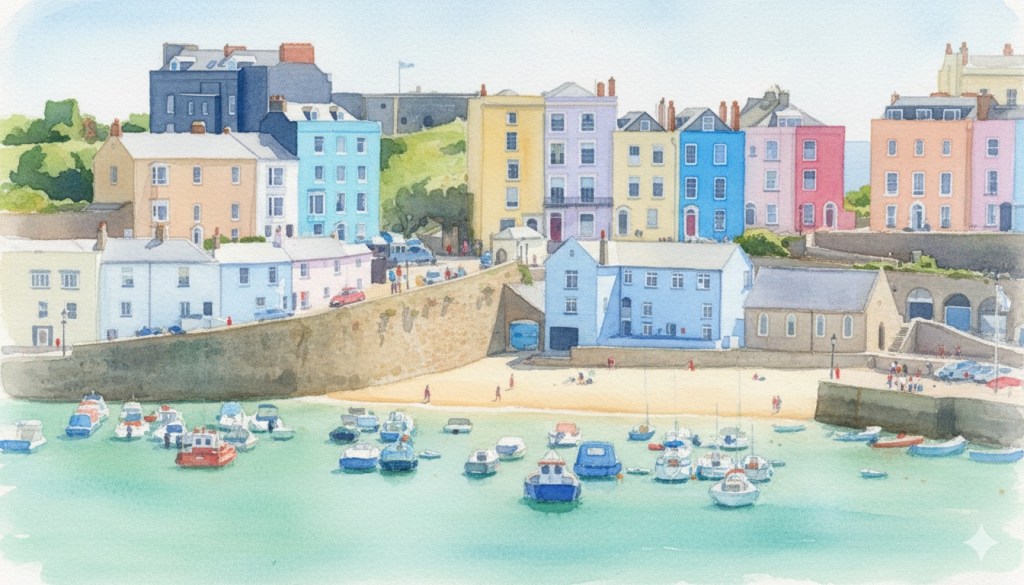
If you’re dreaming of a coastal escape that blends historic charm with vibrant seaside life, look no further than Tenby. Nestled on the Pembrokeshire coast in Wales, this walled town is an absolute gem, captivating visitors with its stunning beaches, ancient fortifications, and that truly iconic harbour scene. Just look at it! The colourful Georgian and Victorian houses tumbling down to the bustling harbour are a sight to behold. It’s like something straight out of a postcard, or perhaps a particularly delightful watercolour.
What Makes Tenby So Irresistible?
The Colourful Harbour: As our image beautifully demonstrates, Tenby’s harbour is its beating heart and most recognisable feature. On a sunny day, the brightly painted houses reflect in the calm waters, where a flotilla of boats bobs gently. It’s the perfect spot for an ice cream, a seafood lunch, or simply to sit and soak in the atmosphere and sun.
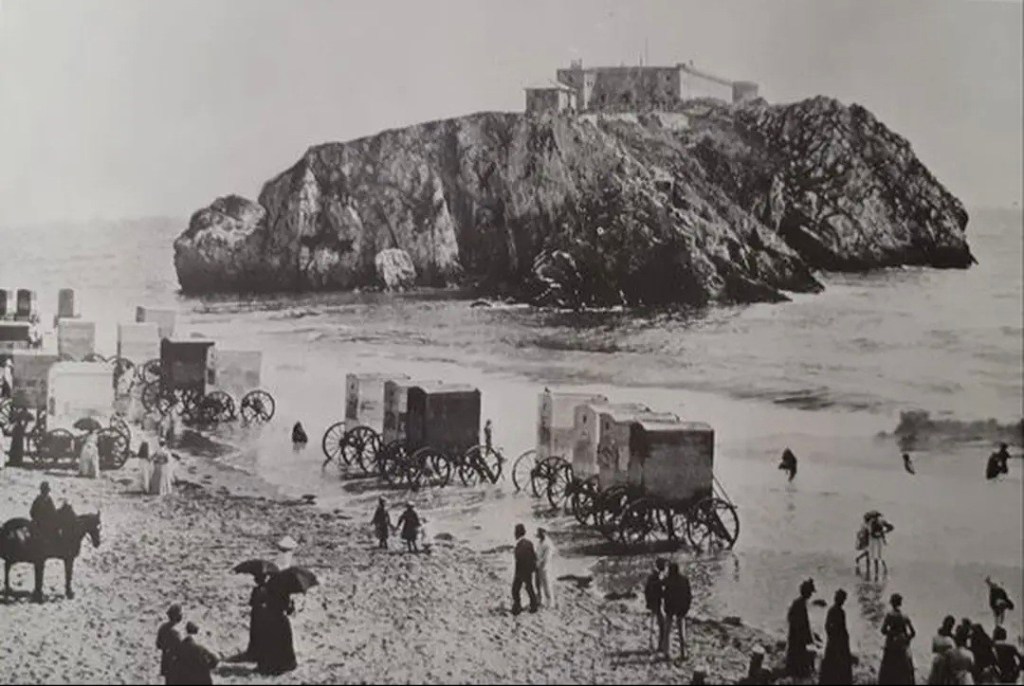
Golden Sands & Blue Flag Beaches: Tenby boasts not one, but four incredible beaches. North Beach, South Beach, Castle Beach and Harbour Beach all offer pristine sands and crystal-clear waters, ideal for swimming, sunbathing, or building sandcastles. Castle Beach, in particular, with St. Catherine’s Island just offshore, feels like a scene from an adventure novel.
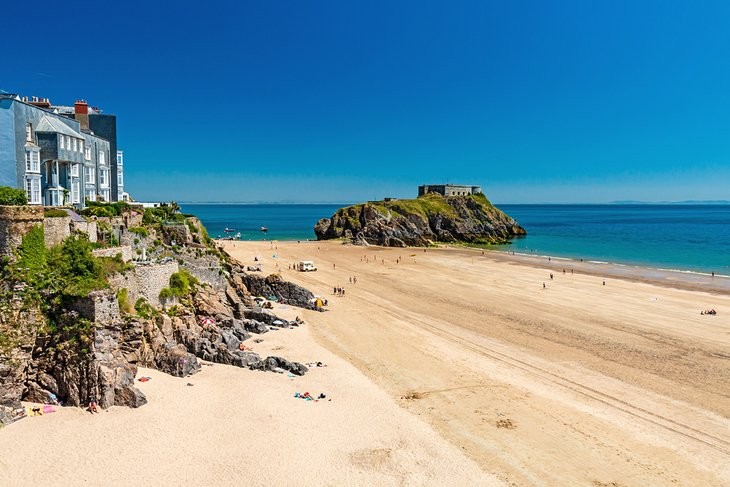
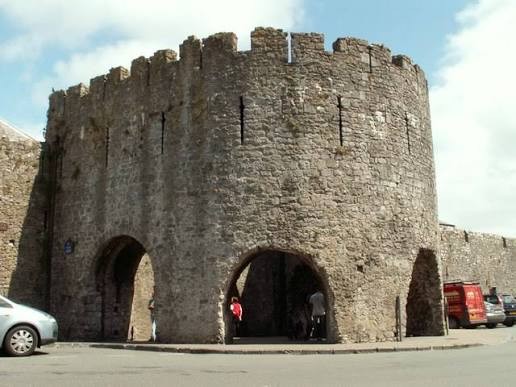
A Rich History Within Ancient Walls: Step away from the beaches and you’re transported back in time. Tenby is one of the few remaining walled towns in the UK, and you can still walk along parts of its medieval walls. Explore the narrow, winding streets, discover independent shops, and imagine life within these protective ramparts centuries ago. Don’t miss Tenby Castle ruins on Castle Hill for panoramic views.
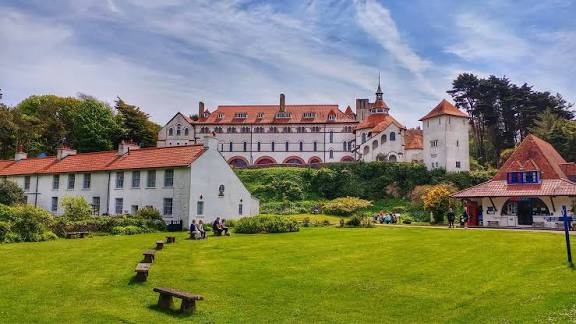
Island Adventures: From the harbour, you can catch a boat trip to Caldey Island, a tranquil monastic island just a short distance away. Home to Cistercian monks, it offers a unique opportunity to experience peace and solitude, explore beautiful coves, and even buy some of their famous Caldey Island perfume or chocolate.
Foodie Delights: Being a fishing town, it’s no surprise that Tenby serves up some fantastic fresh seafood. From casual fish and chips by the sea to upscale dining experiences, there’s something to tantalise every taste bud. And of course, no Welsh holiday is complete without trying a traditional Welsh cake!
Whether you’re looking for an active holiday filled with watersports and coastal walks along the Pembrokeshire Coast Path, or a relaxing break soaking up the charm and history, Tenby delivers. It’s a town that truly has it all – vibrant colours, golden beaches, and a welcoming atmosphere that will make you want to return again and again.
Have you visited Tenby? What was your favourite part?
Your support makes a difference in my life and helps me create more of what you, and I, like. Thank you!
Tap here for a list of 100 endangered animals and plants.
100 endangered plant and animal species
* Abies beshanzuensis (Baishan fir) – Plant (Tree) – Baishanzu Mountain, Zhejiang, China – Three mature individuals
* Actinote zikani – Insect (butterfly) – Near São Paulo, Atlantic forest, Brazil – Unknown numbers
* Aipysurus foliosquama (Leaf scaled sea-snake) – Reptile – Ashmore Reef and Hibernia Reef, Timor Sea – Unknown numbers * Amanipodagrion gilliesi (Amani flatwing) – Insect (damselfly) – Amani-Sigi Forest, Usamabara Mountains, Tanzania – < 500 individuals * Antisolabis seychellensis – Insect – Morne Blanc, Mahé island, Seychelles – Unknown numbers * Antilophia bokermanni (Araripe manakin) – Bird – Chapado do Araripe, South Ceará, Brazil – 779 individuals * Aphanius transgrediens (Aci Göl toothcarp) – Fish – south-eastern shore of former Lake Aci, Turkey – Few hundred pairs * Aproteles bulmerae (Bulmer’s fruit bat) – Mammal – Luplupwintern Cave, Western Province, Papua New Guinea – 150 * Ardea insignis (White bellied heron) – Bird – Bhutan, North East India and Myanmar – 70–400 individuals * Ardeotis nigriceps (Great Indian bustard) – Bird – Rajasthan, Gujarat, Maharashtra, Andhra Pradesh, Karnataka and Madhya, India – 50–249 mature individuals * Astrochelys yniphora (Ploughshare tortoise) – Reptile – Baly Bay region, northwestern Madagascar – 440–770 * Atelopus balios (Rio Pescado stubfoot toad) – Amphibian – Azuay, Cañar and Guyas provinces, south-western Ecuador – Unknown numbers * Aythya innotata (Madagascar pochard) – Bird – volcanic lakes north of Bealanana, Madagascar – 80 mature individuals * Azurina eupalama (Galapagos damsel fish) – Fish – Unknown numbers – Unknown numbers * Bahaba taipingensis (Giant yellow croaker) – Fish – Chinese coast from Yangtze River, China to Hong Kong – Unknown numbers * Batagur baska (Common batagur) – Reptile (turtle) – Bangladesh, Cambodia, India, Indonesia and Malaysia – Unknown numbers * Bazzania bhutanica – Plant – Budini and Lafeti Khola, Bhutan – 2 sub-populations * Beatragus hunteri (Hirola) – Mammal (antelope) – South-east Kenya and possibly south-west Somalia – < 1,000 individuals * Bombus franklini (Franklin’s bumblebee) – Insect (bee) – Oregon and California – Unknown numbers * Brachyteles hypoxanthus (Northern muriqui / Woolly spider monkey) – Mammal (primate) – Atlantic forest, south-eastern Brazil – < 1,000 * Bradypus pygmaeus (Pygmy three-toed sloth) – Mammal – Isla Escudo de Veraguas, Panama – < 500 * Callitriche pulchra – Plant (freshwater) – pool on Gavdos, Greece – Unknown numbers * Calumma tarzan (Tarzan’s chameleon) – Reptile – Anosibe An’Ala region, eastern Madagascar – < 100 * Cavia intermedia (Santa Catarina’s guinea pig) – Mammal (rodent) – Moleques do Sul Island, Santa Catarina, Brazil – 40–60 * Cercopithecus roloway (Roloway guenon) – Mammal (primate) – Côte d’Ivoire – Unknown numbers * Coleura seychellensis (Seychelles sheath-tailed bat) – Mammal (bat) – Two small caves on Silhouette and Mahé, Seychelles – < 100 * Cryptomyces maximus (Willow blister) – Fungi – Pembrokeshire, United Kingdom – Unknown numbers * Cryptotis nelsoni (Nelson’s small-eared shrew) – Mammal (shrew) – Volcán San Martín Tuxtla, Veracruz, Mexico – Unknown numbers * Cyclura collei (Jamaican iguana / Jamaican rock iguana) – Reptile – Hellshire Hills, Jamaica – Unknown numbers * Daubentonia madagascariensis (Aye-aye) – Mammal (primate) – Deciduous forest, East Madagascar – Unknown numbers * Dendrophylax fawcettii (Cayman Islands ghost orchid) – Plant (orchid) – Ironwood Forest, George Town, Grand Cayman – Unknown numbers * Dicerorhinus sumatrensis (Sumatran rhino) – Mammal (rhino) – Sabah, Sarawak and Peninsular Malaysia, Kalimantan and Sumatra, Indonesia – < 100 (more recent estimates suggest 34-47) * Diomedea amsterdamensis (Amsterdam albatross) – Bird – Breeds on Plateuau des Tourbières, Amsterdam Island, Indian Ocean. – 100 mature individuals * Dioscorea strydomiana (Wild yam) – Plant – Oshoek area, Mpumalanga, South Africa – 200 * Diospyros katendei – Plant (tree) – Kasyoha-Kitomi Forest Reserve, Uganda – 20 individuals in a single population * Dipterocarpus lamellatus – Plant (tree) – Siangau Forest Reserve, Sabah, Malaysia – 12 individuals * Discoglossus nigriventer (Hula painted frog) – Amphibian – Hula Valley, Israel – Unknown numbers * Dombeya mauritiana – Plant – Mauritius – Unknown numbers * Elaeocarpus bojeri (Bois Dentelle) – Plant (tree) – Grand Bassin, Mauritius – < 10 individuals * Eleutherodactylus glandulifer (La Hotte glanded frog) – Amphibian – Massif de la Hotte, Haiti – Unknown numbers * Eleutherodactylus thorectes (Macaya breast-spot frog) – Amphibian – Formon and Macaya peaks, Masif de la Hotte, Haiti – Unknown numbers * Eriosyce chilensis (Chilenito (cactus)) – Plant – Pta Molles and Pichidungui, Chile – < 500 individuals * Erythrina schliebenii (Coral tree) – Plant – Namatimbili-Ngarama Forest, Tanzania – < 50 individuals * Euphorbia tanaensis – Plant (tree) – Witu Forest Reserve, Kenya – 4 mature individuals * Eurynorhyncus pygmeus (Spoon-billed sandpiper) – Bird – Breeds in Russia, migrates along the East Asian-Australasian Flyway to wintering grounds in India, Bangladesh and Myanmar – 100 breeding pairs * Ficus katendei – Plant – Kasyoha-Kitomi Forest Reserve, Ishasha River, Uganda – < 50 mature individuals * Geronticus eremita (Northern bald ibis) – Bird – Breeds in Morocco, Turkey and Syria. Syrian population winters in central Ethiopia. – About 3000 individuals * Gigasiphon macrosiphon – Plant (flower) – Kaya Muhaka, Gongoni and Mrima Forest Reserves, Kenya, Amani Nature Reserve, West Kilombero Scarp Forest Reserve, and Kihansi Gorge, Tanzania – 33 * Gocea ohridana – Mollusc – Lake Ohrid, Macedonia – Unknown numbers * Heleophryne rosei (Table mountain ghost frog) – Amphibian – Table Mountain, Western Cape Province, South Africa – Unknown numbers * Hemicycla paeteliana – Mollusc (land snail) – Jandia peninsula, Fuerteventura, Canary Islands – Unknown numbers * Heteromirafa sidamoensis (Liben lark) – Bird – Liben Plains, southern Ethiopia – 90–256 * Hibiscadelphus woodii – Plant (tree) – Kalalau Valley, Hawaii – Unknown numbers * Hucho perryi (Sakhalin taimen) – Fish – Russian and Japanese rivers, Pacific Ocean between Russia and Japan – Unknown numbers * Johora singaporensis (Singapore freshwater crab) – Crustacean – Bukit Timah Nature Reserve and streamlet near Bukit Batok, Singapore – Unknown numbers * Lathyrus belinensis (Belin vetchling) – Plant – Outskirts of Belin village, Antalya, Turkey – < 1,000 * Leiopelma archeyi (Archey’s frog) – Amphibian – Coromandel peninsula and Whareorino Forest, New Zealand – Unknown numbers * Lithobates sevosus (Dusky gopher frog) – Amphibian – Harrison County, Mississippi, USA – 60–100 * Lophura edwardsi (Edwards’s pheasant) – Bird – Quang Binh, Quang Tri and Thua Thien-Hue, Viet Nam – Unknown numbers * Magnolia wolfii – Plant (tree) – Risaralda, Colombia – 3 * Margaritifera marocana – Mollusc – Oued Denna, Oued Abid and Oued Beth, Morocco – < 250 * Moominia willii – Mollusc (snail) – Silhouette Island, Seychelles – < 500 * Natalus primus (Cuban greater funnel eared bat) – Mammal (bat) – Cueva La Barca, Isle of Pines, Cuba – < 100 * Nepenthes attenboroughii (Attenborough’s pitcher plant) – Plant – Mount Victoria, Palawan, Philippines – Unknown numbers * Nomascus hainanus (Hainan black crested gibbon) – Mammal (primate) – Hainan Island, China – 20 * Neurergus kaiseri (Luristan newt) – Amphibian – Zagros Mountains, Lorestan, Iran – < 1,000 * Oreocnemis phoenix (Mulanje red damsel) – Insect (damselfly) – Mulanje Plateau, Malawi – Unknown numbers * Pangasius sanitwongsei (Pangasid catfish) – Fish – Chao Phraya and Mekong basins in Cambodia, China, Lao PDR, Thailand and Viet Nam – Unknown numbers * Parides burchellanus – Insect (butterfly) – Cerrado, Brazil – < 100 * Phocoena sinus (Vaquita) – Mammal (porpoise) – Northern Gulf of California, Mexico – 12 * Picea neoveitchii (Type of spruce tree) – Plant (tree) – Qinling Range, China – Unknown numbers * Pinus squamata (Qiaojia pine) – Plant (tree) – Qiaojia, Yunnan, China – < 25 * Poecilotheria metallica (Gooty tarantula / Metallic tarantula / Peacock tarantula / Salepurgu) – Spider – Nandyal and Giddalur, Andhra Pradesh, India – Unknown numbers * Pomarea whitneyi (Fatuhiva monarch) – Bird – Fatu Hiva, Marquesas Islands, French Polynesia – 50 * Pristis pristis (Common sawfish) – Fish – Coastal tropical and subtropical waters of Indo-Pacific and Atlantic Oceans. Currently largely restricted to northern Australia – Unknown numbers * Hapalemur simus (Greater bamboo lemur) – Mammal (primate) – Southeastern and southcentral rainforests of Madagascar – 500 * Propithecus candidus (Silky sifaka) – Mammal (primate) – Maroantsetra to Andapa basin, and Marojeju Massif, Madagascar – 100–1,000 * Psammobates geometricus (Geometric tortoise) – Reptile – Western Cape Province, South Africa – Unknown numbers * Pseudoryx nghetinhensis (Saola) – Mammal – Annamite mountains, on the Viet Nam – PDR Laos border – Unknown numbers * Psiadia cataractae – Plant – Mauritius – Unknown numbers * Psorodonotus ebneri (Beydaglari bush-cricket) – Insect – Beydaglari range, Antalaya, Turkey – Unknown numbers * Rafetus swinhoei (Red River giant softshell turtle) – Reptile – Hoan Kiem Lake and Dong Mo Lake, Viet Nam, and Suzhou Zoo, China – 3 * Rhinoceros sondaicus (Javan rhino) – Mammal (rhino) – Ujung Kulon National Park, Java, Indonesia – < 100 * Rhinopithecus avunculus (Tonkin snub-nosed monkey) – Mammal (primate) – Northeastern Vietnam – < 200 * Rhizanthella gardneri (West Australian underground orchid) – Plant (orchid) – Western Australia, Australia – < 100 * Rhynchocyon spp. (Boni giant sengi) – Mammal – Boni-Dodori Forest, Lamu area, Kenya – Unknown numbers * Risiocnemis seidenschwarzi (Cebu frill-wing) – Insect (damselfly) – Rivulet beside the Kawasan River, Cebu, Philippines – Unknown numbers * Rosa arabica – Plant – St Katherine Mountains, Egypt – Unknown numbers, 10 sub-populations * Salanoia durrelli (Durrell’s vontsira) – Mammal (mongoose) – Marshes of Lake Alaotra, Madagascar – Unknown numbers * Santamartamys rufodorsalis (Red crested tree rat) – Mammal (rodent) – Sierra Nevada de Santa Marta, Colombia – Unknown numbers * Scaturiginichthys vermeilipinnis (Red-finned blue-eye) – Fish – Edgbaston Station, central western Queensland, Australia – 2,000–4,000 * Squatina squatina (Angel shark) – Fish – Canary Islands – Unknown numbers * Sterna bernsteini (Chinese crested tern) – Bird – Breeding in Zhejiang and Fujian, China. Outside breeding season in Indonesia, Malaysia, Philippines, Taiwan, Thailand. – < 50 * Syngnathus watermeyeri (Estuarine pipefish) – Fish – Kariega Estuary to East Kleinemonde Estuary, Eastern Cape Province, South Africa – Unknown numbers * Tahina spectabilis (Suicide palm / Dimaka) – Plant – Analalava district, north-western Madagascar – 90 * Telmatobufo bullocki (Bullock’s false toad) – Amphibian (frog) – Nahuelbuta, Arauco Province, Chile – Unknown numbers * Tokudaia muenninki (Okinawa spiny rat) – Mammal (rodent) – Okinawa Island, Japan – Unknown numbers * Trigonostigma somphongsi (Somphongs’s rasbora) – Fish – Mae Khlong basin, Thailand – Unknown numbers * Valencia letourneuxi – Fish – Southern Albania and Western Greece – Unknown numbers * Voanioala gerardii (Forest coconut) – Plant – Masoala peninsula, Madagascar – < 10 * Zaglossus attenboroughi (Attenborough’s echidna) – Mammal – Cyclops Mountains, Papua Province, Indonesia – Unknown numbers
- Darkness, Power and BeautyHorse’s steady gazeStrengthful eyes that dare to meetChallenge accepted Courage is the strength to face… Read more: Darkness, Power and Beauty
- The Daffodil’s Song: A Lyrical Tribute to the Wonders of SpringDaffodil so brightGolden petals, sunshine’s kissHope blooms anew As I wander through the garden, the… Read more: The Daffodil’s Song: A Lyrical Tribute to the Wonders of Spring
- Acanthus: A Versatile Plant with a Rich Cultural HeritageThe Graceful Lines of an Acanthus Leaf. Acanthus is a genus of flowering plants native… Read more: Acanthus: A Versatile Plant with a Rich Cultural Heritage
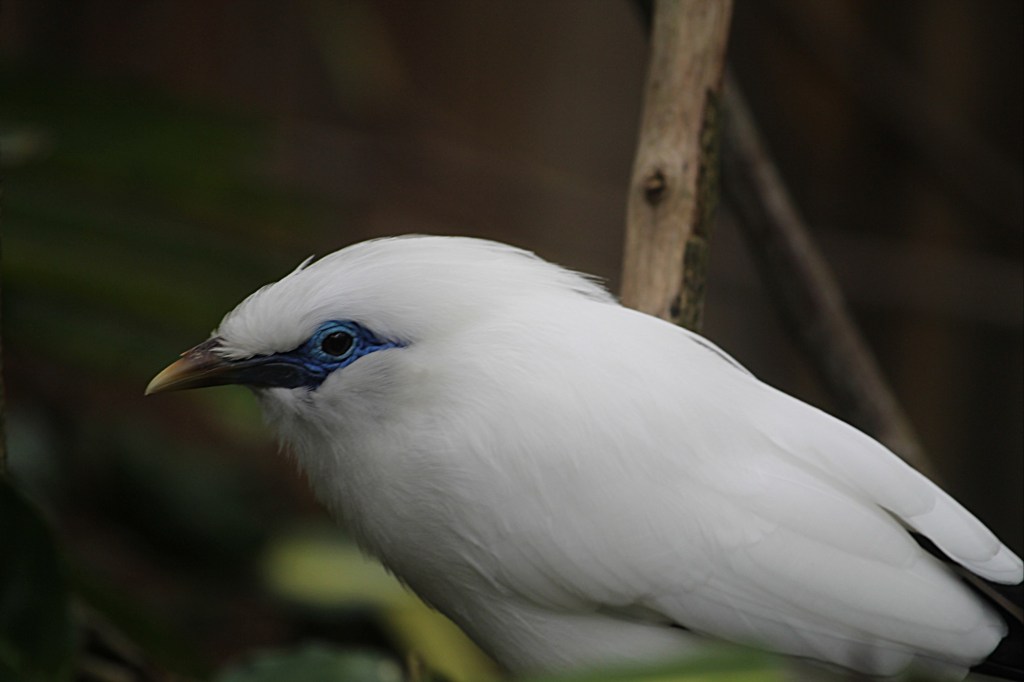
The Bali myna (Leucopsar rothschildi)
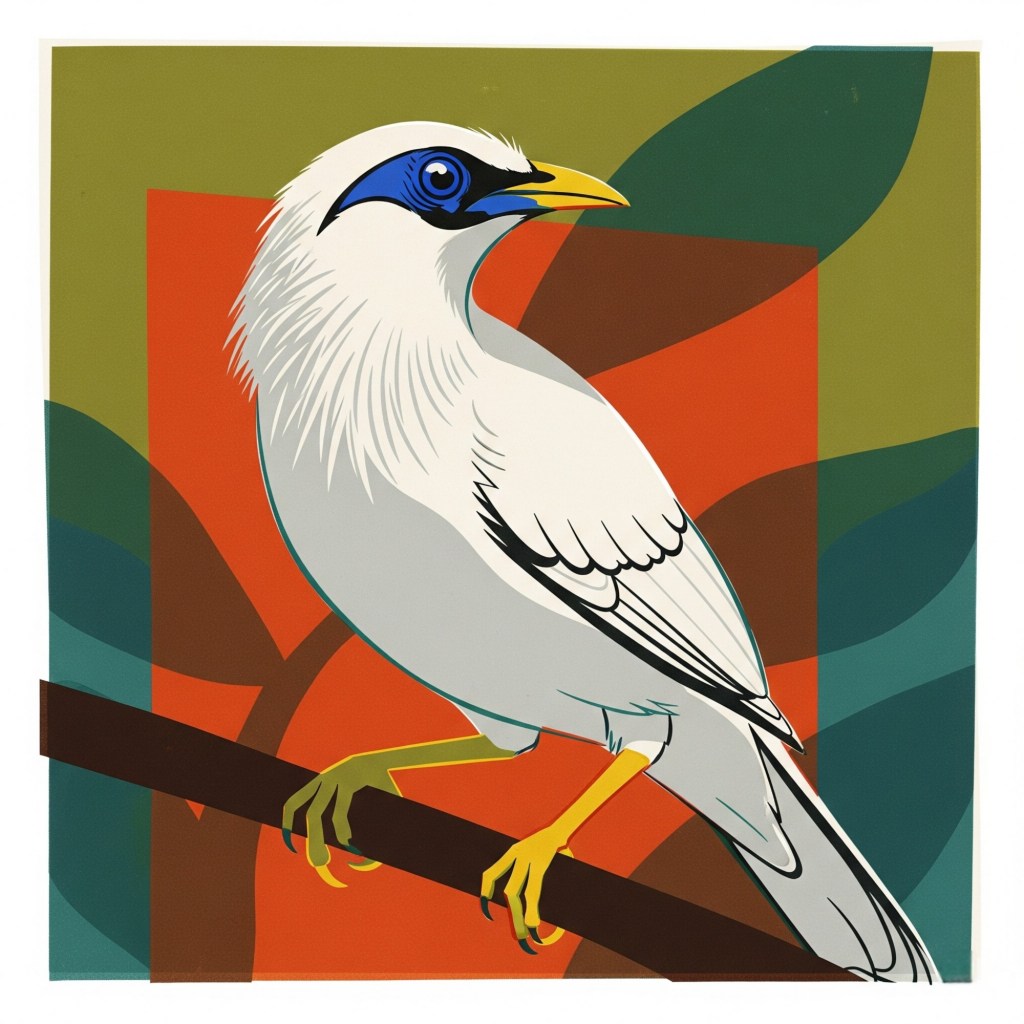
Also known as Rothschild’s mynah or Bali starling, is a striking and critically endangered bird native to the island of Bali, Indonesia. Here’s what makes it unique and why it’s so special:
Appearance
– The Bali myna is medium-sized, about 25 cm (9.8 in) long, with a stocky build.
– It is almost entirely white, featuring a long, drooping crest, black tips on its wings and tail, blue bare skin around the eyes, greyish legs, and a yellow and brown bill.
– Both males and females look similar, and juveniles have a shorter crest and a yellowish wash.
Habitat and Range
– Its natural range is restricted to northwest Bali and its offshore islands, making it the island’s only endemic vertebrate species.
– The Bali myna is the faunal emblem of Bali and is featured on the 200 Rupiah coin.
Behavior and Diet
– These birds are diurnal but secretive, often staying in treetops for cover and coming to the ground mainly to drink or gather nesting materials.
– They feed on fruit, seeds, worms, and insects.
– During the breeding season (Bali’s rainy season), males attract females by calling loudly and bobbing up and down. They nest in tree cavities, with the female laying and incubating two or three eggs.
Conservation Status
– The Bali myna is critically endangered, with wild populations once dropping to fewer than 10 individuals in the wild due to illegal poaching for the cage bird trade and habitat loss.
– Conservation efforts, including captive breeding and community-based programs, have helped increase wild numbers to between 50 and 100 as of 2025.
– The species is protected under CITES Appendix I, meaning trade is strictly regulated, and only experienced aviculturalists affiliated with breeding programs can legally keep them.
Cultural and Ecological Significance
– The Bali myna is a symbol of Bali’s natural heritage and is central to local conservation education and community involvement in protecting the species.
Have you got a favourite animal, in Chester Zoo or in general?
Your support makes a difference in my life and helps me create more of what you, and I, like. Thank you!
Tap here for a list of 100 endangered animals and plants.
100 endangered plant and animal species
* Abies beshanzuensis (Baishan fir) – Plant (Tree) – Baishanzu Mountain, Zhejiang, China – Three mature individuals
* Actinote zikani – Insect (butterfly) – Near São Paulo, Atlantic forest, Brazil – Unknown numbers
* Aipysurus foliosquama (Leaf scaled sea-snake) – Reptile – Ashmore Reef and Hibernia Reef, Timor Sea – Unknown numbers * Amanipodagrion gilliesi (Amani flatwing) – Insect (damselfly) – Amani-Sigi Forest, Usamabara Mountains, Tanzania – < 500 individuals * Antisolabis seychellensis – Insect – Morne Blanc, Mahé island, Seychelles – Unknown numbers * Antilophia bokermanni (Araripe manakin) – Bird – Chapado do Araripe, South Ceará, Brazil – 779 individuals * Aphanius transgrediens (Aci Göl toothcarp) – Fish – south-eastern shore of former Lake Aci, Turkey – Few hundred pairs * Aproteles bulmerae (Bulmer’s fruit bat) – Mammal – Luplupwintern Cave, Western Province, Papua New Guinea – 150 * Ardea insignis (White bellied heron) – Bird – Bhutan, North East India and Myanmar – 70–400 individuals * Ardeotis nigriceps (Great Indian bustard) – Bird – Rajasthan, Gujarat, Maharashtra, Andhra Pradesh, Karnataka and Madhya, India – 50–249 mature individuals * Astrochelys yniphora (Ploughshare tortoise) – Reptile – Baly Bay region, northwestern Madagascar – 440–770 * Atelopus balios (Rio Pescado stubfoot toad) – Amphibian – Azuay, Cañar and Guyas provinces, south-western Ecuador – Unknown numbers * Aythya innotata (Madagascar pochard) – Bird – volcanic lakes north of Bealanana, Madagascar – 80 mature individuals * Azurina eupalama (Galapagos damsel fish) – Fish – Unknown numbers – Unknown numbers * Bahaba taipingensis (Giant yellow croaker) – Fish – Chinese coast from Yangtze River, China to Hong Kong – Unknown numbers * Batagur baska (Common batagur) – Reptile (turtle) – Bangladesh, Cambodia, India, Indonesia and Malaysia – Unknown numbers * Bazzania bhutanica – Plant – Budini and Lafeti Khola, Bhutan – 2 sub-populations * Beatragus hunteri (Hirola) – Mammal (antelope) – South-east Kenya and possibly south-west Somalia – < 1,000 individuals * Bombus franklini (Franklin’s bumblebee) – Insect (bee) – Oregon and California – Unknown numbers * Brachyteles hypoxanthus (Northern muriqui / Woolly spider monkey) – Mammal (primate) – Atlantic forest, south-eastern Brazil – < 1,000 * Bradypus pygmaeus (Pygmy three-toed sloth) – Mammal – Isla Escudo de Veraguas, Panama – < 500 * Callitriche pulchra – Plant (freshwater) – pool on Gavdos, Greece – Unknown numbers * Calumma tarzan (Tarzan’s chameleon) – Reptile – Anosibe An’Ala region, eastern Madagascar – < 100 * Cavia intermedia (Santa Catarina’s guinea pig) – Mammal (rodent) – Moleques do Sul Island, Santa Catarina, Brazil – 40–60 * Cercopithecus roloway (Roloway guenon) – Mammal (primate) – Côte d’Ivoire – Unknown numbers * Coleura seychellensis (Seychelles sheath-tailed bat) – Mammal (bat) – Two small caves on Silhouette and Mahé, Seychelles – < 100 * Cryptomyces maximus (Willow blister) – Fungi – Pembrokeshire, United Kingdom – Unknown numbers * Cryptotis nelsoni (Nelson’s small-eared shrew) – Mammal (shrew) – Volcán San Martín Tuxtla, Veracruz, Mexico – Unknown numbers * Cyclura collei (Jamaican iguana / Jamaican rock iguana) – Reptile – Hellshire Hills, Jamaica – Unknown numbers * Daubentonia madagascariensis (Aye-aye) – Mammal (primate) – Deciduous forest, East Madagascar – Unknown numbers * Dendrophylax fawcettii (Cayman Islands ghost orchid) – Plant (orchid) – Ironwood Forest, George Town, Grand Cayman – Unknown numbers * Dicerorhinus sumatrensis (Sumatran rhino) – Mammal (rhino) – Sabah, Sarawak and Peninsular Malaysia, Kalimantan and Sumatra, Indonesia – < 100 (more recent estimates suggest 34-47) * Diomedea amsterdamensis (Amsterdam albatross) – Bird – Breeds on Plateuau des Tourbières, Amsterdam Island, Indian Ocean. – 100 mature individuals * Dioscorea strydomiana (Wild yam) – Plant – Oshoek area, Mpumalanga, South Africa – 200 * Diospyros katendei – Plant (tree) – Kasyoha-Kitomi Forest Reserve, Uganda – 20 individuals in a single population * Dipterocarpus lamellatus – Plant (tree) – Siangau Forest Reserve, Sabah, Malaysia – 12 individuals * Discoglossus nigriventer (Hula painted frog) – Amphibian – Hula Valley, Israel – Unknown numbers * Dombeya mauritiana – Plant – Mauritius – Unknown numbers * Elaeocarpus bojeri (Bois Dentelle) – Plant (tree) – Grand Bassin, Mauritius – < 10 individuals * Eleutherodactylus glandulifer (La Hotte glanded frog) – Amphibian – Massif de la Hotte, Haiti – Unknown numbers * Eleutherodactylus thorectes (Macaya breast-spot frog) – Amphibian – Formon and Macaya peaks, Masif de la Hotte, Haiti – Unknown numbers * Eriosyce chilensis (Chilenito (cactus)) – Plant – Pta Molles and Pichidungui, Chile – < 500 individuals * Erythrina schliebenii (Coral tree) – Plant – Namatimbili-Ngarama Forest, Tanzania – < 50 individuals * Euphorbia tanaensis – Plant (tree) – Witu Forest Reserve, Kenya – 4 mature individuals * Eurynorhyncus pygmeus (Spoon-billed sandpiper) – Bird – Breeds in Russia, migrates along the East Asian-Australasian Flyway to wintering grounds in India, Bangladesh and Myanmar – 100 breeding pairs * Ficus katendei – Plant – Kasyoha-Kitomi Forest Reserve, Ishasha River, Uganda – < 50 mature individuals * Geronticus eremita (Northern bald ibis) – Bird – Breeds in Morocco, Turkey and Syria. Syrian population winters in central Ethiopia. – About 3000 individuals * Gigasiphon macrosiphon – Plant (flower) – Kaya Muhaka, Gongoni and Mrima Forest Reserves, Kenya, Amani Nature Reserve, West Kilombero Scarp Forest Reserve, and Kihansi Gorge, Tanzania – 33 * Gocea ohridana – Mollusc – Lake Ohrid, Macedonia – Unknown numbers * Heleophryne rosei (Table mountain ghost frog) – Amphibian – Table Mountain, Western Cape Province, South Africa – Unknown numbers * Hemicycla paeteliana – Mollusc (land snail) – Jandia peninsula, Fuerteventura, Canary Islands – Unknown numbers * Heteromirafa sidamoensis (Liben lark) – Bird – Liben Plains, southern Ethiopia – 90–256 * Hibiscadelphus woodii – Plant (tree) – Kalalau Valley, Hawaii – Unknown numbers * Hucho perryi (Sakhalin taimen) – Fish – Russian and Japanese rivers, Pacific Ocean between Russia and Japan – Unknown numbers * Johora singaporensis (Singapore freshwater crab) – Crustacean – Bukit Timah Nature Reserve and streamlet near Bukit Batok, Singapore – Unknown numbers * Lathyrus belinensis (Belin vetchling) – Plant – Outskirts of Belin village, Antalya, Turkey – < 1,000 * Leiopelma archeyi (Archey’s frog) – Amphibian – Coromandel peninsula and Whareorino Forest, New Zealand – Unknown numbers * Lithobates sevosus (Dusky gopher frog) – Amphibian – Harrison County, Mississippi, USA – 60–100 * Lophura edwardsi (Edwards’s pheasant) – Bird – Quang Binh, Quang Tri and Thua Thien-Hue, Viet Nam – Unknown numbers * Magnolia wolfii – Plant (tree) – Risaralda, Colombia – 3 * Margaritifera marocana – Mollusc – Oued Denna, Oued Abid and Oued Beth, Morocco – < 250 * Moominia willii – Mollusc (snail) – Silhouette Island, Seychelles – < 500 * Natalus primus (Cuban greater funnel eared bat) – Mammal (bat) – Cueva La Barca, Isle of Pines, Cuba – < 100 * Nepenthes attenboroughii (Attenborough’s pitcher plant) – Plant – Mount Victoria, Palawan, Philippines – Unknown numbers * Nomascus hainanus (Hainan black crested gibbon) – Mammal (primate) – Hainan Island, China – 20 * Neurergus kaiseri (Luristan newt) – Amphibian – Zagros Mountains, Lorestan, Iran – < 1,000 * Oreocnemis phoenix (Mulanje red damsel) – Insect (damselfly) – Mulanje Plateau, Malawi – Unknown numbers * Pangasius sanitwongsei (Pangasid catfish) – Fish – Chao Phraya and Mekong basins in Cambodia, China, Lao PDR, Thailand and Viet Nam – Unknown numbers * Parides burchellanus – Insect (butterfly) – Cerrado, Brazil – < 100 * Phocoena sinus (Vaquita) – Mammal (porpoise) – Northern Gulf of California, Mexico – 12 * Picea neoveitchii (Type of spruce tree) – Plant (tree) – Qinling Range, China – Unknown numbers * Pinus squamata (Qiaojia pine) – Plant (tree) – Qiaojia, Yunnan, China – < 25 * Poecilotheria metallica (Gooty tarantula / Metallic tarantula / Peacock tarantula / Salepurgu) – Spider – Nandyal and Giddalur, Andhra Pradesh, India – Unknown numbers * Pomarea whitneyi (Fatuhiva monarch) – Bird – Fatu Hiva, Marquesas Islands, French Polynesia – 50 * Pristis pristis (Common sawfish) – Fish – Coastal tropical and subtropical waters of Indo-Pacific and Atlantic Oceans. Currently largely restricted to northern Australia – Unknown numbers * Hapalemur simus (Greater bamboo lemur) – Mammal (primate) – Southeastern and southcentral rainforests of Madagascar – 500 * Propithecus candidus (Silky sifaka) – Mammal (primate) – Maroantsetra to Andapa basin, and Marojeju Massif, Madagascar – 100–1,000 * Psammobates geometricus (Geometric tortoise) – Reptile – Western Cape Province, South Africa – Unknown numbers * Pseudoryx nghetinhensis (Saola) – Mammal – Annamite mountains, on the Viet Nam – PDR Laos border – Unknown numbers * Psiadia cataractae – Plant – Mauritius – Unknown numbers * Psorodonotus ebneri (Beydaglari bush-cricket) – Insect – Beydaglari range, Antalaya, Turkey – Unknown numbers * Rafetus swinhoei (Red River giant softshell turtle) – Reptile – Hoan Kiem Lake and Dong Mo Lake, Viet Nam, and Suzhou Zoo, China – 3 * Rhinoceros sondaicus (Javan rhino) – Mammal (rhino) – Ujung Kulon National Park, Java, Indonesia – < 100 * Rhinopithecus avunculus (Tonkin snub-nosed monkey) – Mammal (primate) – Northeastern Vietnam – < 200 * Rhizanthella gardneri (West Australian underground orchid) – Plant (orchid) – Western Australia, Australia – < 100 * Rhynchocyon spp. (Boni giant sengi) – Mammal – Boni-Dodori Forest, Lamu area, Kenya – Unknown numbers * Risiocnemis seidenschwarzi (Cebu frill-wing) – Insect (damselfly) – Rivulet beside the Kawasan River, Cebu, Philippines – Unknown numbers * Rosa arabica – Plant – St Katherine Mountains, Egypt – Unknown numbers, 10 sub-populations * Salanoia durrelli (Durrell’s vontsira) – Mammal (mongoose) – Marshes of Lake Alaotra, Madagascar – Unknown numbers * Santamartamys rufodorsalis (Red crested tree rat) – Mammal (rodent) – Sierra Nevada de Santa Marta, Colombia – Unknown numbers * Scaturiginichthys vermeilipinnis (Red-finned blue-eye) – Fish – Edgbaston Station, central western Queensland, Australia – 2,000–4,000 * Squatina squatina (Angel shark) – Fish – Canary Islands – Unknown numbers * Sterna bernsteini (Chinese crested tern) – Bird – Breeding in Zhejiang and Fujian, China. Outside breeding season in Indonesia, Malaysia, Philippines, Taiwan, Thailand. – < 50 * Syngnathus watermeyeri (Estuarine pipefish) – Fish – Kariega Estuary to East Kleinemonde Estuary, Eastern Cape Province, South Africa – Unknown numbers * Tahina spectabilis (Suicide palm / Dimaka) – Plant – Analalava district, north-western Madagascar – 90 * Telmatobufo bullocki (Bullock’s false toad) – Amphibian (frog) – Nahuelbuta, Arauco Province, Chile – Unknown numbers * Tokudaia muenninki (Okinawa spiny rat) – Mammal (rodent) – Okinawa Island, Japan – Unknown numbers * Trigonostigma somphongsi (Somphongs’s rasbora) – Fish – Mae Khlong basin, Thailand – Unknown numbers * Valencia letourneuxi – Fish – Southern Albania and Western Greece – Unknown numbers * Voanioala gerardii (Forest coconut) – Plant – Masoala peninsula, Madagascar – < 10 * Zaglossus attenboroughi (Attenborough’s echidna) – Mammal – Cyclops Mountains, Papua Province, Indonesia – Unknown numbers
- Darkness, Power and BeautyHorse’s steady gazeStrengthful eyes that dare to meetChallenge accepted Courage is the strength to face… Read more: Darkness, Power and Beauty
- The Daffodil’s Song: A Lyrical Tribute to the Wonders of SpringDaffodil so brightGolden petals, sunshine’s kissHope blooms anew As I wander through the garden, the… Read more: The Daffodil’s Song: A Lyrical Tribute to the Wonders of Spring
- Acanthus: A Versatile Plant with a Rich Cultural HeritageThe Graceful Lines of an Acanthus Leaf. Acanthus is a genus of flowering plants native… Read more: Acanthus: A Versatile Plant with a Rich Cultural Heritage
The Mythology of Bala Lake: Wales’ Enchanted Waters.
A Lake Steeped in Legend
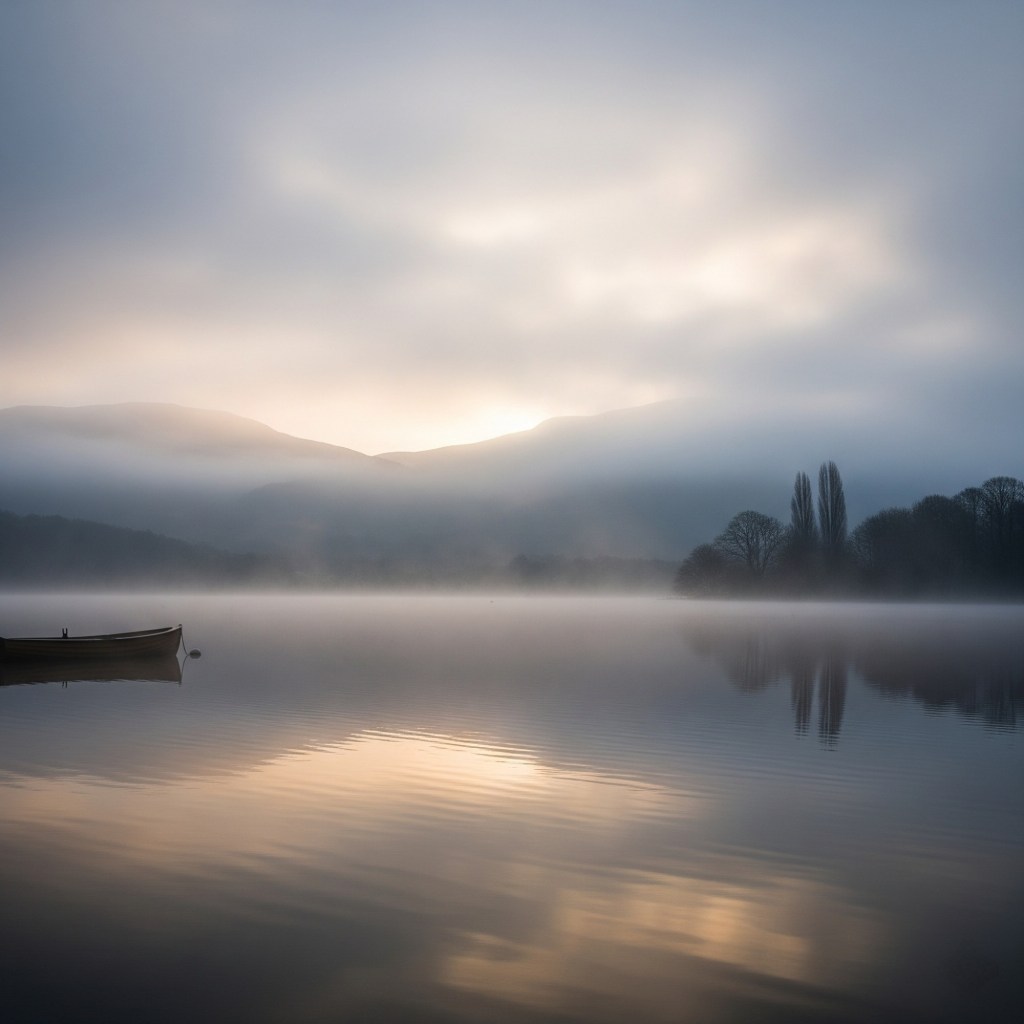
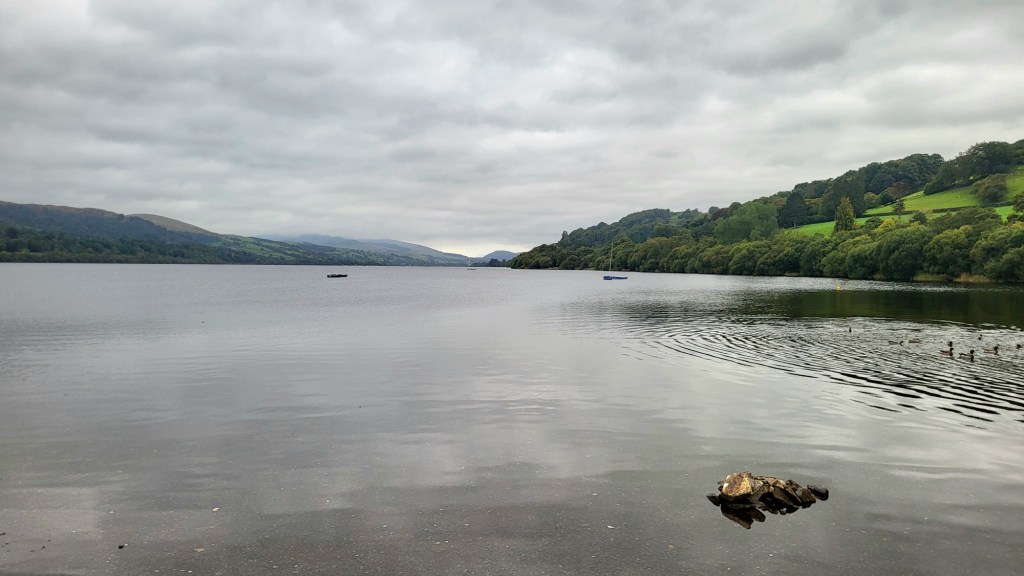
Nestled in the heart of Snowdonia, Bala Lake (Llyn Tegid) is not just Wales’ largest natural lake,it is a vessel of ancient myths, secrets, and timeless folklore. For centuries, its deep, dark waters have inspired tales of drowned kingdoms, enchanted creatures, and legendary heroes. The lake’s name itself, “Tegid”, hints at its mystical past, derived from the Welsh word for “serene” or “fair.” But beneath its tranquil surface lies a world of myth and magic, where history and legend blur.
The Drowned Kingdom of King Helig
One of the most enduring legends of Bala Lake is the story of King Helig ap Glannog, a 6th-century ruler whose kingdom, Cantref Gwaelod, was said to lie beneath the waves. According to folklore, Helig’s land was a fertile lowland, protected by dyke and dam. But one fateful night, the sea gates were left open, either by the negligence of a drunken gatekeeper or the wrath of a scorned fairy, and the waters rushed in, swallowing the kingdom whole.
To this day, locals claim that on quiet nights, the church bells of Helig’s lost kingdom can still be heard tolling from the depths. Fishermen tell of glimpsing rooftops and towering spires far below, and some even say that Helig and his court sleep beneath the lake, waiting for the day they will rise again.
“When the waters are still, and the mist hangs low, you can hear the echoes of a lost world.”
Tegid Foel and the Sleeping Warriors
Another tale speaks of Tegid Foel, a giant or king who once ruled the region. It is said that he and his warriors rest in a hidden cave beneath the lake, ready to awaken in Wales’ hour of greatest need. This legend mirrors the broader Welsh myth of sleeping heroes, warriors who lie in wait, much like King Arthur in Avalon, to return when their homeland calls.
Some versions of the story claim that Tegid Foel was a giant who carved out the lake with his bare hands, while others say he was a nobleman transformed into a monster for his sins. Whatever the truth, his name lives on in the lake’s Welsh identity: “Llyn Tegid”.
The Afanc: Wales’ Loch Ness Monster
No body of water in Welsh mythology is complete without its own lake monster , and Bala Lake is no exception. The Afanc, a monstrous, crocodile-like beast, was said to dwell in the lake, dragging unsuspecting travelers to their doom. Unlike the gentle giants of other myths, the Afanc was a creature of chaos, its thrashing tail causing floods and destruction.
Legends tell of how the Afanc was finally lured out of the lake by a clever maiden, who tricked it into following her to a deep pit, where it was trapped forever. Some say the beast still stirs in the depths, its occasional movements causing mysterious ripples on the surface.
The Gwragedd Annwn: Fairy Wives of the Lake
Bala Lake is also home to the Gwragedd Annwn, the “Wives of the Otherworld.” These beautiful, elusive fairy women were said to emerge from the water, sometimes to help humans, other times to lure them into their aquatic realm. Fishermen who caught glimpses of them described them as radiant, with long flowing hair and dresses woven from lake reeds.
One famous tale tells of a young man who married a Gwragedd Annwn, only for her to vanish back into the lake when he broke a taboo, often by striking her or revealing her true nature. These stories serve as cautionary tales about the perils of mortal curiosity and the thin veil between our world and the Otherworld.
Merlin, Arthur, and the Lady of the Lake
Bala Lake is sometimes linked to the broader Arthurian legends. Some scholars suggest that the lake could be one of the many bodies of water associated with the Lady of the Lake, the enchantress who gave King Arthur his sword, Excalibur.
Local lore says that Merlin himself once walked these shores, drawn by the lake’s magical properties. Whether as a place of prophecy, a hiding spot for sacred relics, or a gateway to Avalon, Bala Lake’s connection to Arthurian myth adds another layer to its mystique.
What do you think lies beneath the surface of Bala Lake? A lost kingdom? A slumbering monster? Or something even older? Share your thoughts and your own legends.
Your support makes a difference in my life and helps me create more of what you, and I, like. Thank you!
Tap here for a list of 100 endangered animals and plants.
100 endangered plant and animal species
* Abies beshanzuensis (Baishan fir) – Plant (Tree) – Baishanzu Mountain, Zhejiang, China – Three mature individuals
* Actinote zikani – Insect (butterfly) – Near São Paulo, Atlantic forest, Brazil – Unknown numbers
* Aipysurus foliosquama (Leaf scaled sea-snake) – Reptile – Ashmore Reef and Hibernia Reef, Timor Sea – Unknown numbers * Amanipodagrion gilliesi (Amani flatwing) – Insect (damselfly) – Amani-Sigi Forest, Usamabara Mountains, Tanzania – < 500 individuals * Antisolabis seychellensis – Insect – Morne Blanc, Mahé island, Seychelles – Unknown numbers * Antilophia bokermanni (Araripe manakin) – Bird – Chapado do Araripe, South Ceará, Brazil – 779 individuals * Aphanius transgrediens (Aci Göl toothcarp) – Fish – south-eastern shore of former Lake Aci, Turkey – Few hundred pairs * Aproteles bulmerae (Bulmer’s fruit bat) – Mammal – Luplupwintern Cave, Western Province, Papua New Guinea – 150 * Ardea insignis (White bellied heron) – Bird – Bhutan, North East India and Myanmar – 70–400 individuals * Ardeotis nigriceps (Great Indian bustard) – Bird – Rajasthan, Gujarat, Maharashtra, Andhra Pradesh, Karnataka and Madhya, India – 50–249 mature individuals * Astrochelys yniphora (Ploughshare tortoise) – Reptile – Baly Bay region, northwestern Madagascar – 440–770 * Atelopus balios (Rio Pescado stubfoot toad) – Amphibian – Azuay, Cañar and Guyas provinces, south-western Ecuador – Unknown numbers * Aythya innotata (Madagascar pochard) – Bird – volcanic lakes north of Bealanana, Madagascar – 80 mature individuals * Azurina eupalama (Galapagos damsel fish) – Fish – Unknown numbers – Unknown numbers * Bahaba taipingensis (Giant yellow croaker) – Fish – Chinese coast from Yangtze River, China to Hong Kong – Unknown numbers * Batagur baska (Common batagur) – Reptile (turtle) – Bangladesh, Cambodia, India, Indonesia and Malaysia – Unknown numbers * Bazzania bhutanica – Plant – Budini and Lafeti Khola, Bhutan – 2 sub-populations * Beatragus hunteri (Hirola) – Mammal (antelope) – South-east Kenya and possibly south-west Somalia – < 1,000 individuals * Bombus franklini (Franklin’s bumblebee) – Insect (bee) – Oregon and California – Unknown numbers * Brachyteles hypoxanthus (Northern muriqui / Woolly spider monkey) – Mammal (primate) – Atlantic forest, south-eastern Brazil – < 1,000 * Bradypus pygmaeus (Pygmy three-toed sloth) – Mammal – Isla Escudo de Veraguas, Panama – < 500 * Callitriche pulchra – Plant (freshwater) – pool on Gavdos, Greece – Unknown numbers * Calumma tarzan (Tarzan’s chameleon) – Reptile – Anosibe An’Ala region, eastern Madagascar – < 100 * Cavia intermedia (Santa Catarina’s guinea pig) – Mammal (rodent) – Moleques do Sul Island, Santa Catarina, Brazil – 40–60 * Cercopithecus roloway (Roloway guenon) – Mammal (primate) – Côte d’Ivoire – Unknown numbers * Coleura seychellensis (Seychelles sheath-tailed bat) – Mammal (bat) – Two small caves on Silhouette and Mahé, Seychelles – < 100 * Cryptomyces maximus (Willow blister) – Fungi – Pembrokeshire, United Kingdom – Unknown numbers * Cryptotis nelsoni (Nelson’s small-eared shrew) – Mammal (shrew) – Volcán San Martín Tuxtla, Veracruz, Mexico – Unknown numbers * Cyclura collei (Jamaican iguana / Jamaican rock iguana) – Reptile – Hellshire Hills, Jamaica – Unknown numbers * Daubentonia madagascariensis (Aye-aye) – Mammal (primate) – Deciduous forest, East Madagascar – Unknown numbers * Dendrophylax fawcettii (Cayman Islands ghost orchid) – Plant (orchid) – Ironwood Forest, George Town, Grand Cayman – Unknown numbers * Dicerorhinus sumatrensis (Sumatran rhino) – Mammal (rhino) – Sabah, Sarawak and Peninsular Malaysia, Kalimantan and Sumatra, Indonesia – < 100 (more recent estimates suggest 34-47) * Diomedea amsterdamensis (Amsterdam albatross) – Bird – Breeds on Plateuau des Tourbières, Amsterdam Island, Indian Ocean. – 100 mature individuals * Dioscorea strydomiana (Wild yam) – Plant – Oshoek area, Mpumalanga, South Africa – 200 * Diospyros katendei – Plant (tree) – Kasyoha-Kitomi Forest Reserve, Uganda – 20 individuals in a single population * Dipterocarpus lamellatus – Plant (tree) – Siangau Forest Reserve, Sabah, Malaysia – 12 individuals * Discoglossus nigriventer (Hula painted frog) – Amphibian – Hula Valley, Israel – Unknown numbers * Dombeya mauritiana – Plant – Mauritius – Unknown numbers * Elaeocarpus bojeri (Bois Dentelle) – Plant (tree) – Grand Bassin, Mauritius – < 10 individuals * Eleutherodactylus glandulifer (La Hotte glanded frog) – Amphibian – Massif de la Hotte, Haiti – Unknown numbers * Eleutherodactylus thorectes (Macaya breast-spot frog) – Amphibian – Formon and Macaya peaks, Masif de la Hotte, Haiti – Unknown numbers * Eriosyce chilensis (Chilenito (cactus)) – Plant – Pta Molles and Pichidungui, Chile – < 500 individuals * Erythrina schliebenii (Coral tree) – Plant – Namatimbili-Ngarama Forest, Tanzania – < 50 individuals * Euphorbia tanaensis – Plant (tree) – Witu Forest Reserve, Kenya – 4 mature individuals * Eurynorhyncus pygmeus (Spoon-billed sandpiper) – Bird – Breeds in Russia, migrates along the East Asian-Australasian Flyway to wintering grounds in India, Bangladesh and Myanmar – 100 breeding pairs * Ficus katendei – Plant – Kasyoha-Kitomi Forest Reserve, Ishasha River, Uganda – < 50 mature individuals * Geronticus eremita (Northern bald ibis) – Bird – Breeds in Morocco, Turkey and Syria. Syrian population winters in central Ethiopia. – About 3000 individuals * Gigasiphon macrosiphon – Plant (flower) – Kaya Muhaka, Gongoni and Mrima Forest Reserves, Kenya, Amani Nature Reserve, West Kilombero Scarp Forest Reserve, and Kihansi Gorge, Tanzania – 33 * Gocea ohridana – Mollusc – Lake Ohrid, Macedonia – Unknown numbers * Heleophryne rosei (Table mountain ghost frog) – Amphibian – Table Mountain, Western Cape Province, South Africa – Unknown numbers * Hemicycla paeteliana – Mollusc (land snail) – Jandia peninsula, Fuerteventura, Canary Islands – Unknown numbers * Heteromirafa sidamoensis (Liben lark) – Bird – Liben Plains, southern Ethiopia – 90–256 * Hibiscadelphus woodii – Plant (tree) – Kalalau Valley, Hawaii – Unknown numbers * Hucho perryi (Sakhalin taimen) – Fish – Russian and Japanese rivers, Pacific Ocean between Russia and Japan – Unknown numbers * Johora singaporensis (Singapore freshwater crab) – Crustacean – Bukit Timah Nature Reserve and streamlet near Bukit Batok, Singapore – Unknown numbers * Lathyrus belinensis (Belin vetchling) – Plant – Outskirts of Belin village, Antalya, Turkey – < 1,000 * Leiopelma archeyi (Archey’s frog) – Amphibian – Coromandel peninsula and Whareorino Forest, New Zealand – Unknown numbers * Lithobates sevosus (Dusky gopher frog) – Amphibian – Harrison County, Mississippi, USA – 60–100 * Lophura edwardsi (Edwards’s pheasant) – Bird – Quang Binh, Quang Tri and Thua Thien-Hue, Viet Nam – Unknown numbers * Magnolia wolfii – Plant (tree) – Risaralda, Colombia – 3 * Margaritifera marocana – Mollusc – Oued Denna, Oued Abid and Oued Beth, Morocco – < 250 * Moominia willii – Mollusc (snail) – Silhouette Island, Seychelles – < 500 * Natalus primus (Cuban greater funnel eared bat) – Mammal (bat) – Cueva La Barca, Isle of Pines, Cuba – < 100 * Nepenthes attenboroughii (Attenborough’s pitcher plant) – Plant – Mount Victoria, Palawan, Philippines – Unknown numbers * Nomascus hainanus (Hainan black crested gibbon) – Mammal (primate) – Hainan Island, China – 20 * Neurergus kaiseri (Luristan newt) – Amphibian – Zagros Mountains, Lorestan, Iran – < 1,000 * Oreocnemis phoenix (Mulanje red damsel) – Insect (damselfly) – Mulanje Plateau, Malawi – Unknown numbers * Pangasius sanitwongsei (Pangasid catfish) – Fish – Chao Phraya and Mekong basins in Cambodia, China, Lao PDR, Thailand and Viet Nam – Unknown numbers * Parides burchellanus – Insect (butterfly) – Cerrado, Brazil – < 100 * Phocoena sinus (Vaquita) – Mammal (porpoise) – Northern Gulf of California, Mexico – 12 * Picea neoveitchii (Type of spruce tree) – Plant (tree) – Qinling Range, China – Unknown numbers * Pinus squamata (Qiaojia pine) – Plant (tree) – Qiaojia, Yunnan, China – < 25 * Poecilotheria metallica (Gooty tarantula / Metallic tarantula / Peacock tarantula / Salepurgu) – Spider – Nandyal and Giddalur, Andhra Pradesh, India – Unknown numbers * Pomarea whitneyi (Fatuhiva monarch) – Bird – Fatu Hiva, Marquesas Islands, French Polynesia – 50 * Pristis pristis (Common sawfish) – Fish – Coastal tropical and subtropical waters of Indo-Pacific and Atlantic Oceans. Currently largely restricted to northern Australia – Unknown numbers * Hapalemur simus (Greater bamboo lemur) – Mammal (primate) – Southeastern and southcentral rainforests of Madagascar – 500 * Propithecus candidus (Silky sifaka) – Mammal (primate) – Maroantsetra to Andapa basin, and Marojeju Massif, Madagascar – 100–1,000 * Psammobates geometricus (Geometric tortoise) – Reptile – Western Cape Province, South Africa – Unknown numbers * Pseudoryx nghetinhensis (Saola) – Mammal – Annamite mountains, on the Viet Nam – PDR Laos border – Unknown numbers * Psiadia cataractae – Plant – Mauritius – Unknown numbers * Psorodonotus ebneri (Beydaglari bush-cricket) – Insect – Beydaglari range, Antalaya, Turkey – Unknown numbers * Rafetus swinhoei (Red River giant softshell turtle) – Reptile – Hoan Kiem Lake and Dong Mo Lake, Viet Nam, and Suzhou Zoo, China – 3 * Rhinoceros sondaicus (Javan rhino) – Mammal (rhino) – Ujung Kulon National Park, Java, Indonesia – < 100 * Rhinopithecus avunculus (Tonkin snub-nosed monkey) – Mammal (primate) – Northeastern Vietnam – < 200 * Rhizanthella gardneri (West Australian underground orchid) – Plant (orchid) – Western Australia, Australia – < 100 * Rhynchocyon spp. (Boni giant sengi) – Mammal – Boni-Dodori Forest, Lamu area, Kenya – Unknown numbers * Risiocnemis seidenschwarzi (Cebu frill-wing) – Insect (damselfly) – Rivulet beside the Kawasan River, Cebu, Philippines – Unknown numbers * Rosa arabica – Plant – St Katherine Mountains, Egypt – Unknown numbers, 10 sub-populations * Salanoia durrelli (Durrell’s vontsira) – Mammal (mongoose) – Marshes of Lake Alaotra, Madagascar – Unknown numbers * Santamartamys rufodorsalis (Red crested tree rat) – Mammal (rodent) – Sierra Nevada de Santa Marta, Colombia – Unknown numbers * Scaturiginichthys vermeilipinnis (Red-finned blue-eye) – Fish – Edgbaston Station, central western Queensland, Australia – 2,000–4,000 * Squatina squatina (Angel shark) – Fish – Canary Islands – Unknown numbers * Sterna bernsteini (Chinese crested tern) – Bird – Breeding in Zhejiang and Fujian, China. Outside breeding season in Indonesia, Malaysia, Philippines, Taiwan, Thailand. – < 50 * Syngnathus watermeyeri (Estuarine pipefish) – Fish – Kariega Estuary to East Kleinemonde Estuary, Eastern Cape Province, South Africa – Unknown numbers * Tahina spectabilis (Suicide palm / Dimaka) – Plant – Analalava district, north-western Madagascar – 90 * Telmatobufo bullocki (Bullock’s false toad) – Amphibian (frog) – Nahuelbuta, Arauco Province, Chile – Unknown numbers * Tokudaia muenninki (Okinawa spiny rat) – Mammal (rodent) – Okinawa Island, Japan – Unknown numbers * Trigonostigma somphongsi (Somphongs’s rasbora) – Fish – Mae Khlong basin, Thailand – Unknown numbers * Valencia letourneuxi – Fish – Southern Albania and Western Greece – Unknown numbers * Voanioala gerardii (Forest coconut) – Plant – Masoala peninsula, Madagascar – < 10 * Zaglossus attenboroughi (Attenborough’s echidna) – Mammal – Cyclops Mountains, Papua Province, Indonesia – Unknown numbers
- Darkness, Power and BeautyHorse’s steady gazeStrengthful eyes that dare to meetChallenge accepted Courage is the strength to face… Read more: Darkness, Power and Beauty
- The Daffodil’s Song: A Lyrical Tribute to the Wonders of SpringDaffodil so brightGolden petals, sunshine’s kissHope blooms anew As I wander through the garden, the… Read more: The Daffodil’s Song: A Lyrical Tribute to the Wonders of Spring
- Acanthus: A Versatile Plant with a Rich Cultural HeritageThe Graceful Lines of an Acanthus Leaf. Acanthus is a genus of flowering plants native… Read more: Acanthus: A Versatile Plant with a Rich Cultural Heritage
Greatness
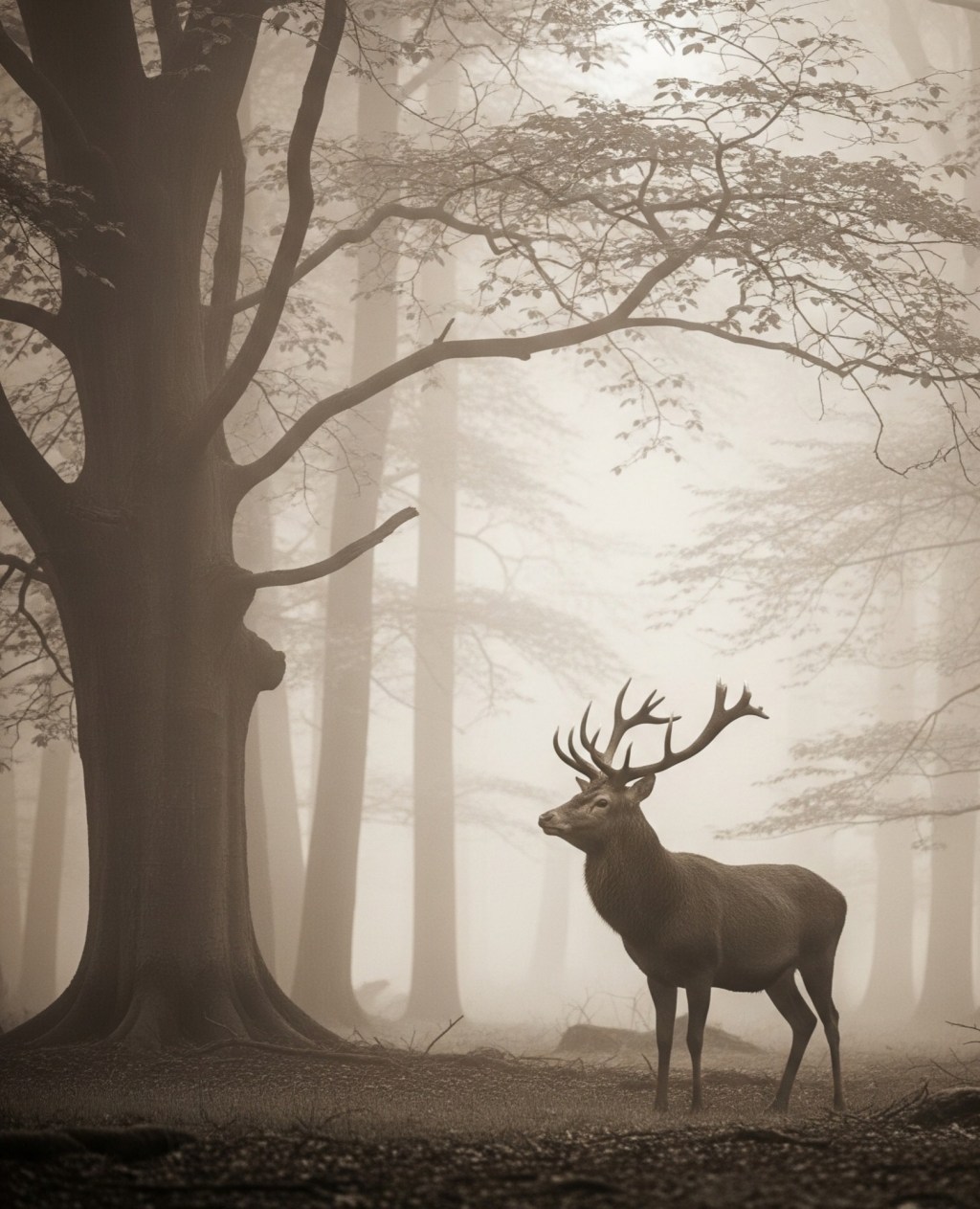
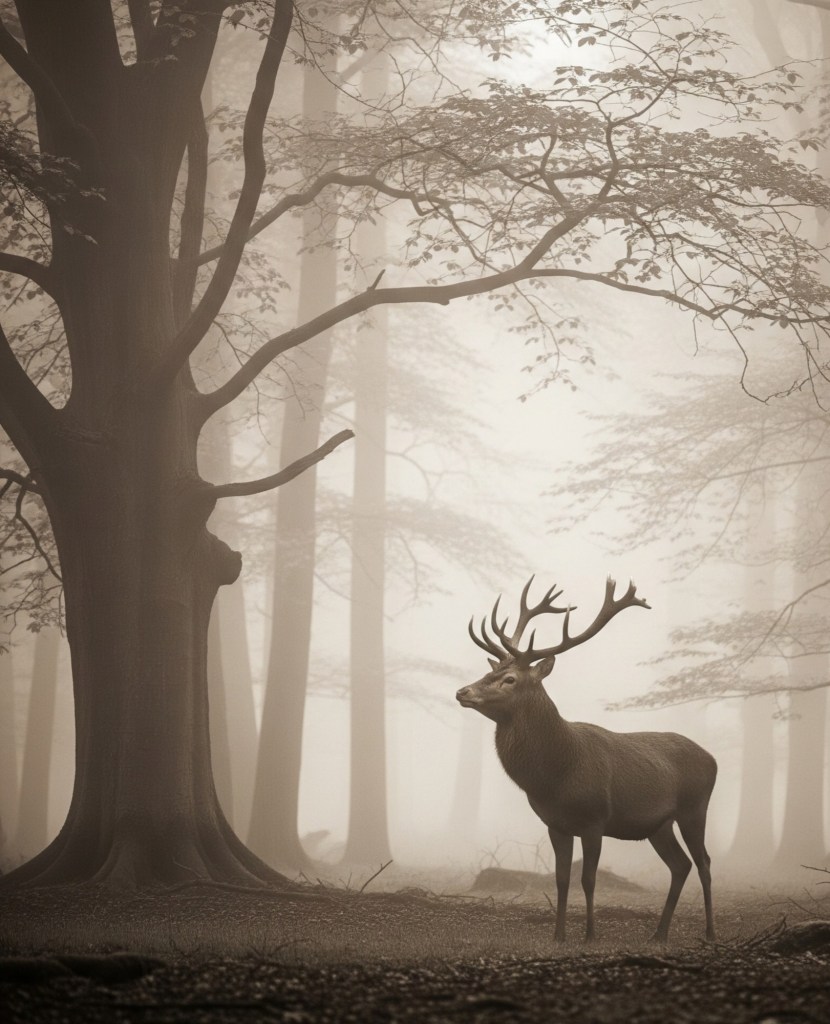
There’s something moving about a stag standing alone in morning mist, antlers raised like a crown against the soft light filtering through trees. To some, this image captures pure natural majesty—a creature perfectly at home in its world, showing grace, strength, and wild beauty. Yet not everyone who sees this scene will feel the same awe. And maybe that’s exactly the point.
Greatness in Its Place
The stag in this misty forest is clearly magnificent in its own world. Its impressive antlers show years of growth and survival. Its alert stance suggests it has mastered an environment that would challenge most creatures. Here, in this moment, it is exactly what it was meant to be. This is greatness in its purest form: being fully yourself in your own setting.
But step back, and things get more complex. To a hunter, this might represent a prize. To someone afraid of wild animals, it might create fear rather than wonder. To a city dweller who has never experienced wilderness, it might seem strange and irrelevant. The stag stays the same, yet its “greatness” changes with each person who looks at it.
Why Greatness Is Personal
This shows us something important about how we see greatness in ourselves and others. We often think that real excellence should be obvious to everyone, that true achievement will speak for itself no matter who’s looking. But human greatness, like the beauty of that forest stag, often depends on context.
Think about the teacher who changes lives in a struggling school. Within that community, they are a hero whose impact touches generations. Yet their work might go unnoticed by the wider world, their pay modest, their name unknown beyond their classroom. Are they any less great because their excellence doesn’t translate to fame or money?
Or consider the artist whose work deeply moves a small audience while staying invisible to mainstream tastes. The parent who gives up career advancement to be there for their children. The researcher exploring knowledge that might only prove important years from now. The quiet neighbor who always shows up when someone needs help.
The Problem with One-Size-Fits-All Greatness
Our culture often tries to measure greatness the same way for everyone—wealth, fame, social media followers, awards. These measures can be useful, but they’re also flawed. They favour certain types of excellence while making others invisible. They can make us forget that greatness often lies in how well we fulfill our particular role in the world, not in how well we match someone else’s idea of success.
The stag in the forest doesn’t need human approval to be magnificent. Its greatness lies in being perfectly suited to its environment, playing its role in nature, embodying wildness itself. It doesn’t need to be a different animal to be worthy of admiration.
Finding Your Own Forest
Maybe the most freeing realization is that we don’t need to be great in everyone’s eyes to be truly great. Like that stag, we each have our own forest—our unique circumstances, talents, challenges, and opportunities. Our greatness lies not in meeting outside expectations but in fully living in our own particular corner of the world.
This doesn’t mean giving up on ambition or accepting mediocrity. It means recognizing that real greatness comes from understanding our own nature and situation well enough to excel within it. The stag doesn’t try to be a lion or an eagle; it masters the art of being a deer in a forest.
Celebrating Different Kinds of Excellence
When we broaden our idea of greatness beyond narrow measures, the world becomes richer. We start to notice the quiet excellences around us: the barista who remembers everyone’s order and makes each customer feel seen, the maintenance worker who takes real pride in keeping spaces beautiful, the friend who knows how to listen without judgment.
These forms of greatness might not make headlines, but they make life more beautiful and human. They remind us that excellence comes in as many forms as there are people to live it.
A Kinder Way to See Greatness
The misty forest photograph captures something timeless: greatness doesn’t need to explain itself or seek approval. It simply is. The stag stands in its truth, magnificent in its own right, whether or not anyone appreciates that magnificence.
This is both humbling and encouraging. It suggests that greatness is more reachable than we might think—not because it’s easier, but because there are so many different ways to achieve it. Your greatness might look nothing like mine, and that’s not just okay—it’s necessary.
In a world that often celebrates only the loudest, richest, most visible kinds of success, maybe we need more images like this one. More reminders that true greatness often stands quietly in its own truth, magnificent in ways that matter deeply, even if they don’t matter to everyone.
The stag in the forest doesn’t need everyone to understand its majesty. Neither do you.
Your support makes a difference in my life and helps me create more of what you, and I, like. Thank you!
Tap here for a list of 100 endangered animals and plants.
100 endangered plant and animal species
* Abies beshanzuensis (Baishan fir) – Plant (Tree) – Baishanzu Mountain, Zhejiang, China – Three mature individuals
* Actinote zikani – Insect (butterfly) – Near São Paulo, Atlantic forest, Brazil – Unknown numbers
* Aipysurus foliosquama (Leaf scaled sea-snake) – Reptile – Ashmore Reef and Hibernia Reef, Timor Sea – Unknown numbers * Amanipodagrion gilliesi (Amani flatwing) – Insect (damselfly) – Amani-Sigi Forest, Usamabara Mountains, Tanzania – < 500 individuals * Antisolabis seychellensis – Insect – Morne Blanc, Mahé island, Seychelles – Unknown numbers * Antilophia bokermanni (Araripe manakin) – Bird – Chapado do Araripe, South Ceará, Brazil – 779 individuals * Aphanius transgrediens (Aci Göl toothcarp) – Fish – south-eastern shore of former Lake Aci, Turkey – Few hundred pairs * Aproteles bulmerae (Bulmer’s fruit bat) – Mammal – Luplupwintern Cave, Western Province, Papua New Guinea – 150 * Ardea insignis (White bellied heron) – Bird – Bhutan, North East India and Myanmar – 70–400 individuals * Ardeotis nigriceps (Great Indian bustard) – Bird – Rajasthan, Gujarat, Maharashtra, Andhra Pradesh, Karnataka and Madhya, India – 50–249 mature individuals * Astrochelys yniphora (Ploughshare tortoise) – Reptile – Baly Bay region, northwestern Madagascar – 440–770 * Atelopus balios (Rio Pescado stubfoot toad) – Amphibian – Azuay, Cañar and Guyas provinces, south-western Ecuador – Unknown numbers * Aythya innotata (Madagascar pochard) – Bird – volcanic lakes north of Bealanana, Madagascar – 80 mature individuals * Azurina eupalama (Galapagos damsel fish) – Fish – Unknown numbers – Unknown numbers * Bahaba taipingensis (Giant yellow croaker) – Fish – Chinese coast from Yangtze River, China to Hong Kong – Unknown numbers * Batagur baska (Common batagur) – Reptile (turtle) – Bangladesh, Cambodia, India, Indonesia and Malaysia – Unknown numbers * Bazzania bhutanica – Plant – Budini and Lafeti Khola, Bhutan – 2 sub-populations * Beatragus hunteri (Hirola) – Mammal (antelope) – South-east Kenya and possibly south-west Somalia – < 1,000 individuals * Bombus franklini (Franklin’s bumblebee) – Insect (bee) – Oregon and California – Unknown numbers * Brachyteles hypoxanthus (Northern muriqui / Woolly spider monkey) – Mammal (primate) – Atlantic forest, south-eastern Brazil – < 1,000 * Bradypus pygmaeus (Pygmy three-toed sloth) – Mammal – Isla Escudo de Veraguas, Panama – < 500 * Callitriche pulchra – Plant (freshwater) – pool on Gavdos, Greece – Unknown numbers * Calumma tarzan (Tarzan’s chameleon) – Reptile – Anosibe An’Ala region, eastern Madagascar – < 100 * Cavia intermedia (Santa Catarina’s guinea pig) – Mammal (rodent) – Moleques do Sul Island, Santa Catarina, Brazil – 40–60 * Cercopithecus roloway (Roloway guenon) – Mammal (primate) – Côte d’Ivoire – Unknown numbers * Coleura seychellensis (Seychelles sheath-tailed bat) – Mammal (bat) – Two small caves on Silhouette and Mahé, Seychelles – < 100 * Cryptomyces maximus (Willow blister) – Fungi – Pembrokeshire, United Kingdom – Unknown numbers * Cryptotis nelsoni (Nelson’s small-eared shrew) – Mammal (shrew) – Volcán San Martín Tuxtla, Veracruz, Mexico – Unknown numbers * Cyclura collei (Jamaican iguana / Jamaican rock iguana) – Reptile – Hellshire Hills, Jamaica – Unknown numbers * Daubentonia madagascariensis (Aye-aye) – Mammal (primate) – Deciduous forest, East Madagascar – Unknown numbers * Dendrophylax fawcettii (Cayman Islands ghost orchid) – Plant (orchid) – Ironwood Forest, George Town, Grand Cayman – Unknown numbers * Dicerorhinus sumatrensis (Sumatran rhino) – Mammal (rhino) – Sabah, Sarawak and Peninsular Malaysia, Kalimantan and Sumatra, Indonesia – < 100 (more recent estimates suggest 34-47) * Diomedea amsterdamensis (Amsterdam albatross) – Bird – Breeds on Plateuau des Tourbières, Amsterdam Island, Indian Ocean. – 100 mature individuals * Dioscorea strydomiana (Wild yam) – Plant – Oshoek area, Mpumalanga, South Africa – 200 * Diospyros katendei – Plant (tree) – Kasyoha-Kitomi Forest Reserve, Uganda – 20 individuals in a single population * Dipterocarpus lamellatus – Plant (tree) – Siangau Forest Reserve, Sabah, Malaysia – 12 individuals * Discoglossus nigriventer (Hula painted frog) – Amphibian – Hula Valley, Israel – Unknown numbers * Dombeya mauritiana – Plant – Mauritius – Unknown numbers * Elaeocarpus bojeri (Bois Dentelle) – Plant (tree) – Grand Bassin, Mauritius – < 10 individuals * Eleutherodactylus glandulifer (La Hotte glanded frog) – Amphibian – Massif de la Hotte, Haiti – Unknown numbers * Eleutherodactylus thorectes (Macaya breast-spot frog) – Amphibian – Formon and Macaya peaks, Masif de la Hotte, Haiti – Unknown numbers * Eriosyce chilensis (Chilenito (cactus)) – Plant – Pta Molles and Pichidungui, Chile – < 500 individuals * Erythrina schliebenii (Coral tree) – Plant – Namatimbili-Ngarama Forest, Tanzania – < 50 individuals * Euphorbia tanaensis – Plant (tree) – Witu Forest Reserve, Kenya – 4 mature individuals * Eurynorhyncus pygmeus (Spoon-billed sandpiper) – Bird – Breeds in Russia, migrates along the East Asian-Australasian Flyway to wintering grounds in India, Bangladesh and Myanmar – 100 breeding pairs * Ficus katendei – Plant – Kasyoha-Kitomi Forest Reserve, Ishasha River, Uganda – < 50 mature individuals * Geronticus eremita (Northern bald ibis) – Bird – Breeds in Morocco, Turkey and Syria. Syrian population winters in central Ethiopia. – About 3000 individuals * Gigasiphon macrosiphon – Plant (flower) – Kaya Muhaka, Gongoni and Mrima Forest Reserves, Kenya, Amani Nature Reserve, West Kilombero Scarp Forest Reserve, and Kihansi Gorge, Tanzania – 33 * Gocea ohridana – Mollusc – Lake Ohrid, Macedonia – Unknown numbers * Heleophryne rosei (Table mountain ghost frog) – Amphibian – Table Mountain, Western Cape Province, South Africa – Unknown numbers * Hemicycla paeteliana – Mollusc (land snail) – Jandia peninsula, Fuerteventura, Canary Islands – Unknown numbers * Heteromirafa sidamoensis (Liben lark) – Bird – Liben Plains, southern Ethiopia – 90–256 * Hibiscadelphus woodii – Plant (tree) – Kalalau Valley, Hawaii – Unknown numbers * Hucho perryi (Sakhalin taimen) – Fish – Russian and Japanese rivers, Pacific Ocean between Russia and Japan – Unknown numbers * Johora singaporensis (Singapore freshwater crab) – Crustacean – Bukit Timah Nature Reserve and streamlet near Bukit Batok, Singapore – Unknown numbers * Lathyrus belinensis (Belin vetchling) – Plant – Outskirts of Belin village, Antalya, Turkey – < 1,000 * Leiopelma archeyi (Archey’s frog) – Amphibian – Coromandel peninsula and Whareorino Forest, New Zealand – Unknown numbers * Lithobates sevosus (Dusky gopher frog) – Amphibian – Harrison County, Mississippi, USA – 60–100 * Lophura edwardsi (Edwards’s pheasant) – Bird – Quang Binh, Quang Tri and Thua Thien-Hue, Viet Nam – Unknown numbers * Magnolia wolfii – Plant (tree) – Risaralda, Colombia – 3 * Margaritifera marocana – Mollusc – Oued Denna, Oued Abid and Oued Beth, Morocco – < 250 * Moominia willii – Mollusc (snail) – Silhouette Island, Seychelles – < 500 * Natalus primus (Cuban greater funnel eared bat) – Mammal (bat) – Cueva La Barca, Isle of Pines, Cuba – < 100 * Nepenthes attenboroughii (Attenborough’s pitcher plant) – Plant – Mount Victoria, Palawan, Philippines – Unknown numbers * Nomascus hainanus (Hainan black crested gibbon) – Mammal (primate) – Hainan Island, China – 20 * Neurergus kaiseri (Luristan newt) – Amphibian – Zagros Mountains, Lorestan, Iran – < 1,000 * Oreocnemis phoenix (Mulanje red damsel) – Insect (damselfly) – Mulanje Plateau, Malawi – Unknown numbers * Pangasius sanitwongsei (Pangasid catfish) – Fish – Chao Phraya and Mekong basins in Cambodia, China, Lao PDR, Thailand and Viet Nam – Unknown numbers * Parides burchellanus – Insect (butterfly) – Cerrado, Brazil – < 100 * Phocoena sinus (Vaquita) – Mammal (porpoise) – Northern Gulf of California, Mexico – 12 * Picea neoveitchii (Type of spruce tree) – Plant (tree) – Qinling Range, China – Unknown numbers * Pinus squamata (Qiaojia pine) – Plant (tree) – Qiaojia, Yunnan, China – < 25 * Poecilotheria metallica (Gooty tarantula / Metallic tarantula / Peacock tarantula / Salepurgu) – Spider – Nandyal and Giddalur, Andhra Pradesh, India – Unknown numbers * Pomarea whitneyi (Fatuhiva monarch) – Bird – Fatu Hiva, Marquesas Islands, French Polynesia – 50 * Pristis pristis (Common sawfish) – Fish – Coastal tropical and subtropical waters of Indo-Pacific and Atlantic Oceans. Currently largely restricted to northern Australia – Unknown numbers * Hapalemur simus (Greater bamboo lemur) – Mammal (primate) – Southeastern and southcentral rainforests of Madagascar – 500 * Propithecus candidus (Silky sifaka) – Mammal (primate) – Maroantsetra to Andapa basin, and Marojeju Massif, Madagascar – 100–1,000 * Psammobates geometricus (Geometric tortoise) – Reptile – Western Cape Province, South Africa – Unknown numbers * Pseudoryx nghetinhensis (Saola) – Mammal – Annamite mountains, on the Viet Nam – PDR Laos border – Unknown numbers * Psiadia cataractae – Plant – Mauritius – Unknown numbers * Psorodonotus ebneri (Beydaglari bush-cricket) – Insect – Beydaglari range, Antalaya, Turkey – Unknown numbers * Rafetus swinhoei (Red River giant softshell turtle) – Reptile – Hoan Kiem Lake and Dong Mo Lake, Viet Nam, and Suzhou Zoo, China – 3 * Rhinoceros sondaicus (Javan rhino) – Mammal (rhino) – Ujung Kulon National Park, Java, Indonesia – < 100 * Rhinopithecus avunculus (Tonkin snub-nosed monkey) – Mammal (primate) – Northeastern Vietnam – < 200 * Rhizanthella gardneri (West Australian underground orchid) – Plant (orchid) – Western Australia, Australia – < 100 * Rhynchocyon spp. (Boni giant sengi) – Mammal – Boni-Dodori Forest, Lamu area, Kenya – Unknown numbers * Risiocnemis seidenschwarzi (Cebu frill-wing) – Insect (damselfly) – Rivulet beside the Kawasan River, Cebu, Philippines – Unknown numbers * Rosa arabica – Plant – St Katherine Mountains, Egypt – Unknown numbers, 10 sub-populations * Salanoia durrelli (Durrell’s vontsira) – Mammal (mongoose) – Marshes of Lake Alaotra, Madagascar – Unknown numbers * Santamartamys rufodorsalis (Red crested tree rat) – Mammal (rodent) – Sierra Nevada de Santa Marta, Colombia – Unknown numbers * Scaturiginichthys vermeilipinnis (Red-finned blue-eye) – Fish – Edgbaston Station, central western Queensland, Australia – 2,000–4,000 * Squatina squatina (Angel shark) – Fish – Canary Islands – Unknown numbers * Sterna bernsteini (Chinese crested tern) – Bird – Breeding in Zhejiang and Fujian, China. Outside breeding season in Indonesia, Malaysia, Philippines, Taiwan, Thailand. – < 50 * Syngnathus watermeyeri (Estuarine pipefish) – Fish – Kariega Estuary to East Kleinemonde Estuary, Eastern Cape Province, South Africa – Unknown numbers * Tahina spectabilis (Suicide palm / Dimaka) – Plant – Analalava district, north-western Madagascar – 90 * Telmatobufo bullocki (Bullock’s false toad) – Amphibian (frog) – Nahuelbuta, Arauco Province, Chile – Unknown numbers * Tokudaia muenninki (Okinawa spiny rat) – Mammal (rodent) – Okinawa Island, Japan – Unknown numbers * Trigonostigma somphongsi (Somphongs’s rasbora) – Fish – Mae Khlong basin, Thailand – Unknown numbers * Valencia letourneuxi – Fish – Southern Albania and Western Greece – Unknown numbers * Voanioala gerardii (Forest coconut) – Plant – Masoala peninsula, Madagascar – < 10 * Zaglossus attenboroughi (Attenborough’s echidna) – Mammal – Cyclops Mountains, Papua Province, Indonesia – Unknown numbers
- Darkness, Power and BeautyHorse’s steady gazeStrengthful eyes that dare to meetChallenge accepted Courage is the strength to face… Read more: Darkness, Power and Beauty
- The Daffodil’s Song: A Lyrical Tribute to the Wonders of SpringDaffodil so brightGolden petals, sunshine’s kissHope blooms anew As I wander through the garden, the… Read more: The Daffodil’s Song: A Lyrical Tribute to the Wonders of Spring
- Acanthus: A Versatile Plant with a Rich Cultural HeritageThe Graceful Lines of an Acanthus Leaf. Acanthus is a genus of flowering plants native… Read more: Acanthus: A Versatile Plant with a Rich Cultural Heritage
Lavender: Wellness to Folklore
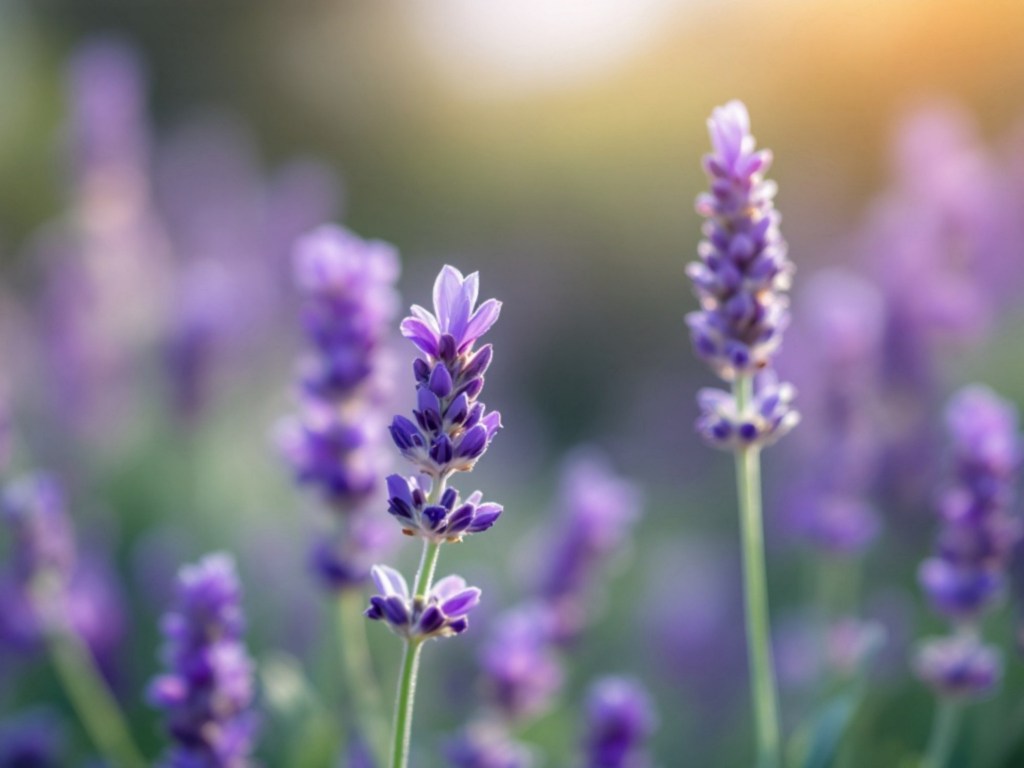
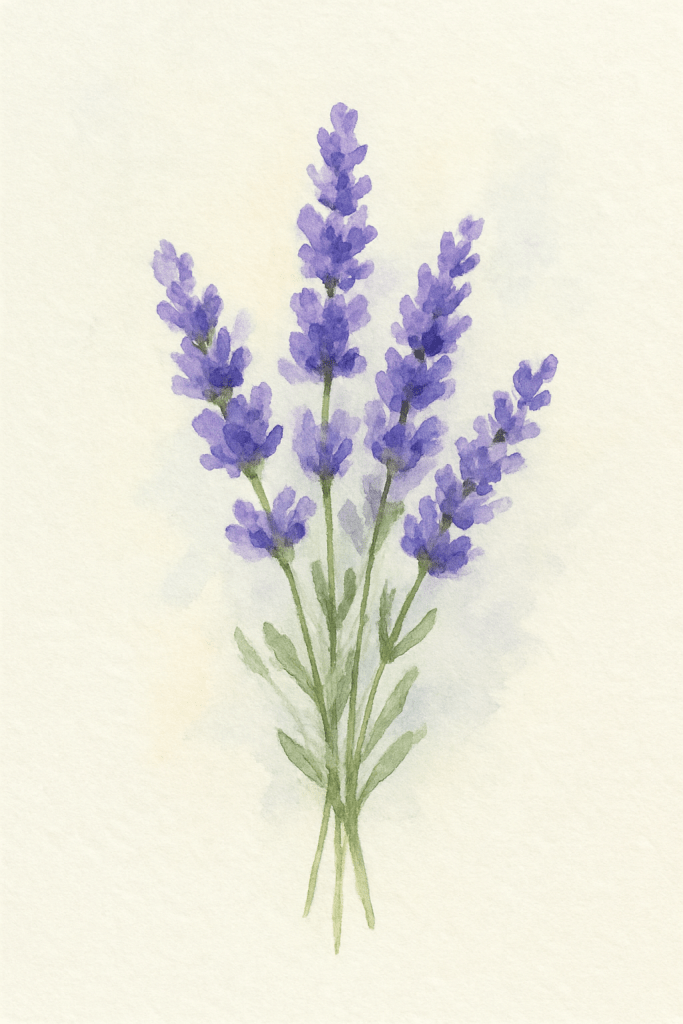
Beautiful looking and beautifully fragrant.
Lavender is more than just a fragrant purple flower. For centuries, this versatile herb has been valued for its calming scent, healing properties, and even mystical associations. Today, it continues to shine in wellness, beauty, cooking, and home care.
Lavender for Wellness and Relaxation
Lavender essential oil is one of the most popular tools in aromatherapy. Its soothing fragrance promotes relaxation, reduces stress, and supports restful sleep. Adding a few drops to a diffuser or pillow is a natural way to unwind.
Lavender in Skincare and Haircare
With antibacterial and anti-inflammatory properties, lavender oil is used in creams, balms, and serums to calm irritated skin, ease redness, and fight acne. In haircare, lavender-infused shampoos and oils help soothe the scalp, reduce dandruff, and encourage healthy growth.
Cooking with Lavender
Culinary lavender adds a delicate, floral note to teas, syrups, baked goods, and savory dishes. It is also a traditional ingredient in the French spice blend Herbes de Provence. Used sparingly, it brings both fragrance and flavor to the kitchen.
Lavender in the Home
Lavender’s natural antibacterial qualities make it a useful addition to DIY cleaning products, leaving surfaces fresh and fragrant. Dried lavender sachets repel moths, mosquitoes, and flies, making them a natural choice for closets and drawers.
Lavender in Folklore and Tradition
In folklore, lavender has long been associated with protection, love, and purity. Ancient Romans used it in baths for cleansing and healing. In the Middle Ages, people hung lavender bundles in homes to ward off evil spirits and illness. Even today, many consider lavender a symbol of calm, peace, and good fortune.
Lavender for Décor and Crafts
Beyond its practical uses, lavender is prized for beauty. Dried bundles or wreaths make long-lasting decorations, filling the home with both color and a calming aroma.
In essence
Lavender is far more than a fragrant flower. From promoting wellness and enhancing skincare to flavoring meals and protecting homes, this herb has stood the test of time. Rooted in both tradition and modern science, lavender remains one of the most useful and beloved plants in the world.
Your support makes a difference in my life and helps me create more of what you, and I, like. Thank you!
Tap here for a list of 100 endangered animals and plants.
100 endangered plant and animal species
* Abies beshanzuensis (Baishan fir) – Plant (Tree) – Baishanzu Mountain, Zhejiang, China – Three mature individuals
* Actinote zikani – Insect (butterfly) – Near São Paulo, Atlantic forest, Brazil – Unknown numbers
* Aipysurus foliosquama (Leaf scaled sea-snake) – Reptile – Ashmore Reef and Hibernia Reef, Timor Sea – Unknown numbers * Amanipodagrion gilliesi (Amani flatwing) – Insect (damselfly) – Amani-Sigi Forest, Usamabara Mountains, Tanzania – < 500 individuals * Antisolabis seychellensis – Insect – Morne Blanc, Mahé island, Seychelles – Unknown numbers * Antilophia bokermanni (Araripe manakin) – Bird – Chapado do Araripe, South Ceará, Brazil – 779 individuals * Aphanius transgrediens (Aci Göl toothcarp) – Fish – south-eastern shore of former Lake Aci, Turkey – Few hundred pairs * Aproteles bulmerae (Bulmer’s fruit bat) – Mammal – Luplupwintern Cave, Western Province, Papua New Guinea – 150 * Ardea insignis (White bellied heron) – Bird – Bhutan, North East India and Myanmar – 70–400 individuals * Ardeotis nigriceps (Great Indian bustard) – Bird – Rajasthan, Gujarat, Maharashtra, Andhra Pradesh, Karnataka and Madhya, India – 50–249 mature individuals * Astrochelys yniphora (Ploughshare tortoise) – Reptile – Baly Bay region, northwestern Madagascar – 440–770 * Atelopus balios (Rio Pescado stubfoot toad) – Amphibian – Azuay, Cañar and Guyas provinces, south-western Ecuador – Unknown numbers * Aythya innotata (Madagascar pochard) – Bird – volcanic lakes north of Bealanana, Madagascar – 80 mature individuals * Azurina eupalama (Galapagos damsel fish) – Fish – Unknown numbers – Unknown numbers * Bahaba taipingensis (Giant yellow croaker) – Fish – Chinese coast from Yangtze River, China to Hong Kong – Unknown numbers * Batagur baska (Common batagur) – Reptile (turtle) – Bangladesh, Cambodia, India, Indonesia and Malaysia – Unknown numbers * Bazzania bhutanica – Plant – Budini and Lafeti Khola, Bhutan – 2 sub-populations * Beatragus hunteri (Hirola) – Mammal (antelope) – South-east Kenya and possibly south-west Somalia – < 1,000 individuals * Bombus franklini (Franklin’s bumblebee) – Insect (bee) – Oregon and California – Unknown numbers * Brachyteles hypoxanthus (Northern muriqui / Woolly spider monkey) – Mammal (primate) – Atlantic forest, south-eastern Brazil – < 1,000 * Bradypus pygmaeus (Pygmy three-toed sloth) – Mammal – Isla Escudo de Veraguas, Panama – < 500 * Callitriche pulchra – Plant (freshwater) – pool on Gavdos, Greece – Unknown numbers * Calumma tarzan (Tarzan’s chameleon) – Reptile – Anosibe An’Ala region, eastern Madagascar – < 100 * Cavia intermedia (Santa Catarina’s guinea pig) – Mammal (rodent) – Moleques do Sul Island, Santa Catarina, Brazil – 40–60 * Cercopithecus roloway (Roloway guenon) – Mammal (primate) – Côte d’Ivoire – Unknown numbers * Coleura seychellensis (Seychelles sheath-tailed bat) – Mammal (bat) – Two small caves on Silhouette and Mahé, Seychelles – < 100 * Cryptomyces maximus (Willow blister) – Fungi – Pembrokeshire, United Kingdom – Unknown numbers * Cryptotis nelsoni (Nelson’s small-eared shrew) – Mammal (shrew) – Volcán San Martín Tuxtla, Veracruz, Mexico – Unknown numbers * Cyclura collei (Jamaican iguana / Jamaican rock iguana) – Reptile – Hellshire Hills, Jamaica – Unknown numbers * Daubentonia madagascariensis (Aye-aye) – Mammal (primate) – Deciduous forest, East Madagascar – Unknown numbers * Dendrophylax fawcettii (Cayman Islands ghost orchid) – Plant (orchid) – Ironwood Forest, George Town, Grand Cayman – Unknown numbers * Dicerorhinus sumatrensis (Sumatran rhino) – Mammal (rhino) – Sabah, Sarawak and Peninsular Malaysia, Kalimantan and Sumatra, Indonesia – < 100 (more recent estimates suggest 34-47) * Diomedea amsterdamensis (Amsterdam albatross) – Bird – Breeds on Plateuau des Tourbières, Amsterdam Island, Indian Ocean. – 100 mature individuals * Dioscorea strydomiana (Wild yam) – Plant – Oshoek area, Mpumalanga, South Africa – 200 * Diospyros katendei – Plant (tree) – Kasyoha-Kitomi Forest Reserve, Uganda – 20 individuals in a single population * Dipterocarpus lamellatus – Plant (tree) – Siangau Forest Reserve, Sabah, Malaysia – 12 individuals * Discoglossus nigriventer (Hula painted frog) – Amphibian – Hula Valley, Israel – Unknown numbers * Dombeya mauritiana – Plant – Mauritius – Unknown numbers * Elaeocarpus bojeri (Bois Dentelle) – Plant (tree) – Grand Bassin, Mauritius – < 10 individuals * Eleutherodactylus glandulifer (La Hotte glanded frog) – Amphibian – Massif de la Hotte, Haiti – Unknown numbers * Eleutherodactylus thorectes (Macaya breast-spot frog) – Amphibian – Formon and Macaya peaks, Masif de la Hotte, Haiti – Unknown numbers * Eriosyce chilensis (Chilenito (cactus)) – Plant – Pta Molles and Pichidungui, Chile – < 500 individuals * Erythrina schliebenii (Coral tree) – Plant – Namatimbili-Ngarama Forest, Tanzania – < 50 individuals * Euphorbia tanaensis – Plant (tree) – Witu Forest Reserve, Kenya – 4 mature individuals * Eurynorhyncus pygmeus (Spoon-billed sandpiper) – Bird – Breeds in Russia, migrates along the East Asian-Australasian Flyway to wintering grounds in India, Bangladesh and Myanmar – 100 breeding pairs * Ficus katendei – Plant – Kasyoha-Kitomi Forest Reserve, Ishasha River, Uganda – < 50 mature individuals * Geronticus eremita (Northern bald ibis) – Bird – Breeds in Morocco, Turkey and Syria. Syrian population winters in central Ethiopia. – About 3000 individuals * Gigasiphon macrosiphon – Plant (flower) – Kaya Muhaka, Gongoni and Mrima Forest Reserves, Kenya, Amani Nature Reserve, West Kilombero Scarp Forest Reserve, and Kihansi Gorge, Tanzania – 33 * Gocea ohridana – Mollusc – Lake Ohrid, Macedonia – Unknown numbers * Heleophryne rosei (Table mountain ghost frog) – Amphibian – Table Mountain, Western Cape Province, South Africa – Unknown numbers * Hemicycla paeteliana – Mollusc (land snail) – Jandia peninsula, Fuerteventura, Canary Islands – Unknown numbers * Heteromirafa sidamoensis (Liben lark) – Bird – Liben Plains, southern Ethiopia – 90–256 * Hibiscadelphus woodii – Plant (tree) – Kalalau Valley, Hawaii – Unknown numbers * Hucho perryi (Sakhalin taimen) – Fish – Russian and Japanese rivers, Pacific Ocean between Russia and Japan – Unknown numbers * Johora singaporensis (Singapore freshwater crab) – Crustacean – Bukit Timah Nature Reserve and streamlet near Bukit Batok, Singapore – Unknown numbers * Lathyrus belinensis (Belin vetchling) – Plant – Outskirts of Belin village, Antalya, Turkey – < 1,000 * Leiopelma archeyi (Archey’s frog) – Amphibian – Coromandel peninsula and Whareorino Forest, New Zealand – Unknown numbers * Lithobates sevosus (Dusky gopher frog) – Amphibian – Harrison County, Mississippi, USA – 60–100 * Lophura edwardsi (Edwards’s pheasant) – Bird – Quang Binh, Quang Tri and Thua Thien-Hue, Viet Nam – Unknown numbers * Magnolia wolfii – Plant (tree) – Risaralda, Colombia – 3 * Margaritifera marocana – Mollusc – Oued Denna, Oued Abid and Oued Beth, Morocco – < 250 * Moominia willii – Mollusc (snail) – Silhouette Island, Seychelles – < 500 * Natalus primus (Cuban greater funnel eared bat) – Mammal (bat) – Cueva La Barca, Isle of Pines, Cuba – < 100 * Nepenthes attenboroughii (Attenborough’s pitcher plant) – Plant – Mount Victoria, Palawan, Philippines – Unknown numbers * Nomascus hainanus (Hainan black crested gibbon) – Mammal (primate) – Hainan Island, China – 20 * Neurergus kaiseri (Luristan newt) – Amphibian – Zagros Mountains, Lorestan, Iran – < 1,000 * Oreocnemis phoenix (Mulanje red damsel) – Insect (damselfly) – Mulanje Plateau, Malawi – Unknown numbers * Pangasius sanitwongsei (Pangasid catfish) – Fish – Chao Phraya and Mekong basins in Cambodia, China, Lao PDR, Thailand and Viet Nam – Unknown numbers * Parides burchellanus – Insect (butterfly) – Cerrado, Brazil – < 100 * Phocoena sinus (Vaquita) – Mammal (porpoise) – Northern Gulf of California, Mexico – 12 * Picea neoveitchii (Type of spruce tree) – Plant (tree) – Qinling Range, China – Unknown numbers * Pinus squamata (Qiaojia pine) – Plant (tree) – Qiaojia, Yunnan, China – < 25 * Poecilotheria metallica (Gooty tarantula / Metallic tarantula / Peacock tarantula / Salepurgu) – Spider – Nandyal and Giddalur, Andhra Pradesh, India – Unknown numbers * Pomarea whitneyi (Fatuhiva monarch) – Bird – Fatu Hiva, Marquesas Islands, French Polynesia – 50 * Pristis pristis (Common sawfish) – Fish – Coastal tropical and subtropical waters of Indo-Pacific and Atlantic Oceans. Currently largely restricted to northern Australia – Unknown numbers * Hapalemur simus (Greater bamboo lemur) – Mammal (primate) – Southeastern and southcentral rainforests of Madagascar – 500 * Propithecus candidus (Silky sifaka) – Mammal (primate) – Maroantsetra to Andapa basin, and Marojeju Massif, Madagascar – 100–1,000 * Psammobates geometricus (Geometric tortoise) – Reptile – Western Cape Province, South Africa – Unknown numbers * Pseudoryx nghetinhensis (Saola) – Mammal – Annamite mountains, on the Viet Nam – PDR Laos border – Unknown numbers * Psiadia cataractae – Plant – Mauritius – Unknown numbers * Psorodonotus ebneri (Beydaglari bush-cricket) – Insect – Beydaglari range, Antalaya, Turkey – Unknown numbers * Rafetus swinhoei (Red River giant softshell turtle) – Reptile – Hoan Kiem Lake and Dong Mo Lake, Viet Nam, and Suzhou Zoo, China – 3 * Rhinoceros sondaicus (Javan rhino) – Mammal (rhino) – Ujung Kulon National Park, Java, Indonesia – < 100 * Rhinopithecus avunculus (Tonkin snub-nosed monkey) – Mammal (primate) – Northeastern Vietnam – < 200 * Rhizanthella gardneri (West Australian underground orchid) – Plant (orchid) – Western Australia, Australia – < 100 * Rhynchocyon spp. (Boni giant sengi) – Mammal – Boni-Dodori Forest, Lamu area, Kenya – Unknown numbers * Risiocnemis seidenschwarzi (Cebu frill-wing) – Insect (damselfly) – Rivulet beside the Kawasan River, Cebu, Philippines – Unknown numbers * Rosa arabica – Plant – St Katherine Mountains, Egypt – Unknown numbers, 10 sub-populations * Salanoia durrelli (Durrell’s vontsira) – Mammal (mongoose) – Marshes of Lake Alaotra, Madagascar – Unknown numbers * Santamartamys rufodorsalis (Red crested tree rat) – Mammal (rodent) – Sierra Nevada de Santa Marta, Colombia – Unknown numbers * Scaturiginichthys vermeilipinnis (Red-finned blue-eye) – Fish – Edgbaston Station, central western Queensland, Australia – 2,000–4,000 * Squatina squatina (Angel shark) – Fish – Canary Islands – Unknown numbers * Sterna bernsteini (Chinese crested tern) – Bird – Breeding in Zhejiang and Fujian, China. Outside breeding season in Indonesia, Malaysia, Philippines, Taiwan, Thailand. – < 50 * Syngnathus watermeyeri (Estuarine pipefish) – Fish – Kariega Estuary to East Kleinemonde Estuary, Eastern Cape Province, South Africa – Unknown numbers * Tahina spectabilis (Suicide palm / Dimaka) – Plant – Analalava district, north-western Madagascar – 90 * Telmatobufo bullocki (Bullock’s false toad) – Amphibian (frog) – Nahuelbuta, Arauco Province, Chile – Unknown numbers * Tokudaia muenninki (Okinawa spiny rat) – Mammal (rodent) – Okinawa Island, Japan – Unknown numbers * Trigonostigma somphongsi (Somphongs’s rasbora) – Fish – Mae Khlong basin, Thailand – Unknown numbers * Valencia letourneuxi – Fish – Southern Albania and Western Greece – Unknown numbers * Voanioala gerardii (Forest coconut) – Plant – Masoala peninsula, Madagascar – < 10 * Zaglossus attenboroughi (Attenborough’s echidna) – Mammal – Cyclops Mountains, Papua Province, Indonesia – Unknown numbers
- Darkness, Power and BeautyHorse’s steady gazeStrengthful eyes that dare to meetChallenge accepted Courage is the strength to face… Read more: Darkness, Power and Beauty
- The Daffodil’s Song: A Lyrical Tribute to the Wonders of SpringDaffodil so brightGolden petals, sunshine’s kissHope blooms anew As I wander through the garden, the… Read more: The Daffodil’s Song: A Lyrical Tribute to the Wonders of Spring
- Acanthus: A Versatile Plant with a Rich Cultural HeritageThe Graceful Lines of an Acanthus Leaf. Acanthus is a genus of flowering plants native… Read more: Acanthus: A Versatile Plant with a Rich Cultural Heritage
AI: Coming to a garden near you.
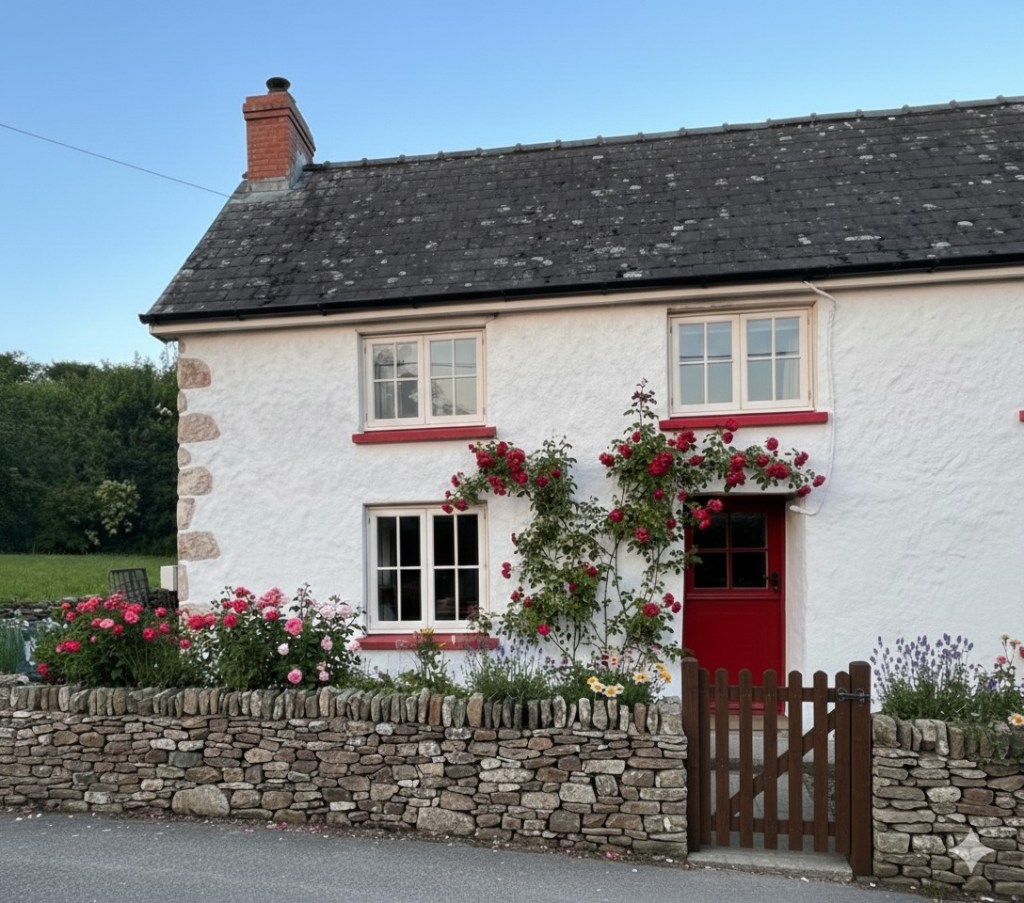
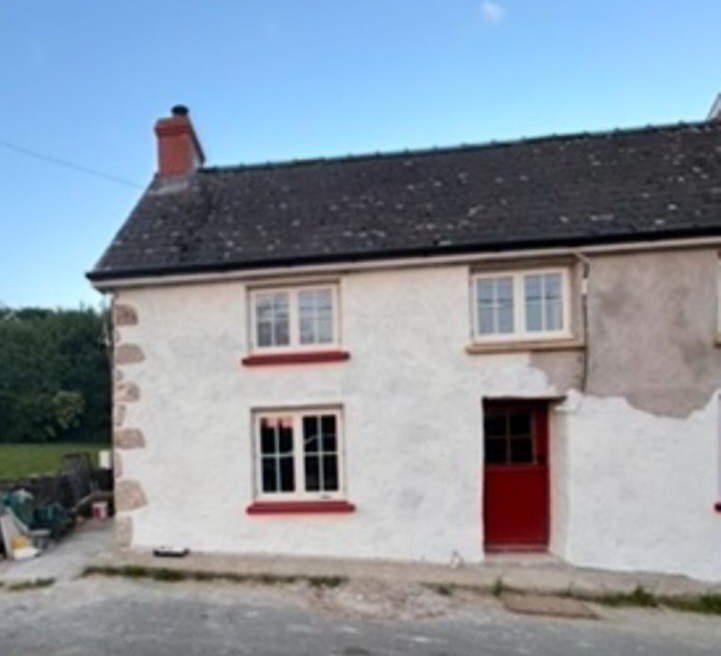
I’m a gardener, and I’m often asked to help people envision what their gardens could become. We’ll talk about plants, soil, and sunlight, but sometimes a customer wants to see the whole picture. They want to know what a finished project will look like, and I have to admit, that can be a real challenge. I can describe it, draw a sketch, or even show them pictures of similar gardens, but it’s never quite the same as seeing their own space transformed.
Recently, one of my clients asked me to help them imagine their cottage with a low stone wall and climbing roses around the front door. They had a great vision, but they were hesitant to commit without a clearer idea of the final look. I knew I couldn’t just snap my fingers and make it happen, but then I remembered a new tool that could help me: generative AI.
From a Picture to a Possibility.
I took a photo of their house as it was then. The house was a lovely old cottage, with a slightly unfinished look and some bare ground in the front. There was so much potential there! I uploaded the photo to an AI image generator and gave it a simple request: “Add a low stone wall with roses around the door.”
I was amazed by the result. The AI took the original image and, in a matter of seconds, created a new one that showed exactly what my client had in mind. It added a beautiful, rustic stone wall, with lush roses climbing up the side of the house and around the red door. The AI even “finished” painting the house and the red paint on the third windowsill, a detail I hadn’t even thought to request!
This experience was a revelation. It wasn’t just about a one-time trick; it was about how AI can help us visualize and plan our projects more effectively. For me, as a gardener, this technology is a fantastic new tool. It helps me communicate ideas more clearly to my customers. I can show them what their garden will look like in the spring, summer, and fall, with different plants and features. It’s a way to remove the guesswork and help people feel more confident in their decisions.
AI isn’t going to replace a good gardener. It can’t feel the soil, choose the right plant for a specific spot, or get its hands dirty. But it can be an incredibly useful partner, helping us to imagine and plan our projects in a way that wasn’t possible before. It’s a powerful tool that helps bridge the gap between imagination and reality, and for me, that’s incredibly exciting.
Your support makes a difference in my life and helps me create more of what you, and I, like. Thank you!
Tap here for a list of 100 endangered animals and plants.
100 endangered plant and animal species
* Abies beshanzuensis (Baishan fir) – Plant (Tree) – Baishanzu Mountain, Zhejiang, China – Three mature individuals
* Actinote zikani – Insect (butterfly) – Near São Paulo, Atlantic forest, Brazil – Unknown numbers
* Aipysurus foliosquama (Leaf scaled sea-snake) – Reptile – Ashmore Reef and Hibernia Reef, Timor Sea – Unknown numbers * Amanipodagrion gilliesi (Amani flatwing) – Insect (damselfly) – Amani-Sigi Forest, Usamabara Mountains, Tanzania – < 500 individuals * Antisolabis seychellensis – Insect – Morne Blanc, Mahé island, Seychelles – Unknown numbers * Antilophia bokermanni (Araripe manakin) – Bird – Chapado do Araripe, South Ceará, Brazil – 779 individuals * Aphanius transgrediens (Aci Göl toothcarp) – Fish – south-eastern shore of former Lake Aci, Turkey – Few hundred pairs * Aproteles bulmerae (Bulmer’s fruit bat) – Mammal – Luplupwintern Cave, Western Province, Papua New Guinea – 150 * Ardea insignis (White bellied heron) – Bird – Bhutan, North East India and Myanmar – 70–400 individuals * Ardeotis nigriceps (Great Indian bustard) – Bird – Rajasthan, Gujarat, Maharashtra, Andhra Pradesh, Karnataka and Madhya, India – 50–249 mature individuals * Astrochelys yniphora (Ploughshare tortoise) – Reptile – Baly Bay region, northwestern Madagascar – 440–770 * Atelopus balios (Rio Pescado stubfoot toad) – Amphibian – Azuay, Cañar and Guyas provinces, south-western Ecuador – Unknown numbers * Aythya innotata (Madagascar pochard) – Bird – volcanic lakes north of Bealanana, Madagascar – 80 mature individuals * Azurina eupalama (Galapagos damsel fish) – Fish – Unknown numbers – Unknown numbers * Bahaba taipingensis (Giant yellow croaker) – Fish – Chinese coast from Yangtze River, China to Hong Kong – Unknown numbers * Batagur baska (Common batagur) – Reptile (turtle) – Bangladesh, Cambodia, India, Indonesia and Malaysia – Unknown numbers * Bazzania bhutanica – Plant – Budini and Lafeti Khola, Bhutan – 2 sub-populations * Beatragus hunteri (Hirola) – Mammal (antelope) – South-east Kenya and possibly south-west Somalia – < 1,000 individuals * Bombus franklini (Franklin’s bumblebee) – Insect (bee) – Oregon and California – Unknown numbers * Brachyteles hypoxanthus (Northern muriqui / Woolly spider monkey) – Mammal (primate) – Atlantic forest, south-eastern Brazil – < 1,000 * Bradypus pygmaeus (Pygmy three-toed sloth) – Mammal – Isla Escudo de Veraguas, Panama – < 500 * Callitriche pulchra – Plant (freshwater) – pool on Gavdos, Greece – Unknown numbers * Calumma tarzan (Tarzan’s chameleon) – Reptile – Anosibe An’Ala region, eastern Madagascar – < 100 * Cavia intermedia (Santa Catarina’s guinea pig) – Mammal (rodent) – Moleques do Sul Island, Santa Catarina, Brazil – 40–60 * Cercopithecus roloway (Roloway guenon) – Mammal (primate) – Côte d’Ivoire – Unknown numbers * Coleura seychellensis (Seychelles sheath-tailed bat) – Mammal (bat) – Two small caves on Silhouette and Mahé, Seychelles – < 100 * Cryptomyces maximus (Willow blister) – Fungi – Pembrokeshire, United Kingdom – Unknown numbers * Cryptotis nelsoni (Nelson’s small-eared shrew) – Mammal (shrew) – Volcán San Martín Tuxtla, Veracruz, Mexico – Unknown numbers * Cyclura collei (Jamaican iguana / Jamaican rock iguana) – Reptile – Hellshire Hills, Jamaica – Unknown numbers * Daubentonia madagascariensis (Aye-aye) – Mammal (primate) – Deciduous forest, East Madagascar – Unknown numbers * Dendrophylax fawcettii (Cayman Islands ghost orchid) – Plant (orchid) – Ironwood Forest, George Town, Grand Cayman – Unknown numbers * Dicerorhinus sumatrensis (Sumatran rhino) – Mammal (rhino) – Sabah, Sarawak and Peninsular Malaysia, Kalimantan and Sumatra, Indonesia – < 100 (more recent estimates suggest 34-47) * Diomedea amsterdamensis (Amsterdam albatross) – Bird – Breeds on Plateuau des Tourbières, Amsterdam Island, Indian Ocean. – 100 mature individuals * Dioscorea strydomiana (Wild yam) – Plant – Oshoek area, Mpumalanga, South Africa – 200 * Diospyros katendei – Plant (tree) – Kasyoha-Kitomi Forest Reserve, Uganda – 20 individuals in a single population * Dipterocarpus lamellatus – Plant (tree) – Siangau Forest Reserve, Sabah, Malaysia – 12 individuals * Discoglossus nigriventer (Hula painted frog) – Amphibian – Hula Valley, Israel – Unknown numbers * Dombeya mauritiana – Plant – Mauritius – Unknown numbers * Elaeocarpus bojeri (Bois Dentelle) – Plant (tree) – Grand Bassin, Mauritius – < 10 individuals * Eleutherodactylus glandulifer (La Hotte glanded frog) – Amphibian – Massif de la Hotte, Haiti – Unknown numbers * Eleutherodactylus thorectes (Macaya breast-spot frog) – Amphibian – Formon and Macaya peaks, Masif de la Hotte, Haiti – Unknown numbers * Eriosyce chilensis (Chilenito (cactus)) – Plant – Pta Molles and Pichidungui, Chile – < 500 individuals * Erythrina schliebenii (Coral tree) – Plant – Namatimbili-Ngarama Forest, Tanzania – < 50 individuals * Euphorbia tanaensis – Plant (tree) – Witu Forest Reserve, Kenya – 4 mature individuals * Eurynorhyncus pygmeus (Spoon-billed sandpiper) – Bird – Breeds in Russia, migrates along the East Asian-Australasian Flyway to wintering grounds in India, Bangladesh and Myanmar – 100 breeding pairs * Ficus katendei – Plant – Kasyoha-Kitomi Forest Reserve, Ishasha River, Uganda – < 50 mature individuals * Geronticus eremita (Northern bald ibis) – Bird – Breeds in Morocco, Turkey and Syria. Syrian population winters in central Ethiopia. – About 3000 individuals * Gigasiphon macrosiphon – Plant (flower) – Kaya Muhaka, Gongoni and Mrima Forest Reserves, Kenya, Amani Nature Reserve, West Kilombero Scarp Forest Reserve, and Kihansi Gorge, Tanzania – 33 * Gocea ohridana – Mollusc – Lake Ohrid, Macedonia – Unknown numbers * Heleophryne rosei (Table mountain ghost frog) – Amphibian – Table Mountain, Western Cape Province, South Africa – Unknown numbers * Hemicycla paeteliana – Mollusc (land snail) – Jandia peninsula, Fuerteventura, Canary Islands – Unknown numbers * Heteromirafa sidamoensis (Liben lark) – Bird – Liben Plains, southern Ethiopia – 90–256 * Hibiscadelphus woodii – Plant (tree) – Kalalau Valley, Hawaii – Unknown numbers * Hucho perryi (Sakhalin taimen) – Fish – Russian and Japanese rivers, Pacific Ocean between Russia and Japan – Unknown numbers * Johora singaporensis (Singapore freshwater crab) – Crustacean – Bukit Timah Nature Reserve and streamlet near Bukit Batok, Singapore – Unknown numbers * Lathyrus belinensis (Belin vetchling) – Plant – Outskirts of Belin village, Antalya, Turkey – < 1,000 * Leiopelma archeyi (Archey’s frog) – Amphibian – Coromandel peninsula and Whareorino Forest, New Zealand – Unknown numbers * Lithobates sevosus (Dusky gopher frog) – Amphibian – Harrison County, Mississippi, USA – 60–100 * Lophura edwardsi (Edwards’s pheasant) – Bird – Quang Binh, Quang Tri and Thua Thien-Hue, Viet Nam – Unknown numbers * Magnolia wolfii – Plant (tree) – Risaralda, Colombia – 3 * Margaritifera marocana – Mollusc – Oued Denna, Oued Abid and Oued Beth, Morocco – < 250 * Moominia willii – Mollusc (snail) – Silhouette Island, Seychelles – < 500 * Natalus primus (Cuban greater funnel eared bat) – Mammal (bat) – Cueva La Barca, Isle of Pines, Cuba – < 100 * Nepenthes attenboroughii (Attenborough’s pitcher plant) – Plant – Mount Victoria, Palawan, Philippines – Unknown numbers * Nomascus hainanus (Hainan black crested gibbon) – Mammal (primate) – Hainan Island, China – 20 * Neurergus kaiseri (Luristan newt) – Amphibian – Zagros Mountains, Lorestan, Iran – < 1,000 * Oreocnemis phoenix (Mulanje red damsel) – Insect (damselfly) – Mulanje Plateau, Malawi – Unknown numbers * Pangasius sanitwongsei (Pangasid catfish) – Fish – Chao Phraya and Mekong basins in Cambodia, China, Lao PDR, Thailand and Viet Nam – Unknown numbers * Parides burchellanus – Insect (butterfly) – Cerrado, Brazil – < 100 * Phocoena sinus (Vaquita) – Mammal (porpoise) – Northern Gulf of California, Mexico – 12 * Picea neoveitchii (Type of spruce tree) – Plant (tree) – Qinling Range, China – Unknown numbers * Pinus squamata (Qiaojia pine) – Plant (tree) – Qiaojia, Yunnan, China – < 25 * Poecilotheria metallica (Gooty tarantula / Metallic tarantula / Peacock tarantula / Salepurgu) – Spider – Nandyal and Giddalur, Andhra Pradesh, India – Unknown numbers * Pomarea whitneyi (Fatuhiva monarch) – Bird – Fatu Hiva, Marquesas Islands, French Polynesia – 50 * Pristis pristis (Common sawfish) – Fish – Coastal tropical and subtropical waters of Indo-Pacific and Atlantic Oceans. Currently largely restricted to northern Australia – Unknown numbers * Hapalemur simus (Greater bamboo lemur) – Mammal (primate) – Southeastern and southcentral rainforests of Madagascar – 500 * Propithecus candidus (Silky sifaka) – Mammal (primate) – Maroantsetra to Andapa basin, and Marojeju Massif, Madagascar – 100–1,000 * Psammobates geometricus (Geometric tortoise) – Reptile – Western Cape Province, South Africa – Unknown numbers * Pseudoryx nghetinhensis (Saola) – Mammal – Annamite mountains, on the Viet Nam – PDR Laos border – Unknown numbers * Psiadia cataractae – Plant – Mauritius – Unknown numbers * Psorodonotus ebneri (Beydaglari bush-cricket) – Insect – Beydaglari range, Antalaya, Turkey – Unknown numbers * Rafetus swinhoei (Red River giant softshell turtle) – Reptile – Hoan Kiem Lake and Dong Mo Lake, Viet Nam, and Suzhou Zoo, China – 3 * Rhinoceros sondaicus (Javan rhino) – Mammal (rhino) – Ujung Kulon National Park, Java, Indonesia – < 100 * Rhinopithecus avunculus (Tonkin snub-nosed monkey) – Mammal (primate) – Northeastern Vietnam – < 200 * Rhizanthella gardneri (West Australian underground orchid) – Plant (orchid) – Western Australia, Australia – < 100 * Rhynchocyon spp. (Boni giant sengi) – Mammal – Boni-Dodori Forest, Lamu area, Kenya – Unknown numbers * Risiocnemis seidenschwarzi (Cebu frill-wing) – Insect (damselfly) – Rivulet beside the Kawasan River, Cebu, Philippines – Unknown numbers * Rosa arabica – Plant – St Katherine Mountains, Egypt – Unknown numbers, 10 sub-populations * Salanoia durrelli (Durrell’s vontsira) – Mammal (mongoose) – Marshes of Lake Alaotra, Madagascar – Unknown numbers * Santamartamys rufodorsalis (Red crested tree rat) – Mammal (rodent) – Sierra Nevada de Santa Marta, Colombia – Unknown numbers * Scaturiginichthys vermeilipinnis (Red-finned blue-eye) – Fish – Edgbaston Station, central western Queensland, Australia – 2,000–4,000 * Squatina squatina (Angel shark) – Fish – Canary Islands – Unknown numbers * Sterna bernsteini (Chinese crested tern) – Bird – Breeding in Zhejiang and Fujian, China. Outside breeding season in Indonesia, Malaysia, Philippines, Taiwan, Thailand. – < 50 * Syngnathus watermeyeri (Estuarine pipefish) – Fish – Kariega Estuary to East Kleinemonde Estuary, Eastern Cape Province, South Africa – Unknown numbers * Tahina spectabilis (Suicide palm / Dimaka) – Plant – Analalava district, north-western Madagascar – 90 * Telmatobufo bullocki (Bullock’s false toad) – Amphibian (frog) – Nahuelbuta, Arauco Province, Chile – Unknown numbers * Tokudaia muenninki (Okinawa spiny rat) – Mammal (rodent) – Okinawa Island, Japan – Unknown numbers * Trigonostigma somphongsi (Somphongs’s rasbora) – Fish – Mae Khlong basin, Thailand – Unknown numbers * Valencia letourneuxi – Fish – Southern Albania and Western Greece – Unknown numbers * Voanioala gerardii (Forest coconut) – Plant – Masoala peninsula, Madagascar – < 10 * Zaglossus attenboroughi (Attenborough’s echidna) – Mammal – Cyclops Mountains, Papua Province, Indonesia – Unknown numbers
- Darkness, Power and BeautyHorse’s steady gazeStrengthful eyes that dare to meetChallenge accepted Courage is the strength to face… Read more: Darkness, Power and Beauty
- The Daffodil’s Song: A Lyrical Tribute to the Wonders of SpringDaffodil so brightGolden petals, sunshine’s kissHope blooms anew As I wander through the garden, the… Read more: The Daffodil’s Song: A Lyrical Tribute to the Wonders of Spring
- Acanthus: A Versatile Plant with a Rich Cultural HeritageThe Graceful Lines of an Acanthus Leaf. Acanthus is a genus of flowering plants native… Read more: Acanthus: A Versatile Plant with a Rich Cultural Heritage
The Last Dance
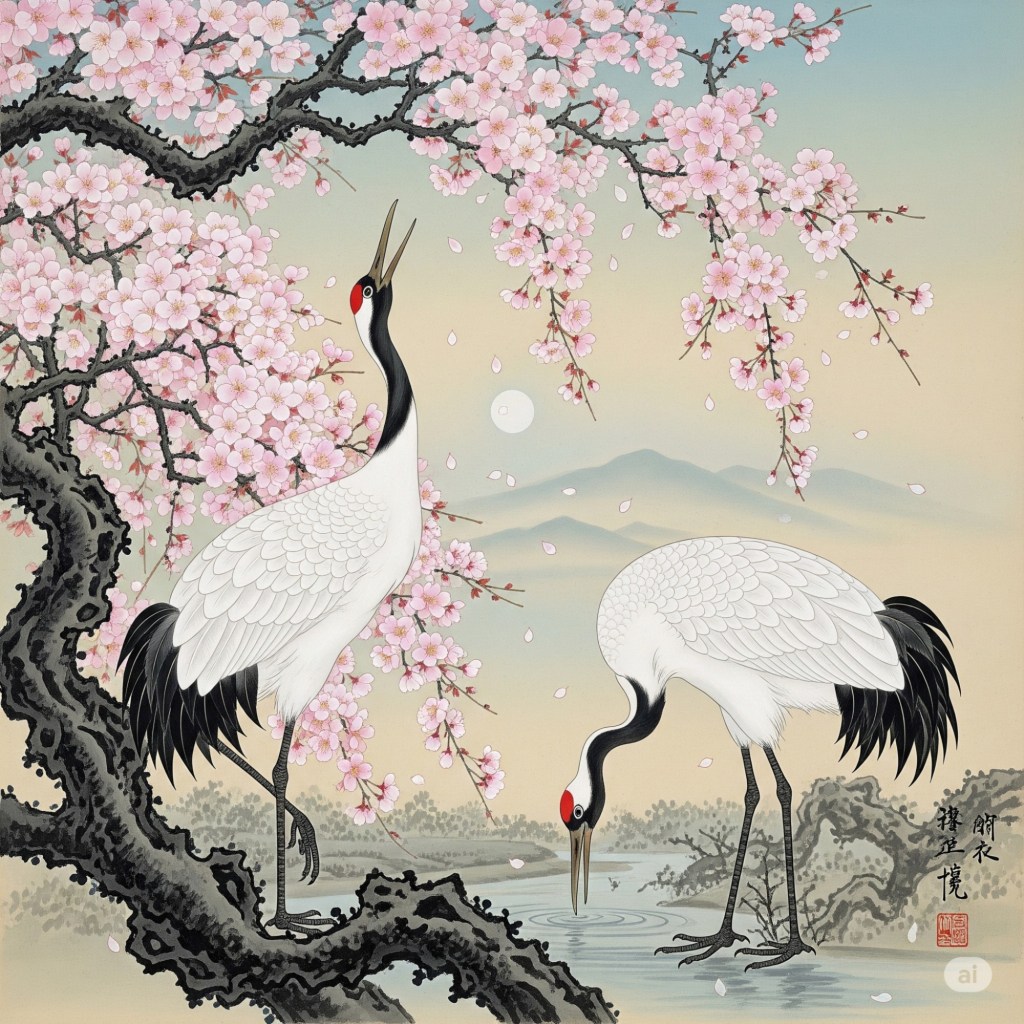
White birds dance in spring,
Love’s final song on silk
The moon watches on.
Master Takeshi’s hands trembled as he mixed the paint, each drop of water adding life to the colours. The cherry blossoms outside his window had reached their peak – that perfect, heartbreaking moment before the inevitable fall of its pink tears. He knew this would be his final spring; the cough that had plagued him through winter now whispered of endings.
The pale moon rose like a communion wafer in the blue canvas of the night sky, a witness to his solitude. His students had long since departed, his wife rested beneath the cherry tree in the village cemetery, and his children lived in distant cities with no time for an old man’s fading art. The brushes that had once danced across silk with the confidence of youth now felt heavy in his arthritic grip.
But tonight was different. Tonight, he had seen them.
Two cranes had appeared by the stream as the last light faded, their white forms luminous against the dusky water. They moved as lovers move in their first and final dance, unknowing of the old man’s eyes that drank their beauty like summer wine. In their dance, Takeshi glimpsed something he had spent seventy years trying to capture: the essence of love enduring beyond time.
The moon climbed higher as he worked, its cold light mixing with the warm glow of his lantern. He painted time into timelessness, each brushstroke a recorded memory, each curve of the cranes’ necks a fragment of beauty. His body ached, but his spirit soared with a clarity he hadn’t felt in years. The cherry petals seemed to fall in slow motion across his silk canvas, and he caught them falling, caught them in their brief and burning beauty.
As dawn approached, Takeshi set down his brush for the last time. The painting was complete: two cranes eternal in their devotion, cherry blossoms caught forever in their gentle fall, the pale moon watching over it all, a pearl of blessing.
In the morning, they found him sleeping the sleep that has no waking, peacefully in his chair facing the window where the real cranes danced. The villagers discovered the painting and gasped – for in the morning light, they swore the cranes turned to watch them, alive with an ancient wisdom.
Hung in the village shrine where incense dreams met candlelit prayers, it worked its gentle magic on all who came to see. Bitter couples grew sweet again, children ceased their crying, and the lonely felt less alone beneath its gaze. The cherry tree outside began to bloom longer each year, as if reluctant to let spring fade.
Some say that on nights when the moon is full and low, just as it was in Takeshi’s final painting, the cranes step from the silk and dance once more by the stream. Others claim it’s merely moonlight playing tricks on grieving hearts.
But the villagers know better. They know that love, once captured in its purest form, becomes eternal – outlasting the hands that created it, the eyes that first beheld it, and even the seasons that inspired it. In his last great work, Master Takeshi had painted not just cranes and blossoms, but the soul of devotion itself.
There, under the eternal moon’s blessing, his final song still plays – a melody of devotion that death cannot silence, beauty that time cannot fade, love that lives forever in the grace of two white cranes dancing through the falling petals of the world.
Your support makes a difference in my life and helps me create more of what you, and I, like. Thank you!
Tap here for a list of 100 endangered animals and plants.
100 endangered plant and animal species
* Abies beshanzuensis (Baishan fir) – Plant (Tree) – Baishanzu Mountain, Zhejiang, China – Three mature individuals
* Actinote zikani – Insect (butterfly) – Near São Paulo, Atlantic forest, Brazil – Unknown numbers
* Aipysurus foliosquama (Leaf scaled sea-snake) – Reptile – Ashmore Reef and Hibernia Reef, Timor Sea – Unknown numbers * Amanipodagrion gilliesi (Amani flatwing) – Insect (damselfly) – Amani-Sigi Forest, Usamabara Mountains, Tanzania – < 500 individuals * Antisolabis seychellensis – Insect – Morne Blanc, Mahé island, Seychelles – Unknown numbers * Antilophia bokermanni (Araripe manakin) – Bird – Chapado do Araripe, South Ceará, Brazil – 779 individuals * Aphanius transgrediens (Aci Göl toothcarp) – Fish – south-eastern shore of former Lake Aci, Turkey – Few hundred pairs * Aproteles bulmerae (Bulmer’s fruit bat) – Mammal – Luplupwintern Cave, Western Province, Papua New Guinea – 150 * Ardea insignis (White bellied heron) – Bird – Bhutan, North East India and Myanmar – 70–400 individuals * Ardeotis nigriceps (Great Indian bustard) – Bird – Rajasthan, Gujarat, Maharashtra, Andhra Pradesh, Karnataka and Madhya, India – 50–249 mature individuals * Astrochelys yniphora (Ploughshare tortoise) – Reptile – Baly Bay region, northwestern Madagascar – 440–770 * Atelopus balios (Rio Pescado stubfoot toad) – Amphibian – Azuay, Cañar and Guyas provinces, south-western Ecuador – Unknown numbers * Aythya innotata (Madagascar pochard) – Bird – volcanic lakes north of Bealanana, Madagascar – 80 mature individuals * Azurina eupalama (Galapagos damsel fish) – Fish – Unknown numbers – Unknown numbers * Bahaba taipingensis (Giant yellow croaker) – Fish – Chinese coast from Yangtze River, China to Hong Kong – Unknown numbers * Batagur baska (Common batagur) – Reptile (turtle) – Bangladesh, Cambodia, India, Indonesia and Malaysia – Unknown numbers * Bazzania bhutanica – Plant – Budini and Lafeti Khola, Bhutan – 2 sub-populations * Beatragus hunteri (Hirola) – Mammal (antelope) – South-east Kenya and possibly south-west Somalia – < 1,000 individuals * Bombus franklini (Franklin’s bumblebee) – Insect (bee) – Oregon and California – Unknown numbers * Brachyteles hypoxanthus (Northern muriqui / Woolly spider monkey) – Mammal (primate) – Atlantic forest, south-eastern Brazil – < 1,000 * Bradypus pygmaeus (Pygmy three-toed sloth) – Mammal – Isla Escudo de Veraguas, Panama – < 500 * Callitriche pulchra – Plant (freshwater) – pool on Gavdos, Greece – Unknown numbers * Calumma tarzan (Tarzan’s chameleon) – Reptile – Anosibe An’Ala region, eastern Madagascar – < 100 * Cavia intermedia (Santa Catarina’s guinea pig) – Mammal (rodent) – Moleques do Sul Island, Santa Catarina, Brazil – 40–60 * Cercopithecus roloway (Roloway guenon) – Mammal (primate) – Côte d’Ivoire – Unknown numbers * Coleura seychellensis (Seychelles sheath-tailed bat) – Mammal (bat) – Two small caves on Silhouette and Mahé, Seychelles – < 100 * Cryptomyces maximus (Willow blister) – Fungi – Pembrokeshire, United Kingdom – Unknown numbers * Cryptotis nelsoni (Nelson’s small-eared shrew) – Mammal (shrew) – Volcán San Martín Tuxtla, Veracruz, Mexico – Unknown numbers * Cyclura collei (Jamaican iguana / Jamaican rock iguana) – Reptile – Hellshire Hills, Jamaica – Unknown numbers * Daubentonia madagascariensis (Aye-aye) – Mammal (primate) – Deciduous forest, East Madagascar – Unknown numbers * Dendrophylax fawcettii (Cayman Islands ghost orchid) – Plant (orchid) – Ironwood Forest, George Town, Grand Cayman – Unknown numbers * Dicerorhinus sumatrensis (Sumatran rhino) – Mammal (rhino) – Sabah, Sarawak and Peninsular Malaysia, Kalimantan and Sumatra, Indonesia – < 100 (more recent estimates suggest 34-47) * Diomedea amsterdamensis (Amsterdam albatross) – Bird – Breeds on Plateuau des Tourbières, Amsterdam Island, Indian Ocean. – 100 mature individuals * Dioscorea strydomiana (Wild yam) – Plant – Oshoek area, Mpumalanga, South Africa – 200 * Diospyros katendei – Plant (tree) – Kasyoha-Kitomi Forest Reserve, Uganda – 20 individuals in a single population * Dipterocarpus lamellatus – Plant (tree) – Siangau Forest Reserve, Sabah, Malaysia – 12 individuals * Discoglossus nigriventer (Hula painted frog) – Amphibian – Hula Valley, Israel – Unknown numbers * Dombeya mauritiana – Plant – Mauritius – Unknown numbers * Elaeocarpus bojeri (Bois Dentelle) – Plant (tree) – Grand Bassin, Mauritius – < 10 individuals * Eleutherodactylus glandulifer (La Hotte glanded frog) – Amphibian – Massif de la Hotte, Haiti – Unknown numbers * Eleutherodactylus thorectes (Macaya breast-spot frog) – Amphibian – Formon and Macaya peaks, Masif de la Hotte, Haiti – Unknown numbers * Eriosyce chilensis (Chilenito (cactus)) – Plant – Pta Molles and Pichidungui, Chile – < 500 individuals * Erythrina schliebenii (Coral tree) – Plant – Namatimbili-Ngarama Forest, Tanzania – < 50 individuals * Euphorbia tanaensis – Plant (tree) – Witu Forest Reserve, Kenya – 4 mature individuals * Eurynorhyncus pygmeus (Spoon-billed sandpiper) – Bird – Breeds in Russia, migrates along the East Asian-Australasian Flyway to wintering grounds in India, Bangladesh and Myanmar – 100 breeding pairs * Ficus katendei – Plant – Kasyoha-Kitomi Forest Reserve, Ishasha River, Uganda – < 50 mature individuals * Geronticus eremita (Northern bald ibis) – Bird – Breeds in Morocco, Turkey and Syria. Syrian population winters in central Ethiopia. – About 3000 individuals * Gigasiphon macrosiphon – Plant (flower) – Kaya Muhaka, Gongoni and Mrima Forest Reserves, Kenya, Amani Nature Reserve, West Kilombero Scarp Forest Reserve, and Kihansi Gorge, Tanzania – 33 * Gocea ohridana – Mollusc – Lake Ohrid, Macedonia – Unknown numbers * Heleophryne rosei (Table mountain ghost frog) – Amphibian – Table Mountain, Western Cape Province, South Africa – Unknown numbers * Hemicycla paeteliana – Mollusc (land snail) – Jandia peninsula, Fuerteventura, Canary Islands – Unknown numbers * Heteromirafa sidamoensis (Liben lark) – Bird – Liben Plains, southern Ethiopia – 90–256 * Hibiscadelphus woodii – Plant (tree) – Kalalau Valley, Hawaii – Unknown numbers * Hucho perryi (Sakhalin taimen) – Fish – Russian and Japanese rivers, Pacific Ocean between Russia and Japan – Unknown numbers * Johora singaporensis (Singapore freshwater crab) – Crustacean – Bukit Timah Nature Reserve and streamlet near Bukit Batok, Singapore – Unknown numbers * Lathyrus belinensis (Belin vetchling) – Plant – Outskirts of Belin village, Antalya, Turkey – < 1,000 * Leiopelma archeyi (Archey’s frog) – Amphibian – Coromandel peninsula and Whareorino Forest, New Zealand – Unknown numbers * Lithobates sevosus (Dusky gopher frog) – Amphibian – Harrison County, Mississippi, USA – 60–100 * Lophura edwardsi (Edwards’s pheasant) – Bird – Quang Binh, Quang Tri and Thua Thien-Hue, Viet Nam – Unknown numbers * Magnolia wolfii – Plant (tree) – Risaralda, Colombia – 3 * Margaritifera marocana – Mollusc – Oued Denna, Oued Abid and Oued Beth, Morocco – < 250 * Moominia willii – Mollusc (snail) – Silhouette Island, Seychelles – < 500 * Natalus primus (Cuban greater funnel eared bat) – Mammal (bat) – Cueva La Barca, Isle of Pines, Cuba – < 100 * Nepenthes attenboroughii (Attenborough’s pitcher plant) – Plant – Mount Victoria, Palawan, Philippines – Unknown numbers * Nomascus hainanus (Hainan black crested gibbon) – Mammal (primate) – Hainan Island, China – 20 * Neurergus kaiseri (Luristan newt) – Amphibian – Zagros Mountains, Lorestan, Iran – < 1,000 * Oreocnemis phoenix (Mulanje red damsel) – Insect (damselfly) – Mulanje Plateau, Malawi – Unknown numbers * Pangasius sanitwongsei (Pangasid catfish) – Fish – Chao Phraya and Mekong basins in Cambodia, China, Lao PDR, Thailand and Viet Nam – Unknown numbers * Parides burchellanus – Insect (butterfly) – Cerrado, Brazil – < 100 * Phocoena sinus (Vaquita) – Mammal (porpoise) – Northern Gulf of California, Mexico – 12 * Picea neoveitchii (Type of spruce tree) – Plant (tree) – Qinling Range, China – Unknown numbers * Pinus squamata (Qiaojia pine) – Plant (tree) – Qiaojia, Yunnan, China – < 25 * Poecilotheria metallica (Gooty tarantula / Metallic tarantula / Peacock tarantula / Salepurgu) – Spider – Nandyal and Giddalur, Andhra Pradesh, India – Unknown numbers * Pomarea whitneyi (Fatuhiva monarch) – Bird – Fatu Hiva, Marquesas Islands, French Polynesia – 50 * Pristis pristis (Common sawfish) – Fish – Coastal tropical and subtropical waters of Indo-Pacific and Atlantic Oceans. Currently largely restricted to northern Australia – Unknown numbers * Hapalemur simus (Greater bamboo lemur) – Mammal (primate) – Southeastern and southcentral rainforests of Madagascar – 500 * Propithecus candidus (Silky sifaka) – Mammal (primate) – Maroantsetra to Andapa basin, and Marojeju Massif, Madagascar – 100–1,000 * Psammobates geometricus (Geometric tortoise) – Reptile – Western Cape Province, South Africa – Unknown numbers * Pseudoryx nghetinhensis (Saola) – Mammal – Annamite mountains, on the Viet Nam – PDR Laos border – Unknown numbers * Psiadia cataractae – Plant – Mauritius – Unknown numbers * Psorodonotus ebneri (Beydaglari bush-cricket) – Insect – Beydaglari range, Antalaya, Turkey – Unknown numbers * Rafetus swinhoei (Red River giant softshell turtle) – Reptile – Hoan Kiem Lake and Dong Mo Lake, Viet Nam, and Suzhou Zoo, China – 3 * Rhinoceros sondaicus (Javan rhino) – Mammal (rhino) – Ujung Kulon National Park, Java, Indonesia – < 100 * Rhinopithecus avunculus (Tonkin snub-nosed monkey) – Mammal (primate) – Northeastern Vietnam – < 200 * Rhizanthella gardneri (West Australian underground orchid) – Plant (orchid) – Western Australia, Australia – < 100 * Rhynchocyon spp. (Boni giant sengi) – Mammal – Boni-Dodori Forest, Lamu area, Kenya – Unknown numbers * Risiocnemis seidenschwarzi (Cebu frill-wing) – Insect (damselfly) – Rivulet beside the Kawasan River, Cebu, Philippines – Unknown numbers * Rosa arabica – Plant – St Katherine Mountains, Egypt – Unknown numbers, 10 sub-populations * Salanoia durrelli (Durrell’s vontsira) – Mammal (mongoose) – Marshes of Lake Alaotra, Madagascar – Unknown numbers * Santamartamys rufodorsalis (Red crested tree rat) – Mammal (rodent) – Sierra Nevada de Santa Marta, Colombia – Unknown numbers * Scaturiginichthys vermeilipinnis (Red-finned blue-eye) – Fish – Edgbaston Station, central western Queensland, Australia – 2,000–4,000 * Squatina squatina (Angel shark) – Fish – Canary Islands – Unknown numbers * Sterna bernsteini (Chinese crested tern) – Bird – Breeding in Zhejiang and Fujian, China. Outside breeding season in Indonesia, Malaysia, Philippines, Taiwan, Thailand. – < 50 * Syngnathus watermeyeri (Estuarine pipefish) – Fish – Kariega Estuary to East Kleinemonde Estuary, Eastern Cape Province, South Africa – Unknown numbers * Tahina spectabilis (Suicide palm / Dimaka) – Plant – Analalava district, north-western Madagascar – 90 * Telmatobufo bullocki (Bullock’s false toad) – Amphibian (frog) – Nahuelbuta, Arauco Province, Chile – Unknown numbers * Tokudaia muenninki (Okinawa spiny rat) – Mammal (rodent) – Okinawa Island, Japan – Unknown numbers * Trigonostigma somphongsi (Somphongs’s rasbora) – Fish – Mae Khlong basin, Thailand – Unknown numbers * Valencia letourneuxi – Fish – Southern Albania and Western Greece – Unknown numbers * Voanioala gerardii (Forest coconut) – Plant – Masoala peninsula, Madagascar – < 10 * Zaglossus attenboroughi (Attenborough’s echidna) – Mammal – Cyclops Mountains, Papua Province, Indonesia – Unknown numbers
- Darkness, Power and BeautyHorse’s steady gazeStrengthful eyes that dare to meetChallenge accepted Courage is the strength to face… Read more: Darkness, Power and Beauty
- The Daffodil’s Song: A Lyrical Tribute to the Wonders of SpringDaffodil so brightGolden petals, sunshine’s kissHope blooms anew As I wander through the garden, the… Read more: The Daffodil’s Song: A Lyrical Tribute to the Wonders of Spring
- Acanthus: A Versatile Plant with a Rich Cultural HeritageThe Graceful Lines of an Acanthus Leaf. Acanthus is a genus of flowering plants native… Read more: Acanthus: A Versatile Plant with a Rich Cultural Heritage
🏡Charcoal Decay🏡
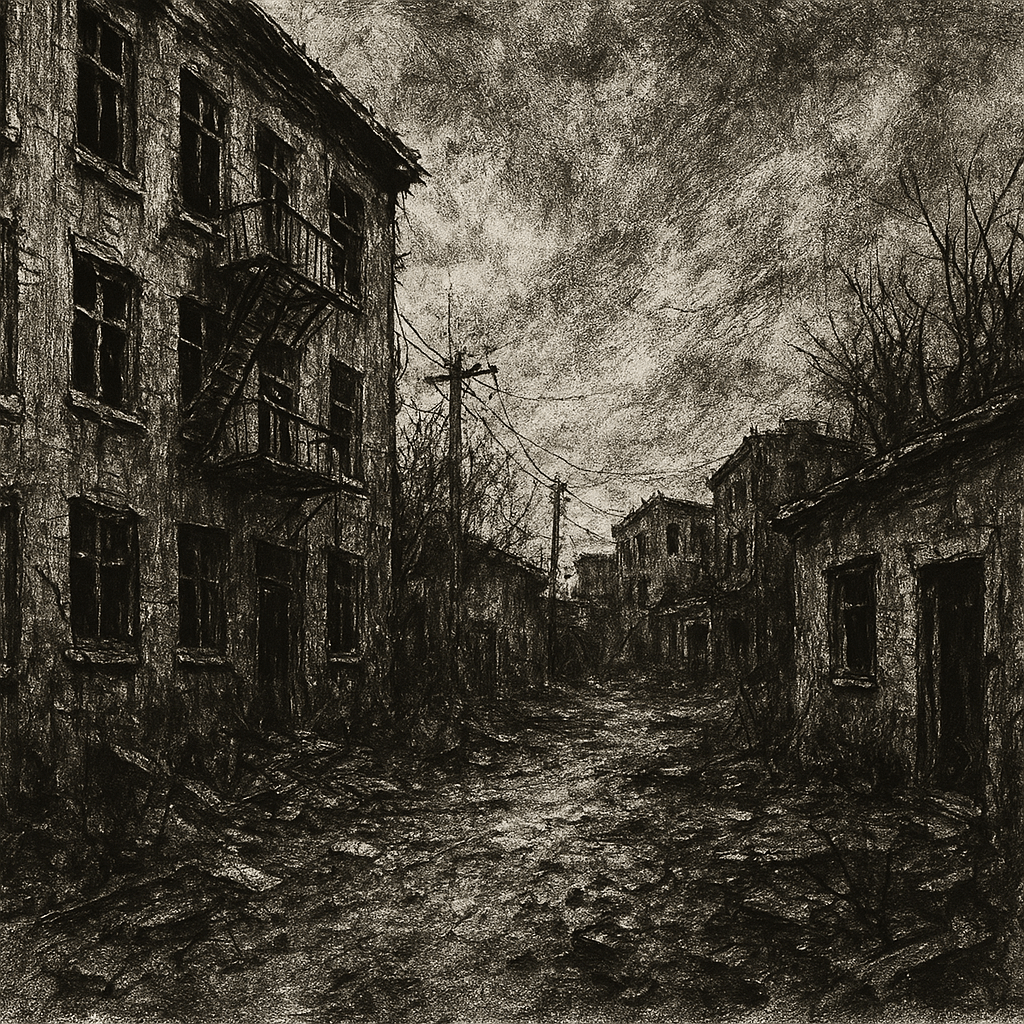
Echoes in the dark,
A city breathes its last sigh,
Ruins hold the past.
An eerie silence hangs heavy in the air, a thick, suffocating blanket of stillness. It’s a silence that speaks volumes, whispering tales of what once was and what is no more. This image, rendered in stark, haunting charcoal, is a window into a world forgotten, a city abandoned to the relentless march of time and decay.
The artist’s hand has meticulously captured the brutal beauty of desolation.
The buildings, once proud and bustling with life, now stand as skeletal remains, their windows like vacant eyes staring out at a bleak and uncertain future. A fire escape, rusted and broken, hangs precariously, betraying a hasty, desperate flight. The street below, a patchwork of rubble and dirt, tells its own story of neglect and ruin.
Yet, amidst the wreckage, a strange sense of peace prevails. The chaotic destruction has given way to a new, desolate order. Nature, ever resilient, begins its slow reclamation. Bare, gnarled branches of trees reach out like boney fingers, grasping at the broken sky. A lone telephone pole, a relic of a bygone era, stands over the forgotten street, its wires drooping like weary lines of communication severed long ago.
As well as a depiction of a post-apocalyptic landscape this image is a profound meditation on loss, memory, and the inevitable cycle of life and death. It asks us to confront our own fears of impermanence and to find a strange, unsettling beauty in the ruins. It’s a reminder that even in the most desolate of places, stories continue to be told, through its imagery and by the scars on the stones of a forgotten world.
Your support makes a difference in my life and helps me create more of what you, and I, like. Thank you!
Tap here for a list of 100 endangered animals and plants.
100 endangered plant and animal species
* Abies beshanzuensis (Baishan fir) – Plant (Tree) – Baishanzu Mountain, Zhejiang, China – Three mature individuals
* Actinote zikani – Insect (butterfly) – Near São Paulo, Atlantic forest, Brazil – Unknown numbers
* Aipysurus foliosquama (Leaf scaled sea-snake) – Reptile – Ashmore Reef and Hibernia Reef, Timor Sea – Unknown numbers * Amanipodagrion gilliesi (Amani flatwing) – Insect (damselfly) – Amani-Sigi Forest, Usamabara Mountains, Tanzania – < 500 individuals * Antisolabis seychellensis – Insect – Morne Blanc, Mahé island, Seychelles – Unknown numbers * Antilophia bokermanni (Araripe manakin) – Bird – Chapado do Araripe, South Ceará, Brazil – 779 individuals * Aphanius transgrediens (Aci Göl toothcarp) – Fish – south-eastern shore of former Lake Aci, Turkey – Few hundred pairs * Aproteles bulmerae (Bulmer’s fruit bat) – Mammal – Luplupwintern Cave, Western Province, Papua New Guinea – 150 * Ardea insignis (White bellied heron) – Bird – Bhutan, North East India and Myanmar – 70–400 individuals * Ardeotis nigriceps (Great Indian bustard) – Bird – Rajasthan, Gujarat, Maharashtra, Andhra Pradesh, Karnataka and Madhya, India – 50–249 mature individuals * Astrochelys yniphora (Ploughshare tortoise) – Reptile – Baly Bay region, northwestern Madagascar – 440–770 * Atelopus balios (Rio Pescado stubfoot toad) – Amphibian – Azuay, Cañar and Guyas provinces, south-western Ecuador – Unknown numbers * Aythya innotata (Madagascar pochard) – Bird – volcanic lakes north of Bealanana, Madagascar – 80 mature individuals * Azurina eupalama (Galapagos damsel fish) – Fish – Unknown numbers – Unknown numbers * Bahaba taipingensis (Giant yellow croaker) – Fish – Chinese coast from Yangtze River, China to Hong Kong – Unknown numbers * Batagur baska (Common batagur) – Reptile (turtle) – Bangladesh, Cambodia, India, Indonesia and Malaysia – Unknown numbers * Bazzania bhutanica – Plant – Budini and Lafeti Khola, Bhutan – 2 sub-populations * Beatragus hunteri (Hirola) – Mammal (antelope) – South-east Kenya and possibly south-west Somalia – < 1,000 individuals * Bombus franklini (Franklin’s bumblebee) – Insect (bee) – Oregon and California – Unknown numbers * Brachyteles hypoxanthus (Northern muriqui / Woolly spider monkey) – Mammal (primate) – Atlantic forest, south-eastern Brazil – < 1,000 * Bradypus pygmaeus (Pygmy three-toed sloth) – Mammal – Isla Escudo de Veraguas, Panama – < 500 * Callitriche pulchra – Plant (freshwater) – pool on Gavdos, Greece – Unknown numbers * Calumma tarzan (Tarzan’s chameleon) – Reptile – Anosibe An’Ala region, eastern Madagascar – < 100 * Cavia intermedia (Santa Catarina’s guinea pig) – Mammal (rodent) – Moleques do Sul Island, Santa Catarina, Brazil – 40–60 * Cercopithecus roloway (Roloway guenon) – Mammal (primate) – Côte d’Ivoire – Unknown numbers * Coleura seychellensis (Seychelles sheath-tailed bat) – Mammal (bat) – Two small caves on Silhouette and Mahé, Seychelles – < 100 * Cryptomyces maximus (Willow blister) – Fungi – Pembrokeshire, United Kingdom – Unknown numbers * Cryptotis nelsoni (Nelson’s small-eared shrew) – Mammal (shrew) – Volcán San Martín Tuxtla, Veracruz, Mexico – Unknown numbers * Cyclura collei (Jamaican iguana / Jamaican rock iguana) – Reptile – Hellshire Hills, Jamaica – Unknown numbers * Daubentonia madagascariensis (Aye-aye) – Mammal (primate) – Deciduous forest, East Madagascar – Unknown numbers * Dendrophylax fawcettii (Cayman Islands ghost orchid) – Plant (orchid) – Ironwood Forest, George Town, Grand Cayman – Unknown numbers * Dicerorhinus sumatrensis (Sumatran rhino) – Mammal (rhino) – Sabah, Sarawak and Peninsular Malaysia, Kalimantan and Sumatra, Indonesia – < 100 (more recent estimates suggest 34-47) * Diomedea amsterdamensis (Amsterdam albatross) – Bird – Breeds on Plateuau des Tourbières, Amsterdam Island, Indian Ocean. – 100 mature individuals * Dioscorea strydomiana (Wild yam) – Plant – Oshoek area, Mpumalanga, South Africa – 200 * Diospyros katendei – Plant (tree) – Kasyoha-Kitomi Forest Reserve, Uganda – 20 individuals in a single population * Dipterocarpus lamellatus – Plant (tree) – Siangau Forest Reserve, Sabah, Malaysia – 12 individuals * Discoglossus nigriventer (Hula painted frog) – Amphibian – Hula Valley, Israel – Unknown numbers * Dombeya mauritiana – Plant – Mauritius – Unknown numbers * Elaeocarpus bojeri (Bois Dentelle) – Plant (tree) – Grand Bassin, Mauritius – < 10 individuals * Eleutherodactylus glandulifer (La Hotte glanded frog) – Amphibian – Massif de la Hotte, Haiti – Unknown numbers * Eleutherodactylus thorectes (Macaya breast-spot frog) – Amphibian – Formon and Macaya peaks, Masif de la Hotte, Haiti – Unknown numbers * Eriosyce chilensis (Chilenito (cactus)) – Plant – Pta Molles and Pichidungui, Chile – < 500 individuals * Erythrina schliebenii (Coral tree) – Plant – Namatimbili-Ngarama Forest, Tanzania – < 50 individuals * Euphorbia tanaensis – Plant (tree) – Witu Forest Reserve, Kenya – 4 mature individuals * Eurynorhyncus pygmeus (Spoon-billed sandpiper) – Bird – Breeds in Russia, migrates along the East Asian-Australasian Flyway to wintering grounds in India, Bangladesh and Myanmar – 100 breeding pairs * Ficus katendei – Plant – Kasyoha-Kitomi Forest Reserve, Ishasha River, Uganda – < 50 mature individuals * Geronticus eremita (Northern bald ibis) – Bird – Breeds in Morocco, Turkey and Syria. Syrian population winters in central Ethiopia. – About 3000 individuals * Gigasiphon macrosiphon – Plant (flower) – Kaya Muhaka, Gongoni and Mrima Forest Reserves, Kenya, Amani Nature Reserve, West Kilombero Scarp Forest Reserve, and Kihansi Gorge, Tanzania – 33 * Gocea ohridana – Mollusc – Lake Ohrid, Macedonia – Unknown numbers * Heleophryne rosei (Table mountain ghost frog) – Amphibian – Table Mountain, Western Cape Province, South Africa – Unknown numbers * Hemicycla paeteliana – Mollusc (land snail) – Jandia peninsula, Fuerteventura, Canary Islands – Unknown numbers * Heteromirafa sidamoensis (Liben lark) – Bird – Liben Plains, southern Ethiopia – 90–256 * Hibiscadelphus woodii – Plant (tree) – Kalalau Valley, Hawaii – Unknown numbers * Hucho perryi (Sakhalin taimen) – Fish – Russian and Japanese rivers, Pacific Ocean between Russia and Japan – Unknown numbers * Johora singaporensis (Singapore freshwater crab) – Crustacean – Bukit Timah Nature Reserve and streamlet near Bukit Batok, Singapore – Unknown numbers * Lathyrus belinensis (Belin vetchling) – Plant – Outskirts of Belin village, Antalya, Turkey – < 1,000 * Leiopelma archeyi (Archey’s frog) – Amphibian – Coromandel peninsula and Whareorino Forest, New Zealand – Unknown numbers * Lithobates sevosus (Dusky gopher frog) – Amphibian – Harrison County, Mississippi, USA – 60–100 * Lophura edwardsi (Edwards’s pheasant) – Bird – Quang Binh, Quang Tri and Thua Thien-Hue, Viet Nam – Unknown numbers * Magnolia wolfii – Plant (tree) – Risaralda, Colombia – 3 * Margaritifera marocana – Mollusc – Oued Denna, Oued Abid and Oued Beth, Morocco – < 250 * Moominia willii – Mollusc (snail) – Silhouette Island, Seychelles – < 500 * Natalus primus (Cuban greater funnel eared bat) – Mammal (bat) – Cueva La Barca, Isle of Pines, Cuba – < 100 * Nepenthes attenboroughii (Attenborough’s pitcher plant) – Plant – Mount Victoria, Palawan, Philippines – Unknown numbers * Nomascus hainanus (Hainan black crested gibbon) – Mammal (primate) – Hainan Island, China – 20 * Neurergus kaiseri (Luristan newt) – Amphibian – Zagros Mountains, Lorestan, Iran – < 1,000 * Oreocnemis phoenix (Mulanje red damsel) – Insect (damselfly) – Mulanje Plateau, Malawi – Unknown numbers * Pangasius sanitwongsei (Pangasid catfish) – Fish – Chao Phraya and Mekong basins in Cambodia, China, Lao PDR, Thailand and Viet Nam – Unknown numbers * Parides burchellanus – Insect (butterfly) – Cerrado, Brazil – < 100 * Phocoena sinus (Vaquita) – Mammal (porpoise) – Northern Gulf of California, Mexico – 12 * Picea neoveitchii (Type of spruce tree) – Plant (tree) – Qinling Range, China – Unknown numbers * Pinus squamata (Qiaojia pine) – Plant (tree) – Qiaojia, Yunnan, China – < 25 * Poecilotheria metallica (Gooty tarantula / Metallic tarantula / Peacock tarantula / Salepurgu) – Spider – Nandyal and Giddalur, Andhra Pradesh, India – Unknown numbers * Pomarea whitneyi (Fatuhiva monarch) – Bird – Fatu Hiva, Marquesas Islands, French Polynesia – 50 * Pristis pristis (Common sawfish) – Fish – Coastal tropical and subtropical waters of Indo-Pacific and Atlantic Oceans. Currently largely restricted to northern Australia – Unknown numbers * Hapalemur simus (Greater bamboo lemur) – Mammal (primate) – Southeastern and southcentral rainforests of Madagascar – 500 * Propithecus candidus (Silky sifaka) – Mammal (primate) – Maroantsetra to Andapa basin, and Marojeju Massif, Madagascar – 100–1,000 * Psammobates geometricus (Geometric tortoise) – Reptile – Western Cape Province, South Africa – Unknown numbers * Pseudoryx nghetinhensis (Saola) – Mammal – Annamite mountains, on the Viet Nam – PDR Laos border – Unknown numbers * Psiadia cataractae – Plant – Mauritius – Unknown numbers * Psorodonotus ebneri (Beydaglari bush-cricket) – Insect – Beydaglari range, Antalaya, Turkey – Unknown numbers * Rafetus swinhoei (Red River giant softshell turtle) – Reptile – Hoan Kiem Lake and Dong Mo Lake, Viet Nam, and Suzhou Zoo, China – 3 * Rhinoceros sondaicus (Javan rhino) – Mammal (rhino) – Ujung Kulon National Park, Java, Indonesia – < 100 * Rhinopithecus avunculus (Tonkin snub-nosed monkey) – Mammal (primate) – Northeastern Vietnam – < 200 * Rhizanthella gardneri (West Australian underground orchid) – Plant (orchid) – Western Australia, Australia – < 100 * Rhynchocyon spp. (Boni giant sengi) – Mammal – Boni-Dodori Forest, Lamu area, Kenya – Unknown numbers * Risiocnemis seidenschwarzi (Cebu frill-wing) – Insect (damselfly) – Rivulet beside the Kawasan River, Cebu, Philippines – Unknown numbers * Rosa arabica – Plant – St Katherine Mountains, Egypt – Unknown numbers, 10 sub-populations * Salanoia durrelli (Durrell’s vontsira) – Mammal (mongoose) – Marshes of Lake Alaotra, Madagascar – Unknown numbers * Santamartamys rufodorsalis (Red crested tree rat) – Mammal (rodent) – Sierra Nevada de Santa Marta, Colombia – Unknown numbers * Scaturiginichthys vermeilipinnis (Red-finned blue-eye) – Fish – Edgbaston Station, central western Queensland, Australia – 2,000–4,000 * Squatina squatina (Angel shark) – Fish – Canary Islands – Unknown numbers * Sterna bernsteini (Chinese crested tern) – Bird – Breeding in Zhejiang and Fujian, China. Outside breeding season in Indonesia, Malaysia, Philippines, Taiwan, Thailand. – < 50 * Syngnathus watermeyeri (Estuarine pipefish) – Fish – Kariega Estuary to East Kleinemonde Estuary, Eastern Cape Province, South Africa – Unknown numbers * Tahina spectabilis (Suicide palm / Dimaka) – Plant – Analalava district, north-western Madagascar – 90 * Telmatobufo bullocki (Bullock’s false toad) – Amphibian (frog) – Nahuelbuta, Arauco Province, Chile – Unknown numbers * Tokudaia muenninki (Okinawa spiny rat) – Mammal (rodent) – Okinawa Island, Japan – Unknown numbers * Trigonostigma somphongsi (Somphongs’s rasbora) – Fish – Mae Khlong basin, Thailand – Unknown numbers * Valencia letourneuxi – Fish – Southern Albania and Western Greece – Unknown numbers * Voanioala gerardii (Forest coconut) – Plant – Masoala peninsula, Madagascar – < 10 * Zaglossus attenboroughi (Attenborough’s echidna) – Mammal – Cyclops Mountains, Papua Province, Indonesia – Unknown numbers
- Darkness, Power and BeautyHorse’s steady gazeStrengthful eyes that dare to meetChallenge accepted Courage is the strength to face… Read more: Darkness, Power and Beauty
- The Daffodil’s Song: A Lyrical Tribute to the Wonders of SpringDaffodil so brightGolden petals, sunshine’s kissHope blooms anew As I wander through the garden, the… Read more: The Daffodil’s Song: A Lyrical Tribute to the Wonders of Spring
- Acanthus: A Versatile Plant with a Rich Cultural HeritageThe Graceful Lines of an Acanthus Leaf. Acanthus is a genus of flowering plants native… Read more: Acanthus: A Versatile Plant with a Rich Cultural Heritage
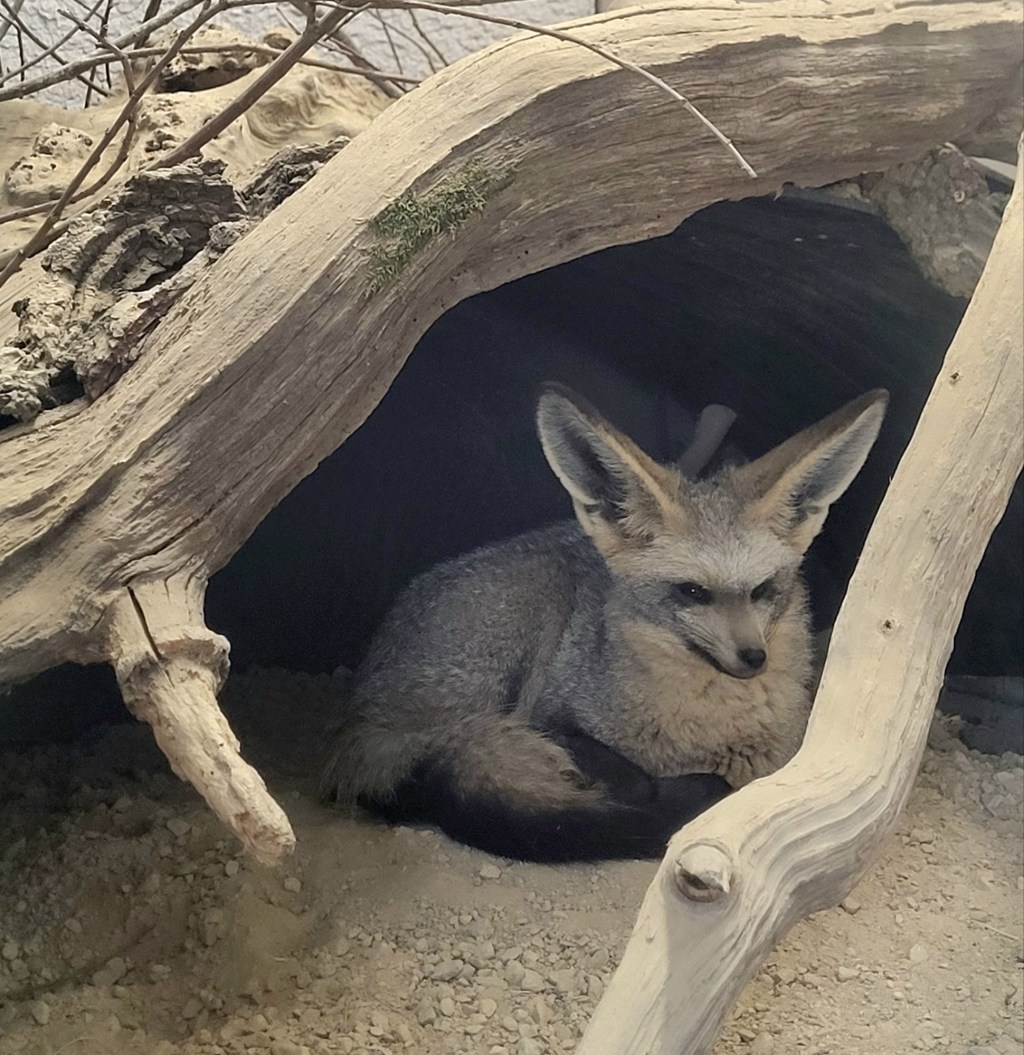
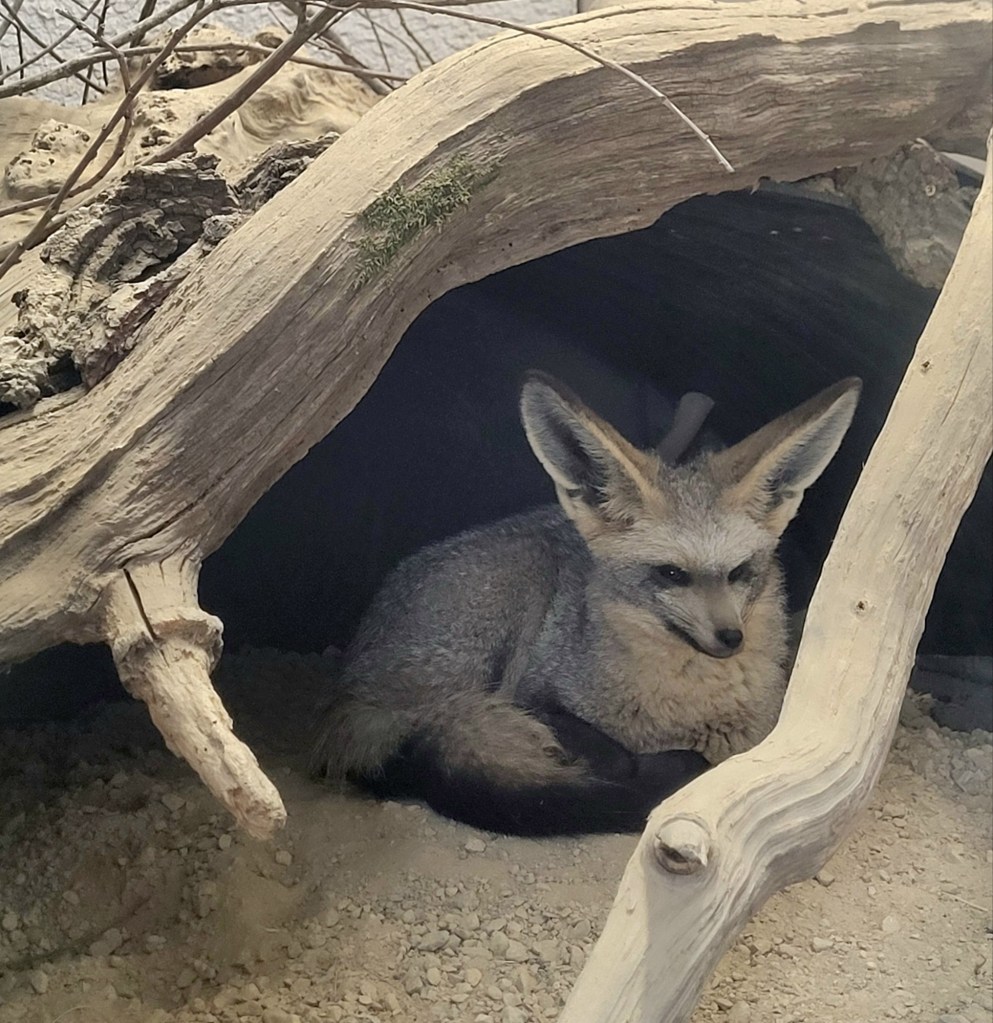
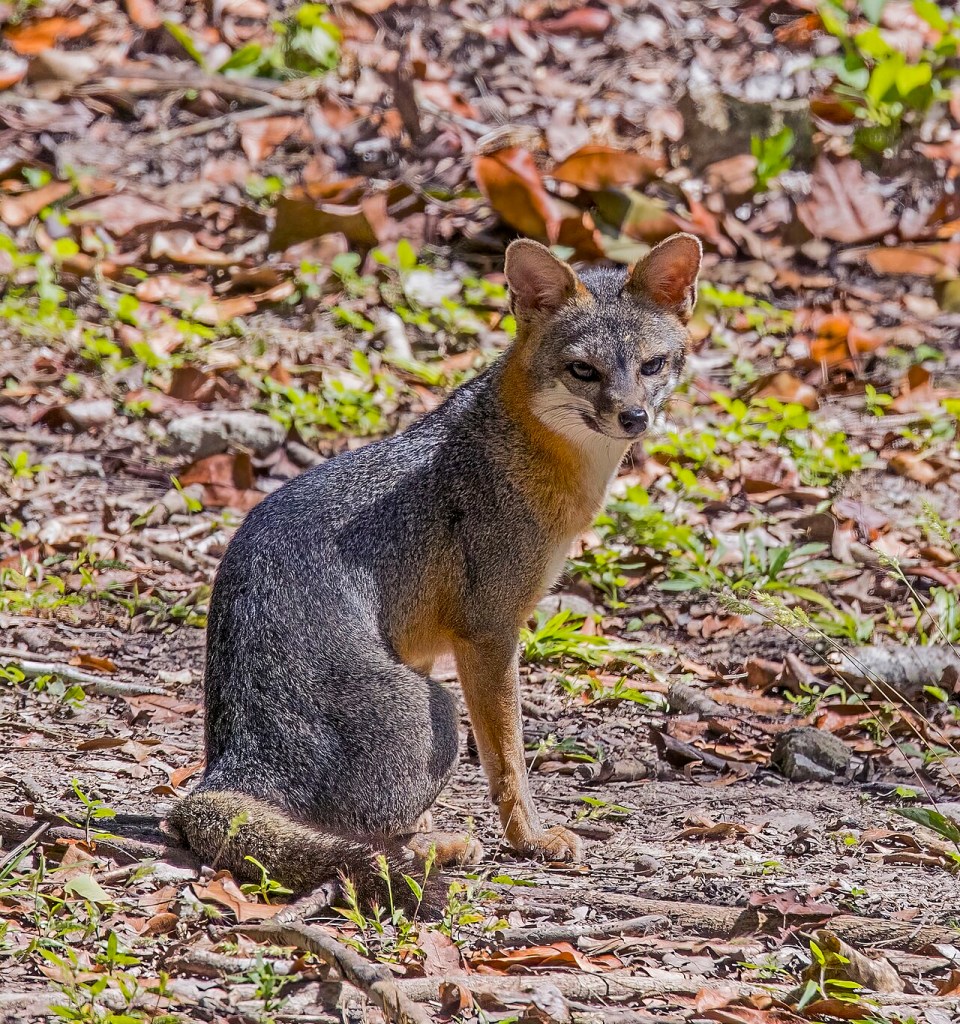
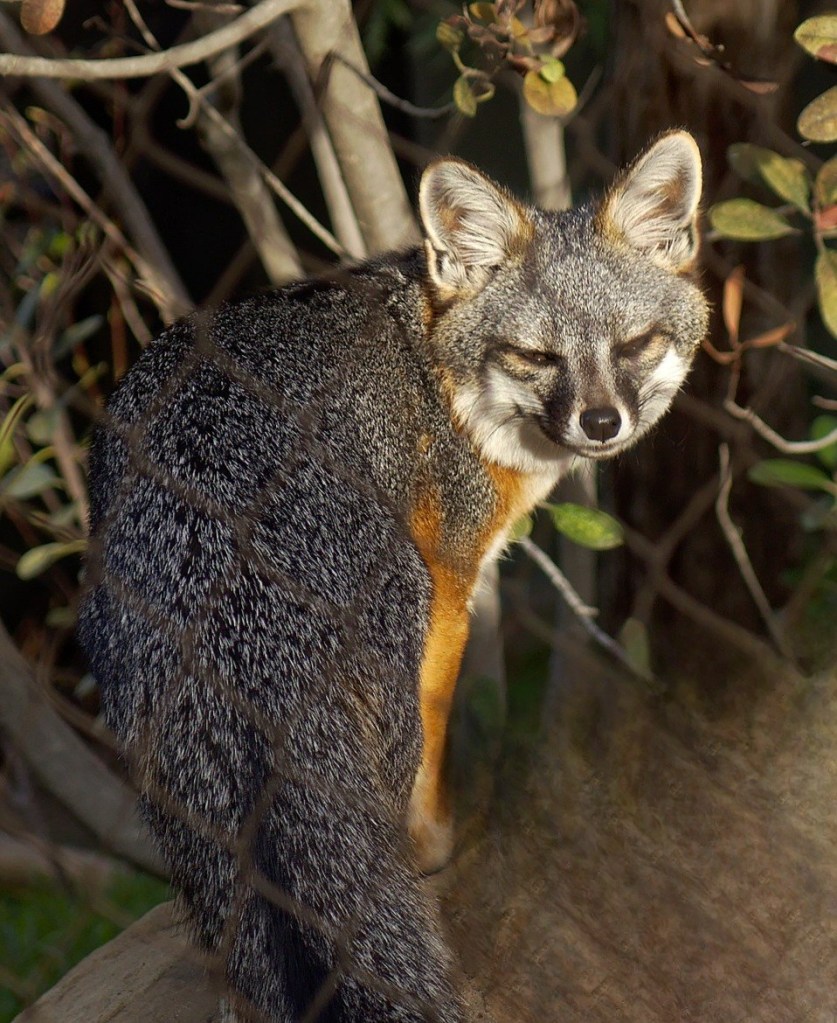
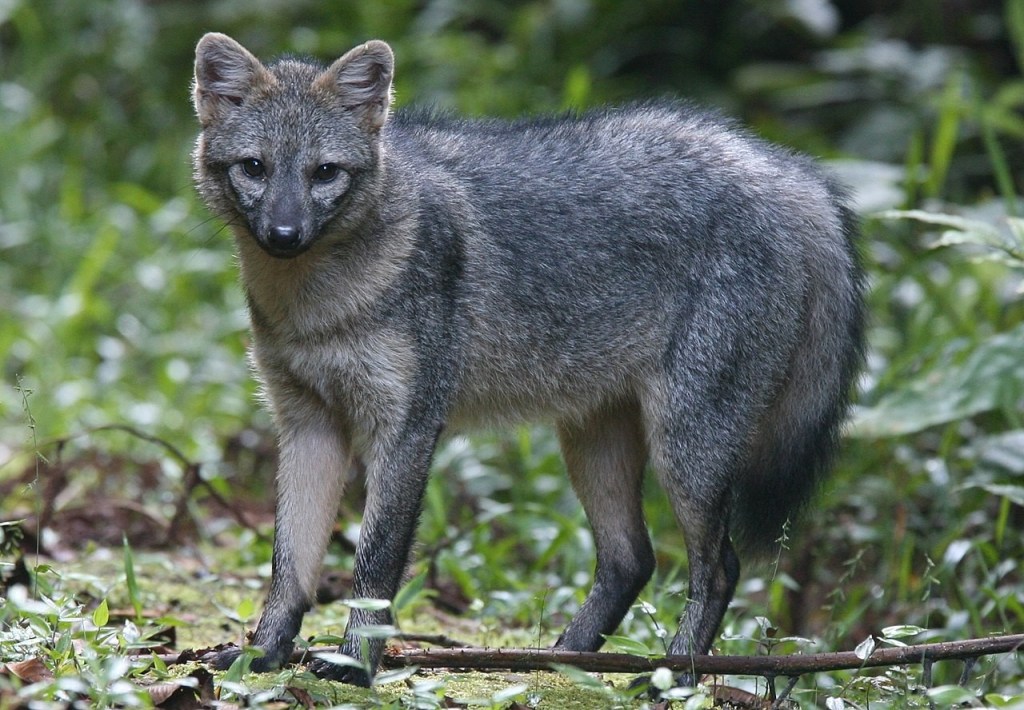

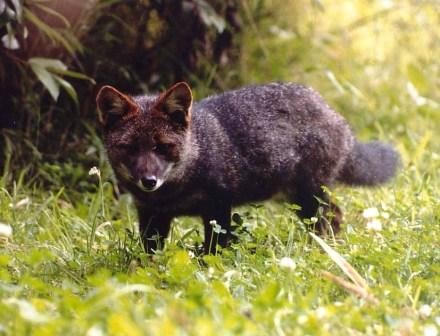
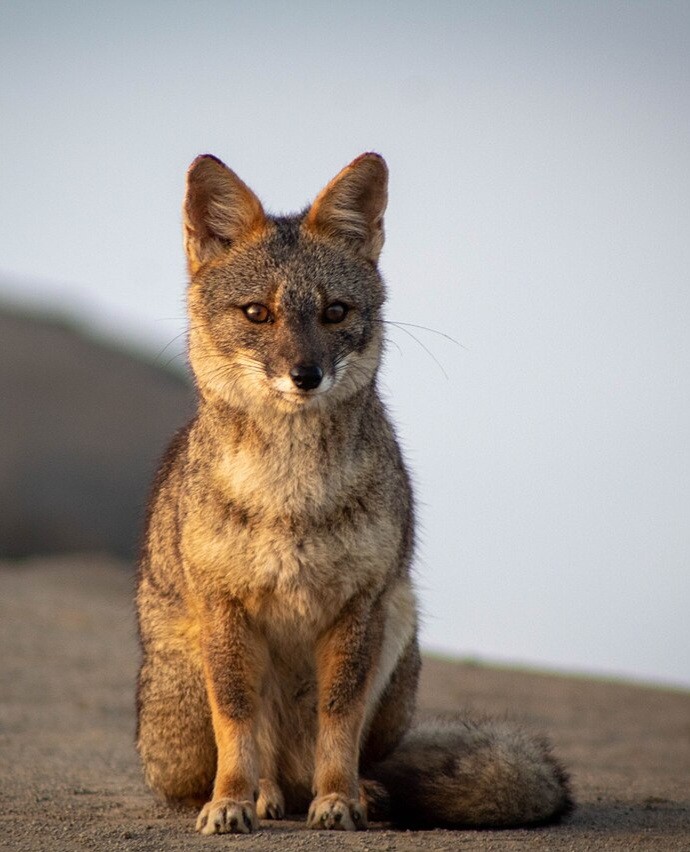
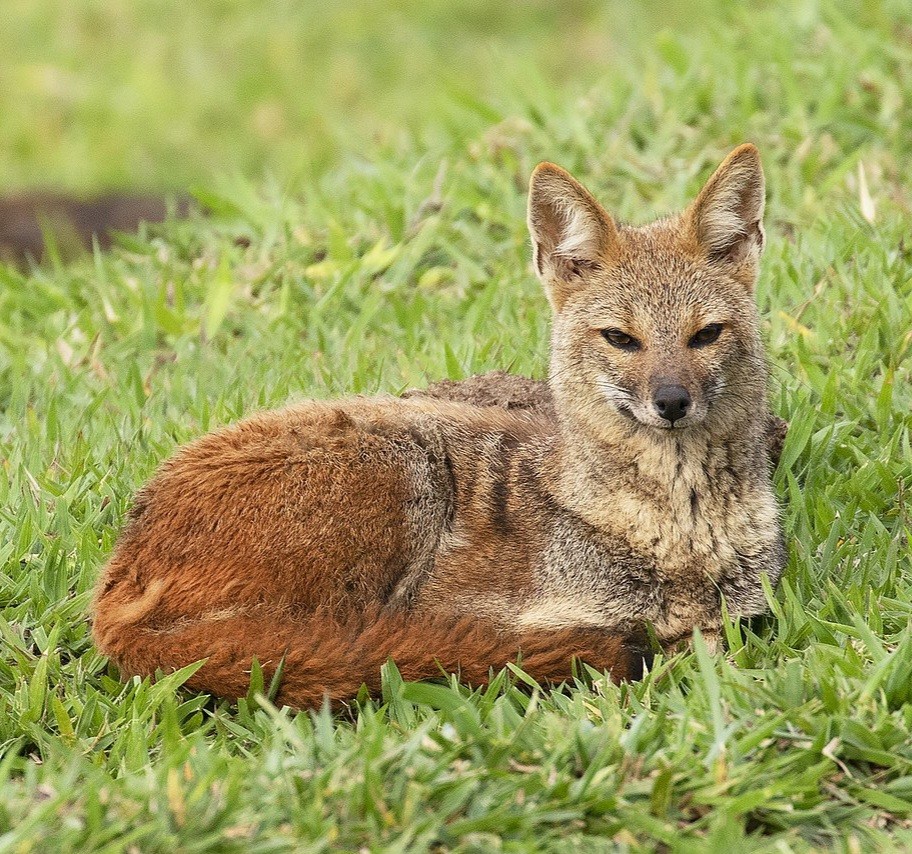
 Anthony's Literary Lens
You must be logged in to post a comment.