Tag: flowers

  • AI: Coming to a garden near you.

    AI: Coming to a garden near you.

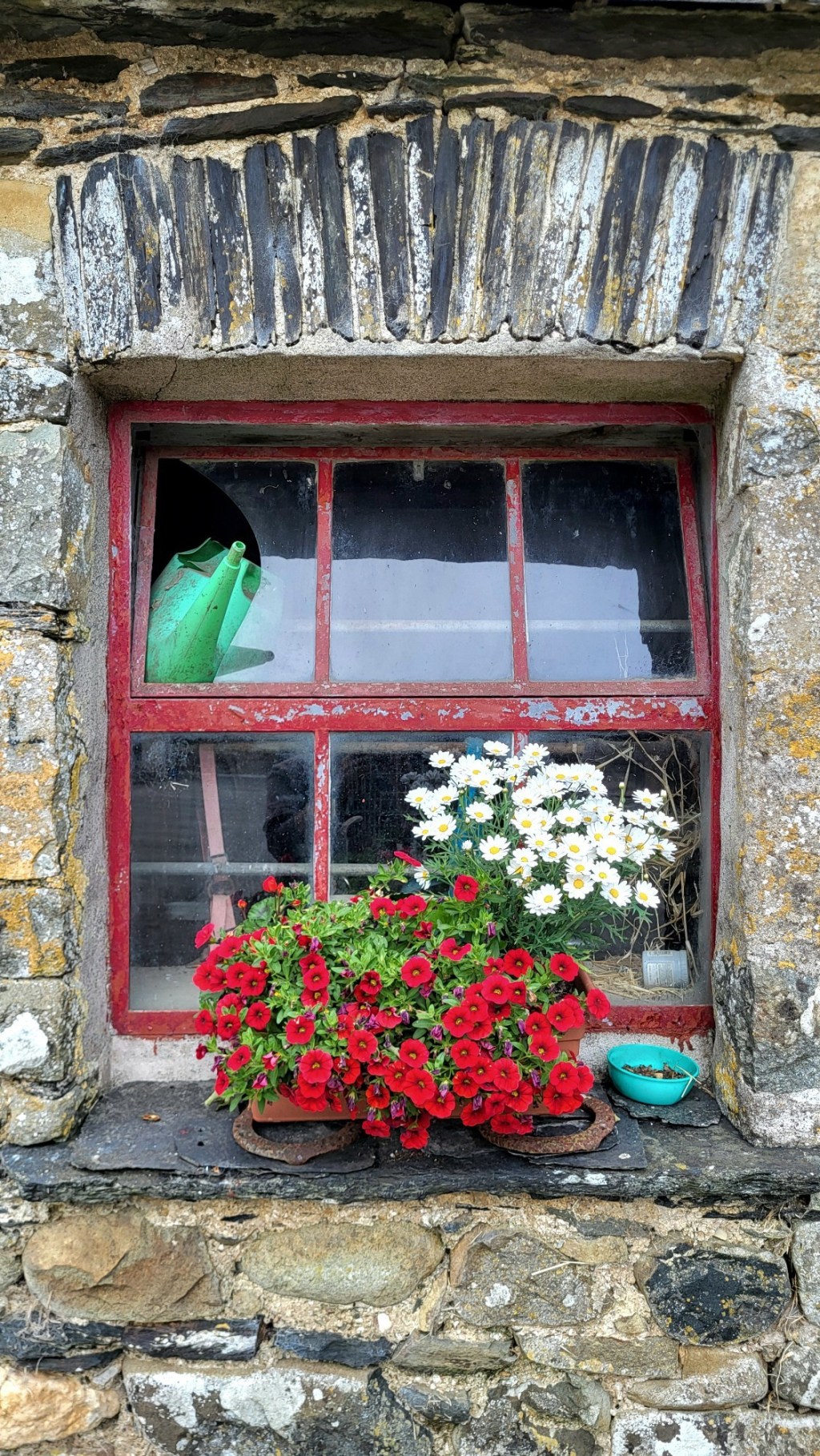
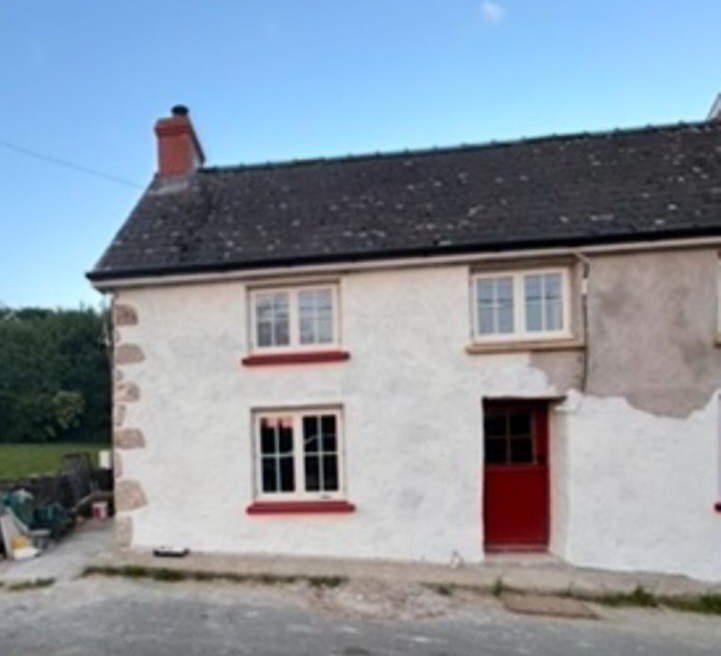
    Before
    Cottage, flowers
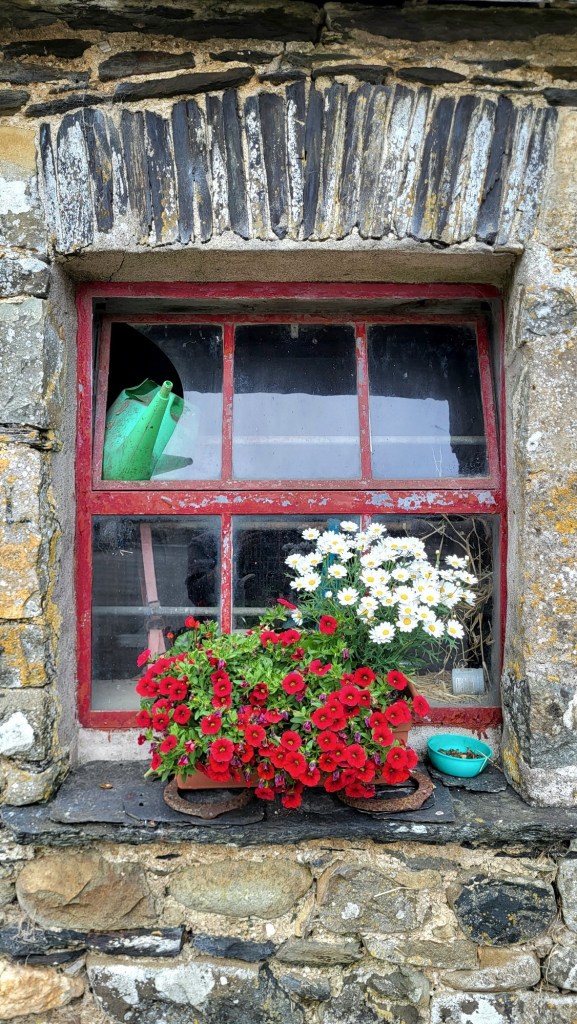
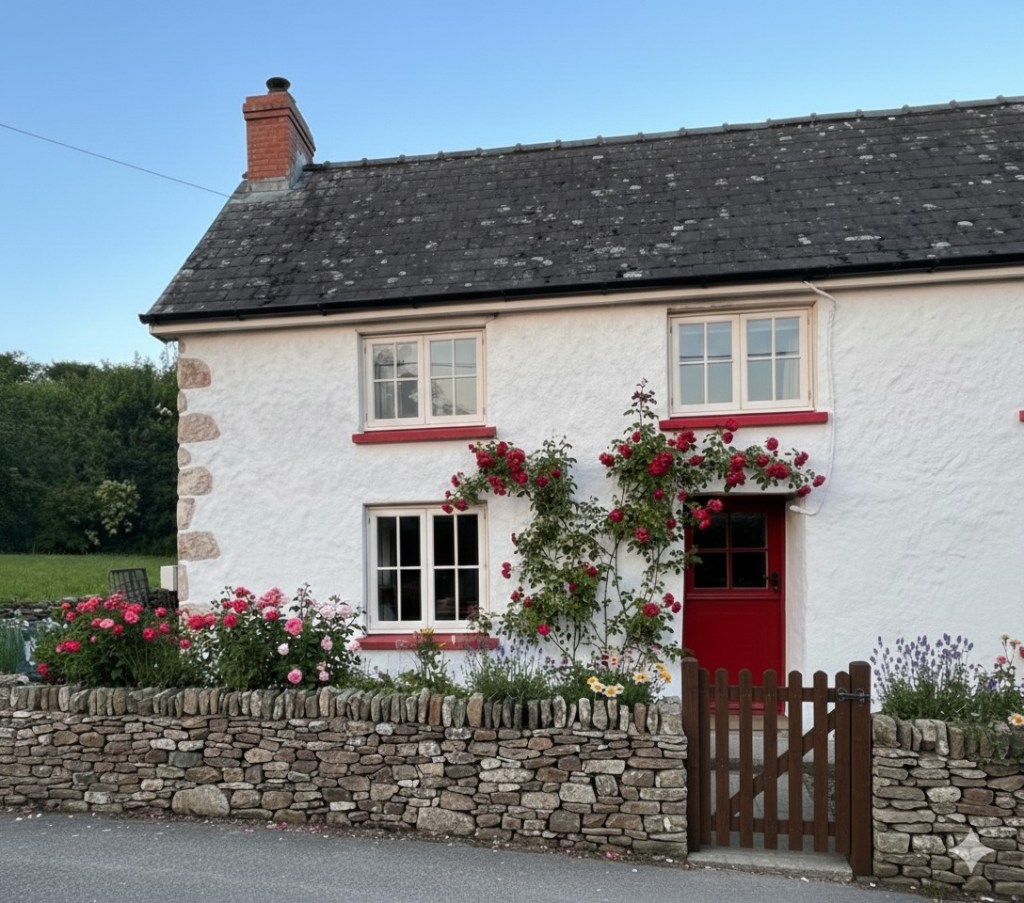
    After. It even improved the quality of the original photo!

    I’m a gardener, and I’m often asked to help people envision what their gardens could become. We’ll talk about plants, soil, and sunlight, but sometimes a customer wants to see the whole picture. They want to know what a finished project will look like, and I have to admit, that can be a real challenge. I can describe it, draw a sketch, or even show them pictures of similar gardens, but it’s never quite the same as seeing their own space transformed.
    Recently, one of my clients asked me to help them imagine their cottage with a low stone wall and climbing roses around the front door. They had a great vision, but they were hesitant to commit without a clearer idea of the final look. I knew I couldn’t just snap my fingers and make it happen, but then I remembered a new tool that could help me: generative AI.

    From a Picture to a Possibility.
    I took a photo of their house as it was then.  The house was a lovely old cottage, with a slightly unfinished look and some bare ground in the front. There was so much potential there! I uploaded the photo to an AI image generator and gave it a simple request: “Add a low stone wall with roses around the door.”

    I was amazed by the result. The AI took the original image and, in a matter of seconds, created a new one that showed exactly what my client had in mind. It added a beautiful, rustic stone wall, with lush roses climbing up the side of the house and around the red door.  The AI even “finished” painting the house and the red paint on the third windowsill, a detail I hadn’t even thought to request!

    This experience was a revelation. It wasn’t just about a one-time trick; it was about how AI can help us visualize and plan our projects more effectively. For me, as a gardener, this technology is a fantastic new tool. It helps me communicate ideas more clearly to my customers. I can show them what their garden will look like in the spring, summer, and fall, with different plants and features. It’s a way to remove the guesswork and help people feel more confident in their decisions.

    AI isn’t going to replace a good gardener. It can’t feel the soil, choose the right plant for a specific spot, or get its hands dirty. But it can be an incredibly useful partner, helping us to imagine and plan our projects in a way that wasn’t possible before. It’s a powerful tool that helps bridge the gap between imagination and reality, and for me, that’s incredibly exciting.


    If you find my photography or my writing inspiring and uplifting, consider supporting what I do. Buy me a coffee on Ko-fi.
    Your support makes a difference in my life and helps me create more of what you, and I, like. Thank you!
    Tap here for a list of 100 endangered animals and plants.

    100 endangered plant and animal species

    * Abies beshanzuensis (Baishan fir) – Plant (Tree) – Baishanzu Mountain, Zhejiang, China – Three mature individuals

    * Actinote zikani – Insect (butterfly) – Near São Paulo, Atlantic forest, Brazil – Unknown numbers

    * Aipysurus foliosquama (Leaf scaled sea-snake) – Reptile – Ashmore Reef and Hibernia Reef, Timor Sea – Unknown numbers * Amanipodagrion gilliesi (Amani flatwing) – Insect (damselfly) – Amani-Sigi Forest, Usamabara Mountains, Tanzania – < 500 individuals * Antisolabis seychellensis – Insect – Morne Blanc, Mahé island, Seychelles – Unknown numbers * Antilophia bokermanni (Araripe manakin) – Bird – Chapado do Araripe, South Ceará, Brazil – 779 individuals * Aphanius transgrediens (Aci Göl toothcarp) – Fish – south-eastern shore of former Lake Aci, Turkey – Few hundred pairs * Aproteles bulmerae (Bulmer’s fruit bat) – Mammal – Luplupwintern Cave, Western Province, Papua New Guinea – 150 * Ardea insignis (White bellied heron) – Bird – Bhutan, North East India and Myanmar – 70–400 individuals * Ardeotis nigriceps (Great Indian bustard) – Bird – Rajasthan, Gujarat, Maharashtra, Andhra Pradesh, Karnataka and Madhya, India – 50–249 mature individuals * Astrochelys yniphora (Ploughshare tortoise) – Reptile – Baly Bay region, northwestern Madagascar – 440–770 * Atelopus balios (Rio Pescado stubfoot toad) – Amphibian – Azuay, Cañar and Guyas provinces, south-western Ecuador – Unknown numbers * Aythya innotata (Madagascar pochard) – Bird – volcanic lakes north of Bealanana, Madagascar – 80 mature individuals * Azurina eupalama (Galapagos damsel fish) – Fish – Unknown numbers – Unknown numbers * Bahaba taipingensis (Giant yellow croaker) – Fish – Chinese coast from Yangtze River, China to Hong Kong – Unknown numbers * Batagur baska (Common batagur) – Reptile (turtle) – Bangladesh, Cambodia, India, Indonesia and Malaysia – Unknown numbers * Bazzania bhutanica – Plant – Budini and Lafeti Khola, Bhutan – 2 sub-populations * Beatragus hunteri (Hirola) – Mammal (antelope) – South-east Kenya and possibly south-west Somalia – < 1,000 individuals * Bombus franklini (Franklin’s bumblebee) – Insect (bee) – Oregon and California – Unknown numbers * Brachyteles hypoxanthus (Northern muriqui / Woolly spider monkey) – Mammal (primate) – Atlantic forest, south-eastern Brazil – < 1,000 * Bradypus pygmaeus (Pygmy three-toed sloth) – Mammal – Isla Escudo de Veraguas, Panama – < 500 * Callitriche pulchra – Plant (freshwater) – pool on Gavdos, Greece – Unknown numbers * Calumma tarzan (Tarzan’s chameleon) – Reptile – Anosibe An’Ala region, eastern Madagascar – < 100 * Cavia intermedia (Santa Catarina’s guinea pig) – Mammal (rodent) – Moleques do Sul Island, Santa Catarina, Brazil – 40–60 * Cercopithecus roloway (Roloway guenon) – Mammal (primate) – Côte d’Ivoire – Unknown numbers * Coleura seychellensis (Seychelles sheath-tailed bat) – Mammal (bat) – Two small caves on Silhouette and Mahé, Seychelles – < 100 * Cryptomyces maximus (Willow blister) – Fungi – Pembrokeshire, United Kingdom – Unknown numbers * Cryptotis nelsoni (Nelson’s small-eared shrew) – Mammal (shrew) – Volcán San Martín Tuxtla, Veracruz, Mexico – Unknown numbers * Cyclura collei (Jamaican iguana / Jamaican rock iguana) – Reptile – Hellshire Hills, Jamaica – Unknown numbers * Daubentonia madagascariensis (Aye-aye) – Mammal (primate) – Deciduous forest, East Madagascar – Unknown numbers * Dendrophylax fawcettii (Cayman Islands ghost orchid) – Plant (orchid) – Ironwood Forest, George Town, Grand Cayman – Unknown numbers * Dicerorhinus sumatrensis (Sumatran rhino) – Mammal (rhino) – Sabah, Sarawak and Peninsular Malaysia, Kalimantan and Sumatra, Indonesia – < 100 (more recent estimates suggest 34-47) * Diomedea amsterdamensis (Amsterdam albatross) – Bird – Breeds on Plateuau des Tourbières, Amsterdam Island, Indian Ocean. – 100 mature individuals * Dioscorea strydomiana (Wild yam) – Plant – Oshoek area, Mpumalanga, South Africa – 200 * Diospyros katendei – Plant (tree) – Kasyoha-Kitomi Forest Reserve, Uganda – 20 individuals in a single population * Dipterocarpus lamellatus – Plant (tree) – Siangau Forest Reserve, Sabah, Malaysia – 12 individuals * Discoglossus nigriventer (Hula painted frog) – Amphibian – Hula Valley, Israel – Unknown numbers * Dombeya mauritiana – Plant – Mauritius – Unknown numbers * Elaeocarpus bojeri (Bois Dentelle) – Plant (tree) – Grand Bassin, Mauritius – < 10 individuals * Eleutherodactylus glandulifer (La Hotte glanded frog) – Amphibian – Massif de la Hotte, Haiti – Unknown numbers * Eleutherodactylus thorectes (Macaya breast-spot frog) – Amphibian – Formon and Macaya peaks, Masif de la Hotte, Haiti – Unknown numbers * Eriosyce chilensis (Chilenito (cactus)) – Plant – Pta Molles and Pichidungui, Chile – < 500 individuals * Erythrina schliebenii (Coral tree) – Plant – Namatimbili-Ngarama Forest, Tanzania – < 50 individuals * Euphorbia tanaensis – Plant (tree) – Witu Forest Reserve, Kenya – 4 mature individuals * Eurynorhyncus pygmeus (Spoon-billed sandpiper) – Bird – Breeds in Russia, migrates along the East Asian-Australasian Flyway to wintering grounds in India, Bangladesh and Myanmar – 100 breeding pairs * Ficus katendei – Plant – Kasyoha-Kitomi Forest Reserve, Ishasha River, Uganda – < 50 mature individuals * Geronticus eremita (Northern bald ibis) – Bird – Breeds in Morocco, Turkey and Syria. Syrian population winters in central Ethiopia. – About 3000 individuals * Gigasiphon macrosiphon – Plant (flower) – Kaya Muhaka, Gongoni and Mrima Forest Reserves, Kenya, Amani Nature Reserve, West Kilombero Scarp Forest Reserve, and Kihansi Gorge, Tanzania – 33 * Gocea ohridana – Mollusc – Lake Ohrid, Macedonia – Unknown numbers * Heleophryne rosei (Table mountain ghost frog) – Amphibian – Table Mountain, Western Cape Province, South Africa – Unknown numbers * Hemicycla paeteliana – Mollusc (land snail) – Jandia peninsula, Fuerteventura, Canary Islands – Unknown numbers * Heteromirafa sidamoensis (Liben lark) – Bird – Liben Plains, southern Ethiopia – 90–256 * Hibiscadelphus woodii – Plant (tree) – Kalalau Valley, Hawaii – Unknown numbers * Hucho perryi (Sakhalin taimen) – Fish – Russian and Japanese rivers, Pacific Ocean between Russia and Japan – Unknown numbers * Johora singaporensis (Singapore freshwater crab) – Crustacean – Bukit Timah Nature Reserve and streamlet near Bukit Batok, Singapore – Unknown numbers * Lathyrus belinensis (Belin vetchling) – Plant – Outskirts of Belin village, Antalya, Turkey – < 1,000 * Leiopelma archeyi (Archey’s frog) – Amphibian – Coromandel peninsula and Whareorino Forest, New Zealand – Unknown numbers * Lithobates sevosus (Dusky gopher frog) – Amphibian – Harrison County, Mississippi, USA – 60–100 * Lophura edwardsi (Edwards’s pheasant) – Bird – Quang Binh, Quang Tri and Thua Thien-Hue, Viet Nam – Unknown numbers * Magnolia wolfii – Plant (tree) – Risaralda, Colombia – 3 * Margaritifera marocana – Mollusc – Oued Denna, Oued Abid and Oued Beth, Morocco – < 250 * Moominia willii – Mollusc (snail) – Silhouette Island, Seychelles – < 500 * Natalus primus (Cuban greater funnel eared bat) – Mammal (bat) – Cueva La Barca, Isle of Pines, Cuba – < 100 * Nepenthes attenboroughii (Attenborough’s pitcher plant) – Plant – Mount Victoria, Palawan, Philippines – Unknown numbers * Nomascus hainanus (Hainan black crested gibbon) – Mammal (primate) – Hainan Island, China – 20 * Neurergus kaiseri (Luristan newt) – Amphibian – Zagros Mountains, Lorestan, Iran – < 1,000 * Oreocnemis phoenix (Mulanje red damsel) – Insect (damselfly) – Mulanje Plateau, Malawi – Unknown numbers * Pangasius sanitwongsei (Pangasid catfish) – Fish – Chao Phraya and Mekong basins in Cambodia, China, Lao PDR, Thailand and Viet Nam – Unknown numbers * Parides burchellanus – Insect (butterfly) – Cerrado, Brazil – < 100 * Phocoena sinus (Vaquita) – Mammal (porpoise) – Northern Gulf of California, Mexico – 12 * Picea neoveitchii (Type of spruce tree) – Plant (tree) – Qinling Range, China – Unknown numbers * Pinus squamata (Qiaojia pine) – Plant (tree) – Qiaojia, Yunnan, China – < 25 * Poecilotheria metallica (Gooty tarantula / Metallic tarantula / Peacock tarantula / Salepurgu) – Spider – Nandyal and Giddalur, Andhra Pradesh, India – Unknown numbers * Pomarea whitneyi (Fatuhiva monarch) – Bird – Fatu Hiva, Marquesas Islands, French Polynesia – 50 * Pristis pristis (Common sawfish) – Fish – Coastal tropical and subtropical waters of Indo-Pacific and Atlantic Oceans. Currently largely restricted to northern Australia – Unknown numbers * Hapalemur simus (Greater bamboo lemur) – Mammal (primate) – Southeastern and southcentral rainforests of Madagascar – 500 * Propithecus candidus (Silky sifaka) – Mammal (primate) – Maroantsetra to Andapa basin, and Marojeju Massif, Madagascar – 100–1,000 * Psammobates geometricus (Geometric tortoise) – Reptile – Western Cape Province, South Africa – Unknown numbers * Pseudoryx nghetinhensis (Saola) – Mammal – Annamite mountains, on the Viet Nam – PDR Laos border – Unknown numbers * Psiadia cataractae – Plant – Mauritius – Unknown numbers * Psorodonotus ebneri (Beydaglari bush-cricket) – Insect – Beydaglari range, Antalaya, Turkey – Unknown numbers * Rafetus swinhoei (Red River giant softshell turtle) – Reptile – Hoan Kiem Lake and Dong Mo Lake, Viet Nam, and Suzhou Zoo, China – 3 * Rhinoceros sondaicus (Javan rhino) – Mammal (rhino) – Ujung Kulon National Park, Java, Indonesia – < 100 * Rhinopithecus avunculus (Tonkin snub-nosed monkey) – Mammal (primate) – Northeastern Vietnam – < 200 * Rhizanthella gardneri (West Australian underground orchid) – Plant (orchid) – Western Australia, Australia – < 100 * Rhynchocyon spp. (Boni giant sengi) – Mammal – Boni-Dodori Forest, Lamu area, Kenya – Unknown numbers * Risiocnemis seidenschwarzi (Cebu frill-wing) – Insect (damselfly) – Rivulet beside the Kawasan River, Cebu, Philippines – Unknown numbers * Rosa arabica – Plant – St Katherine Mountains, Egypt – Unknown numbers, 10 sub-populations * Salanoia durrelli (Durrell’s vontsira) – Mammal (mongoose) – Marshes of Lake Alaotra, Madagascar – Unknown numbers * Santamartamys rufodorsalis (Red crested tree rat) – Mammal (rodent) – Sierra Nevada de Santa Marta, Colombia – Unknown numbers * Scaturiginichthys vermeilipinnis (Red-finned blue-eye) – Fish – Edgbaston Station, central western Queensland, Australia – 2,000–4,000 * Squatina squatina (Angel shark) – Fish – Canary Islands – Unknown numbers * Sterna bernsteini (Chinese crested tern) – Bird – Breeding in Zhejiang and Fujian, China. Outside breeding season in Indonesia, Malaysia, Philippines, Taiwan, Thailand. – < 50 * Syngnathus watermeyeri (Estuarine pipefish) – Fish – Kariega Estuary to East Kleinemonde Estuary, Eastern Cape Province, South Africa – Unknown numbers * Tahina spectabilis (Suicide palm / Dimaka) – Plant – Analalava district, north-western Madagascar – 90 * Telmatobufo bullocki (Bullock’s false toad) – Amphibian (frog) – Nahuelbuta, Arauco Province, Chile – Unknown numbers * Tokudaia muenninki (Okinawa spiny rat) – Mammal (rodent) – Okinawa Island, Japan – Unknown numbers * Trigonostigma somphongsi (Somphongs’s rasbora) – Fish – Mae Khlong basin, Thailand – Unknown numbers * Valencia letourneuxi – Fish – Southern Albania and Western Greece – Unknown numbers * Voanioala gerardii (Forest coconut) – Plant – Masoala peninsula, Madagascar – < 10 * Zaglossus attenboroughi (Attenborough’s echidna) – Mammal – Cyclops Mountains, Papua Province, Indonesia – Unknown numbers

    Tap to view my redbubble gallery.
  • It was seen: It was known.

    It was seen: It was known.

    All things begin in the seeing. The rest is remembering.

    In the long-before days, when the ground was still figuring how to be solid and rivers ran too fast for names, the folk did not look at the little things. Eyes were for hunting, for storms, for shadow at the treeline. No one saw the ground’s small wonders.

    There were no flowers then—not as you know. Just roots, and scratch-grass, and bristleleaf. All of it colourless. Or maybe they had colour, but no one looked long enough to tell it.

    Then there was the girl.

    Or the man.

    Some say a child, nameless, with hands too small to carry much, who walked off from the path chasing a sound like a stone rolling in a cup. Others say it was a wanderer, the kind who forgets where they were going and finds things instead.

    The story turns crooked here.

    They came to a place in the stonewall hills, where the air smelled like nothing—neither smoke nor rain. And there it was. A patch of red, not blood, not berry. A strange redness, soft and open like it wanted to be seen.

    It was a flower, though the word hadn’t been made yet.

    They say the person sat. Just that. Sat and watched it.

    First hour passed like sap. Then another.

    Then more folk came, and the looking spread. One would stare and forget their hunger. Another would see and feel strange inside, like sorrow curling into sweetness. They started to speak of it, poorly. No one had the words. They tried things like “heart-leaf” or “glow-thing.” Nothing stuck.

    But then a child—perhaps the first child born after that day—called it flor, because the sounds were easy in the mouth, and no one argued.

    After that, the world began to bloom in places it hadn’t. It was not that flowers came, but that they were noticed, and in being noticed, they multiplied. That’s what the old women said, when they sat by their windows with the petal-pots.

    Not magic. Not god-work.

    Just the first time someone stopped, and looked, and didn’t want to leave.


    If you find my photography or my writing inspiring and uplifting, consider supporting what I do. Buy me a coffee on Ko-fi.
    Your support makes a difference in my life and helps me create more of what you, and I, like. Thank you!
    Tap here for a list of 100 endangered animals and plants.

    100 endangered plant and animal species

    * Abies beshanzuensis (Baishan fir) – Plant (Tree) – Baishanzu Mountain, Zhejiang, China – Three mature individuals

    * Actinote zikani – Insect (butterfly) – Near São Paulo, Atlantic forest, Brazil – Unknown numbers

    * Aipysurus foliosquama (Leaf scaled sea-snake) – Reptile – Ashmore Reef and Hibernia Reef, Timor Sea – Unknown numbers * Amanipodagrion gilliesi (Amani flatwing) – Insect (damselfly) – Amani-Sigi Forest, Usamabara Mountains, Tanzania – < 500 individuals * Antisolabis seychellensis – Insect – Morne Blanc, Mahé island, Seychelles – Unknown numbers * Antilophia bokermanni (Araripe manakin) – Bird – Chapado do Araripe, South Ceará, Brazil – 779 individuals * Aphanius transgrediens (Aci Göl toothcarp) – Fish – south-eastern shore of former Lake Aci, Turkey – Few hundred pairs * Aproteles bulmerae (Bulmer’s fruit bat) – Mammal – Luplupwintern Cave, Western Province, Papua New Guinea – 150 * Ardea insignis (White bellied heron) – Bird – Bhutan, North East India and Myanmar – 70–400 individuals * Ardeotis nigriceps (Great Indian bustard) – Bird – Rajasthan, Gujarat, Maharashtra, Andhra Pradesh, Karnataka and Madhya, India – 50–249 mature individuals * Astrochelys yniphora (Ploughshare tortoise) – Reptile – Baly Bay region, northwestern Madagascar – 440–770 * Atelopus balios (Rio Pescado stubfoot toad) – Amphibian – Azuay, Cañar and Guyas provinces, south-western Ecuador – Unknown numbers * Aythya innotata (Madagascar pochard) – Bird – volcanic lakes north of Bealanana, Madagascar – 80 mature individuals * Azurina eupalama (Galapagos damsel fish) – Fish – Unknown numbers – Unknown numbers * Bahaba taipingensis (Giant yellow croaker) – Fish – Chinese coast from Yangtze River, China to Hong Kong – Unknown numbers * Batagur baska (Common batagur) – Reptile (turtle) – Bangladesh, Cambodia, India, Indonesia and Malaysia – Unknown numbers * Bazzania bhutanica – Plant – Budini and Lafeti Khola, Bhutan – 2 sub-populations * Beatragus hunteri (Hirola) – Mammal (antelope) – South-east Kenya and possibly south-west Somalia – < 1,000 individuals * Bombus franklini (Franklin’s bumblebee) – Insect (bee) – Oregon and California – Unknown numbers * Brachyteles hypoxanthus (Northern muriqui / Woolly spider monkey) – Mammal (primate) – Atlantic forest, south-eastern Brazil – < 1,000 * Bradypus pygmaeus (Pygmy three-toed sloth) – Mammal – Isla Escudo de Veraguas, Panama – < 500 * Callitriche pulchra – Plant (freshwater) – pool on Gavdos, Greece – Unknown numbers * Calumma tarzan (Tarzan’s chameleon) – Reptile – Anosibe An’Ala region, eastern Madagascar – < 100 * Cavia intermedia (Santa Catarina’s guinea pig) – Mammal (rodent) – Moleques do Sul Island, Santa Catarina, Brazil – 40–60 * Cercopithecus roloway (Roloway guenon) – Mammal (primate) – Côte d’Ivoire – Unknown numbers * Coleura seychellensis (Seychelles sheath-tailed bat) – Mammal (bat) – Two small caves on Silhouette and Mahé, Seychelles – < 100 * Cryptomyces maximus (Willow blister) – Fungi – Pembrokeshire, United Kingdom – Unknown numbers * Cryptotis nelsoni (Nelson’s small-eared shrew) – Mammal (shrew) – Volcán San Martín Tuxtla, Veracruz, Mexico – Unknown numbers * Cyclura collei (Jamaican iguana / Jamaican rock iguana) – Reptile – Hellshire Hills, Jamaica – Unknown numbers * Daubentonia madagascariensis (Aye-aye) – Mammal (primate) – Deciduous forest, East Madagascar – Unknown numbers * Dendrophylax fawcettii (Cayman Islands ghost orchid) – Plant (orchid) – Ironwood Forest, George Town, Grand Cayman – Unknown numbers * Dicerorhinus sumatrensis (Sumatran rhino) – Mammal (rhino) – Sabah, Sarawak and Peninsular Malaysia, Kalimantan and Sumatra, Indonesia – < 100 (more recent estimates suggest 34-47) * Diomedea amsterdamensis (Amsterdam albatross) – Bird – Breeds on Plateuau des Tourbières, Amsterdam Island, Indian Ocean. – 100 mature individuals * Dioscorea strydomiana (Wild yam) – Plant – Oshoek area, Mpumalanga, South Africa – 200 * Diospyros katendei – Plant (tree) – Kasyoha-Kitomi Forest Reserve, Uganda – 20 individuals in a single population * Dipterocarpus lamellatus – Plant (tree) – Siangau Forest Reserve, Sabah, Malaysia – 12 individuals * Discoglossus nigriventer (Hula painted frog) – Amphibian – Hula Valley, Israel – Unknown numbers * Dombeya mauritiana – Plant – Mauritius – Unknown numbers * Elaeocarpus bojeri (Bois Dentelle) – Plant (tree) – Grand Bassin, Mauritius – < 10 individuals * Eleutherodactylus glandulifer (La Hotte glanded frog) – Amphibian – Massif de la Hotte, Haiti – Unknown numbers * Eleutherodactylus thorectes (Macaya breast-spot frog) – Amphibian – Formon and Macaya peaks, Masif de la Hotte, Haiti – Unknown numbers * Eriosyce chilensis (Chilenito (cactus)) – Plant – Pta Molles and Pichidungui, Chile – < 500 individuals * Erythrina schliebenii (Coral tree) – Plant – Namatimbili-Ngarama Forest, Tanzania – < 50 individuals * Euphorbia tanaensis – Plant (tree) – Witu Forest Reserve, Kenya – 4 mature individuals * Eurynorhyncus pygmeus (Spoon-billed sandpiper) – Bird – Breeds in Russia, migrates along the East Asian-Australasian Flyway to wintering grounds in India, Bangladesh and Myanmar – 100 breeding pairs * Ficus katendei – Plant – Kasyoha-Kitomi Forest Reserve, Ishasha River, Uganda – < 50 mature individuals * Geronticus eremita (Northern bald ibis) – Bird – Breeds in Morocco, Turkey and Syria. Syrian population winters in central Ethiopia. – About 3000 individuals * Gigasiphon macrosiphon – Plant (flower) – Kaya Muhaka, Gongoni and Mrima Forest Reserves, Kenya, Amani Nature Reserve, West Kilombero Scarp Forest Reserve, and Kihansi Gorge, Tanzania – 33 * Gocea ohridana – Mollusc – Lake Ohrid, Macedonia – Unknown numbers * Heleophryne rosei (Table mountain ghost frog) – Amphibian – Table Mountain, Western Cape Province, South Africa – Unknown numbers * Hemicycla paeteliana – Mollusc (land snail) – Jandia peninsula, Fuerteventura, Canary Islands – Unknown numbers * Heteromirafa sidamoensis (Liben lark) – Bird – Liben Plains, southern Ethiopia – 90–256 * Hibiscadelphus woodii – Plant (tree) – Kalalau Valley, Hawaii – Unknown numbers * Hucho perryi (Sakhalin taimen) – Fish – Russian and Japanese rivers, Pacific Ocean between Russia and Japan – Unknown numbers * Johora singaporensis (Singapore freshwater crab) – Crustacean – Bukit Timah Nature Reserve and streamlet near Bukit Batok, Singapore – Unknown numbers * Lathyrus belinensis (Belin vetchling) – Plant – Outskirts of Belin village, Antalya, Turkey – < 1,000 * Leiopelma archeyi (Archey’s frog) – Amphibian – Coromandel peninsula and Whareorino Forest, New Zealand – Unknown numbers * Lithobates sevosus (Dusky gopher frog) – Amphibian – Harrison County, Mississippi, USA – 60–100 * Lophura edwardsi (Edwards’s pheasant) – Bird – Quang Binh, Quang Tri and Thua Thien-Hue, Viet Nam – Unknown numbers * Magnolia wolfii – Plant (tree) – Risaralda, Colombia – 3 * Margaritifera marocana – Mollusc – Oued Denna, Oued Abid and Oued Beth, Morocco – < 250 * Moominia willii – Mollusc (snail) – Silhouette Island, Seychelles – < 500 * Natalus primus (Cuban greater funnel eared bat) – Mammal (bat) – Cueva La Barca, Isle of Pines, Cuba – < 100 * Nepenthes attenboroughii (Attenborough’s pitcher plant) – Plant – Mount Victoria, Palawan, Philippines – Unknown numbers * Nomascus hainanus (Hainan black crested gibbon) – Mammal (primate) – Hainan Island, China – 20 * Neurergus kaiseri (Luristan newt) – Amphibian – Zagros Mountains, Lorestan, Iran – < 1,000 * Oreocnemis phoenix (Mulanje red damsel) – Insect (damselfly) – Mulanje Plateau, Malawi – Unknown numbers * Pangasius sanitwongsei (Pangasid catfish) – Fish – Chao Phraya and Mekong basins in Cambodia, China, Lao PDR, Thailand and Viet Nam – Unknown numbers * Parides burchellanus – Insect (butterfly) – Cerrado, Brazil – < 100 * Phocoena sinus (Vaquita) – Mammal (porpoise) – Northern Gulf of California, Mexico – 12 * Picea neoveitchii (Type of spruce tree) – Plant (tree) – Qinling Range, China – Unknown numbers * Pinus squamata (Qiaojia pine) – Plant (tree) – Qiaojia, Yunnan, China – < 25 * Poecilotheria metallica (Gooty tarantula / Metallic tarantula / Peacock tarantula / Salepurgu) – Spider – Nandyal and Giddalur, Andhra Pradesh, India – Unknown numbers * Pomarea whitneyi (Fatuhiva monarch) – Bird – Fatu Hiva, Marquesas Islands, French Polynesia – 50 * Pristis pristis (Common sawfish) – Fish – Coastal tropical and subtropical waters of Indo-Pacific and Atlantic Oceans. Currently largely restricted to northern Australia – Unknown numbers * Hapalemur simus (Greater bamboo lemur) – Mammal (primate) – Southeastern and southcentral rainforests of Madagascar – 500 * Propithecus candidus (Silky sifaka) – Mammal (primate) – Maroantsetra to Andapa basin, and Marojeju Massif, Madagascar – 100–1,000 * Psammobates geometricus (Geometric tortoise) – Reptile – Western Cape Province, South Africa – Unknown numbers * Pseudoryx nghetinhensis (Saola) – Mammal – Annamite mountains, on the Viet Nam – PDR Laos border – Unknown numbers * Psiadia cataractae – Plant – Mauritius – Unknown numbers * Psorodonotus ebneri (Beydaglari bush-cricket) – Insect – Beydaglari range, Antalaya, Turkey – Unknown numbers * Rafetus swinhoei (Red River giant softshell turtle) – Reptile – Hoan Kiem Lake and Dong Mo Lake, Viet Nam, and Suzhou Zoo, China – 3 * Rhinoceros sondaicus (Javan rhino) – Mammal (rhino) – Ujung Kulon National Park, Java, Indonesia – < 100 * Rhinopithecus avunculus (Tonkin snub-nosed monkey) – Mammal (primate) – Northeastern Vietnam – < 200 * Rhizanthella gardneri (West Australian underground orchid) – Plant (orchid) – Western Australia, Australia – < 100 * Rhynchocyon spp. (Boni giant sengi) – Mammal – Boni-Dodori Forest, Lamu area, Kenya – Unknown numbers * Risiocnemis seidenschwarzi (Cebu frill-wing) – Insect (damselfly) – Rivulet beside the Kawasan River, Cebu, Philippines – Unknown numbers * Rosa arabica – Plant – St Katherine Mountains, Egypt – Unknown numbers, 10 sub-populations * Salanoia durrelli (Durrell’s vontsira) – Mammal (mongoose) – Marshes of Lake Alaotra, Madagascar – Unknown numbers * Santamartamys rufodorsalis (Red crested tree rat) – Mammal (rodent) – Sierra Nevada de Santa Marta, Colombia – Unknown numbers * Scaturiginichthys vermeilipinnis (Red-finned blue-eye) – Fish – Edgbaston Station, central western Queensland, Australia – 2,000–4,000 * Squatina squatina (Angel shark) – Fish – Canary Islands – Unknown numbers * Sterna bernsteini (Chinese crested tern) – Bird – Breeding in Zhejiang and Fujian, China. Outside breeding season in Indonesia, Malaysia, Philippines, Taiwan, Thailand. – < 50 * Syngnathus watermeyeri (Estuarine pipefish) – Fish – Kariega Estuary to East Kleinemonde Estuary, Eastern Cape Province, South Africa – Unknown numbers * Tahina spectabilis (Suicide palm / Dimaka) – Plant – Analalava district, north-western Madagascar – 90 * Telmatobufo bullocki (Bullock’s false toad) – Amphibian (frog) – Nahuelbuta, Arauco Province, Chile – Unknown numbers * Tokudaia muenninki (Okinawa spiny rat) – Mammal (rodent) – Okinawa Island, Japan – Unknown numbers * Trigonostigma somphongsi (Somphongs’s rasbora) – Fish – Mae Khlong basin, Thailand – Unknown numbers * Valencia letourneuxi – Fish – Southern Albania and Western Greece – Unknown numbers * Voanioala gerardii (Forest coconut) – Plant – Masoala peninsula, Madagascar – < 10 * Zaglossus attenboroughi (Attenborough’s echidna) – Mammal – Cyclops Mountains, Papua Province, Indonesia – Unknown numbers

    Tap to view my redbubble gallery.
  • A Meditation on Bluebells and Beech Leaves

    A Meditation on Bluebells and Beech Leaves

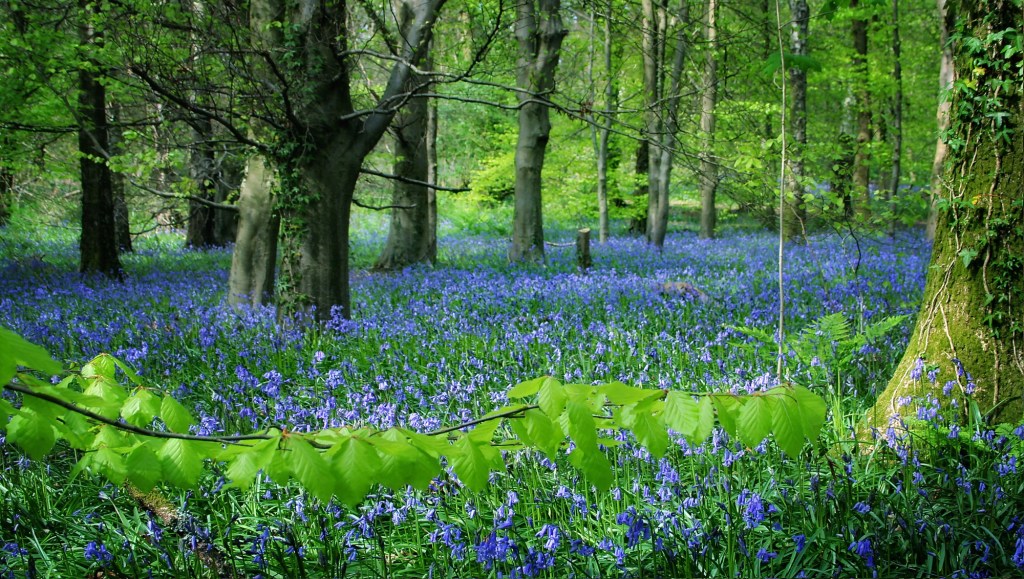
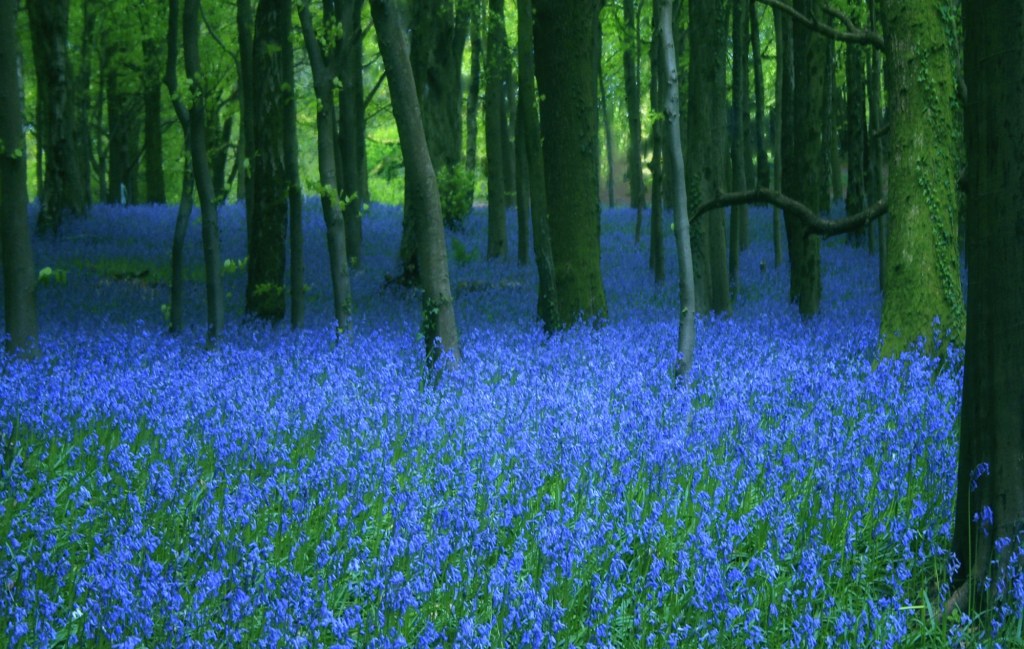
    In this sweet season when the year unfolds its tender promise, when Nature, stirring from her wintry sleep, adorns the woodlands with her gentlest hues, I wander aimlessly along pathways where the bluebells keep their soft silent vigil.

    Bluebells


    How fair these azure bells that bow their heads in modest splendor! They carpet the ancient forest floor as a sea of heavenly blue, each delicate bloom trembling with the faintest breath of wind. Each one a miracle of divine craftsmanship yet humble in its transient glory.

    I have looked upon the lapis gardens of noble estates and witnessed the ultramarine depths of mountain lakes, yet never do I find such perfection of shade as in these humble woodland flowers. They are not mere terrestrial blooms but seem messengers from the empyrean realm, bringing down to earth fragments of the firmamental blue that arches high above our temporal dwelling. Their celestial tint speaks to something eternal in the human breast—a recognition of beauty that transcends our brief existence.

    And there in the shadowed wood, the beech trees offer up their fresh young leaves, translucent as finest parchment when held against the vernal sun. How tender is their green! How perfect each unfolding leaf, emerging from its winter bud with a slow and patient certainty that speaks of quiet confidence in renewal. These infant leaves, untouched by summer’s hardening rays or autumn’s gilding hand, possess a purity of essence that stirs within the contemplative mind a sense of wonder at creation’s ceaseless cycle.

    What blessed communion exists between the bluebell’s heaven-reflecting hue and the beech leaf’s innocent green! Together they form a harmony that no earthly musician could compose, a visual poetry that transcends the feeble efforts of human verse. In their glowing presence, my soul, so often clouded by the vapors of worldly care, finds refreshment and illumination, as if some divine voice speaks through these simple woodland treasures, reminding me of truths profound yet easily forgotten in the tumult of our busy days.

    Bluebells

    My other bluebell blogs: My Elusive Dream, Dawn Unveils.


    If you find my photography or my writing inspiring and uplifting, consider supporting what I do. Buy me a coffee on Ko-fi.
    Your support makes a difference in my life and helps me create more of what you, and I, like. Thank you!
    Tap to view my redbubble gallery.
  • Chrysanthemum Art

    Chrysanthemum Art

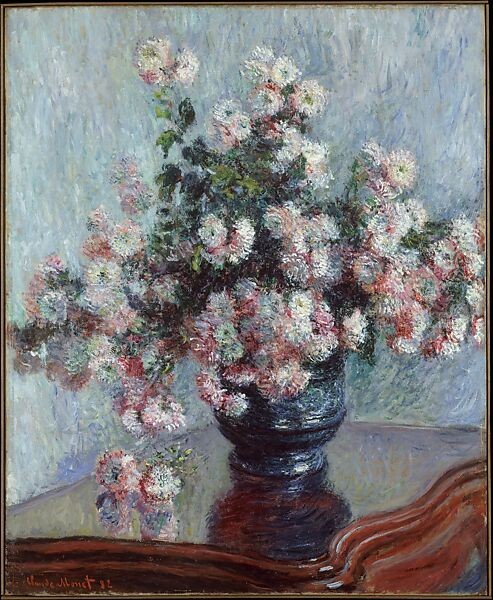
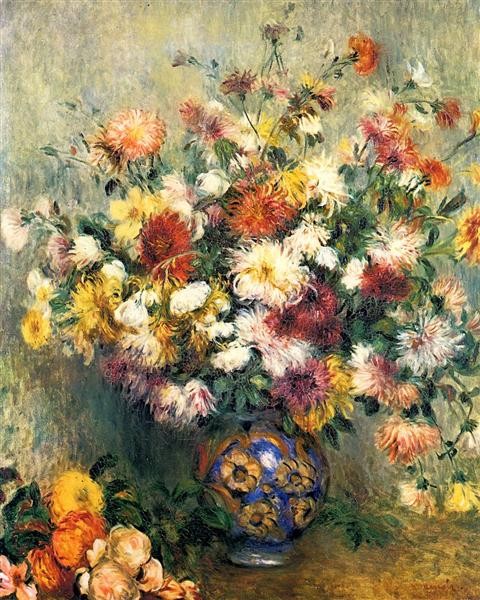
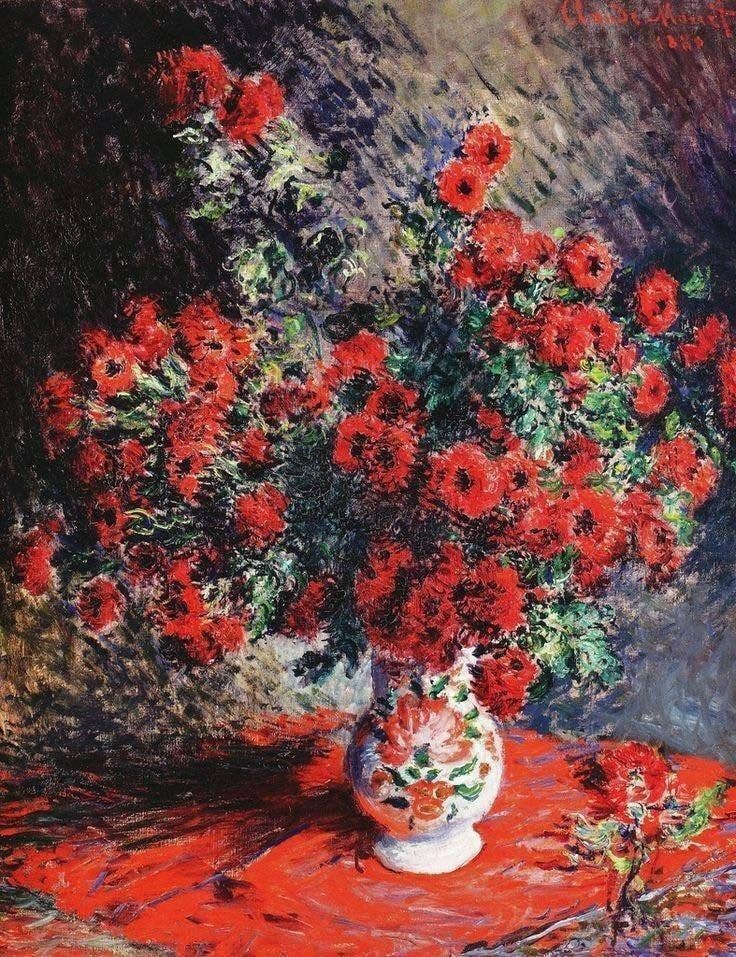
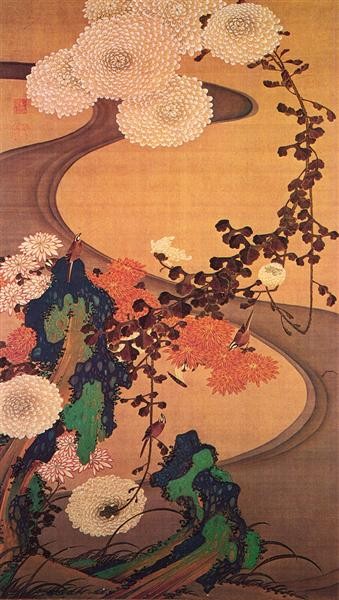
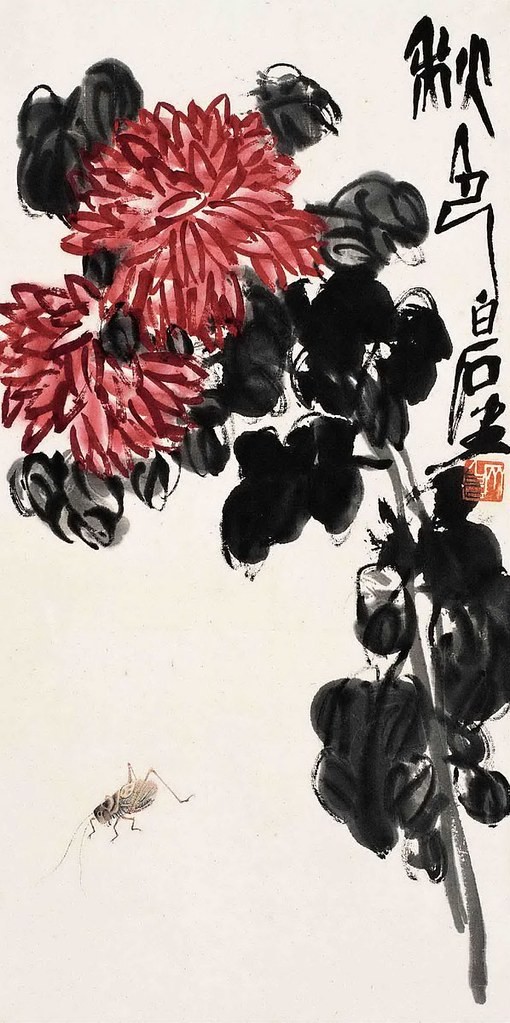
    Chrysanthemums have been a popular subject in art for centuries, celebrated for their beauty and symbolism. Here are some famous paintings and artistic works featuring chrysanthemums:

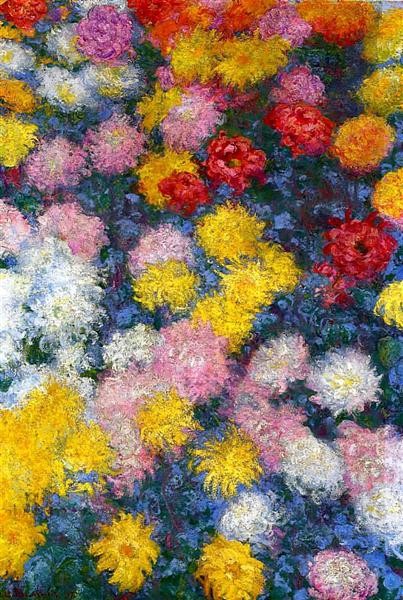
    Chrysanthemum

    Claude Monet

    Monet, the French Impressionist master, painted several works featuring chrysanthemums. In his characteristic style, he captures their vibrant colors and delicate textures, showcasing their charm. His painting “Chrysanthemums” is a striking example of how Impressionists used light and color to bring flowers to life.

    Pierre-Auguste Renoir

    Renoir, another Impressionist, was also captivated by chrysanthemums. His painting “Chrysanthemums” features a vase overflowing with the blooms, emphasizing their lushness and intricate forms. Renoir’s brushwork highlights the flowers’ natural beauty.

    Van Gogh

    While Van Gogh is most famous for his sunflowers, he also painted chrysanthemums. His still-life works featuring these flowers reflect his love of vibrant colors and his ability to imbue still objects with emotional depth.

    Ito Jakuchu

    Ito Jakuchu, a Japanese Edo-period artist, created intricate and vibrant scrolls of chrysanthemums. His work reflects the flower’s importance in Japanese culture and combines realism with a sense of spiritual elegance.

    Qi Baishi

    Qi Baishi, a master of traditional Chinese painting, often depicted chrysanthemums in his works. Using expressive brushstrokes and ink washes, he captured their essence with simplicity and depth.


    If you find this content inspiring and uplifting, consider supporting what I do. Buy me a coffee on Ko-fi.
    Your support makes a difference in my life and helps me create more of what you, and I, like. Thank you!
    Tap to view my redbubble gallery.
  • Unseen blossoms bloom

    Unseen blossoms bloom

    Unseen blossoms bloom,
    In the corners of my mind,
    Silent refuge found.

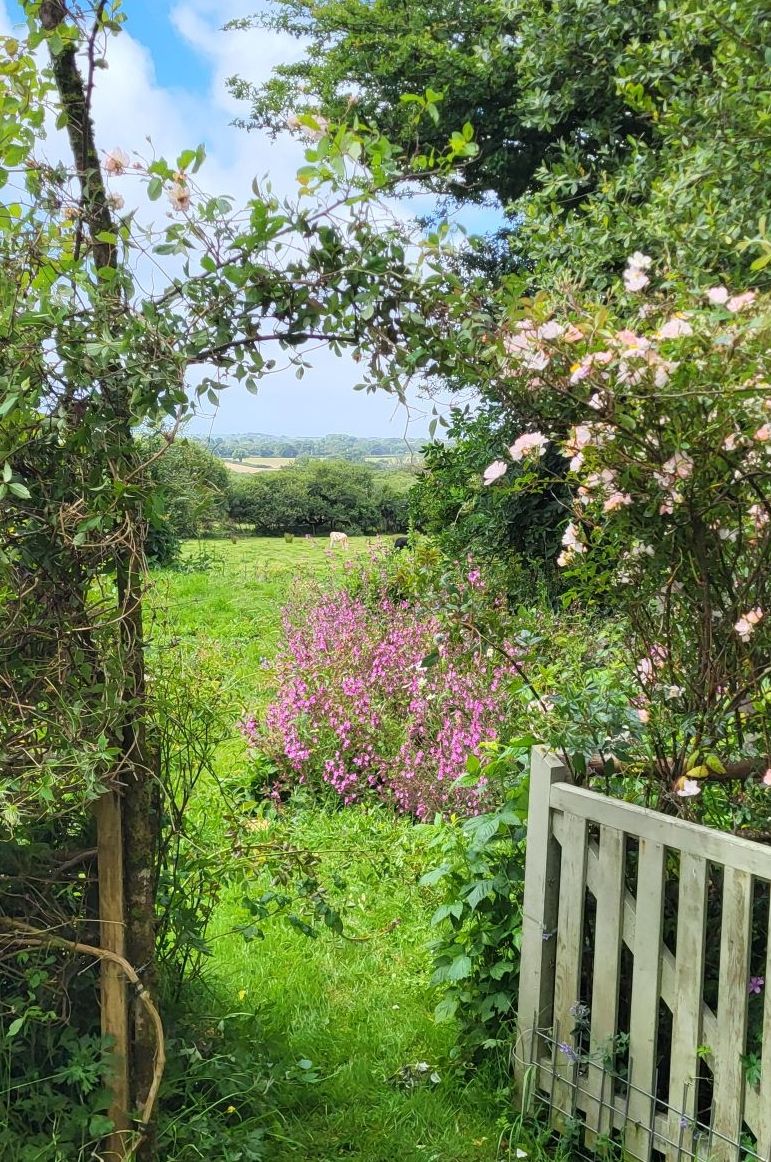
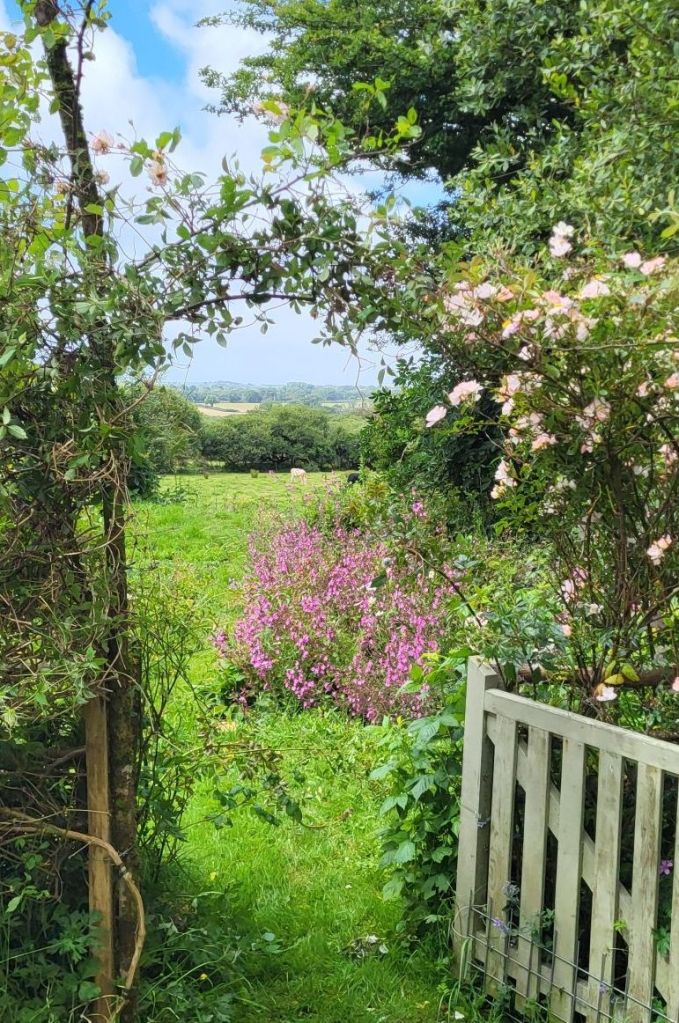
    Open the gate

    There is a garden somewhere, always just out of reach, a flicker at the edge of my vision, a scent that lingers like a memory, where the flowers are thoughts and the trees, they grow dreams, or maybe it’s all a mirage, a trick of the light, something my mind conjures up to escape the monotony, the dull hum of daily life. Sometimes, in the quiet moments, I think I hear it, the soft rustle of leaves in a breeze that carries the whisper of forgotten hopes. Is it real? Or just a fragment of my imagination, a place where everything makes sense, where the chaos of the world is filtered through petals and roots?

    I picture the paths, winding and narrow, leading me deeper into the labyrinth of my own psyche, each step a journey inward. The sun filters through a canopy of thoughts, dappling the ground with patches of clarity and confusion, and I wander, seeking something I can never quite grasp. There are benches there, I think, places to rest and ponder, but every time I sit, the thoughts come rushing, swirling like autumn leaves caught in a sudden gust. The garden grows, morphs, with every beat of my heart, every pulse of my brain. Flowers bloom with ideas I can’t quite articulate, and the air is thick with potential, like the moment before a storm when the world holds its breath.

    I wonder if others have a garden like mine, hidden in the folds of their consciousness, a secret refuge from the tangible and the mundane. Do their gardens burst with color and life, or are they barren, desolate landscapes, echoes of their fears and regrets? Sometimes I see people there, shadowy figures moving among the greenery, their faces blurred and indistinct. Are they visitors, like me, or are they part of the garden itself, manifestations of my deepest thoughts and emotions?

    Time doesn’t move the same way in this place. Minutes stretch into hours, or maybe it’s the other way around. I lose myself in the rhythm of the garden, the way the flowers sway and the leaves shimmer, and I forget about the world outside, the deadlines, the noise, the never-ending rush. Here, in this elusive space, I find a piece of myself that I didn’t know was missing, a tranquility that feels both alien and familiar.

    There is a garden somewhere, and though I can’t always find it, I know it’s there, waiting, a silent sanctuary in the chaos of existence. And maybe that’s enough, just knowing it’s there, just knowing that in some hidden corner of my mind, a garden grows, wild and untamed, proof of the power of dreams and the value of hope.

    Tap to view my redbubble gallery.
  • 🌸Take a Moment🌸

    🌸Take a Moment🌸

    As in William Wordsworth’s timeless verse, I found myself wandering through the vast expanse of my thoughts. Just as the poet mused upon a solitary cloud drifting aimlessly, I too ponder the intricacies of life and nature.

    In each petal, life,
    🌸Courage rises from the soil,🌸
    In each bloom, a sigh

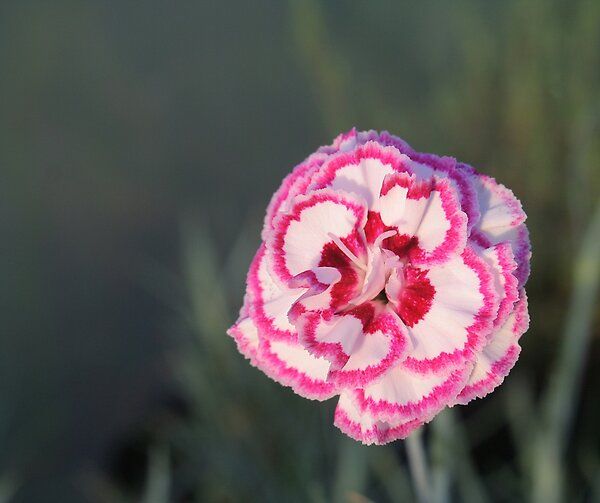
    Flowers – these unexpected bursts of colour and fragrance, have captivated humanity since the dawn of time. We find ourselves drawn to their delicate forms, their vibrant hues that seem to defy the boundaries of the natural world. Perhaps it is their fleeting existence that gives them such power. They are a poignant reminder of the relentless cycle of life, death, and rebirth, blooming with an energy that seems to defy their inevitable wilt.

    Is it the velvety caress of a rose petal, the intricacy of stamen and pistil in a lily, or the heady perfume of a jasmine vine that speaks to our soul? Or is it something deeper, a connection to a forgotten past, a memory of Eden etched into our collective unconscious?

    Take a moment, dear reader, to pause in your hurried existence. Let your gaze linger on the beauty of a floral arrangement. Inhale the subtle perfume.  Allow yourself to be transported to a realm of tranquillity, a space where worries dissipate and the simple beauty of existence takes centre stage.

    What whispers do the flowers share with you? What resonates within your soul when you behold their fleeting splendour? Share your thoughts in the comments below, let us delve together into the allure of flowers. If you feel, write a blog and leave a link.


    If you find this content inspiring and uplifting, consider supporting what I do. Buy me a coffee on Ko-fi.
    Your support makes a difference in my life and helps me create more of what you like. Thank you!
    Tap to view my redbubble gallery.
  • My Elusive Dream

    My Elusive Dream

    Through ancient paths, seekers stray,
    Amidst the woods, where my dreams lay.
    With every step, anticipation looms,
    Lost in wonder, pure magic blooms.

    Anthony
    Bluebells and ferns

    For weeks, I’d been on the hunt. The elusive bluebell woods, whispered about in hushed tones by fellow nature enthusiasts, had become my personal grail. Everywhere I turned, the internet boasted photos of these magical glades, carpeted in a mesmerising sea of blue. The dream? To capture that scene myself, a vision of sapphire and emerald.

    The hunt, however, proved frustrating. One lead sent me down an old muddy farm track where I met a grumpy old muddy farmer. The fleeting window of the bluebell bloom was narrowing, and a sliver of worry began to gnaw at my resolve. Each failed expedition chipped away at my optimism, leaving me with nothing but wellies caked in mud and a knapsack full of disappointment.

    Then, on a whim, I decided to explore a barely-there track on the edge of a sleepy village. The rusty gate, its paint peeling like sunburnt skin, its ancient latch, which yielded with a satisfying groan, marked the entrance. Anticipation intensified, the air itself held the sweet promise of spring.

    Sunlight, which filtered through the ancient beech tree canopy, dappled the path ahead. Decomposing leaves crunched underfoot, their earthy scent mingling with the fresh, green perfume of emerging life. Primroses peeked out shyly, tendrils of ivy, like scrawny fingers, reached out from the gnarled trunks, and jewel-toned flies buzzed lazily past, their iridescent wings catching the fragmented light.

    The first hint of blue came not from a flower, but a flash of a blue tit flitting amongst the branches. It was a prelude, a tease of the main act.

    And then, there it was.

    Bluebells and beeches

    A gasp escaped my lips. The woodland floor wasn’t carpeted, it was engulfed in a breathtaking sea of bluebells. Their delicate, bell-shaped blooms swayed gently in the afternoon breeze, the blue contrasting effortlessly with the verdant young beech leaves. In that moment, my world seemed to shrink to this small glade, all my worries and anxieties melting away.

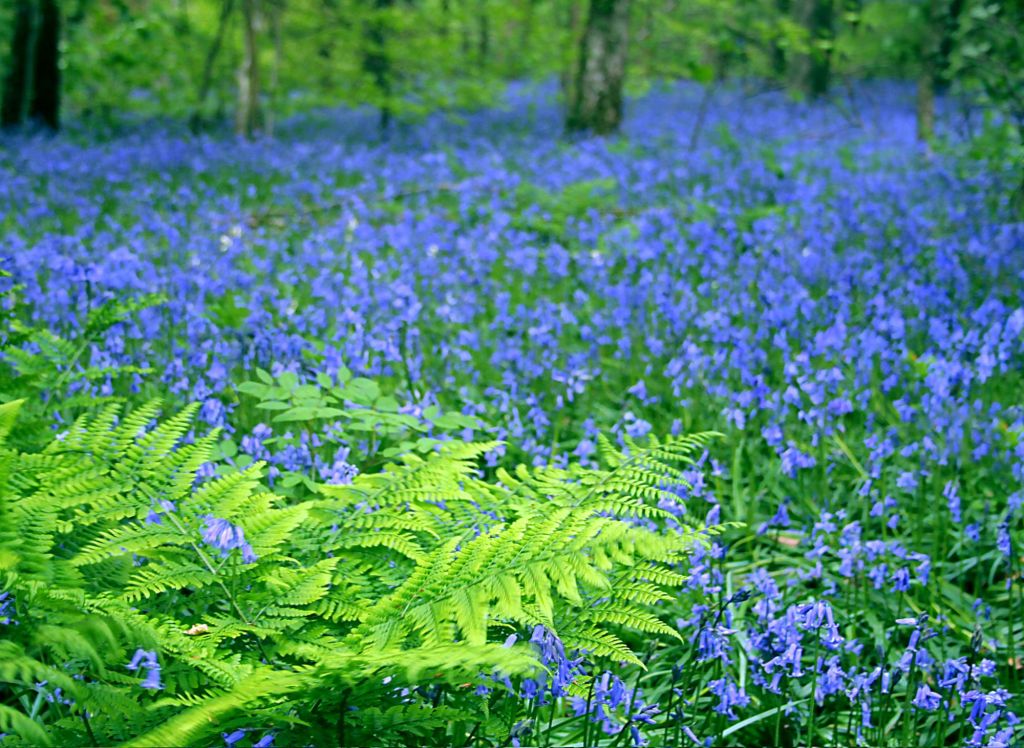
    Beside this breathtaking display, another patch of magic unfolded. Lush green ferns, unfurling their delicate fronds, created a textural contrast with the smooth bluebells. This wasn’t just a carpet of colour, it was a living, breathing artwork, a masterwork of nature.

    My frustrations melted away entirely, replaced by a profound sense of wonder. Here, in this hidden haven, I had found not just a breathtaking scene to capture, but a moment of pure, unadulterated joy. I suppose the photographs were a reason to search, but being here is what I really wanted. The elusive bluebells had revealed their secret, they had gifted me a memory that would forever be etched in my heart.

    Tap to view my redbubble gallery.
  • Midnight Performance: Video of cactus flower opening

    Midnight Performance: Video of cactus flower opening

    I’m so pleased with how this turned out.
    Tap to watch the video

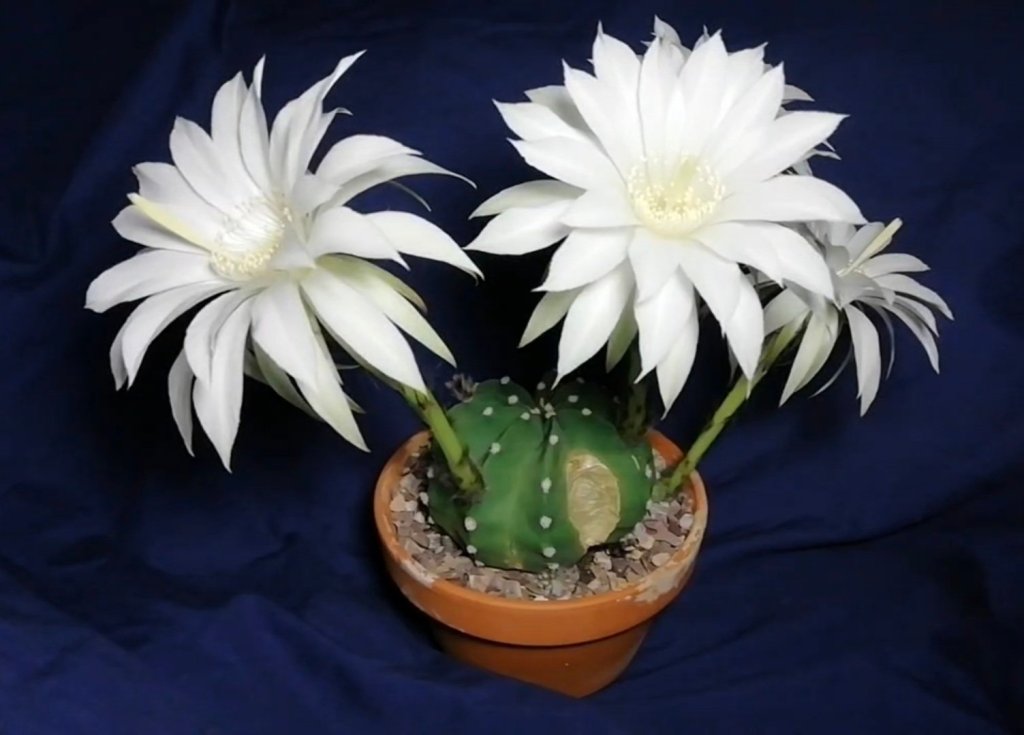
    So, I’ve been growing cactus (or is it cacti?) for a while now, and I’ve always been fascinated by their unique blooms. One of my favourite cacti to grow is the Echinopsis subdenudata, also known as the Easter Lily cactus. This cactus produces large (up to 4in or 11 cm across), white flowers with a beautiful scent that usually open at midnight and are fading by midday.

    Echinopsis subdenudata.

    I was determined to capture the magical moment when one of mine opened. I decided to use my phone to record the process using the app Stop Motion Studio.

    The night before, I saw the flower was bursting to open.I set up my phone on a tripod and positioned it right next to the cactus. I then opened the Stop Motion Studio app and set it to take photos of the flower every few seconds. I left the phone on all night, so I could capture the flower as it slowly unfurled.

    The next morning, I was excited to check my footage. I was amazed to see how clearly the app had captured the entire process of the flower opening. The video is only 11 seconds long, and, as you can see, it shows the flower unfolding its petals until it is fully open.

    I was so happy with the results of my experiment. I was able to capture a beautiful and unique natural phenomenon that I could share with others. If you’re interested in trying this yourself, I highly recommend it.

    The Echinopsis subdenudata is a large, barrel-shaped cactus that is native to the Andes Mountains of South America. It can grow up to 3 feet tall and produces large, white flowers. These blooms open at night, attracting nocturnal pollinators such as hawkmoths and sphinx moths. The flowers have a beautiful scent that is similar to jasmine (they fill my greenhouse when they open).

    Echinopsis subdenudata is a popular houseplant because it is relatively easy to care for. It can be grown in a pot or container with well-draining soil. It should be watered infrequently, and it should be given plenty of sunlight. I think the secret of making it flower is not to water it at all through the winter.

    If you’re looking for a cactus that will reward you with beautiful flowers, the Echinopsis subdenudata is a great choice.

    Tap to view my redbubble gallery.
  • Sasha and the Enchanted Rose Garden

    Sasha and the Enchanted Rose Garden

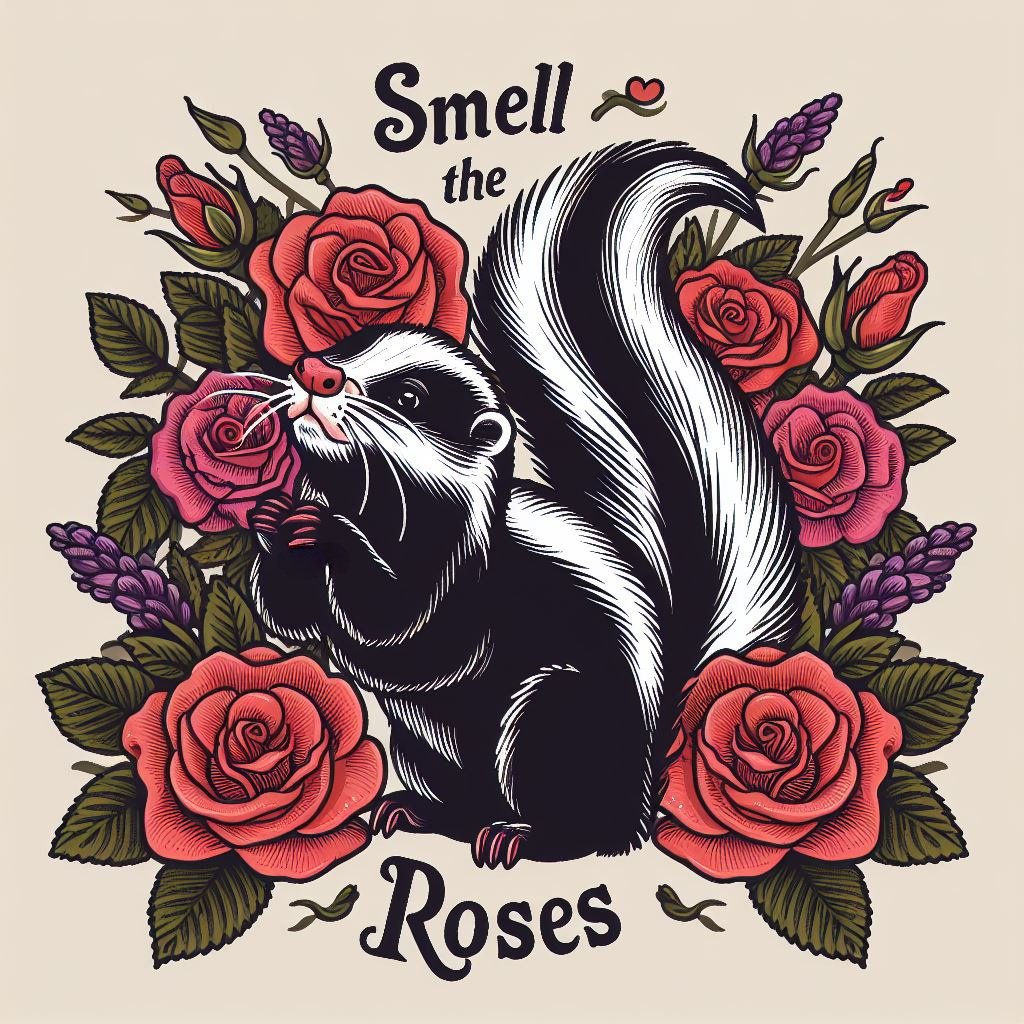
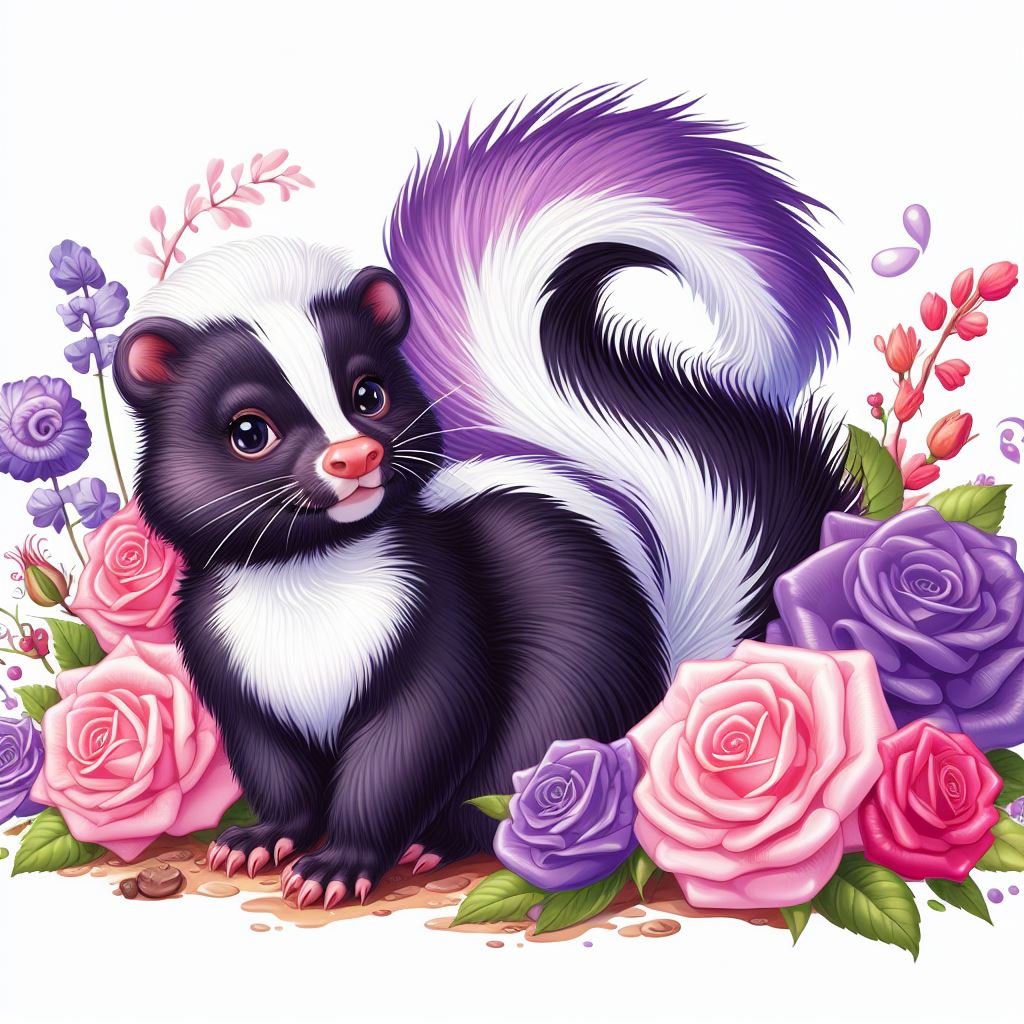
    In a forest where everything was black and white, there lived a kind-hearted skunk named Sasha. Unlike her monochromatic friends, Sasha longed to experience the beauty of colours. While her skunk companions were content with their grey surroundings, Sasha had a deep desire to find a world filled with vibrant hues.

    Sasha’s friends often teased her, saying, “Why do you want to see colours, Sasha? Everything is just fine in black and white!” But Sasha remained determined. She believed in the magic of colours, and she had a secret that her friends couldn’t understand.

    One sunny morning, Sasha decided to embark on a journey deeper into the forest. She had heard whispers about a wondrous place called the Enchanted Rose Garden, rumoured to be hidden far beyond the tallest trees. With hope in her heart and a sparkle in her eyes, Sasha began her quest to find the colours she longed for.

    As Sasha ventured further into the forest, she encountered various animals and creatures who cautioned her about the perils of the unknown. “Beware, Sasha,” advised a wise old owl, “The path ahead is full of challenges, but your love for colours will guide you.”

    Sasha continued her journey with determination, and as she progressed, she noticed the forest becoming increasingly enchanted. Trees transformed into towering rosebushes, and the air became filled with the sweet scent of roses. At last, she arrived at the legendary Rose Garden.

    Tap to view my redbubble gallery.

    The garden was an extraordinary sight. Gigantic, colourful roses bloomed in every shade imaginable. Sasha felt like she had stepped into a magical painting. She began to dance among the roses, and as she twirled, something remarkable happened. Colours burst forth, and her world was transformed from black and white to a dazzling rainbow and her tail was transformed into the most beautiful shade of purple!

    Sasha realised that her determination to change had brought her the very thing she had always dreamed of. The garden was a place of pure enchantment and joy. Sasha’s friends, who had once teased her, were astounded by her newfound colourful appearance and the magical garden she had found.

    From that day on, Sasha was known as the Colourful Queen, and her friends couldn’t get enough of her newfound vibrant beauty. They all joined her in the Enchanted Rose Garden, where they too experienced the wonder of a world filled with colour.

    And so, Sasha the Skunk lived happily ever after in her Enchanted Rose Garden, proving that sometimes it’s the things that make us different that lead us to the most extraordinary discoveries. The end.

    Tap to view my redbubble gallery.
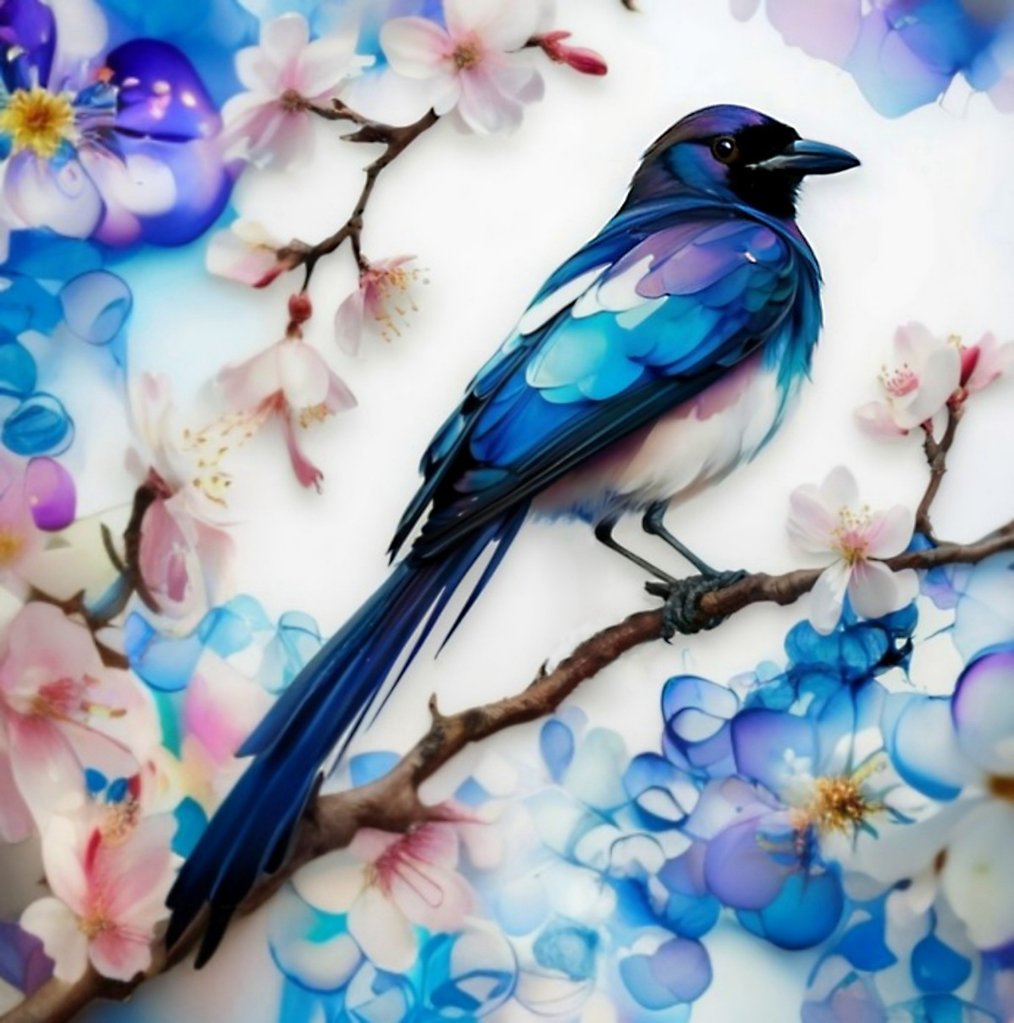
  • Magpies. The Bird of Many Meanings

    Magpies. The Bird of Many Meanings

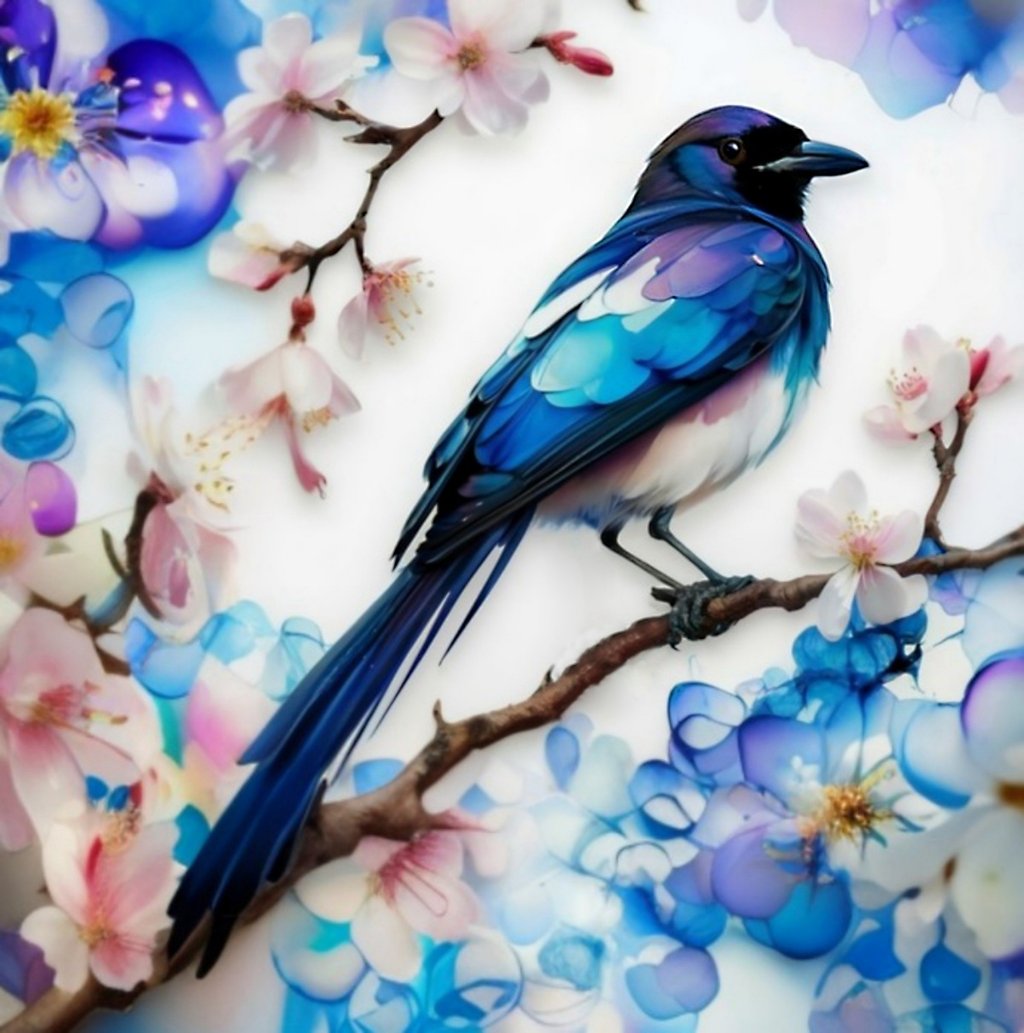
    Magpies are fascinating birds that have inspired many myths and legends around the world. Here are some examples of stories about magpies from different cultures:

    Tap to view my redbubble gallery.

    In China, Korea, and Japan, magpies are considered to be auspicious birds that bring good luck and happiness. They are associated with the Qixi Festival, also known as the Chinese Valentine’s Day, which celebrates the annual meeting of two lovers, Zhinü and Niulang, who are separated by the Milky Way. According to the legend, a flock of magpies forms a bridge across the sky to allow the lovers to reunite once a year.

    In Britain, magpies are often seen as omens of bad luck or death, especially if seen alone. There is a well-known rhyme that predicts one’s fortune based on the number of magpies seen: “One for sorrow, two for joy, three for a girl, four for a boy, five for silver, six for gold, seven for a secret never to be told.” Some people believe that greeting a lone magpie or saluting it can ward off the bad luck.

    In Celtic lore, the magpie was a bird associated with fairy revels; with the spread of Christianity, however, this changed to a connection with witches and devils. In Scandinavia, magpies were said to be sorcerers flying to unholy gatherings, and yet the nesting magpie was once considered a sign of luck in those countries. In France, magpies were believed to be able to foretell the weather and the future.

    In Native American cultures, magpies had various meanings and roles. Some tribes of Native Americans believed that wearing a magpie feather was a sign of fearlessness, while others considered the magpie to be a sacred messenger of the creator, or even a guardian with shamanic abilities. In some legends, the magpie helped the coyote, the trickster, to create the world or to steal fire from the gods.

    These are just some of the many stories and beliefs that people have about magpies. Magpies are truly remarkable birds that have captured the imagination of humans for centuries.

    Tap to view my redbubble gallery.
Design a site like this with WordPress.com
Get started