A dimly lit, cavernous room filled with a hum of forgotten technology. The walls are adorned with corroded panels and remnants of old agricultural tools, now museum pieces.
In the center, a flickering hologram of a weathered farmer in overalls and a straw hat stands tall, with a soft blue glow. The figure’s voice is calm yet sorrowful, echoing in the hollow space. Surrounding the hologram are silent spectators, young faces illuminated by its ghostly light, their clothes sleek and utilitarian, suggesting a world of automation and detachment from nature.
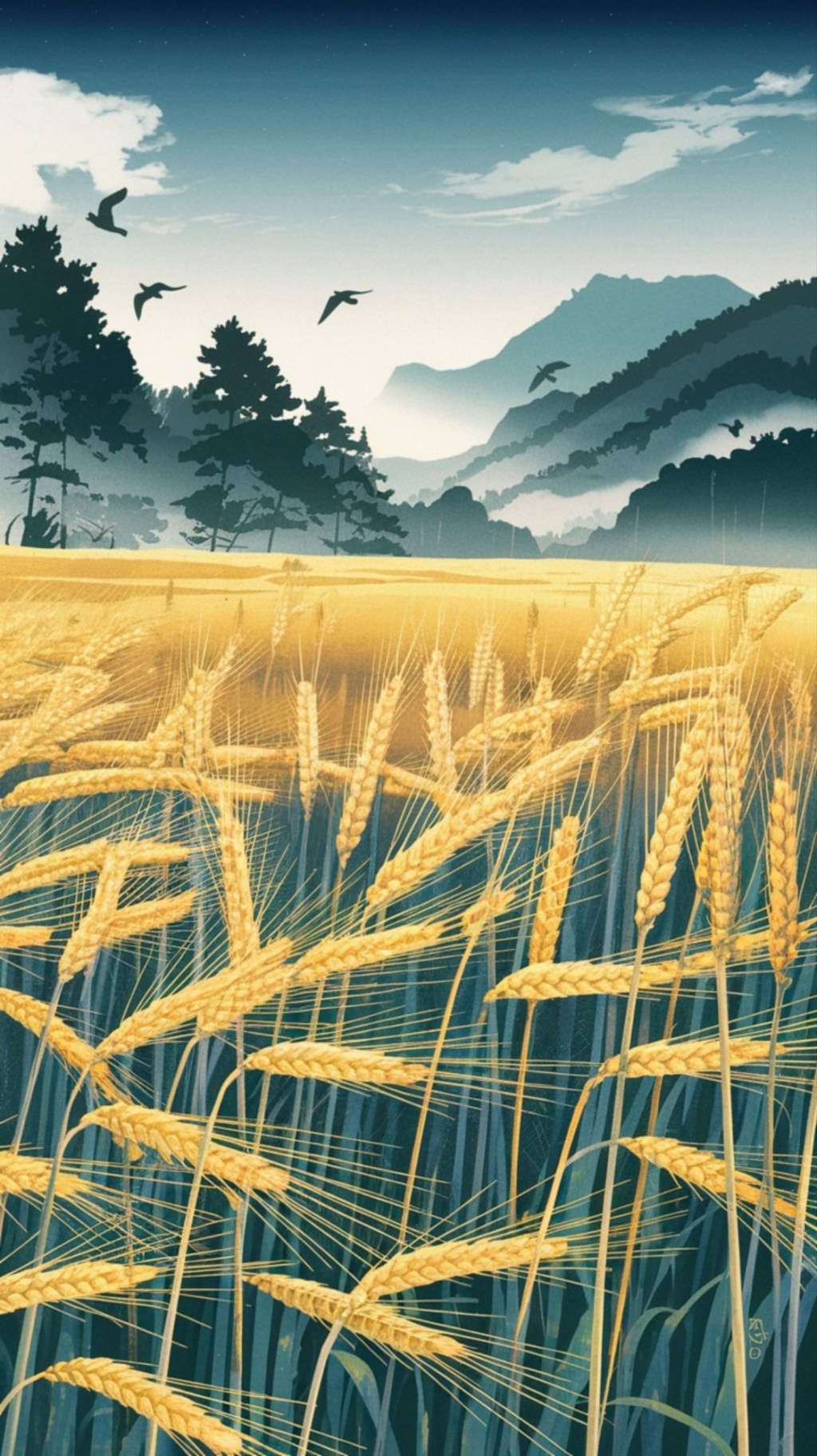
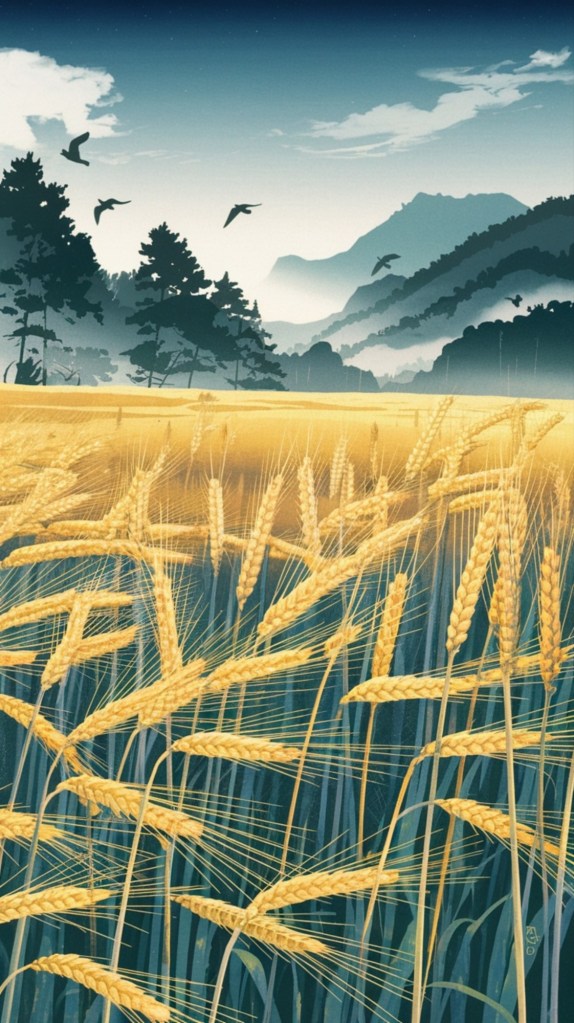
“Once, this was the way of things. The cycle of seasons guided us, taught us patience and survival. Fields of wheat—golden and swaying under the sun—were not just crops. They were life. They were bread, sustenance, and hope.
But you… you’ve forgotten. Forgotten the smell of freshly turned soil. Forgotten the feel of grain in your hands, the ache of laboring beneath a harvest moon. You’ve lost the wisdom that every seed planted is a promise made to the future.
You live now in towers that pierce the clouds, eating foods conjured from machines, grown in chemical vats. Convenience has replaced resilience. No longer do you store grain against the coming of winter. No longer do you prepare, for winter itself has been engineered out of your world. And yet, you are colder than ever.

Do you know what wheat meant? It meant warmth. It meant survival through the bitter months. We threshed it, stored it, guarded it. We sang songs to it, blessed it. Not because it was easy, but because it was essential. There is no joy without effort, no nourishment without toil.
And winter—it wasn’t just a season. It was a reckoning. It taught us humility. When the land went barren, when the frost claimed the earth, we relied on what we had prepared. It bound us together, made us grateful for every loaf.
But now, you press buttons. You summon sustenance from nowhere. Tell me, what will you do when the machines fail? When the systems you depend on falter, and the winds howl again, and the earth beneath your feet remembers its power?
You must return to the soil. Not for nostalgia, but for necessity. Plant. Harvest. Store. Learn again what it means to endure, to thrive by your own hands. If you do not, winter will come—not the winter of old, but one far colder, far more unyielding.
The wheat waits for you. The earth waits for you. Listen to them, before it’s too late.”
(The hologram flickers, its image momentarily distorting before stabilizing, the faint sound of wind and rustling wheat echoing from unseen speakers. The room is silent, the weight of the message settling over the onlookers like the frost of a long-forgotten winter.)

Your support makes a difference in my life and helps me create more of what you, and I, like. Thank you!

- Darkness, Power and Beauty
 Horse’s steady gazeStrengthful eyes that dare to meetChallenge accepted Courage is the strength to face… Read more: Darkness, Power and Beauty
 - The Daffodil’s Song: A Lyrical Tribute to the Wonders of Spring
 Daffodil so brightGolden petals, sunshine’s kissHope blooms anew As I wander through the garden, the… Read more: The Daffodil’s Song: A Lyrical Tribute to the Wonders of Spring
 - Acanthus: A Versatile Plant with a Rich Cultural Heritage
 The Graceful Lines of an Acanthus Leaf. Acanthus is a genus of flowering plants native… Read more: Acanthus: A Versatile Plant with a Rich Cultural Heritage



 Anthony's Literary Lens
You must be logged in to post a comment.