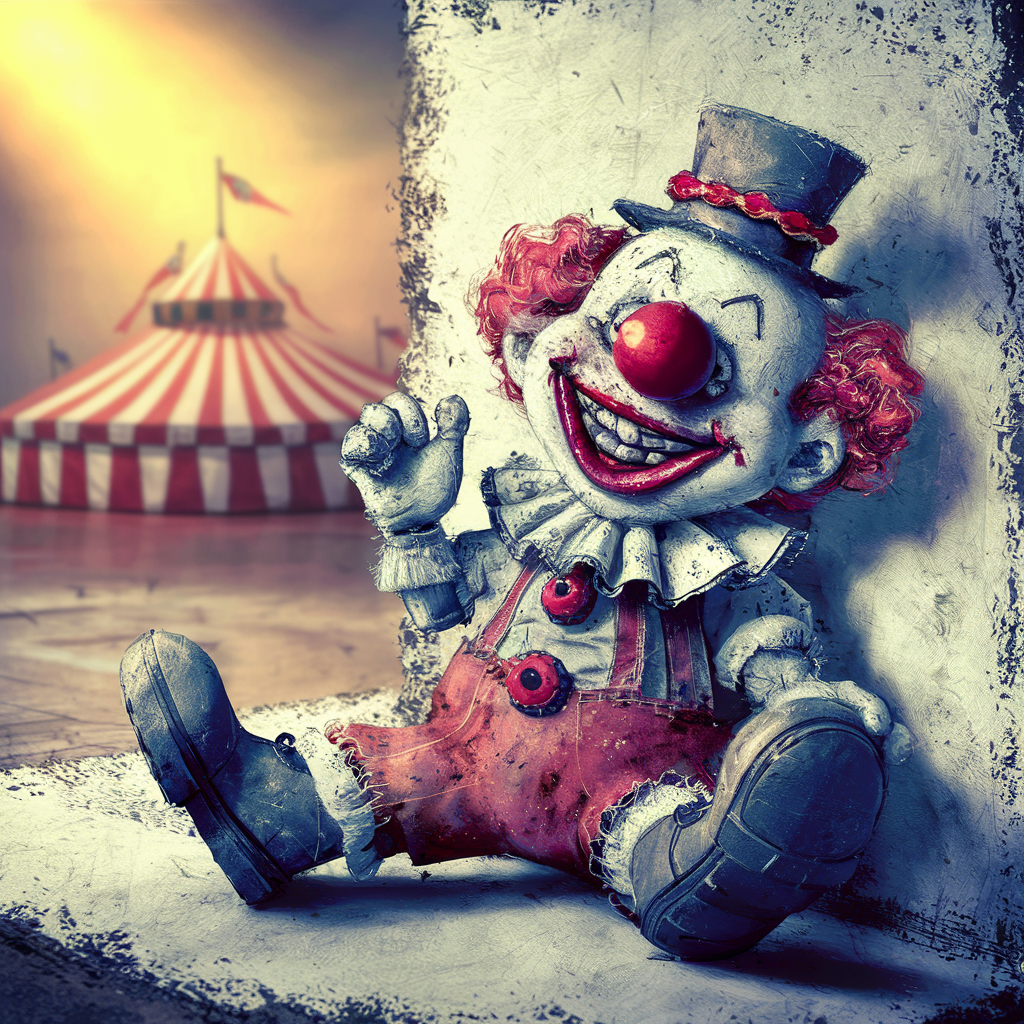
Step into my world, with a grin so wide,
Anthony
Where laughs turns to shivers, and fears reside.
In the circus of nightmares, I’ll be your guide,
With tricks and treats, on this dark carnival ride.
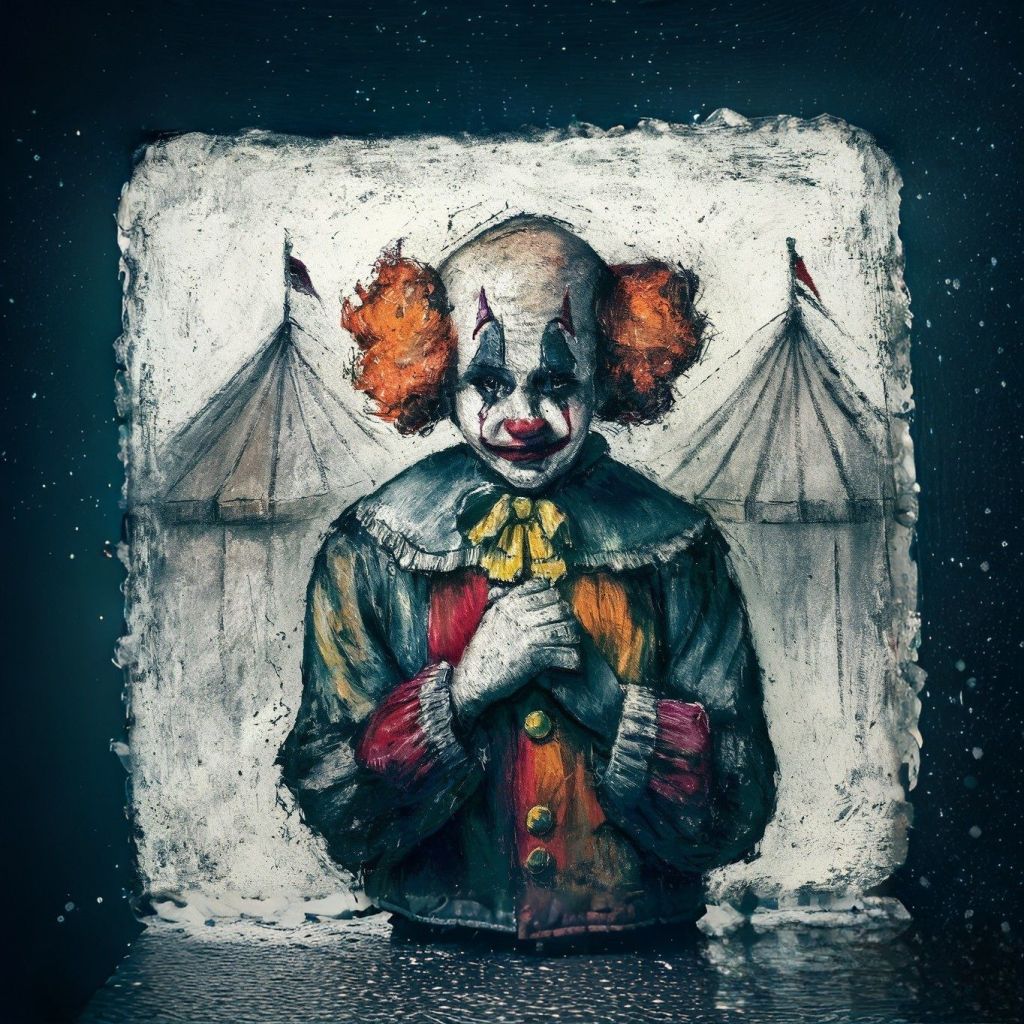
In the colourful array of human fears, few evoke as much intrigue and curiosity as coulrophobia – the fear of clowns. From the big-top circus to the silver screen, clowns have long occupied a peculiar space in our collective consciousness, alternately inspiring laughter and instilling dread. But what lies behind this enigmatic fear, and why do some individuals find themselves gripped by it?
To understand coulrophobia, we must first delve into its origins. Clowns, with their exaggerated features, garish makeup, and unpredictable behaviour, can evoke a range of emotions. For many, the sight of a clown elicits joy and amusement, but for others, it triggers a primal sense of unease. This discomfort may stem from various sources, including negative childhood experiences, exposure to frightening portrayals of clowns in media, or an innate aversion to ambiguity and masked identities.
Psychologists posit that coulrophobia may be rooted in the uncanny valley phenomenon – a term used to describe the unsettling feeling elicited by humanoid entities that are almost, but not quite, human. Clowns, with their exaggerated facial features and exaggerated expressions, often fall into this eerie territory, leaving some individuals feeling unsettled or even threatened.
Furthermore, the inherent unpredictability of clowns can exacerbate this fear. Their whimsical antics and exaggerated gestures may come across as erratic or insincere, creating a sense of mistrust or discomfort in those who crave predictability and stability.
The portrayal of clowns in popular culture has undoubtedly contributed to the perpetuation of coulrophobia. From Stephen King’s menacing Pennywise to the sinister clown sightings that captivated the public in recent years, the image of the malevolent clown has become deeply ingrained in our cultural psyche.
Moreover, the proliferation of horror movies featuring murderous clowns has cemented the association between clowns and fear in the minds of many. These depictions capitalise on our primal fears and exploit the inherent creepiness of clowns, further fueling the phenomenon of coulrophobia.

- Darkness, Power and Beauty
 Horse’s steady gazeStrengthful eyes that dare to meetChallenge accepted Courage is the strength to face… Read more: Darkness, Power and Beauty
 - The Daffodil’s Song: A Lyrical Tribute to the Wonders of Spring
 Daffodil so brightGolden petals, sunshine’s kissHope blooms anew As I wander through the garden, the… Read more: The Daffodil’s Song: A Lyrical Tribute to the Wonders of Spring
 - Acanthus: A Versatile Plant with a Rich Cultural Heritage
 The Graceful Lines of an Acanthus Leaf. Acanthus is a genus of flowering plants native… Read more: Acanthus: A Versatile Plant with a Rich Cultural Heritage























 Anthony's Literary Lens
You must be logged in to post a comment.