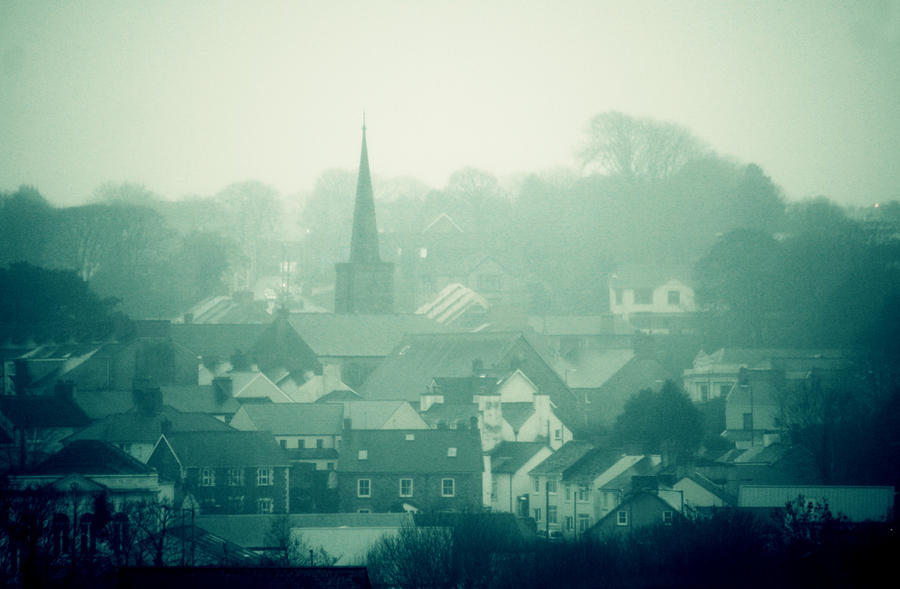
Tag: Pembrokeshire

  • Carew Castle, Pembrokeshire

    Carew Castle, Pembrokeshire

    A Swan’s Tour.

    A Graceful Journey Through Time.
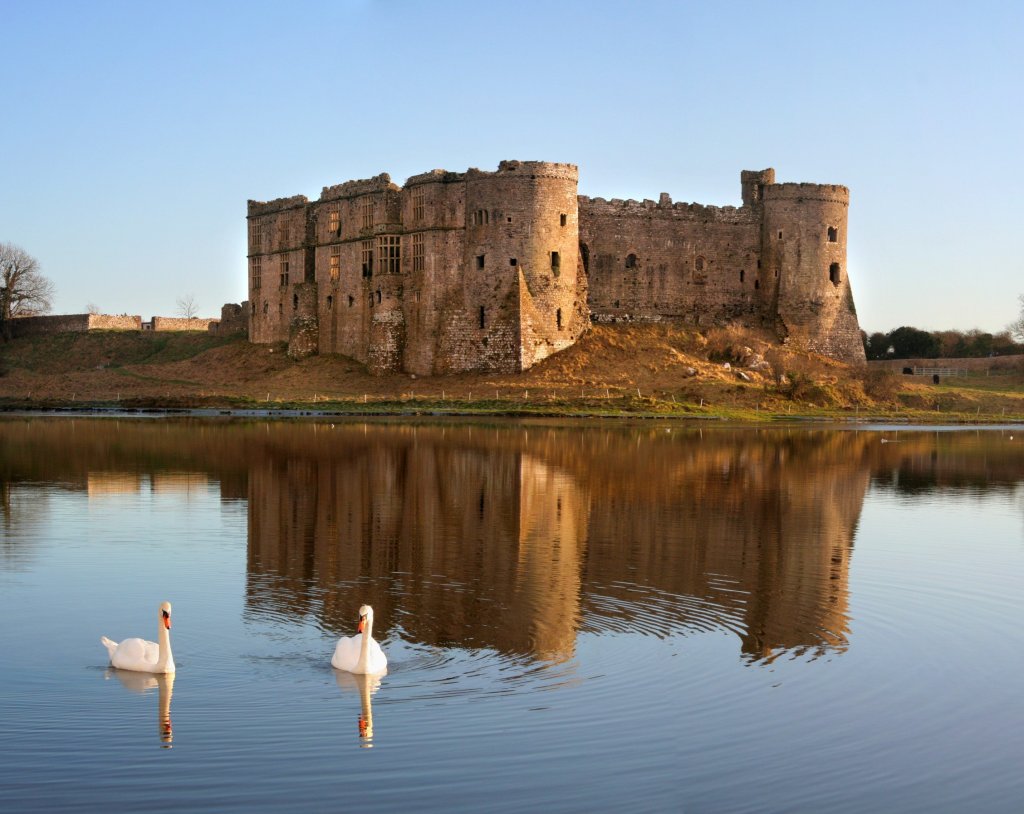
    Greetings, dear visitors. We are your guides for today, a loving swan couple who have called the mill pond in front of Carew Castle our home for generations. As you join us on this serene tour, we’ll take you through the history of the castle, the surrounding Pembrokeshire area, and our own story, seamlessly woven into this enchanting tapestry of time.

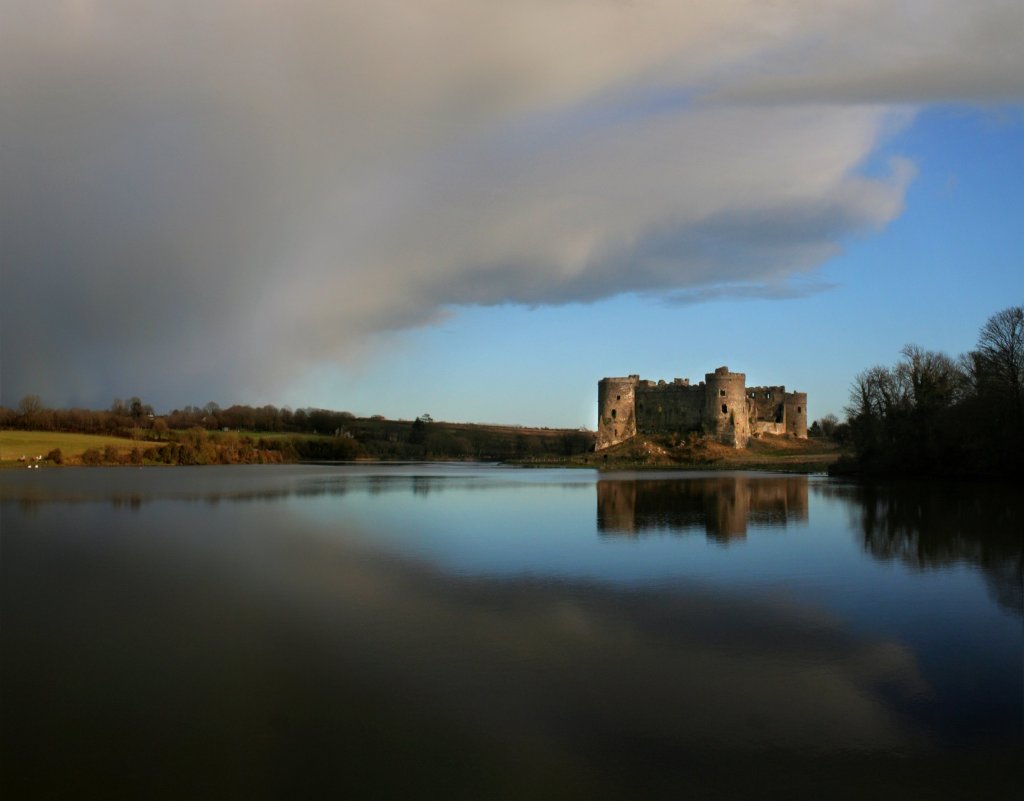
    Stormy History. Tap to buy prints and more.

    Swan Tales by the Castle.
    As you take this journey through history, remember that we, the swans, have our own story here. Our family’s devotion to this place has mirrored the enduring spirit of the castle. We’ve seen generations come and go, always returning to our mill pond, just as visitors return to Carew Castle.

    Peaceful Times. Tap to buy prints and more.

    Carew Castle – A Timeless Fortress.
    As you gaze upon the stately Carew Castle, let us share its history with you. This mighty fortress has seen centuries come and go. It was first raised by the Normans in the 11th century, serving as a powerful symbol of conquest in Pembrokeshire. Throughout the mediaeval period, it played a vital role in regional politics, a time when knights in shining armour and grand feasts graced its halls.

    The Castle’s Turbulent Tale.
    The castle witnessed its fair share of turmoil during the English Civil War in the 17th century. Parliamentarian troops took control, and much of its grandeur was lost. However, like us, the swans, Carew Castle rose from the ashes. In the 1660s, Sir Nicholas de Carew initiated its restoration, creating a unique blend of mediaeval and Jacobean architecture.

    A Picturesque Pond and Gardens.
    The stunning mill pond surrounding the castle is a sight to behold. The serene waters mirror the grandeur of the castle, inviting you to reflect on the past. Its gentle flow connects us, the swans, to the history of the castle, as we’ve swum in its embrace for centuries. The castle’s gardens, adorned with vibrant flora, add to the picturesque charm.

    The Enchanting Pembrokeshire Region.
    Look beyond the castle’s walls, and you’ll discover the beauty of Pembrokeshire. This region is known for its rugged coastline, sandy beaches, and ancient landscapes. Explore the coastal paths and secret coves that bear witness to countless stories of fishermen and adventurers, just as we have our own stories to tell.

    A Timeless Journey of Discovery.
    As we wrap up our guided tour, we hope you’ve enjoyed this unique perspective on Carew Castle and Pembrokeshire, seen through the eyes of the swans. Just as history weaves its narrative into the stones of the castle and the landscapes of Pembrokeshire, our presence, too, reflects the enduring bond between nature and history in this captivating corner of Wales. Come visit, explore, and perhaps catch a glimpse of us, the swan couple, as we continue our timeless journey alongside the rich history of Carew Castle and the enchanting beauty of Pembrokeshire.

    Tap to view my redbubble gallery.
  • Echoes of the Past

    Echoes of the Past

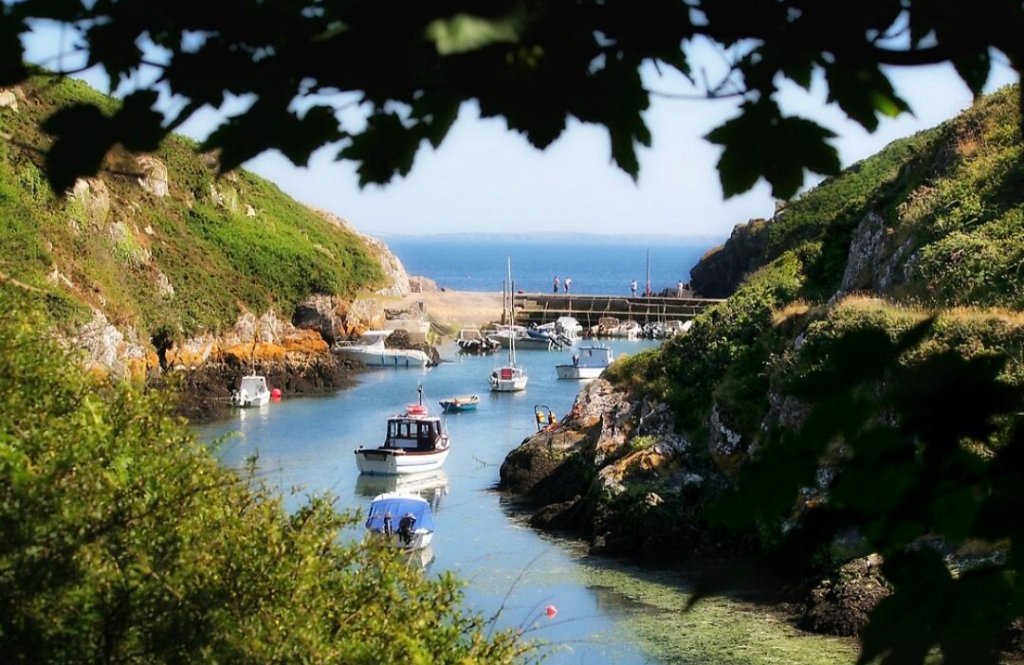
    Discovering Porthclais Harbour
    Tap to view in my redbubble gallery.

    Thomas had always been fascinated by the harbour and its rich history. He loved to explore the area and imagine what life might have been like in the days when Porthclais harbour was a thriving port.

    One summer’s day, as Thomas was walking along the harbour wall, he suddenly felt a strange feeling come over him. He looked up and saw that the sun had disappeared behind a cloud, and the sky had become dark and stormy. The muted colours made Thomas feel as though he had stepped back in time, to a different era.

    As he walked along the deserted quayside, Thomas could hear the sounds of people and animals all around him. He looked to his left and saw a group of merchants, loading sacks of wool onto a ship. To his right, he saw a group of fishermen, mending their nets and chatting. In the distance, he could hear the clanging of the blacksmith’s forge and the lowing of cattle.

    The history of Porthclais Harbour is a
    tapestry woven from the stories of those
    who lived and worked there.

    Anthony

    Thomas was so engrossed in the scene that he didn’t even notice when the storm had passed, and the sun had returned. When he finally looked up, he saw that the quayside was once again deserted, and the sounds had vanished. He rubbed his eyes, wondering if he had just been dreaming, but when he looked back, he could see the old buildings, the harbour wall, and the sea, just as they were in the present day.

    From that day on, Thomas often visited Porthclais Harbour, and each time he felt that strange feeling, he would imagine what life might have been like in times past. He would picture the ships sailing in and out of the harbour, and the merchants and sailors going about their business. And he would wonder if the spirits of those who had lived and worked there in the past still lingered, and if they were trying to tell him their story.

    Years passed, and Thomas grew old, but his love for the harbour never faded. He would often sit on the quayside, watching the sea and the clouds, and imagining all the tales that might have unfolded there over the centuries. And he would smile, knowing that the harbour would always be there, a reminder of the rich history and the endless possibilities of the past.

    Tap to view my redbubble gallery.

    More interesting posts

  • Life in the Spotlight

    Life in the Spotlight

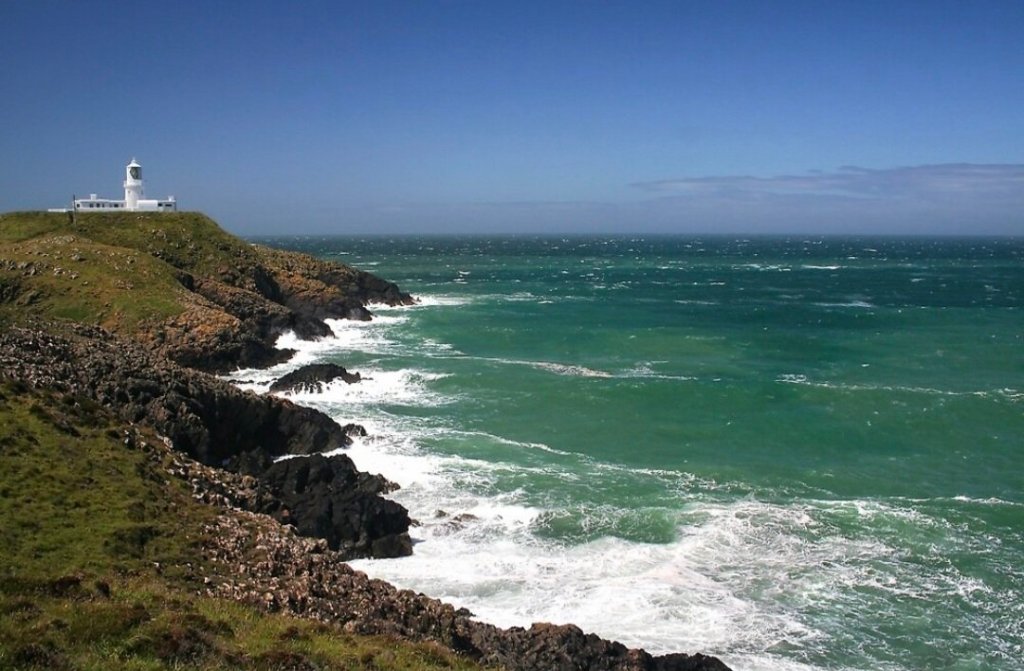
    Shining a Light on Strumble Head
    Tap to view in my redbubble gallery.

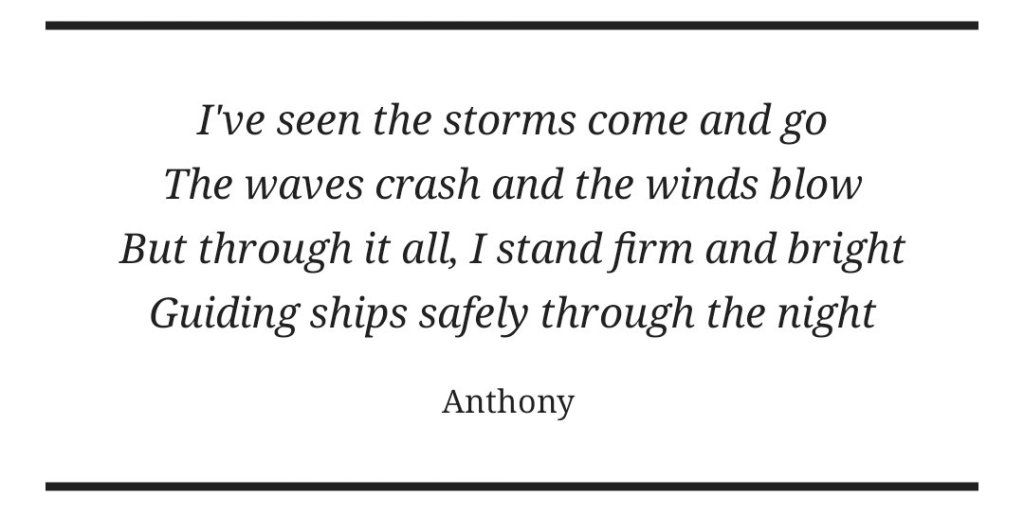
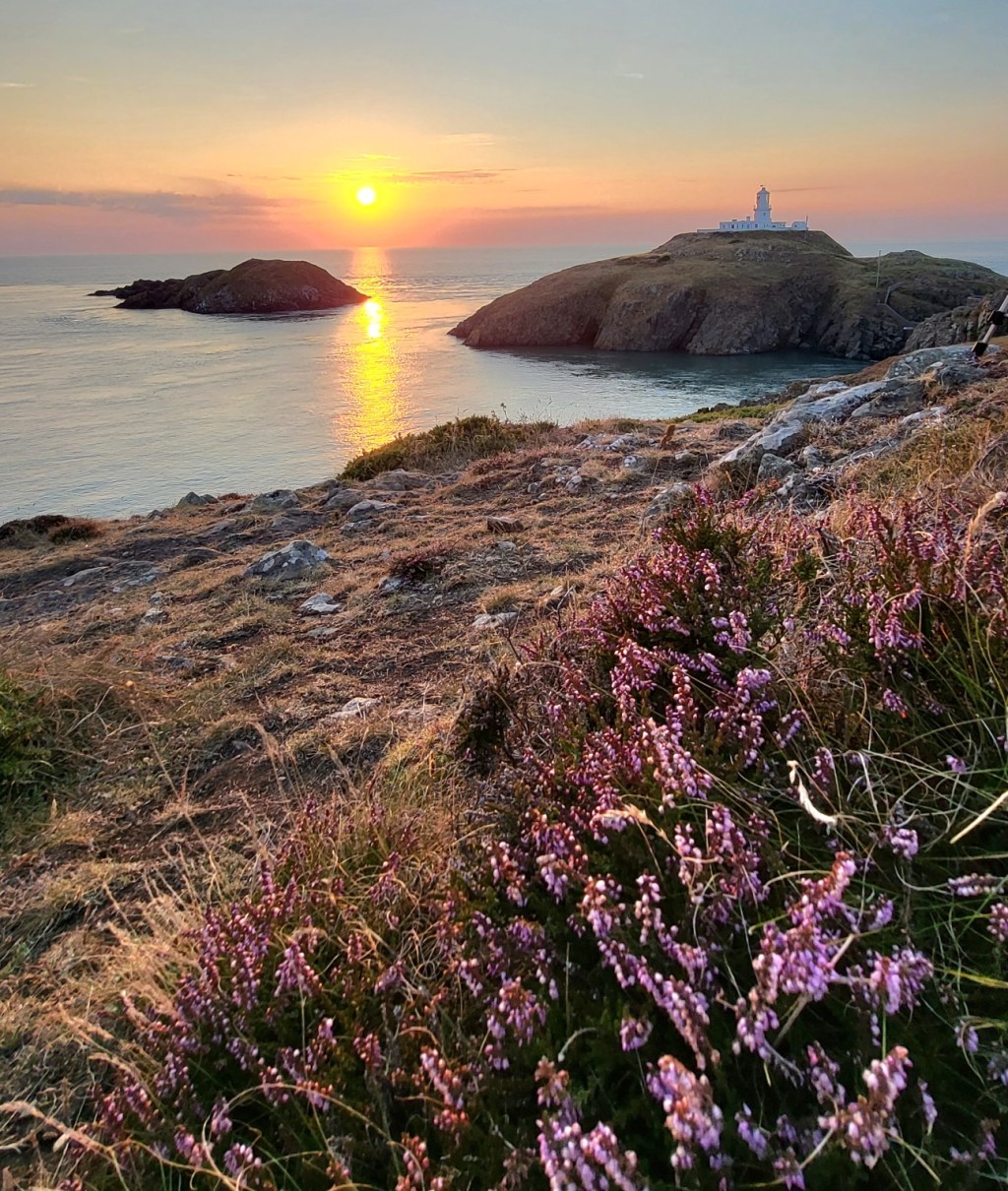
    “Ahoy there, I’m Strumble Head Lighthouse, a beacon of the beautiful Pembrokeshire coast. I’ve been shining bright for over a hundred years, guiding ships away from danger and blinking in the night sky for all to see.”

    “I may be small, but I’ve got a big personality. I’m a one-of-a-kind lighthouse, sitting proudly on my own little island called Ynys Meicl or Michael’s Island. From here, I’ve got a front-row seat to watch the most magnificent marine life pass by, from whales and dolphins to porpoises and seals.

    When the weather heats up, I’m surrounded by a blanket of flowers, and when the winds howl and the waves crash, I put on a spectacular show.

    I may not be accessible to the public, but I can still be admired from afar. The parking area and coastal path provide stunning views of me and the surrounding areas, like Carreg Onnen Bay and Garn Fawr.

    And let’s not forget, I’m also a photographer’s dream. With my flashing lights and stunning backdrops, I’m always ready for my close-up. So, next time you’re in Pembrokeshire, come take a look at me and all the beauty that surrounds me. I promise, it’ll be a sight to see.”

    Tap to view my redbubble gallery.

    More interesting posts

  • The Pembrokeshire Ghost

    The Pembrokeshire Ghost

    The Lonely Cottage
    Tap to view in my redbubble gallery.

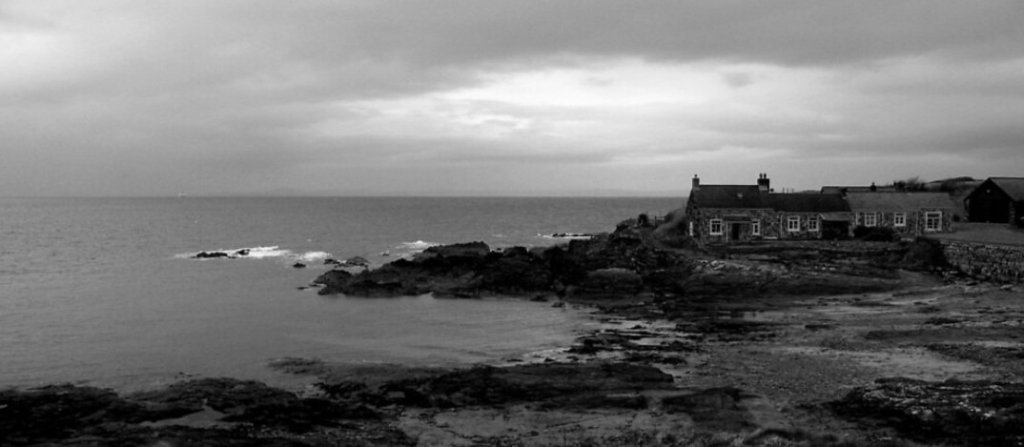
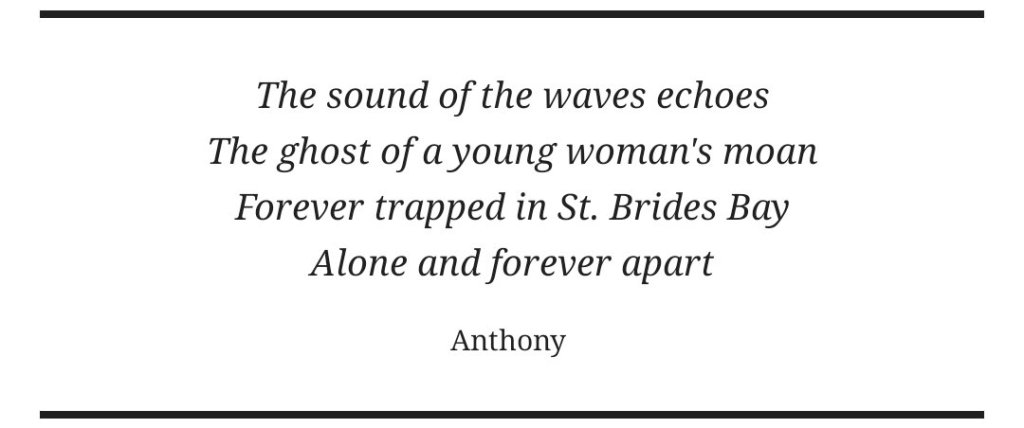
    A small cottage nestled on the lonely Pembrokeshire coast, in an area known as St. Brides Bay. It was said that the bay gets its name from the ancient church that stands near the cliffs, dedicated to the patron saint of young brides.

    The picturesque little cottage had white walls and a thatched roof, surrounded by wildflowers and tall grasses. It had been passed down through generations of a local family, who would often spend their summers there, enjoying the peaceful surroundings and the shoothing sound of the waves crashing against the shore. On winter nights, they would enjoy the open fire’s warmth as the wind howled over the sea.

    However, as the years went by, the cottage began to fall into disrepair. To the villager’s bemusement, the family stopped visiting, and the cottage was left to the elements. The thatch began to rot, the windows cracked, and the walls crumbled. Eventually, the cottage was abandoned, and it became nothing more than a forgotten ruin.

    But the cottage was not truly abandoned. For it was said that the ghost of a young woman still lingered there, wandering the ruins, her long, white dress trailing behind her. She was said to be the ghost of a young woman who had lived in the cottage many years ago. She had been in love with a young man from the village, but their love was forbidden by her family and he was sent to sea to keep them apart. In a fit of despair, she threw herself from the cliffs, her ghost remaining behind to mourn her lost love.

    The villagers avoided the cottage, believing it to be cursed. But one day, a young couple, drawn by the beauty of the coast, decided to buy the cottage and restore it to its former glory. As they began their renovations, they soon discovered that the ghost of the young woman was not the only thing haunting the cottage. There were strange noises in the night and objects would move on their own. The couple became terrified and decided to leave the cottage, never to return.

    Now, the cottage once again stands abandoned, and the ghost of the young woman still wanders the ruins, her love for her lost lover still unfulfilled. It is said that on quiet nights, her ghostly figure can be seen standing on the cliffs, looking out to sea, waiting for the return of her true love.

    The villagers say that the wind whispers her name on stormy nights and, until someone is brave enough to restore the cottage and fill it with laughter and true love, the ghost of the young woman will continue to wander the Pembrokeshire coast, a lonely and sad figure, forever trapped in the past and the present.

    Tap to view my redbubble gallery.

    More interesting posts

  • A postcard from Pembrokeshire

    A postcard from Pembrokeshire

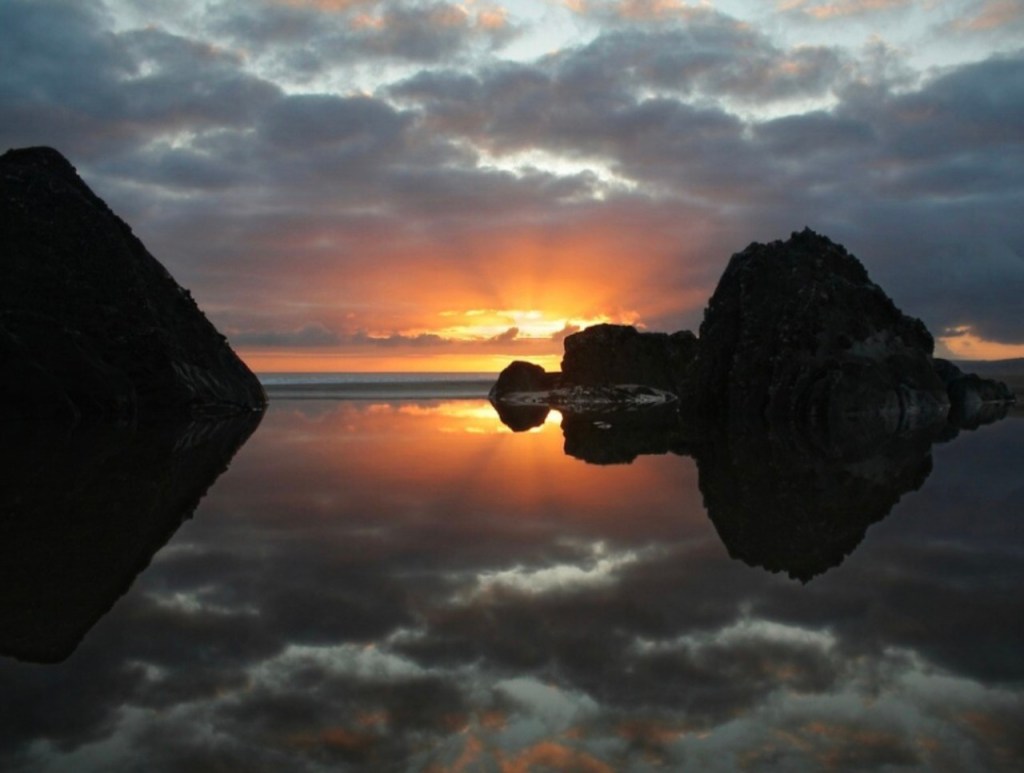
    A Pembrokeshire sunrise to remember
    Tap to view my redbubble gallery.

    Dear Reader,

    I hope this letter finds you well. I am writing to tell you about my holiday in Manorbier, Pembrokeshire. It is absolutely beautiful here, and I am having the time of my life.

    One of the highlights of my trip so far has been watching the sunrise on the beach. The colours in the sky are absolutely breathtaking, and the sound of the waves crashing on the shore is incredibly soothing. I have been going to the beach early in the morning to catch the sunrise, and it has been such a magical experience it’s inspired the poet in me.

    The east awakens,
    With a fiery glow.
    The waves dance to the beat,
    Of the sunrise show

    Anthony

    My favourite moment was when I was wandering along the beach early one morning and came across a small rock pool. The water in the pool was perfectly still, and as the sun began to rise, the colours of the sunrise were reflected in the water. It was like a mirror, and I was able to capture the most beautiful photograph of the sunrise reflecting in the pool. It was such a magical moment, and I am so happy that I was able to capture it. I have included that photograph with this letter, I hope you like it as much as I do.

    The weather has been perfect for a beach holiday too, warm and sunny, with a light breeze to keep us cool. The water is so clear and inviting, and I have been swimming every day. The beach is also great for long walks, and I’ve been exploring the different coves and rock pools along the coast.

    Manorbier is such a quaint and charming village, with narrow streets, and pretty cottages. The people here are so friendly and welcoming. I’ve been trying out the local seafood, which has been delicious. I also visited the castle here, it has a rich history and it was great to learn more about the area.

    I am so glad I decided to come on this holiday, it has been a much-needed break and a chance to relax and unwind. I wish you were here to share in the beauty and tranquillity of this place. I’m looking forward to coming back home and catching up with you soon.

    Take care and talk to you soon

    Sincerely,
    Anthony

    Tap to view my redbubble gallery.
  • The Legend of St Non’s Chapel

    The Legend of St Non’s Chapel

    A Shrine to Wales’ Patron Saint
    Tap to view in redbubble

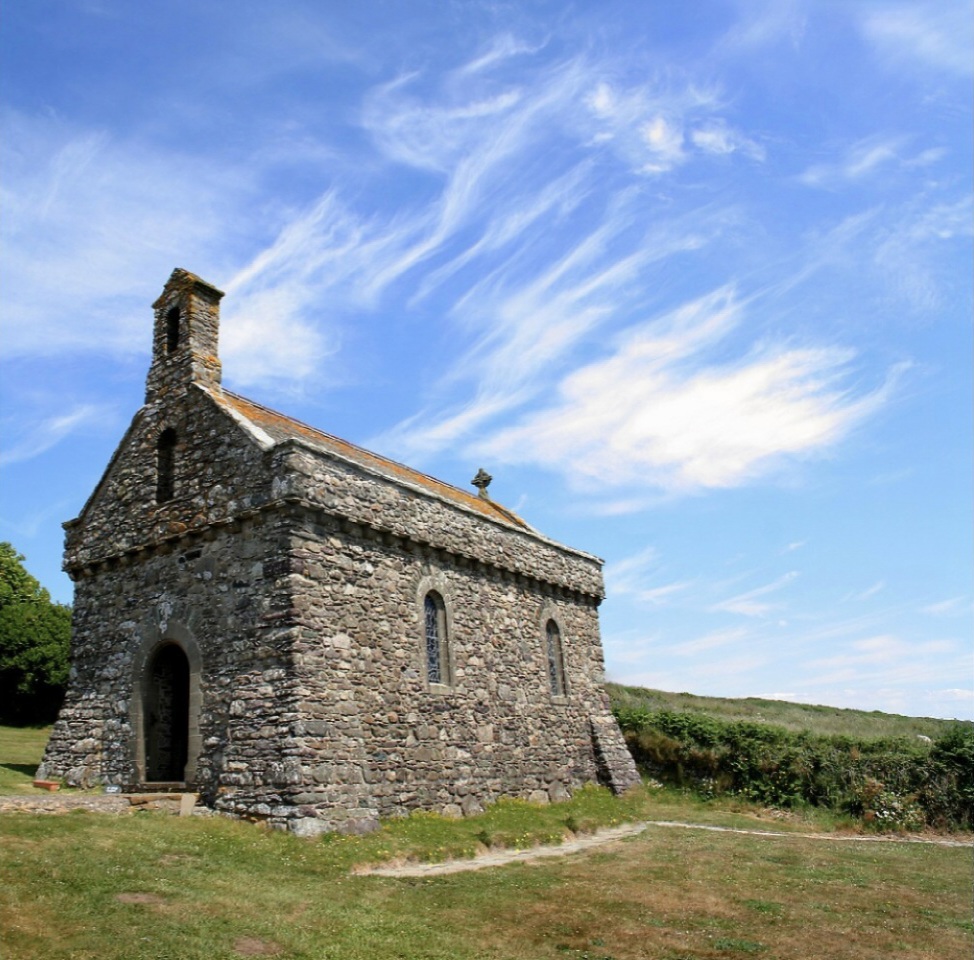
    St Non’s Chapel is a small and charming chapel located in Pembrokeshire, Wales. Unusual in that it is aligned north–south rather than the usual east–west, is situated on the coast with views of the Irish Sea, this chapel is surrounded by stunning countryside. In addition to the chapel, there is also a holy well nearby that is said to grant wishes to those who make a wish in it. Legend has it that St Non’s Chapel was built on the spot where St Non, the mother of St David (the patron saint of Wales), gave birth to him in the 5th century (in a raging storm). The chapel has undergone many renovations and restorations over the years, but has managed to retain its ancient character.

    Inside, visitors can see a 12th century stone font, a stone altar, and stained glass windows, as well as various ancient artifacts and religious relics. The chapel is close to walking trails through the surrounding countryside. St David’s City, a beautiful and historic city, is not far away either. In short, St Non’s Chapel is a must-see destination for those visiting Pembrokeshire, with its rich history, holy well, and beautiful surroundings.

    Tap to view my redbubble gallery.
  • Reflections at Stumble Head Lighthouse

    Reflections at Stumble Head Lighthouse

    A Moment’s Peace
    Tap to see in my redbubble

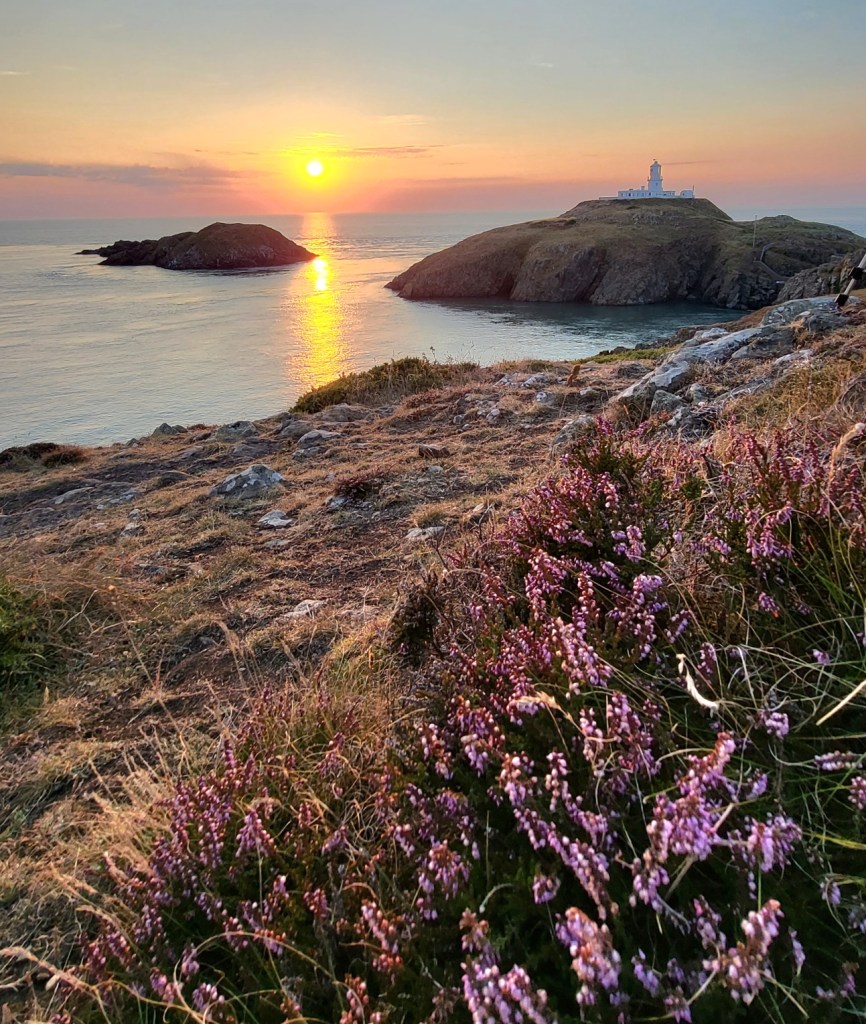
    As the sun sets beyond the Stumble Head Lighthouse, it seems to sink into the sea, painting the sky with a stunning array of colors. From fiery oranges and reds to softer pinks and purples, the sunset is a truly magical sight to behold.

    But the beauty of the sunset extends beyond just the visual spectacle. As the day comes to a close and the sky grows dark, there is a sense of peace and calm that settles over the land. The bustle of the day fades away, and the world seems to slow down just a bit. It’s a time to reflect on the events of the day, to let go of any stress or worries, and to simply be present in the moment.

    The sunset is a reminder of the natural cycles of life, the constant ebb and flow of the world around us. It serves as a reminder to cherish each moment and to make the most of the time we have.

    The heather too in the foreground, with its delicate purple blooms, adds an extra touch of luck and good fortune to the scene.

    So next time you see the sunset beyond the Stumble Head Lighthouse, take a moment to pause and appreciate the beauty and wonder of this fleeting moment in time. It’s a moment that you’ll never get back, and one that you’ll always remember.

    Tap to see my redbubble gallery
  • A Pilgrimage to St. David’s: A Journey to Wales’ Most Sacred Place

    A Pilgrimage to St. David’s: A Journey to Wales’ Most Sacred Place

    Welsh Wonder
    Tap to view in redbubble.

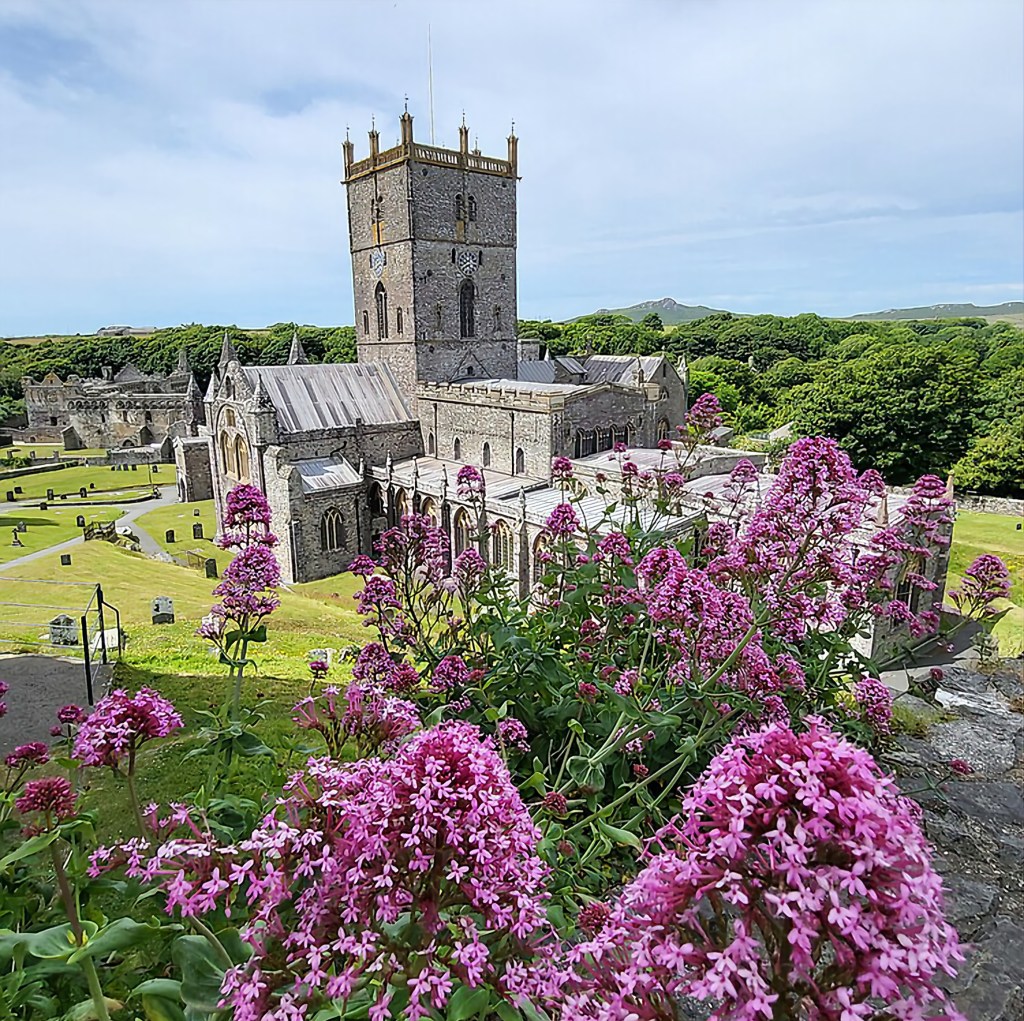
    St. David’s Cathedral is a beautiful and historic place of worship located in the city of St. David’s, Pembrokeshire, Wales. The cathedral is named after St. David, the patron saint of Wales, and has a long and fascinating history dating back to the 6th century.

    The current cathedral building was constructed in the 12th and 13th centuries and is an excellent example of Norman architecture. It is built from local sandstone and boasts a distinctive tower, which can be seen from miles around. The cathedral is also home to several important artworks, including a 14th-century altarpiece and a 15th-century clock.

    One of the most striking features of the cathedral is its elaborate interior. The nave is adorned with intricate carvings and stained glass windows, which depict various scenes from the Bible. The cathedral also has a beautiful choir, which is used for regular services and special events.

    St. David’s Cathedral is an important place of pilgrimage for many people in Wales and beyond. Every year, thousands of visitors come to the cathedral to pay their respects to St. David and to experience the beauty and peace of this sacred place.

    The cathedral is also an important cultural and educational hub, hosting concerts, lectures, and other events throughout the year. It is a place where people of all ages and backgrounds can come to learn, to pray, and to find inspiration.

    In conclusion, St. David’s Cathedral is a beautiful and historic place of worship that has played a central role in the life of the community for centuries. It is a must-see destination for anyone visiting the city of St. David’s or the surrounding area.

    Tap to view my redbubble gallery.

    More interesting posts

  • Discovering the Charm of Mwnt Church in Pembrokeshire

    Discovering the Charm of Mwnt Church in Pembrokeshire

    Mwnt Magic


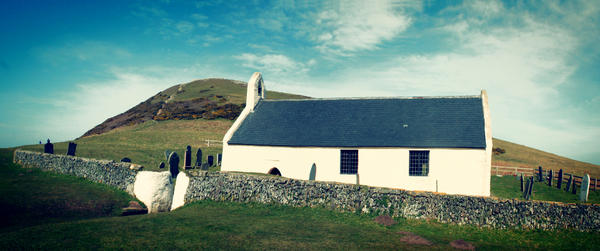
    Mwnt Church is a small, charming chapel located in the Pembrokeshire Coast National Park in Wales. The church, which is dedicated to St. Caron, is a Grade II listed building and is believed to date back to the early 16th century.

    The church is located in the village of Mwnt, which is situated on a hill overlooking the Irish Sea. The church sits atop the hill, surrounded by beautiful countryside, making it a popular spot for visitors looking to enjoy the stunning views of the Pembrokeshire coast.

    Inside the church, you will find a simple yet charming interior. The nave is adorned with whitewashed walls and a wooden ceiling, and there are several stained glass windows which add a touch of color to the space. The altar is simple, with a wooden cross and a few flowers.

    One of the most notable features of Mwnt Church is its location. The church sits atop a hill overlooking the sea, and the views from the churchyard are breathtaking. On a clear day, you can see for miles in every direction, taking in the rugged beauty of the Pembrokeshire coast.

    Mwnt Church is a popular spot for visitors to the Pembrokeshire Coast National Park, and it is not uncommon to see people walking up the hill to visit the church and enjoy the views. The church is also a popular spot for wedding ceremonies, and many couples choose to exchange their vows in this beautiful setting.

    Overall, Mwnt Church is a charming and peaceful spot that is well worth a visit if you are in the Pembrokeshire area. Whether you are looking to enjoy the views, take a peaceful walk, or simply spend some time in a beautiful and historic building, Mwnt Church is sure to delight.

    My Redbubble Page

    Welcome to My Redbubble Page

    Check out my products on Redbubble:


    My Redbubble

  • Haverfordwest, from medieval castle to modern town

    Haverfordwest, from medieval castle to modern town

    Welsh Wonders

    Haverfordwest is a small town in Wales with a rich history dating back to the 12th century. Located in the heart of Pembrokeshire, Haverfordwest has a long and fascinating past that has shaped the town into what it is today.

    One of the oldest and most iconic landmarks in Haverfordwest is the castle, which was built in the 12th century by the Normans as a fortification against Welsh rebels. The castle has undergone several renovations over the years and has served various purposes, including being used as a prison and a courthouse. Today, it is a popular tourist attraction where visitors can take guided tours and learn about its rich history.

    In the 16th and 17th centuries, Haverfordwest became an important center for trade and industry, with several merchants and craftsmen setting up shop in the town. This period of prosperity was reflected in the grand houses and buildings that were constructed during this time, many of which can still be seen in the town today.

    During the Industrial Revolution, Haverfordwest experienced a decline in its economy as industry and trade moved to larger cities. However, the town has since recovered and is now home to a thriving community with a strong focus on tourism and the arts.

    Throughout its history, Haverfordwest has been shaped by a variety of cultural influences, including Welsh, Norman, and English, which can be seen in the architecture, language, and customs of the town.

    So next time you visit Haverfordwest, be sure to take a step back in time and explore the town’s rich history. Whether you’re interested in medieval castles, the Industrial Revolution, or just want to learn more about Wales, Haverfordwest has something to offer for everyone.


    If you find my photography or my writing inspiring and uplifting, consider supporting what I do. Buy me a coffee on Ko-fi.
    Your support makes a difference in my life and helps me create more of what you, and I, like. Thank you!
    Tap here for a list of 100 endangered animals and plants.

    100 endangered plant and animal species

    * Abies beshanzuensis (Baishan fir) – Plant (Tree) – Baishanzu Mountain, Zhejiang, China – Three mature individuals

    * Actinote zikani – Insect (butterfly) – Near São Paulo, Atlantic forest, Brazil – Unknown numbers

    * Aipysurus foliosquama (Leaf scaled sea-snake) – Reptile – Ashmore Reef and Hibernia Reef, Timor Sea – Unknown numbers * Amanipodagrion gilliesi (Amani flatwing) – Insect (damselfly) – Amani-Sigi Forest, Usamabara Mountains, Tanzania – < 500 individuals * Antisolabis seychellensis – Insect – Morne Blanc, Mahé island, Seychelles – Unknown numbers * Antilophia bokermanni (Araripe manakin) – Bird – Chapado do Araripe, South Ceará, Brazil – 779 individuals * Aphanius transgrediens (Aci Göl toothcarp) – Fish – south-eastern shore of former Lake Aci, Turkey – Few hundred pairs * Aproteles bulmerae (Bulmer’s fruit bat) – Mammal – Luplupwintern Cave, Western Province, Papua New Guinea – 150 * Ardea insignis (White bellied heron) – Bird – Bhutan, North East India and Myanmar – 70–400 individuals * Ardeotis nigriceps (Great Indian bustard) – Bird – Rajasthan, Gujarat, Maharashtra, Andhra Pradesh, Karnataka and Madhya, India – 50–249 mature individuals * Astrochelys yniphora (Ploughshare tortoise) – Reptile – Baly Bay region, northwestern Madagascar – 440–770 * Atelopus balios (Rio Pescado stubfoot toad) – Amphibian – Azuay, Cañar and Guyas provinces, south-western Ecuador – Unknown numbers * Aythya innotata (Madagascar pochard) – Bird – volcanic lakes north of Bealanana, Madagascar – 80 mature individuals * Azurina eupalama (Galapagos damsel fish) – Fish – Unknown numbers – Unknown numbers * Bahaba taipingensis (Giant yellow croaker) – Fish – Chinese coast from Yangtze River, China to Hong Kong – Unknown numbers * Batagur baska (Common batagur) – Reptile (turtle) – Bangladesh, Cambodia, India, Indonesia and Malaysia – Unknown numbers * Bazzania bhutanica – Plant – Budini and Lafeti Khola, Bhutan – 2 sub-populations * Beatragus hunteri (Hirola) – Mammal (antelope) – South-east Kenya and possibly south-west Somalia – < 1,000 individuals * Bombus franklini (Franklin’s bumblebee) – Insect (bee) – Oregon and California – Unknown numbers * Brachyteles hypoxanthus (Northern muriqui / Woolly spider monkey) – Mammal (primate) – Atlantic forest, south-eastern Brazil – < 1,000 * Bradypus pygmaeus (Pygmy three-toed sloth) – Mammal – Isla Escudo de Veraguas, Panama – < 500 * Callitriche pulchra – Plant (freshwater) – pool on Gavdos, Greece – Unknown numbers * Calumma tarzan (Tarzan’s chameleon) – Reptile – Anosibe An’Ala region, eastern Madagascar – < 100 * Cavia intermedia (Santa Catarina’s guinea pig) – Mammal (rodent) – Moleques do Sul Island, Santa Catarina, Brazil – 40–60 * Cercopithecus roloway (Roloway guenon) – Mammal (primate) – Côte d’Ivoire – Unknown numbers * Coleura seychellensis (Seychelles sheath-tailed bat) – Mammal (bat) – Two small caves on Silhouette and Mahé, Seychelles – < 100 * Cryptomyces maximus (Willow blister) – Fungi – Pembrokeshire, United Kingdom – Unknown numbers * Cryptotis nelsoni (Nelson’s small-eared shrew) – Mammal (shrew) – Volcán San Martín Tuxtla, Veracruz, Mexico – Unknown numbers * Cyclura collei (Jamaican iguana / Jamaican rock iguana) – Reptile – Hellshire Hills, Jamaica – Unknown numbers * Daubentonia madagascariensis (Aye-aye) – Mammal (primate) – Deciduous forest, East Madagascar – Unknown numbers * Dendrophylax fawcettii (Cayman Islands ghost orchid) – Plant (orchid) – Ironwood Forest, George Town, Grand Cayman – Unknown numbers * Dicerorhinus sumatrensis (Sumatran rhino) – Mammal (rhino) – Sabah, Sarawak and Peninsular Malaysia, Kalimantan and Sumatra, Indonesia – < 100 (more recent estimates suggest 34-47) * Diomedea amsterdamensis (Amsterdam albatross) – Bird – Breeds on Plateuau des Tourbières, Amsterdam Island, Indian Ocean. – 100 mature individuals * Dioscorea strydomiana (Wild yam) – Plant – Oshoek area, Mpumalanga, South Africa – 200 * Diospyros katendei – Plant (tree) – Kasyoha-Kitomi Forest Reserve, Uganda – 20 individuals in a single population * Dipterocarpus lamellatus – Plant (tree) – Siangau Forest Reserve, Sabah, Malaysia – 12 individuals * Discoglossus nigriventer (Hula painted frog) – Amphibian – Hula Valley, Israel – Unknown numbers * Dombeya mauritiana – Plant – Mauritius – Unknown numbers * Elaeocarpus bojeri (Bois Dentelle) – Plant (tree) – Grand Bassin, Mauritius – < 10 individuals * Eleutherodactylus glandulifer (La Hotte glanded frog) – Amphibian – Massif de la Hotte, Haiti – Unknown numbers * Eleutherodactylus thorectes (Macaya breast-spot frog) – Amphibian – Formon and Macaya peaks, Masif de la Hotte, Haiti – Unknown numbers * Eriosyce chilensis (Chilenito (cactus)) – Plant – Pta Molles and Pichidungui, Chile – < 500 individuals * Erythrina schliebenii (Coral tree) – Plant – Namatimbili-Ngarama Forest, Tanzania – < 50 individuals * Euphorbia tanaensis – Plant (tree) – Witu Forest Reserve, Kenya – 4 mature individuals * Eurynorhyncus pygmeus (Spoon-billed sandpiper) – Bird – Breeds in Russia, migrates along the East Asian-Australasian Flyway to wintering grounds in India, Bangladesh and Myanmar – 100 breeding pairs * Ficus katendei – Plant – Kasyoha-Kitomi Forest Reserve, Ishasha River, Uganda – < 50 mature individuals * Geronticus eremita (Northern bald ibis) – Bird – Breeds in Morocco, Turkey and Syria. Syrian population winters in central Ethiopia. – About 3000 individuals * Gigasiphon macrosiphon – Plant (flower) – Kaya Muhaka, Gongoni and Mrima Forest Reserves, Kenya, Amani Nature Reserve, West Kilombero Scarp Forest Reserve, and Kihansi Gorge, Tanzania – 33 * Gocea ohridana – Mollusc – Lake Ohrid, Macedonia – Unknown numbers * Heleophryne rosei (Table mountain ghost frog) – Amphibian – Table Mountain, Western Cape Province, South Africa – Unknown numbers * Hemicycla paeteliana – Mollusc (land snail) – Jandia peninsula, Fuerteventura, Canary Islands – Unknown numbers * Heteromirafa sidamoensis (Liben lark) – Bird – Liben Plains, southern Ethiopia – 90–256 * Hibiscadelphus woodii – Plant (tree) – Kalalau Valley, Hawaii – Unknown numbers * Hucho perryi (Sakhalin taimen) – Fish – Russian and Japanese rivers, Pacific Ocean between Russia and Japan – Unknown numbers * Johora singaporensis (Singapore freshwater crab) – Crustacean – Bukit Timah Nature Reserve and streamlet near Bukit Batok, Singapore – Unknown numbers * Lathyrus belinensis (Belin vetchling) – Plant – Outskirts of Belin village, Antalya, Turkey – < 1,000 * Leiopelma archeyi (Archey’s frog) – Amphibian – Coromandel peninsula and Whareorino Forest, New Zealand – Unknown numbers * Lithobates sevosus (Dusky gopher frog) – Amphibian – Harrison County, Mississippi, USA – 60–100 * Lophura edwardsi (Edwards’s pheasant) – Bird – Quang Binh, Quang Tri and Thua Thien-Hue, Viet Nam – Unknown numbers * Magnolia wolfii – Plant (tree) – Risaralda, Colombia – 3 * Margaritifera marocana – Mollusc – Oued Denna, Oued Abid and Oued Beth, Morocco – < 250 * Moominia willii – Mollusc (snail) – Silhouette Island, Seychelles – < 500 * Natalus primus (Cuban greater funnel eared bat) – Mammal (bat) – Cueva La Barca, Isle of Pines, Cuba – < 100 * Nepenthes attenboroughii (Attenborough’s pitcher plant) – Plant – Mount Victoria, Palawan, Philippines – Unknown numbers * Nomascus hainanus (Hainan black crested gibbon) – Mammal (primate) – Hainan Island, China – 20 * Neurergus kaiseri (Luristan newt) – Amphibian – Zagros Mountains, Lorestan, Iran – < 1,000 * Oreocnemis phoenix (Mulanje red damsel) – Insect (damselfly) – Mulanje Plateau, Malawi – Unknown numbers * Pangasius sanitwongsei (Pangasid catfish) – Fish – Chao Phraya and Mekong basins in Cambodia, China, Lao PDR, Thailand and Viet Nam – Unknown numbers * Parides burchellanus – Insect (butterfly) – Cerrado, Brazil – < 100 * Phocoena sinus (Vaquita) – Mammal (porpoise) – Northern Gulf of California, Mexico – 12 * Picea neoveitchii (Type of spruce tree) – Plant (tree) – Qinling Range, China – Unknown numbers * Pinus squamata (Qiaojia pine) – Plant (tree) – Qiaojia, Yunnan, China – < 25 * Poecilotheria metallica (Gooty tarantula / Metallic tarantula / Peacock tarantula / Salepurgu) – Spider – Nandyal and Giddalur, Andhra Pradesh, India – Unknown numbers * Pomarea whitneyi (Fatuhiva monarch) – Bird – Fatu Hiva, Marquesas Islands, French Polynesia – 50 * Pristis pristis (Common sawfish) – Fish – Coastal tropical and subtropical waters of Indo-Pacific and Atlantic Oceans. Currently largely restricted to northern Australia – Unknown numbers * Hapalemur simus (Greater bamboo lemur) – Mammal (primate) – Southeastern and southcentral rainforests of Madagascar – 500 * Propithecus candidus (Silky sifaka) – Mammal (primate) – Maroantsetra to Andapa basin, and Marojeju Massif, Madagascar – 100–1,000 * Psammobates geometricus (Geometric tortoise) – Reptile – Western Cape Province, South Africa – Unknown numbers * Pseudoryx nghetinhensis (Saola) – Mammal – Annamite mountains, on the Viet Nam – PDR Laos border – Unknown numbers * Psiadia cataractae – Plant – Mauritius – Unknown numbers * Psorodonotus ebneri (Beydaglari bush-cricket) – Insect – Beydaglari range, Antalaya, Turkey – Unknown numbers * Rafetus swinhoei (Red River giant softshell turtle) – Reptile – Hoan Kiem Lake and Dong Mo Lake, Viet Nam, and Suzhou Zoo, China – 3 * Rhinoceros sondaicus (Javan rhino) – Mammal (rhino) – Ujung Kulon National Park, Java, Indonesia – < 100 * Rhinopithecus avunculus (Tonkin snub-nosed monkey) – Mammal (primate) – Northeastern Vietnam – < 200 * Rhizanthella gardneri (West Australian underground orchid) – Plant (orchid) – Western Australia, Australia – < 100 * Rhynchocyon spp. (Boni giant sengi) – Mammal – Boni-Dodori Forest, Lamu area, Kenya – Unknown numbers * Risiocnemis seidenschwarzi (Cebu frill-wing) – Insect (damselfly) – Rivulet beside the Kawasan River, Cebu, Philippines – Unknown numbers * Rosa arabica – Plant – St Katherine Mountains, Egypt – Unknown numbers, 10 sub-populations * Salanoia durrelli (Durrell’s vontsira) – Mammal (mongoose) – Marshes of Lake Alaotra, Madagascar – Unknown numbers * Santamartamys rufodorsalis (Red crested tree rat) – Mammal (rodent) – Sierra Nevada de Santa Marta, Colombia – Unknown numbers * Scaturiginichthys vermeilipinnis (Red-finned blue-eye) – Fish – Edgbaston Station, central western Queensland, Australia – 2,000–4,000 * Squatina squatina (Angel shark) – Fish – Canary Islands – Unknown numbers * Sterna bernsteini (Chinese crested tern) – Bird – Breeding in Zhejiang and Fujian, China. Outside breeding season in Indonesia, Malaysia, Philippines, Taiwan, Thailand. – < 50 * Syngnathus watermeyeri (Estuarine pipefish) – Fish – Kariega Estuary to East Kleinemonde Estuary, Eastern Cape Province, South Africa – Unknown numbers * Tahina spectabilis (Suicide palm / Dimaka) – Plant – Analalava district, north-western Madagascar – 90 * Telmatobufo bullocki (Bullock’s false toad) – Amphibian (frog) – Nahuelbuta, Arauco Province, Chile – Unknown numbers * Tokudaia muenninki (Okinawa spiny rat) – Mammal (rodent) – Okinawa Island, Japan – Unknown numbers * Trigonostigma somphongsi (Somphongs’s rasbora) – Fish – Mae Khlong basin, Thailand – Unknown numbers * Valencia letourneuxi – Fish – Southern Albania and Western Greece – Unknown numbers * Voanioala gerardii (Forest coconut) – Plant – Masoala peninsula, Madagascar – < 10 * Zaglossus attenboroughi (Attenborough’s echidna) – Mammal – Cyclops Mountains, Papua Province, Indonesia – Unknown numbers
    Tap to view my redbubble gallery.
Design a site like this with WordPress.com
Get started