Tag: Sheep

  • In the Company of Sheep

    In the Company of Sheep

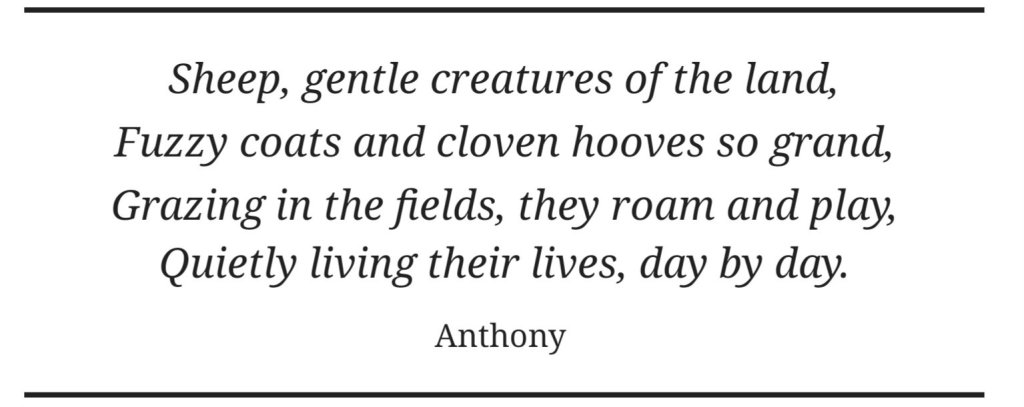
    There’s a particular quiet that settles around sheep. A kind of unhurried calm that makes you aware of small things. The soft tearing of grass. The occasional low bleat, conversational rather than urgent. The shuffle of hooves on earth worn smooth by countless hooves.
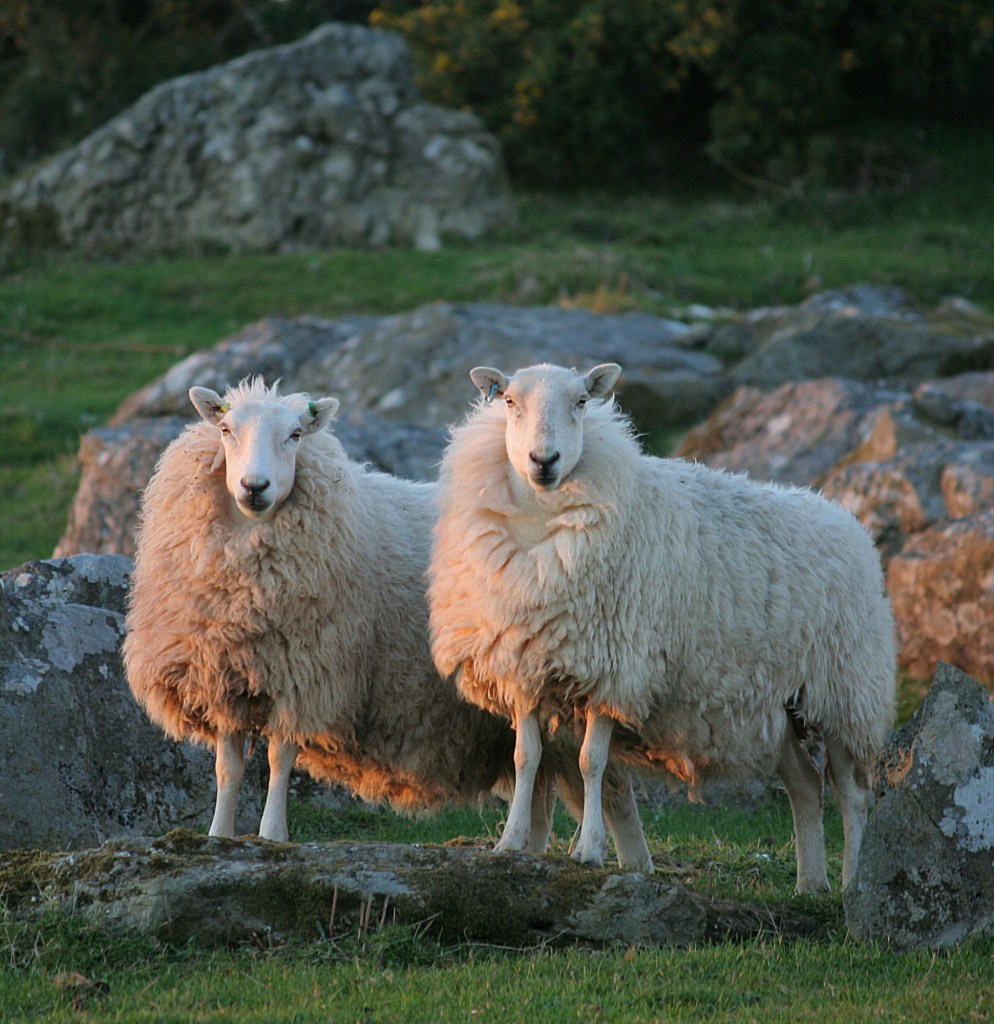
    Two sheep on the rocks
    A photo I took a while back

    Their wool catches light differently than you’d expect. Up close, it’s not the clean white of children’s drawings but cream and gray, sometimes rust-stained at the edges, textured like an old sweater that’s been loved too long. It moves as they move, a living textile that shifts and settles with each breath.
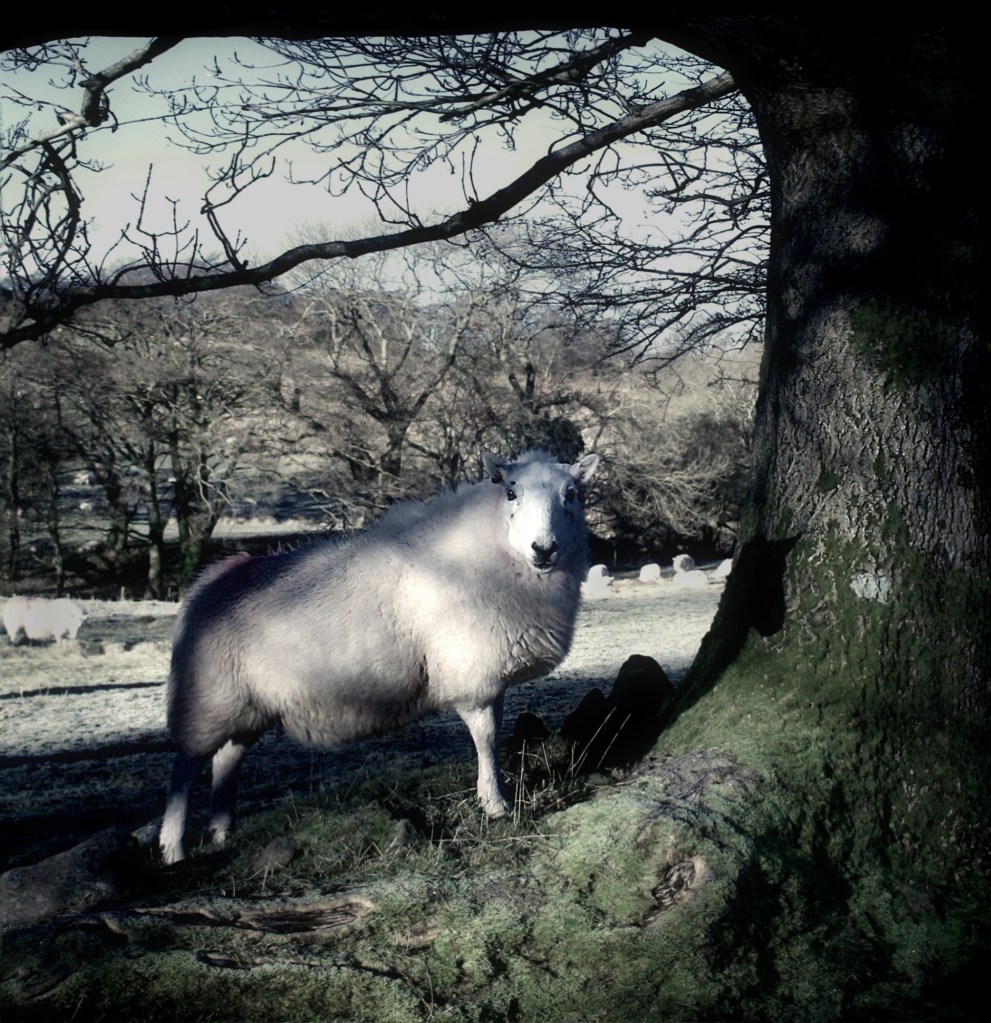
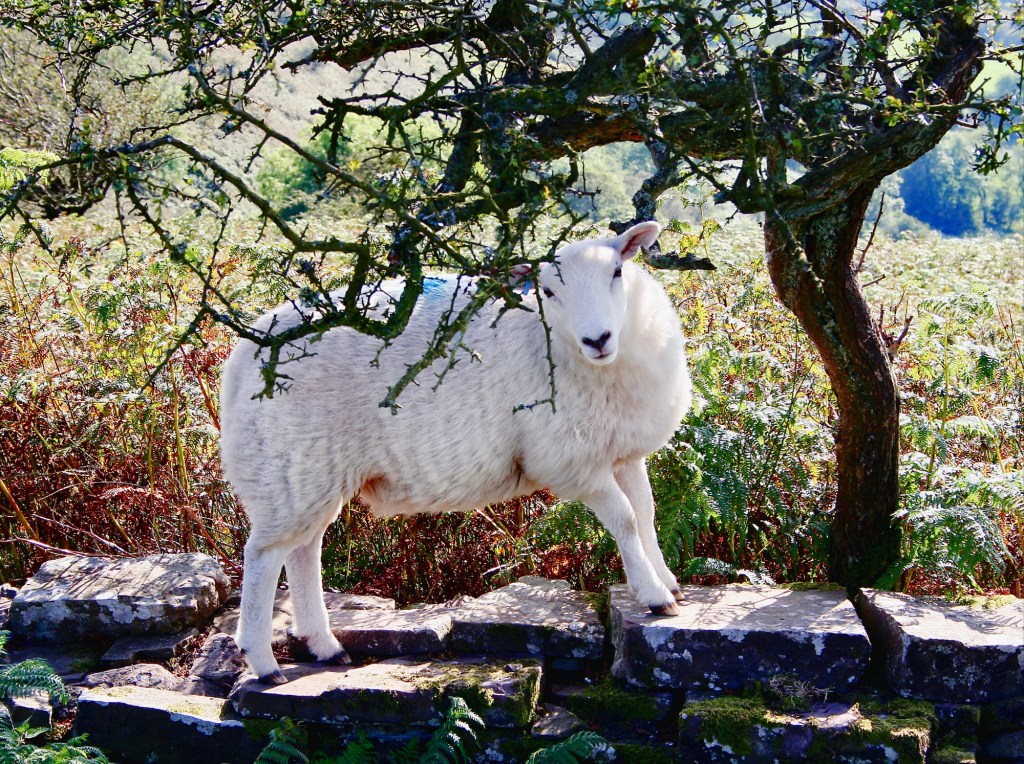
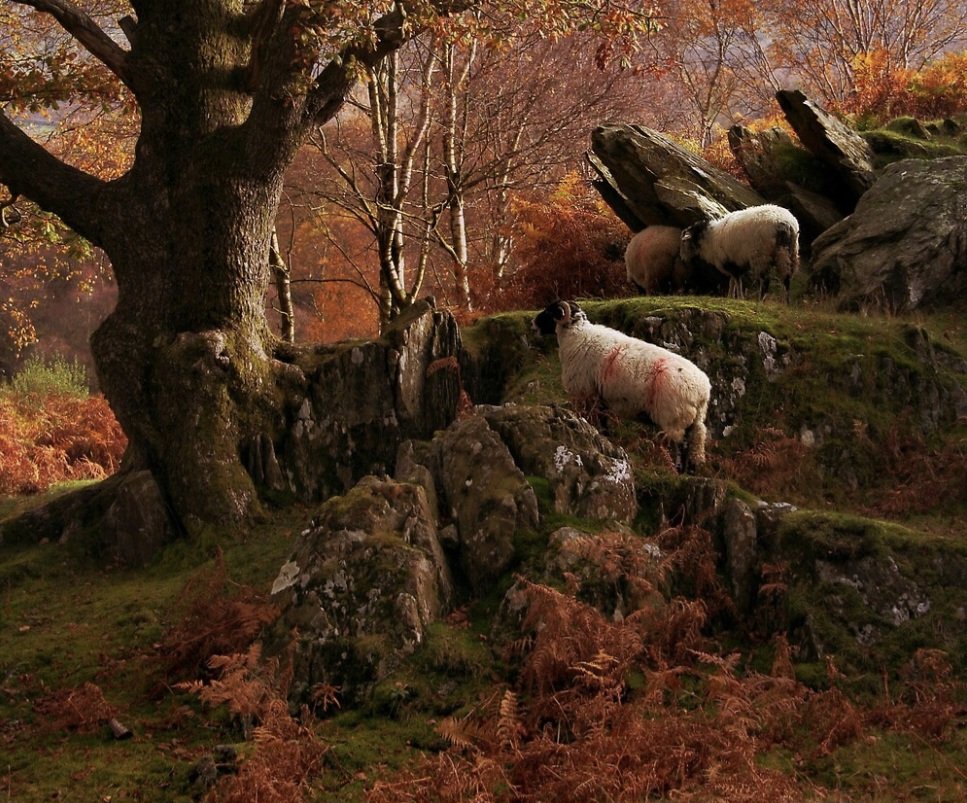
    A sheep under a tree
    I tried to frame this one with the tree

    They have a way of existing that feels adjacent to time rather than driven by it. A sheep will look at you with those rectangular pupils – unsettling until you get used to them – and seem to reach no particular conclusion. Then back to grazing. The repetitive motion of heads lowering, jaws working sideways, a rhythm that could be meditative if you let it.

    The smell is earthy and warm. Lanolin and grass and something else, something animal and honest. It clings to fence posts and lingers in the air, especially after rain when everything grows heavier and more present.

    Standing near them, you notice how much they notice. An ear flicks toward a distant sound. One lifts its head, and others follow – not panicked, just checking. They’re always checking, always peripherally aware, even in their apparent contentment.

    There’s something grounding about their physicality. The solid weight of them. The way they occupy space without apology, practical bodies built for weather and terrain. No pretense. Just wool and bone and the day’s work of eating, which they approach with steady focus.

    In their company, your own breathing slows to match the pace of the field.


    If you find my photography or my writing inspiring and uplifting, consider supporting what I do. Buy me a coffee on Ko-fi.
    Your support makes a difference in my life and helps me create more of what you, and I, like. Thank you!
    Tap here for a list of 100 endangered animals and plants.

    100 endangered plant and animal species

    * Abies beshanzuensis (Baishan fir) – Plant (Tree) – Baishanzu Mountain, Zhejiang, China – Three mature individuals

    * Actinote zikani – Insect (butterfly) – Near São Paulo, Atlantic forest, Brazil – Unknown numbers

    * Aipysurus foliosquama (Leaf scaled sea-snake) – Reptile – Ashmore Reef and Hibernia Reef, Timor Sea – Unknown numbers * Amanipodagrion gilliesi (Amani flatwing) – Insect (damselfly) – Amani-Sigi Forest, Usamabara Mountains, Tanzania – < 500 individuals * Antisolabis seychellensis – Insect – Morne Blanc, Mahé island, Seychelles – Unknown numbers * Antilophia bokermanni (Araripe manakin) – Bird – Chapado do Araripe, South Ceará, Brazil – 779 individuals * Aphanius transgrediens (Aci Göl toothcarp) – Fish – south-eastern shore of former Lake Aci, Turkey – Few hundred pairs * Aproteles bulmerae (Bulmer’s fruit bat) – Mammal – Luplupwintern Cave, Western Province, Papua New Guinea – 150 * Ardea insignis (White bellied heron) – Bird – Bhutan, North East India and Myanmar – 70–400 individuals * Ardeotis nigriceps (Great Indian bustard) – Bird – Rajasthan, Gujarat, Maharashtra, Andhra Pradesh, Karnataka and Madhya, India – 50–249 mature individuals * Astrochelys yniphora (Ploughshare tortoise) – Reptile – Baly Bay region, northwestern Madagascar – 440–770 * Atelopus balios (Rio Pescado stubfoot toad) – Amphibian – Azuay, Cañar and Guyas provinces, south-western Ecuador – Unknown numbers * Aythya innotata (Madagascar pochard) – Bird – volcanic lakes north of Bealanana, Madagascar – 80 mature individuals * Azurina eupalama (Galapagos damsel fish) – Fish – Unknown numbers – Unknown numbers * Bahaba taipingensis (Giant yellow croaker) – Fish – Chinese coast from Yangtze River, China to Hong Kong – Unknown numbers * Batagur baska (Common batagur) – Reptile (turtle) – Bangladesh, Cambodia, India, Indonesia and Malaysia – Unknown numbers * Bazzania bhutanica – Plant – Budini and Lafeti Khola, Bhutan – 2 sub-populations * Beatragus hunteri (Hirola) – Mammal (antelope) – South-east Kenya and possibly south-west Somalia – < 1,000 individuals * Bombus franklini (Franklin’s bumblebee) – Insect (bee) – Oregon and California – Unknown numbers * Brachyteles hypoxanthus (Northern muriqui / Woolly spider monkey) – Mammal (primate) – Atlantic forest, south-eastern Brazil – < 1,000 * Bradypus pygmaeus (Pygmy three-toed sloth) – Mammal – Isla Escudo de Veraguas, Panama – < 500 * Callitriche pulchra – Plant (freshwater) – pool on Gavdos, Greece – Unknown numbers * Calumma tarzan (Tarzan’s chameleon) – Reptile – Anosibe An’Ala region, eastern Madagascar – < 100 * Cavia intermedia (Santa Catarina’s guinea pig) – Mammal (rodent) – Moleques do Sul Island, Santa Catarina, Brazil – 40–60 * Cercopithecus roloway (Roloway guenon) – Mammal (primate) – Côte d’Ivoire – Unknown numbers * Coleura seychellensis (Seychelles sheath-tailed bat) – Mammal (bat) – Two small caves on Silhouette and Mahé, Seychelles – < 100 * Cryptomyces maximus (Willow blister) – Fungi – Pembrokeshire, United Kingdom – Unknown numbers * Cryptotis nelsoni (Nelson’s small-eared shrew) – Mammal (shrew) – Volcán San Martín Tuxtla, Veracruz, Mexico – Unknown numbers * Cyclura collei (Jamaican iguana / Jamaican rock iguana) – Reptile – Hellshire Hills, Jamaica – Unknown numbers * Daubentonia madagascariensis (Aye-aye) – Mammal (primate) – Deciduous forest, East Madagascar – Unknown numbers * Dendrophylax fawcettii (Cayman Islands ghost orchid) – Plant (orchid) – Ironwood Forest, George Town, Grand Cayman – Unknown numbers * Dicerorhinus sumatrensis (Sumatran rhino) – Mammal (rhino) – Sabah, Sarawak and Peninsular Malaysia, Kalimantan and Sumatra, Indonesia – < 100 (more recent estimates suggest 34-47) * Diomedea amsterdamensis (Amsterdam albatross) – Bird – Breeds on Plateuau des Tourbières, Amsterdam Island, Indian Ocean. – 100 mature individuals * Dioscorea strydomiana (Wild yam) – Plant – Oshoek area, Mpumalanga, South Africa – 200 * Diospyros katendei – Plant (tree) – Kasyoha-Kitomi Forest Reserve, Uganda – 20 individuals in a single population * Dipterocarpus lamellatus – Plant (tree) – Siangau Forest Reserve, Sabah, Malaysia – 12 individuals * Discoglossus nigriventer (Hula painted frog) – Amphibian – Hula Valley, Israel – Unknown numbers * Dombeya mauritiana – Plant – Mauritius – Unknown numbers * Elaeocarpus bojeri (Bois Dentelle) – Plant (tree) – Grand Bassin, Mauritius – < 10 individuals * Eleutherodactylus glandulifer (La Hotte glanded frog) – Amphibian – Massif de la Hotte, Haiti – Unknown numbers * Eleutherodactylus thorectes (Macaya breast-spot frog) – Amphibian – Formon and Macaya peaks, Masif de la Hotte, Haiti – Unknown numbers * Eriosyce chilensis (Chilenito (cactus)) – Plant – Pta Molles and Pichidungui, Chile – < 500 individuals * Erythrina schliebenii (Coral tree) – Plant – Namatimbili-Ngarama Forest, Tanzania – < 50 individuals * Euphorbia tanaensis – Plant (tree) – Witu Forest Reserve, Kenya – 4 mature individuals * Eurynorhyncus pygmeus (Spoon-billed sandpiper) – Bird – Breeds in Russia, migrates along the East Asian-Australasian Flyway to wintering grounds in India, Bangladesh and Myanmar – 100 breeding pairs * Ficus katendei – Plant – Kasyoha-Kitomi Forest Reserve, Ishasha River, Uganda – < 50 mature individuals * Geronticus eremita (Northern bald ibis) – Bird – Breeds in Morocco, Turkey and Syria. Syrian population winters in central Ethiopia. – About 3000 individuals * Gigasiphon macrosiphon – Plant (flower) – Kaya Muhaka, Gongoni and Mrima Forest Reserves, Kenya, Amani Nature Reserve, West Kilombero Scarp Forest Reserve, and Kihansi Gorge, Tanzania – 33 * Gocea ohridana – Mollusc – Lake Ohrid, Macedonia – Unknown numbers * Heleophryne rosei (Table mountain ghost frog) – Amphibian – Table Mountain, Western Cape Province, South Africa – Unknown numbers * Hemicycla paeteliana – Mollusc (land snail) – Jandia peninsula, Fuerteventura, Canary Islands – Unknown numbers * Heteromirafa sidamoensis (Liben lark) – Bird – Liben Plains, southern Ethiopia – 90–256 * Hibiscadelphus woodii – Plant (tree) – Kalalau Valley, Hawaii – Unknown numbers * Hucho perryi (Sakhalin taimen) – Fish – Russian and Japanese rivers, Pacific Ocean between Russia and Japan – Unknown numbers * Johora singaporensis (Singapore freshwater crab) – Crustacean – Bukit Timah Nature Reserve and streamlet near Bukit Batok, Singapore – Unknown numbers * Lathyrus belinensis (Belin vetchling) – Plant – Outskirts of Belin village, Antalya, Turkey – < 1,000 * Leiopelma archeyi (Archey’s frog) – Amphibian – Coromandel peninsula and Whareorino Forest, New Zealand – Unknown numbers * Lithobates sevosus (Dusky gopher frog) – Amphibian – Harrison County, Mississippi, USA – 60–100 * Lophura edwardsi (Edwards’s pheasant) – Bird – Quang Binh, Quang Tri and Thua Thien-Hue, Viet Nam – Unknown numbers * Magnolia wolfii – Plant (tree) – Risaralda, Colombia – 3 * Margaritifera marocana – Mollusc – Oued Denna, Oued Abid and Oued Beth, Morocco – < 250 * Moominia willii – Mollusc (snail) – Silhouette Island, Seychelles – < 500 * Natalus primus (Cuban greater funnel eared bat) – Mammal (bat) – Cueva La Barca, Isle of Pines, Cuba – < 100 * Nepenthes attenboroughii (Attenborough’s pitcher plant) – Plant – Mount Victoria, Palawan, Philippines – Unknown numbers * Nomascus hainanus (Hainan black crested gibbon) – Mammal (primate) – Hainan Island, China – 20 * Neurergus kaiseri (Luristan newt) – Amphibian – Zagros Mountains, Lorestan, Iran – < 1,000 * Oreocnemis phoenix (Mulanje red damsel) – Insect (damselfly) – Mulanje Plateau, Malawi – Unknown numbers * Pangasius sanitwongsei (Pangasid catfish) – Fish – Chao Phraya and Mekong basins in Cambodia, China, Lao PDR, Thailand and Viet Nam – Unknown numbers * Parides burchellanus – Insect (butterfly) – Cerrado, Brazil – < 100 * Phocoena sinus (Vaquita) – Mammal (porpoise) – Northern Gulf of California, Mexico – 12 * Picea neoveitchii (Type of spruce tree) – Plant (tree) – Qinling Range, China – Unknown numbers * Pinus squamata (Qiaojia pine) – Plant (tree) – Qiaojia, Yunnan, China – < 25 * Poecilotheria metallica (Gooty tarantula / Metallic tarantula / Peacock tarantula / Salepurgu) – Spider – Nandyal and Giddalur, Andhra Pradesh, India – Unknown numbers * Pomarea whitneyi (Fatuhiva monarch) – Bird – Fatu Hiva, Marquesas Islands, French Polynesia – 50 * Pristis pristis (Common sawfish) – Fish – Coastal tropical and subtropical waters of Indo-Pacific and Atlantic Oceans. Currently largely restricted to northern Australia – Unknown numbers * Hapalemur simus (Greater bamboo lemur) – Mammal (primate) – Southeastern and southcentral rainforests of Madagascar – 500 * Propithecus candidus (Silky sifaka) – Mammal (primate) – Maroantsetra to Andapa basin, and Marojeju Massif, Madagascar – 100–1,000 * Psammobates geometricus (Geometric tortoise) – Reptile – Western Cape Province, South Africa – Unknown numbers * Pseudoryx nghetinhensis (Saola) – Mammal – Annamite mountains, on the Viet Nam – PDR Laos border – Unknown numbers * Psiadia cataractae – Plant – Mauritius – Unknown numbers * Psorodonotus ebneri (Beydaglari bush-cricket) – Insect – Beydaglari range, Antalaya, Turkey – Unknown numbers * Rafetus swinhoei (Red River giant softshell turtle) – Reptile – Hoan Kiem Lake and Dong Mo Lake, Viet Nam, and Suzhou Zoo, China – 3 * Rhinoceros sondaicus (Javan rhino) – Mammal (rhino) – Ujung Kulon National Park, Java, Indonesia – < 100 * Rhinopithecus avunculus (Tonkin snub-nosed monkey) – Mammal (primate) – Northeastern Vietnam – < 200 * Rhizanthella gardneri (West Australian underground orchid) – Plant (orchid) – Western Australia, Australia – < 100 * Rhynchocyon spp. (Boni giant sengi) – Mammal – Boni-Dodori Forest, Lamu area, Kenya – Unknown numbers * Risiocnemis seidenschwarzi (Cebu frill-wing) – Insect (damselfly) – Rivulet beside the Kawasan River, Cebu, Philippines – Unknown numbers * Rosa arabica – Plant – St Katherine Mountains, Egypt – Unknown numbers, 10 sub-populations * Salanoia durrelli (Durrell’s vontsira) – Mammal (mongoose) – Marshes of Lake Alaotra, Madagascar – Unknown numbers * Santamartamys rufodorsalis (Red crested tree rat) – Mammal (rodent) – Sierra Nevada de Santa Marta, Colombia – Unknown numbers * Scaturiginichthys vermeilipinnis (Red-finned blue-eye) – Fish – Edgbaston Station, central western Queensland, Australia – 2,000–4,000 * Squatina squatina (Angel shark) – Fish – Canary Islands – Unknown numbers * Sterna bernsteini (Chinese crested tern) – Bird – Breeding in Zhejiang and Fujian, China. Outside breeding season in Indonesia, Malaysia, Philippines, Taiwan, Thailand. – < 50 * Syngnathus watermeyeri (Estuarine pipefish) – Fish – Kariega Estuary to East Kleinemonde Estuary, Eastern Cape Province, South Africa – Unknown numbers * Tahina spectabilis (Suicide palm / Dimaka) – Plant – Analalava district, north-western Madagascar – 90 * Telmatobufo bullocki (Bullock’s false toad) – Amphibian (frog) – Nahuelbuta, Arauco Province, Chile – Unknown numbers * Tokudaia muenninki (Okinawa spiny rat) – Mammal (rodent) – Okinawa Island, Japan – Unknown numbers * Trigonostigma somphongsi (Somphongs’s rasbora) – Fish – Mae Khlong basin, Thailand – Unknown numbers * Valencia letourneuxi – Fish – Southern Albania and Western Greece – Unknown numbers * Voanioala gerardii (Forest coconut) – Plant – Masoala peninsula, Madagascar – < 10 * Zaglossus attenboroughi (Attenborough’s echidna) – Mammal – Cyclops Mountains, Papua Province, Indonesia – Unknown numbers

    Tap to view my redbubble gallery.
  • A Snapshot of Welsh Tranquility

    A Snapshot of Welsh Tranquility

    Wales in stillness breathes,
    Sheep beneath the twisted tree,
    Time folds into now.

    Sheep, Stones, and Sunlight

    There is a moment in every journey where time seems to pause. For me, it happened in the quiet Welsh countryside, where a simple sheep under a gnarled tree stopped me in my tracks. The air was crisp, carrying the scent of moss and bracken, and the landscape stretched wide, untamed yet inviting. This single, unassuming scene—of stone walls, dappled sunlight, and the curious gaze of an animal—felt like a distillation of everything Wales represents. 

    The sheep, a quintessential emblem of this land, stood framed by a spindly tree that clung to the rocky ground. It had the air of an accidental guardian, standing atop ancient stones as if overseeing a realm where history, nature, and humanity blend seamlessly. It didn’t flee or flinch when I approached with my camera, just watched with an intensity that made me feel like the visitor I was. And in that exchange, wordless and fleeting, I felt an unexpected sense of calm. 

    It’s easy to rush through life, ticking off sights and experiences like items on a to-do list. But here, in this quiet moment, I was reminded of the value of stillness. Of the beauty in ordinary things. The lichen-covered stones beneath the sheep’s hooves hinted at stories far older than mine—walls built by hands long gone, dividing fields that have seen generations of life. The sunlight filtering through the tree branches cast shifting patterns on the ground, a reminder of time’s gentle, inevitable flow. 

    Wales has a way of grounding you. Its hills and valleys aren’t just landscapes; they’re vessels of memory. The sheep, as ubiquitous as they are, embody this spirit. They are not just creatures grazing absentmindedly—they are part of the rhythm of the land, living symbols of its enduring character. 

    As I walked away from the scene, I felt lighter. The world seemed a little quieter, my thoughts a little clearer. That single sheep, perched on its stone stage, had given me something unexpected: perspective. It reminded me that not all moments need to be grand to be meaningful. Sometimes, it’s in the simplest of scenes that we find what we didn’t know we were looking for. 

    And that’s the magic of Wales—a place where even the smallest details invite you to slow down, look closer, and feel more deeply.

    If you find this content inspiring and uplifting, consider supporting what I do. Buy me a coffee on Ko-fi.
    Your support makes a difference in my life and helps me create more of what you like. Thank you!
    Tap to view my redbubble gallery.
  • Brigid – The Sheep

    Brigid – The Sheep

    Brigid – The Goddess
    In the world of nature and mythology, some names carry a mystique that transcends time and culture. Brigid is one such name – the Celtic goddess of fire, poetry, and healing. Let’s explore Brigid’s namesake and the rich tapestry of Celtic mythology that envelops her.

    Tap to view my redbubble gallery.

    Brigid – The Shepherdess of Souls
    In some Celtic tales, Brigid was seen as a shepherdess of souls. Just as a shepherd cares for and guides their flock, Brigid was thought to watch over the souls of the departed. The image of a gentle shepherdess, tending to the souls of the deceased, reinforces the connection between Brigid and sheep.

    Brigid’s hearth, a beacon in the night,
    Her flames bring warmth, banish fright.
    In the darkest hours, her light does gleam,
    Guiding lost souls in a gentle, loving dream.

    Brigid – The Celtic Flame
    Brigid, also known as Brigit or Bride, is a beloved figure in Celtic mythology. She is often associated with the Triple Goddess archetype, embodying three distinct aspects: fire, poetry, and healing. Each facet of her character is deeply intertwined with the essence of life itself.

    Amidst the shadows, Brigid’s grace,
    She tends our souls, in the darkest place.
    Her gentle hand, a comforting guide,
    In her presence, our fears subside.

    Brigid – The Fire Goddess
    At the heart of Brigid’s mythology is the element of fire. She is the guardian of the sacred hearth, providing warmth and sustenance to her people. This role is deeply symbolic, as fire represents both physical warmth and the inner flame of inspiration. Brigid’s presence in the home ensures not only the survival of the body but also the nourishment of the spirit.

    From the hearth, her radiance spreads,
    Illuminating the path where darkness treads.
    Brigid’s care, a soothing embrace,
    Guiding us through life’s mysteries with grace.

    Brigid – The Poetess
    Another facet of Brigid’s multifaceted character is her role as a patron of poets and bards. In Celtic tradition, storytelling and poetry held a revered place, and Brigid’s influence in this realm is a testament to her power to inspire. She stirs the creative fires within those who seek to capture the essence of life in verse and prose.

    Brigid – The Healer
    As a healer, Brigid symbolises the restorative power of nature. Her touch brings forth the greenery of spring and the blossoming of life. Her ability to mend wounds, both physical and spiritual, is a reminder of the interconnectedness of all living things. Brigid’s healing presence resonates in the gentle graze of her woolly coat, offering solace and comfort to those who find shelter beneath it.

    Tap to view my redbubble gallery.
  • Blue Sheep’s Tale

    Blue Sheep’s Tale

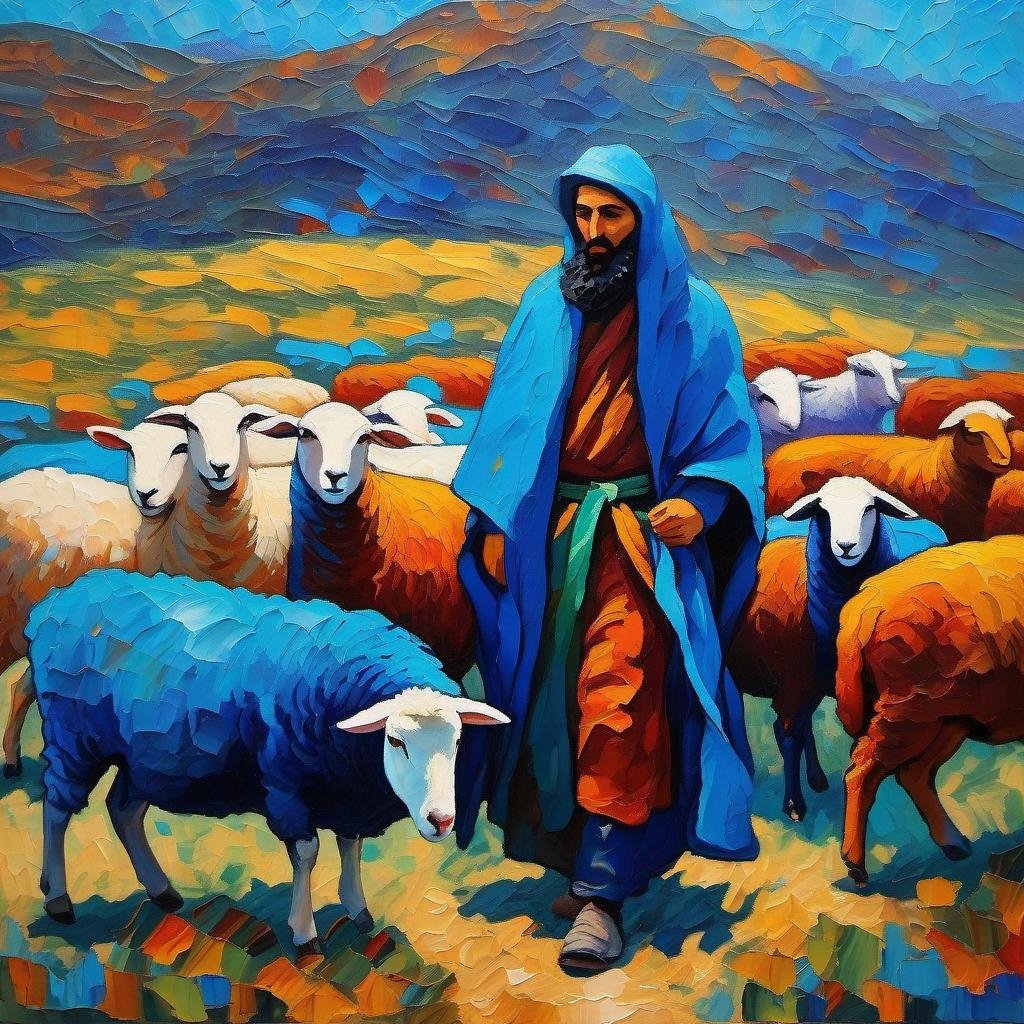
    Once upon a time, in the ancient land of Judea, there lived a humble shepherd named Samuel. He tended to a flock of sheep, and among them, there was a very special one – a sheep with a rare and beautiful blue fleece

    The blue sheep stood out from the rest, its fleece shimmering like the evening sky adorned with stars. Samuel believed that this sheep was a gift from the heavens, and he named it “Azul,” which meant blue in his native tongue.

    As the days passed, Azul’s unique appearance drew the attention of many villagers. They marveled at the sight of the blue sheep, believing it to be a sign from the divine. Samuel cherished Azul and treated it with great care, always making sure it grazed in the lushest pastures and drank from the purest streams.

    One night, as Samuel tended his flock under the starry heavens, a group of bandits appeared on the horizon. The shepherd knew that his flock was in danger, and he stood firm, vowing to protect them with his life. But the bandits had heard of the mythical blue sheep, and they desired to possess it for themselves, believing it would bring them immense wealth and power.

    As the bandits approached, Samuel prayed for guidance, clutching his staff tightly. Suddenly, a bright light filled the night sky, and a soothing voice echoed in his mind, “Fear not, for I am with you.”

    With newfound courage, Samuel stood tall before the menacing bandits, his eyes ablaze with unwavering determination. The cool night air seemed to hum with a divine energy as he took a deep breath and began to speak, his voice carrying the weight of his unshakable faith. He recounted the countless nights he had spent under the starlit skies, feeling the presence of God in the gentle rustling of leaves and the soothing whispers of the wind. With passion and eloquence, he shared the sacred bond he had formed with Azul, the blue sheep, a bond that transcended mere ownership and became a testament to the boundless love and grace of the Almighty.

    Samuel painted a vivid picture of Azul’s divine fleece, its blue hue shimmering like the very essence of heaven itself, reminding the bandits that this sheep was no ordinary creature, but a living manifestation of God’s creativity and divine touch. The shepherd’s words resonated in the hearts of the bandits, penetrating the fortress of their greed and selfish desires. Tears welled up in their eyes as they began to grasp the depth of Samuel’s conviction and the sanctity of his relationship with Azul.

    In that transformative moment, the bandits felt a stirring in their souls, a profound realization that there was more to life than material wealth. They recognized the darkness that had clouded their hearts and the emptiness that their ill intentions had brought upon them. As they listened to Samuel’s fervent testimony, they felt a spark of hope ignite within, leading them towards redemption.

    The once merciless bandits dropped to their knees, their hardened expressions softened by remorse and regret. They vowed to abandon their wicked ways and seek a path of righteousness instead. With trembling hands, they returned the stolen goods they had collected from their ruthless exploits, seeking to undo the harm they had caused to innocent lives.

    Samuel’s unwavering faith and his ability to see the divine in all beings had not only saved his beloved Azul but had also kindled a fire of transformation in the hearts of those who had sought to harm them. From that night onward, the bandits vowed to use their skills for good, protecting the weak and standing up against injustice. Their lives became a testament to the profound impact that faith and compassion can have on even the most hardened souls.

    As the sun rose on a new day, Samuel and Azul returned to their peaceful existence, surrounded not only by their flock but also by the warmth of changed hearts and renewed spirits. The tale of the shepherd and his blue sheep echoed far beyond the hills of Judea, inspiring countless others to look beyond the surface and find the divine spark in all living beings, embracing a path of love, grace, and compassion.

    Samuel’s life took a divine turn, and he became not just a shepherd but a wise spiritual guide. He used Azul’s presence as a teaching tool, reminding people of the beauty and uniqueness of God’s creations. Many found solace in the shepherd’s words and found a deeper connection with their own faith.

    As the years passed, Azul’s legacy lived on, and the blue sheep’s fleece became a symbol of hope and inspiration for generations to come. Samuel’s devotion to his flock, especially Azul, left an indelible mark on the hearts of those who heard his tale, reminding them of the power of faith and the significance of finding beauty in the simplest of things.

    The moral of the story is to value and appreciate the uniqueness of God’s creations and to have faith in times of adversity. Through Samuel’s devotion to his special blue sheep, Azul, he exemplifies the importance of treating all living beings with care and respect. The tale emphasizes that beauty can be found in the simplest of things and that sometimes, what sets us apart can also be a source of inspiration and hope for others. Furthermore, the story teaches the power of faith and how it can guide us through challenging times, providing courage and strength to face difficulties. It encourages us to stay true to our principles, even in the face of greed and temptation, and to believe in the presence of a higher power that can guide and protect us.

    Tap to view my redbubble gallery.

    More interesting posts

  • Grassroots Gathering

    Grassroots Gathering

    “Ewe-nited We Graze, Strong and Free”

    Minutes for the Meeting of the Union of Sheep (US)

    Tap to view in my redbubble gallery.

    Location: Under the ancient Oak.

    Attendance: All members of the US, excluding those who wandered off or were still taking their afternoon nap.

    Agenda:
    I. Election of the new leader of the US.
    II. Ways to improve grass-grazing efficiency.
    III. Complaints and suggestions from members.
    IV. Planning for the Annual Talent Show.

    I. Election of the New Leader of the US.
    The outgoing leader, Baaa-rack Obama, informed the members that it was time for him to step down and pass on the mantle of leadership to a new sheep. The members agreed and held an election to choose the new leader.

    After a heated debate and a round of “baa-ing” from the members, the winner was announced as Wooly McSheepface. Wooly McSheepface is known for her exceptional wool-growing skills and her ability to lead the flock to greener pastures.

    II. Ways to Improve Grass-Grazing Efficiency.
    The members discussed various ways to improve the efficiency of grass-grazing. A few suggestions were made, including:

    a. Grazing in a straight line to minimise the number of steps taken
    b. Taking turns to graze in the same spot to ensure all members get an equal share of the grass
    c. Using a systematic pattern while grazing to cover all areas and prevent overgrazing
    The members agreed to try out these suggestions and report back at the next annual meeting.

    III. Complaints and Suggestions from Members.
    A few members raised concerns about the presence of wolves in the area and the need for better security measures. The new leader, Wooly McSheepface, assured the members that steps would be taken to ensure their safety.

    IV. Planning for the Annual Talent Show.
    The members were excited about the idea of a talent show and suggested various categories for the competition, including:

    Best Wool-Growing
    Most Graceful Jumper
    Best Herder
    Most Creative Baa-ing
    Best Impressionist
    Most Photogenic

    The members also agreed to provide prizes for the winners, such as a personalised wool blanket and special recognition at the next annual meeting. The talent show was scheduled for after the hay had been collected from the meadow.

    Adjournment:
    The meeting was adjourned at 4:00 PM with a round of “baa-ing” from all members.

    Signed,
    Baaa-rack Obama (Outgoing Leader)
    Wooly McSheepface (Incoming Leader)

    Tap to view my redbubble gallery.

    More interesting posts

  • Dolly and the Thrill Seekers

    Dolly and the Thrill Seekers

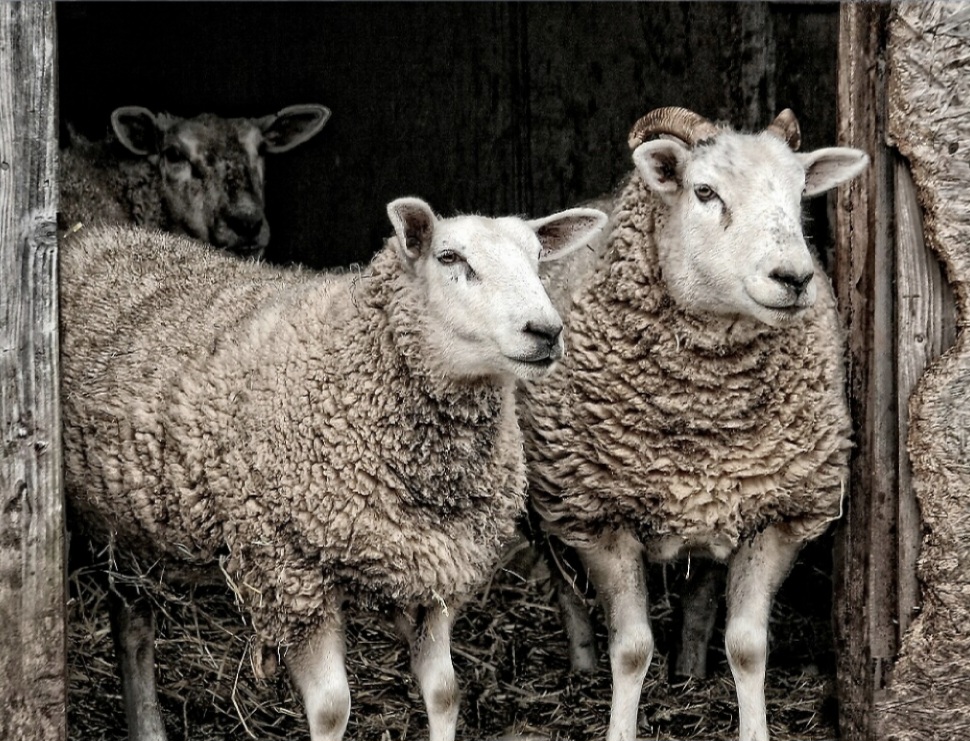
    Dolly bleats-a-lot (left), Woolly Bully (right) and Count Fluffula (lurking in the dark)

    Tap photo to view in redbubble.

    Once upon a time, in a small village, there lived three sheep. Their names were Dolly bleats-a-lot, Count Fluffula, and Woolly Bully. These sheep were quite ordinary, just like any other sheep you might encounter on a farm.

    One day, the three sheep decided they were tired of their mundane lives, and they wanted to do something exciting. So, they set out on an adventure.

    First, they went to the top of a nearby hill. It was a bit windy up there, but they managed to make it to the top without incident. From the top of the hill, they could see the entire village below. It was a rather unremarkable view, but they took a few pictures with their phones just to document the occasion.

    Next, they decided to visit the local amusement park. They had heard that there were lots of fun rides and games there. When they arrived, however, they were disappointed to find that the amusement park was closed for renovations.

    Undeterred, the sheep decided to try something else. They went to the beach, hoping to catch some waves on their surfboards. Unfortunately, the ocean was quite choppy that day, and the sheep were tossed about by the waves. They ended up getting a bit wet, but they had a good time despite the rough conditions.

    In the end, the sheep returned home, feeling a bit disappointed that their adventure had not been more exciting. However, they were grateful for the opportunity to try new things and have a change of scenery. And who knows, perhaps they will have another exciting adventure in the future. The end.

    Tap to view my redbubble gallery.

    Other interesting posts

  • Exploring the Natural Wonders of the Brecon Beacons.

    Exploring the Natural Wonders of the Brecon Beacons.

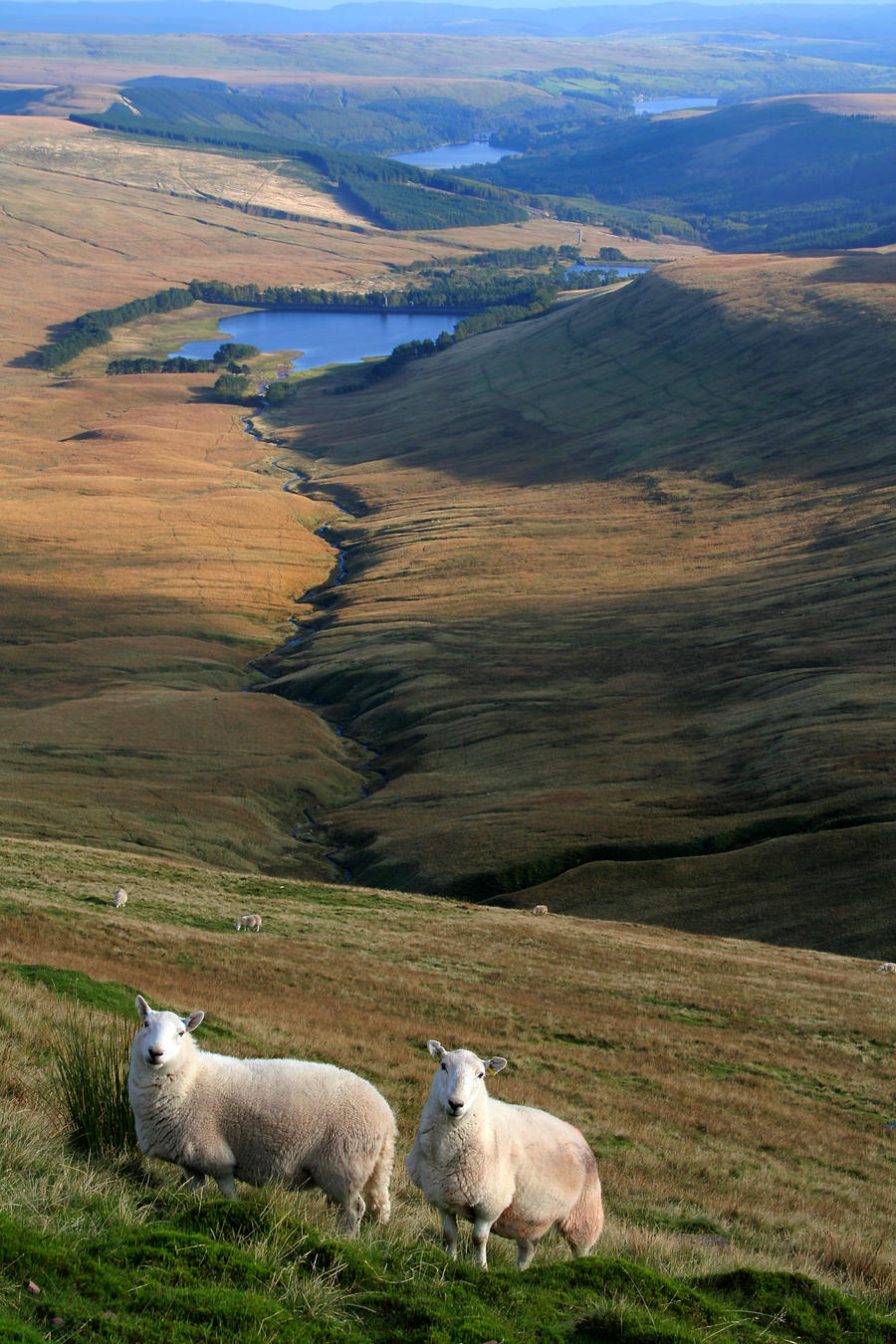
    Rolling green hills
    Ancient stones, a peaceful land
    Nature’s beauty lies

    Wild Welsh Sheep

    The Brecon Beacons National Park is a stunning natural landscape located in South Wales, UK. It covers an area of over 520 square miles and is home to a wide range of flora and fauna, as well as many interesting geological and historical sites.

    The Brecon Beacons are named after the Brecon Beacons mountain range, which forms the centerpiece of the national park. The highest peak in the range is Pen y Fan, which stands at 886 meters (2907 feet) above sea level and offers breathtaking views of the surrounding countryside.

    The national park also includes the Black Mountains and the Fforest Fawr massif, which offer equally impressive vistas and a range of outdoor activities.The Brecon Beacons are known for their rolling hills, picturesque valleys, and stunning waterfalls, making it a popular destination for hikers and nature lovers.

    The national park boasts a number of long-distance walking trails, including the Beacons Way and the Taff Trail, as well as shorter routes that are suitable for all fitness levels. The Brecon Beacons also offer excellent mountain biking, horse riding, and rock climbing opportunities.

    In addition to its natural beauty, the Brecon Beacons are also rich in history and culture. The national park is home to a number of ancient castles, such as Brecon Castle and Hay Castle, as well as historic churches and other landmarks.

    The Brecon Beacons are also home to a number of small villages and towns, each with its own unique character and charm.The Brecon Beacons are a truly special place, offering something for everyone. Whether you’re looking to enjoy the great outdoors, learn about the area’s history and culture, or simply relax and take in the stunning natural beauty, the Brecon Beacons are sure to have something for you.

    Tap to view my redbubble gallery.

    More interesting posts

Design a site like this with WordPress.com
Get started