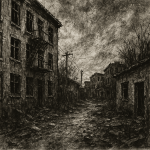
Across the waves, through storm and foam, Erik sails; forever to roam. Cursed by gods, no home, no rest, A ghostly helm, a fate unblessed.
The wind howled through the tattered sail, driving Erik’s ship ever northward. The sea was restless beneath him, dark and endless, as if it sensed the weight of his fate. He stood at the prow, gripping the worn wood, his fingers as calloused as his heart.
They called him Erik the Cursed. Once, he had been a great warrior, a jarl with men who followed him to glory. But he had angered the gods. Some said he had broken an oath to Odin; others whispered of a blood debt unpaid. He had slain his own brother in a rage, and from that day, his luck had soured. Storms found his ships, sickness claimed his crew, and even the strongest shields split under enemy blades.
Now he sailed alone. His men were gone—lost to battle, disease, or the waves. He no longer prayed for their souls. The gods had turned their backs on him, and he had done the same to them. Only the sea remained, cold and merciless.
The mist thickened around him, and the water turned black as night. He knew these waters. They were the border between the world of men and the realm of the dead. A shadow loomed in the fog—a great ship with a sail of tattered souls. Naglfar, the doom-ship of Hel, come to claim him.
Erik laughed, a harsh sound swallowed by the wind. He had fought all his life, and he would not cower now. He drew his sword, though there was no enemy to cut. The ship groaned, the waves rose higher, and the cold seeped into his bones.
Some say his ship was found days later, drifting empty on a still sea. Others claim he still sails, a ghost on the waves, searching for a shore that will never welcome him.
But the old skalds sing of Erik the Cursed, the man who defied his fate—and vanished into legend.
If you find my photography or my writing inspiring and uplifting, consider supporting what I do. Buy me a coffee on Ko-fi. Your support makes a difference in my life and helps me create more of what you, and I, like. Thank you!Tap to view my redbubble gallery.
A riddle here, a riddle there, Cithrus vanishes in mid-air. A wink, a grin, a fleeting sound, He’s nowhere, but still all around.
Teabag Puss
This ceramic CheshireCat sits in my kitchen, watching over my tea bags, its sly grin watching me each time I make a cup of tea. A gift from a little old lady at a curious antique shop—it did more than decorate my home—it ignited my imagination. Staring into its mischievous eyes, I couldn’t help but wonder: what is the story behind this enigmatic creature? What brought it to the tangled paths of Wonderland, and why does it wear that eternal grin? Thus began the tale I wove for it.
Long before Wonderland became the chaotic realm Alice stumbled into, it was a serene, magical land brimming with balance. The Cheshire Cat was not always a smiling phantom; once, he was a young feline with fur as ordinary as the ones who lounge under sunny trees. His name was Cithrus, and he belonged to a powerful family of mystics known as the Moonlit Council. These beings were guardians of Wonderland’s equilibrium, able to manipulate its surreal laws to protect the harmony between whimsy and reason.
Cithrus, however, was different. He was curious about the parts of Wonderland others feared or ignored—the uncharted lands where time had no meaning, the forests where trees whispered riddles, and the skies where stars swapped places on a whim. His unrelenting curiosity often brought trouble, as he frequently bent the rules of their order, pushing Wonderland to the brink of chaos with his experiments.
One day, Cithrus discovered a mysterious rift deep in the Everlaughing Woods, a place where laughter echoed but no soul could be seen. This rift pulsed with forbidden magic, a source of limitless possibility but terrible consequence. Against the warnings of his kin, Cithrus ventured inside. The magic of the rift granted him extraordinary powers, transforming him into the shape-shifting, grinning being we now know. He could now vanish at will, hover in midair, and see truths others couldn’t fathom. But the magic came at a cost—his physical form began to fade, and his emotions detached from the constraints of mortality.
Banished from the Moonlit Council for his recklessness, Cithrus roamed Wonderland as an outsider. Rather than despair, he embraced his new existence, relishing in the freedom and absurdity of his world. Over time, his wit, riddles, and sly demeanor made him a guide of sorts to those who wandered into Wonderland. Some said he loved unraveling people’s minds with his cryptic wisdom; others believed he simply enjoyed the company, as strange and fleeting as it was.
The Cheshire Cat’s perpetual grin, some say, is his way of masking the loneliness of being unanchored in a nonsensical world. Others argue it’s a celebration of the chaos he unleashed—his way of reminding Wonderland that rules, like smiles, can disappear in an instant.
As I walk from the room, feeling the ceramic cat’s eyes on me, I smile at the thought of Cithrus, once a seeker of knowledge, now an eternal enigma. Perhaps he’d approve of my story. Whatever happens, I’m sure he’s already smiling, pleased that his legend continues to grow.
If you find this content inspiring and uplifting, consider supporting what I do. Buy me a coffee on Ko-fi. Your support makes a difference in my life and helps me create more of what you like. Thank you!Tap to view my redbubble gallery.
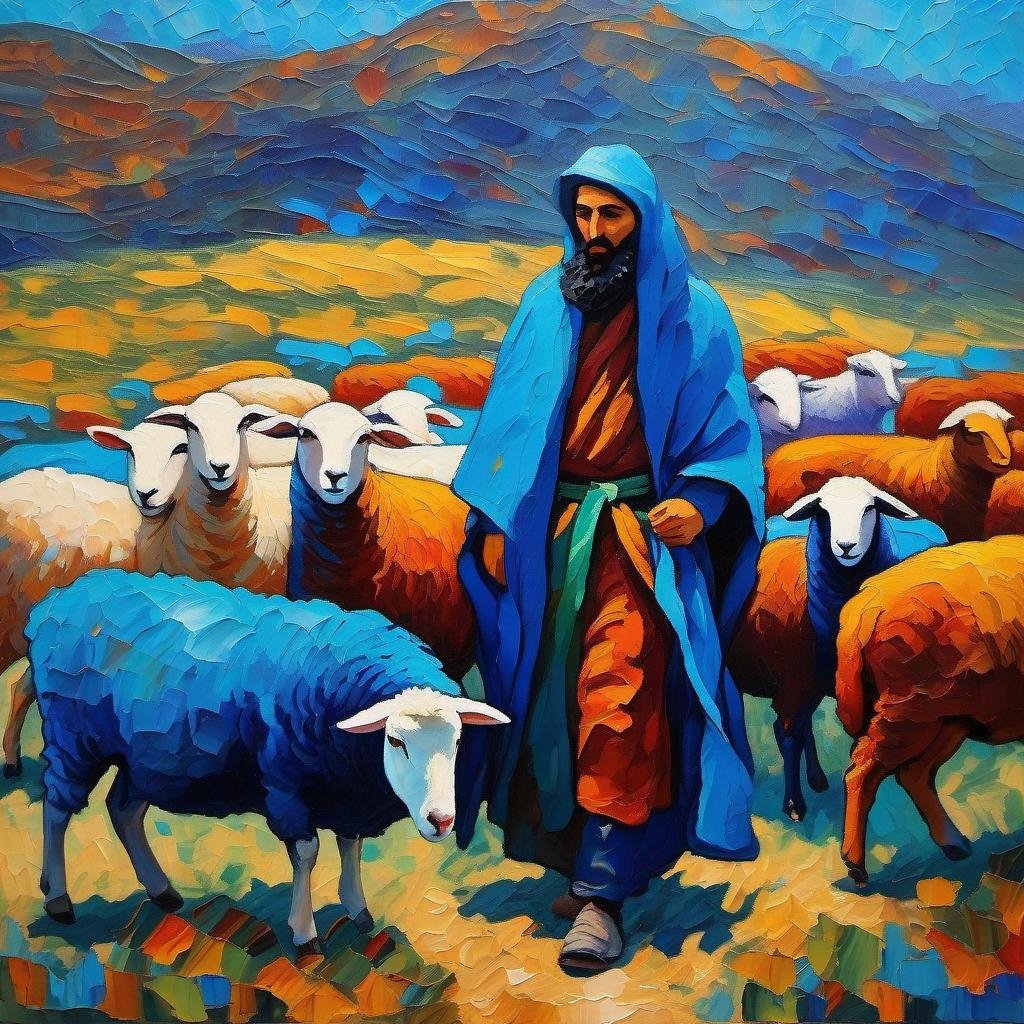
Once upon a time, in the ancient land of Judea, there lived a humble shepherd named Samuel. He tended to a flock of sheep, and among them, there was a very special one – a sheep with a rare and beautiful blue fleece
The blue sheep stood out from the rest, its fleece shimmering like the evening sky adorned with stars. Samuel believed that this sheep was a gift from the heavens, and he named it “Azul,” which meant blue in his native tongue.
As the days passed, Azul’s unique appearance drew the attention of many villagers. They marveled at the sight of the blue sheep, believing it to be a sign from the divine. Samuel cherished Azul and treated it with great care, always making sure it grazed in the lushest pastures and drank from the purest streams.
One night, as Samuel tended his flock under the starry heavens, a group of bandits appeared on the horizon. The shepherd knew that his flock was in danger, and he stood firm, vowing to protect them with his life. But the bandits had heard of the mythical blue sheep, and they desired to possess it for themselves, believing it would bring them immense wealth and power.
As the bandits approached, Samuel prayed for guidance, clutching his staff tightly. Suddenly, a bright light filled the night sky, and a soothing voice echoed in his mind, “Fear not, for I am with you.”
With newfound courage, Samuel stood tall before the menacing bandits, his eyes ablaze with unwavering determination. The cool night air seemed to hum with a divine energy as he took a deep breath and began to speak, his voice carrying the weight of his unshakable faith. He recounted the countless nights he had spent under the starlit skies, feeling the presence of God in the gentle rustling of leaves and the soothing whispers of the wind. With passion and eloquence, he shared the sacred bond he had formed with Azul, the blue sheep, a bond that transcended mere ownership and became a testament to the boundless love and grace of the Almighty.
Samuel painted a vivid picture of Azul’s divine fleece, its blue hue shimmering like the very essence of heaven itself, reminding the bandits that this sheep was no ordinary creature, but a living manifestation of God’s creativity and divine touch. The shepherd’s words resonated in the hearts of the bandits, penetrating the fortress of their greed and selfish desires. Tears welled up in their eyes as they began to grasp the depth of Samuel’s conviction and the sanctity of his relationship with Azul.
In that transformative moment, the bandits felt a stirring in their souls, a profound realization that there was more to life than material wealth. They recognized the darkness that had clouded their hearts and the emptiness that their ill intentions had brought upon them. As they listened to Samuel’s fervent testimony, they felt a spark of hope ignite within, leading them towards redemption.
The once merciless bandits dropped to their knees, their hardened expressions softened by remorse and regret. They vowed to abandon their wicked ways and seek a path of righteousness instead. With trembling hands, they returned the stolen goods they had collected from their ruthless exploits, seeking to undo the harm they had caused to innocent lives.
Samuel’s unwavering faith and his ability to see the divine in all beings had not only saved his beloved Azul but had also kindled a fire of transformation in the hearts of those who had sought to harm them. From that night onward, the bandits vowed to use their skills for good, protecting the weak and standing up against injustice. Their lives became a testament to the profound impact that faith and compassion can have on even the most hardened souls.
As the sun rose on a new day, Samuel and Azul returned to their peaceful existence, surrounded not only by their flock but also by the warmth of changed hearts and renewed spirits. The tale of the shepherd and his blue sheep echoed far beyond the hills of Judea, inspiring countless others to look beyond the surface and find the divine spark in all living beings, embracing a path of love, grace, and compassion.
Samuel’s life took a divine turn, and he became not just a shepherd but a wise spiritual guide. He used Azul’s presence as a teaching tool, reminding people of the beauty and uniqueness of God’s creations. Many found solace in the shepherd’s words and found a deeper connection with their own faith.
As the years passed, Azul’s legacy lived on, and the blue sheep’s fleece became a symbol of hope and inspiration for generations to come. Samuel’s devotion to his flock, especially Azul, left an indelible mark on the hearts of those who heard his tale, reminding them of the power of faith and the significance of finding beauty in the simplest of things.
The moral of the story is to value and appreciate the uniqueness of God’s creations and to have faith in times of adversity. Through Samuel’s devotion to his special blue sheep, Azul, he exemplifies the importance of treating all living beings with care and respect. The tale emphasizes that beauty can be found in the simplest of things and that sometimes, what sets us apart can also be a source of inspiration and hope for others. Furthermore, the story teaches the power of faith and how it can guide us through challenging times, providing courage and strength to face difficulties. It encourages us to stay true to our principles, even in the face of greed and temptation, and to believe in the presence of a higher power that can guide and protect us.
Horse’s steady gazeStrengthful eyes that dare to meetChallenge accepted Courage is the strength to face our fears,… Read more: Darkness, Power and Beauty
The Lonely Cottage Tap to view in my redbubble gallery.
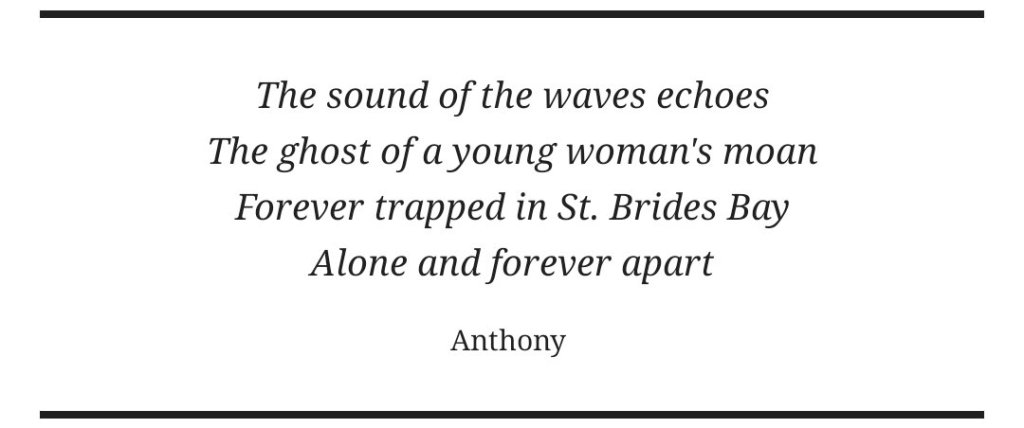
A small cottage nestled on the lonely Pembrokeshire coast, in an area known as St. Brides Bay. It was said that the bay gets its name from the ancient church that stands near the cliffs, dedicated to the patron saint of young brides.
The picturesque little cottage had white walls and a thatched roof, surrounded by wildflowers and tall grasses. It had been passed down through generations of a local family, who would often spend their summers there, enjoying the peaceful surroundings and the shoothing sound of the waves crashing against the shore. On winter nights, they would enjoy the open fire’s warmth as the wind howled over the sea.
However, as the years went by, the cottage began to fall into disrepair. To the villager’s bemusement, the family stopped visiting, and the cottage was left to the elements. The thatch began to rot, the windows cracked, and the walls crumbled. Eventually, the cottage was abandoned, and it became nothing more than a forgotten ruin.
But the cottage was not truly abandoned. For it was said that the ghost of a young woman still lingered there, wandering the ruins, her long, white dress trailing behind her. She was said to be the ghost of a young woman who had lived in the cottage many years ago. She had been in love with a young man from the village, but their love was forbidden by her family and he was sent to sea to keep them apart. In a fit of despair, she threw herself from the cliffs, her ghost remaining behind to mourn her lost love.
The villagers avoided the cottage, believing it to be cursed. But one day, a young couple, drawn by the beauty of the coast, decided to buy the cottage and restore it to its former glory. As they began their renovations, they soon discovered that the ghost of the young woman was not the only thing haunting the cottage. There were strange noises in the night and objects would move on their own. The couple became terrified and decided to leave the cottage, never to return.
Now, the cottage once again stands abandoned, and the ghost of the young woman still wanders the ruins, her love for her lost lover still unfulfilled. It is said that on quiet nights, her ghostly figure can be seen standing on the cliffs, looking out to sea, waiting for the return of her true love.
The villagers say that the wind whispers her name on stormy nights and, until someone is brave enough to restore the cottage and fill it with laughter and true love, the ghost of the young woman will continue to wander the Pembrokeshire coast, a lonely and sad figure, forever trapped in the past and the present.



 Horse’s steady gazeStrengthful eyes that dare to meetChallenge accepted Courage is the strength to face… Read more: Darkness, Power and Beauty
 Daffodil so brightGolden petals, sunshine’s kissHope blooms anew As I wander through the garden, the… Read more: The Daffodil’s Song: A Lyrical Tribute to the Wonders of Spring
 The Graceful Lines of an Acanthus Leaf. Acanthus is a genus of flowering plants native… Read more: Acanthus: A Versatile Plant with a Rich Cultural Heritage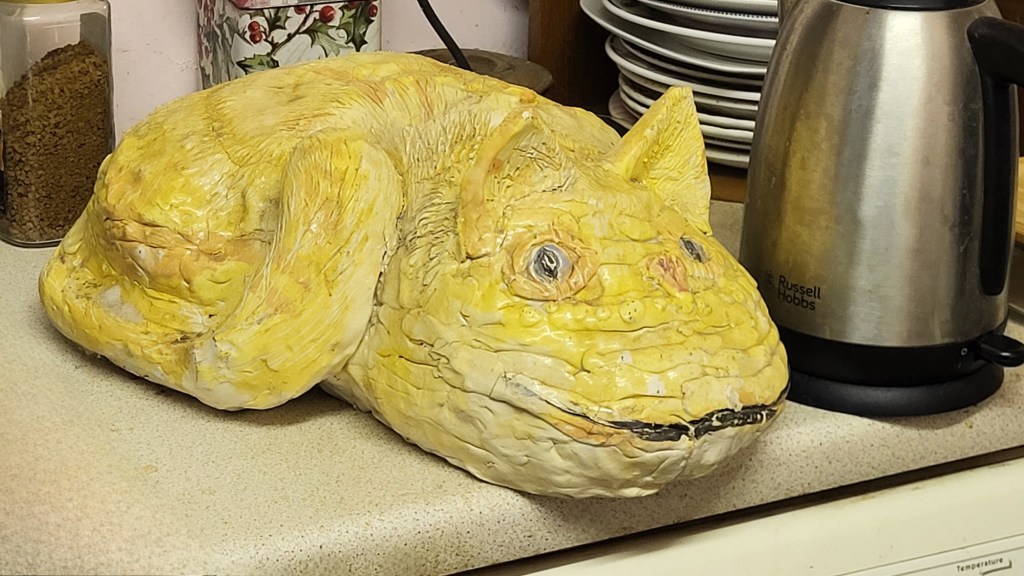











 Anthony's Literary Lens
You must be logged in to post a comment.