Tag: woods

  • Into the Breathing Forest

    Into the Breathing Forest

    The woods inhale. Slowly, deeply. Each leaf a lung, each branch an artery of light.
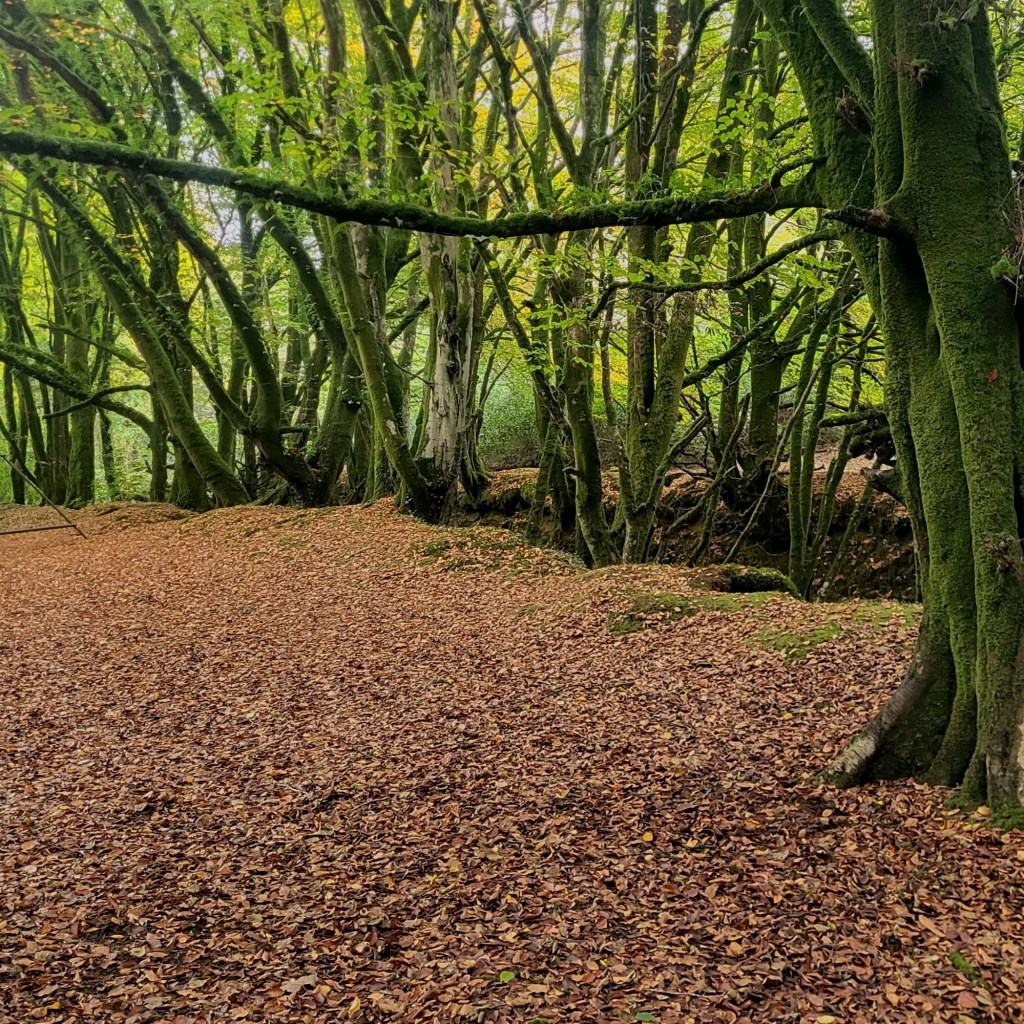
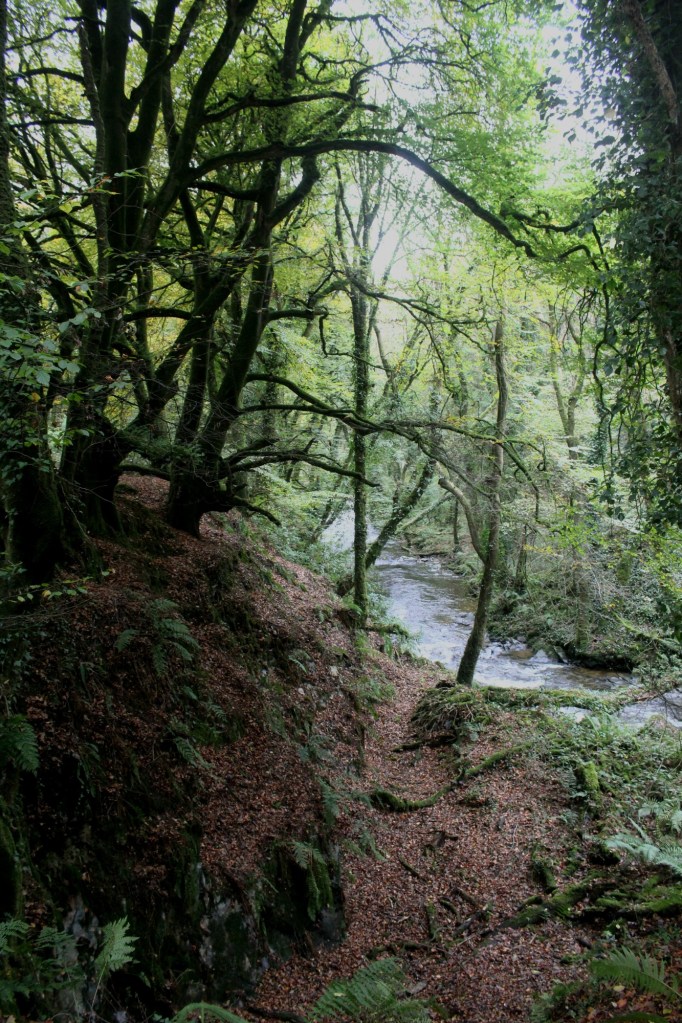
    Step by step, the path unfolds—not beneath feet, but through the mind. The crunch of amber leaves speaks in whispers: “transformation, transformation”. What was green becomes gold becomes earth. The cycle turns, horizon meeting horizon, the forest crossing itself in patterns older than names.
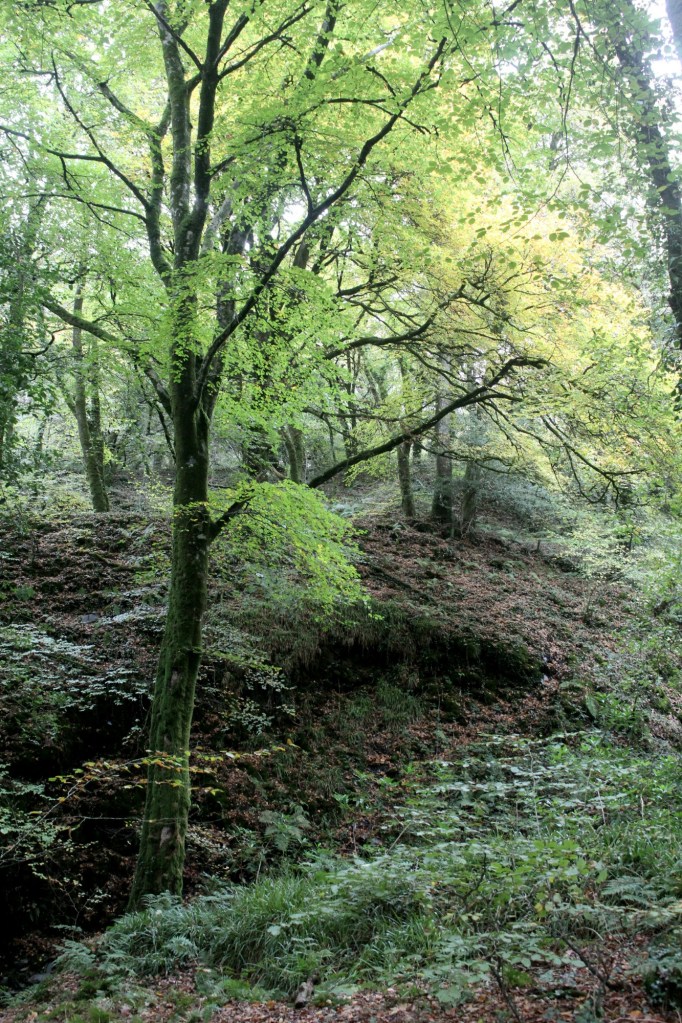
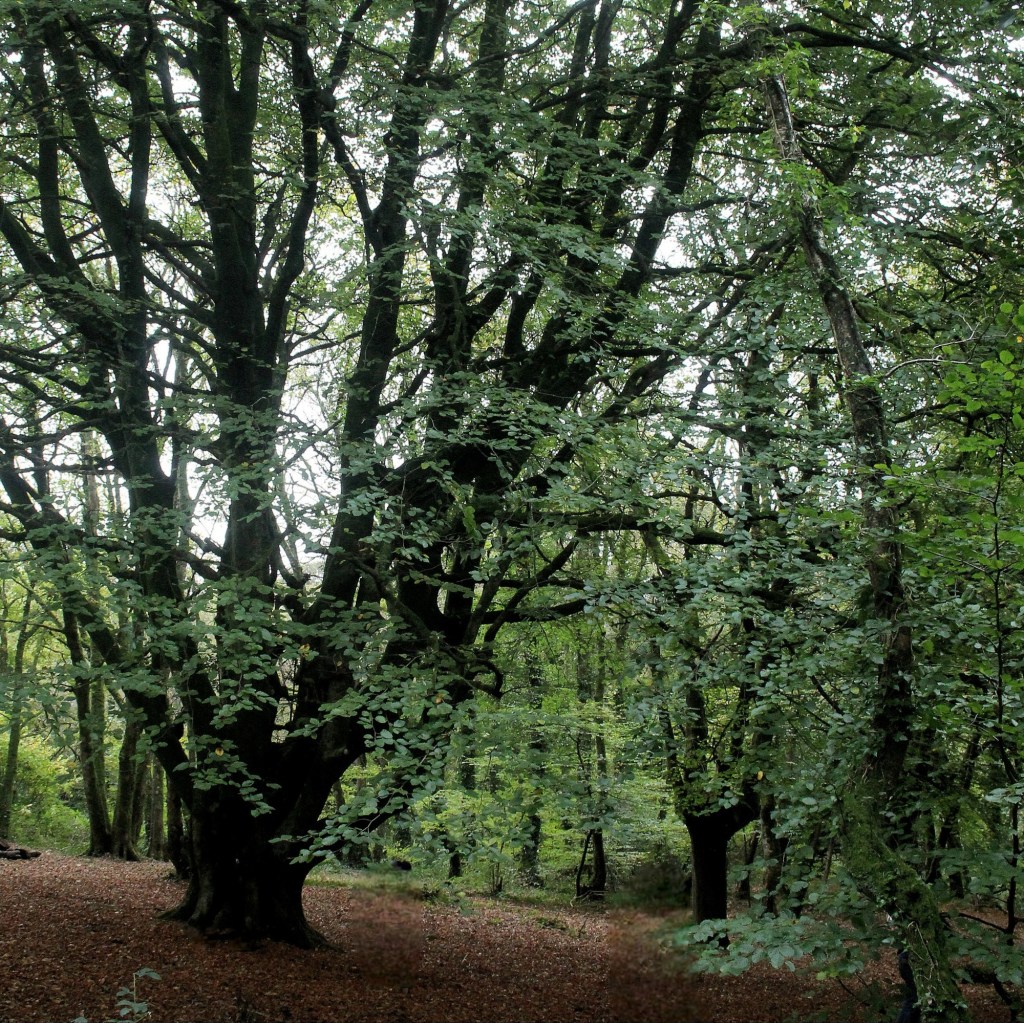
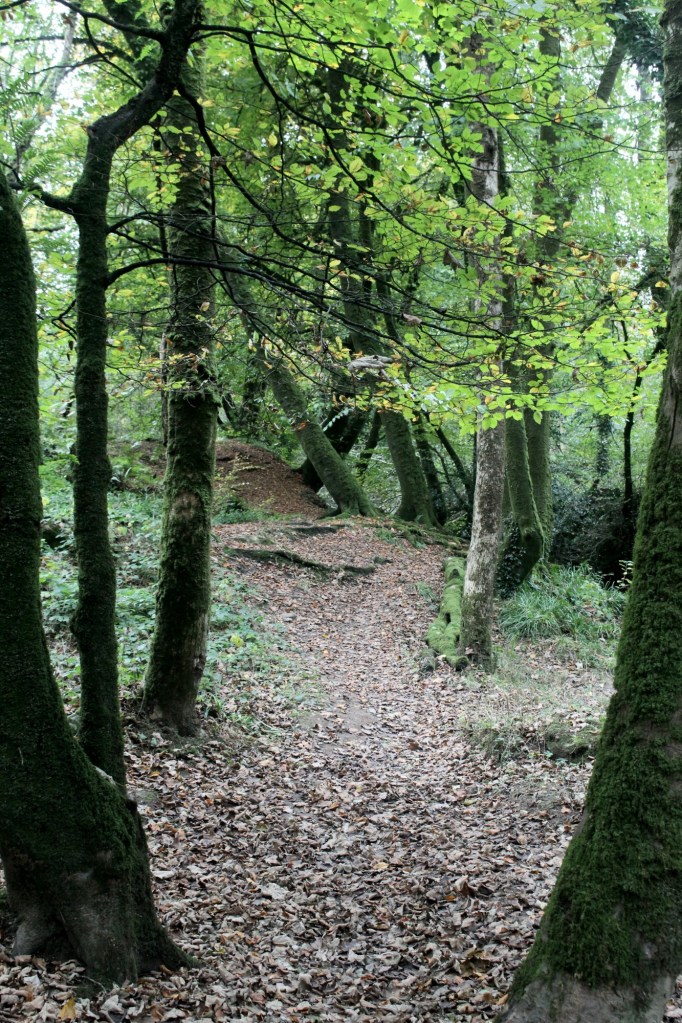
    Touch the bark—cool, ridged, alive. The tree holds memory in its rings, seasons stacked like heartbeats. Moss cushions the northern side, soft as thought, damp as morning. The air moves crisp against skin, carrying secrets: the musk of decay, the sharp sweetness of pine, the mineral breath of soil awakening to its work.
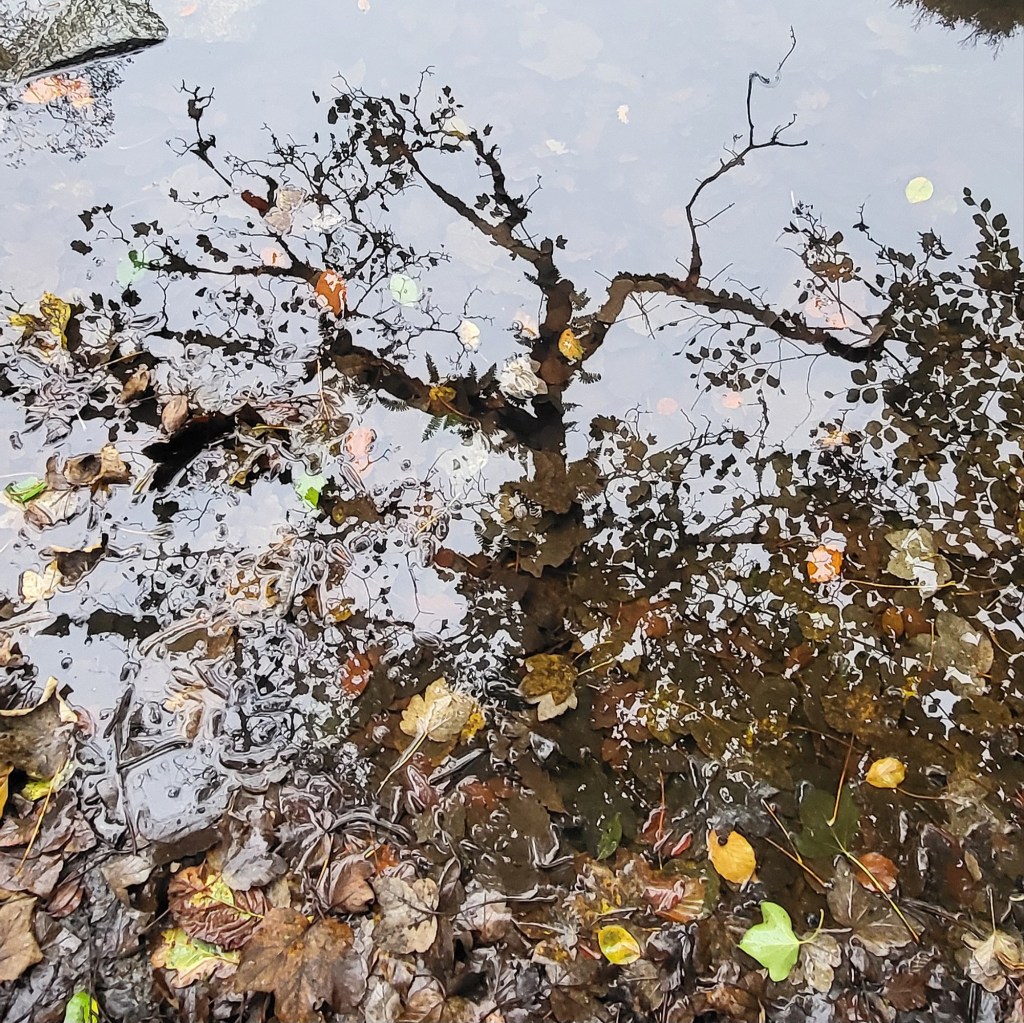
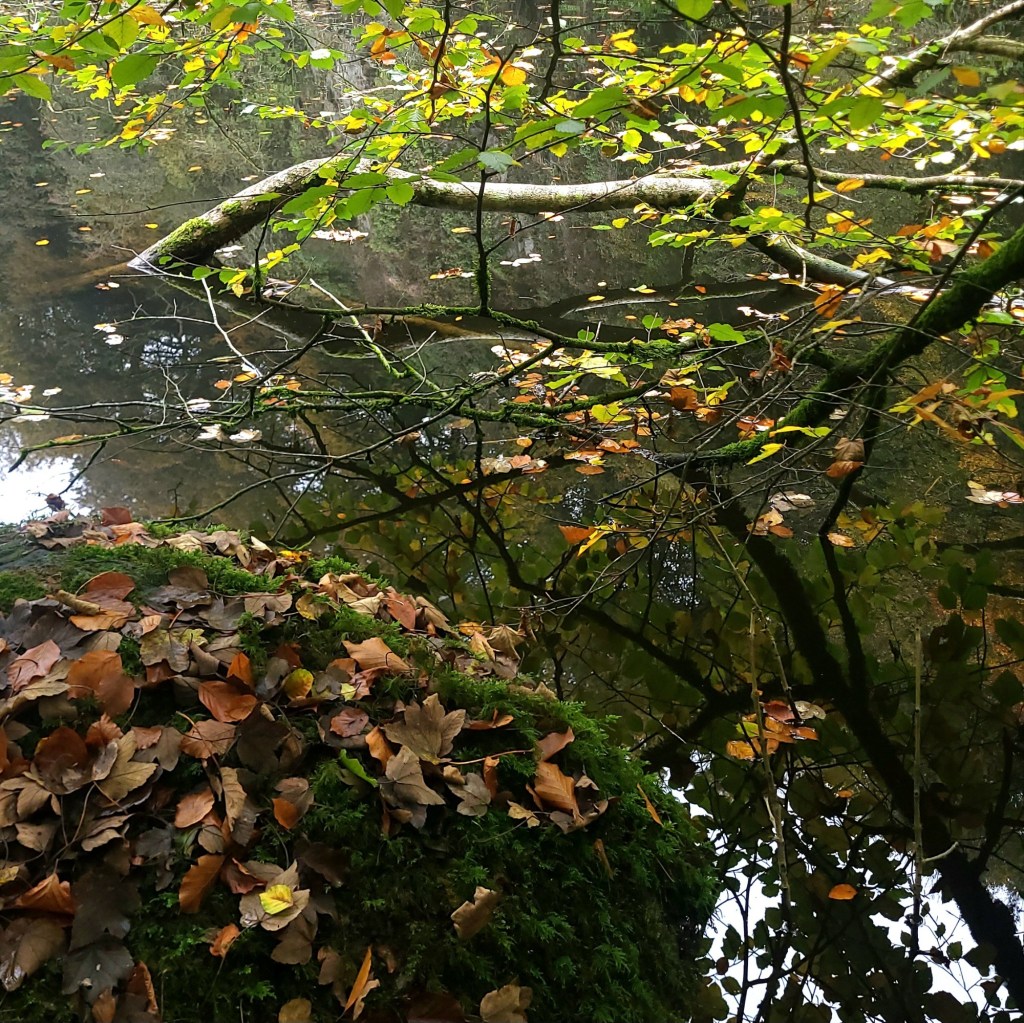
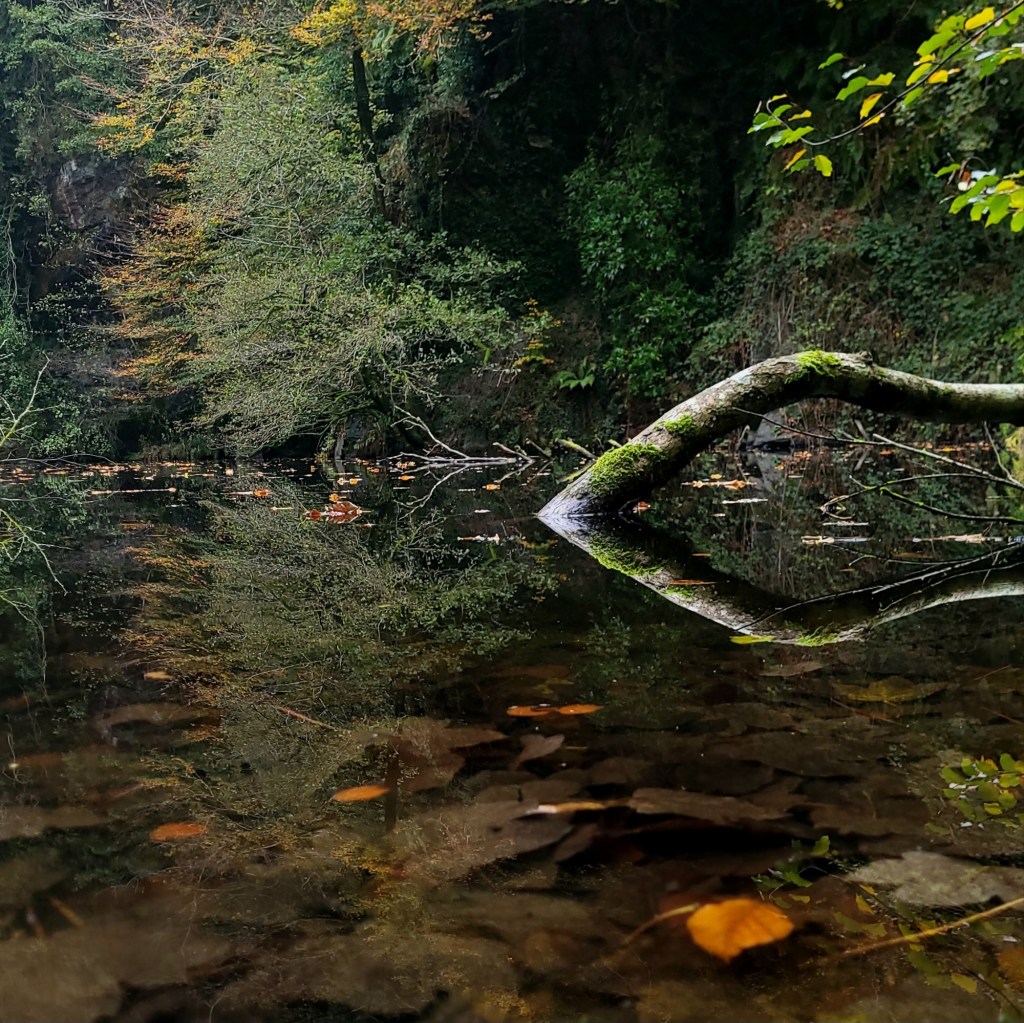
    There, in the still pool, the forest contemplates itself. Trees lean down to meet their reflections, the boundary between earth and water dissolving. Sky trapped in mud. The axis flips—which world is real? Both. Neither. The forest mind reflects the forest heart.
    And here: fungi bloom like thoughts made solid. They are the forest’s silent machinery, the power beneath beauty, translating death into tomorrow. Delicate as moonlight, strong as hunger, they remind us that darkness feeds the light. Every shadow contains its own illumination.
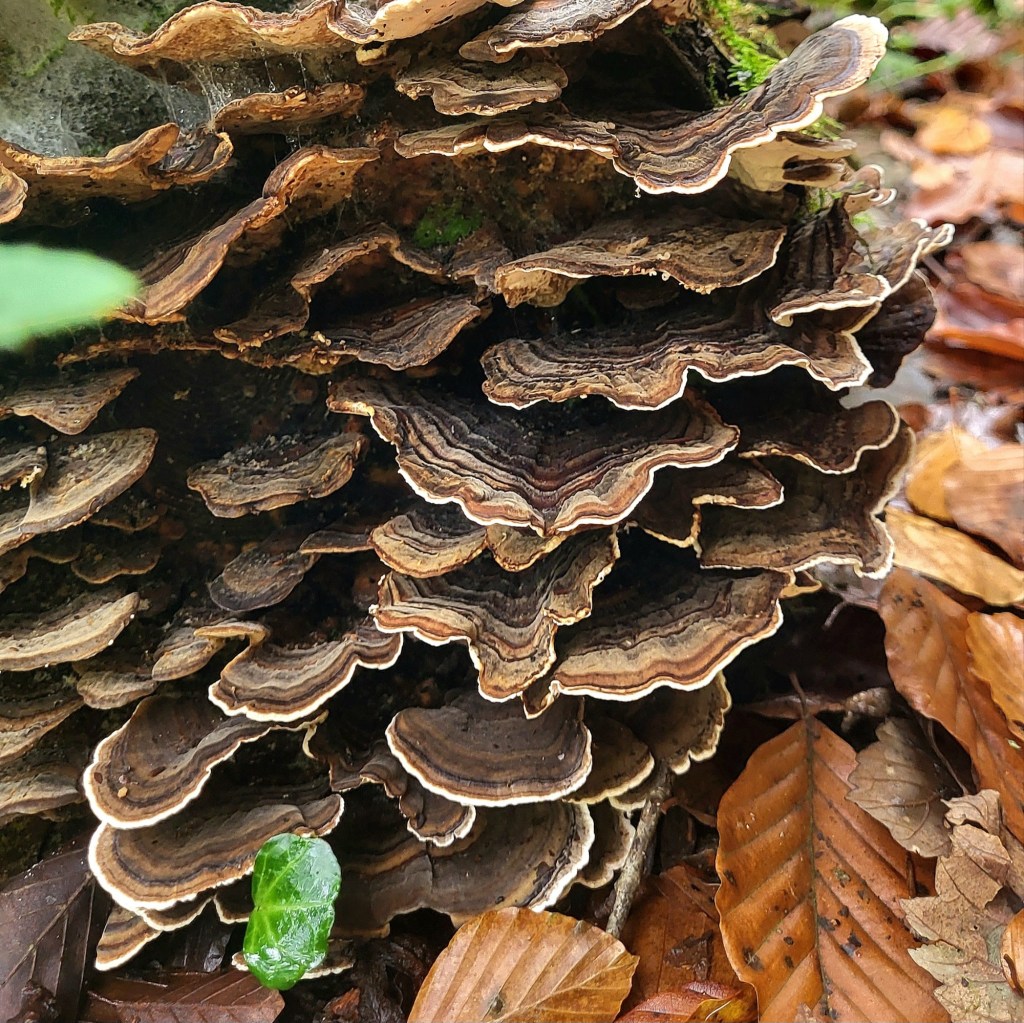
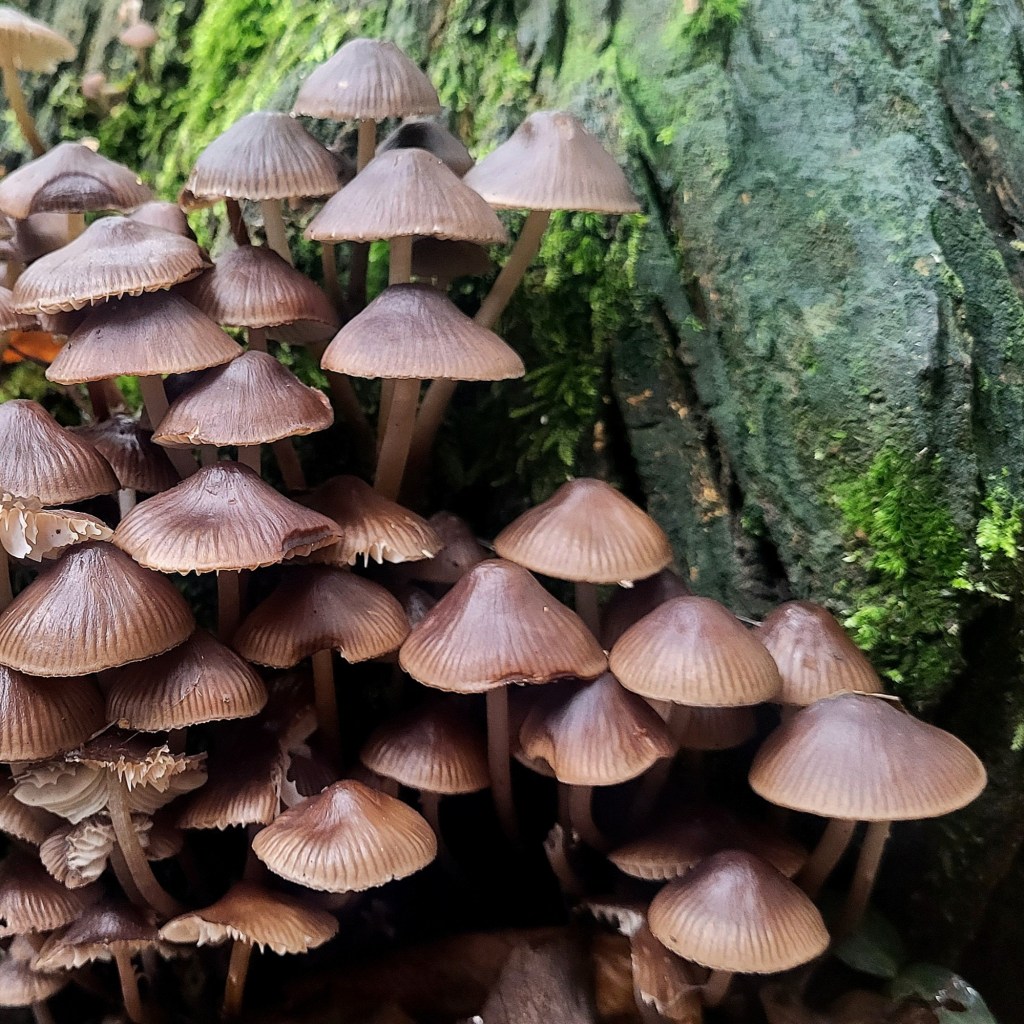

    The wind rustles—not through leaves, but through understanding. Nature’s great work continues, patient and relentless. Stand still. Listen. The woods are showing you the difference between today and tomorrow: one breath, one transformation, one step deeper into the beautiful, breathing mind of autumn.
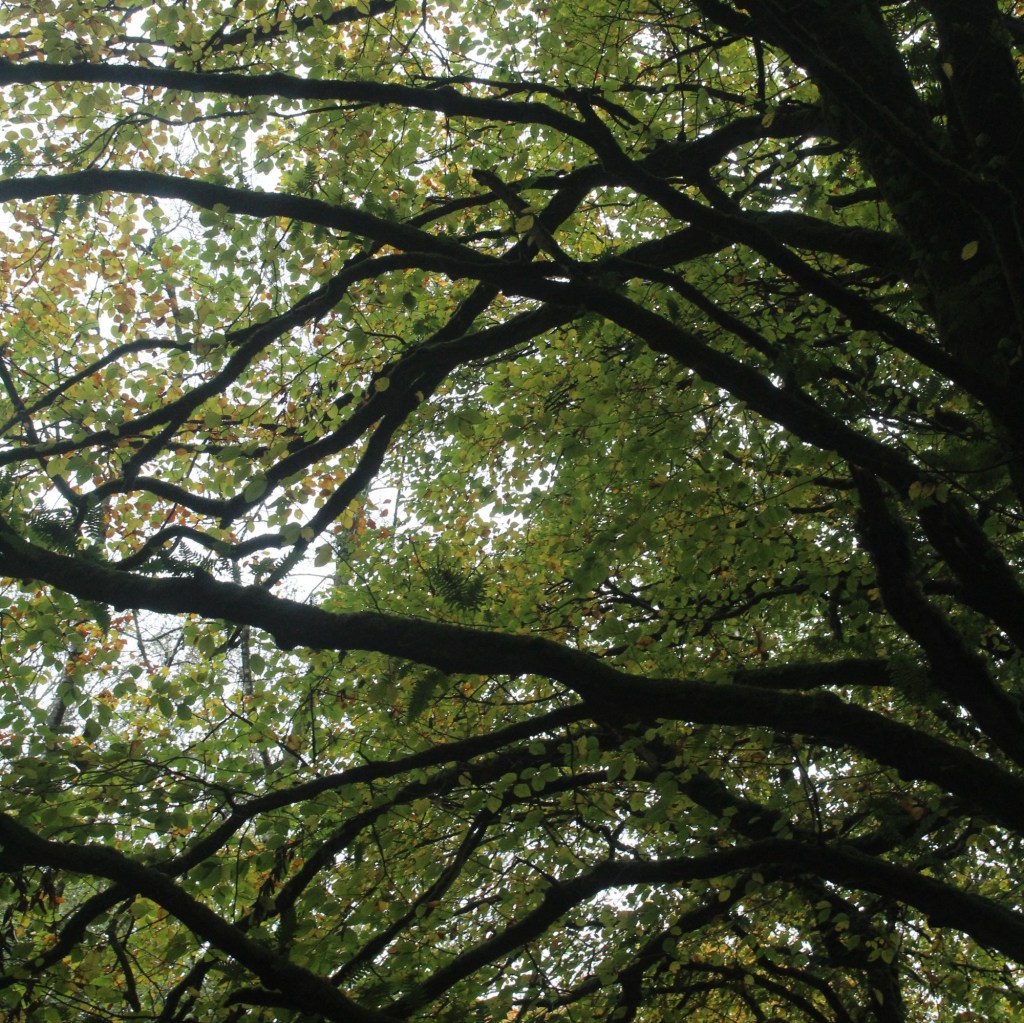
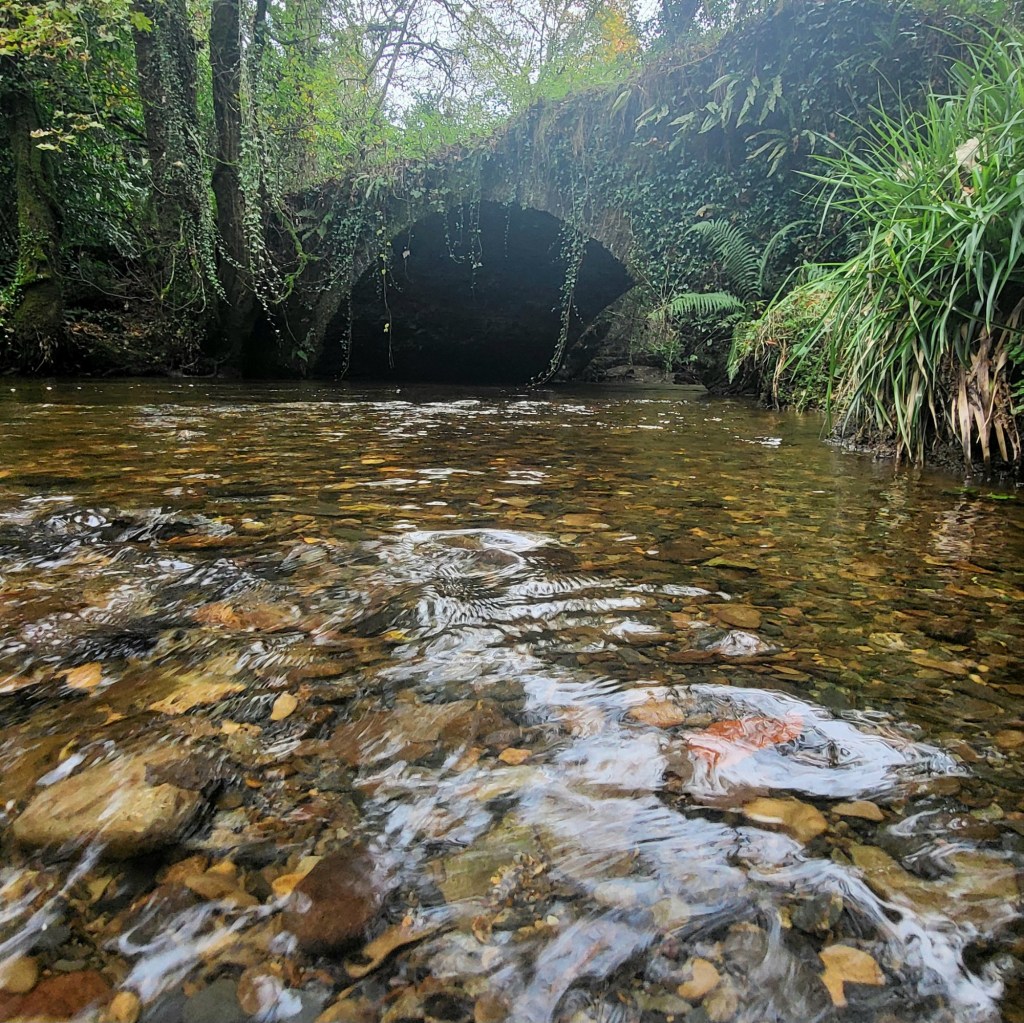

    If you find my photography or my writing inspiring and uplifting, consider supporting what I do. Buy me a coffee on Ko-fi.
    Your support makes a difference in my life and helps me create more of what you, and I, like. Thank you!
    Tap here for a list of 100 endangered animals and plants.

    100 endangered plant and animal species

    * Abies beshanzuensis (Baishan fir) – Plant (Tree) – Baishanzu Mountain, Zhejiang, China – Three mature individuals

    * Actinote zikani – Insect (butterfly) – Near São Paulo, Atlantic forest, Brazil – Unknown numbers

    * Aipysurus foliosquama (Leaf scaled sea-snake) – Reptile – Ashmore Reef and Hibernia Reef, Timor Sea – Unknown numbers * Amanipodagrion gilliesi (Amani flatwing) – Insect (damselfly) – Amani-Sigi Forest, Usamabara Mountains, Tanzania – < 500 individuals * Antisolabis seychellensis – Insect – Morne Blanc, Mahé island, Seychelles – Unknown numbers * Antilophia bokermanni (Araripe manakin) – Bird – Chapado do Araripe, South Ceará, Brazil – 779 individuals * Aphanius transgrediens (Aci Göl toothcarp) – Fish – south-eastern shore of former Lake Aci, Turkey – Few hundred pairs * Aproteles bulmerae (Bulmer’s fruit bat) – Mammal – Luplupwintern Cave, Western Province, Papua New Guinea – 150 * Ardea insignis (White bellied heron) – Bird – Bhutan, North East India and Myanmar – 70–400 individuals * Ardeotis nigriceps (Great Indian bustard) – Bird – Rajasthan, Gujarat, Maharashtra, Andhra Pradesh, Karnataka and Madhya, India – 50–249 mature individuals * Astrochelys yniphora (Ploughshare tortoise) – Reptile – Baly Bay region, northwestern Madagascar – 440–770 * Atelopus balios (Rio Pescado stubfoot toad) – Amphibian – Azuay, Cañar and Guyas provinces, south-western Ecuador – Unknown numbers * Aythya innotata (Madagascar pochard) – Bird – volcanic lakes north of Bealanana, Madagascar – 80 mature individuals * Azurina eupalama (Galapagos damsel fish) – Fish – Unknown numbers – Unknown numbers * Bahaba taipingensis (Giant yellow croaker) – Fish – Chinese coast from Yangtze River, China to Hong Kong – Unknown numbers * Batagur baska (Common batagur) – Reptile (turtle) – Bangladesh, Cambodia, India, Indonesia and Malaysia – Unknown numbers * Bazzania bhutanica – Plant – Budini and Lafeti Khola, Bhutan – 2 sub-populations * Beatragus hunteri (Hirola) – Mammal (antelope) – South-east Kenya and possibly south-west Somalia – < 1,000 individuals * Bombus franklini (Franklin’s bumblebee) – Insect (bee) – Oregon and California – Unknown numbers * Brachyteles hypoxanthus (Northern muriqui / Woolly spider monkey) – Mammal (primate) – Atlantic forest, south-eastern Brazil – < 1,000 * Bradypus pygmaeus (Pygmy three-toed sloth) – Mammal – Isla Escudo de Veraguas, Panama – < 500 * Callitriche pulchra – Plant (freshwater) – pool on Gavdos, Greece – Unknown numbers * Calumma tarzan (Tarzan’s chameleon) – Reptile – Anosibe An’Ala region, eastern Madagascar – < 100 * Cavia intermedia (Santa Catarina’s guinea pig) – Mammal (rodent) – Moleques do Sul Island, Santa Catarina, Brazil – 40–60 * Cercopithecus roloway (Roloway guenon) – Mammal (primate) – Côte d’Ivoire – Unknown numbers * Coleura seychellensis (Seychelles sheath-tailed bat) – Mammal (bat) – Two small caves on Silhouette and Mahé, Seychelles – < 100 * Cryptomyces maximus (Willow blister) – Fungi – Pembrokeshire, United Kingdom – Unknown numbers * Cryptotis nelsoni (Nelson’s small-eared shrew) – Mammal (shrew) – Volcán San Martín Tuxtla, Veracruz, Mexico – Unknown numbers * Cyclura collei (Jamaican iguana / Jamaican rock iguana) – Reptile – Hellshire Hills, Jamaica – Unknown numbers * Daubentonia madagascariensis (Aye-aye) – Mammal (primate) – Deciduous forest, East Madagascar – Unknown numbers * Dendrophylax fawcettii (Cayman Islands ghost orchid) – Plant (orchid) – Ironwood Forest, George Town, Grand Cayman – Unknown numbers * Dicerorhinus sumatrensis (Sumatran rhino) – Mammal (rhino) – Sabah, Sarawak and Peninsular Malaysia, Kalimantan and Sumatra, Indonesia – < 100 (more recent estimates suggest 34-47) * Diomedea amsterdamensis (Amsterdam albatross) – Bird – Breeds on Plateuau des Tourbières, Amsterdam Island, Indian Ocean. – 100 mature individuals * Dioscorea strydomiana (Wild yam) – Plant – Oshoek area, Mpumalanga, South Africa – 200 * Diospyros katendei – Plant (tree) – Kasyoha-Kitomi Forest Reserve, Uganda – 20 individuals in a single population * Dipterocarpus lamellatus – Plant (tree) – Siangau Forest Reserve, Sabah, Malaysia – 12 individuals * Discoglossus nigriventer (Hula painted frog) – Amphibian – Hula Valley, Israel – Unknown numbers * Dombeya mauritiana – Plant – Mauritius – Unknown numbers * Elaeocarpus bojeri (Bois Dentelle) – Plant (tree) – Grand Bassin, Mauritius – < 10 individuals * Eleutherodactylus glandulifer (La Hotte glanded frog) – Amphibian – Massif de la Hotte, Haiti – Unknown numbers * Eleutherodactylus thorectes (Macaya breast-spot frog) – Amphibian – Formon and Macaya peaks, Masif de la Hotte, Haiti – Unknown numbers * Eriosyce chilensis (Chilenito (cactus)) – Plant – Pta Molles and Pichidungui, Chile – < 500 individuals * Erythrina schliebenii (Coral tree) – Plant – Namatimbili-Ngarama Forest, Tanzania – < 50 individuals * Euphorbia tanaensis – Plant (tree) – Witu Forest Reserve, Kenya – 4 mature individuals * Eurynorhyncus pygmeus (Spoon-billed sandpiper) – Bird – Breeds in Russia, migrates along the East Asian-Australasian Flyway to wintering grounds in India, Bangladesh and Myanmar – 100 breeding pairs * Ficus katendei – Plant – Kasyoha-Kitomi Forest Reserve, Ishasha River, Uganda – < 50 mature individuals * Geronticus eremita (Northern bald ibis) – Bird – Breeds in Morocco, Turkey and Syria. Syrian population winters in central Ethiopia. – About 3000 individuals * Gigasiphon macrosiphon – Plant (flower) – Kaya Muhaka, Gongoni and Mrima Forest Reserves, Kenya, Amani Nature Reserve, West Kilombero Scarp Forest Reserve, and Kihansi Gorge, Tanzania – 33 * Gocea ohridana – Mollusc – Lake Ohrid, Macedonia – Unknown numbers * Heleophryne rosei (Table mountain ghost frog) – Amphibian – Table Mountain, Western Cape Province, South Africa – Unknown numbers * Hemicycla paeteliana – Mollusc (land snail) – Jandia peninsula, Fuerteventura, Canary Islands – Unknown numbers * Heteromirafa sidamoensis (Liben lark) – Bird – Liben Plains, southern Ethiopia – 90–256 * Hibiscadelphus woodii – Plant (tree) – Kalalau Valley, Hawaii – Unknown numbers * Hucho perryi (Sakhalin taimen) – Fish – Russian and Japanese rivers, Pacific Ocean between Russia and Japan – Unknown numbers * Johora singaporensis (Singapore freshwater crab) – Crustacean – Bukit Timah Nature Reserve and streamlet near Bukit Batok, Singapore – Unknown numbers * Lathyrus belinensis (Belin vetchling) – Plant – Outskirts of Belin village, Antalya, Turkey – < 1,000 * Leiopelma archeyi (Archey’s frog) – Amphibian – Coromandel peninsula and Whareorino Forest, New Zealand – Unknown numbers * Lithobates sevosus (Dusky gopher frog) – Amphibian – Harrison County, Mississippi, USA – 60–100 * Lophura edwardsi (Edwards’s pheasant) – Bird – Quang Binh, Quang Tri and Thua Thien-Hue, Viet Nam – Unknown numbers * Magnolia wolfii – Plant (tree) – Risaralda, Colombia – 3 * Margaritifera marocana – Mollusc – Oued Denna, Oued Abid and Oued Beth, Morocco – < 250 * Moominia willii – Mollusc (snail) – Silhouette Island, Seychelles – < 500 * Natalus primus (Cuban greater funnel eared bat) – Mammal (bat) – Cueva La Barca, Isle of Pines, Cuba – < 100 * Nepenthes attenboroughii (Attenborough’s pitcher plant) – Plant – Mount Victoria, Palawan, Philippines – Unknown numbers * Nomascus hainanus (Hainan black crested gibbon) – Mammal (primate) – Hainan Island, China – 20 * Neurergus kaiseri (Luristan newt) – Amphibian – Zagros Mountains, Lorestan, Iran – < 1,000 * Oreocnemis phoenix (Mulanje red damsel) – Insect (damselfly) – Mulanje Plateau, Malawi – Unknown numbers * Pangasius sanitwongsei (Pangasid catfish) – Fish – Chao Phraya and Mekong basins in Cambodia, China, Lao PDR, Thailand and Viet Nam – Unknown numbers * Parides burchellanus – Insect (butterfly) – Cerrado, Brazil – < 100 * Phocoena sinus (Vaquita) – Mammal (porpoise) – Northern Gulf of California, Mexico – 12 * Picea neoveitchii (Type of spruce tree) – Plant (tree) – Qinling Range, China – Unknown numbers * Pinus squamata (Qiaojia pine) – Plant (tree) – Qiaojia, Yunnan, China – < 25 * Poecilotheria metallica (Gooty tarantula / Metallic tarantula / Peacock tarantula / Salepurgu) – Spider – Nandyal and Giddalur, Andhra Pradesh, India – Unknown numbers * Pomarea whitneyi (Fatuhiva monarch) – Bird – Fatu Hiva, Marquesas Islands, French Polynesia – 50 * Pristis pristis (Common sawfish) – Fish – Coastal tropical and subtropical waters of Indo-Pacific and Atlantic Oceans. Currently largely restricted to northern Australia – Unknown numbers * Hapalemur simus (Greater bamboo lemur) – Mammal (primate) – Southeastern and southcentral rainforests of Madagascar – 500 * Propithecus candidus (Silky sifaka) – Mammal (primate) – Maroantsetra to Andapa basin, and Marojeju Massif, Madagascar – 100–1,000 * Psammobates geometricus (Geometric tortoise) – Reptile – Western Cape Province, South Africa – Unknown numbers * Pseudoryx nghetinhensis (Saola) – Mammal – Annamite mountains, on the Viet Nam – PDR Laos border – Unknown numbers * Psiadia cataractae – Plant – Mauritius – Unknown numbers * Psorodonotus ebneri (Beydaglari bush-cricket) – Insect – Beydaglari range, Antalaya, Turkey – Unknown numbers * Rafetus swinhoei (Red River giant softshell turtle) – Reptile – Hoan Kiem Lake and Dong Mo Lake, Viet Nam, and Suzhou Zoo, China – 3 * Rhinoceros sondaicus (Javan rhino) – Mammal (rhino) – Ujung Kulon National Park, Java, Indonesia – < 100 * Rhinopithecus avunculus (Tonkin snub-nosed monkey) – Mammal (primate) – Northeastern Vietnam – < 200 * Rhizanthella gardneri (West Australian underground orchid) – Plant (orchid) – Western Australia, Australia – < 100 * Rhynchocyon spp. (Boni giant sengi) – Mammal – Boni-Dodori Forest, Lamu area, Kenya – Unknown numbers * Risiocnemis seidenschwarzi (Cebu frill-wing) – Insect (damselfly) – Rivulet beside the Kawasan River, Cebu, Philippines – Unknown numbers * Rosa arabica – Plant – St Katherine Mountains, Egypt – Unknown numbers, 10 sub-populations * Salanoia durrelli (Durrell’s vontsira) – Mammal (mongoose) – Marshes of Lake Alaotra, Madagascar – Unknown numbers * Santamartamys rufodorsalis (Red crested tree rat) – Mammal (rodent) – Sierra Nevada de Santa Marta, Colombia – Unknown numbers * Scaturiginichthys vermeilipinnis (Red-finned blue-eye) – Fish – Edgbaston Station, central western Queensland, Australia – 2,000–4,000 * Squatina squatina (Angel shark) – Fish – Canary Islands – Unknown numbers * Sterna bernsteini (Chinese crested tern) – Bird – Breeding in Zhejiang and Fujian, China. Outside breeding season in Indonesia, Malaysia, Philippines, Taiwan, Thailand. – < 50 * Syngnathus watermeyeri (Estuarine pipefish) – Fish – Kariega Estuary to East Kleinemonde Estuary, Eastern Cape Province, South Africa – Unknown numbers * Tahina spectabilis (Suicide palm / Dimaka) – Plant – Analalava district, north-western Madagascar – 90 * Telmatobufo bullocki (Bullock’s false toad) – Amphibian (frog) – Nahuelbuta, Arauco Province, Chile – Unknown numbers * Tokudaia muenninki (Okinawa spiny rat) – Mammal (rodent) – Okinawa Island, Japan – Unknown numbers * Trigonostigma somphongsi (Somphongs’s rasbora) – Fish – Mae Khlong basin, Thailand – Unknown numbers * Valencia letourneuxi – Fish – Southern Albania and Western Greece – Unknown numbers * Voanioala gerardii (Forest coconut) – Plant – Masoala peninsula, Madagascar – < 10 * Zaglossus attenboroughi (Attenborough’s echidna) – Mammal – Cyclops Mountains, Papua Province, Indonesia – Unknown numbers

    Tap to view my redbubble gallery.
  • Greatness

    Greatness

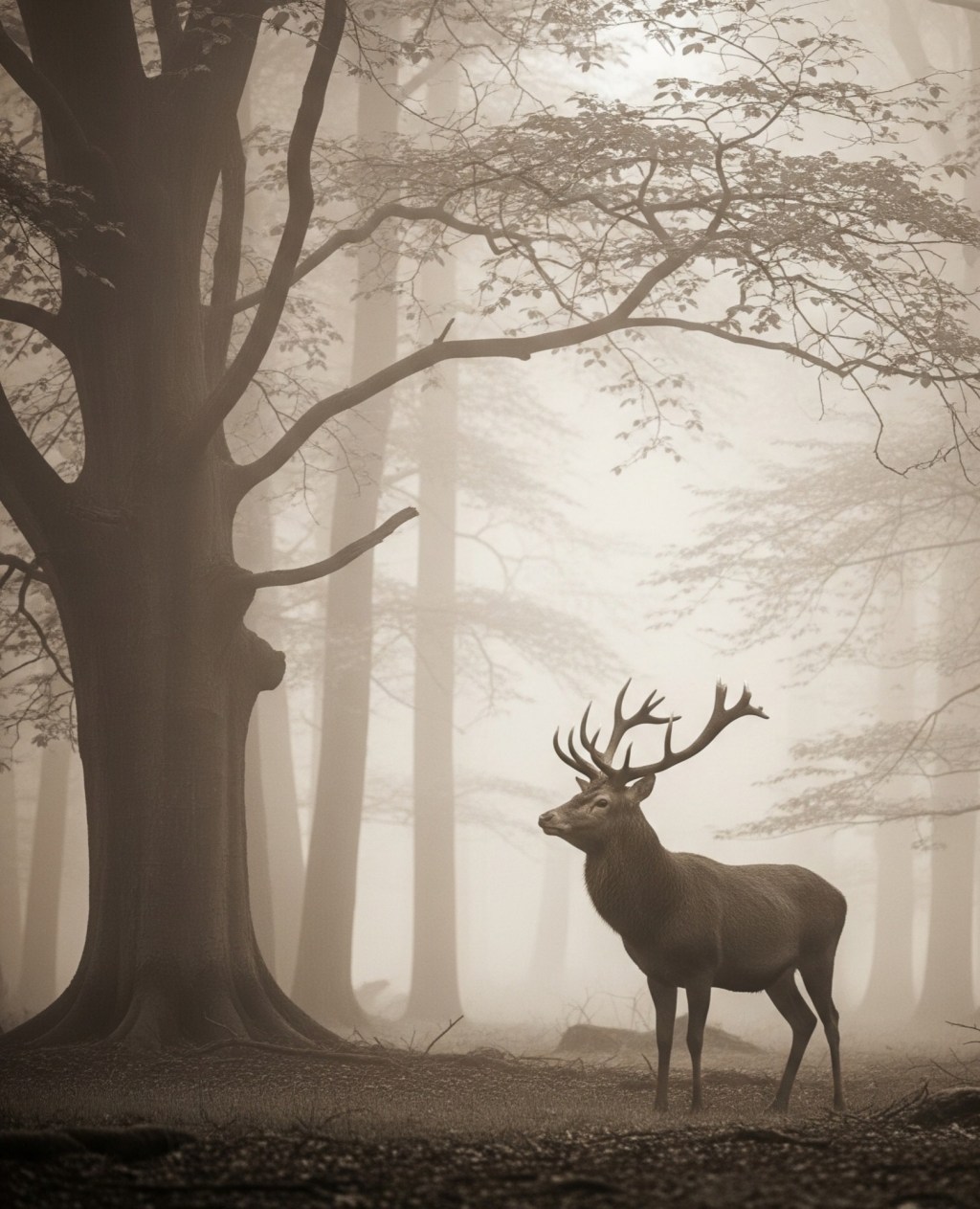
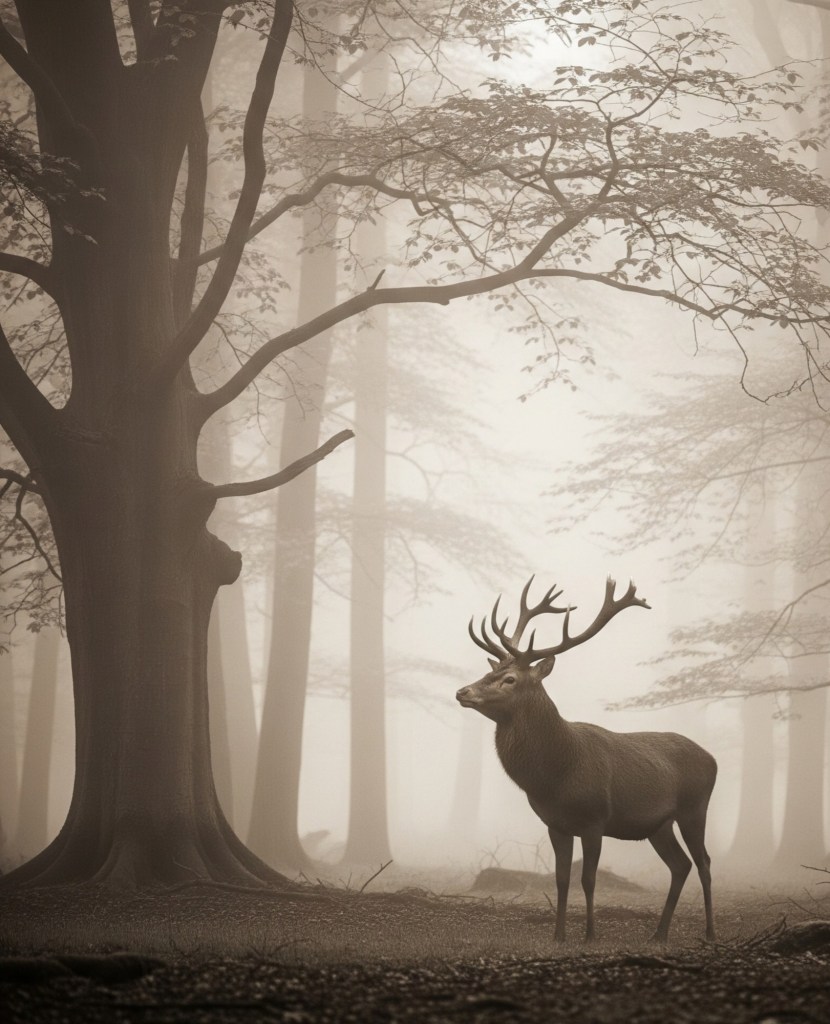
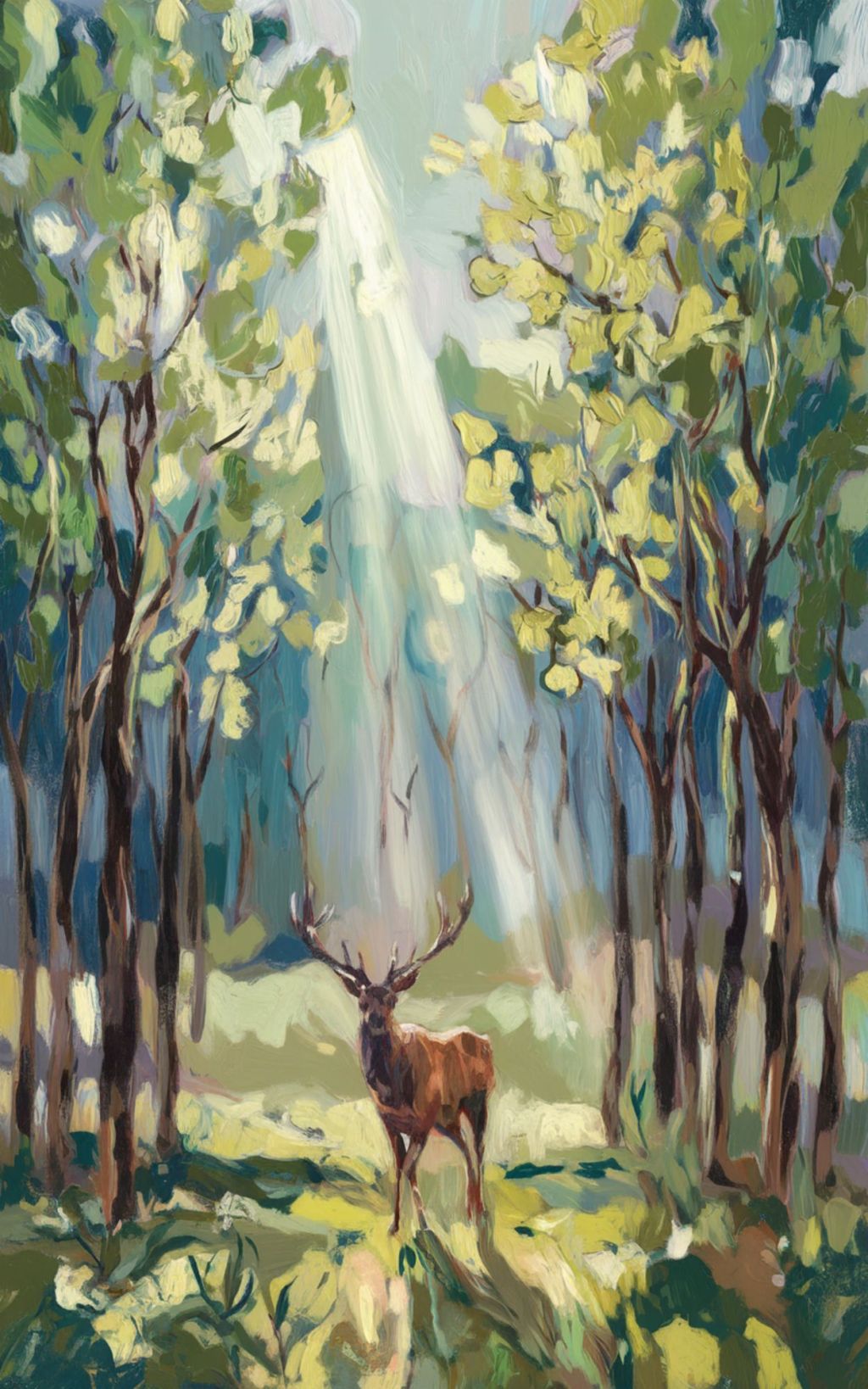
    Greatness in a stag in the mist.
    Not my image

    There’s something moving about a stag standing alone in morning mist, antlers raised like a crown against the soft light filtering through trees. To some, this image captures pure natural majesty—a creature perfectly at home in its world, showing grace, strength, and wild beauty. Yet not everyone who sees this scene will feel the same awe. And maybe that’s exactly the point.

    Greatness in Its Place
    The stag in this misty forest is clearly magnificent in its own world. Its impressive antlers show years of growth and survival. Its alert stance suggests it has mastered an environment that would challenge most creatures. Here, in this moment, it is exactly what it was meant to be. This is greatness in its purest form: being fully yourself in your own setting.

    But step back, and things get more complex. To a hunter, this might represent a prize. To someone afraid of wild animals, it might create fear rather than wonder. To a city dweller who has never experienced wilderness, it might seem strange and irrelevant. The stag stays the same, yet its “greatness” changes with each person who looks at it.

    Why Greatness Is Personal
    This shows us something important about how we see greatness in ourselves and others. We often think that real excellence should be obvious to everyone, that true achievement will speak for itself no matter who’s looking. But human greatness, like the beauty of that forest stag, often depends on context.

    Think about the teacher who changes lives in a struggling school. Within that community, they are a hero whose impact touches generations. Yet their work might go unnoticed by the wider world, their pay modest, their name unknown beyond their classroom. Are they any less great because their excellence doesn’t translate to fame or money?

    Or consider the artist whose work deeply moves a small audience while staying invisible to mainstream tastes. The parent who gives up career advancement to be there for their children. The researcher exploring knowledge that might only prove important years from now. The quiet neighbor who always shows up when someone needs help.

    The Problem with One-Size-Fits-All Greatness
    Our culture often tries to measure greatness the same way for everyone—wealth, fame, social media followers, awards. These measures can be useful, but they’re also flawed. They favour certain types of excellence while making others invisible. They can make us forget that greatness often lies in how well we fulfill our particular role in the world, not in how well we match someone else’s idea of success.

    The stag in the forest doesn’t need human approval to be magnificent. Its greatness lies in being perfectly suited to its environment, playing its role in nature, embodying wildness itself. It doesn’t need to be a different animal to be worthy of admiration.

    Finding Your Own Forest
    Maybe the most freeing realization is that we don’t need to be great in everyone’s eyes to be truly great. Like that stag, we each have our own forest—our unique circumstances, talents, challenges, and opportunities. Our greatness lies not in meeting outside expectations but in fully living in our own particular corner of the world.

    This doesn’t mean giving up on ambition or accepting mediocrity. It means recognizing that real greatness comes from understanding our own nature and situation well enough to excel within it. The stag doesn’t try to be a lion or an eagle; it masters the art of being a deer in a forest.

    Celebrating Different Kinds of Excellence
    When we broaden our idea of greatness beyond narrow measures, the world becomes richer. We start to notice the quiet excellences around us: the barista who remembers everyone’s order and makes each customer feel seen, the maintenance worker who takes real pride in keeping spaces beautiful, the friend who knows how to listen without judgment.

    These forms of greatness might not make headlines, but they make life more beautiful and human. They remind us that excellence comes in as many forms as there are people to live it.

    A Kinder Way to See Greatness
    The misty forest photograph captures something timeless: greatness doesn’t need to explain itself or seek approval. It simply is. The stag stands in its truth, magnificent in its own right, whether or not anyone appreciates that magnificence.

    This is both humbling and encouraging. It suggests that greatness is more reachable than we might think—not because it’s easier, but because there are so many different ways to achieve it. Your greatness might look nothing like mine, and that’s not just okay—it’s necessary.

    In a world that often celebrates only the loudest, richest, most visible kinds of success, maybe we need more images like this one. More reminders that true greatness often stands quietly in its own truth, magnificent in ways that matter deeply, even if they don’t matter to everyone.

    The stag in the forest doesn’t need everyone to understand its majesty. Neither do you.

    If you find my photography or my writing inspiring and uplifting, consider supporting what I do. Buy me a coffee on Ko-fi.
    Your support makes a difference in my life and helps me create more of what you, and I, like. Thank you!
    Tap here for a list of 100 endangered animals and plants.

    100 endangered plant and animal species

    * Abies beshanzuensis (Baishan fir) – Plant (Tree) – Baishanzu Mountain, Zhejiang, China – Three mature individuals

    * Actinote zikani – Insect (butterfly) – Near São Paulo, Atlantic forest, Brazil – Unknown numbers

    * Aipysurus foliosquama (Leaf scaled sea-snake) – Reptile – Ashmore Reef and Hibernia Reef, Timor Sea – Unknown numbers * Amanipodagrion gilliesi (Amani flatwing) – Insect (damselfly) – Amani-Sigi Forest, Usamabara Mountains, Tanzania – < 500 individuals * Antisolabis seychellensis – Insect – Morne Blanc, Mahé island, Seychelles – Unknown numbers * Antilophia bokermanni (Araripe manakin) – Bird – Chapado do Araripe, South Ceará, Brazil – 779 individuals * Aphanius transgrediens (Aci Göl toothcarp) – Fish – south-eastern shore of former Lake Aci, Turkey – Few hundred pairs * Aproteles bulmerae (Bulmer’s fruit bat) – Mammal – Luplupwintern Cave, Western Province, Papua New Guinea – 150 * Ardea insignis (White bellied heron) – Bird – Bhutan, North East India and Myanmar – 70–400 individuals * Ardeotis nigriceps (Great Indian bustard) – Bird – Rajasthan, Gujarat, Maharashtra, Andhra Pradesh, Karnataka and Madhya, India – 50–249 mature individuals * Astrochelys yniphora (Ploughshare tortoise) – Reptile – Baly Bay region, northwestern Madagascar – 440–770 * Atelopus balios (Rio Pescado stubfoot toad) – Amphibian – Azuay, Cañar and Guyas provinces, south-western Ecuador – Unknown numbers * Aythya innotata (Madagascar pochard) – Bird – volcanic lakes north of Bealanana, Madagascar – 80 mature individuals * Azurina eupalama (Galapagos damsel fish) – Fish – Unknown numbers – Unknown numbers * Bahaba taipingensis (Giant yellow croaker) – Fish – Chinese coast from Yangtze River, China to Hong Kong – Unknown numbers * Batagur baska (Common batagur) – Reptile (turtle) – Bangladesh, Cambodia, India, Indonesia and Malaysia – Unknown numbers * Bazzania bhutanica – Plant – Budini and Lafeti Khola, Bhutan – 2 sub-populations * Beatragus hunteri (Hirola) – Mammal (antelope) – South-east Kenya and possibly south-west Somalia – < 1,000 individuals * Bombus franklini (Franklin’s bumblebee) – Insect (bee) – Oregon and California – Unknown numbers * Brachyteles hypoxanthus (Northern muriqui / Woolly spider monkey) – Mammal (primate) – Atlantic forest, south-eastern Brazil – < 1,000 * Bradypus pygmaeus (Pygmy three-toed sloth) – Mammal – Isla Escudo de Veraguas, Panama – < 500 * Callitriche pulchra – Plant (freshwater) – pool on Gavdos, Greece – Unknown numbers * Calumma tarzan (Tarzan’s chameleon) – Reptile – Anosibe An’Ala region, eastern Madagascar – < 100 * Cavia intermedia (Santa Catarina’s guinea pig) – Mammal (rodent) – Moleques do Sul Island, Santa Catarina, Brazil – 40–60 * Cercopithecus roloway (Roloway guenon) – Mammal (primate) – Côte d’Ivoire – Unknown numbers * Coleura seychellensis (Seychelles sheath-tailed bat) – Mammal (bat) – Two small caves on Silhouette and Mahé, Seychelles – < 100 * Cryptomyces maximus (Willow blister) – Fungi – Pembrokeshire, United Kingdom – Unknown numbers * Cryptotis nelsoni (Nelson’s small-eared shrew) – Mammal (shrew) – Volcán San Martín Tuxtla, Veracruz, Mexico – Unknown numbers * Cyclura collei (Jamaican iguana / Jamaican rock iguana) – Reptile – Hellshire Hills, Jamaica – Unknown numbers * Daubentonia madagascariensis (Aye-aye) – Mammal (primate) – Deciduous forest, East Madagascar – Unknown numbers * Dendrophylax fawcettii (Cayman Islands ghost orchid) – Plant (orchid) – Ironwood Forest, George Town, Grand Cayman – Unknown numbers * Dicerorhinus sumatrensis (Sumatran rhino) – Mammal (rhino) – Sabah, Sarawak and Peninsular Malaysia, Kalimantan and Sumatra, Indonesia – < 100 (more recent estimates suggest 34-47) * Diomedea amsterdamensis (Amsterdam albatross) – Bird – Breeds on Plateuau des Tourbières, Amsterdam Island, Indian Ocean. – 100 mature individuals * Dioscorea strydomiana (Wild yam) – Plant – Oshoek area, Mpumalanga, South Africa – 200 * Diospyros katendei – Plant (tree) – Kasyoha-Kitomi Forest Reserve, Uganda – 20 individuals in a single population * Dipterocarpus lamellatus – Plant (tree) – Siangau Forest Reserve, Sabah, Malaysia – 12 individuals * Discoglossus nigriventer (Hula painted frog) – Amphibian – Hula Valley, Israel – Unknown numbers * Dombeya mauritiana – Plant – Mauritius – Unknown numbers * Elaeocarpus bojeri (Bois Dentelle) – Plant (tree) – Grand Bassin, Mauritius – < 10 individuals * Eleutherodactylus glandulifer (La Hotte glanded frog) – Amphibian – Massif de la Hotte, Haiti – Unknown numbers * Eleutherodactylus thorectes (Macaya breast-spot frog) – Amphibian – Formon and Macaya peaks, Masif de la Hotte, Haiti – Unknown numbers * Eriosyce chilensis (Chilenito (cactus)) – Plant – Pta Molles and Pichidungui, Chile – < 500 individuals * Erythrina schliebenii (Coral tree) – Plant – Namatimbili-Ngarama Forest, Tanzania – < 50 individuals * Euphorbia tanaensis – Plant (tree) – Witu Forest Reserve, Kenya – 4 mature individuals * Eurynorhyncus pygmeus (Spoon-billed sandpiper) – Bird – Breeds in Russia, migrates along the East Asian-Australasian Flyway to wintering grounds in India, Bangladesh and Myanmar – 100 breeding pairs * Ficus katendei – Plant – Kasyoha-Kitomi Forest Reserve, Ishasha River, Uganda – < 50 mature individuals * Geronticus eremita (Northern bald ibis) – Bird – Breeds in Morocco, Turkey and Syria. Syrian population winters in central Ethiopia. – About 3000 individuals * Gigasiphon macrosiphon – Plant (flower) – Kaya Muhaka, Gongoni and Mrima Forest Reserves, Kenya, Amani Nature Reserve, West Kilombero Scarp Forest Reserve, and Kihansi Gorge, Tanzania – 33 * Gocea ohridana – Mollusc – Lake Ohrid, Macedonia – Unknown numbers * Heleophryne rosei (Table mountain ghost frog) – Amphibian – Table Mountain, Western Cape Province, South Africa – Unknown numbers * Hemicycla paeteliana – Mollusc (land snail) – Jandia peninsula, Fuerteventura, Canary Islands – Unknown numbers * Heteromirafa sidamoensis (Liben lark) – Bird – Liben Plains, southern Ethiopia – 90–256 * Hibiscadelphus woodii – Plant (tree) – Kalalau Valley, Hawaii – Unknown numbers * Hucho perryi (Sakhalin taimen) – Fish – Russian and Japanese rivers, Pacific Ocean between Russia and Japan – Unknown numbers * Johora singaporensis (Singapore freshwater crab) – Crustacean – Bukit Timah Nature Reserve and streamlet near Bukit Batok, Singapore – Unknown numbers * Lathyrus belinensis (Belin vetchling) – Plant – Outskirts of Belin village, Antalya, Turkey – < 1,000 * Leiopelma archeyi (Archey’s frog) – Amphibian – Coromandel peninsula and Whareorino Forest, New Zealand – Unknown numbers * Lithobates sevosus (Dusky gopher frog) – Amphibian – Harrison County, Mississippi, USA – 60–100 * Lophura edwardsi (Edwards’s pheasant) – Bird – Quang Binh, Quang Tri and Thua Thien-Hue, Viet Nam – Unknown numbers * Magnolia wolfii – Plant (tree) – Risaralda, Colombia – 3 * Margaritifera marocana – Mollusc – Oued Denna, Oued Abid and Oued Beth, Morocco – < 250 * Moominia willii – Mollusc (snail) – Silhouette Island, Seychelles – < 500 * Natalus primus (Cuban greater funnel eared bat) – Mammal (bat) – Cueva La Barca, Isle of Pines, Cuba – < 100 * Nepenthes attenboroughii (Attenborough’s pitcher plant) – Plant – Mount Victoria, Palawan, Philippines – Unknown numbers * Nomascus hainanus (Hainan black crested gibbon) – Mammal (primate) – Hainan Island, China – 20 * Neurergus kaiseri (Luristan newt) – Amphibian – Zagros Mountains, Lorestan, Iran – < 1,000 * Oreocnemis phoenix (Mulanje red damsel) – Insect (damselfly) – Mulanje Plateau, Malawi – Unknown numbers * Pangasius sanitwongsei (Pangasid catfish) – Fish – Chao Phraya and Mekong basins in Cambodia, China, Lao PDR, Thailand and Viet Nam – Unknown numbers * Parides burchellanus – Insect (butterfly) – Cerrado, Brazil – < 100 * Phocoena sinus (Vaquita) – Mammal (porpoise) – Northern Gulf of California, Mexico – 12 * Picea neoveitchii (Type of spruce tree) – Plant (tree) – Qinling Range, China – Unknown numbers * Pinus squamata (Qiaojia pine) – Plant (tree) – Qiaojia, Yunnan, China – < 25 * Poecilotheria metallica (Gooty tarantula / Metallic tarantula / Peacock tarantula / Salepurgu) – Spider – Nandyal and Giddalur, Andhra Pradesh, India – Unknown numbers * Pomarea whitneyi (Fatuhiva monarch) – Bird – Fatu Hiva, Marquesas Islands, French Polynesia – 50 * Pristis pristis (Common sawfish) – Fish – Coastal tropical and subtropical waters of Indo-Pacific and Atlantic Oceans. Currently largely restricted to northern Australia – Unknown numbers * Hapalemur simus (Greater bamboo lemur) – Mammal (primate) – Southeastern and southcentral rainforests of Madagascar – 500 * Propithecus candidus (Silky sifaka) – Mammal (primate) – Maroantsetra to Andapa basin, and Marojeju Massif, Madagascar – 100–1,000 * Psammobates geometricus (Geometric tortoise) – Reptile – Western Cape Province, South Africa – Unknown numbers * Pseudoryx nghetinhensis (Saola) – Mammal – Annamite mountains, on the Viet Nam – PDR Laos border – Unknown numbers * Psiadia cataractae – Plant – Mauritius – Unknown numbers * Psorodonotus ebneri (Beydaglari bush-cricket) – Insect – Beydaglari range, Antalaya, Turkey – Unknown numbers * Rafetus swinhoei (Red River giant softshell turtle) – Reptile – Hoan Kiem Lake and Dong Mo Lake, Viet Nam, and Suzhou Zoo, China – 3 * Rhinoceros sondaicus (Javan rhino) – Mammal (rhino) – Ujung Kulon National Park, Java, Indonesia – < 100 * Rhinopithecus avunculus (Tonkin snub-nosed monkey) – Mammal (primate) – Northeastern Vietnam – < 200 * Rhizanthella gardneri (West Australian underground orchid) – Plant (orchid) – Western Australia, Australia – < 100 * Rhynchocyon spp. (Boni giant sengi) – Mammal – Boni-Dodori Forest, Lamu area, Kenya – Unknown numbers * Risiocnemis seidenschwarzi (Cebu frill-wing) – Insect (damselfly) – Rivulet beside the Kawasan River, Cebu, Philippines – Unknown numbers * Rosa arabica – Plant – St Katherine Mountains, Egypt – Unknown numbers, 10 sub-populations * Salanoia durrelli (Durrell’s vontsira) – Mammal (mongoose) – Marshes of Lake Alaotra, Madagascar – Unknown numbers * Santamartamys rufodorsalis (Red crested tree rat) – Mammal (rodent) – Sierra Nevada de Santa Marta, Colombia – Unknown numbers * Scaturiginichthys vermeilipinnis (Red-finned blue-eye) – Fish – Edgbaston Station, central western Queensland, Australia – 2,000–4,000 * Squatina squatina (Angel shark) – Fish – Canary Islands – Unknown numbers * Sterna bernsteini (Chinese crested tern) – Bird – Breeding in Zhejiang and Fujian, China. Outside breeding season in Indonesia, Malaysia, Philippines, Taiwan, Thailand. – < 50 * Syngnathus watermeyeri (Estuarine pipefish) – Fish – Kariega Estuary to East Kleinemonde Estuary, Eastern Cape Province, South Africa – Unknown numbers * Tahina spectabilis (Suicide palm / Dimaka) – Plant – Analalava district, north-western Madagascar – 90 * Telmatobufo bullocki (Bullock’s false toad) – Amphibian (frog) – Nahuelbuta, Arauco Province, Chile – Unknown numbers * Tokudaia muenninki (Okinawa spiny rat) – Mammal (rodent) – Okinawa Island, Japan – Unknown numbers * Trigonostigma somphongsi (Somphongs’s rasbora) – Fish – Mae Khlong basin, Thailand – Unknown numbers * Valencia letourneuxi – Fish – Southern Albania and Western Greece – Unknown numbers * Voanioala gerardii (Forest coconut) – Plant – Masoala peninsula, Madagascar – < 10 * Zaglossus attenboroughi (Attenborough’s echidna) – Mammal – Cyclops Mountains, Papua Province, Indonesia – Unknown numbers

    Tap to view my redbubble gallery.
  • Breath of the Forest

    Breath of the Forest

    The air—it’s alive. It hums, doesn’t it? Or maybe it’s in my head. No, no, it’s real, vibrating in my chest, crawling through my skin like tiny electric sparks. Is this how air used to feel? Clean, wet, soft like velvet. Not the choking, recycled stuff, scraped thin by machines. My chest feels raw, unprepared for it, like I’ve swallowed something too pure for my body.

    Pure Bliss

    And the trees—heavens, the trees. They stretch forever, all the way up, vanishing into green shadows and sunlight, folding together like lace. Too tall. Too wide. Too much. My eyes can’t hold them all at once. I try. I can’t. I blink, and they shift, ripple, like they’re breathing. The bark, cracked and grooved like skin—no, like stone—but warmer, alive, alive, alive. My fingers press against it. It presses back. Does it know I’m here? Does it care?

    I don’t trust this. It’s too perfect. Too much light, too much green, too much life. It’s like a story I heard when I was a kid. Forests with wolves and deer and wind that whispers. People who walked barefoot on the dirt, dirt that smelled like rain. It was a bedtime lie, wasn’t it? They said we killed it. Burned it. Paved it over and left it for dead. And yet here it is, here I am, knees sinking into the moss. Moss—soft like the fabric of dreams, cool under my palms.

    Dream. Yes, that’s it. This is a dream. It has to be. A glitch. My mind spinning out, a defense mechanism. The tether’s broken, I see the matrix. I’ll wake up. I’ll wake up back in the gray, the hum of machines in my ears. No birds. No birds there. But I hear them here—high, sharp, calling out into the endless green. Birds. I almost laugh. They’re real. Or I’ve invented them. Can I invent sound this beautiful?

    The smell—merciful earth, what is that smell? It’s dirt, yes, but sweeter, richer, like something blooming. Flowers? Do flowers have a smell? Not the ones we grew in the domes, sterile and waxy, pretty but hollow. These are alive, pulsing like veins in the air, like a thousand tiny hearts opening up at once. Too much. It’s too much. I close my eyes, but the forest doesn’t leave. It presses into me, through me, like it wants to crawl inside my lungs, nestle into my ribs

    Woods Imagined

    I can’t go back. How can I go back? They’ll laugh. They won’t understand. They’ll say, Oh, Aaron, the tether scrambled your mind. Forests? Sure. We had those. Once. And what did they do for us? They won’t smell this, feel this. They’ll never know how it moves, how it whispers. I could try to tell them, but the words wouldn’t come. They’re caught in my throat, tangled like the vines wrapping around the trees, twisting upward, desperate for the light.

    The wind. It moves like a sigh, brushing my skin. It knows me. Does it know what I’ve come from? What I’ve left behind? I taste salt, but I’m not crying. Am I? Maybe the forest is crying. Maybe it remembers what’s coming. What’s already happened. Or maybe it’s laughing, laughing at me, a man from the hollow future, standing here like a ghost in a world too alive to make sense.

    I sit. No, I collapse. My legs are shaking, useless. The moss takes me, cradles me like it’s been waiting. The air is thicker now, heavier, like it’s wrapping around me. A cocoon. I want to stay here. Let it swallow me whole. Let it keep me. The tether can break, and I’ll drift here forever, lost in this green dream.

    A sound—a bird, maybe? Or a branch snapping. Too sharp to be the wind. I twist, searching, but there’s nothing, only more trees. Endless trees. Watching me. Whispering to me. I think I hear words. No, not words. Something older, deeper. The pulse of roots in the soil. The creak of branches holding the sky. They know. They know what we’ve done.

    “I’m sorry,” I say aloud, my voice thin, swallowed by the forest. It feels like a lie. The words aren’t enough. Nothing is enough. My hand touches the ground—soft, cool, alive—and I want to sink into it, vanish into the earth like water. Let me stay. Let me forget what we became.

    The wind rises again, stronger this time, carrying the scent of leaves and damp earth. It washes over me, through me. My head is heavy. My eyes close. I’m floating. No—sinking. Sinking into the moss, the soil, the hum of the trees. The air thickens around me, soft as a blanket.

    “Let me stay,” I whisper, though I don’t know who I’m asking. The forest answers with silence, the kind that hums, vibrates, breathes. My chest aches with it. My heart beats too fast. Or maybe it’s slowing. Or maybe it’s the forest’s heart now, and mine is gone.

    I’ll wake up soon, back in the gray. Won’t I? But the wind doesn’t let go. The moss holds tight. The light filters through my eyelids, green and gold, and I think—maybe I won’t wake up. Maybe I was never awake at all.

    If you find this content inspiring and uplifting, consider supporting what I do. Buy me a coffee on Ko-fi.
    Your support makes a difference in my life and helps me create more of what you, and I, like. Thank you!
    Tap to view my redbubble gallery.
  • Stag in Sunlight

    Stag in Sunlight

    Sunlight spills like breath,
    ancient trees hold quiet watch,
    stag stands, still as stone.

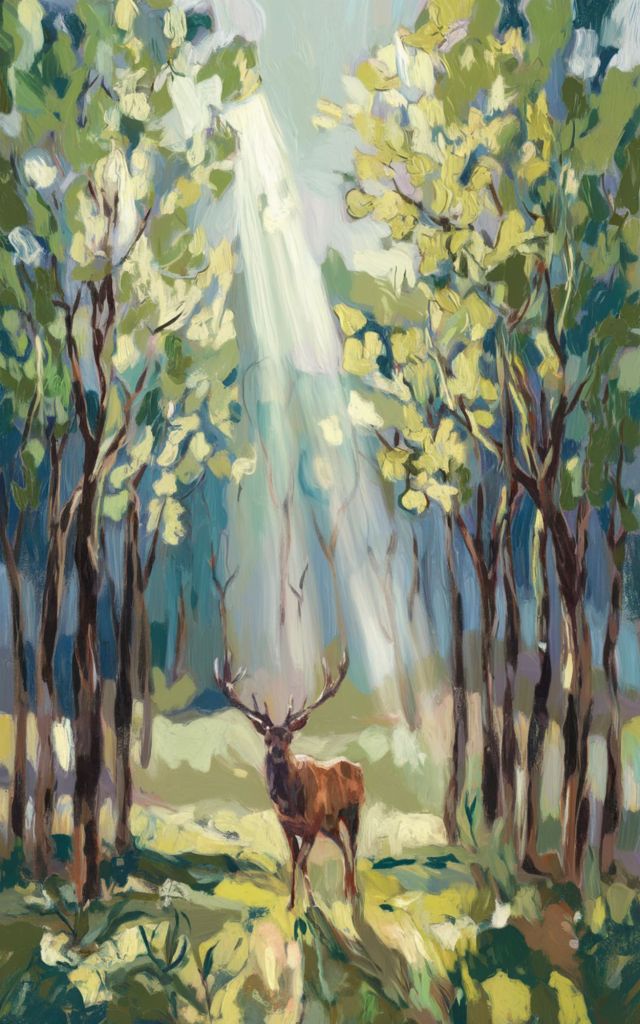
    A stag in sunlight standing in the woods

    In the quiet hush of morning, a single stag stands alone in a secluded forest clearing, his figure outlined in gentle streams of light that filter down from the canopy above. Each ray seeps through the branches and leaves, softening as it falls, wrapping him in a halo that seems both eternal and fleeting. His antlers, branches of bone and time, reach into the air with a majestic calmness, each point a marker of seasons come and gone, each curve a silent record of survival and adaptation. His coat is rich, a mix of earth-browns and shadows, blending into the woods yet catching the light just enough to stand apart, to be noticed.

    This moment—the stag, the sunlight, the stillness—is a scene millions of years in the making, a perfect portrait painted by evolution’s quiet hand. From the simplest of life forms, driven by the need to survive, to the elegance of this creature, whose every feature has been shaped by time itself, life has woven something wondrous. The stag’s heightened senses, his graceful frame, even the natural lines of his form, all serve a purpose, yet they come together to create something beyond mere function. They become beauty. And beauty, too, has its place in evolution, for it draws us near, inspires us to protect, to connect, to pause and simply be present.

    We, too, are shaped by evolution’s design, moulded not only to see but to feel, to wonder, and to appreciate. Perhaps, in a way, our perception of beauty is a survival instinct itself—a way to recognize harmony, to find peace in nature’s rhythms, to feel at home in the world that bore us. Standing in the clearing, we understand our role in this continuum. This moment of quiet awe is a part of something larger—a shared heritage with this stag, this forest, this light. In that silent connection, beauty becomes a bridge across time, binding us to all that has come before and all that will follow.

    And so we stand, quietly watching, breathing, and being, as the stag lifts his head, his gaze piercing yet soft, both knowing and unknowing. In this clearing, we glimpse the rare gift that evolution has left us: the capacity to see beauty not only in what we need but in all that simply is.


    What scene takes your breath away?

    If you find this content inspiring and uplifting, consider supporting what I do. Buy me a coffee on Ko-fi.
    Your support makes a difference in my life and helps me create more of what you like. Thank you!
    Tap to view my redbubble gallery.

  • My Elusive Dream

    My Elusive Dream

    Through ancient paths, seekers stray,
    Amidst the woods, where my dreams lay.
    With every step, anticipation looms,
    Lost in wonder, pure magic blooms.

    Anthony
    Bluebells and ferns

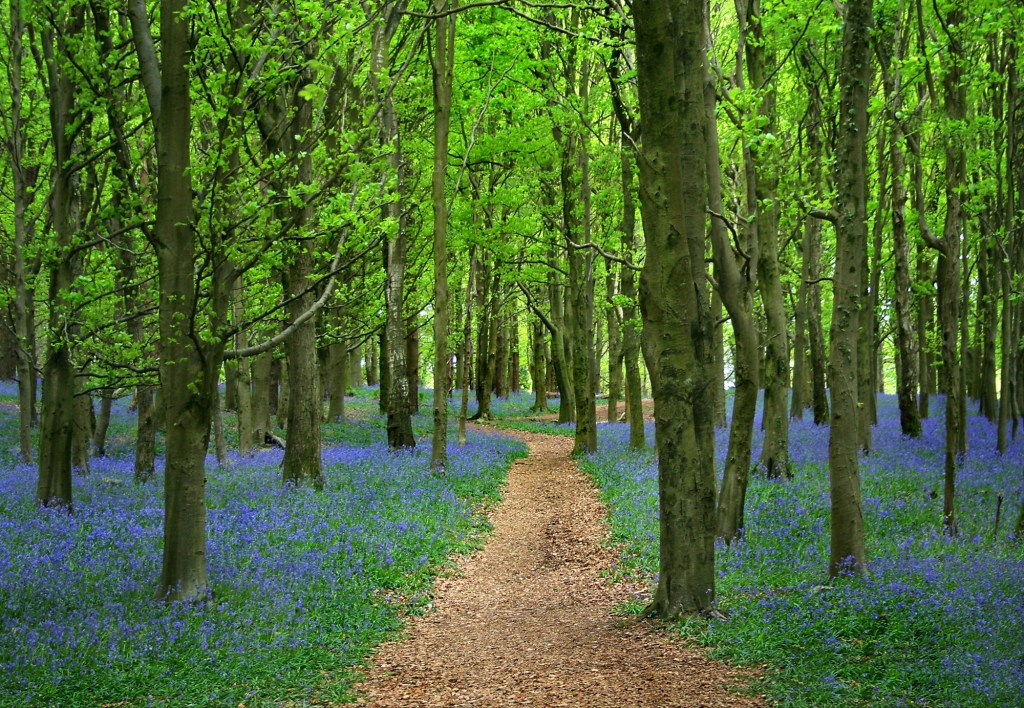
    For weeks, I’d been on the hunt. The elusive bluebell woods, whispered about in hushed tones by fellow nature enthusiasts, had become my personal grail. Everywhere I turned, the internet boasted photos of these magical glades, carpeted in a mesmerising sea of blue. The dream? To capture that scene myself, a vision of sapphire and emerald.

    The hunt, however, proved frustrating. One lead sent me down an old muddy farm track where I met a grumpy old muddy farmer. The fleeting window of the bluebell bloom was narrowing, and a sliver of worry began to gnaw at my resolve. Each failed expedition chipped away at my optimism, leaving me with nothing but wellies caked in mud and a knapsack full of disappointment.

    Then, on a whim, I decided to explore a barely-there track on the edge of a sleepy village. The rusty gate, its paint peeling like sunburnt skin, its ancient latch, which yielded with a satisfying groan, marked the entrance. Anticipation intensified, the air itself held the sweet promise of spring.

    Sunlight, which filtered through the ancient beech tree canopy, dappled the path ahead. Decomposing leaves crunched underfoot, their earthy scent mingling with the fresh, green perfume of emerging life. Primroses peeked out shyly, tendrils of ivy, like scrawny fingers, reached out from the gnarled trunks, and jewel-toned flies buzzed lazily past, their iridescent wings catching the fragmented light.

    The first hint of blue came not from a flower, but a flash of a blue tit flitting amongst the branches. It was a prelude, a tease of the main act.

    And then, there it was.

    Bluebells and beeches

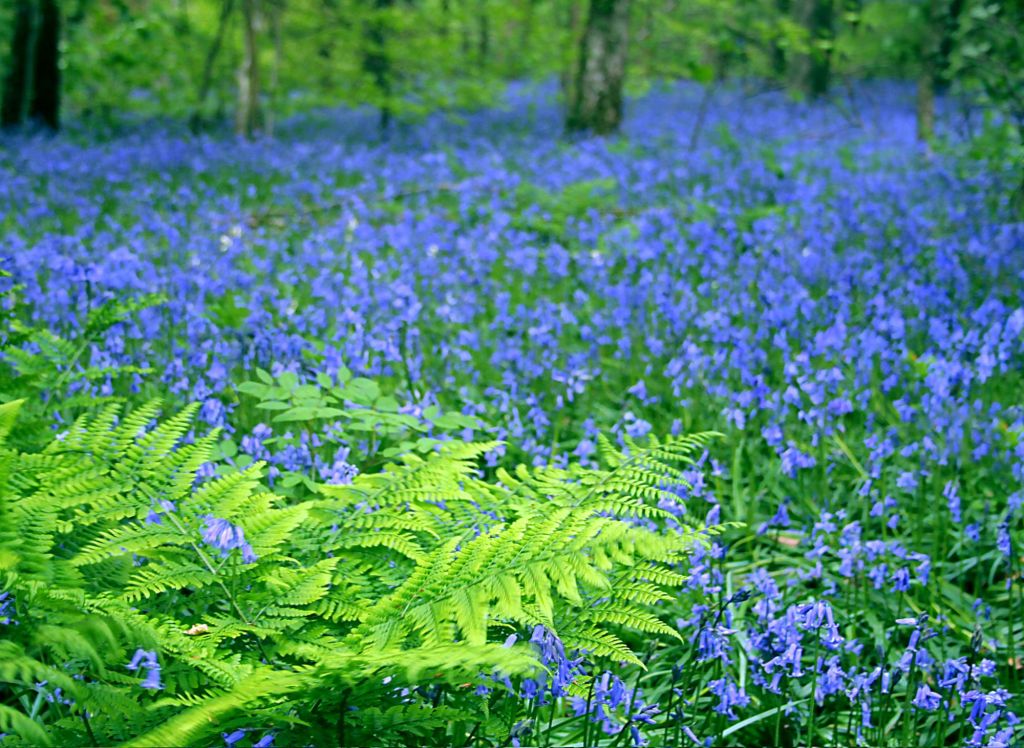
    A gasp escaped my lips. The woodland floor wasn’t carpeted, it was engulfed in a breathtaking sea of bluebells. Their delicate, bell-shaped blooms swayed gently in the afternoon breeze, the blue contrasting effortlessly with the verdant young beech leaves. In that moment, my world seemed to shrink to this small glade, all my worries and anxieties melting away.

    Beside this breathtaking display, another patch of magic unfolded. Lush green ferns, unfurling their delicate fronds, created a textural contrast with the smooth bluebells. This wasn’t just a carpet of colour, it was a living, breathing artwork, a masterwork of nature.

    My frustrations melted away entirely, replaced by a profound sense of wonder. Here, in this hidden haven, I had found not just a breathtaking scene to capture, but a moment of pure, unadulterated joy. I suppose the photographs were a reason to search, but being here is what I really wanted. The elusive bluebells had revealed their secret, they had gifted me a memory that would forever be etched in my heart.

    Tap to view my redbubble gallery.
  • Of Moss and Memories: The Forest Bridge

    Of Moss and Memories: The Forest Bridge

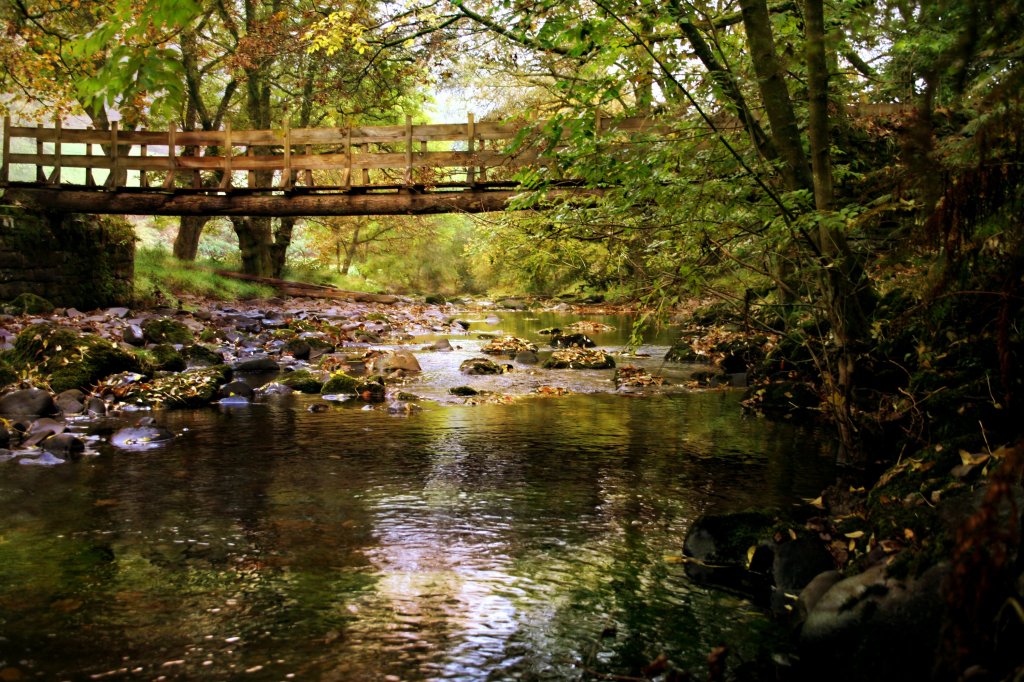
    As I crossed the weathered planks, I discovered the bridge’s secret: it led to inner peace

    Somewhere in Snowdon, Wales
    Tap to view my redbubble gallery.

    Beneath a canopy of ancient oaks and maples, a rustic bridge emerges, its weathered planks worn smooth by countless footsteps. It spans a meandering river, whose waters whisper secrets to the wind-kissed leaves. As you step onto the bridge, the scent of damp earth and moss rises to meet you, a fragrance carried on a gentle breeze. The bridge’s timeworn rails offer a comforting grip, guiding you through the heart of this enchanted forest. In the dappled sunlight, you find solace, where the bridge becomes a silent witness to the stories of the woods, standing strong through seasons and time.

    Tap to view my redbubble gallery.
Design a site like this with WordPress.com
Get started