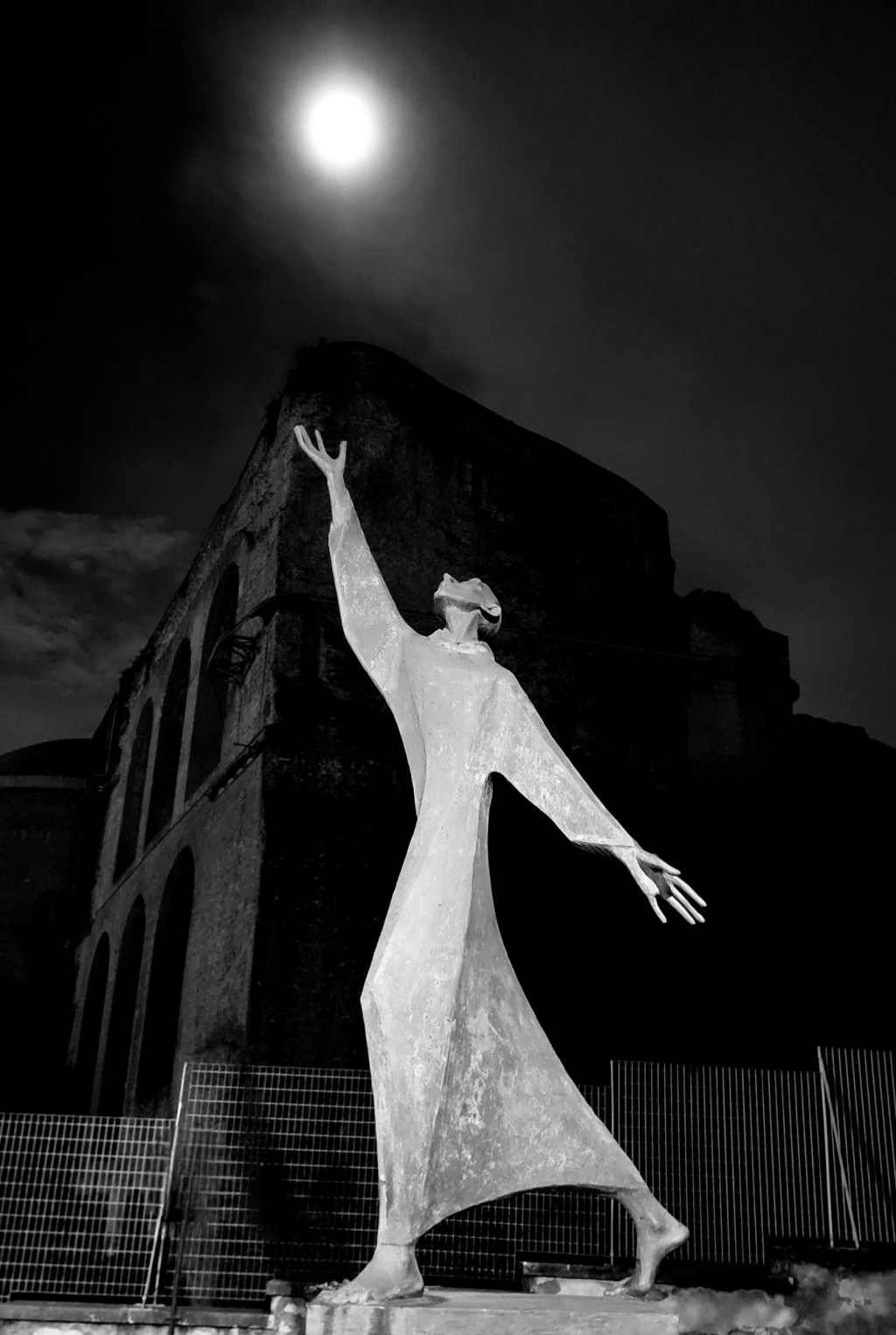
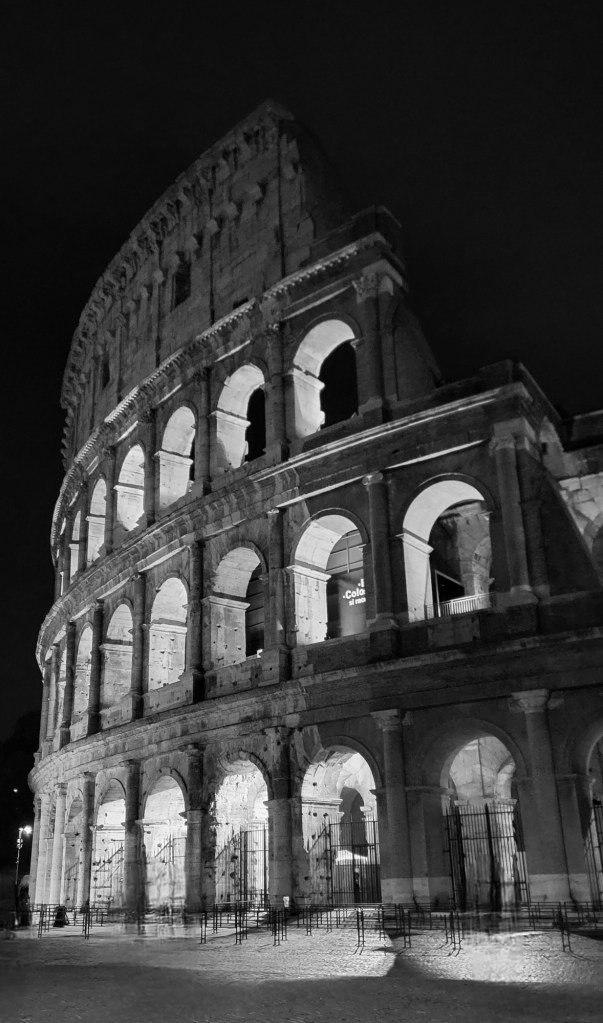
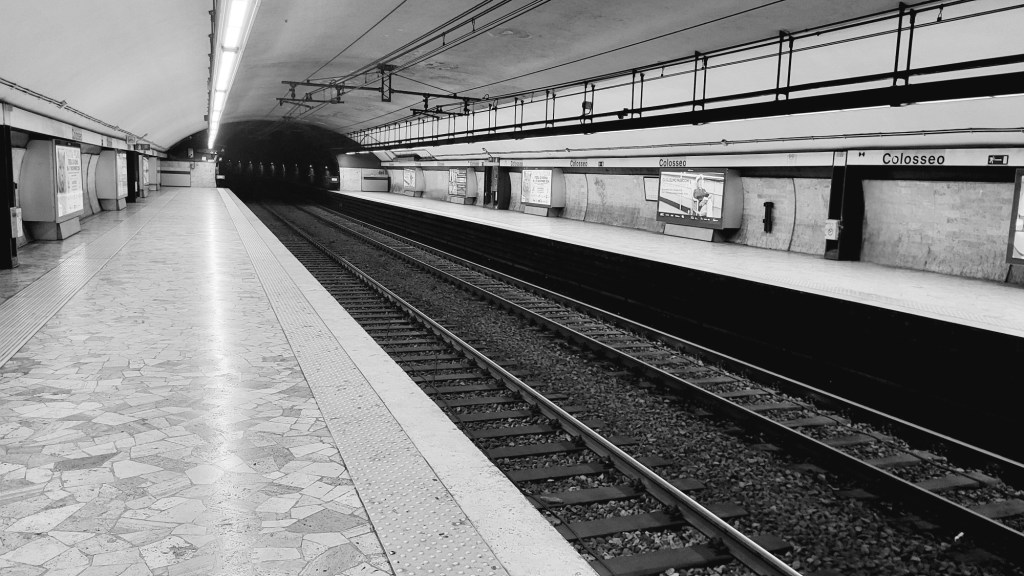
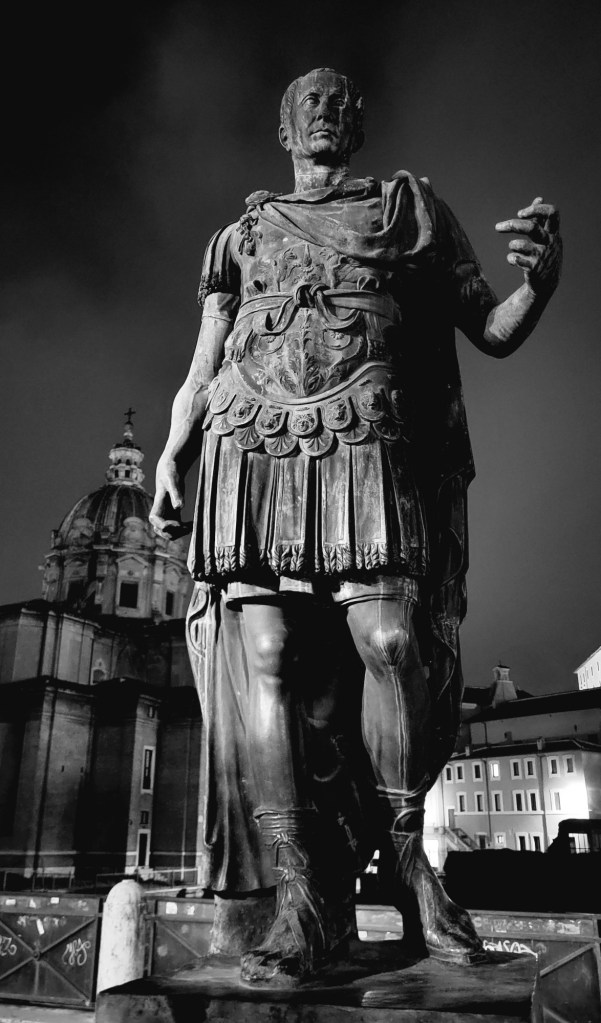
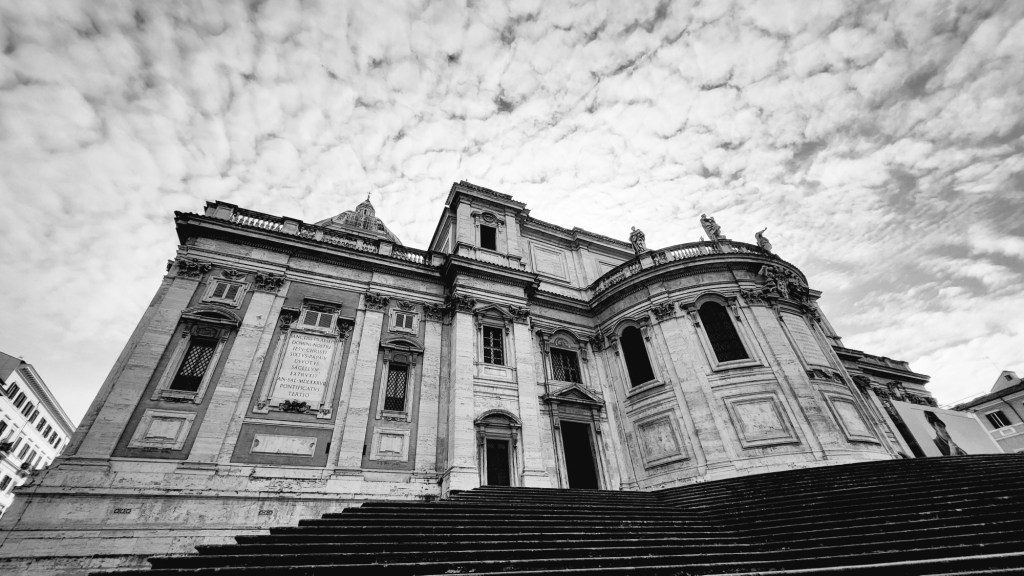
ColosseumMetroStatua di San Francesco d’AssisiJulius CaesarAirportBasilica Papale di Santa Maria MaggioreVilla TorloniaShiba inuFrom inside the ColosseumColiseumHigh fashionIf you find this content inspiring and uplifting, consider supporting what I do. Buy me a coffee on Ko-fi. Your support makes a difference in my life and helps me create more of what you like. Thank you!Tap to view my redbubble gallery.
The sun beat down on me back hot as a blacksmith’s furnace, but I didn’t care a jot. Not today. Today, my legs pumped like pistons, pushin’ that brand new two-wheeler down the dusty lane. My brand new bicycle! It gleamed like a blackbird’s wing in the afternoon light, the handlebars all shiny and the red paint still smellin’ fresh.
The Old Family
Da had surprised me with it just that mornin’. Said it was time I had a proper way to get about, seein’ as I was turnin’ twelve come Michaelmas. Now, twelve might not seem like much to some folk in them grand city places, but out here on the farm, it meant you were practically a man already.
Our cottage, well, it ain’t much to look at in this picture, is it? Patchwork of tin on the roof, holdin’ back the worst of the rain. We don’t got much, Ma says, but what we do have, we make do with. There’s Ma, of course, lookin’ a bit worn ’round the edges these days. Look after five of us, she does, what with Da away workin’ on the big estate most days. And Auntie Gwen, blind in one eye but seeing more than most with the other, her sharp wit keeping us all in line.
And there’s Gran, lookin’ stern as ever in the picture. Don’t let that fool ya, though. She’s got the softest spot for all of us, especially little Lily there in the middle. My sister, always got her nose in a book. On the other side of me is Elsie, me other sister – tougher than a badger that one, always bossin’ us about.
But today, none of them mattered. Today, it was just me and this magnificent machine. I whizzed past the chickens scatterin’ like feathers in a gale, then down by the sheep field, pretendin’ I was a knight chargin’ into battle. The wind nearly took my hat, and I could almost taste freedom on my tongue.
This bicycle wasn’t just some toy, mind you. It was a lifeline. Now I could help Da collect the eggs quicker, maybe even get into town on market days to sell some of Ma’s jams. It was a chance to earn my keep, to be a proper part of this family.
As the sun begun to set, I looked back at the day and I knew this bicycle was more than just metal and wheels. It was a promise. A promise of a brighter future, of adventures waitin’ just around the bend. And with a wide grin, I pedalled on, my heart light as a feather.
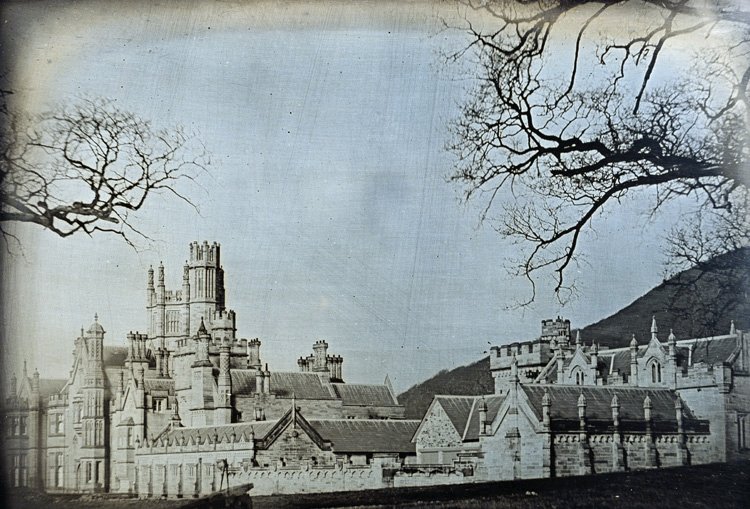
The first photo to be taken in Wales at Margam park, Port Talbot
It’s interesting to be taking photos here as very few people know Margam Park was the location of the earliest known Welsh photograph. It was a daguerreotype of the castle taken on 9 March 1841 by the Reverend Calvert Richard Jones. A daguerreotype is an early type of photograph that was produced on a silver-plated copper sheet. The Reverend Jones was a pioneer of photography and a friend of William Henry Fox Talbot, who was also a frequent visitor to Margam Park and experimented with his own photographic methods. The Margam daguerreotype is now kept at the National Library of Wales and is considered a valuable historical document.
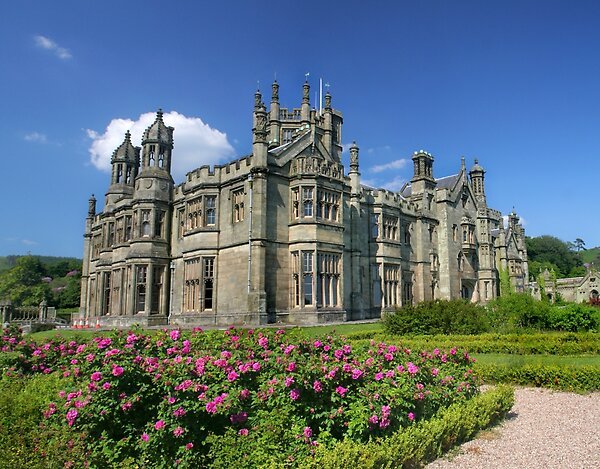
Took this photo of Margam Park a few years ago. Tap to see my red bubble gallery
In the early 19th century, the estate passed to the Talbot family, who built “Margam Castle”c a neo-Gothic country house that was designed by Thomas Hopper and completed in 1840. The castle was the seat of the Talbot family until the end of the Second World War, when it was used by the army and suffered from neglect and vandalism.
In 1973, the Margam Estate was acquired by Glamorgan County Council, and in 1977, the park was opened to the public. Since then, the park has been restored and enhanced, offering a variety of attractions and activities for visitors, such as a sculpture park, a farm trail, a narrow gauge railway, a fairytale village, and a discovery centre.
Margam Park is a place of exceptional historic and scenic value, and has some of the country’s finest architectural treasures in its magnificent setting. It is a rare and valuable learning resource and a heritage attraction of considerable distinction.
“In the crevices of despair, nature composes a ballad of renewal, each leaf a lyric in the unwritten song of life’s enduring melody.”
Anthony
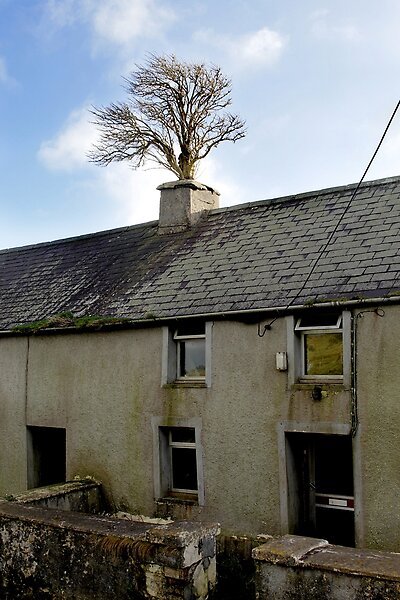
Took this photo in the Welsh hills. I love how nature reclaims man’s constructions. Tap to view my redbubble gallery
In the gloomy recesses of our fractured existence, where the shadows of despair lengthen and the echoes of discord reverberate, there exists a profound truth—nature, that eternal force, ceaselessly endeavours to reclaim dominion over the desolation we’ve wrought. Through the fractures and crevices of our broken world, it weaves its resilient tendrils, a manifestation of the indomitable spirit of life.
Oh, the lamentable tale of our folly, where progress has become the architect of its own undoing. The ceaseless march of industry, the relentless pursuit of mastery over the elements, has left our once-vibrant world battered and bruised. Yet, in the midst of this man-made labyrinth, nature persists, an undaunted force that refuses to be silenced.
Behold the tenacity of the weed, that humble interloper pushing through the unforgiving concrete. A symbol of defiance against the cold hand of human order. Through the cracks in the pavement, nature extends a green rebellion, reclaiming its birthright inch by persistent inch. It is as if the earth itself, wearied by our excesses, whispers a quiet protest, reminding us that it, too, has a voice—a voice echoing through the crevices of our misguided endeavours.
In the murk of our industrialization, nature’s resilience becomes a beacon of hope, a reminder that despite our ceaseless march towards progress, there exists a sublime balance we dare not disrupt. The wind through the shattered windows, the wildflowers in the neglected corners, each a chorus singing the hymn of an untamed world seeking to endure.
And so, as we stand amidst the ruins of our own creation, let us not forget that nature, in its quiet rebellion, persists—a testimony to a world that always finds a way to push back against the encroaching darkness, through the cracks and crevices of our broken existence.
Wales is often called the “land of castles” – and for a good reason. There are over 400 castles in this small country, ranging from ancient earthworks and stone ruins to magnificent fortresses and stately homes. In this blog post, I will explore some of the history and features of these castles, and why they are such an important part of Welsh culture and heritage.
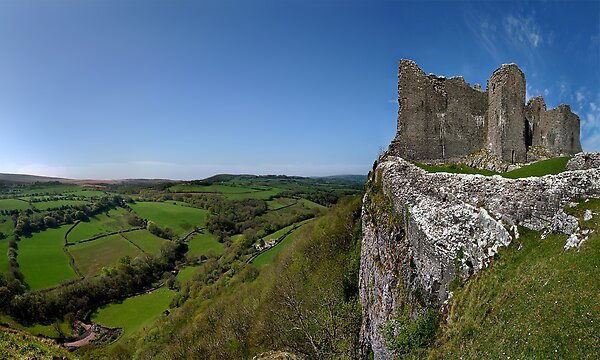
Carreg Cennen Castle Tap to see my red bubble gallery
“Within the weathered stones of Welsh castles, whispers of ancient magic linger, transporting the imagination to realms of enchantment and wonder.”
Anthony
The earliest castles in Wales date back to the Iron Age, when the Celtic tribes built hillforts and defended settlements across the land. Some of these sites, such as Dinas Emrys and Tre’r Ceiri, are still visible today. The Romans also built forts and walls in Wales, such as Segontium and Caerleon, to protect their province of Britannia from the native Britons and the invading Saxons.
The Norman conquest of England in 1066 brought a new wave of castle building in Wales, as the Normans and their allies sought to extend their control and influence over the Welsh kingdoms. They built motte-and-bailey castles, which consisted of a wooden tower on a raised mound (motte) and a walled courtyard (bailey), often surrounded by a ditch. Some of the most famous examples of these castles are Chepstow, Cardiff, and Pembroke. The Normans also rebuilt and enlarged some of the existing Roman and Welsh fortifications, such as Caerphilly and Caernarfon.
The Welsh princes and lords resisted the Norman invasion and expansion, and built their own castles to defend their territories and assert their authority. These castles were often made of stone, and had distinctive features such as round towers, gatehouses, and curtain walls. Some of the most impressive Welsh castles are Dolwyddelan, Castell y Bere, and Carreg Cennen (photoed). The Welsh castles also reflected the culture and identity of their builders, and often incorporated elements of Welsh art and architecture, such as carvings, sculptures, and inscriptions.
The 13th century saw the rise of King Edward I of England, who launched a series of campaigns to conquer Wales and end the Welsh resistance. He built a ring of massive and sophisticated castles along the north and west coast of Wales, such as Conwy, Beaumaris, Harlech, and Criccieth. These castles were designed to dominate the landscape and intimidate the Welsh population, and were also symbols of royal power and prestige. They were built by master masons and engineers, and had advanced features such as concentric walls, moats, drawbridges, portcullises, and arrow slits. These castles are considered to be some of the finest examples of medieval military architecture in Europe, and are part of the UNESCO World Heritage Site of the Castles and Town Walls of King Edward in Gwynedd.
The 15th century saw the emergence of a Welsh hero, Owain Glyndŵr, who led a rebellion against English rule and proclaimed himself Prince of Wales. He captured and destroyed many of the English and Norman castles, and built his own castles, such as Sycharth and Dolbadarn, to rally his supporters and allies. His rebellion was ultimately unsuccessful, but he inspired generations of Welsh patriots and nationalists.
The 16th century saw the Tudor dynasty come to power in England, which had Welsh origins. The Tudors brought a period of relative peace and stability to Wales, and also enacted the Laws in Wales Acts, which integrated Wales into the English legal and administrative system. The Tudors also patronized and renovated some of the Welsh castles, such as Raglan and Carew, and transformed them into comfortable and elegant residences. The Tudors also adopted the Welsh dragon as part of their heraldry and flag, which is still used today as the national emblem of Wales.
The 17th century saw the outbreak of the English Civil War, which divided the country between the Royalists and the Parliamentarians. Many of the Welsh castles were involved in the conflict, and changed hands several times. Some of the castles were besieged, damaged, or demolished, such as Denbigh, Holt, and Chirk. Some of the castles were also used as prisons, garrisons, or headquarters, such as Caerphilly, Powis, and Ludlow.
The 18th and 19th centuries saw the rise of the Industrial Revolution, which transformed the economy and society of Wales. Many of the Welsh castles were neglected, abandoned, or sold, and some of them were used as quarries, factories, or mines, such as Flint, Kidwelly, and Caldicot. Some of the castles were also restored, preserved, or rebuilt, by wealthy landowners, antiquarians, or architects, such as Penrhyn, Castell Coch, and Penhow. Some of the castles were also donated, leased, or sold to the public, the state, or charitable organizations, such as Tretower, Dinefwr, and Plas Mawr.
The 20th and 21st centuries saw the growth of tourism, education, and conservation in Wales. Many of the Welsh castles are now open to visitors, and are managed by various bodies, such as Cadw, the National Trust, and local authorities. The castles are also used for various events, activities, and exhibitions, such as festivals, concerts, weddings, and re-enactments. The castles are also sources of research, learning, and inspiration, for historians, archaeologists, students, and artists. The castles are also part of the national identity and pride of Wales, and are celebrated in literature, music, and art.
The castles of Wales are a rich and diverse legacy of the past, and a living and vibrant part of the present. They tell the stories of the people, events, and ideas that shaped the history and culture of Wales, and also reflect the changes and challenges that faced the country over the centuries. They are also monuments of beauty, skill, and creativity, and showcase the architectural and engineering achievements of their builders and designers. They are also places of wonder, mystery, and romance, and invite us to explore, discover, and enjoy them. They are, in short, the treasures of Wales.
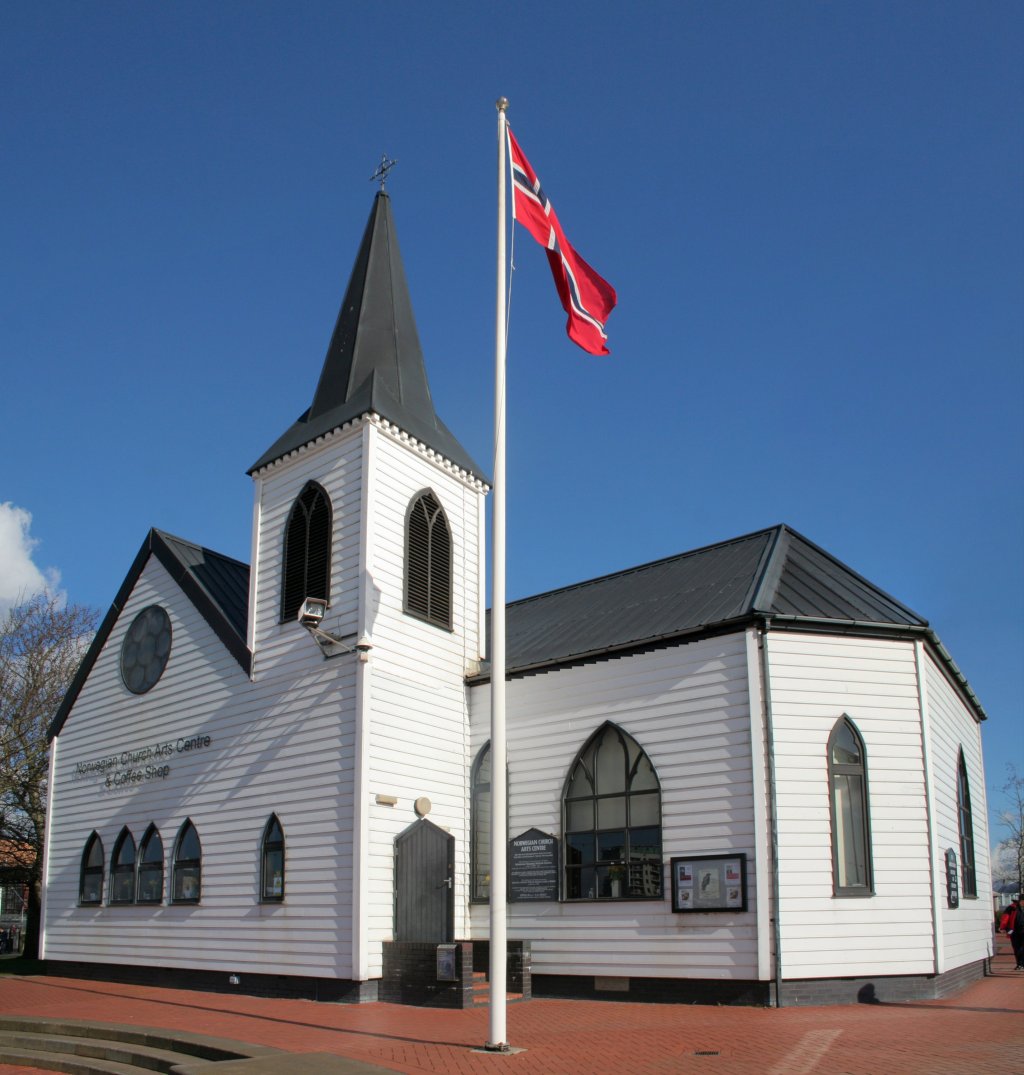
The Norwegian Church in Cardiff Bay is a historic and cultural landmark in Cardiff, Wales. It was originally built in 1868 to serve the growing Norwegian community in the area, many of whom were involved in the shipping and coal trading industries. The church played a vital role in the community, serving as a place of worship and a social centre for Norwegians living in
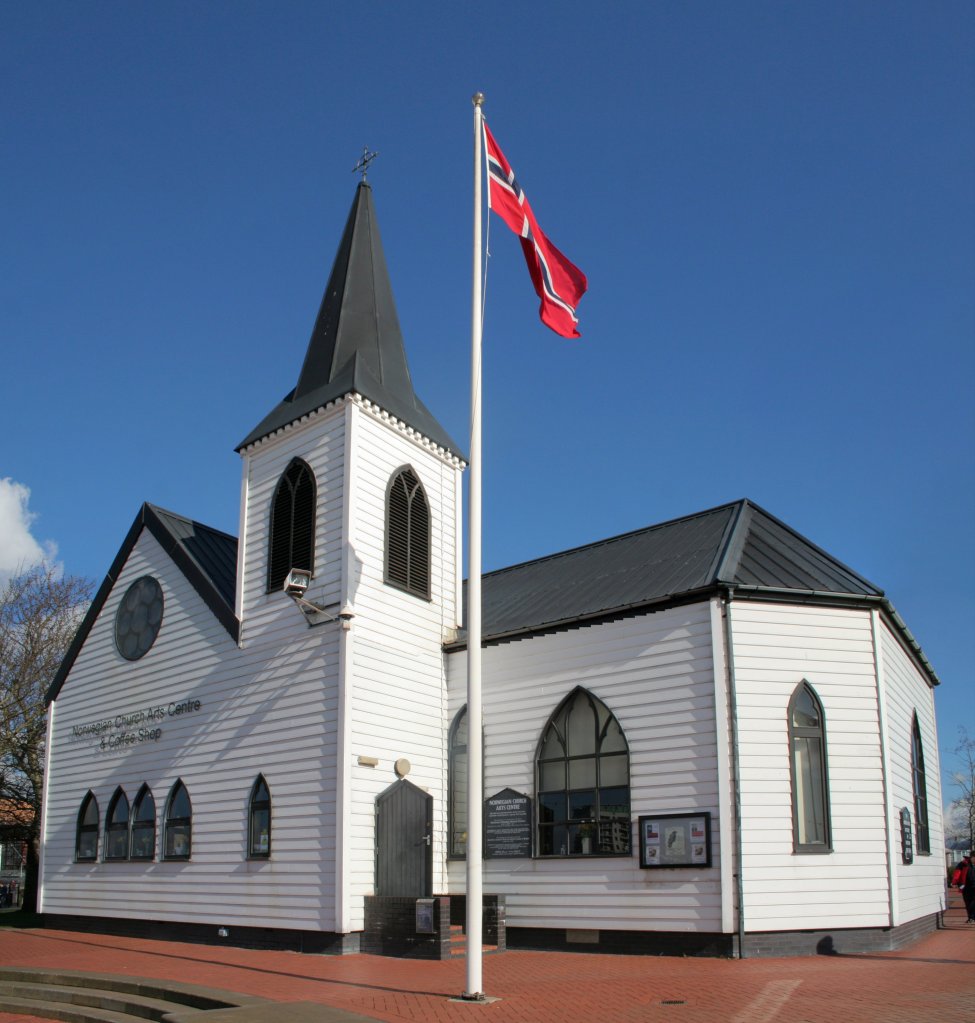
Norwegian Church in Cardiff Bay Tap to view my redbubble gallery.
In the late 20th century, the church fell into disuse, but it was later renovated and reopened as a cultural and arts centre. Interestingly, in 1916, the world-famous author Roald Dahl, who was born in Cardiff and whose parents were Norwegian, was baptised in the Norwegian Church. This historical connection adds to its significance.
Today, it hosts various events, exhibitions, and performances, making it a hub for cultural and artistic activities in Cardiff. It also has a cafe with beautiful waterfront views. The Norwegian Church is an important part of the cultural heritage of Cardiff and the broader history of the Welsh-Norwegian connection in the city
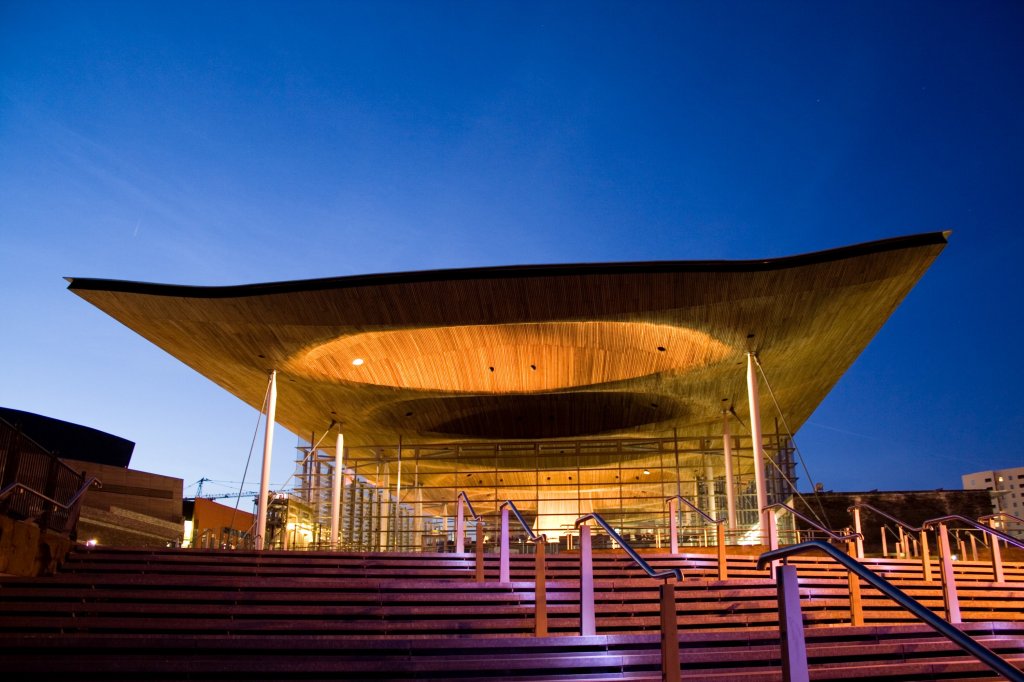
In the heart of Cardiff Bay, nestled alongside the glistening waters, stands a striking building that embodies the aspirations of a nation. The Senedd Cymru, or Welsh Parliament, is a symbol of Wales’ journey towards self-governance, a journey that has been marked by both progress and setbacks.
A photo I took a few years ago. Tap to view my redbubble gallery.
The dragon’s fire From humble beginnings, a flame took hold, Devolution’s embers, burning bold. Through trials and tribulations, it did grow, A beacon of Welsh self-governance’s glow.
My Welsh version. It’s a computer translation but I thought I’d treat you all to some Welsh.
Tân y ddraig O ddechreuadau gostyngedig, cydiodd fflam, Embers datganoli, llosgi beiddgar. Trwy brofedigaethau a gorthrymderau, tyfodd, Ffagl o llewyrch hunanlywodraeth Gymreig.
In 1997, a narrow referendum victory (50.3%) paved the way for the establishment of the Welsh Assembly. Initially possessing limited powers, the Assembly gradually gained more autonomy, culminating in its renaming as the Senedd Cymru in 2020.
Today, the Senedd holds a wide range of powers, including responsibility for education, health, housing, and the environment. It also has the power to set Welsh taxes, such as income tax and landfill tax.
The Senedd is a symbol of Wales’ aspirations for self-governance. Its evolution has been a gradual process, but it now plays a vital role in the governance of the nation.
As the Senedd continues to evolve, it is likely to remain a focal point for Welsh identity and its pursuit of greater autonomy.
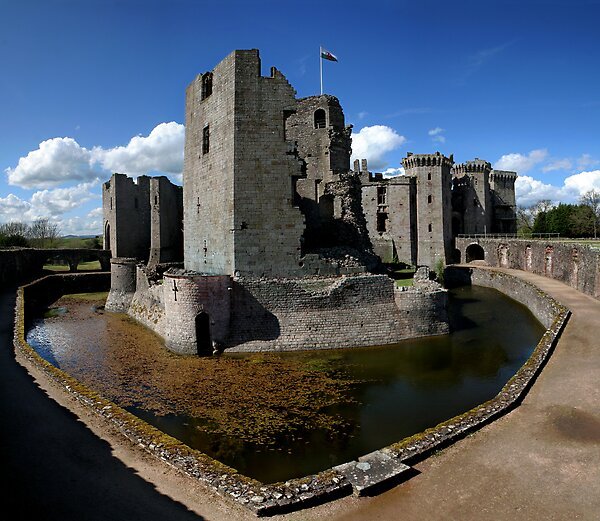
In the heart of the lush Welsh countryside, there stood a castle unlike any other. Its name was whispered in awe and reverence across the land – Raglan Castle. The castle’s history was a tapestry woven with threads of valour, intrigue, and timeless beauty.
Tap to view my redbubble gallery.
The very walls of Raglan Castle seemed to carry echoes of the 12th century, when the earliest stones were laid. As the centuries passed, its destiny was irrevocably entwined with the Herbert family. Sir William ap Thomas, a man of vision and ambition, took it upon himself to transform Raglan into a fortress fit for a noble dynasty.
The castle’s defining feature, the “Yellow Tower of Gwent,” rose proudly into the sky, its hexagonal shape defying convention and capturing the imagination of all who beheld it. Raglan Castle’s grandeur was further accentuated by its double-towered gatehouse and the shimmering moat that encircled it.
But Raglan Castle was not merely an architectural marvel. It was a stage upon which history unfolded. The Herberts played their part in the Wars of the Roses, their legacy forever etched in the stone walls of Raglan. As the castle reached its zenith, it was a symbol of power, influence, and unyielding loyalty.
However, as fate would have it, the English Civil War descended upon the land, casting a shadow of conflict and change. Raglan Castle found itself at the epicentre of a fierce struggle. When the Royalists and Parliamentarians clashed, the castle stood defiant, its spirit unbroken.
The year was 1646, and the siege was relentless. But the indomitable fortress of Raglan withstood all assaults, a testament to the courage of its defenders. Eventually, the winds of change blew, and the Royalist cause faltered. The castle fell, and its defiance was silenced.
Now, in the modern age, Raglan Castle stands in picturesque ruin. The echoes of its past resonate in every stone, in the grand tower that still reaches for the heavens, and in the waters of the moat that once protected it. It is a place of wonder and contemplation, a living testament to the enduring spirit of Wales and the castles that define its history.
Raglan Castle, with its dramatic past and timeless beauty, remains a beacon for those who seek to glimpse the shadows of history and feel the echoes of a bygone era.
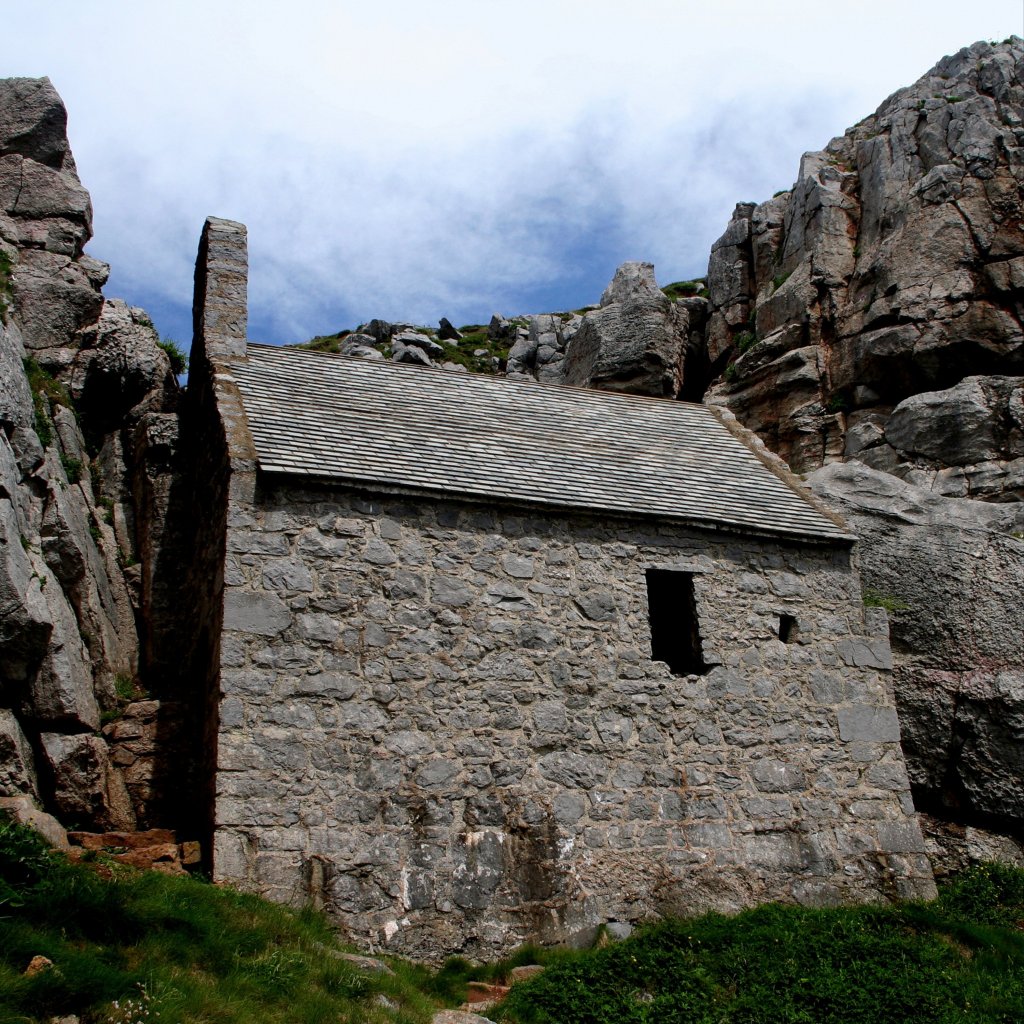
In the early 6th century, in the rugged, windswept cliffs of Pembrokeshire, where the sea meets the land, there lived a hermit named Saint Govan. He had found solace in the natural beauty of the coastal landscape and the spiritual connection it offered.
Tap to view my redbubble gallery.
One fateful day, as Saint Govan knelt in prayer within his humble chapel, a band of fearsome pirates descended upon the rocky shores. They sought to plunder the nearby village and destroy the hermit’s sacred sanctuary. The hermit, a man of unwavering faith, continued to pray for protection.
In a miraculous turn of events, the very cliffs that cradled Saint Govan’s chapel began to open up, forming a narrow cleft in the rock face. It is said that this cleft was just wide enough to shelter the hermit from the marauding pirates. As the band of outlaws approached, they were unable to locate the hidden entrance to the chapel, and their attempts to reach Saint Govan were thwarted by the hand of God.
With awe and amazement, the pirates eventually gave up their pursuit and departed, leaving Saint Govan unharmed. It was a divine act of protection, and the hermit saw it as a sign of God’s grace.
From that day forward, Saint Govan continued his life of contemplation and prayer in the tranquil solitude of his chapel, grateful for the miraculous shelter provided by the very cliffs that he had come to love. The legend of Saint Govan’s miraculous escape and his unwavering devotion continues to be told and cherished in the heart of Pembrokeshire, a testament to the power of faith and the wonders of nature.
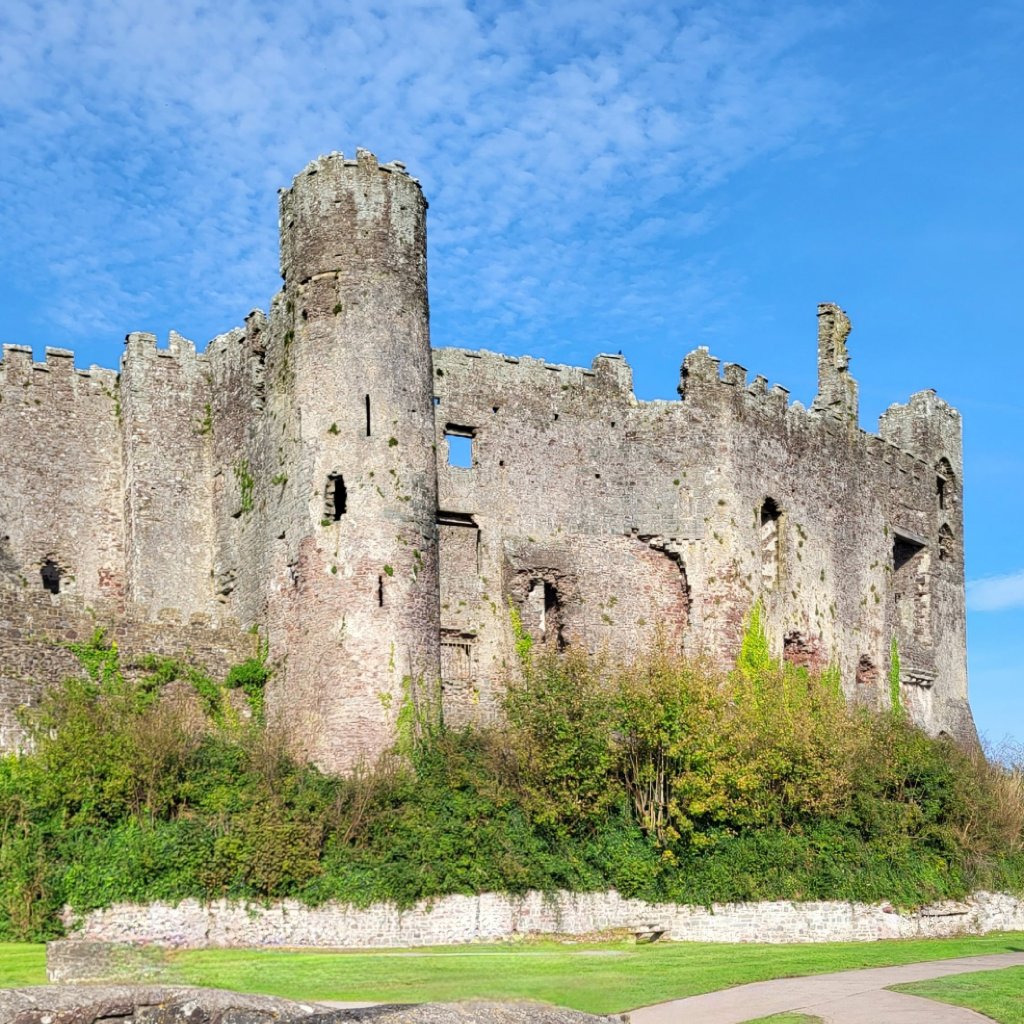
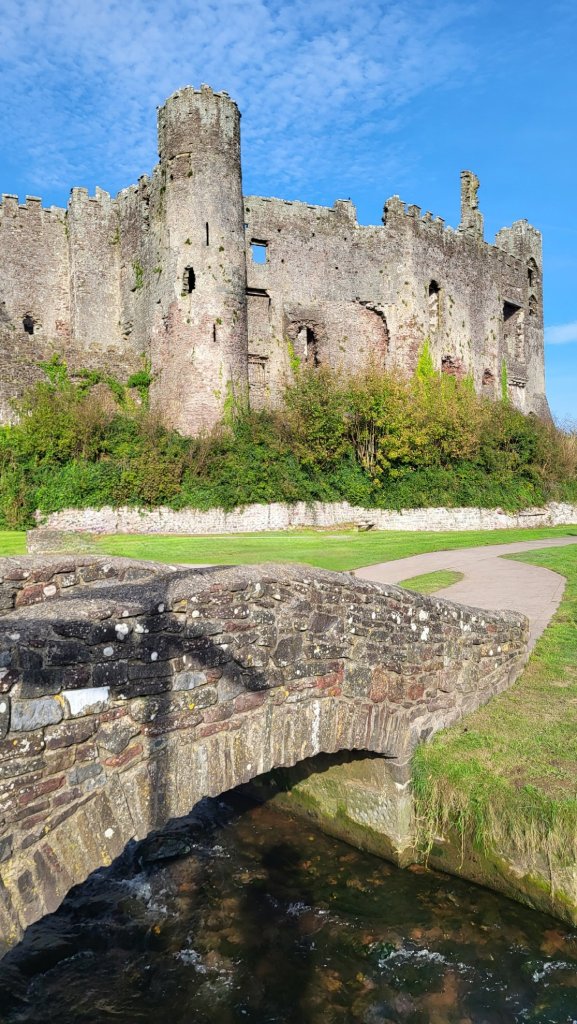
Laugharne Castle stands as a testament to the poetry of history, a place where the pen and the sword have etched a narrative that continues to stir the depths of the human soul.
Tap to view my redbubble gallery.
In Laugharne, where the waves whisper secrets to the shore, stands a castle steeped in history. A timeless sentinel, its weathered stones tell tales of bygone days, echoes of lives once lived. Here, in this quaint Welsh town, where the past and present entwine like lovers beneath a harvest moon, I found my muse, my refuge, my Laugharne.
The castle, ancient as the hills, cradles the whispers of centuries, a silent guardian of time. Its crumbling walls have seen kings and rebels pass through their arches, and the ghosts of their stories still dance in the moonlight. Its turrets, like the worn spines of dusty books in an old, forgotten library, touch the heavens with silent pleas for remembrance, just as I longed to reach the depths of my soul with words.
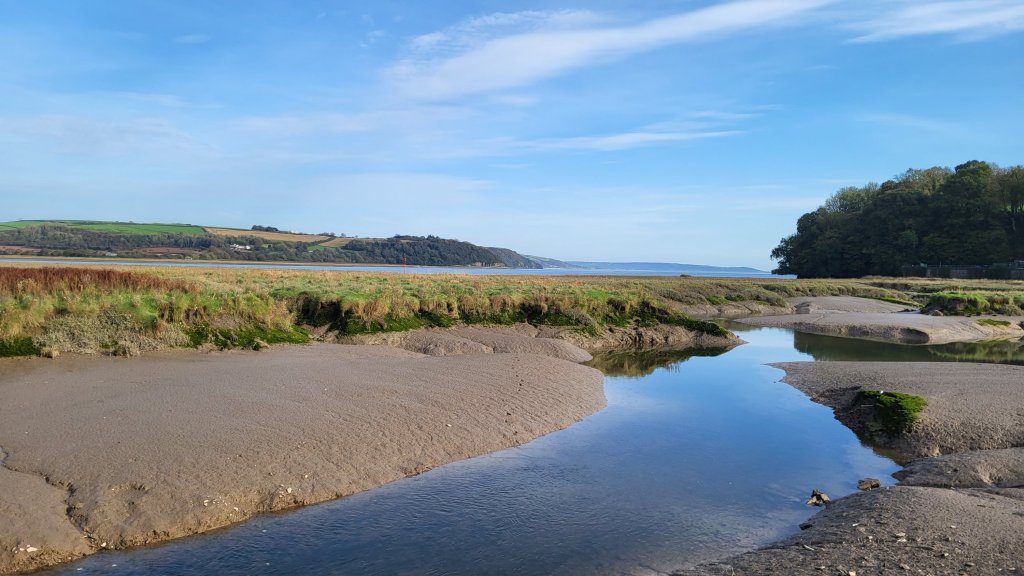
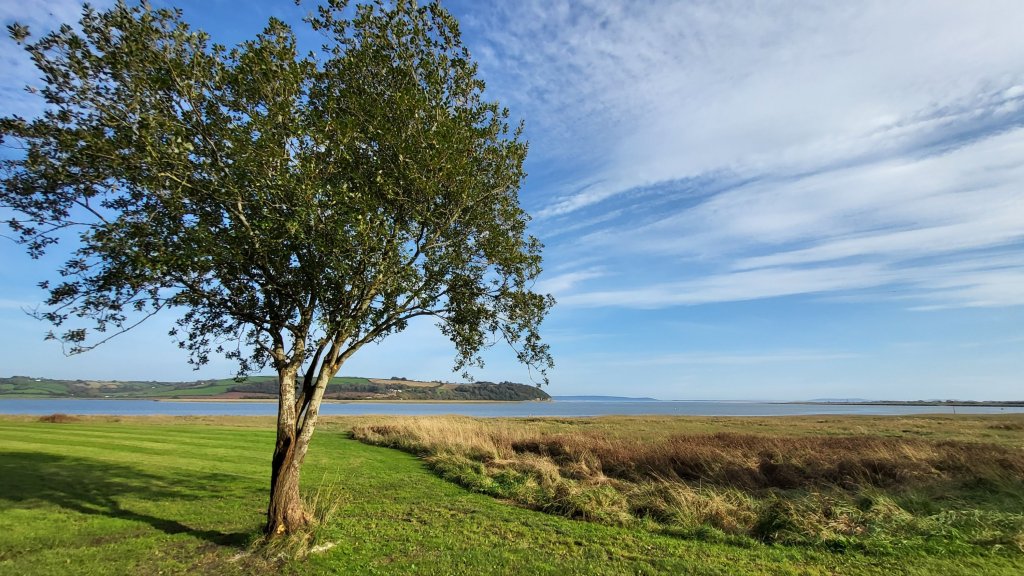
From this vantage point, I gazed upon the estuary, where the River Taf kisses the sea in a slow, sensuous dance. The mudflats and salt marshes spoke of eternity, of life’s ceaseless ebb and flow. The gulls call like ghosts of sailors long gone, crying out in a language only the heart can understand. It was here that I found the music of my verses, in the rhythm of the tides and the cadence of the breeze.
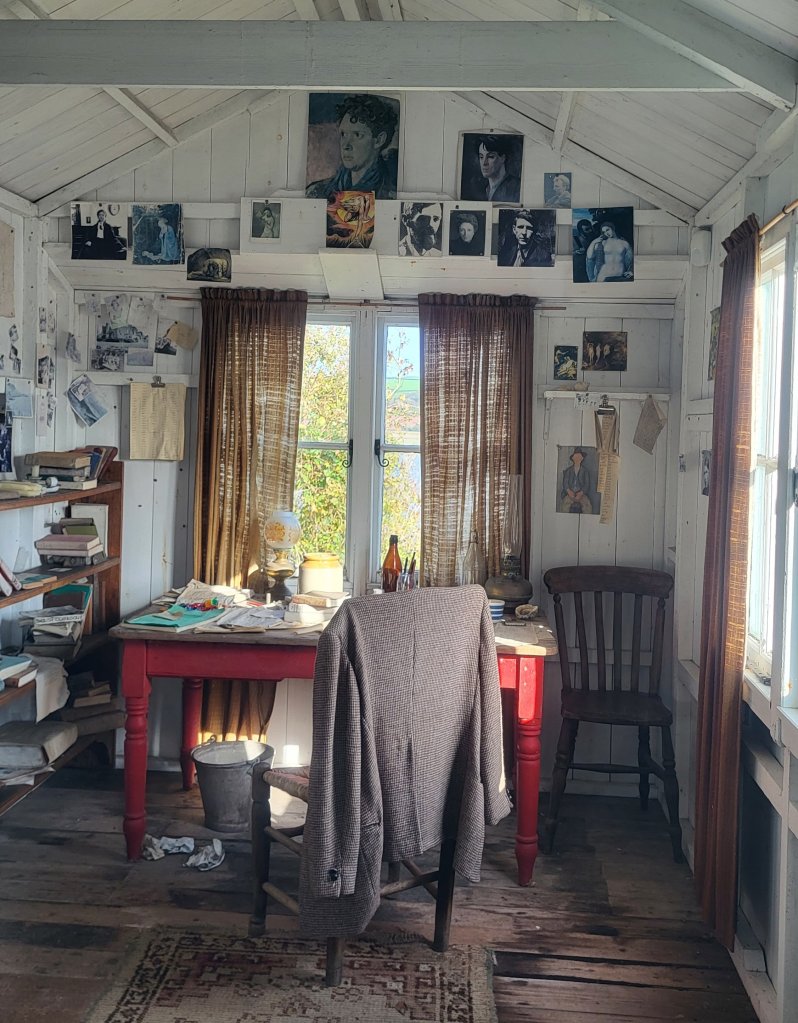
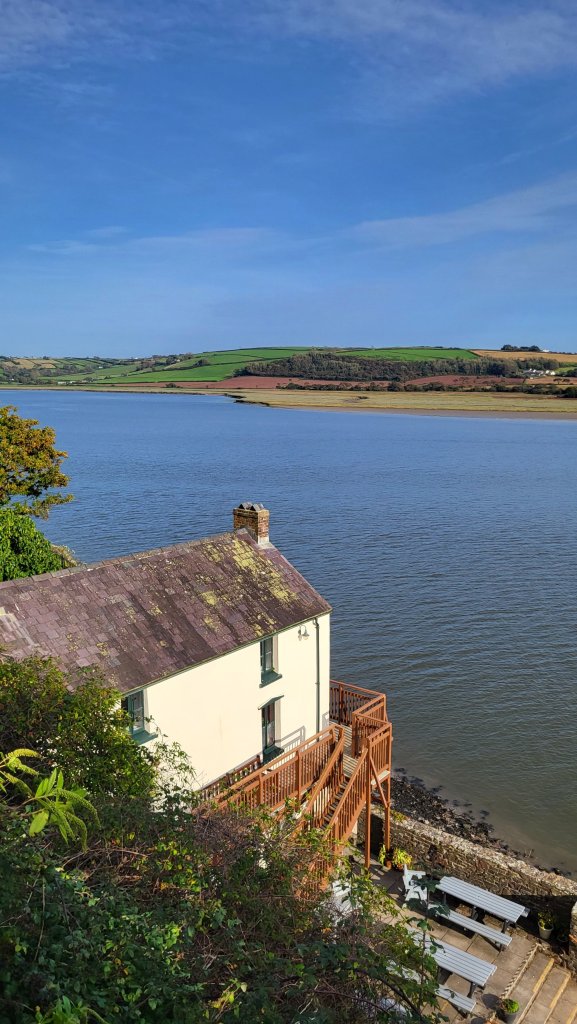
The boathouse, a sanctuary of solitude, cradled my thoughts as they tumbled from my mind like leaves in the autumn wind. Surrounded by the lilt of the Welsh accent, the laughter of the locals, and the whispers of the landscape, my pen danced on paper, giving life to the words that would become my legacy.
The charming town of Laugharne, with its cottages and lanes, its pubs and its people, became the canvas for my stories, the backdrop for my dreams. The magic of this place, where time itself seemed to linger, inspired me to spin tales of love and loss, of beauty and decay. Each cobblestone street held a story, each gust of wind a secret, waiting to be uncovered.
As the sun dipped below the horizon, casting the castle in shadow, I found solace in the embrace of Laugharne. It was a place where poetry and reality blurred, where my words flowed like the Taf’s waters, and where I, like the castle, stood as a testament to the enduring power of stories. In Laugharne, I found my voice, and the echoes of that voice still linger in the whispers of the castle, the sigh of the estuary, and the laughter of the gulls.
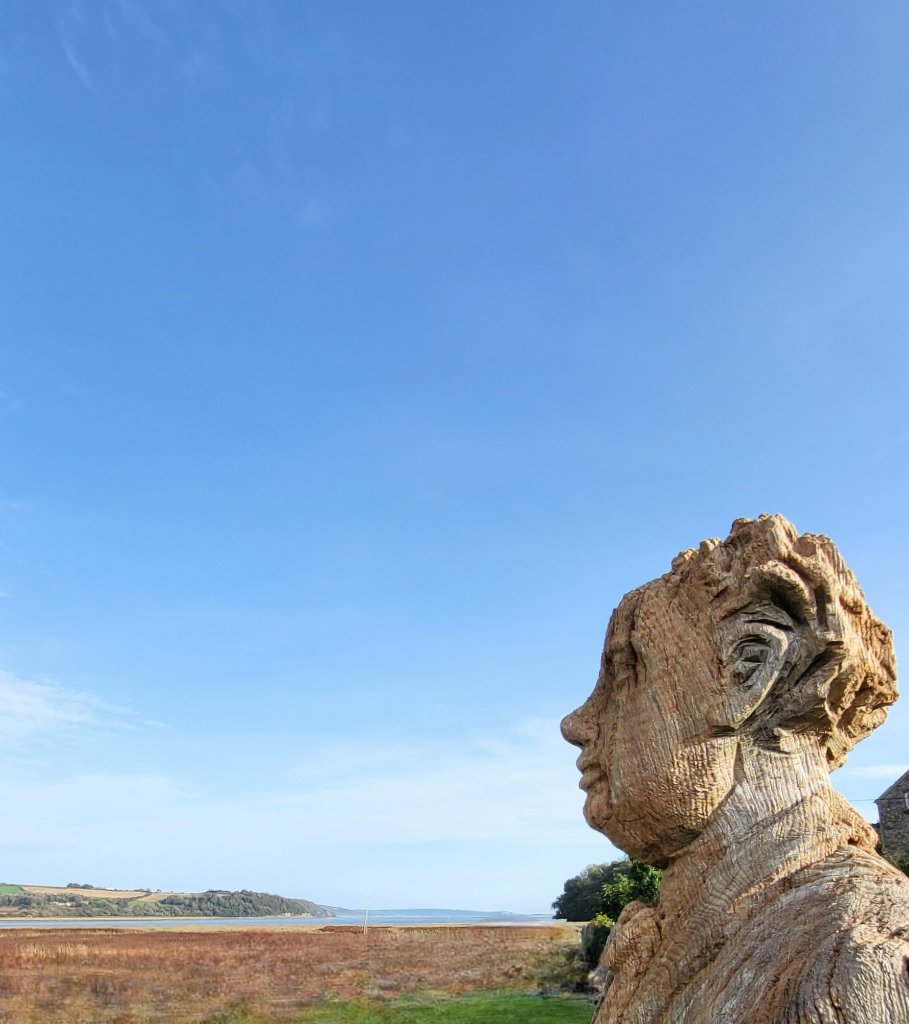
The mudflats and salt marshes spoke of eternityThe Taf Estuary serenades the weary traveler, echoing the verses of Thomas’s soulful proseThomas’ writing shedThe magic of this place, where time itself seemed to linger, inspired me to spin tales of love and loss, of beauty and decay.Dylan Thomas’s boathouseLaugharne Castle Tap to view my redbubble gallery.






 Horse’s steady gazeStrengthful eyes that dare to meetChallenge accepted Courage is the strength to face… Read more: Darkness, Power and Beauty
 Daffodil so brightGolden petals, sunshine’s kissHope blooms anew As I wander through the garden, the… Read more: The Daffodil’s Song: A Lyrical Tribute to the Wonders of Spring
 The Graceful Lines of an Acanthus Leaf. Acanthus is a genus of flowering plants native… Read more: Acanthus: A Versatile Plant with a Rich Cultural Heritage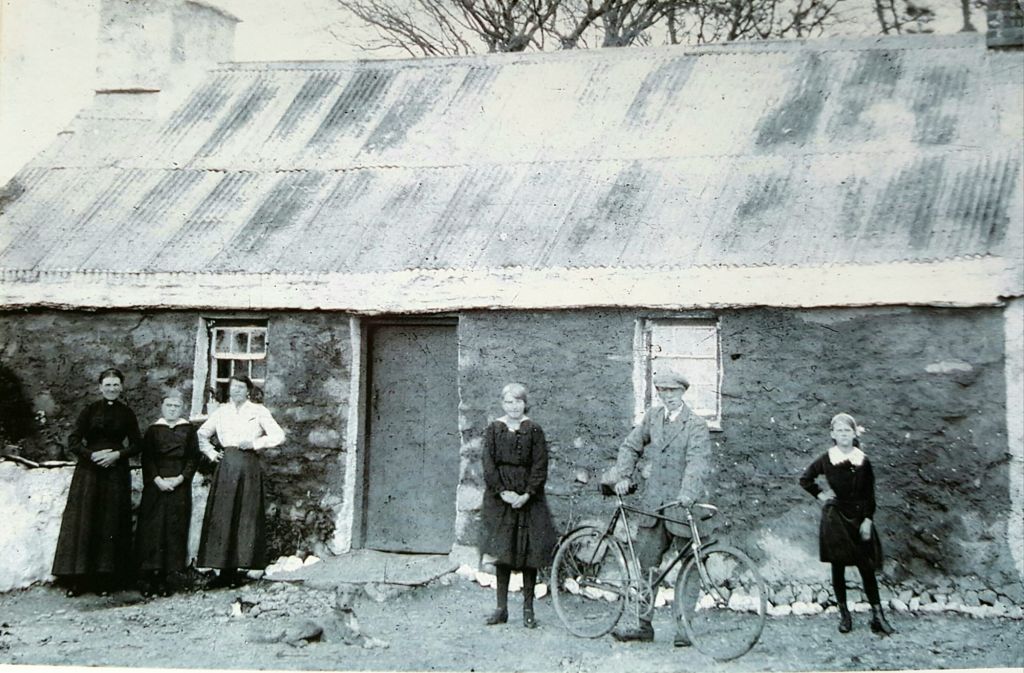





 Anthony's Literary Lens
You must be logged in to post a comment.