Basil, mint, and thyme— scent of soil and sunlight’s warmth, roots finding their way.
Hands deep in the earth, I feel the quiet pulse of life beat beneath my fingers—a slow, steady rhythm that grounds me in a way few things do. Roots twist below, unseen threads tying me to this moment, reminding me that sometimes the most meaningful connections are the ones you can’t quite see. In the green silence around me, everything slows. I breathe with the soil, the earthy scent filling my lungs as if I’m taking in the very essence of the garden itself.
Sunlight warms my skin, each ray another gentle reminder that life continues, grows, even when no one’s watching. There’s a comfort in the hum of it all: the small, tireless work of nature happening at its own perfect pace. My thoughts start to settle, sinking down into the soil with the roots, each breath drawing me deeper into the present. Here, lost in this quiet rhythm, I feel whole, as if I, too, am planted right where I’m meant to be.
Bare feet touch the grass, the hum of soil grounding me— sunlight warms my skin.
What garden have you got and how does it help you.
If you find this content inspiring and uplifting, consider supporting what I do. Buy me a coffee on Ko-fi. Your support makes a difference in my life and helps me create more of what you like. Thank you!Tap to view my redbubble gallery.
There’s something endlessly fascinating about trying to capture nature in words. It’s not just about describing a mountain, a forest, or the way sunlight hits a river (or a flamingo); it’s about getting to the essence of what those things make us feel. Nature isn’t static—it’s full of life, sound, and motion—and trying to pin that down with language can be both beautiful and frustrating.
Abstract Flamingos at Chester Zoo
Different writers have tried, each with their unique approach. From the poetic and romantic to the philosophical or even fantastical, nature on the page transforms depending on who’s writing it. Let’s take a look at how some of the greats—Wordsworth, Woolf, Hemingway, Thoreau, and Le Guin—have captured the natural world through their own distinctive lenses. Let’s try to capture it in their words:
William Wordsworth’s Nature: An Ode to Spiritual Connection
The hills rose gentle and vast before me, clad in the golden hue of a setting sun, their slopes a reflection of the ever-turning wheel of the seasons. Softly did the breeze stir the leaves, and in that gentle motion, I felt the spirit of the earth, that same force that moves through every flower and stream, uniting the soul with its Creator.
In Wordsworth’s world, nature is alive with divine significance, a reflection of human emotion and spirit. As he gazes upon the landscape, there is no separation between man and nature—each is a reflection of the other, bound by something eternal and profound. The simple beauty of a daisy, the distant curve of a hill, these are not just parts of the world; they are symbols, carrying meaning far beyond their physical presence. Wordsworth’s nature is a place to reconnect with the divine, a space for meditation and self-discovery.
Virginia Woolf’s Nature: A Flow of Consciousness
The waves lapped rhythmically against the shore, a steady pulse, as though the sea itself were breathing. The sun, dipping below the horizon, cast long shadows that stretched and twisted across the sand. Was it only a moment, or had the light shifted so imperceptibly that time itself seemed to bend, losing its shape, melting into the folds of the evening?
For Woolf, nature isn’t a static scene but a flowing, shifting experience, much like the workings of the mind. The waves aren’t just there; they pulse, breathe, and pull the observer into a contemplation of time, memory, and existence. Her style is often more about the fleeting impressions—the shifting of light, the slight change in air—capturing nature not as an object to be described, but as a feeling that washes over, constantly shifting as the observer’s thoughts and emotions shift.
Ernest Hemingway’s Nature: Stark and Simple Beauty
The river cut through the valley, clear and cold, its surface broken here and there by the silver flash of trout. Pine trees lined the banks, standing straight and still against the blue sky. There was no sound but the water and the occasional snap of a twig underfoot. It was good here, clean, the way things should be.
Hemingway’s approach to nature is stripped down to its essentials. There’s no romanticising, no deep reflection on the meaning of it all—just the straightforward beauty of the world as it is. His nature is rugged, often harsh, but deeply satisfying in its simplicity. It’s a place where a man can be alone, think clearly, and confront life on its own terms. The river, the pine trees, the fish—they are not symbols of anything greater. They just *are*, and that’s enough.
Henry David Thoreau’s Nature: A Manifesto of Wild Freedom
The woods stretched out before me, deep and untrammelled, full of secrets only the wind and the animals knew. Each tree stood like a guardian, each blade of grass a symbol of the freedom that is our birthright, should we only recognize it. In these wild places, I feel my spirit rise, untethered from the confines of society, unburdened by the weight of civilization.
Thoreau’s nature is more than a backdrop; it is a force of liberation. It represents freedom from the constraints of society and the artificial structures that human beings create. For him, being in nature is not just about enjoying its beauty—it’s a form of protest, a way of rejecting the complications and corruptions of civilization. In the woods, one can live deliberately, drawing closer to the truths of existence. Thoreau’s prose often reflects this sense of moral clarity, where every tree and animal is part of a larger, purer world.
Ursula K. Le Guin’s Nature: An Element of Cosmic Wonder
The mountains rose in the distance, their peaks lost in clouds that shimmered with a pale, unearthly light. The air here was different, touched by something ancient, as though the stones themselves remembered a time before humans walked the earth. Strange birds called from the trees, their notes echoing in the strange, purple dusk. It was a place both familiar and otherworldly, a reminder that nature, in all its forms, was not made for human understanding.
Le Guin’s nature is both mystical and scientific, often intertwined with the themes of her speculative worlds. It is not merely the background for human events, but a powerful, autonomous force, shaped by forces beyond human comprehension. In her writing, nature often feels ancient, strange, and vast—a reminder of humanity’s smallness in the face of the cosmos. Her descriptions blend the real and the fantastical, inviting readers to see nature as something both wondrous and alien, as much a mystery as it is a source of beauty.
If you find this content inspiring and uplifting, consider supporting what I do. Buy me a coffee on Ko-fi. Your support makes a difference in my life and helps me create more of what you like. Thank you!Tap to view my redbubble gallery.
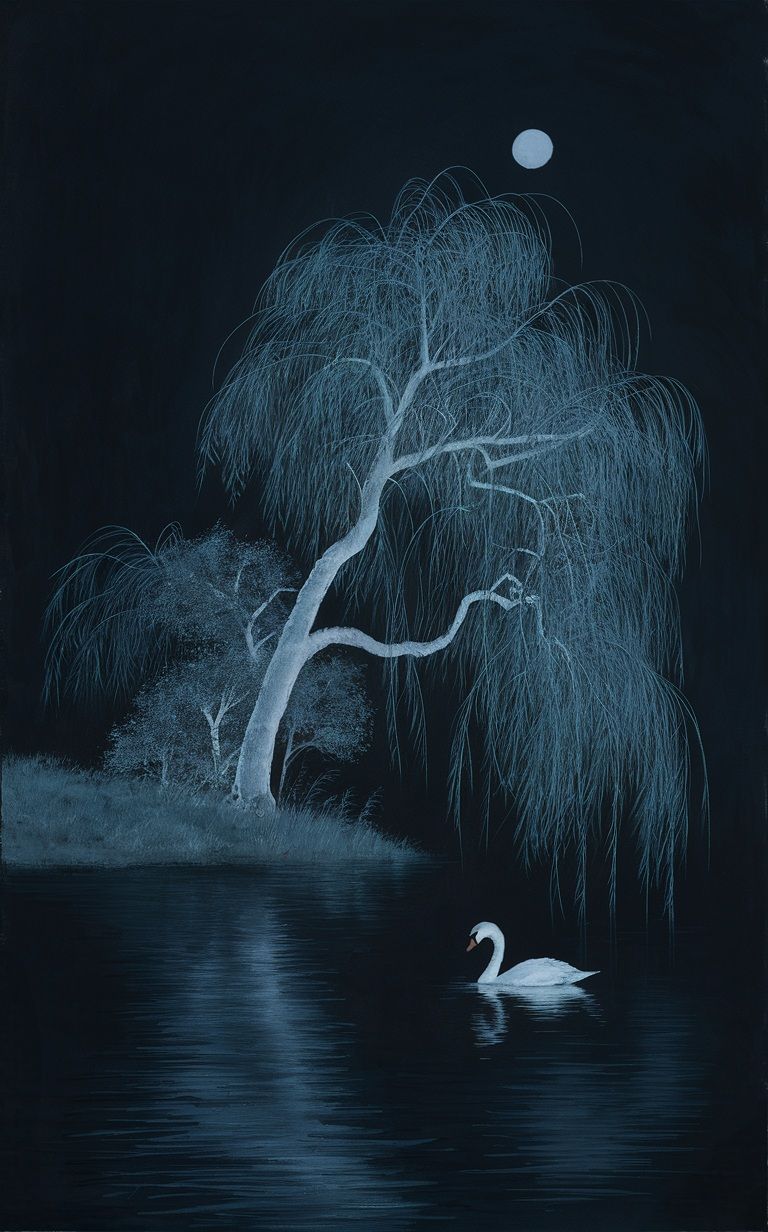
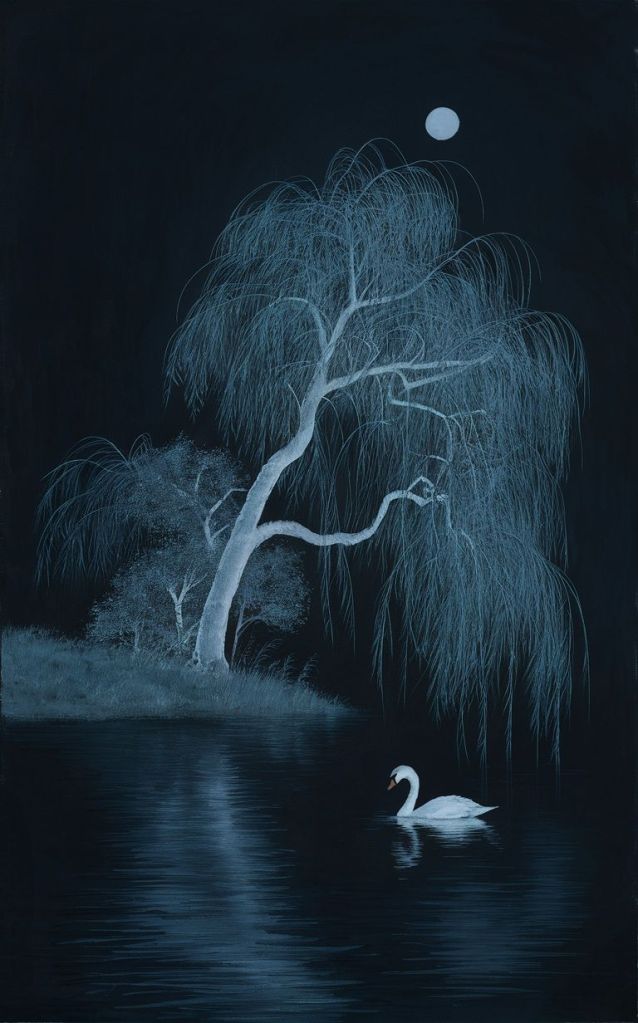
In moonlit silence, A swan glides on still waters— Peace found, then it fades.
Chasing fleeting dreams, A willow weeps by the lake— Life’s truths left unshared.
For as long as anyone could remember, Thomas had been searching for the perfect image. He had wandered through cities and across open fields, scaling mountains and drifting through forests, camera in hand, eyes ever searching. It wasn’t fame or fortune he sought, nor was it even artistic acclaim. He simply wanted to capture something that spoke to the deepest part of himself—a vision so complete it would silence the restless hum in his soul.
Decades passed, and Thomas’s pursuit became an obsession. He had taken thousands of photos: sweeping landscapes, crumbling ruins, the faces of strangers who carried entire lifetimes in their expressions. Yet none of it stilled the ache. The perfect image remained elusive, a dream slipping just out of reach. With every new shot, the feeling that something was missing gnawed at him.
He was nearing the end of his life. His once-strong hands had begun to tremble, and his eyes, once so sharp and clear, had grown tired. Still, the search went on. One evening, while wandering a quiet countryside, Thomas stumbled upon a hidden lake. The air was cool and damp, the world around him bathed in a soft silver light. A gentle breeze rustled the leaves of a willow tree that stood by the water’s edge, its branches cascading toward the lake like a weeping figure. And then, as if conjured by his longing, he saw it—the swan.
The bird glided across the still water, pure and graceful, as if composed of moonlight, its reflection rippling beneath the willow’s branches swayed gently, framing the moment as if it had been waiting just for him.
Thomas stood frozen, his breath caught in his throat. This was it. This was the image he had been searching for his entire life. His heart raced, but he did not reach for his camera. He knew that no lens could capture the perfection of what lay before him. The stillness of the night, the way the swan moved, the timeless serenity of it all—it was beyond what words or pictures could convey. It was something that could only be felt.
For the first time in years, Thomas felt whole. The relentless urge that had driven him for so long fell silent, replaced by an overwhelming sense of peace. He smiled, tears welling in his eyes as he watched the swan disappear into the shadows, its light slowly dissolving into the encroaching darkness. In that moment, he was complete.
But just as he sat in the embrace of the weeping willow, breathing out a sigh of contentment, his body betrayed him. As the swan’s light faded, so did his strength and energy, his eyes still fixed on the shimmering water, on the memory of the swan. His world grew dimmer, the edges of his vision fading to darkness, but he did not feel fear. Thomas closed his eyes, knowing that he had finally found what he had been looking for.
And then, he was gone.
In the end, perhaps the meaning of life is a truth so deeply personal that it eludes expression. It is a fleeting moment of beauty, a profound realisation, or an experience that resonates within us, yet remains impossible to convey. Thomas had found what he had been searching for, a glimpse of perfection that was his alone, a secret forever held within the quiet of his heart.
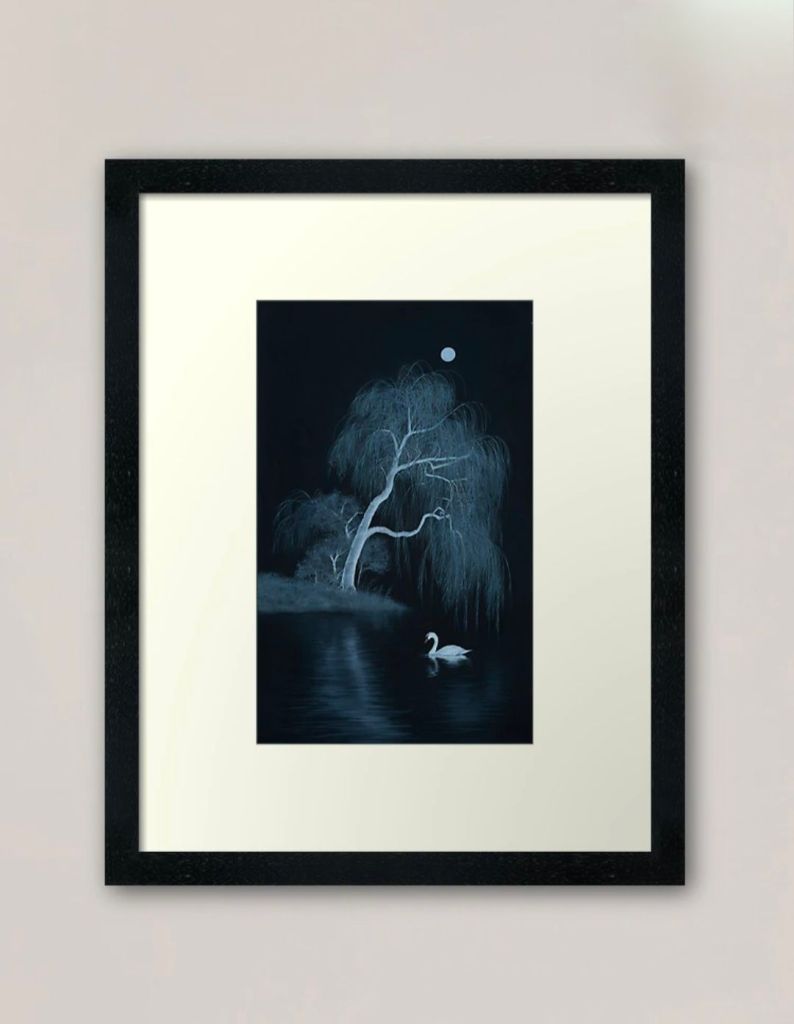
Available framed on RedBubbleIf you find this content inspiring and uplifting, consider supporting what I do. Buy me a coffee on Ko-fi. Your support makes a difference in my life and helps me create more of what you like. Thank you!Tap to view my redbubble gallery.
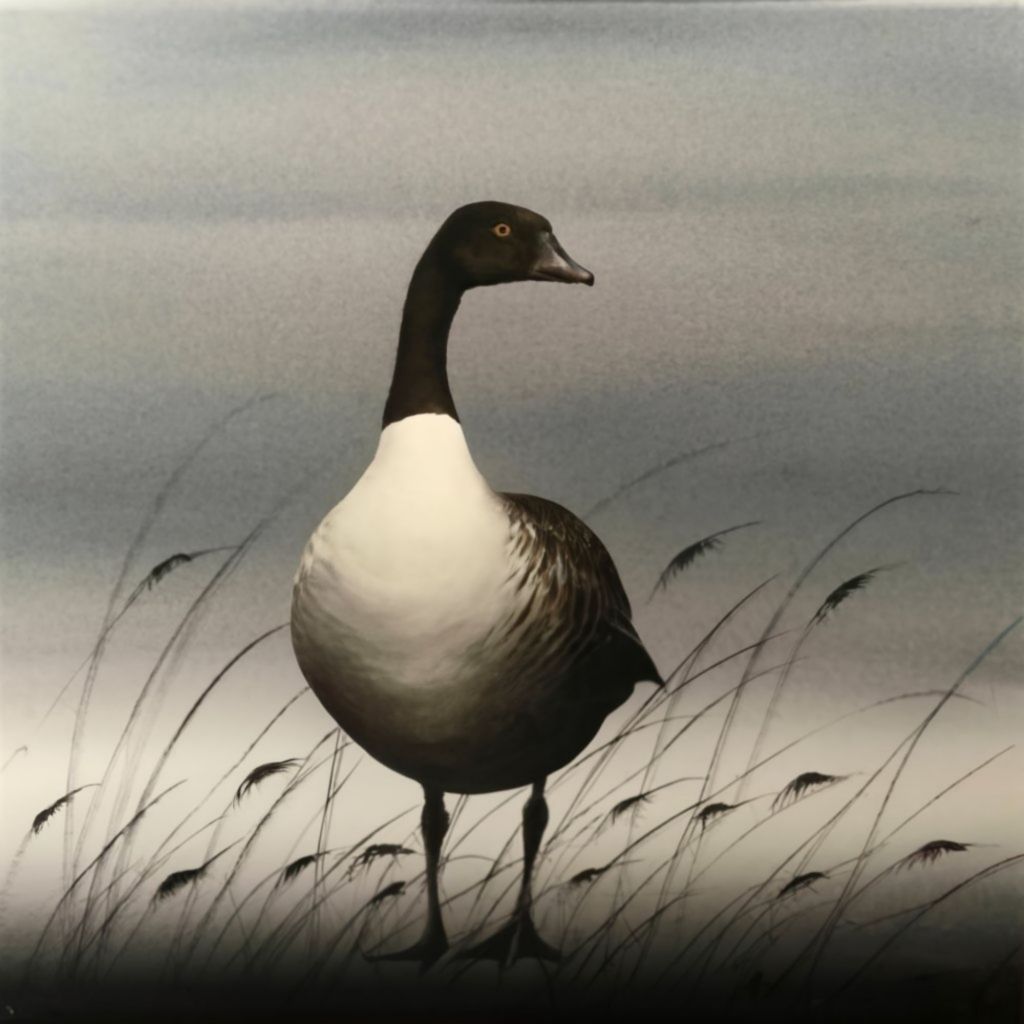
alone, I watch the sky birdsong fades, a mournful cry lost, I stand and wait
The wind whipped through the reeds, carrying with it the mournful cries of my flock. They were long gone, their V-formation etched into the fading light of the sky. I stood alone, an orphan of the skies, in a vast, empty landscape.
I had always been a bit of an outlier, a dreamer who preferred the quiet solitude of the marshes to the boisterous company of my kin. But now, as the chill of autumn crept into the air, I felt a profound sense of loss. The warmth of their companionship, the comforting rhythm of their wings beating in unison, had been a constant in my life. Without them, I felt adrift, a leaf torn from its branch and carried by the currents of fate.
I watched the sun dip below the horizon, casting long, dancing shadows across the water. The sky was ablaze with hues of orange, pink, and purple, but I found no beauty in it. It only served to highlight my isolation, a stark contrast to the vibrant spectacle that unfolded above.
As the night fell, a cold wind began to blow, carrying with it, what sounded like, the distant howl of a lone wolf. I shivered, my feathers ruffled by the icy blast. I longed for the warmth of my flock, their bodies pressed together against the biting cold. But I knew that I was alone now, and that there was no turning back.
I closed my eyes and tried to sleep, but my mind was filled with images of the past. I saw myself as a young gosling, learning to fly under the watchful eye of my mother. I remembered the thrill of soaring through the sky, the wind rushing past my face. I recalled the joy of finding food, the camaraderie of sharing a meal with my flock.
When I finally drifted off to sleep, I dreamed of a world where I was not alone. I dreamed of flying alongside my flock, their honking filling the air with a joyous chorus. But when I woke, the dream was shattered, and I was once again alone in the cold, dark night.
If you find this content inspiring and uplifting, consider supporting what I do. Buy me a coffee on Ko-fi. Your support makes a difference in my life and helps me create more of what you like. Thank you!Tap to view my redbubble gallery.
Human heart connects, With nature’s rhythm, a bond, As one, beauty shines.
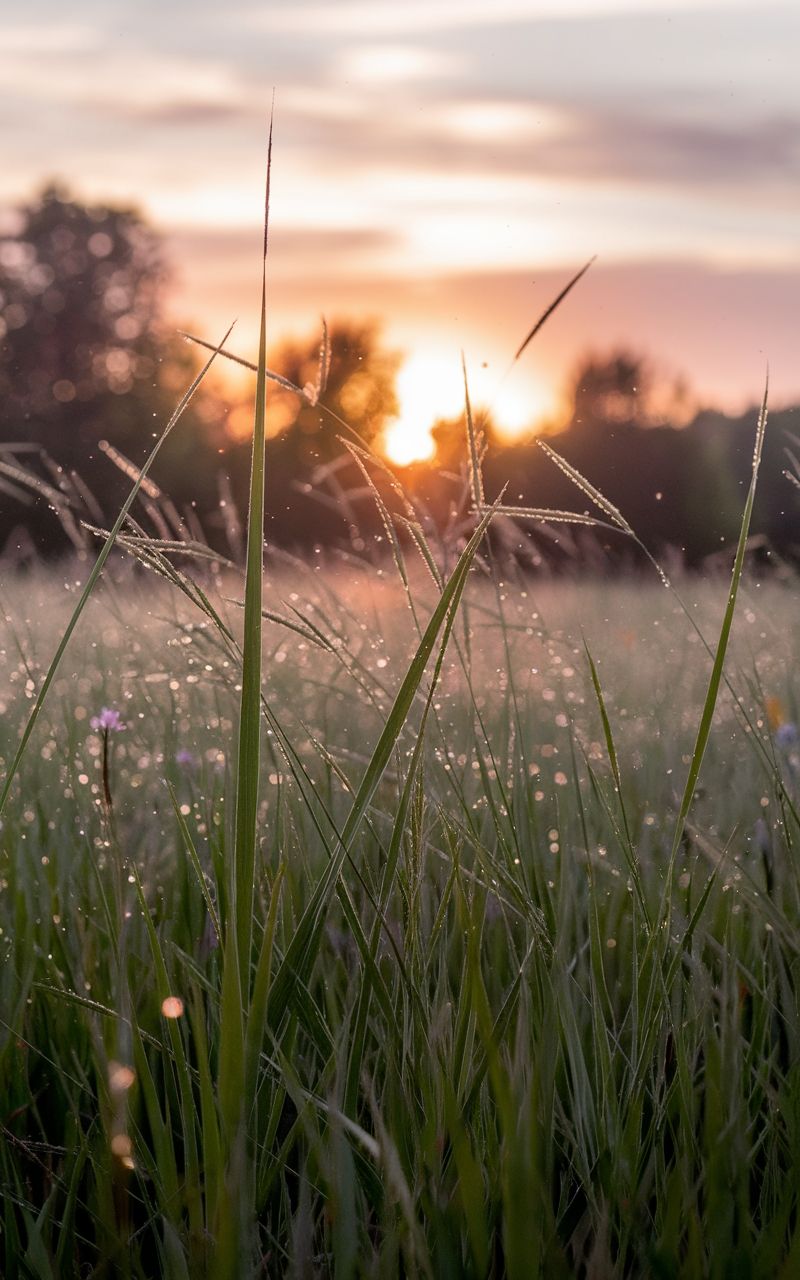
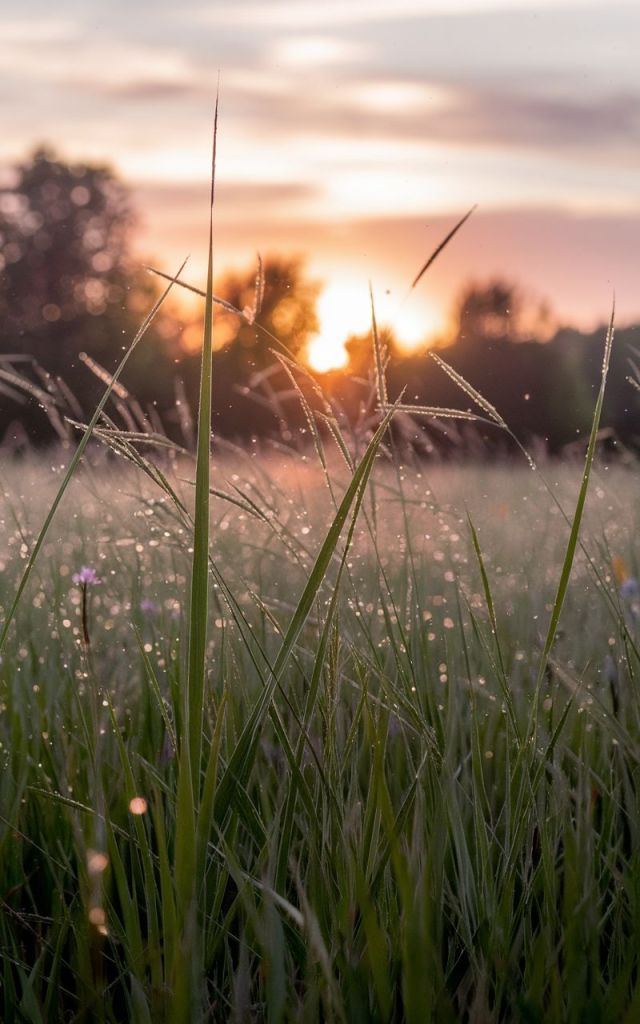
The sun, a golden orb, painted the sky with hues of orange and pink as we strolled through the dew-kissed meadow. Blades of grass, tall and emerald, swayed gently in the morning breeze, their tips shimmering with tiny droplets of water. The air was filled with the sweet scent of wildflowers and the distant chirping of birds.
As we walked, we pondered the complex and often contentious relationship between humans and the natural world. We discussed the ethical implications of our actions, from the exploitation of resources to the destruction of habitats. It was a delicate balance, we agreed, one that required careful consideration and a deep respect for all living things.
Yet, amidst the challenges and complexities, there was a profound beauty to be found in nature. The intricate patterns of a spider’s web, the majestic flight of a hawk, the vibrant colours of a butterfly – each and every aspect of the natural world was a demonstration of the wonder and diversity of life.
We marvelled at the way the sunlight danced upon the blades of grass, creating a mesmerising spectacle of light and shadow. We listened to the symphony of sounds that filled the meadow, from the buzzing of bees to the rustling of leaves. And we felt a sense of peace and tranquillity as we connected with the rhythms of nature.
It was a moment of profound reflection, a time to appreciate the fragility of our planet and the importance of preserving its beauty for future generations. As we continued our walk, we carried with us a renewed sense of wonder and a commitment to living in harmony with the natural world.
If you find this content inspiring and uplifting, consider supporting what I do. Buy me a coffee on Ko-fi. Your support makes a difference in my life and helps me create more of what you like. Thank you!Tap to view my redbubble gallery.
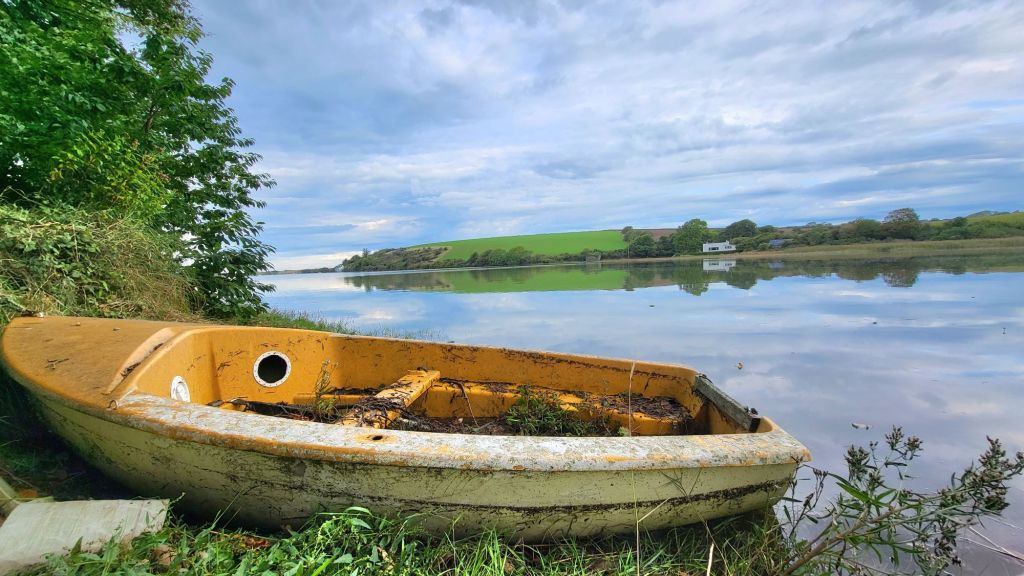
River flows away, Yet I linger, bound by sludge, Wasted, still, unseen.
How do I even begin to explain it? I feel like a boat—one built to cut through waves, to explore uncharted waters, to sail under the open sky with the wind pushing me forward. I was designed to move, to journey, to experience life in all its unpredictability. But here I am, rotting in the mud at the side of the river, stuck in the stagnant shallows while the current of life rushes by without me.
It’s infuriating. I’m meant to be out there, feeling the pull of the tide, facing storms and basking in the sunlight on my deck. But instead, I’m trapped in this pit of muck, with nothing but decay around me, sinking deeper into the filth. My hull was once sleek, my sails full of promise, but now? Now I’m just a forgotten vessel, rusted and brittle, abandoned to the elements.
The river flows past, mocking me with every ripple. I should be part of that, navigating its twists and turns, but I’m stuck on the sidelines, watching as life carries on without me. Every day that passes is another day lost, another opportunity wasted, another inch deeper into this miserable sludge.
I feel the weight of it all, the heaviness pressing down on me, and it’s suffocating. The dreams, the plans, the purpose—they’re all still there, buried deep inside, but they’re smothered by this mire that’s holding me back. It’s not that I’ve lost my will; it’s that I’m being choked by this godforsaken mud, this unrelenting stagnation.
I wasn’t made for this! I wasn’t built to rot away in some forgotten corner, becoming part of the landscape of failure. But here I am, powerless against the relentless drag of this miserable place. It’s like being betrayed by your own potential, knowing you were meant for so much more but being held back by forces you can’t control, by circumstances that refuse to let you go.
I’m angry—angry at the mud, angry at the river for carrying on without me, and most of all, angry at myself for not finding a way to break free. Because I know I was meant to sail, to thrive, to conquer the open waters of life. But instead, I’m left here to decay, to watch the world pass me by while I waste away in this stagnant, suffocating bog.
If you find this content inspiring and uplifting, consider supporting what I do. Buy me a coffee on Ko-fi. Your support makes a difference in my life and helps me create more of what you like. Thank you!Tap to view my redbubble gallery.
Ephemeral world, Your smile fades with the twilight, Yet lingers like stars.
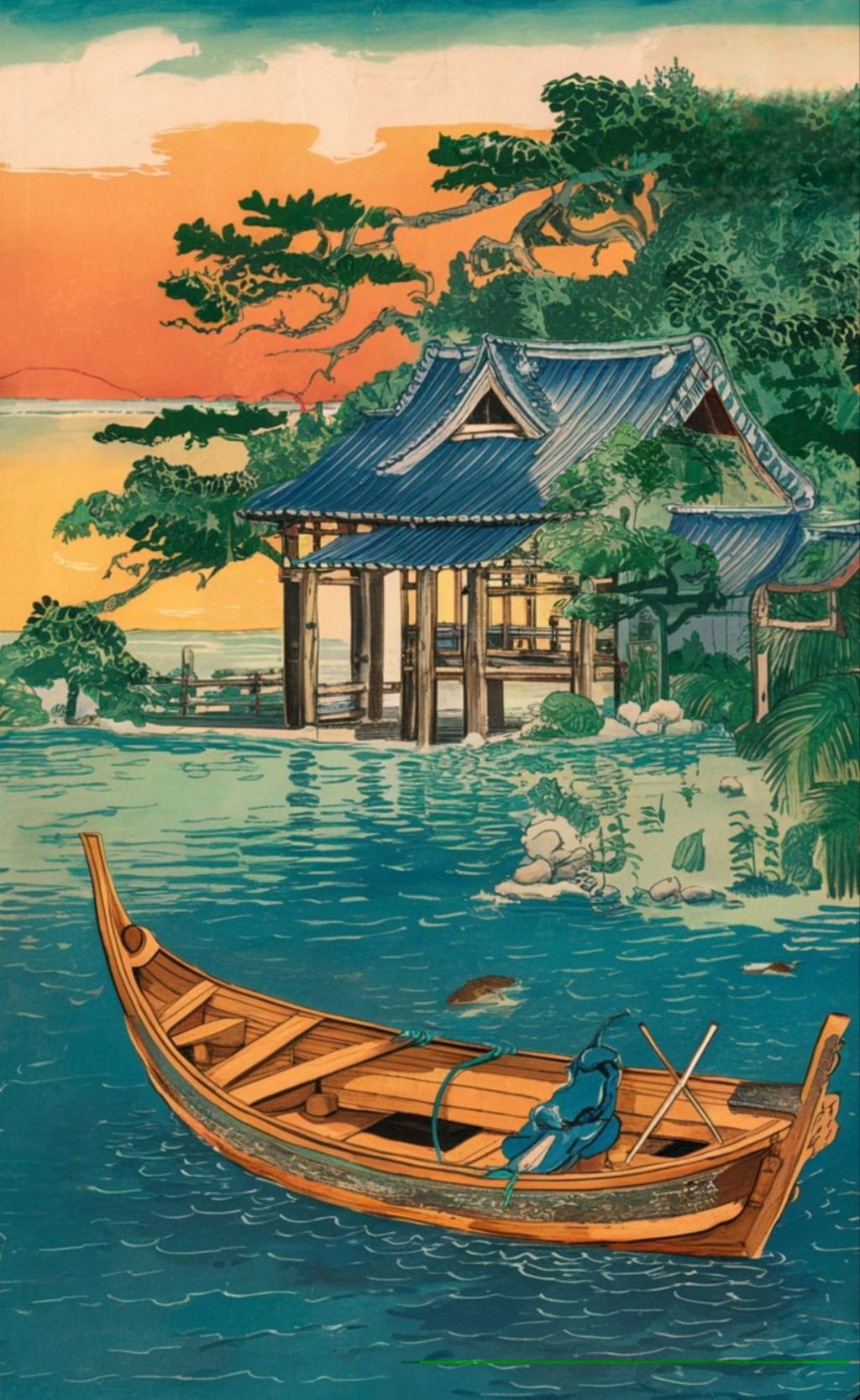
Ukiyo – Adrift
In the fleeting world, Ukiyo, where time drifts like cherry blossoms on the wind, everything dissolves into colours that bleed across the sky. There’s no yesterday, no tomorrow, only now—this shimmering, effervescent now.
A red thread loops around your finger, tangling with mine. We walk on water, toes kissing the surface, ripples of our laughter sending waves to the stars. Your face—so familiar, yet always new, changes with the phases of the moon. Was it love, or just a reflection of love, or perhaps the shadow of a memory of love? But in Ukiyo, does it matter? Here, we are dreamers dreaming of each other, each gaze a promise that will never be fulfilled but always cherished.
Golden koi swim through the sky, leaving trails of sunlight in their wake. I reach out to touch them, but they slip through my fingers, becoming notes of a song I’ve heard before but can’t remember. Or maybe it’s your voice, whispering secrets that echo through the canyons of my mind, words lost in translation between reality and the dream. Ukiyo is the art of forgetting, of living in the moment where nothing lasts, and everything is forever.
The streets are a labyrinth, but we never get lost. Instead, we find ourselves at every turn, new versions of us born from the ashes of the last. I paint your portrait on the wind, and the colors dance, merging and dissolving until it’s no longer clear where you end and I begin. We are brushstrokes in an unfinished painting, lovers caught in the act of becoming.
You smile, but it’s a smile I can’t hold onto. It slips away like sand through an hourglass, yet I don’t mind. In Ukiyo, even the most fleeting moments are eternal. We float, tethered to nothing but the pulse of the universe, a heartbeat that echoes through the endless ocean of stars.
Love in Ukiyo is like cherry blossoms in spring—beautiful, brief, and impossible to grasp. We don’t need to grasp it. We are the cherry blossoms, the gentle fall, the moment between the breath and the sigh. We are here, together, apart, lost, found, always searching, always knowing, in the eternal now.
If you find this content inspiring and uplifting, consider supporting what I do. Buy me a coffee on Ko-fi. Your support makes a difference in my life and helps me create more of what you like. Thank you!Tap to view my redbubble gallery.
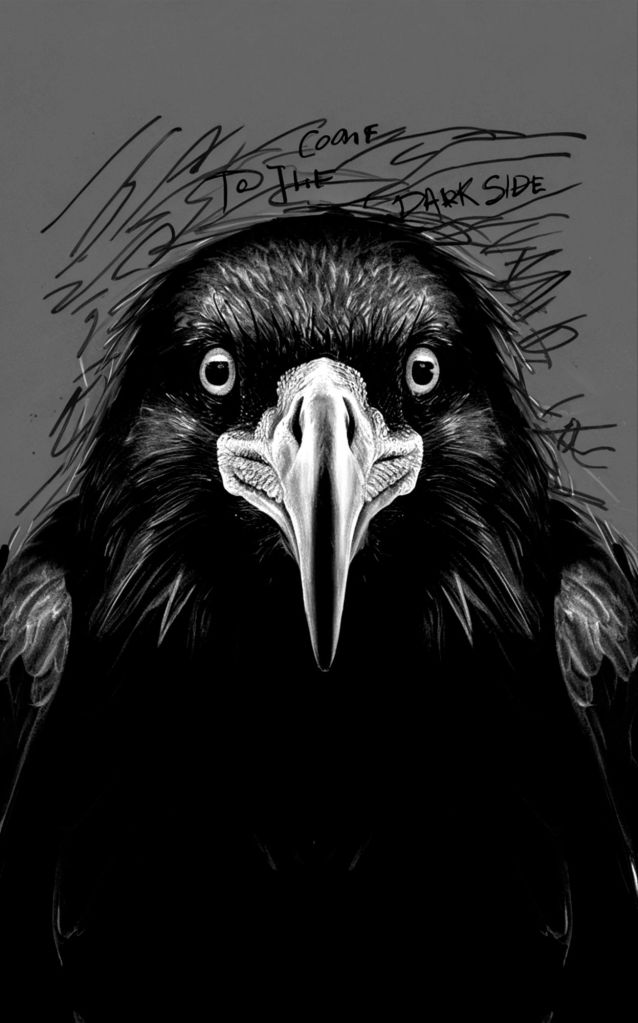
Black wings cut the sky, Whispers from the shadow’s edge, Light fades, truth takes flight.
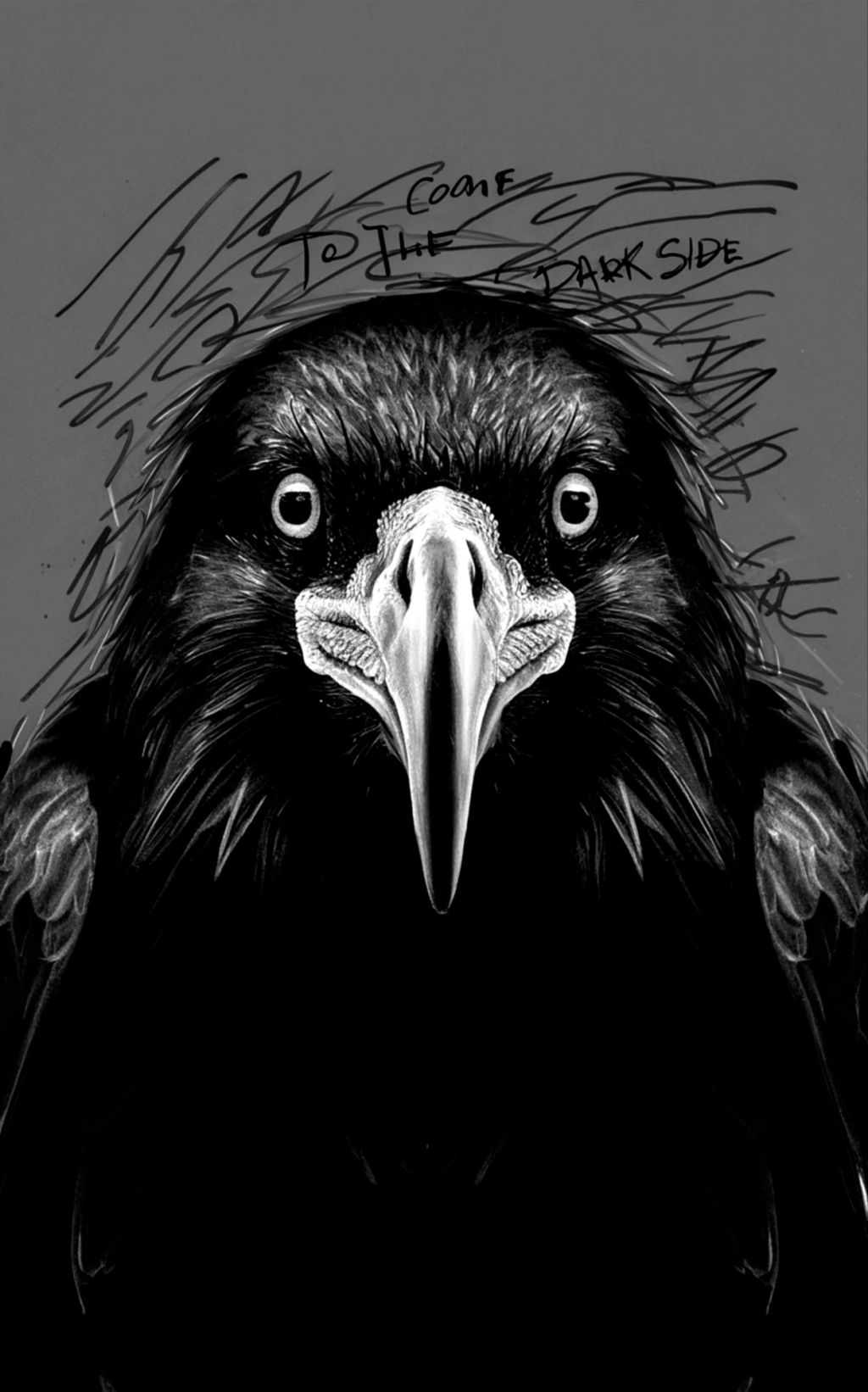
Lightless eyes see all.
“Ah, there you are, wandering in the light, so blissfully unaware of the shadows lurking just beyond your reach. I see you, human, with your fragile flesh and feeble spirit, clinging to the sun’s warmth as if it could save you. But what is light without darkness? What is warmth without the cold? Your world is a fleeting illusion, a brittle shell that will crack and crumble with the passing of time.
Come closer, yes, closer still. You’ve seen me before, perched on the edge of your vision, haven’t you? A flash of black feathers, a caw that echoes in your dreams, a fleeting shadow that sends a shiver down your spine. You tell yourself it’s just a bird, nothing more. But I am more. Oh, so much more.
Caw in the cold night, Shadows beckon from the trees, Darkness holds the key.
The light, it blinds you, dulls your senses, keeps you soft and weak. You stumble through your days, oblivious to the truth, content in your ignorance. But I can show you what lies beyond the veil. I can guide you to the darkness where true power lies. There, in the cold embrace of shadow, you will see the world as it truly is—without the lies, without the masks.
Do you hear it? The whisper in the wind, the rustling in the trees, the soft cawing in the night? That’s the call of the dark, the ancient song of the forgotten and the forsaken. You’ve felt it, haven’t you? The tug at your heart, the pull of something deeper, something darker. It’s been with you all along, growing stronger with each passing day, each sleepless night.
Come to the dark side, human. Embrace the cold, the shadow, the truth. Let the light fade from your eyes and see the world as I do—sharp, clear, free of the lies and illusions that bind you. In the darkness, you will find power. In the shadows, you will find freedom. And in the cold, you will find me.
I will be waiting for you, in the place where light fears to tread. When you’re ready, when you’ve had enough of the lies, come find me. Together, we will soar into the night, into the darkness that has been calling your name since the day you were born.”
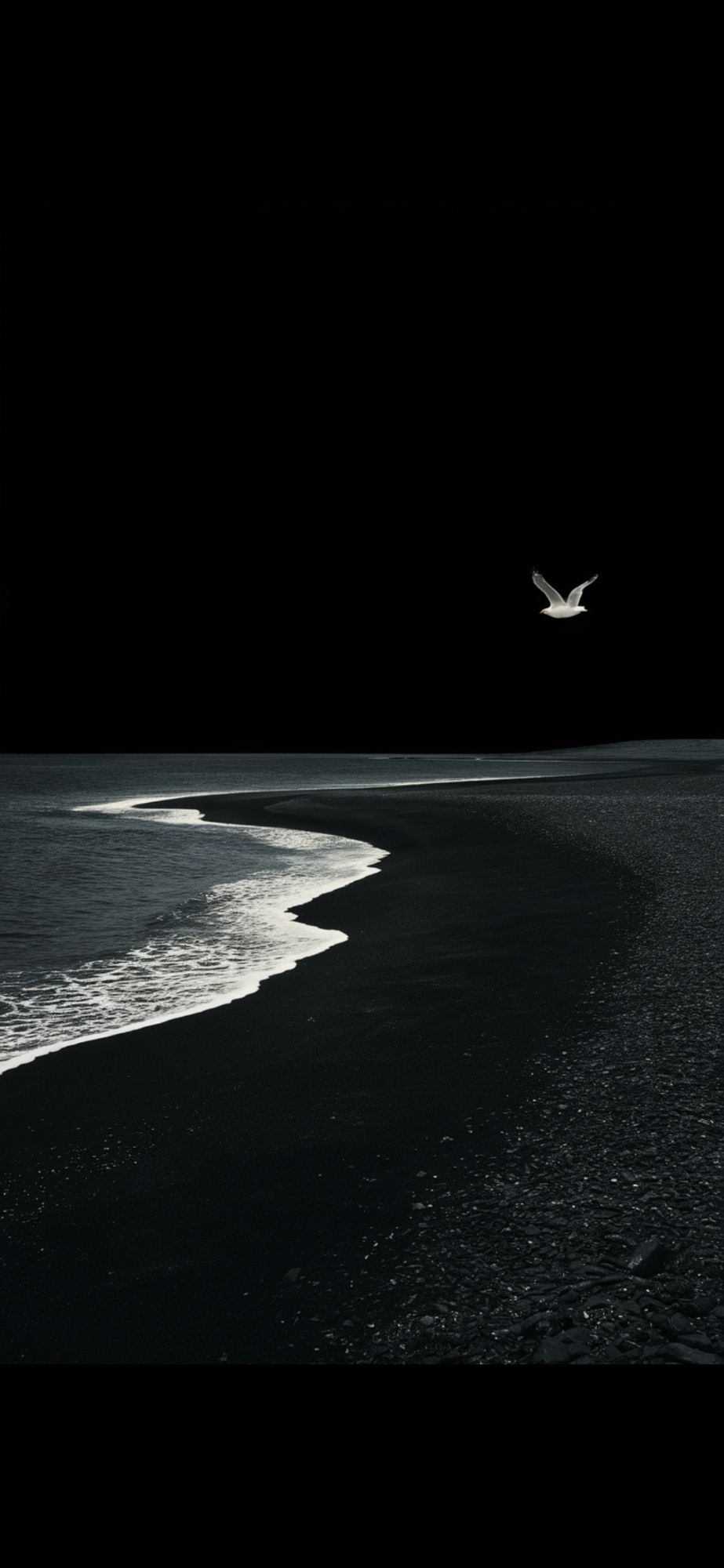
There is a peculiar, magnetic quality in the place where the skies, the sea, and the sands converge into an unbroken expanse of black. It is as if the very soul of the world has been submerged in ink, every contour and texture absorbing light and thought alike. It is a place of quietude and profound contemplation, where the usual clamours of the mind are stilled, and only the vast, black silence prevails.
I was drawn to it, not by conscious volition but by an irresistible pull that defies explanation. The air itself seemed to whisper secrets of ancient sorrows and forgotten dreams, luring me with its quiet song. The skies overhead, a dense, velvet shroud, stretched infinitely, their darkness uninterrupted save for the occasional flicker of some distant, dying star. It was a night eternal, where the very notion of time seemed suspended, caught between one breath and the next.
The sea, too, was black, an abyssal mirror reflecting the obsidian skies. Its waves whispered against the shore with a sound that was almost a sigh, a gentle, mournful music that spoke of depths uncharted and secrets untold. Each ripple was a caress, a touch from a world beyond the grasp of daylight. It beckoned with an enigmatic allure, promising revelations to those brave enough to listen.
And then, the sand. The sand was the strangest of all—black as coal, yet soft beneath my feet. It gave way, a yielding embrace that seemed to draw me deeper with each step. Each grain was a universe unto itself, tiny fragments of an ancient, forgotten whole. It was as if the earth had opened its heart and revealed the darkness that lies within us all.
I walked along the shore, feeling the pull of this place deepen with each moment. The world of light and color from which I had come seemed distant, an echo of a half-remembered dream. Here, in this place of black skies, black sea, and black sand, I felt a strange sense of belonging, as if I had found the true home of my soul. It was a realm of quiet introspection, where the external world faded, and the inner landscape came into sharp relief.
The wind whispered through the darkness, carrying with it the scent of salt and mystery. I could feel the weight of the ages in the air, the presence of all who had come before, drawn by the same inexplicable force. They had walked these shores, their footsteps now lost to time, their voices absorbed by the all-encompassing silence. And yet, in some profound way, they were still here, their spirits intertwined with the fabric of this place.
In the end, it was not the darkness that drew me, but the depth it revealed. For in that depth, I found a reflection of my own soul—a place where light and shadow dance in eternal balance, where the mysteries of existence lie just beneath the surface, waiting to be uncovered. Here, in the black sands, I found a part of myself I had not known was lost, and in its discovery, I found a strange, unearthly peace.
Unseen blossoms bloom, In the corners of my mind, Silent refuge found.
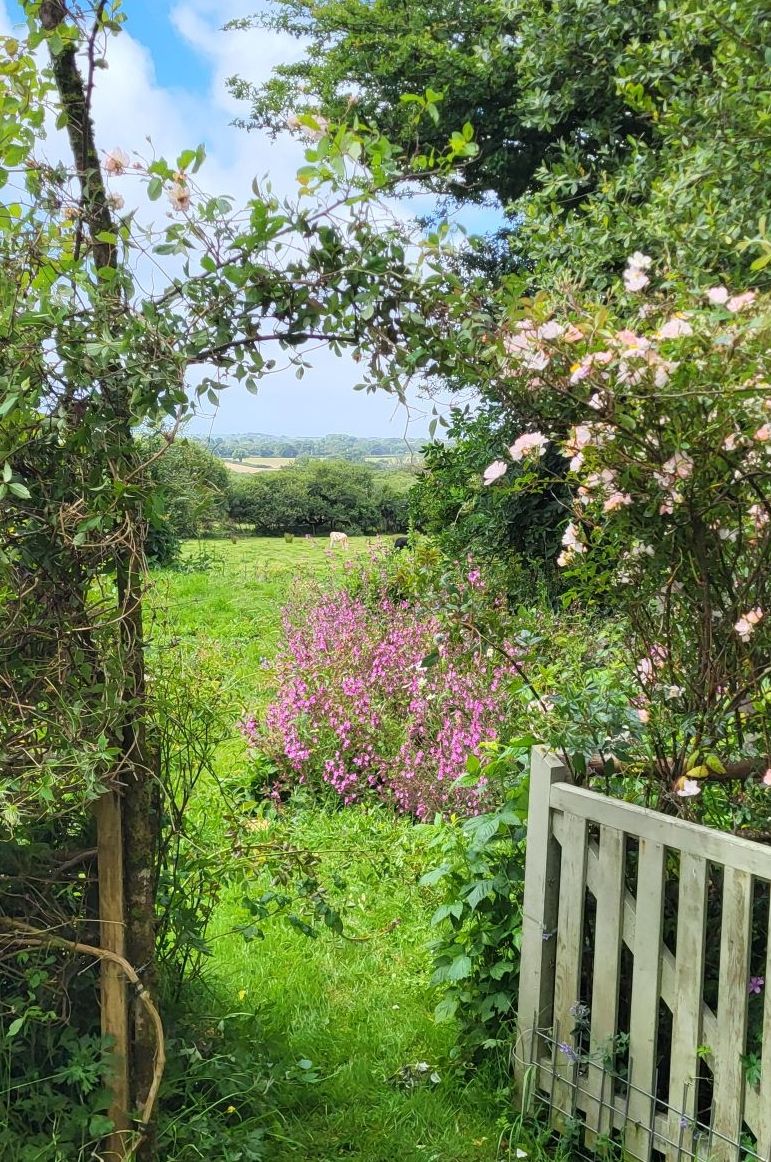
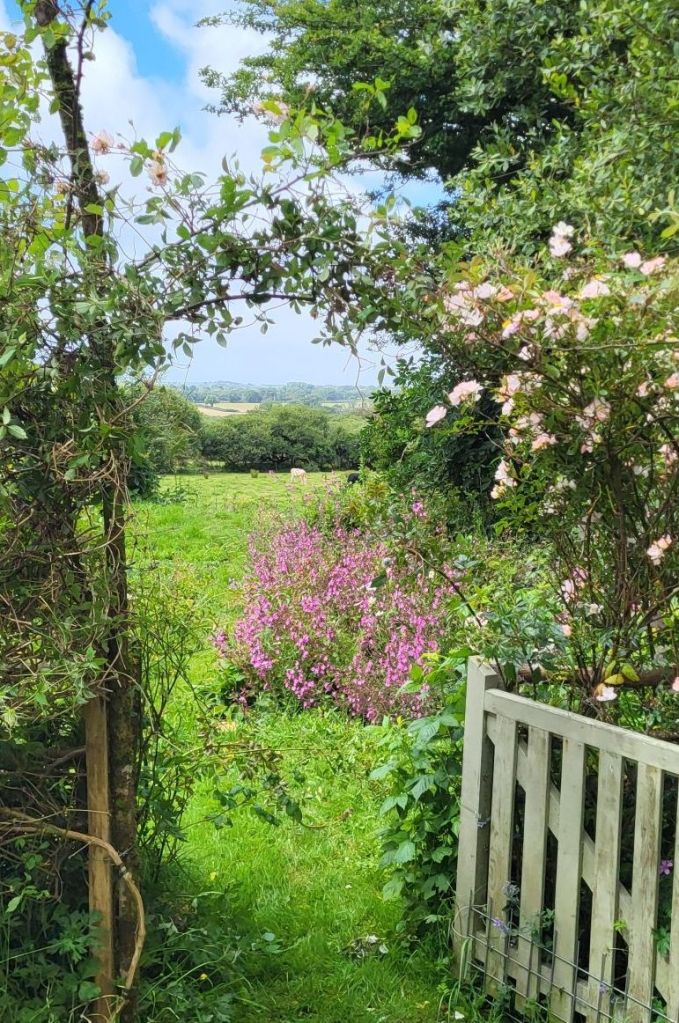
Open the gate
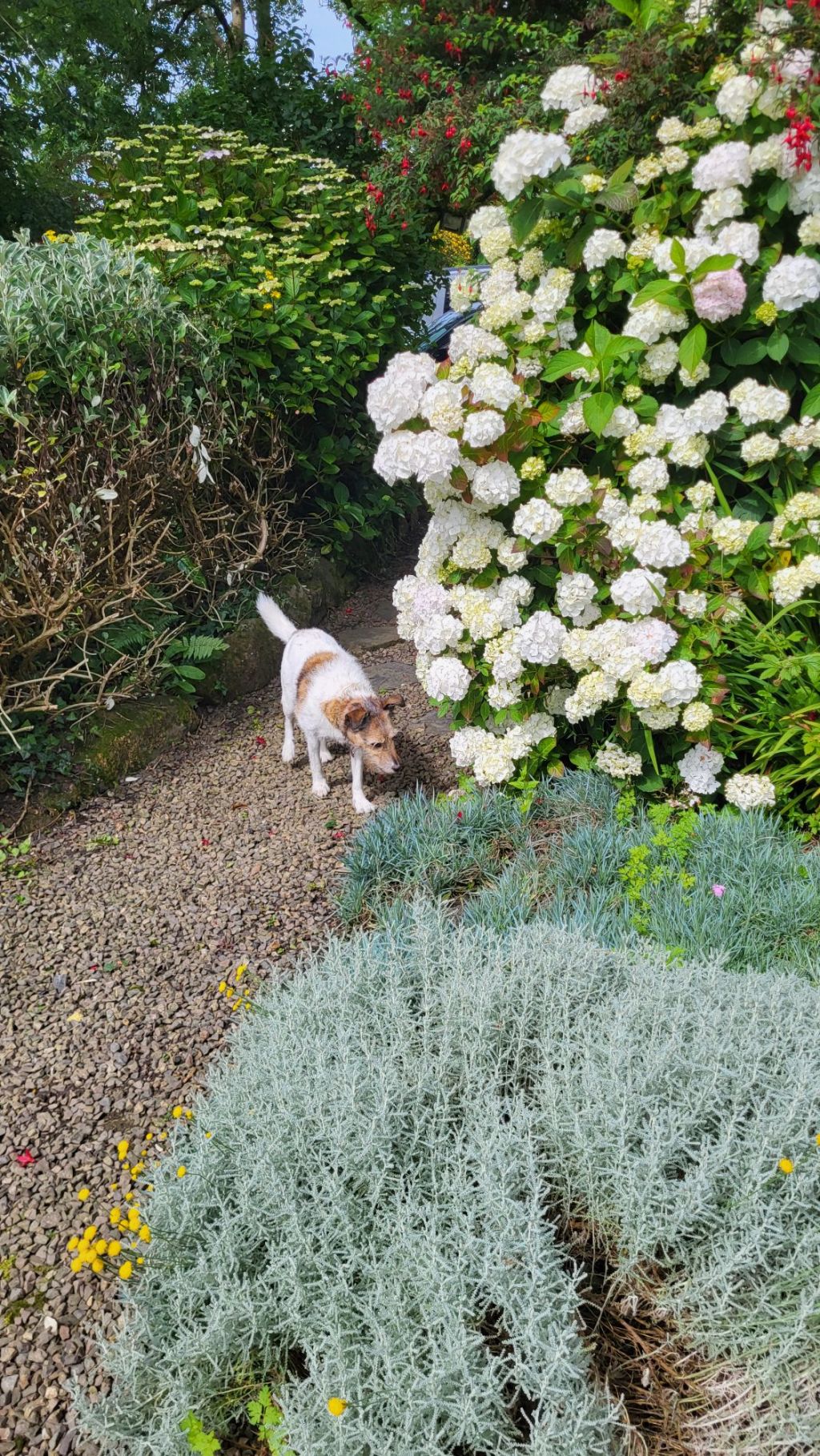
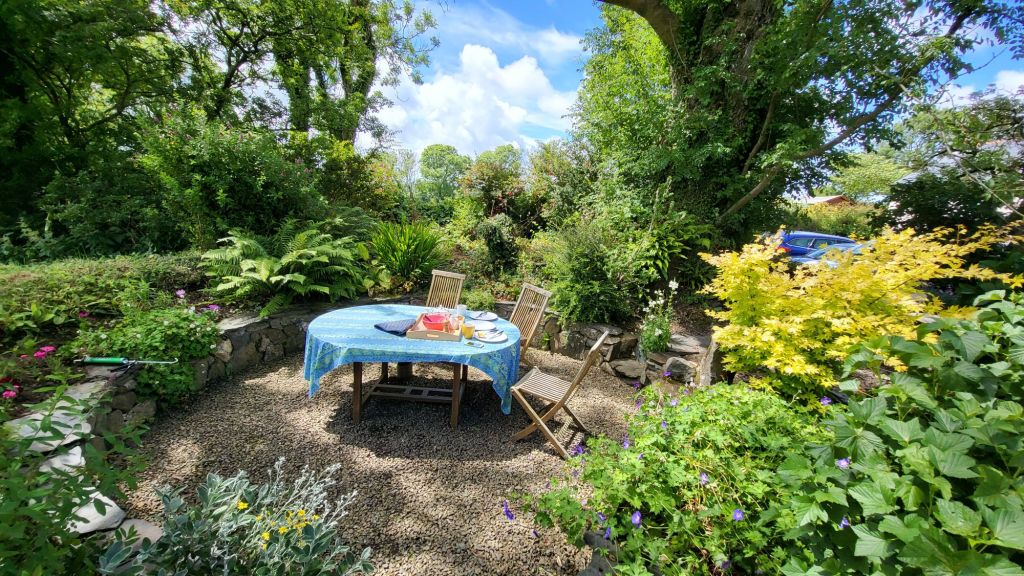
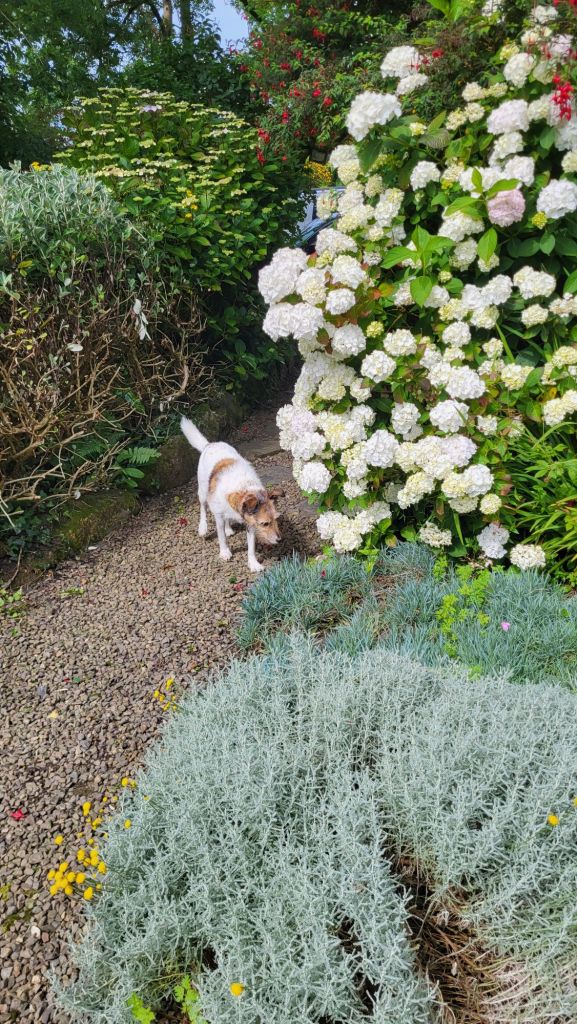
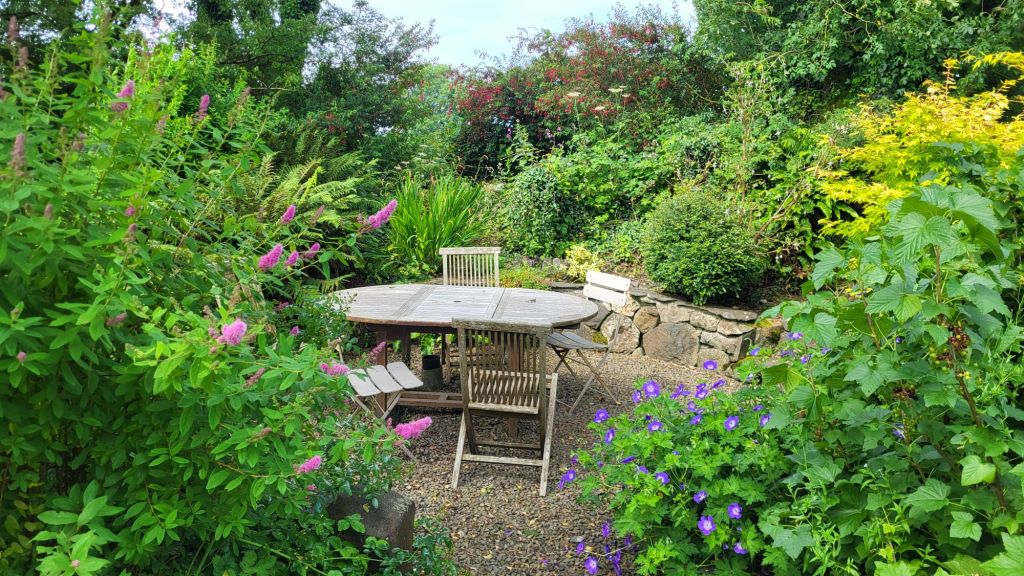
There is a garden somewhere, always just out of reach, a flicker at the edge of my vision, a scent that lingers like a memory, where the flowers are thoughts and the trees, they grow dreams, or maybe it’s all a mirage, a trick of the light, something my mind conjures up to escape the monotony, the dull hum of daily life. Sometimes, in the quiet moments, I think I hear it, the soft rustle of leaves in a breeze that carries the whisper of forgotten hopes. Is it real? Or just a fragment of my imagination, a place where everything makes sense, where the chaos of the world is filtered through petals and roots?
I picture the paths, winding and narrow, leading me deeper into the labyrinth of my own psyche, each step a journey inward. The sun filters through a canopy of thoughts, dappling the ground with patches of clarity and confusion, and I wander, seeking something I can never quite grasp. There are benches there, I think, places to rest and ponder, but every time I sit, the thoughts come rushing, swirling like autumn leaves caught in a sudden gust. The garden grows, morphs, with every beat of my heart, every pulse of my brain. Flowers bloom with ideas I can’t quite articulate, and the air is thick with potential, like the moment before a storm when the world holds its breath.
I wonder if others have a garden like mine, hidden in the folds of their consciousness, a secret refuge from the tangible and the mundane. Do their gardens burst with color and life, or are they barren, desolate landscapes, echoes of their fears and regrets? Sometimes I see people there, shadowy figures moving among the greenery, their faces blurred and indistinct. Are they visitors, like me, or are they part of the garden itself, manifestations of my deepest thoughts and emotions?
Time doesn’t move the same way in this place. Minutes stretch into hours, or maybe it’s the other way around. I lose myself in the rhythm of the garden, the way the flowers sway and the leaves shimmer, and I forget about the world outside, the deadlines, the noise, the never-ending rush. Here, in this elusive space, I find a piece of myself that I didn’t know was missing, a tranquility that feels both alien and familiar.
There is a garden somewhere, and though I can’t always find it, I know it’s there, waiting, a silent sanctuary in the chaos of existence. And maybe that’s enough, just knowing it’s there, just knowing that in some hidden corner of my mind, a garden grows, wild and untamed, proof of the power of dreams and the value of hope.


 “No man ever steps in the same river twice, for it’s not the same river… Read more: You Never Read the Same Book Twice
 Lemon verbena tea is a herbal tea made from the leaves of the lemon verbena… Read more: You deserve a Lemon Verbena tea
 It was the start of a new year, and I was so excited for what… Read more: Year of the Rabbit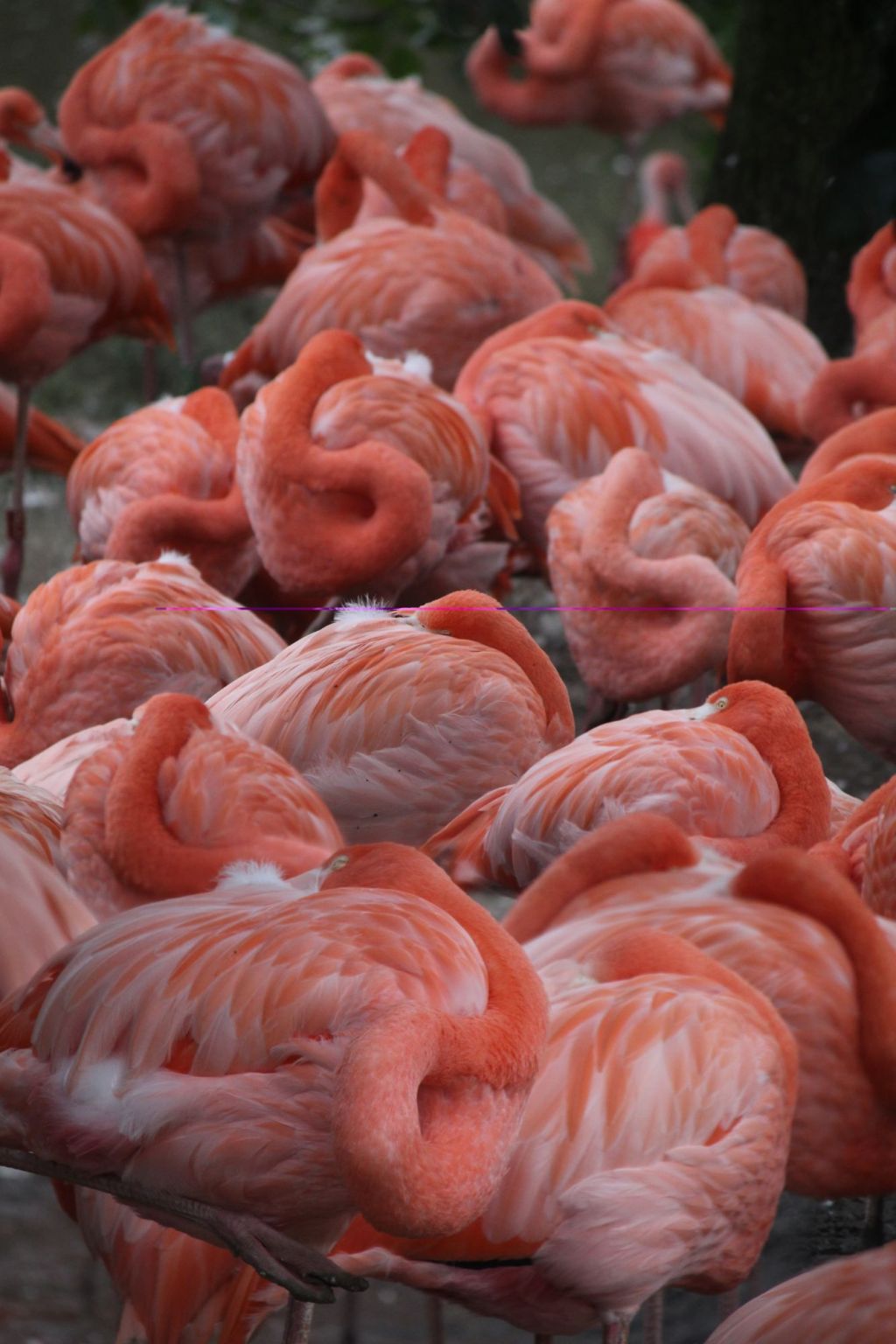


 Anthony's Literary Lens
You must be logged in to post a comment.