Tag: church

  • The Church That the Sea Claimed: Cwm-yr-Eglwys

    The Church That the Sea Claimed: Cwm-yr-Eglwys

    Imagine this: it’s 1859, and you’re sheltering from a ferocious storm in the small coastal village of Cwm-yr-Eglwys, Pembrokeshire. The wind howls with a fury you’ve never heard before, and the sea—normally kept at bay by the shore—is rising with terrifying power.
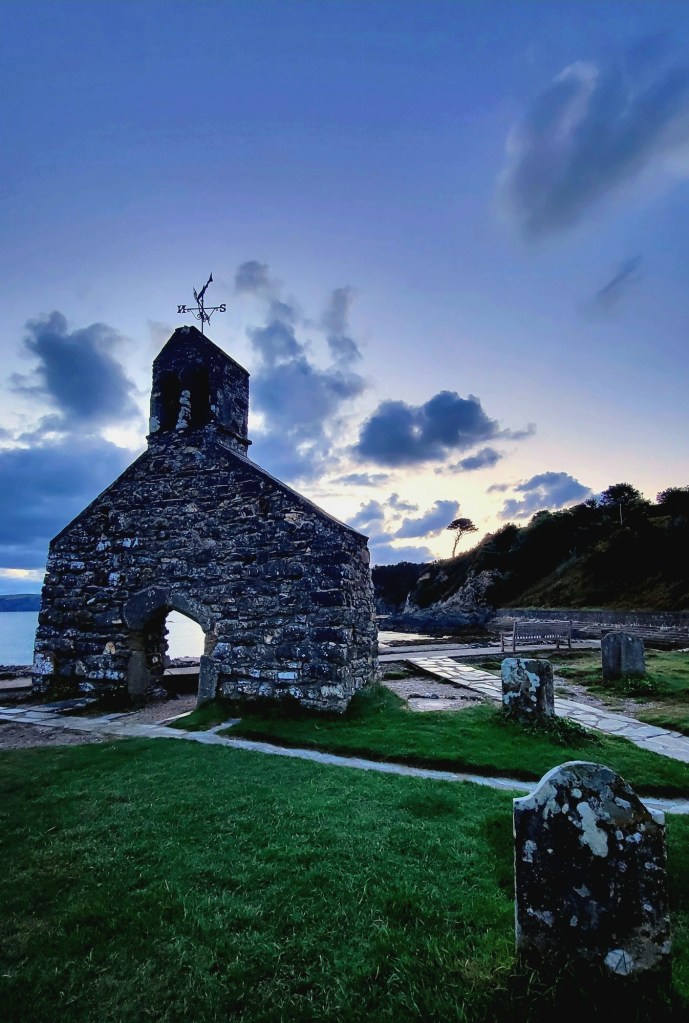
    Cwm-yr-eglwys church Pembrokeshire
    Cwm-yr-eglwys Church, Pembrokeshire

    The Night Everything Changed
    On October 25, 1859, the Royal Charter Storm struck the Welsh coast with devastating force. Named after the ship wrecked off Anglesey with over 450 souls lost, this tempest brought wind speeds estimated at 100 mph and record-low barometric pressure.

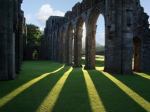
    At Cwm-yr-Eglwys, St Brynach’s Church—a medieval building that had served the community for centuries—faced the full fury of the storm. Massive waves crashed over the sea wall and surged into the building. The roof was torn away, the north wall collapsed, and much of the church was dragged into the sea.

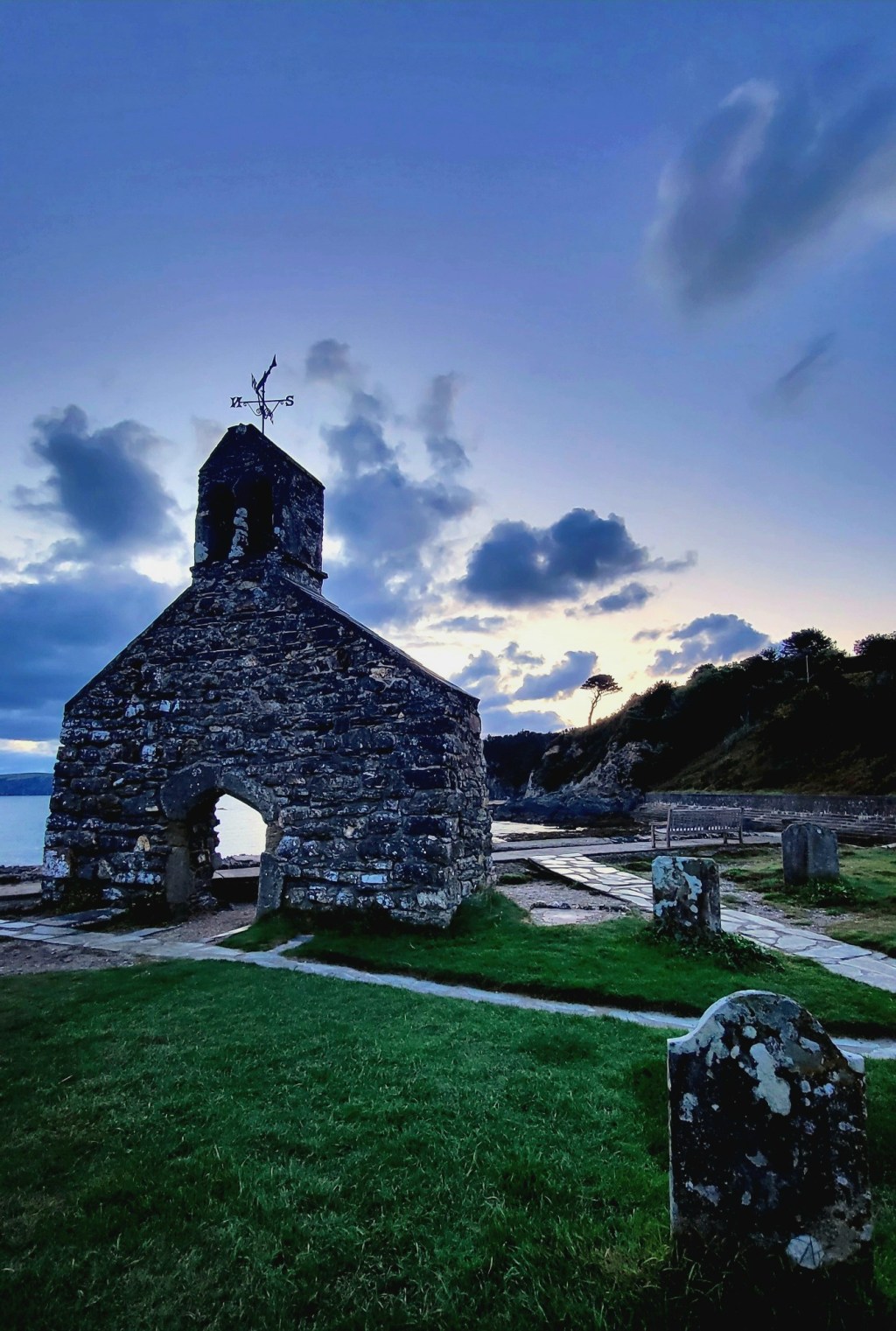
    By morning, only the western gable end with its distinctive bellcote remained standing. Everything else had been claimed by the waves.

    A Fragment That Endures
    St Brynach’s was the heart of this small community—a place where generations had been baptized, married, and buried. After the devastation, it was too damaged to repair, and a new church was eventually built further inland, beyond the reach of the sea.

    The ruins were left where they fell, and over 160 years later, that single wall still stands. Today, it’s one of Pembrokeshire’s most photographed landmarks—a haunting silhouette against the sea, with empty window frames open to the sky and weathered gravestones leaning in the coastal winds.

    Beauty in Loss
    On a calm day, it’s almost impossible to imagine the violence of that October night. But the silent stones tell their story: of a community that built too close to the waves, and of the night when the sea came to reclaim its own.


    If you find my photography or my writing inspiring and uplifting, consider supporting what I do. Buy me a coffee on Ko-fi.
    Your support makes a difference in my life and helps me create more of what you, and I, like. Thank you!
    Tap here for a list of 100 endangered animals and plants.

    100 endangered plant and animal species

    * Abies beshanzuensis (Baishan fir) – Plant (Tree) – Baishanzu Mountain, Zhejiang, China – Three mature individuals

    * Actinote zikani – Insect (butterfly) – Near São Paulo, Atlantic forest, Brazil – Unknown numbers

    * Aipysurus foliosquama (Leaf scaled sea-snake) – Reptile – Ashmore Reef and Hibernia Reef, Timor Sea – Unknown numbers * Amanipodagrion gilliesi (Amani flatwing) – Insect (damselfly) – Amani-Sigi Forest, Usamabara Mountains, Tanzania – < 500 individuals * Antisolabis seychellensis – Insect – Morne Blanc, Mahé island, Seychelles – Unknown numbers * Antilophia bokermanni (Araripe manakin) – Bird – Chapado do Araripe, South Ceará, Brazil – 779 individuals * Aphanius transgrediens (Aci Göl toothcarp) – Fish – south-eastern shore of former Lake Aci, Turkey – Few hundred pairs * Aproteles bulmerae (Bulmer’s fruit bat) – Mammal – Luplupwintern Cave, Western Province, Papua New Guinea – 150 * Ardea insignis (White bellied heron) – Bird – Bhutan, North East India and Myanmar – 70–400 individuals * Ardeotis nigriceps (Great Indian bustard) – Bird – Rajasthan, Gujarat, Maharashtra, Andhra Pradesh, Karnataka and Madhya, India – 50–249 mature individuals * Astrochelys yniphora (Ploughshare tortoise) – Reptile – Baly Bay region, northwestern Madagascar – 440–770 * Atelopus balios (Rio Pescado stubfoot toad) – Amphibian – Azuay, Cañar and Guyas provinces, south-western Ecuador – Unknown numbers * Aythya innotata (Madagascar pochard) – Bird – volcanic lakes north of Bealanana, Madagascar – 80 mature individuals * Azurina eupalama (Galapagos damsel fish) – Fish – Unknown numbers – Unknown numbers * Bahaba taipingensis (Giant yellow croaker) – Fish – Chinese coast from Yangtze River, China to Hong Kong – Unknown numbers * Batagur baska (Common batagur) – Reptile (turtle) – Bangladesh, Cambodia, India, Indonesia and Malaysia – Unknown numbers * Bazzania bhutanica – Plant – Budini and Lafeti Khola, Bhutan – 2 sub-populations * Beatragus hunteri (Hirola) – Mammal (antelope) – South-east Kenya and possibly south-west Somalia – < 1,000 individuals * Bombus franklini (Franklin’s bumblebee) – Insect (bee) – Oregon and California – Unknown numbers * Brachyteles hypoxanthus (Northern muriqui / Woolly spider monkey) – Mammal (primate) – Atlantic forest, south-eastern Brazil – < 1,000 * Bradypus pygmaeus (Pygmy three-toed sloth) – Mammal – Isla Escudo de Veraguas, Panama – < 500 * Callitriche pulchra – Plant (freshwater) – pool on Gavdos, Greece – Unknown numbers * Calumma tarzan (Tarzan’s chameleon) – Reptile – Anosibe An’Ala region, eastern Madagascar – < 100 * Cavia intermedia (Santa Catarina’s guinea pig) – Mammal (rodent) – Moleques do Sul Island, Santa Catarina, Brazil – 40–60 * Cercopithecus roloway (Roloway guenon) – Mammal (primate) – Côte d’Ivoire – Unknown numbers * Coleura seychellensis (Seychelles sheath-tailed bat) – Mammal (bat) – Two small caves on Silhouette and Mahé, Seychelles – < 100 * Cryptomyces maximus (Willow blister) – Fungi – Pembrokeshire, United Kingdom – Unknown numbers * Cryptotis nelsoni (Nelson’s small-eared shrew) – Mammal (shrew) – Volcán San Martín Tuxtla, Veracruz, Mexico – Unknown numbers * Cyclura collei (Jamaican iguana / Jamaican rock iguana) – Reptile – Hellshire Hills, Jamaica – Unknown numbers * Daubentonia madagascariensis (Aye-aye) – Mammal (primate) – Deciduous forest, East Madagascar – Unknown numbers * Dendrophylax fawcettii (Cayman Islands ghost orchid) – Plant (orchid) – Ironwood Forest, George Town, Grand Cayman – Unknown numbers * Dicerorhinus sumatrensis (Sumatran rhino) – Mammal (rhino) – Sabah, Sarawak and Peninsular Malaysia, Kalimantan and Sumatra, Indonesia – < 100 (more recent estimates suggest 34-47) * Diomedea amsterdamensis (Amsterdam albatross) – Bird – Breeds on Plateuau des Tourbières, Amsterdam Island, Indian Ocean. – 100 mature individuals * Dioscorea strydomiana (Wild yam) – Plant – Oshoek area, Mpumalanga, South Africa – 200 * Diospyros katendei – Plant (tree) – Kasyoha-Kitomi Forest Reserve, Uganda – 20 individuals in a single population * Dipterocarpus lamellatus – Plant (tree) – Siangau Forest Reserve, Sabah, Malaysia – 12 individuals * Discoglossus nigriventer (Hula painted frog) – Amphibian – Hula Valley, Israel – Unknown numbers * Dombeya mauritiana – Plant – Mauritius – Unknown numbers * Elaeocarpus bojeri (Bois Dentelle) – Plant (tree) – Grand Bassin, Mauritius – < 10 individuals * Eleutherodactylus glandulifer (La Hotte glanded frog) – Amphibian – Massif de la Hotte, Haiti – Unknown numbers * Eleutherodactylus thorectes (Macaya breast-spot frog) – Amphibian – Formon and Macaya peaks, Masif de la Hotte, Haiti – Unknown numbers * Eriosyce chilensis (Chilenito (cactus)) – Plant – Pta Molles and Pichidungui, Chile – < 500 individuals * Erythrina schliebenii (Coral tree) – Plant – Namatimbili-Ngarama Forest, Tanzania – < 50 individuals * Euphorbia tanaensis – Plant (tree) – Witu Forest Reserve, Kenya – 4 mature individuals * Eurynorhyncus pygmeus (Spoon-billed sandpiper) – Bird – Breeds in Russia, migrates along the East Asian-Australasian Flyway to wintering grounds in India, Bangladesh and Myanmar – 100 breeding pairs * Ficus katendei – Plant – Kasyoha-Kitomi Forest Reserve, Ishasha River, Uganda – < 50 mature individuals * Geronticus eremita (Northern bald ibis) – Bird – Breeds in Morocco, Turkey and Syria. Syrian population winters in central Ethiopia. – About 3000 individuals * Gigasiphon macrosiphon – Plant (flower) – Kaya Muhaka, Gongoni and Mrima Forest Reserves, Kenya, Amani Nature Reserve, West Kilombero Scarp Forest Reserve, and Kihansi Gorge, Tanzania – 33 * Gocea ohridana – Mollusc – Lake Ohrid, Macedonia – Unknown numbers * Heleophryne rosei (Table mountain ghost frog) – Amphibian – Table Mountain, Western Cape Province, South Africa – Unknown numbers * Hemicycla paeteliana – Mollusc (land snail) – Jandia peninsula, Fuerteventura, Canary Islands – Unknown numbers * Heteromirafa sidamoensis (Liben lark) – Bird – Liben Plains, southern Ethiopia – 90–256 * Hibiscadelphus woodii – Plant (tree) – Kalalau Valley, Hawaii – Unknown numbers * Hucho perryi (Sakhalin taimen) – Fish – Russian and Japanese rivers, Pacific Ocean between Russia and Japan – Unknown numbers * Johora singaporensis (Singapore freshwater crab) – Crustacean – Bukit Timah Nature Reserve and streamlet near Bukit Batok, Singapore – Unknown numbers * Lathyrus belinensis (Belin vetchling) – Plant – Outskirts of Belin village, Antalya, Turkey – < 1,000 * Leiopelma archeyi (Archey’s frog) – Amphibian – Coromandel peninsula and Whareorino Forest, New Zealand – Unknown numbers * Lithobates sevosus (Dusky gopher frog) – Amphibian – Harrison County, Mississippi, USA – 60–100 * Lophura edwardsi (Edwards’s pheasant) – Bird – Quang Binh, Quang Tri and Thua Thien-Hue, Viet Nam – Unknown numbers * Magnolia wolfii – Plant (tree) – Risaralda, Colombia – 3 * Margaritifera marocana – Mollusc – Oued Denna, Oued Abid and Oued Beth, Morocco – < 250 * Moominia willii – Mollusc (snail) – Silhouette Island, Seychelles – < 500 * Natalus primus (Cuban greater funnel eared bat) – Mammal (bat) – Cueva La Barca, Isle of Pines, Cuba – < 100 * Nepenthes attenboroughii (Attenborough’s pitcher plant) – Plant – Mount Victoria, Palawan, Philippines – Unknown numbers * Nomascus hainanus (Hainan black crested gibbon) – Mammal (primate) – Hainan Island, China – 20 * Neurergus kaiseri (Luristan newt) – Amphibian – Zagros Mountains, Lorestan, Iran – < 1,000 * Oreocnemis phoenix (Mulanje red damsel) – Insect (damselfly) – Mulanje Plateau, Malawi – Unknown numbers * Pangasius sanitwongsei (Pangasid catfish) – Fish – Chao Phraya and Mekong basins in Cambodia, China, Lao PDR, Thailand and Viet Nam – Unknown numbers * Parides burchellanus – Insect (butterfly) – Cerrado, Brazil – < 100 * Phocoena sinus (Vaquita) – Mammal (porpoise) – Northern Gulf of California, Mexico – 12 * Picea neoveitchii (Type of spruce tree) – Plant (tree) – Qinling Range, China – Unknown numbers * Pinus squamata (Qiaojia pine) – Plant (tree) – Qiaojia, Yunnan, China – < 25 * Poecilotheria metallica (Gooty tarantula / Metallic tarantula / Peacock tarantula / Salepurgu) – Spider – Nandyal and Giddalur, Andhra Pradesh, India – Unknown numbers * Pomarea whitneyi (Fatuhiva monarch) – Bird – Fatu Hiva, Marquesas Islands, French Polynesia – 50 * Pristis pristis (Common sawfish) – Fish – Coastal tropical and subtropical waters of Indo-Pacific and Atlantic Oceans. Currently largely restricted to northern Australia – Unknown numbers * Hapalemur simus (Greater bamboo lemur) – Mammal (primate) – Southeastern and southcentral rainforests of Madagascar – 500 * Propithecus candidus (Silky sifaka) – Mammal (primate) – Maroantsetra to Andapa basin, and Marojeju Massif, Madagascar – 100–1,000 * Psammobates geometricus (Geometric tortoise) – Reptile – Western Cape Province, South Africa – Unknown numbers * Pseudoryx nghetinhensis (Saola) – Mammal – Annamite mountains, on the Viet Nam – PDR Laos border – Unknown numbers * Psiadia cataractae – Plant – Mauritius – Unknown numbers * Psorodonotus ebneri (Beydaglari bush-cricket) – Insect – Beydaglari range, Antalaya, Turkey – Unknown numbers * Rafetus swinhoei (Red River giant softshell turtle) – Reptile – Hoan Kiem Lake and Dong Mo Lake, Viet Nam, and Suzhou Zoo, China – 3 * Rhinoceros sondaicus (Javan rhino) – Mammal (rhino) – Ujung Kulon National Park, Java, Indonesia – < 100 * Rhinopithecus avunculus (Tonkin snub-nosed monkey) – Mammal (primate) – Northeastern Vietnam – < 200 * Rhizanthella gardneri (West Australian underground orchid) – Plant (orchid) – Western Australia, Australia – < 100 * Rhynchocyon spp. (Boni giant sengi) – Mammal – Boni-Dodori Forest, Lamu area, Kenya – Unknown numbers * Risiocnemis seidenschwarzi (Cebu frill-wing) – Insect (damselfly) – Rivulet beside the Kawasan River, Cebu, Philippines – Unknown numbers * Rosa arabica – Plant – St Katherine Mountains, Egypt – Unknown numbers, 10 sub-populations * Salanoia durrelli (Durrell’s vontsira) – Mammal (mongoose) – Marshes of Lake Alaotra, Madagascar – Unknown numbers * Santamartamys rufodorsalis (Red crested tree rat) – Mammal (rodent) – Sierra Nevada de Santa Marta, Colombia – Unknown numbers * Scaturiginichthys vermeilipinnis (Red-finned blue-eye) – Fish – Edgbaston Station, central western Queensland, Australia – 2,000–4,000 * Squatina squatina (Angel shark) – Fish – Canary Islands – Unknown numbers * Sterna bernsteini (Chinese crested tern) – Bird – Breeding in Zhejiang and Fujian, China. Outside breeding season in Indonesia, Malaysia, Philippines, Taiwan, Thailand. – < 50 * Syngnathus watermeyeri (Estuarine pipefish) – Fish – Kariega Estuary to East Kleinemonde Estuary, Eastern Cape Province, South Africa – Unknown numbers * Tahina spectabilis (Suicide palm / Dimaka) – Plant – Analalava district, north-western Madagascar – 90 * Telmatobufo bullocki (Bullock’s false toad) – Amphibian (frog) – Nahuelbuta, Arauco Province, Chile – Unknown numbers * Tokudaia muenninki (Okinawa spiny rat) – Mammal (rodent) – Okinawa Island, Japan – Unknown numbers * Trigonostigma somphongsi (Somphongs’s rasbora) – Fish – Mae Khlong basin, Thailand – Unknown numbers * Valencia letourneuxi – Fish – Southern Albania and Western Greece – Unknown numbers * Voanioala gerardii (Forest coconut) – Plant – Masoala peninsula, Madagascar – < 10 * Zaglossus attenboroughi (Attenborough’s echidna) – Mammal – Cyclops Mountains, Papua Province, Indonesia – Unknown numbers

    Tap to view my redbubble gallery.
  • At Nevern, Time Doesn’t Pass—It Pools Around Your Feet

    At Nevern, Time Doesn’t Pass—It Pools Around Your Feet

    A lone traveler stands beneath the towering yew tree in the churchyard of Nevern, Pembrokeshire. The air is thick with the scent of damp earth and resin, and the soft hush of wind through the branches is the only sound. A second figure stands beside them, clothed in a long woolen cloak, feet calloused from the road, eyes bright with devotion. Though centuries separate them, they see the same sacred place, feel the same weight of history pressing on their shoulders.

    “Do you see?” The medieval pilgrim gestures toward the Bleeding Yew, the deep red sap weeping from its bark. “They say it bleeds for justice, and it will not stop until the world is fair.” Their voice is heavy with belief.

    The modern visitor runs a hand over the rough bark, watching the slow seep of crimson. “I’ve read about it—some say it’s just a natural phenomenon, something about the tree’s resin reacting to wounds. But still… standing here, it feels like more than that.” They hesitate, then add, “Maybe it does bleed for something. Maybe it always will.”

    The pilgrim nods, satisfied. “Come. There is more to take in.”

    Never, yew tree
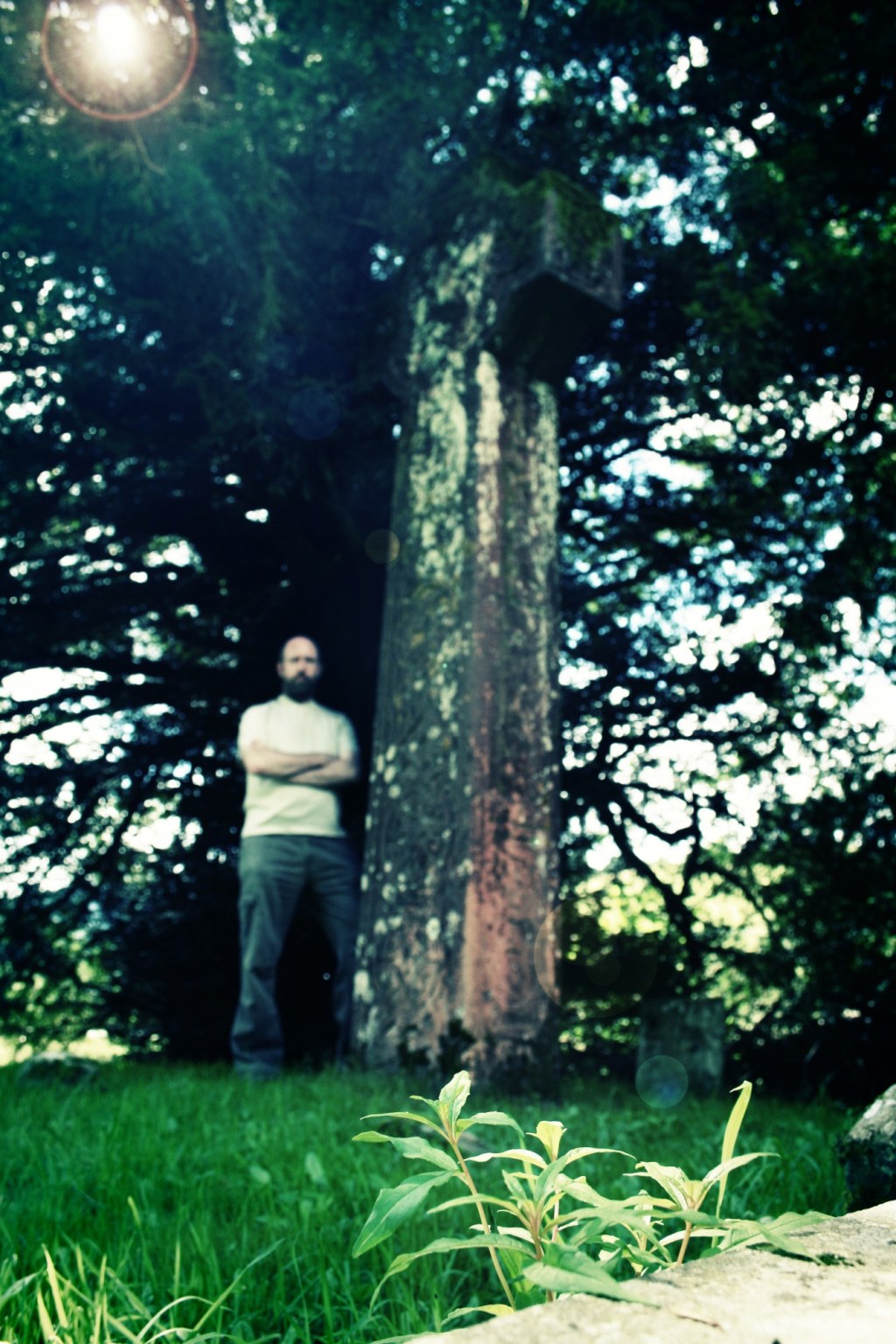
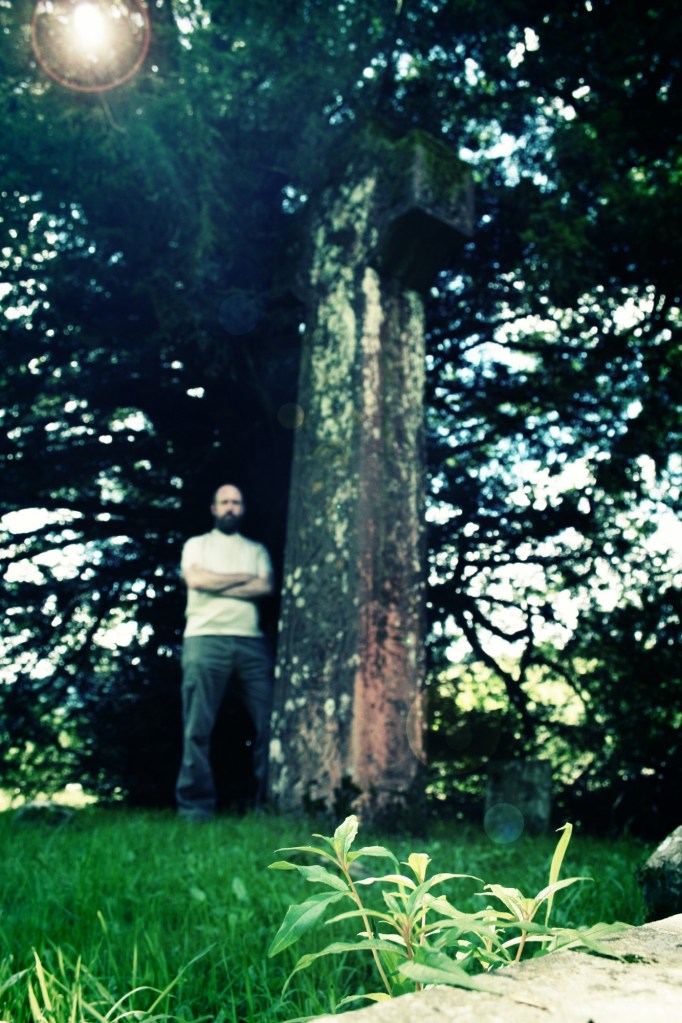
    Me and the great Celtic cross

    Together, they walk toward the Great Celtic Cross, its weathered stone rising 13 feet defiantly into the sky. The pilgrim reaches out, tracing the loops and knots carved into its surface. “This is eternity,” they murmur. “No beginning, no end. Just faith, winding on forever.”

    The visitor studies the carvings, fingers brushing lightly over the stone. “It’s amazing. To think of the hands that made this, how many people must have stood before it, just like we are now. Even after all this time, it still stands.”

    “As it should,” the pilgrim replies. “A signpost for those on the road to St David’s. A beacon for the weary pilgrim.”

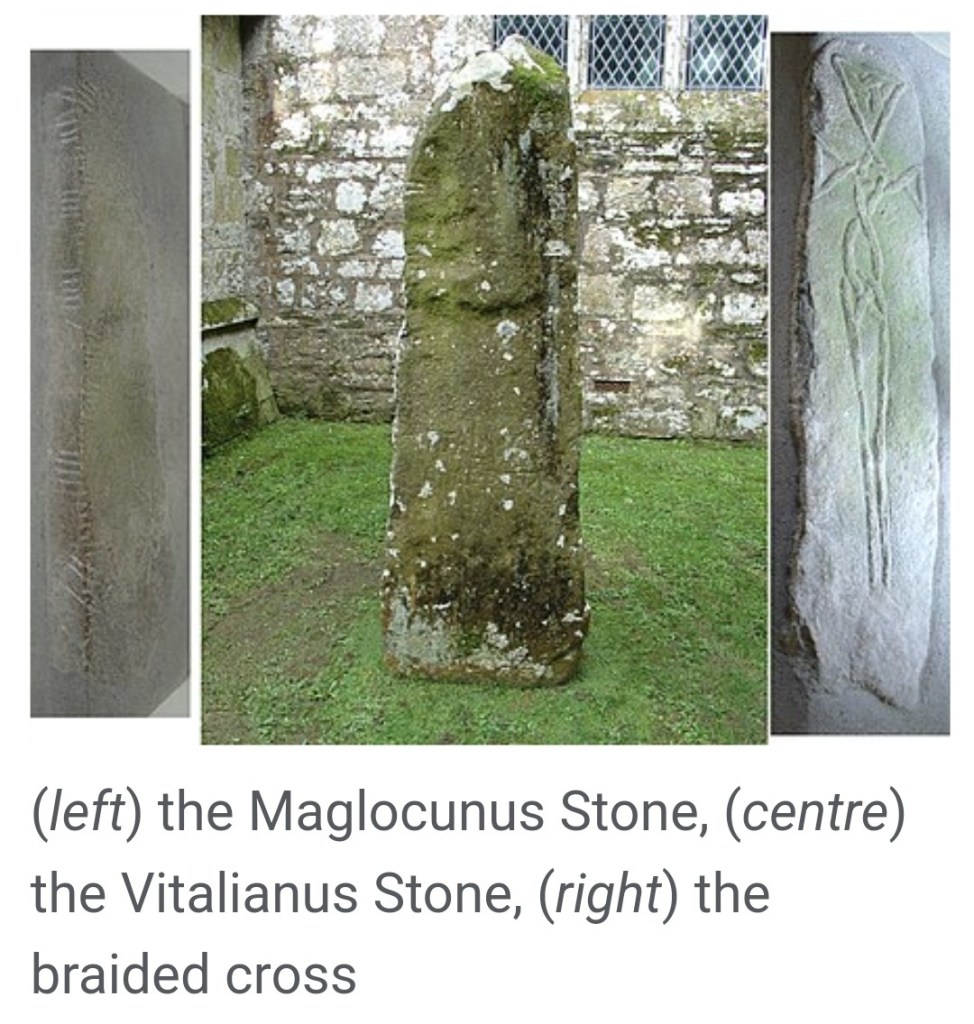
    Just outside the church. The Vitalianus Stone, carved into a pillar in Ogham and Latin the words “VITALIANI EMERTO” suggests the resting place of an important man named Vitaliani. The two languages hint at ancient connections between pagans and Christians. Its inscriptions whispering secrets from the past that we may never understand. The pilgrim kneels before it, tracing the letters. “He was a leader once, a man of faith and strength. His name endures in stone, even as his body has long turned to dust.”

    The visitor leans in, examining the Latin and Ogham script. “It’s strange. We carve our names into things, thinking it will make us last forever. But in the end, it’s the stories that survive, not the physical marks.”

    The pilgrim smiles. “You understand.”

    Inside the church, cool air wraps around them, thick with the scent of wax and old stone.  On one of the windowsills, they see the Megalocnus Stone, where the marks of the older tongue carve deep into the rock. Megalocnus is referenced as far back as the sixth century, affirming the stone’s age. The visitor shakes their head in wonder. “This writing—Ogham—it’s like the language of the land itself, growing up from the stone.”

    The pilgrim rests a hand against it. “We mark the world, and the world marks us.”

    On another windowsill, they find the Pilgrim’s Cross, shallowly etched into the stone. The modern visitor touches the carving, feeling its rough edges. “So many hands must have traced this over the years.”

    “I made my own mark,” the pilgrim admits, voice quiet. “And those after me, and those after them. We all do. All hoping to pass through life, to the next, peacefully.”

    They pause before the Norman-era Rood Screen, its carved wood forming a delicate boundary between the sacred and the earthly. The visitor runs their hand along its surface. “It’s so intricate. So much work must have gone into this.”

    “Devotion is in the small detail as well as the bigger view,” the pilgrim replies. “In all things, we find the divine.”

    At the 700 year old Medieval Baptismal Font, the pilgrim dips their fingers, letting the cool water trickle over their skin. “A new beginning,” they whisper.

    The visitor hesitates, then does the same. The water is cold against their fingertips, sending a shiver through them. “Some things never change,” they murmur.

    Outside, the old Sundial catches the last light of the afternoon. The visitor laughs softly. “Hundreds of years ago, someone stood right here, checking the time by the same sun we’re looking at now.”

    The pilgrim nods. “And after another thousand, others will do the same.”

    A short walk uphill leads them to the second Pilgrim’s Cross, carved deep into the rock behind the church. The view stretches below them, the land rolling away toward the river. The pilgrim kneels, bowing their head in prayer.

    The visitor stands in silence, breathing in the crisp air. “It must have been hard,” they say at last. “Walking so far, carrying all your hopes with you.”

    The pilgrim exhales, voice full of quiet conviction. “Hope is never a burden. It is the reason we walk.”

    As they walk toward the ruins of Nevern Castle, the shadows grow long. The stones stand witness to battles and prayers lingering in the air.

    “Time is strange here,” the visitor muses. “It doesn’t feel like it’s passing. It just… is.”

    The pilgrim smiles. “At Nevern, time doesn’t pass—it pools around your feet.”

    The modern traveller, now seeped in the church’s history, looking down to their feet, feels a pull to join the age-old pilgrimage. Looking up, they see the ancient pilgrim is making their way–fading into the distance. “God bless!”

    (not my photo)
    If you find my photography or my writing inspiring and uplifting, consider supporting what I do. Buy me a coffee on Ko-fi.
    Your support makes a difference in my life and helps me create more of what you, and I, like. Thank you!
    Tap to view my redbubble gallery.
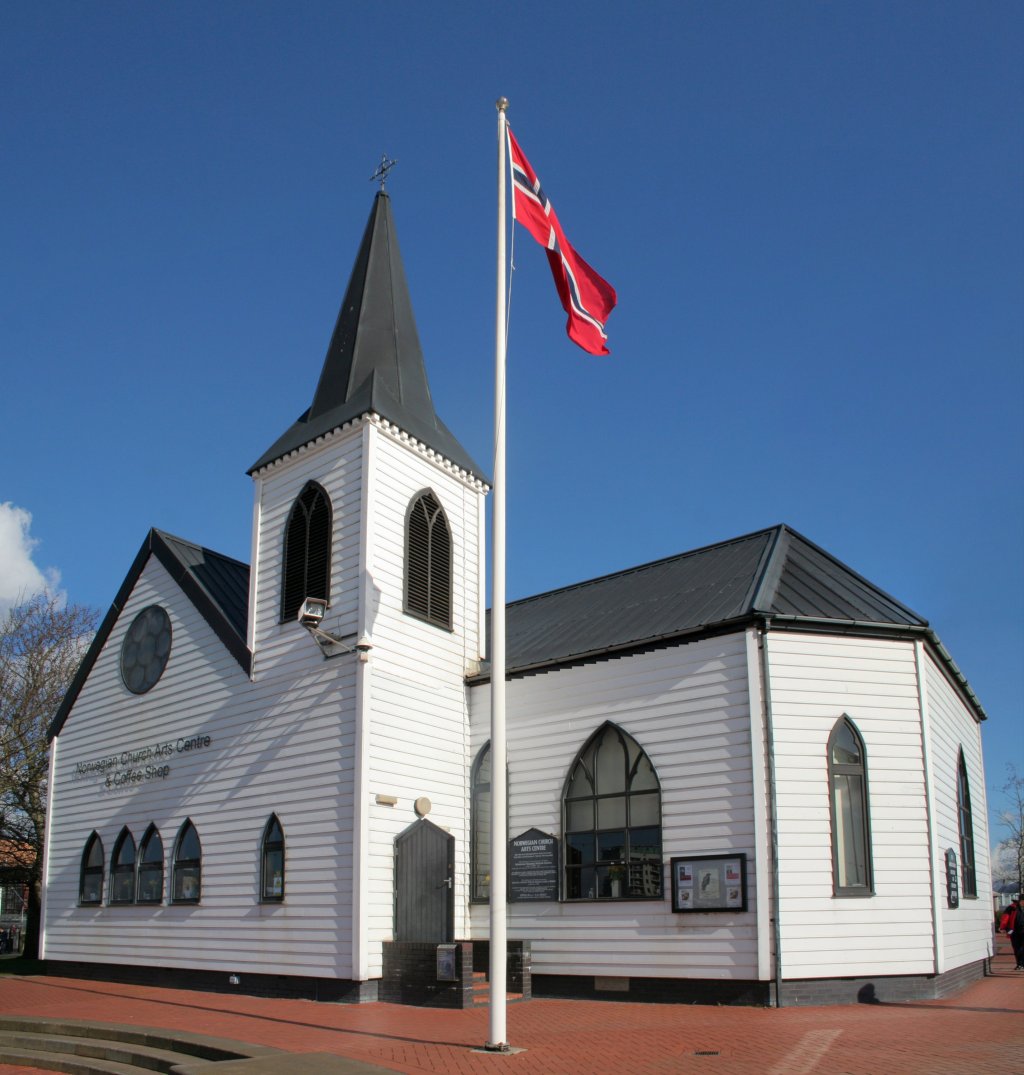
  • Norwegian Church

    Norwegian Church

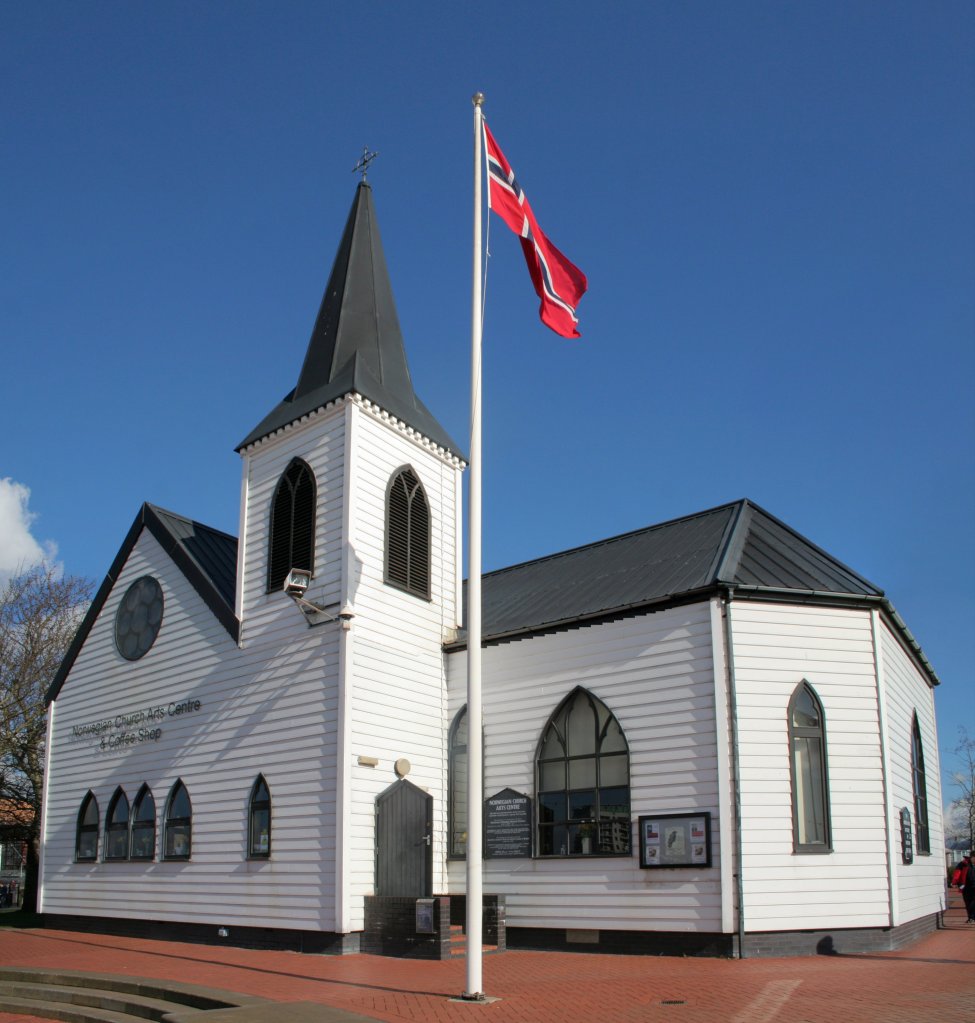
    The Norwegian Church in Cardiff Bay is a historic and cultural landmark in Cardiff, Wales. It was originally built in 1868 to serve the growing Norwegian community in the area, many of whom were involved in the shipping and coal trading industries. The church played a vital role in the community, serving as a place of worship and a social centre for Norwegians living in

    Norwegian Church in Cardiff Bay
    Tap to view my redbubble gallery.

    In the late 20th century, the church fell into disuse, but it was later renovated and reopened as a cultural and arts centre. Interestingly, in 1916, the world-famous author Roald Dahl, who was born in Cardiff and whose parents were Norwegian, was baptised in the Norwegian Church. This historical connection adds to its significance.

    Today, it hosts various events, exhibitions, and performances, making it a hub for cultural and artistic activities in Cardiff. It also has a cafe with beautiful waterfront views. The Norwegian Church is an important part of the cultural heritage of Cardiff and the broader history of the Welsh-Norwegian connection in the city
    Tap to view my redbubble gallery.
  • Legends of Pembrokeshire: Saint Govan’s Sacred Refuge

    Legends of Pembrokeshire: Saint Govan’s Sacred Refuge

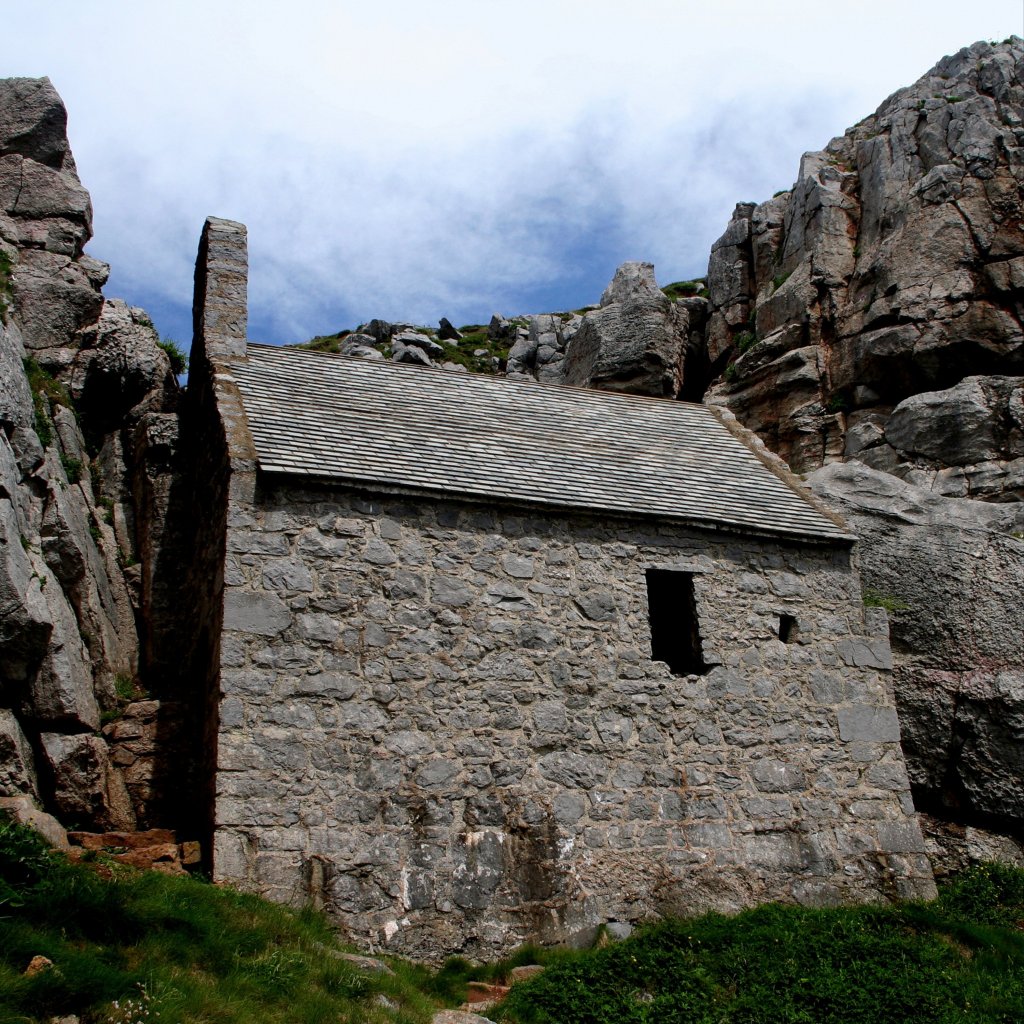
    In the early 6th century, in the rugged, windswept cliffs of Pembrokeshire, where the sea meets the land, there lived a hermit named Saint Govan. He had found solace in the natural beauty of the coastal landscape and the spiritual connection it offered.

    Tap to view my redbubble gallery.

    One fateful day, as Saint Govan knelt in prayer within his humble chapel, a band of fearsome pirates descended upon the rocky shores. They sought to plunder the nearby village and destroy the hermit’s sacred sanctuary. The hermit, a man of unwavering faith, continued to pray for protection.

    In a miraculous turn of events, the very cliffs that cradled Saint Govan’s chapel began to open up, forming a narrow cleft in the rock face. It is said that this cleft was just wide enough to shelter the hermit from the marauding pirates. As the band of outlaws approached, they were unable to locate the hidden entrance to the chapel, and their attempts to reach Saint Govan were thwarted by the hand of God.

    With awe and amazement, the pirates eventually gave up their pursuit and departed, leaving Saint Govan unharmed. It was a divine act of protection, and the hermit saw it as a sign of God’s grace.

    From that day forward, Saint Govan continued his life of contemplation and prayer in the tranquil solitude of his chapel, grateful for the miraculous shelter provided by the very cliffs that he had come to love. The legend of Saint Govan’s miraculous escape and his unwavering devotion continues to be told and cherished in the heart of Pembrokeshire, a testament to the power of faith and the wonders of nature.

    Tap to view my redbubble gallery.
  • Midnight ghosts

    Midnight ghosts

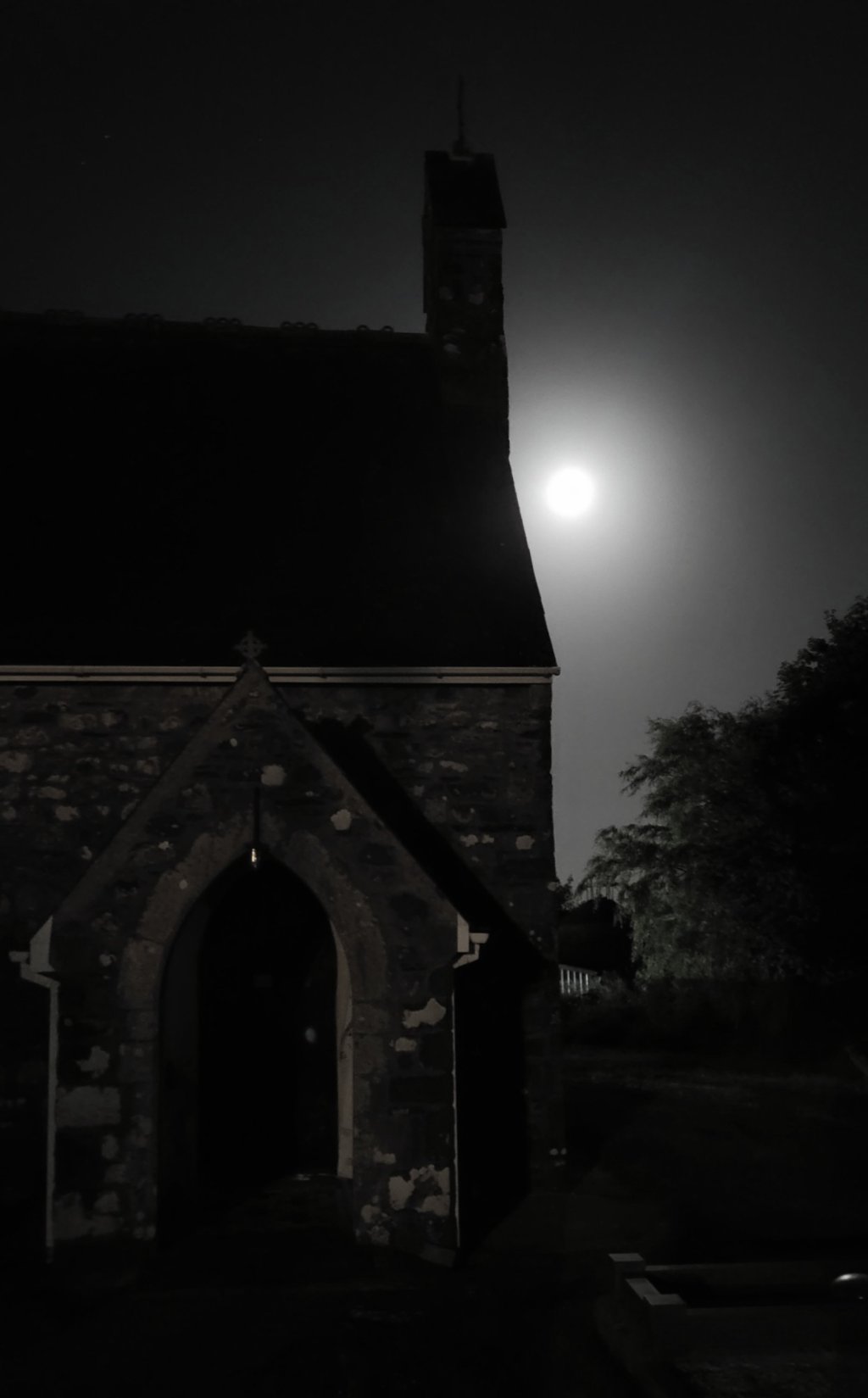
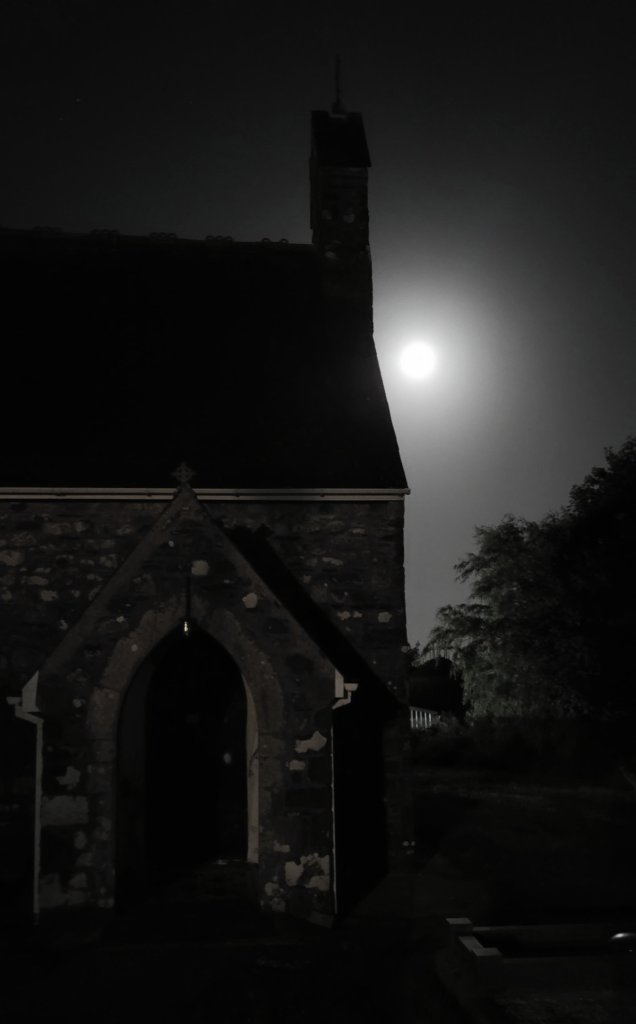
    Many moons ago, in a small village, there stood an ancient church with a graveyard shrouded in eerie legends that no one had dared enter at midnight. It was Halloween night, and the full moon cast an ominous glow over the tombstones. A group of brave friends gathered in the graveyard, daring each other to spend the night among the silent souls.

    Tap to view my redbubble gallery.


    As the clock struck midnight, a chilling mist began to rise from the ground. The air turned cold, and the friends huddled together in fear. In the distance, they heard faint whispers, like the voices of the departed, carried on the wind.

    Suddenly, the church’s bell tolled, but there was no one near it. Panic set in as the ground beneath them rumbled, and ancient tombstones began to shift. From the graves, shadowy figures emerged, dressed in tattered burial clothes – restless spirits of those who had been buried there.

    The friends, paralyzed with fear, watched as the apparitions approached. The lead spirit, a ghostly figure with hollow eyes whispered “set us free”, as it raised a skeletal hand, pointing toward a crypt that had not been opened in centuries. The lid slowly creaked open, revealing a yawning darkness within.

    With no other option, the friends, trembling with fear, entered the crypt. Inside, they found an old, dusty book. As they opened it, the spirits whispered the tale of their tragic demise, seeking closure for their restless souls. Inside, they found the words that the tormented souls had been looking for – a spell to set them free.

    **The Liberation Incantation**

    “In the shadow of the moon, under the night’s shroud,
    With empathy, we break the ethereal shroud.
    Release these souls from their timeless plight,
    Grant them peace, and end their endless night.

    By the power of compassion, we implore,
    Open the sealed tomb’s ancient door.
    Let the spirits find freedom and release,
    So they may depart in tranquil peace.

    As we speak these words, let the spirits go,
    To a place where their souls may finally soar.
    May this act bring them solace and closure,
    In the name of kindness and their final exposure.”

    With the story told, the spirits slowly faded away, and the ground ceased to shake. The friends, having listened to the spirits’ sorrowful tales, closed the crypt and left the graveyard, never to return. From that day on, the church graveyard was known as a place where the spirits found peace on Halloween night, and the village held its breath, waiting for the next generation of brave souls to face the eerie tale of that fateful night.

    Tap to view my redbubble gallery.
  • Mwnt Church: A Mouse’s Hymn

    Mwnt Church: A Mouse’s Hymn

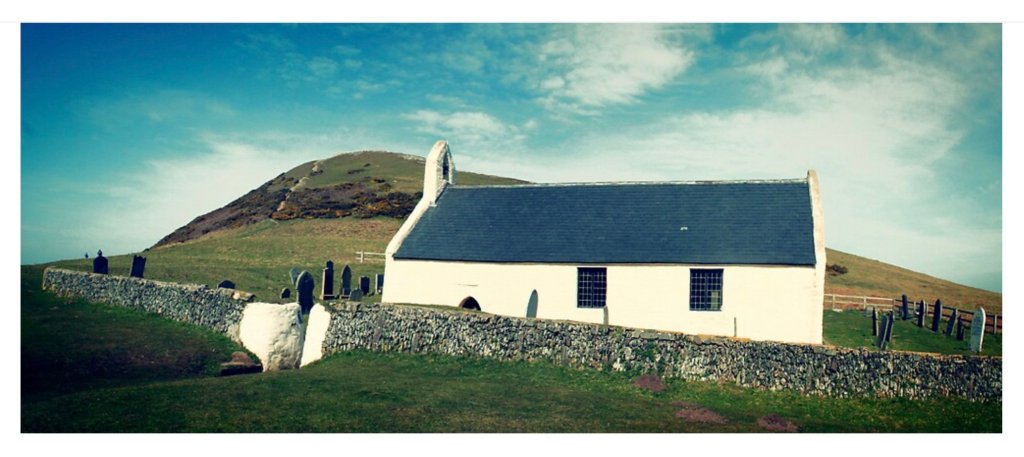
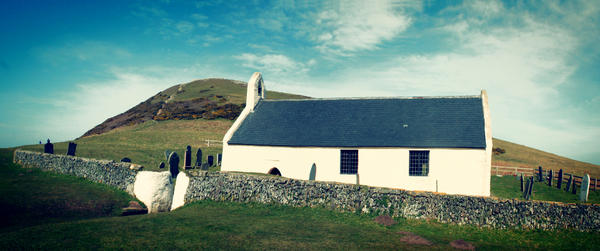
    As a mouse scurrying through the fields of Wales, I like to venture into the beautiful and ancient Mwnt Church. From my small perspective, it’s a towering structure that rises high above the surrounding clifftop meadows. Situated on the stunning coast of Cardiganshire, Wales, surrounded by rolling hills and breathtaking views of the Irish Sea. It’s a peaceful and serene location, the perfect place for reflection and contemplation

    The Stillness of Mwnt Church
    Tap to view in my redbubble gallery.

    From its elevated position, the church offers a panoramic view of the rugged coastline, dotted with small coves and sandy beaches. On clear days, the far-off hills of Ireland are visible in the distance. It’s a truly magical place, one that inspires awe and wonder.

    I love to explore the nooks and crannies of this historic building. The thick stone walls provide plenty of hiding spots, and I never tire of discovering new ones. The church is full of fascinating sights and sounds, from the shuffling of human feet to the rustling of birds in the rafters.

    One of my favourite times to visit the church is during a storm, when the wind howls and the waves crash against the cliffs below. The church stands firm and steadfast, a beacon of hope and strength in the midst of the wild elements.

    On quiet days, I’ll climb to the top of the altar and bask in the warm sunbeams that pour through the stained glass windows. I feel so small in such a big space, but it’s a peaceful feeling, as if I’m in the presence of something greater than myself.

    At other times, the church is filled with the sounds of human voices singing hymns and prayers. I love to listen to the beautiful harmonies, and I feel like a part of something special and timeless.

    The location of the Mwnt Church on the coast of Cardigan is truly special, a place where the beauty of nature and the majesty of human artistry come together in perfect harmony. Whether you are a mouse like me or a human, a visit to this historic site is sure to be a memorable and uplifting experience.

    Tap to view my redbubble gallery.

    More interesting posts

  • Autumnal Magic

    Autumnal Magic

    A Glimpse of Beauty in Decay
    Tap to view in redbubble

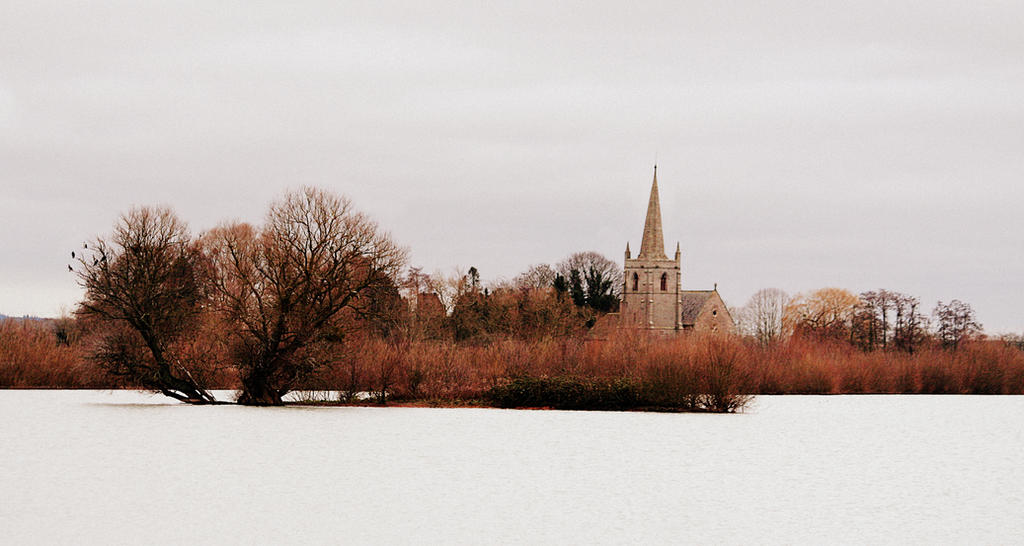
    As I walked through the rust-colored woods on a crisp autumn morning, the sun was just beginning to peek over the horizon. The leaves on the trees were mostly on the ground making the path a thick carpet of fallen leaves. I could hear the crunch of my boots on the leaves as I made my way down the winding path that led to the lake.

    As I approached the lake, I could see that the water was frozen solid, the surface covered with a thin layer of snow. In the center of the lake, there was a small island, and on the island stood a beautiful old church. The church was made of stone and had a steeple that reached towards the sky. The windows were stained glass, and the doors were heavy oak.

    I walked out onto the frozen lake, the ice creaking beneath my feet. As I got closer to the island, I could see that the church was in a state of disrepair. The roof was missing tiles, and the stone walls were covered in vines and moss. Despite its dilapidated state, the church had a certain charm and beauty about it.

    I stood in front of the church for a moment, admiring the way the sunlight filtered through the stained glass windows and cast a warm, golden glow on the interior. The church was silent and still, frozen in time, waiting for a congregation to thaw it back to life.

    As I turned to leave, I couldn’t help but feel a sense of sadness. The church on the island in the frozen lake was a beautiful and peaceful place, but it seemed to be forgotten and left to decay. I could only hope that one day, someone would come along and restore it to its former glory.

    Tap to view my redbubble gallery.
  • A Pilgrimage to St. David’s: A Journey to Wales’ Most Sacred Place

    A Pilgrimage to St. David’s: A Journey to Wales’ Most Sacred Place

    Welsh Wonder
    Tap to view in redbubble.

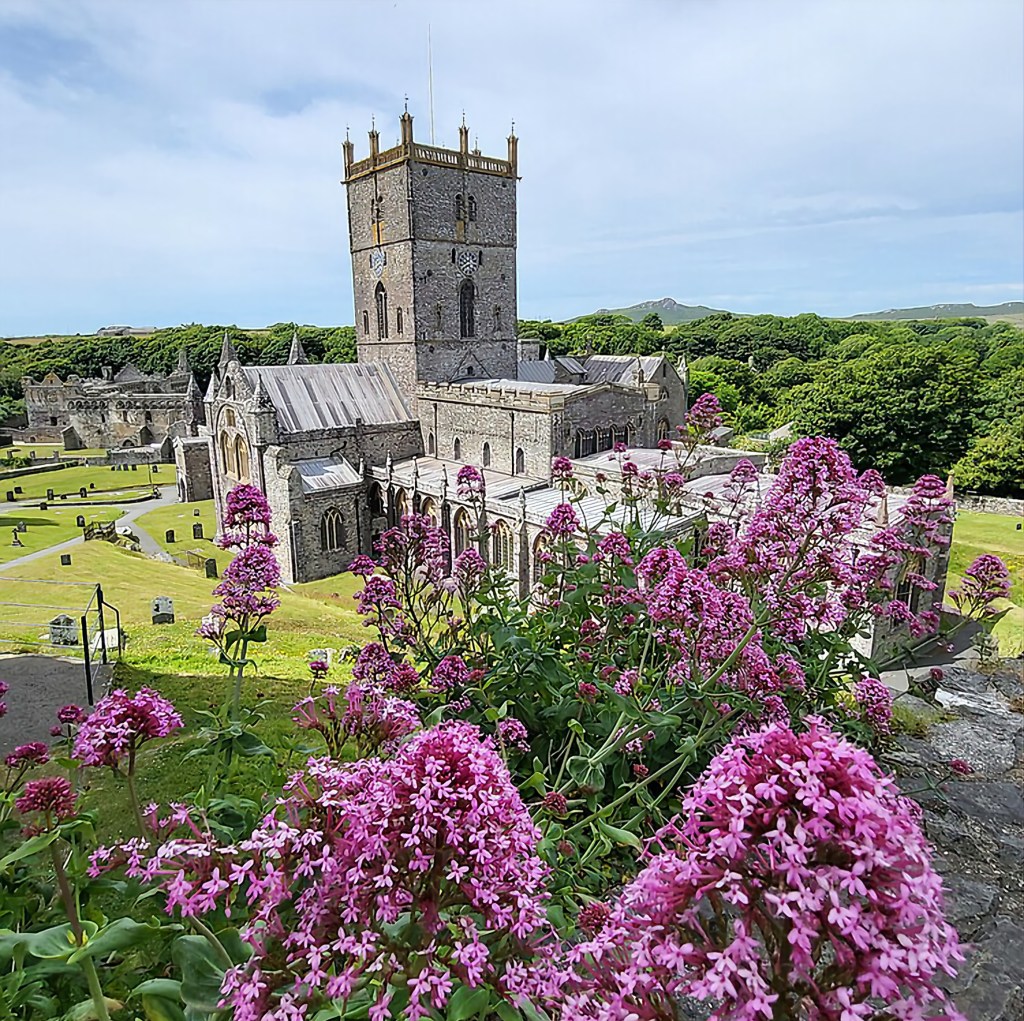
    St. David’s Cathedral is a beautiful and historic place of worship located in the city of St. David’s, Pembrokeshire, Wales. The cathedral is named after St. David, the patron saint of Wales, and has a long and fascinating history dating back to the 6th century.

    The current cathedral building was constructed in the 12th and 13th centuries and is an excellent example of Norman architecture. It is built from local sandstone and boasts a distinctive tower, which can be seen from miles around. The cathedral is also home to several important artworks, including a 14th-century altarpiece and a 15th-century clock.

    One of the most striking features of the cathedral is its elaborate interior. The nave is adorned with intricate carvings and stained glass windows, which depict various scenes from the Bible. The cathedral also has a beautiful choir, which is used for regular services and special events.

    St. David’s Cathedral is an important place of pilgrimage for many people in Wales and beyond. Every year, thousands of visitors come to the cathedral to pay their respects to St. David and to experience the beauty and peace of this sacred place.

    The cathedral is also an important cultural and educational hub, hosting concerts, lectures, and other events throughout the year. It is a place where people of all ages and backgrounds can come to learn, to pray, and to find inspiration.

    In conclusion, St. David’s Cathedral is a beautiful and historic place of worship that has played a central role in the life of the community for centuries. It is a must-see destination for anyone visiting the city of St. David’s or the surrounding area.

    Tap to view my redbubble gallery.

    More interesting posts

  • Discovering the Charm of Mwnt Church in Pembrokeshire

    Discovering the Charm of Mwnt Church in Pembrokeshire

    Mwnt Magic


    Mwnt Church is a small, charming chapel located in the Pembrokeshire Coast National Park in Wales. The church, which is dedicated to St. Caron, is a Grade II listed building and is believed to date back to the early 16th century.

    The church is located in the village of Mwnt, which is situated on a hill overlooking the Irish Sea. The church sits atop the hill, surrounded by beautiful countryside, making it a popular spot for visitors looking to enjoy the stunning views of the Pembrokeshire coast.

    Inside the church, you will find a simple yet charming interior. The nave is adorned with whitewashed walls and a wooden ceiling, and there are several stained glass windows which add a touch of color to the space. The altar is simple, with a wooden cross and a few flowers.

    One of the most notable features of Mwnt Church is its location. The church sits atop a hill overlooking the sea, and the views from the churchyard are breathtaking. On a clear day, you can see for miles in every direction, taking in the rugged beauty of the Pembrokeshire coast.

    Mwnt Church is a popular spot for visitors to the Pembrokeshire Coast National Park, and it is not uncommon to see people walking up the hill to visit the church and enjoy the views. The church is also a popular spot for wedding ceremonies, and many couples choose to exchange their vows in this beautiful setting.

    Overall, Mwnt Church is a charming and peaceful spot that is well worth a visit if you are in the Pembrokeshire area. Whether you are looking to enjoy the views, take a peaceful walk, or simply spend some time in a beautiful and historic building, Mwnt Church is sure to delight.

    My Redbubble Page

    Welcome to My Redbubble Page

    Check out my products on Redbubble:


    My Redbubble

Design a site like this with WordPress.com
Get started