Tag: horse

  • The Light in the Stable

    The Light in the Stable

    Silence speaks my name,
    Ancient patience in her eyes,
    I forget to leave.
    Horse, pony
    The Image That Captured Me

    The stables smelled of hay and old wood shavings, the kind of scent that clings to your clothes long after you’ve left. It was late afternoon, and the air was thick with the quiet hum of horses shifting in their stalls, the occasional rustle of straw underhoof. I had come here on a whim, drawn by the kind of restlessness that only a change of scenery can soothe. The owner, a wiry man with hands like cracked leather, had nodded at me as I wandered in, as if he understood that some people just need to stand in the presence of animals to remember what silence feels like.

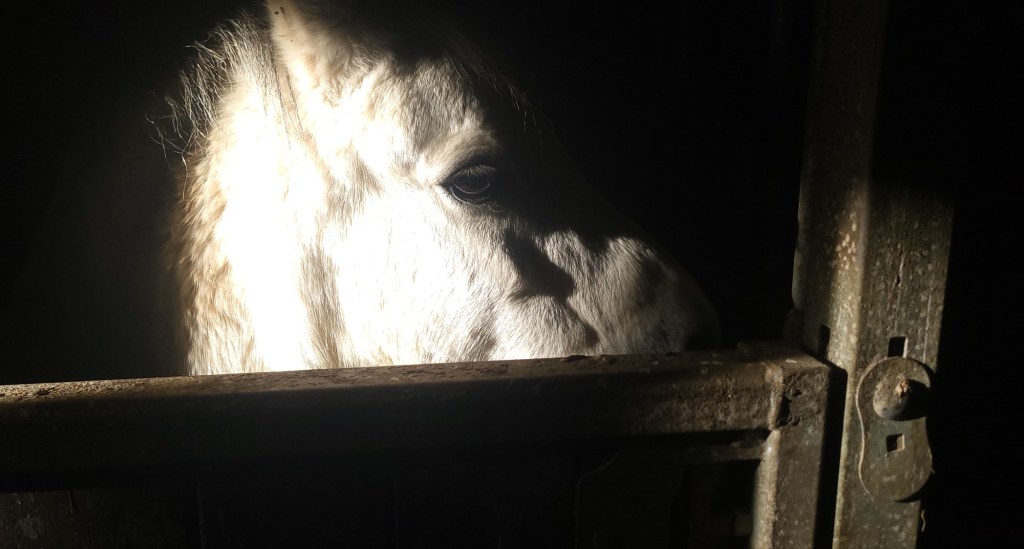
    The stalls were arranged in a long, dim row, each door latched with iron that had seen decades of use. Most of the horses were dozing, their massive bodies still, their breath slow and deep. But then there was this one – a white horse, its coat almost luminous in the gloom. It stood near the front of its stall, its head turned just enough to catch the light.

    And what light it was.

    Somehow, the sun had found a gap in the stable walls – a narrow slit, no wider than a hand, where the wood had warped or shrunk over time. A beam of golden light cut through the darkness like a blade, falling directly onto the horse’s face. The effect was surreal, almost sacred. The horse’s white fur glowed as if lit from within, its dark eyes reflecting something ancient and knowing. For a moment, it felt like I was witnessing a secret, something not meant for human eyes.

    I stood there, frozen. The horse didn’t move, didn’t flinch. It simply stared back, its gaze steady, as if it had been waiting for someone to notice. The light traced the curve of its muzzle, the delicate ridge of its cheekbone, turning the ordinary into something mythic. I thought of paintings I’d seen in museums, of saints and angels bathed in divine light. But this was no painting. This was real, fleeting, a moment suspended in time.

    I reached for my phone, my fingers fumbling. The camera lens struggled to capture what my eyes could see – the contrast, the depth, the way the light seemed to breathe. But when I looked at the photo later, there it was: the horse, the light, the quiet intensity of that stolen moment.

    The owner found me still standing there, phone in hand. He glanced at the horse, then at me, and smiled. “That one,” he said, “she’s always been like that. Like she’s waiting for something.” I didn’t ask what. Some things don’t need explaining.

    Outside, the world was still turning – cars passing, people talking, the usual noise of life. But in that stable, with the light falling just so, everything felt still. And for the first time in a long time, I didn’t feel the need to move. I just stood there, watching the light shift, the horse’s breath steady and sure, and wondered what it was we were both waiting for.


    If you find my photography or my writing inspiring and uplifting, consider supporting what I do. Buy me a coffee on Ko-fi.
    Your support makes a difference in my life and helps me create more of what you, and I, like. Thank you!
    Tap here for a list of 100 endangered animals and plants.

    100 endangered plant and animal species

    * Abies beshanzuensis (Baishan fir) – Plant (Tree) – Baishanzu Mountain, Zhejiang, China – Three mature individuals

    * Actinote zikani – Insect (butterfly) – Near São Paulo, Atlantic forest, Brazil – Unknown numbers

    * Aipysurus foliosquama (Leaf scaled sea-snake) – Reptile – Ashmore Reef and Hibernia Reef, Timor Sea – Unknown numbers * Amanipodagrion gilliesi (Amani flatwing) – Insect (damselfly) – Amani-Sigi Forest, Usamabara Mountains, Tanzania – < 500 individuals * Antisolabis seychellensis – Insect – Morne Blanc, Mahé island, Seychelles – Unknown numbers * Antilophia bokermanni (Araripe manakin) – Bird – Chapado do Araripe, South Ceará, Brazil – 779 individuals * Aphanius transgrediens (Aci Göl toothcarp) – Fish – south-eastern shore of former Lake Aci, Turkey – Few hundred pairs * Aproteles bulmerae (Bulmer’s fruit bat) – Mammal – Luplupwintern Cave, Western Province, Papua New Guinea – 150 * Ardea insignis (White bellied heron) – Bird – Bhutan, North East India and Myanmar – 70–400 individuals * Ardeotis nigriceps (Great Indian bustard) – Bird – Rajasthan, Gujarat, Maharashtra, Andhra Pradesh, Karnataka and Madhya, India – 50–249 mature individuals * Astrochelys yniphora (Ploughshare tortoise) – Reptile – Baly Bay region, northwestern Madagascar – 440–770 * Atelopus balios (Rio Pescado stubfoot toad) – Amphibian – Azuay, Cañar and Guyas provinces, south-western Ecuador – Unknown numbers * Aythya innotata (Madagascar pochard) – Bird – volcanic lakes north of Bealanana, Madagascar – 80 mature individuals * Azurina eupalama (Galapagos damsel fish) – Fish – Unknown numbers – Unknown numbers * Bahaba taipingensis (Giant yellow croaker) – Fish – Chinese coast from Yangtze River, China to Hong Kong – Unknown numbers * Batagur baska (Common batagur) – Reptile (turtle) – Bangladesh, Cambodia, India, Indonesia and Malaysia – Unknown numbers * Bazzania bhutanica – Plant – Budini and Lafeti Khola, Bhutan – 2 sub-populations * Beatragus hunteri (Hirola) – Mammal (antelope) – South-east Kenya and possibly south-west Somalia – < 1,000 individuals * Bombus franklini (Franklin’s bumblebee) – Insect (bee) – Oregon and California – Unknown numbers * Brachyteles hypoxanthus (Northern muriqui / Woolly spider monkey) – Mammal (primate) – Atlantic forest, south-eastern Brazil – < 1,000 * Bradypus pygmaeus (Pygmy three-toed sloth) – Mammal – Isla Escudo de Veraguas, Panama – < 500 * Callitriche pulchra – Plant (freshwater) – pool on Gavdos, Greece – Unknown numbers * Calumma tarzan (Tarzan’s chameleon) – Reptile – Anosibe An’Ala region, eastern Madagascar – < 100 * Cavia intermedia (Santa Catarina’s guinea pig) – Mammal (rodent) – Moleques do Sul Island, Santa Catarina, Brazil – 40–60 * Cercopithecus roloway (Roloway guenon) – Mammal (primate) – Côte d’Ivoire – Unknown numbers * Coleura seychellensis (Seychelles sheath-tailed bat) – Mammal (bat) – Two small caves on Silhouette and Mahé, Seychelles – < 100 * Cryptomyces maximus (Willow blister) – Fungi – Pembrokeshire, United Kingdom – Unknown numbers * Cryptotis nelsoni (Nelson’s small-eared shrew) – Mammal (shrew) – Volcán San Martín Tuxtla, Veracruz, Mexico – Unknown numbers * Cyclura collei (Jamaican iguana / Jamaican rock iguana) – Reptile – Hellshire Hills, Jamaica – Unknown numbers * Daubentonia madagascariensis (Aye-aye) – Mammal (primate) – Deciduous forest, East Madagascar – Unknown numbers * Dendrophylax fawcettii (Cayman Islands ghost orchid) – Plant (orchid) – Ironwood Forest, George Town, Grand Cayman – Unknown numbers * Dicerorhinus sumatrensis (Sumatran rhino) – Mammal (rhino) – Sabah, Sarawak and Peninsular Malaysia, Kalimantan and Sumatra, Indonesia – < 100 (more recent estimates suggest 34-47) * Diomedea amsterdamensis (Amsterdam albatross) – Bird – Breeds on Plateuau des Tourbières, Amsterdam Island, Indian Ocean. – 100 mature individuals * Dioscorea strydomiana (Wild yam) – Plant – Oshoek area, Mpumalanga, South Africa – 200 * Diospyros katendei – Plant (tree) – Kasyoha-Kitomi Forest Reserve, Uganda – 20 individuals in a single population * Dipterocarpus lamellatus – Plant (tree) – Siangau Forest Reserve, Sabah, Malaysia – 12 individuals * Discoglossus nigriventer (Hula painted frog) – Amphibian – Hula Valley, Israel – Unknown numbers * Dombeya mauritiana – Plant – Mauritius – Unknown numbers * Elaeocarpus bojeri (Bois Dentelle) – Plant (tree) – Grand Bassin, Mauritius – < 10 individuals * Eleutherodactylus glandulifer (La Hotte glanded frog) – Amphibian – Massif de la Hotte, Haiti – Unknown numbers * Eleutherodactylus thorectes (Macaya breast-spot frog) – Amphibian – Formon and Macaya peaks, Masif de la Hotte, Haiti – Unknown numbers * Eriosyce chilensis (Chilenito (cactus)) – Plant – Pta Molles and Pichidungui, Chile – < 500 individuals * Erythrina schliebenii (Coral tree) – Plant – Namatimbili-Ngarama Forest, Tanzania – < 50 individuals * Euphorbia tanaensis – Plant (tree) – Witu Forest Reserve, Kenya – 4 mature individuals * Eurynorhyncus pygmeus (Spoon-billed sandpiper) – Bird – Breeds in Russia, migrates along the East Asian-Australasian Flyway to wintering grounds in India, Bangladesh and Myanmar – 100 breeding pairs * Ficus katendei – Plant – Kasyoha-Kitomi Forest Reserve, Ishasha River, Uganda – < 50 mature individuals * Geronticus eremita (Northern bald ibis) – Bird – Breeds in Morocco, Turkey and Syria. Syrian population winters in central Ethiopia. – About 3000 individuals * Gigasiphon macrosiphon – Plant (flower) – Kaya Muhaka, Gongoni and Mrima Forest Reserves, Kenya, Amani Nature Reserve, West Kilombero Scarp Forest Reserve, and Kihansi Gorge, Tanzania – 33 * Gocea ohridana – Mollusc – Lake Ohrid, Macedonia – Unknown numbers * Heleophryne rosei (Table mountain ghost frog) – Amphibian – Table Mountain, Western Cape Province, South Africa – Unknown numbers * Hemicycla paeteliana – Mollusc (land snail) – Jandia peninsula, Fuerteventura, Canary Islands – Unknown numbers * Heteromirafa sidamoensis (Liben lark) – Bird – Liben Plains, southern Ethiopia – 90–256 * Hibiscadelphus woodii – Plant (tree) – Kalalau Valley, Hawaii – Unknown numbers * Hucho perryi (Sakhalin taimen) – Fish – Russian and Japanese rivers, Pacific Ocean between Russia and Japan – Unknown numbers * Johora singaporensis (Singapore freshwater crab) – Crustacean – Bukit Timah Nature Reserve and streamlet near Bukit Batok, Singapore – Unknown numbers * Lathyrus belinensis (Belin vetchling) – Plant – Outskirts of Belin village, Antalya, Turkey – < 1,000 * Leiopelma archeyi (Archey’s frog) – Amphibian – Coromandel peninsula and Whareorino Forest, New Zealand – Unknown numbers * Lithobates sevosus (Dusky gopher frog) – Amphibian – Harrison County, Mississippi, USA – 60–100 * Lophura edwardsi (Edwards’s pheasant) – Bird – Quang Binh, Quang Tri and Thua Thien-Hue, Viet Nam – Unknown numbers * Magnolia wolfii – Plant (tree) – Risaralda, Colombia – 3 * Margaritifera marocana – Mollusc – Oued Denna, Oued Abid and Oued Beth, Morocco – < 250 * Moominia willii – Mollusc (snail) – Silhouette Island, Seychelles – < 500 * Natalus primus (Cuban greater funnel eared bat) – Mammal (bat) – Cueva La Barca, Isle of Pines, Cuba – < 100 * Nepenthes attenboroughii (Attenborough’s pitcher plant) – Plant – Mount Victoria, Palawan, Philippines – Unknown numbers * Nomascus hainanus (Hainan black crested gibbon) – Mammal (primate) – Hainan Island, China – 20 * Neurergus kaiseri (Luristan newt) – Amphibian – Zagros Mountains, Lorestan, Iran – < 1,000 * Oreocnemis phoenix (Mulanje red damsel) – Insect (damselfly) – Mulanje Plateau, Malawi – Unknown numbers * Pangasius sanitwongsei (Pangasid catfish) – Fish – Chao Phraya and Mekong basins in Cambodia, China, Lao PDR, Thailand and Viet Nam – Unknown numbers * Parides burchellanus – Insect (butterfly) – Cerrado, Brazil – < 100 * Phocoena sinus (Vaquita) – Mammal (porpoise) – Northern Gulf of California, Mexico – 12 * Picea neoveitchii (Type of spruce tree) – Plant (tree) – Qinling Range, China – Unknown numbers * Pinus squamata (Qiaojia pine) – Plant (tree) – Qiaojia, Yunnan, China – < 25 * Poecilotheria metallica (Gooty tarantula / Metallic tarantula / Peacock tarantula / Salepurgu) – Spider – Nandyal and Giddalur, Andhra Pradesh, India – Unknown numbers * Pomarea whitneyi (Fatuhiva monarch) – Bird – Fatu Hiva, Marquesas Islands, French Polynesia – 50 * Pristis pristis (Common sawfish) – Fish – Coastal tropical and subtropical waters of Indo-Pacific and Atlantic Oceans. Currently largely restricted to northern Australia – Unknown numbers * Hapalemur simus (Greater bamboo lemur) – Mammal (primate) – Southeastern and southcentral rainforests of Madagascar – 500 * Propithecus candidus (Silky sifaka) – Mammal (primate) – Maroantsetra to Andapa basin, and Marojeju Massif, Madagascar – 100–1,000 * Psammobates geometricus (Geometric tortoise) – Reptile – Western Cape Province, South Africa – Unknown numbers * Pseudoryx nghetinhensis (Saola) – Mammal – Annamite mountains, on the Viet Nam – PDR Laos border – Unknown numbers * Psiadia cataractae – Plant – Mauritius – Unknown numbers * Psorodonotus ebneri (Beydaglari bush-cricket) – Insect – Beydaglari range, Antalaya, Turkey – Unknown numbers * Rafetus swinhoei (Red River giant softshell turtle) – Reptile – Hoan Kiem Lake and Dong Mo Lake, Viet Nam, and Suzhou Zoo, China – 3 * Rhinoceros sondaicus (Javan rhino) – Mammal (rhino) – Ujung Kulon National Park, Java, Indonesia – < 100 * Rhinopithecus avunculus (Tonkin snub-nosed monkey) – Mammal (primate) – Northeastern Vietnam – < 200 * Rhizanthella gardneri (West Australian underground orchid) – Plant (orchid) – Western Australia, Australia – < 100 * Rhynchocyon spp. (Boni giant sengi) – Mammal – Boni-Dodori Forest, Lamu area, Kenya – Unknown numbers * Risiocnemis seidenschwarzi (Cebu frill-wing) – Insect (damselfly) – Rivulet beside the Kawasan River, Cebu, Philippines – Unknown numbers * Rosa arabica – Plant – St Katherine Mountains, Egypt – Unknown numbers, 10 sub-populations * Salanoia durrelli (Durrell’s vontsira) – Mammal (mongoose) – Marshes of Lake Alaotra, Madagascar – Unknown numbers * Santamartamys rufodorsalis (Red crested tree rat) – Mammal (rodent) – Sierra Nevada de Santa Marta, Colombia – Unknown numbers * Scaturiginichthys vermeilipinnis (Red-finned blue-eye) – Fish – Edgbaston Station, central western Queensland, Australia – 2,000–4,000 * Squatina squatina (Angel shark) – Fish – Canary Islands – Unknown numbers * Sterna bernsteini (Chinese crested tern) – Bird – Breeding in Zhejiang and Fujian, China. Outside breeding season in Indonesia, Malaysia, Philippines, Taiwan, Thailand. – < 50 * Syngnathus watermeyeri (Estuarine pipefish) – Fish – Kariega Estuary to East Kleinemonde Estuary, Eastern Cape Province, South Africa – Unknown numbers * Tahina spectabilis (Suicide palm / Dimaka) – Plant – Analalava district, north-western Madagascar – 90 * Telmatobufo bullocki (Bullock’s false toad) – Amphibian (frog) – Nahuelbuta, Arauco Province, Chile – Unknown numbers * Tokudaia muenninki (Okinawa spiny rat) – Mammal (rodent) – Okinawa Island, Japan – Unknown numbers * Trigonostigma somphongsi (Somphongs’s rasbora) – Fish – Mae Khlong basin, Thailand – Unknown numbers * Valencia letourneuxi – Fish – Southern Albania and Western Greece – Unknown numbers * Voanioala gerardii (Forest coconut) – Plant – Masoala peninsula, Madagascar – < 10 * Zaglossus attenboroughi (Attenborough’s echidna) – Mammal – Cyclops Mountains, Papua Province, Indonesia – Unknown numbers

    Tap to view my redbubble gallery.
  • The Mare Eternal

    The Mare Eternal

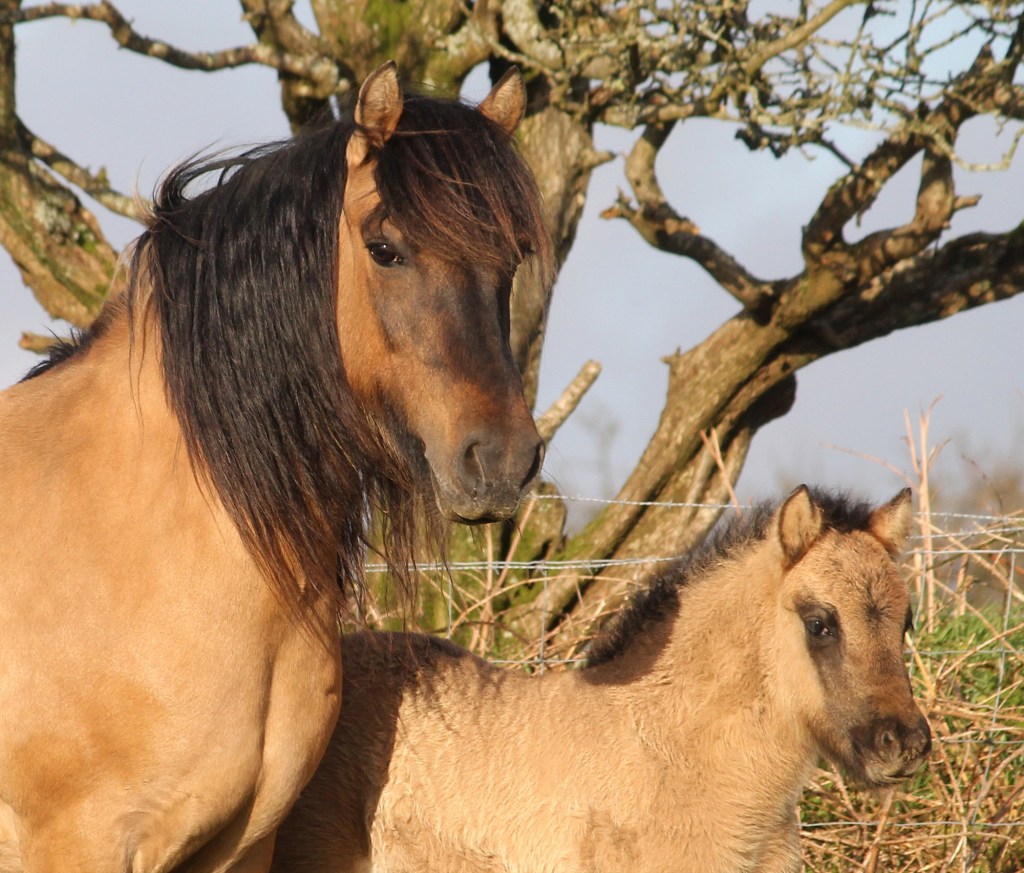
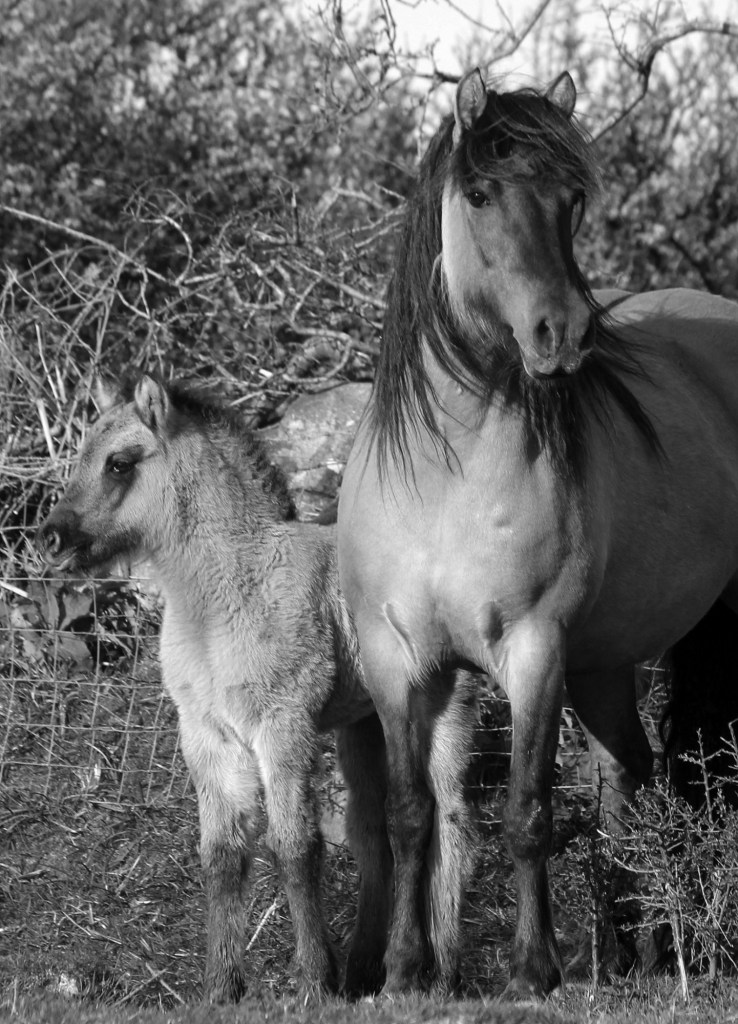
    The foal bolted. Little streak of chaos, its legs seemed far too long and far too skinny to carry it as fast as it went, but there it was, defying reason, defying physics, defying the well-worn patience of its mother.

    Mare, horse,foal
    My friend’s horses

    The mare sighed, the sound a mix of exasperation and resignation, the kind only mothers and gods know. She had been a mother before. She would be a mother again. But this foal, this particular foal, had a spark to it. A dangerous spark. She chased.

    It was all fields at first. Bright fields, green as the idea of springtime, endless as optimism. The foal ran, leaping in arcs that could shame any rainbow. The mare followed, heart thrumming with equal parts fear and pride. The foal laughed—yes, laughed—and that laughter was an arrow to the mare’s chest. How could a laugh be so beautiful and so terrifying? She couldn’t explain it, but she knew. Every gallop brought the foal closer to something: a boundary, an edge, an end.

    The woods came next. Dark and gnarled and full of secrets. The foal’s gait changed. Slower, but still determined. The mare followed, watching as her child learned to weave through brambles, sidestep dangers, and chase beams of light. There was a wolf once. The mare saw it before the foal did, and her heart stopped, her legs faltered. But the foal—clever little spark—saw it too, and instead of fear, it showed defiance. A stomp, a whinny, and the wolf slinked away. The mare breathed again, though not deeply. She didn’t have time for deep breaths anymore. 

    The foal found a river next. Fast and cold and impossible to stop. It charged headlong into the current, and the mare’s pulse spiked. Water was not grass, not earth. Water was a thief. It could take a foal and never give it back. She plunged in after, her hooves finding no purchase, only faith. The foal splashed and stumbled, and the mare thought: *this is the end*. But no. The foal found footing on the other side and pranced up the bank, triumphant. The mare dragged herself onto dry land, shaking and coughing, wondering how many more times she could survive her child’s survival.

    Hills rose in the distance. The foal raced up the first with the energy of youth, the energy of something that didn’t know yet that energy runs out. The mare chased, slower now. Her legs ached. The foal reached the crest and reared up, silhouetted against a sun that suddenly seemed lower in the sky.

    It was a horse now. Not a foal, not anymore. Strong and sleek, full of life. It ran down the hill into the valley below, and the mare followed. She was not strong and sleek. Not anymore.

    The horse ran. Through fields again, these ones golden, full of a warmth that felt like goodbye. The mare tried to keep up, tried to call out, but her voice was a whisper and her legs were lead. The horse—her foal, her spark—didn’t stop, didn’t turn. It ran into the horizon, where the sun sank lower, lower, gone.

    The mare stood still. She couldn’t run anymore. Her body wouldn’t let her. But she watched. She would always watch. Because that’s what mothers do. They run after their children until they can’t, and then they stay where they are, watching, hoping, remembering.

    And then, after a long while, the mare lay down in the field. It was soft. Softer than she expected. She closed her eyes.

    And the foal, who was never a foal, who was always running, always running, ran on.


    永遠の牝馬。

    子馬が駆け出した。小さな混沌の閃光のように、足はあまりにも細く、あまりにも長すぎて、そんな速さで走れるはずがないのに、そこにいた。理屈を超え、物理を超え、そして母親の擦り減った忍耐をも超えて。

    Mare, horse,foal
    私の友達の馬たち。

    牝馬はため息をついた。その音は、呆れと諦めが入り混じったもので、母親と神様だけが知っているような響きだった。彼女はこれまでにも母親だったことがある。そしてこれからも母親になるだろう。だが、この子馬、この特別な子馬には何かがあった。危うい火花のようなものが。それが気になって、彼女は追いかけた。

    最初は一面の野原だった。明るい野原、春のイメージそのもののような緑、楽観主義のように果てしない広がり。子馬は走った。虹も顔負けの見事な弧を描いて跳ね回った。牝馬はそれを追いかけた。胸の鼓動は恐れと誇りが半々だった。子馬は笑った――そう、笑ったのだ。その笑い声は、牝馬の胸を射抜く矢だった。どうして笑い声がこんなにも美しく、そして恐ろしいのだろうか。彼女には説明できなかったが、分かっていた。ひとつの確信があった。子馬のひと駆けごとに、何かに近づいていたのだ――境界線、端、あるいは終わりのようなものに。

    次に現れたのは森だった。暗く、ねじれ、秘密に満ちた森。子馬の足取りは変わった。遅くなったが、それでもなお、確固たる決意があった。牝馬は後を追い、子がいばらをすり抜け、危険をかわし、木漏れ日を追いかけるのを見守った。一度、狼が現れた。牝馬は子馬よりも先にその姿を見つけた。心臓が止まり、足がすくんだ。だが、子馬――あの賢い小さな火花――も狼に気づいていた。そして恐れる代わりに、反抗を見せた。踏み鳴らし、いななき、狼は身をひそめて去っていった。牝馬は再び息をついたが、深くは吸えなかった。もはや、深呼吸する時間はなかった。

    次に子馬が見つけたのは川だった。速く、冷たく、止めることができない流れ。子馬はためらうことなくその流れに飛び込んだ。牝馬の脈は跳ね上がった。水は草ではない、土でもない。水は泥棒だ。子馬をさらって二度と返さないかもしれない。彼女も後を追い、飛び込んだが、ひづめはどこにも支えを見つけられなかった。ただの信念だけが彼女を支えていた。子馬は水しぶきを上げ、つまずき、牝馬は思った。「これが終わりだ」と。だが、そうではなかった。子馬は流れの向こう岸で足場を見つけ、岸に駆け上がった。その姿は勝利そのものだった。牝馬はやっとの思いで陸に上がり、体を震わせ、水をはらい、咳き込みながら考えた。*あと何回、子の生存に付き合って自分が生き延びられるのだろうか*と。

    遠くに丘が見えた。子馬は一番手前の丘を、若さのエネルギーのままに駆け上がった。まだ、エネルギーが尽きるということを知らない生き物のエネルギーで。牝馬は後を追ったが、もはやその速度は遅かった。脚は痛みで悲鳴を上げていた。子馬は丘の頂上にたどり着き、太陽を背にして後ろ脚で立ち上がった。そのシルエットは、なぜか少し太陽が低くなったように見えた。

    それはもう子馬ではなかった。馬だった。もはや子馬ではなく、強く、しなやかで、命そのものが溢れていた。その馬は丘を駆け下り、谷へと消えた。牝馬は後を追ったが、自分が強くしなやかだった頃はもう遠い過去だった。

    馬は走った。また野原が現れたが、今度の野原は黄金色だった。別れの温もりを感じさせるような黄金の光に満ちていた。牝馬は必死で追いかけ、呼びかけようとしたが、声はかすれたささやきにしかならず、脚は鉛のように重かった。馬――彼女の子馬、彼女の火花――は止まらなかった。振り返りもしなかった。そのまま、地平線へと走り去った。太陽がさらに低く、低くなり、ついに沈んだ。

    牝馬は立ち尽くしていた。もう走れなかった。体がそれを許さなかった。だが彼女は見守った。これからもずっと見守るのだ。なぜなら、それが母親というものだからだ。母親は子を追いかけ続ける。自分の脚が止まるまで、止まった後も、そこに留まり、見つめ、祈り、思い出し続けるのだ。

    そして、しばらくしてから、牝馬は野原に身を横たえた。そこは思ったよりも柔らかかった。目を閉じた。

    かつては子馬で、しかし一度も本当の意味で「ただの子馬」ではなかったもの――走り続けたその存在は、今もどこかで走り続けていた。


    If you find this content inspiring and uplifting, consider supporting what I do. Buy me a coffee on Ko-fi.
    Your support makes a difference in my life and helps me create more of what you like. Thank you!
    Tap to view my redbubble gallery.
  • Horse’s Journey Through Time

    Horse’s Journey Through Time

    Eyes that hold the stars,
    Speak of wisdom, trust, and time,
    Timeless bond remains.

    Spirit of the horse

    I have roamed the earth since the dawn of humanity, my hooves carving paths into the soil of history. I am the spirit of the horse, a flicker of wild grace and unbroken strength that moves through the ages. From the plains where men first cast their shadows beside mine, to the battlefields where their cries mingled with my breath, I have stood witness to the delicate dance of trust between us. 

    Man and horse. 
    Horse and man. 
    Bound by something older than words, 
    Deeper than any sea.

    I remember the first ones. They were wary, their hands trembling as they reached out, offering me grain, their voices soft with the caution of new beginnings. I was wild then, untamed as the wind that raked the tall grass. They saw in me something they could not name but knew they needed. Strength. Freedom.

    And so, they tamed me. But not with chains. No, they tamed me with the whisper of promise: _”Come with me, and together we will run farther than the horizon.”

    I ran with them into battlefields drenched in blood, my heart pounding against the war cries of men. I carried warriors clad in iron, their swords raised high, their hopes resting on my shoulders. They whispered prayers into my ears before the charge, and I bore their fears as much as their weight. When they fell, I stood guard, refusing to leave their side. I knew what they meant when they called me “brother.” 

    But I also knew gentler days. 
    The quiet fields of farmers. 
    The laughter of children as they clutched my mane. 
    The soft hands of women weaving flowers into my bridle. 

    I pulled plows through soil rich with promise, feeling the rhythm of life in every furrow. I was the strength they leaned on, the constant in their seasons. They sang songs to me, songs of gratitude and kinship, their melodies blending with the rustle of wheat and the murmur of streams. 

    Through centuries, I watched as the bond between us changed. Machines rose to take my place, their cold precision replacing the warmth of my breath. I was no longer the heart of their progress, but still, they found me in the wild places. They sought me out to feel alive, to remember what it meant to run free. 

    There is something eternal in our connection, something that even the hum of engines cannot erase. It is in the way a rider leans into my rhythm, their heartbeat syncing with mine. It is in the way they look into my eyes and see something ancient, something untamed but trusting. 

    Man and horse. 
    Horse and man. 
    Together, we have crossed deserts and rivers, 
    faced storms and sunrises. 

    You have given me purpose, and I have given you wings. 

    Even now, as the world spins faster than it ever has, I feel your need for me. You come to me with your burdens, your silent fears, and I take them from you, if only for a while. You whisper to me of things you cannot say aloud, and I listen. I always listen. 

    I am the spirit of the horse, and I will endure. 
    For as long as you seek freedom, 
    for as long as your soul longs to run, 
    I will be there. 

    Together, we are more than the sum of our parts. 
    Together, we are a story, 
    written in the dust of ancient trails 
    and carried on the wind of endless tomorrows.

    If you find this content inspiring and uplifting, consider supporting what I do. Buy me a coffee on Ko-fi.
    Your support makes a difference in my life and helps me create more of what you like. Thank you!
    Tap to view my redbubble gallery.
  • Capturing The Contrast

    Capturing The Contrast

    Black and white horse
    Who me?

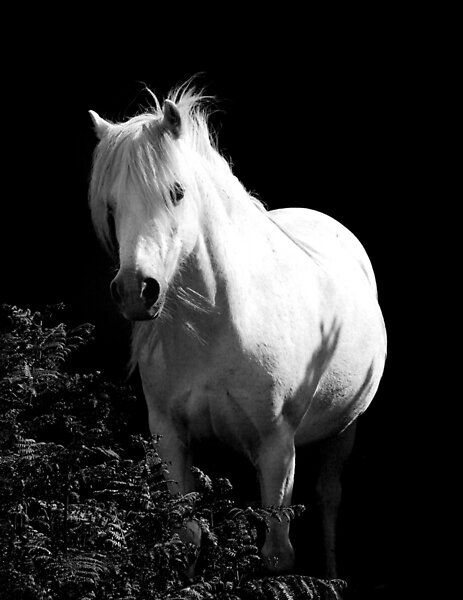
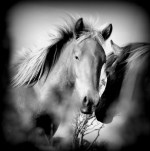
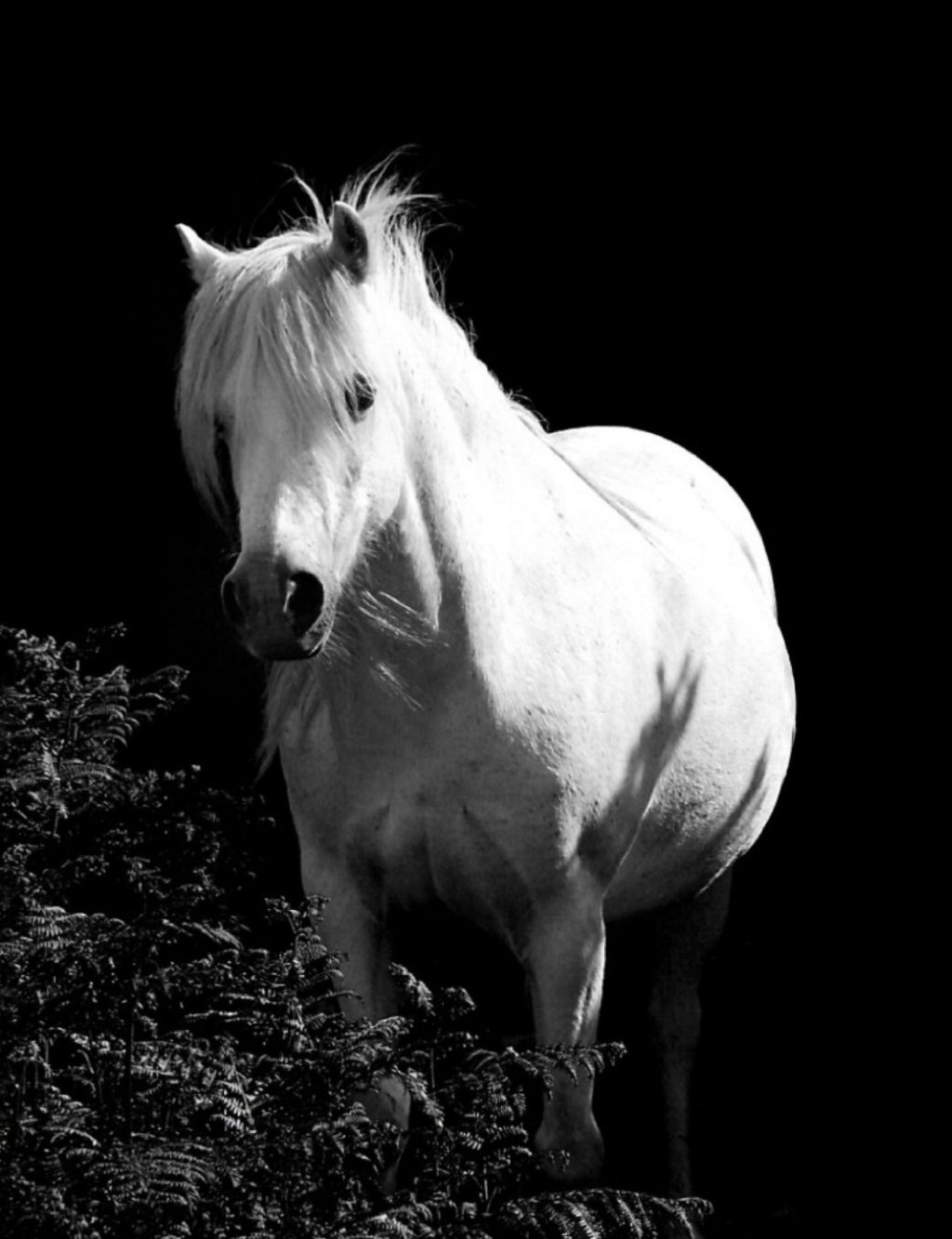
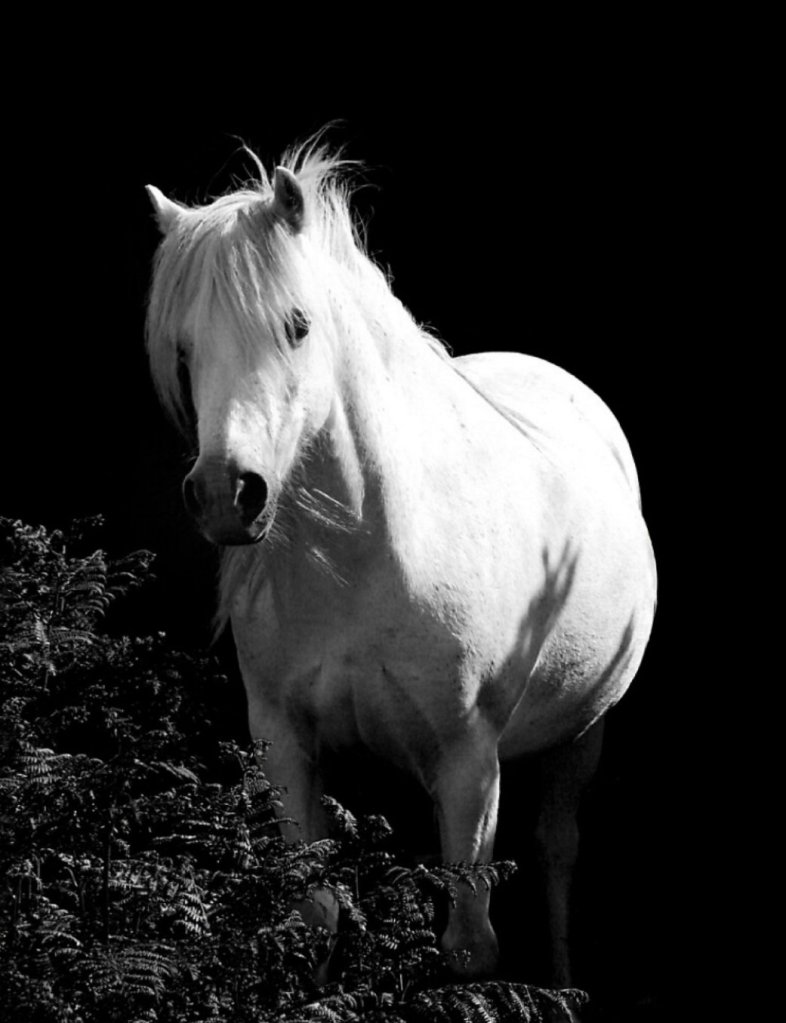
    You know, sometimes a photo just grabs you and won’t let go. That’s what happened with this shot of my white horse against the dark background. I’ve taken thousands of horse photos – trust me, my phone’s storage is crying about it – but there’s something about this one that feels different. It’s like catching magic in a moment, if magic wore a mane and had a tendency to sneeze on your camera lens.
    I decided to go with black and white for this one, and I’ll tell you why. There’s this gorgeous tension between light and shadow that color sometimes masks – like when you’re wearing a really great outfit but your statement necklace is stealing all the attention. In black and white, you can really see how my horse’s coat practically glows against that velvet-dark background. It’s not just white; it’s this luminous, ethereal kind of white that makes you wonder if maybe, just maybe, unicorns aren’t such a far-fetched idea after all.

    And can we talk about that little bit of foliage peeking in? It’s doing the heavy lifting of keeping this photo grounded in reality, like that one sensible friend who reminds you that no, you probably shouldn’t get bangs at 2 AM. Without it, the horse might look like it’s floating in space – which, cool concept, but not what I was going for here.
    The contrast between black and white creates this almost theatrical backdrop, like nature decided to set up its own spotlight. My horse didn’t get the memo about being dramatic though – they’re just standing there, being their authentic self, probably thinking about their next snack. But that’s what makes it work, right? That completely unposed, natural moment caught in this stark, artistic frame.

    I’ve noticed that some of my favorite photos are the ones that make you lean in a little closer, the ones that play with the line between simplicity and drama. This shot does that for me. It’s like the photographic equivalent of a really good whisper – quiet but impossible to ignore. And while I’d love to say I planned every element of this composition, sometimes the best photos are the ones where you’re just lucky enough to be there with your camera when the light, the moment, and yes, even the cooperative positioning of a horse, all decide to play nice together.

    And yes, before you ask, I absolutely have this printed and hanging on my wall. Because some photos just deserve to graduate from the endless scroll of our camera rolls, don’t you think?


    If you find this content inspiring and uplifting, consider supporting what I do. Buy me a coffee on Ko-fi.
    Your support makes a difference in my life and helps me create more of what you like. Thank you!
    Tap to view my redbubble gallery.
  • Life in the High Wilds

    Life in the High Wilds

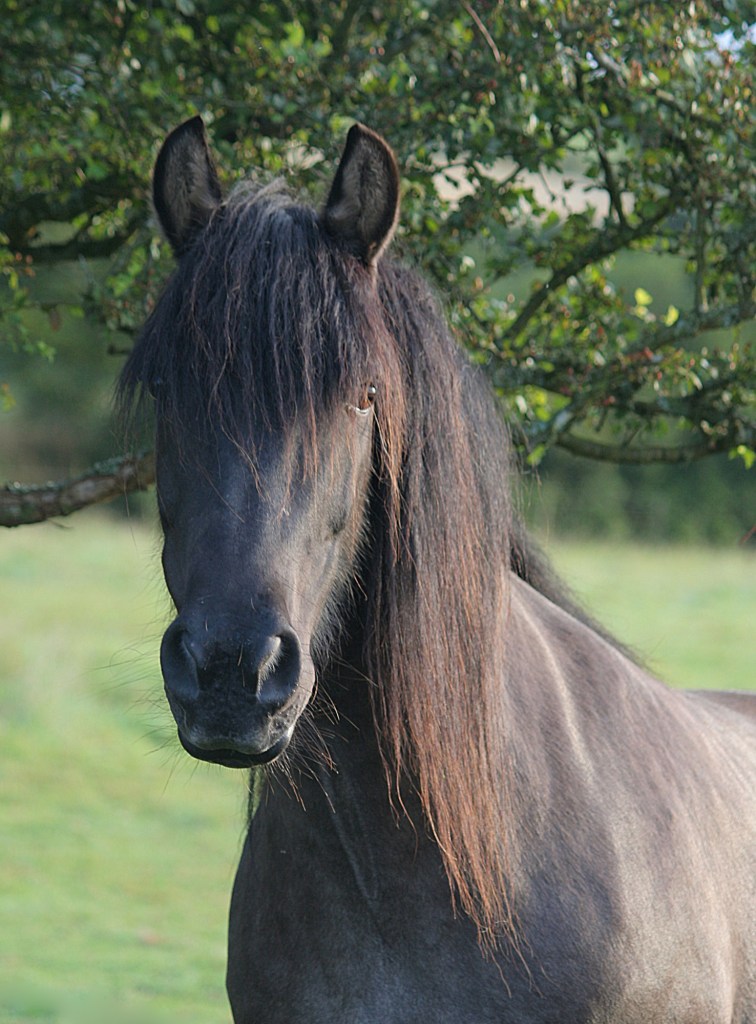
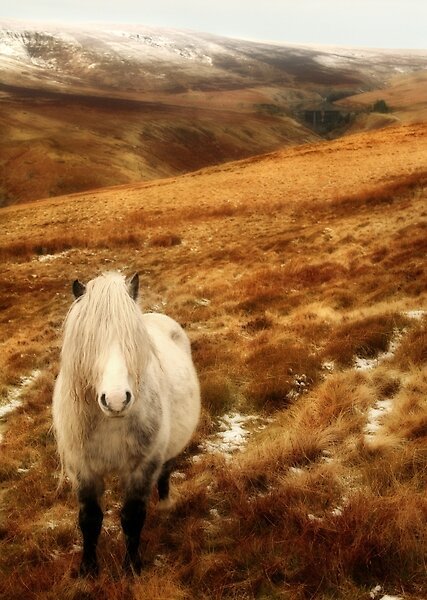
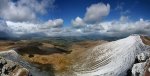
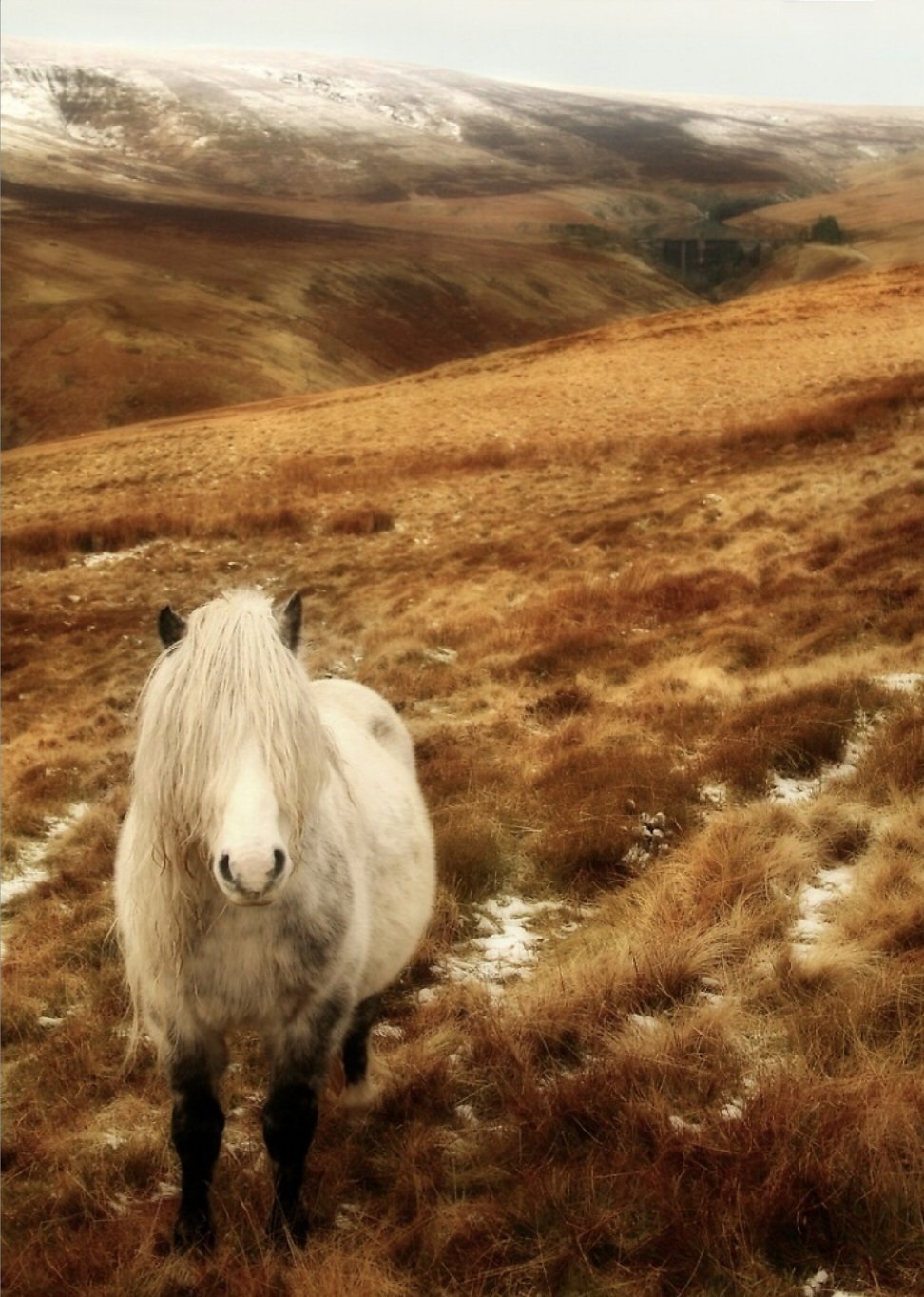
    Up here, on this harsh and unforgiving mountaintop, I stand as a solitary sentinel of the wilderness, my hooves planted firmly in the snow. The biting winds cut through my long hair and mane, cascading like a silken curtain to cover my face, but I find solace in the midst of this frigid beauty

    I took this near Llanthony Priory with Grwyne Fawr Reservoir in the background. Tap to view my redbubble gallery.

    Up here, on this harsh and unforgiving mountaintop, I stand as a solitary sentinel of the wilderness, my hooves planted firmly in the snow. The biting winds cut through my long hair and mane, cascading like a silken curtain to cover my face, but I find solace in the midst of this frigid beauty.

    You see, the world may deem our existence in these unforgiving altitudes as harsh, but I find contentment in the solitude and simplicity of this life. The rugged terrain, crowned with snow caps, has become my kingdom. It is a place where silence reigns supreme, broken only by the occasional gust of wind or the distant cry of a raptor.

    In this pristine isolation, I find freedom. I am not burdened by the expectations of the world below, nor do I long for the comforts of a stable or the company of my equine brethren. My days are filled with the art of survival, as I navigate treacherous slopes and forage for the meagre vegetation that clings to life in these unforgiving conditions.

    The icy touch of winter may be unforgiving, but it has sculpted me into a creature of resilience. I bear the weight of my long hair and mane with pride, for they are a testament to my strength and endurance. They shield me from the biting cold and grant me a shroud of anonymity in this vast, unforgiving expanse.

    I gaze upon the snow-capped peaks of the Welsh mountains that surround me, their majesty humbling and awe-inspiring. In this rugged beauty, I find my peace. I am a horse of the mountains, and I would not trade this life for anything. Here, on this harsh wild mountaintop, I am content, for I have found my place in the heart of nature’s grandeur.

    Tap to view my redbubble gallery.
  • Subtle Tones

    Subtle Tones

    Tap to view in my redbubble gallery.

    Within conversation, subtle tones refers to the nuances and variations in the way we speak, including the pitch, volume, and emphasis on certain words or phrases. These tones can convey a range of emotions, attitudes, and intentions, often beyond the literal meaning of the words we use.

    For example, imagine someone saying “I’m fine” in a low, monotone voice, versus saying it with a bright smile and a lilt in their voice. The difference in tone can suggest very different emotions or meanings, such as apathy versus enthusiasm.

    Similarly, when we engage in conversation, our tone can convey various social cues, such as friendliness, dominance, or hostility. These cues can shape how others perceive us and how they respond to us.

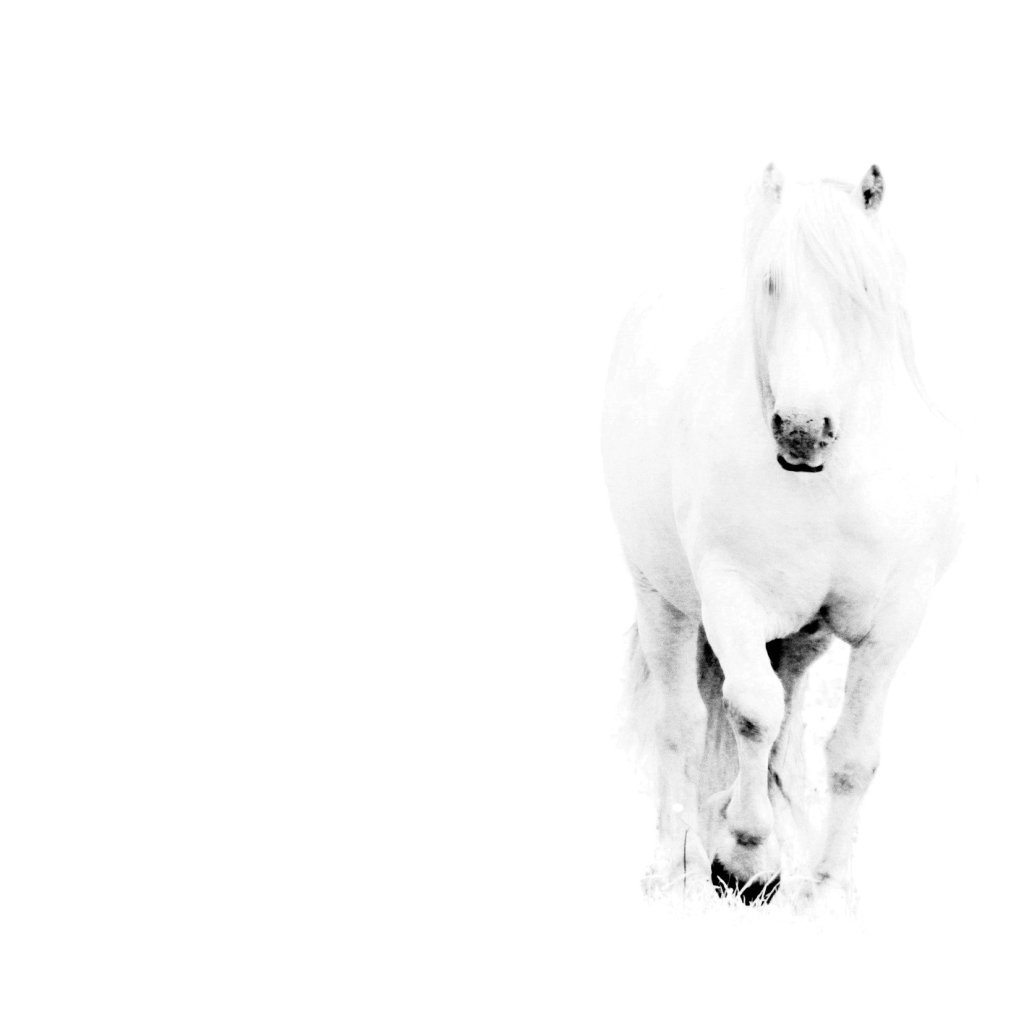
    Now, let’s compare this with the monochrome photo. At first glance, the image may seem simple and straightforward. However, upon closer inspection, we can see subtle differences in the tones and shades of white, which create depth and texture within the image.

    For instance, the white of the horse’s coat appears slightly brighter or darker than the white of the background. This difference in tone creates a sense of contrast and dimensionality, making the horse stand out more.

    Likewise, in conversation, subtle changes in tone can create a sense of contrast and depth, highlighting certain words or ideas and making them have greater impact.

    Moreover, just as the white horse on a white background can be challenging to photograph, subtle tones in conversation can be difficult to detect and interpret accurately. Our own biases, assumptions, and emotional states can influence how we perceive and respond to these subtle cues.

    Therefore, it’s important to be mindful of these subtleties within our own speech and the speech of others. By paying attention to these nuances, we can develop a deeper understanding of ourselves and those around us, and communicate more effectively and empathetically.

    Initially, ideas which seem unconnected, subtle tones within conversation and a photo of a white horse, share similarities in terms of the subtle nuances and variations that create depth, texture, and contrast. By being aware of these subtleties, we can become better communicators and better appreciate the beauty and complexity of the world around us.

    Tap to view my redbubble gallery.

    More interesting posts

  • Horsing Around with Words

    Horsing Around with Words

    Tap to view in my redbubble gallery.

    From Neigh to Yay:

    How to Make Conversations Come Alive

    Espresso: “You know, conversation is really an art form.”

    Coco: “Absolutely, it requires skill and practice to carry it out successfully.”

    Espresso: “What do you think are some important elements of a good conversation?”

    Coco: “Well, first of all, active listening is key. You need to pay attention to what the other horse is saying, and respond thoughtfully and respectfully.”

    Espresso: “Yes, and I think it’s also important to have a good sense of… timing. Knowing when to speak, when to pause, and when to ask questions can really make a conversation flooooow smoothly.”

    Coco: “Definitely. And I would add that having a wide range of topics to draw from is also important. You don’t want to always talk about the same thing.”

    Espresso: “Yes, variety is important. And it’s also important to be open-minded and willing to consider different perspectives. Even if you disagree with someone, you can still have a productive conversation if you listen respectfully and try to understand where they’re coming from.”

    Coco: “Exactly. And I think that’s what separates a good conversationalist from a bad one. It’s not just about being able to talk, but about being able to really engage with others and build meaningful connections.”

    Espresso: “Well said, my friend. It’s a skill we should all strive to improve, both for our own sake and for the sake of our herd.”

    Tap to view my redbubble gallery.

    More interesting posts

  • Memoir of a Winter Beach

    Memoir of a Winter Beach

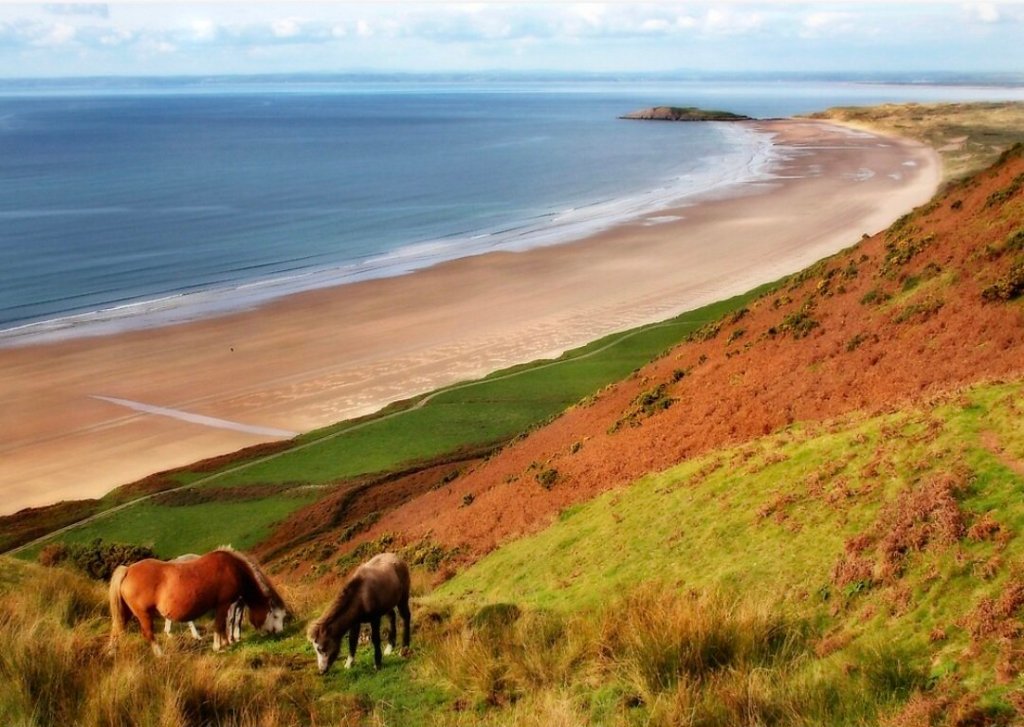
    It was a blustery winter’s day, and I found myself drifting along the shore, the sound of the waves crashing against the sand in a soothing melody. The sky was a deep shade of blue, mottled with just a few clouds to remind us we were in Wales. The sun was shining, casting a warm glow over the rusty landscape.

    Rhossili Beach, Wales
    Tap to view in my redbubble gallery.

    As I walked, I came upon a group of ponies, their manes whipping about in the wind like tattered banners. They were grazing on the sandy dunes, contentedly munching away, oblivious to the fact that they had an audience. I approached them quietly, not wanting to disturb their feast, and was pleased to find that they only glanced in my direction.

    I stood for a moment, observing these magnificent creatures as they went about their business, their grace and beauty was wonderful. The way they held themselves as they took an acknowledging glance at me, with their heads held high, was simply awe-inspiring.

    I continued along the beach, taking in the sights and sounds of the winter world. Thinking about my good fortune in having this stretch of beach all to myself, with only these ponies for company. The sea was a vibrant shade of blue, and the waves were rolling in, one after another, in a never-ending rhythm. I was struck by the peace and serenity of the moment, feeling as though I were a part of something much larger and more magnificent.

    I sat down on the sand, my rump sinking into the soft grains, and watched a single seagull float by on the air. I took a deep breath, filling my lungs with the fresh, salty air, and felt my body relax. I closed my eyes and listened to the sound of the waves, letting the peace of the moment wash over me.

    As the sun began to dip below the horizon, casting a warm, golden light over the scene, I stood up, feeling refreshed and rejuvenated. I bade farewell to my equine companions and made my way back up the beach, the sound of the waves feeding as I made my way.

    This peaceful and tranquil day on the winter beach, with only the peaceful ponies for company, reminds me always of the majesty and beauty of nature, as well as the simple pleasures that can be found in life.

    Tap to view my redbubble gallery.

    More interesting posts

  • A Pony’s Promise

    A Pony’s Promise

    Snowflake’s Gift of Hope
    Tap to view in  my redbubble gallery.

    I am Snowflake, a pure white pony, and my life changed forever the day I was given to a young girl named Sophia.

    At first, I didn’t know what to make of my new home. I was used to living in a field with other horses, but now I was in a stable, surrounded by unfamiliar sights and smells. But then I met Sophia, and everything changed.

    She was weak and fragile, but she had a kind and gentle spirit. I could sense that she was hurting, and I knew I had to help her. I nuzzled her and let her brush my coat, and I could see the spark of life return to her eyes


    As the days passed, Sophia and I became inseparable. She would come to my stable to visit me, and we would take walks together. She would tell me about her day and her worries, and I would listen and offer her comfort. I could sense that I was helping her in some way, and it made me happy.

    I could see that Sophia was getting better, but I also knew that she was still weak. I made sure to be extra gentle with her, and I never strayed too far from her side.

    Eventually, Sophia was well enough to go home. I was sad to see her go, but I knew I would see her again. And I was right, because her parents arranged for me to come home with her.

    Now, Sophia and I are together all the time. We take care of each other and have fun together. I know that I have helped her to recover both physically and emotionally, and for that, I am proud and grateful.

    I am Snowflake, a simple white pony, but I have been able to make a difference in someone’s life, and that is the greatest gift of all.

    Tap to view my redbubble gallery.

    More interesting posts

  • Discovering the Welsh Cob

    Discovering the Welsh Cob

    A Pony with Heart and Soul
    Tap to view in my redbubble gallery.

    The Welsh cob, also known as the Welsh pony of cob type, is a versatile and hardy breed of pony that hails from Wales. These ponies are known for their strong and compact build, as well as their docile and friendly personalities.

    One of the defining characteristics of the Welsh cob is its thick, flowing mane and tail. This, combined with their strong and sturdy build, makes them a popular choice for showing and driving. They are also well-suited for a variety of other activities, such as jumping and dressage, and are often used as a children’s pony due to their calm and patient nature.

    The Welsh cob’s history can be traced back to the 13th century, when they were used by farmers and miners in Wales. They were bred to be strong and sturdy, able to pull heavy loads and work long hours in harsh conditions. Today, the Welsh cob is still used for a variety of purposes, including riding, driving, and as a companion animal.

    The Welsh cob comes in a variety of colours, including black, bay, chestnut, and palomino. They range in height from 12 to 14 hands, and can weigh anywhere from 800 to 1,200 pounds.

    The Welsh cob breed is divided into four classes, each with their own specific characteristics and requirements. The main classes are:

    Section A: This class is for Welsh Mountain Ponies, which are the smallest and most delicate of the Welsh cobs. They stand at a maximum of 12.2 hands and have a refined head and elegant neck.

    Section B: This class is for Welsh Pony of Cob Type, which are slightly larger and heavier than the Section A ponies. They stand at a maximum of 14.2 hands and have a more substantial build and a stronger head.

    Section C: This class is for Welsh Cob, which are the largest and heaviest of the Welsh cobs. They stand at a minimum of 14 hands and have a strong and sturdy build, with a powerful head and neck. They are considered the most versatile of the Welsh cobs and are used for showing, driving, and jumping.

    Section D: This class is for Welsh Cob mares and geldings. They stand at a minimum of 14 hands and have a strong and sturdy build, with a powerful head and neck. They are used for a variety of activities, including showing, driving, and jumping.

    Overall, they are a beautiful and elegant animal that is both functional and versatile.

    Tap to view my redbubble gallery.

    More interesting posts

Design a site like this with WordPress.com
Get started